Hood design-Week 2
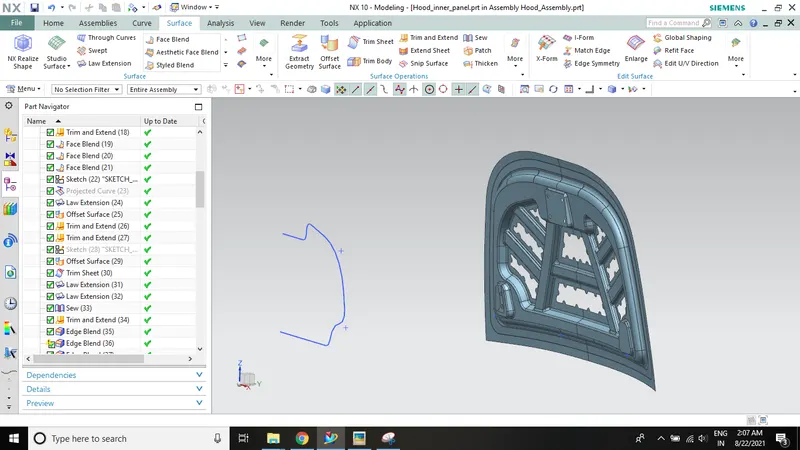
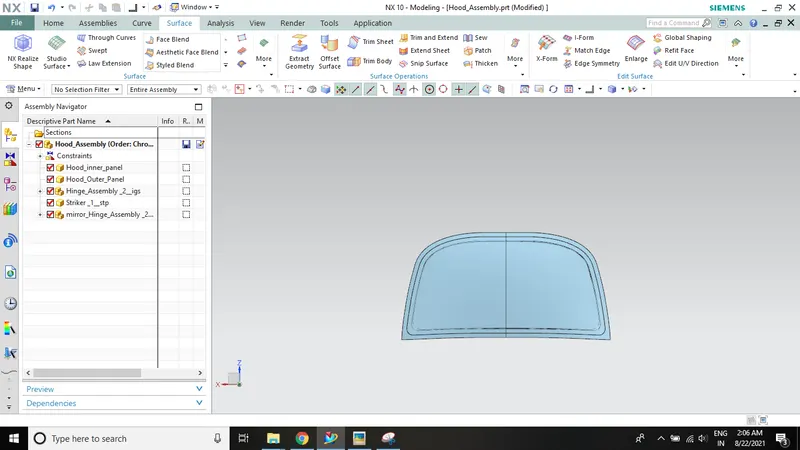
Design and development of Hood outer and inner panel.(hemming part is remaining)
- The Hood or we also called it the bonnet or engine compartment is an opening body panel that covers the engine in a front-engine vehicle.
- the hood is also considered as another type of door in a vehicle as it consists of an outer panel and inner panel.
- the inner panel provides strength while the outer panel functions as a metal cover.
- The hood geometry has a huge influence on the pedestrian safety of the hood.
- The different shapes like bends and roundings make the hood stiffer and harder in some places, a head impact in these areas can lead to large damage.
- Then the more flat area of the hood is softer and more gentle for a pedestrian head impact.
- The hood release system is common on most vehicles and usually consists of an interior hood latch handle, hood release cable, and hood latch assembly.
- The hood latch handle is usually located below the steering wheel, beside the driver's seat, or set into the door frame.
- On race cars or cars with aftermarket hoods (that do not use the factory latch system) the hood may be held down by hood pins.
- Some aftermarket hoods that have a latch system are still equipped with hood pins to hold the hood buttoned down if the latch fails.
- It is important to optimize the hood to the new material in order to utilize all the opportunities to integrate and optimize shape to a new process, Today the hood I optimized to the sheet metal stamping and sheet metal composition.
- The inner hood has a complex design and geometry, this is necessary because it helps to distribute the stresses throughout the hood.
- It also consists of different holes for manufacturing and assembly.
 Tesla car inner hood panel
Hoods are typically made out of the same material as the rest of the bodywork. This may include steel, aluminum, fiberglass, or carbon fiber. However, some aftermarket companies produce replacements for steel hoods in fiberglass or carbon fiber to make the vehicle lighter.
Carbon fiber
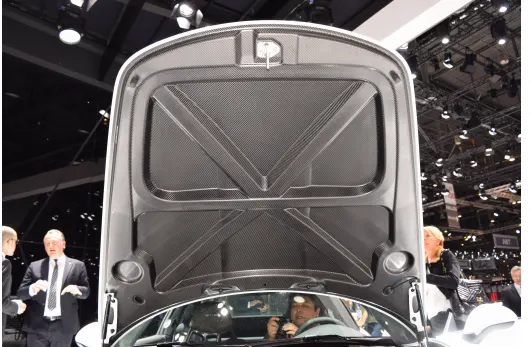 Porsche 911r Carbon fiber hood
 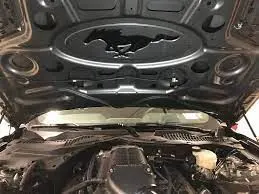 Ford Mustang features a lightweight grille made of carbon fiber composite. ( a running horse is hidden in ford mustang hood).
DESIGN CONSIDERATION WHILE DESIGNING A HOOD.
1. OPENING ANGLE
One of the first things we have to consider is the opening angle. the opening angle determines how much the hood will open. A stay mechanism actuates the opening of the hood. Generally, it handles the hood to stay open.
DIFFERENT REGIONS REQUIRED DIFFERENT OPENING ANGLES. THIS IS BASICALLY FOR PEDESTRIAN SAFETY.
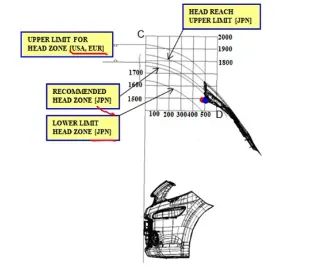
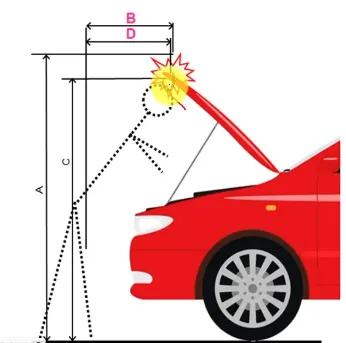
DIFFERENT COUNTRY USES DIFFERENT OPENING ANGLES.
for example:-
if we have to design a car hood panel for the customer who resides in japan we have to make sure the hood will be able to open by the person who has a height of 5foot 6 inches because the average height of the Japanese citizen is 5 foot 6 inches.
2. STAY MECHANISM
THIS MECHANISM HOLDS THE HOOD FROM INSIDE. A BRACKET IS MOUNTED ON THE SIDE OF THE ENGINE COMPARTMENT.
- SUPPORTING ROD
- GAS STAY
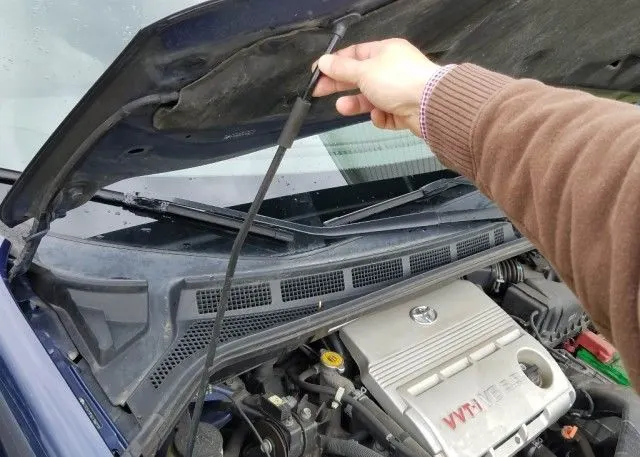
2.1 SUPPORTING ROD
It is a device for supporting the engine hood of a motor vehicle in its open position by means of ROD.a supporting rod is generally straight or bends in nature. the bend is given to strengthen the rod. it doesn't require external gas as it is manually operated .it is manually operated so it is not an expensive component and it can also be designed easily.
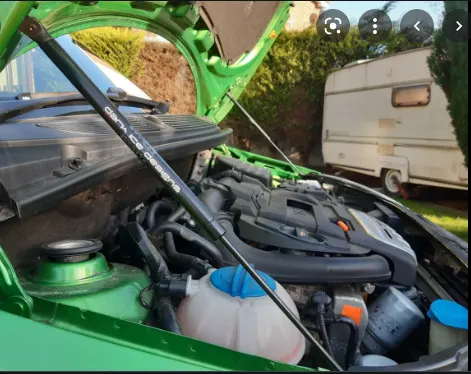
2. Gas stay
A device for supporting the engine hood of a motor vehicle in its opening position by means of an actuator which is activated by gas. This is the automatic stay mechanism it doesn't require any manual need. since it is automatic so it is quite expensive. it is not easy to design as compared to a supporting rod.
GROMET DIMENSIONS:-
Grommets are the parts that hold the rods in rest condition. due to this there is not any type of wear and tear in the engine compartment caused by rods.
REINFORCEMENT:-
"the action or process of reinforcing or strengthening"
In the design and development of hood panel design, it is required whenever we add additional material to the hood so we lose some strength of the hood for that we have to use the (latch and striker) and hinge assembly.
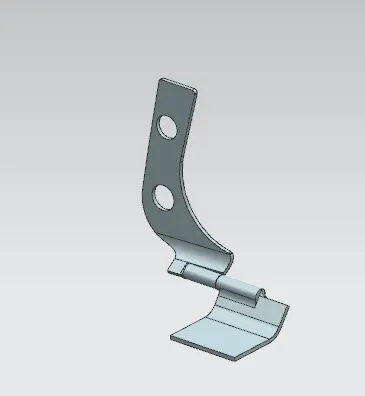
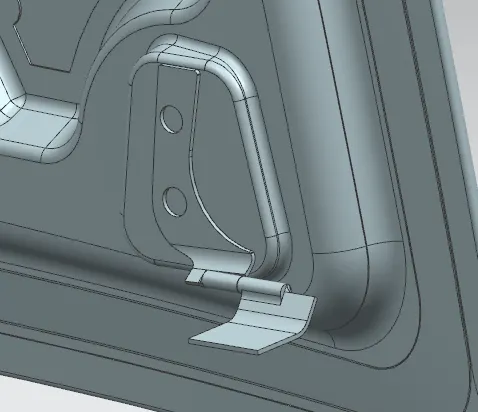
A. HINGE ASSEMBLY
When we will add hinges for actuating to open and close the hood again we will lose some of the parts, here we need a "Hinge axis " . the hinge will be lying on the corner part of the hood panel. when we were placing our hinges we need a emboss for that. HINGES ARE INTENTIONALLY GIVEN TO GIVE STRENGTH TO THE HOOD.when we make the hinge axis we also pinpoint the center point which we later use for latch trajectory.
B. LATCH AND STRIKER
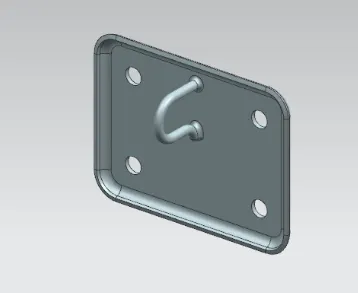
These are the parts that are basically used for the locking mechanism. latch and striker are mounted on the hood and it got looked into the engine compartment. This is operated manually.
Latch striker trajectory:-
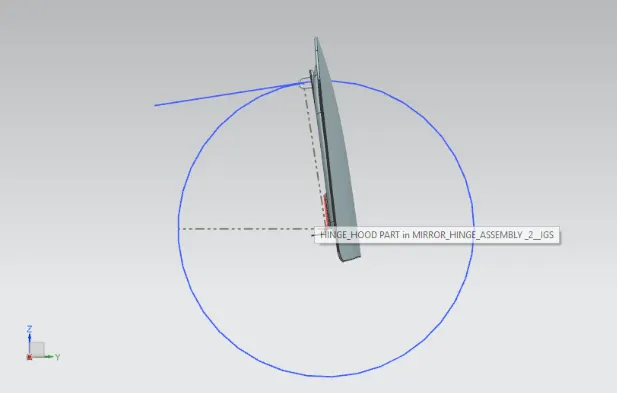
When we were designing the hinge's axis we also created the center point of it. that center point will create our base for the circle. the circle is the trajectory in which our hood will open and close. if the striker is perpendicular to the circle then this identifies my hinge position is correct. then the latch will be positioned to this trajectory.
C. STIFFENER
They are more like sponge material. we will introduce a stiffener in between the outer panel and inner panel. The purpose of this is to improve the strength of the hood locally.
Reason for adding stiffener
to avoid vibration
preventing from causing wear and tear.
D. BRACKET
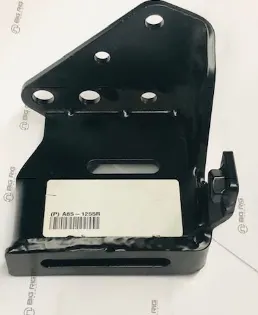
this is basically used for holding gas stay and supporting rod.
OPERATIONS TO BE PERFORMED DURING THE DESIGNING THE HOOD
- Visualization of master section for creation inner panel.
- Creation of embossed for the inner panel.
- Placing of hinges and creation of hinge emboss.
- By using the hinge axis we will create a trajectory for the latch and striker.
- Placing of latch and striker.
- the last step is the hemming method by using this we can easily wrap the outer panel into the inner panel.
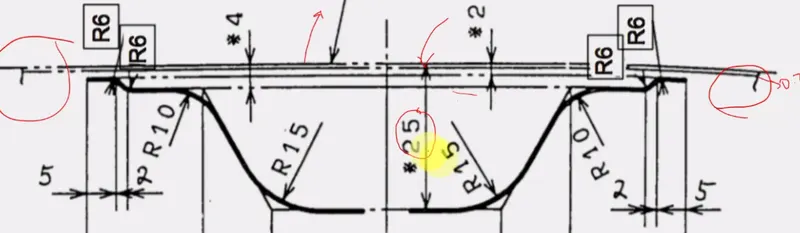
MASTER-SECTION FOR INNER HOOD PANEL.
PEDESTRIAN SAFETY
To reduce the death of pedestrians and injuries in the traffic, measures from the automotive industry as well as environmental changes are required. To test how good the cars are at pedestrian protection, the car industry performs different tests on the cars that simulate a real-life accident with head impact, upper leg impact, and lower leg impact. In the hood's perspective, head impact protection is the most common and is the highest priority. The risk of head injuries is in free-flying head impacts and that is investigated by a free-flying head from the impactor, impacting against the vehicle hood.
WRAP AROUND DISTANCE
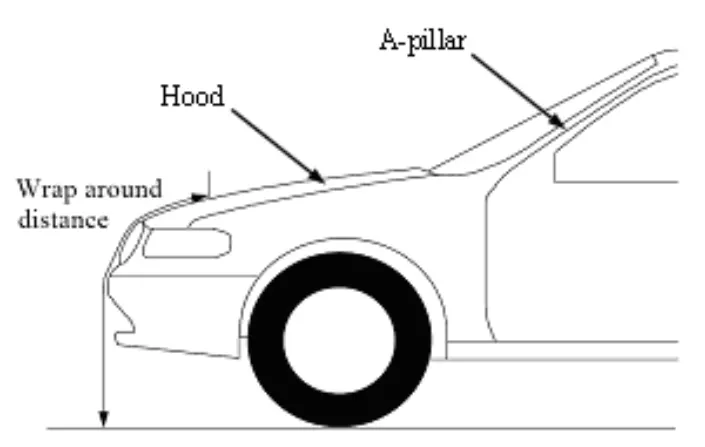
WAD (Wrap-Around Distance) is the geometrically traced distance from the contact point with the Ground Reference Plane, vertically below the front face of the bumper, to any point on the vehicle front structure.
MASTIC POINTS AND MASTIC SEALANT
Every mastic sealant have a tendency of improving support at 80mm diameter
Matic points are generally between the inner and outer panels, the gap between the inner and outer panels will be 5mm.
MASTIC SEALANT - Hard rubber-type sealants are used for joining.
flanges also have mastic points.
we can use it on the outer panel because it will ruin the aesthetic surface of the outer panel.
since the inner panel is a class b surface we can easily create mastic points.
HEMMING METHOD.
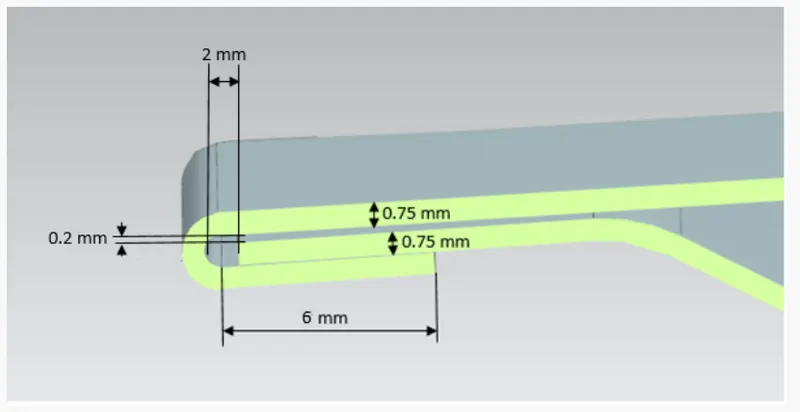
Hemming is the process in which the edge is rolled flush to itself, while a seam joins the edges of two materials. there are certain things we have to follow for bending the outer panel. the gap between the outer and inner panels should be 0.2mm. the distance from bending the outer panel to the inner panel should be 2 mm as shown in the picture.this is the last stage of creating the hood design.
THE FINAL CAD FOR THE HOOD ASSEMBLY.