Hood design-Week 2
- Title of the Project:
Design of Hood Assembly using External Skin Data Through NX CAD 12.
- Objective:
To design and model the hood outer, inner panels and reinforcement of hood using master section data and skin data. And generate a hood assembly using NX CAD 12.
- Introduction:
Sheetmetal are widely used in generating the automotive body components, which is due to their lighter in mass, easy manufacturability, low cost of production and product within the time constraints and also helps in gaining design competencies of a component easily and accurately. Sheetmetal thickness may vary from 0.3mm to 12mm.they can be easily transformed into final model using simple pressing and bending operations. Sheetmetal components can be either a single part or tailored blanked part. Hood assembly is a component which plays a vital role in gaining safety standards and also in aesthetics appearances. Whenever while designing the hood assembly these factors are the major base data in order to satisfy. Therefore, a detailed report on how the hood design is modelled and developed will be generated in this project by considering various factors followed in hood assembly.
4. Methodology:
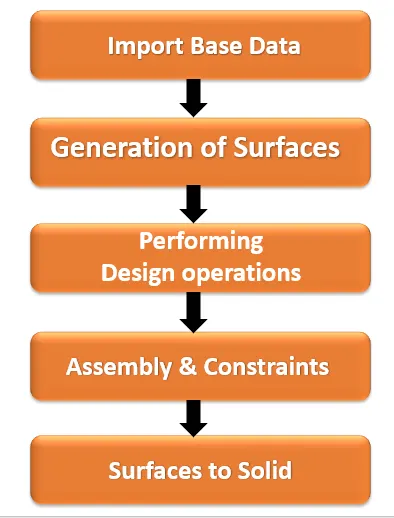
5.Description of Methodology:
- Import Base data:
It is an initial stage of generating hood design. The skin profile body is imported to NX Workbench and its master section data is clearly analysed.
- Generation of Surfaces:
Based on the skin data, by offsetting the parent surface the actual working surfaces are created as per the design of master section.
- Performing Design operations:
After generating surfaces, the sketching is done on the top plane of inner panel. Using this profile, the embossing operations are performed, mastic points are created and reinforcement is generated on the hood inner panel. Further trimming, extending and sewing operations were carried out on the inner panel.
- Assembly & Constraints:
Once the hood inner panel is completely generated, the other components such as hinge assembly and striker, latch is imported to assembly workbench. Further the hinge is aligned and placed at reinforcement of inner panel exactly. Striker and latch position is determined using the hinge assembly axis line and aligned exactly on the trajectory circle.
- Surface to Solid:
Once the surfaces of hood assembly are completely along with its constraints. the entire body surfaces are converted into solid body by providing the thickness value for the hood assembly, as per the master section data.
6.Steps followed in design Process:
- Importing of skin profile data (Hood outer panel).
- Offsetting of hood outer panel to create working surface as per the master section data.
- Sketching of profile on the inner panel by selecting top plane in order to create the embosses.
- Sketching of mastic points on the hood inner panel and trimming the sheet.
- Trimming, extending and sewing of surfaces as per design requirement.
- Mirroring the geometry to get complete inner pane.
- Performing face blend operations across the hood inner panel.
- Importing of hinge assembly and aligning them exactly on the reinforcement of hood inner panel.
- Importing of striker and aligning them exactly on the trajectory circle, which is generated using the hinge axis of hood inner panel.
- Creating of embosses of striker on the inner panel using the wave geometry linker.
- Creating of outer hood panel by offsetting the parent surface. Based on the master section data hemming operations are performed in between hood outer and inner panel.
- Selecting the entire hood assembly surfaces and converting them into a solid part by providing the thickness value based on the master section data
7. Hood Components, factors , Manufacturing process:
Hood assembly consists of outer panel, inner panel, hinge, striker latch, stiffener pad.
Hood is a component which covers the complete engine cradle section.it is also know as bonnet. Hood is the most critical component in BIW structure of an Automobile.it helps in gaining the safety standards easily. This hood component helps in releasing the energy from the car rather than generating. Most of the hood needs to satisfy the regulations provided by the front crash and pedestrian safety constraints followed by the NCAP.
- Hood Opening Angle:
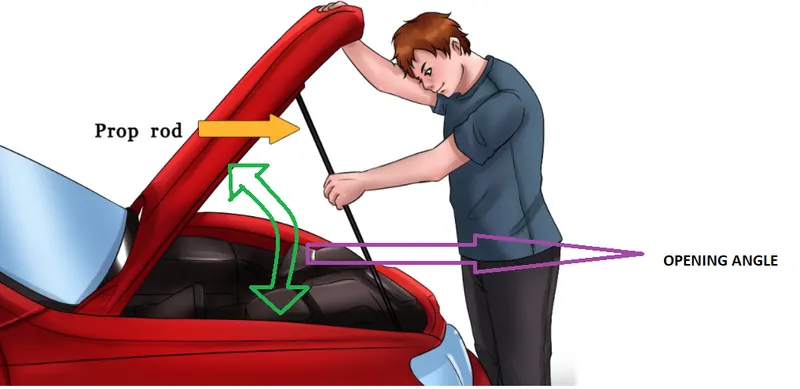
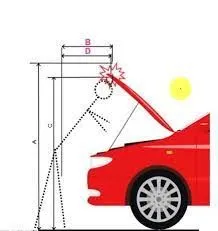
It is an angle of inclination provided by the hinge to the hood in order to perform open and closing operation easily. This opening angle of the hood varies depending upon the region.
- Hood Holding Mechanisms:
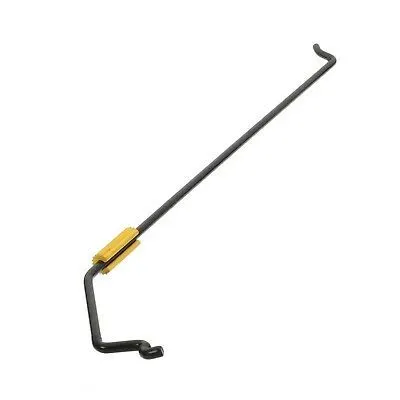
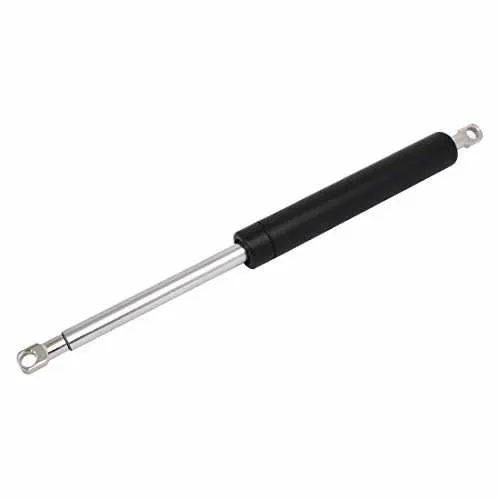
It is a mechanism which tends to hold the hood statically. There are two types holding mechanism are provided for the hood, such as support rod and gas stay mechanism. Most of the mid segment cars are provided with the support rod mechanism, such that it is effective in cost, least in mass, and easy operation. Whenever the hood is opened the rod is lifted and attached to the slot provided on the hood engine bracket, which intern tends to hold the hood firmly. Gas stay is another mechanism which has telescopic cylinders filled with gas tends to hold the hood firmly.
- Hood Outer panel:
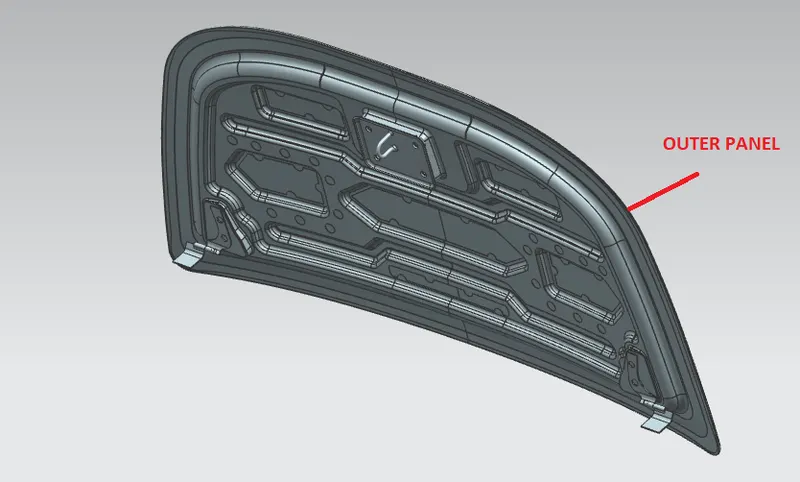
Hood outer panel is an exterior surface of hood in BIW structure, such that which is made of Sheetmetal having the thickness of 0.75 mm with curvy and styled profile across the ends and edges. This outer panel is merged with inner pane through hemming process and other supporting components are assembled to it in order to form a complete hood assembly.
- Hood Inner panel:
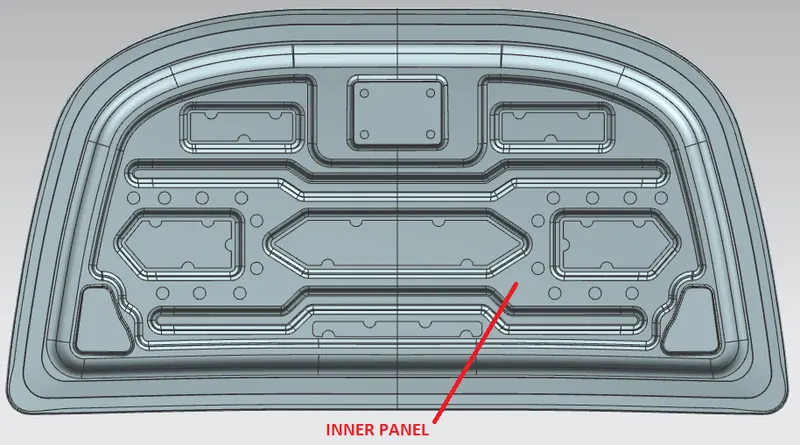
Hood inner panel is an internal reinforcement Sheetmetal component for the hood part, such that it would consists of embosses, cut-outs in it. normally the thickness would vary from 0.6 – 0.8 mm. this inner panel acts as stiffener to outer panel, and these two panels are merged through hemming process. The inner panel design depends upon various factors such as latch area, hood width, outer panel design. The embosses are generated in order to increase the crash worthiness of the hood assembly and also providing better reinforcement.
- Hinge assembly:
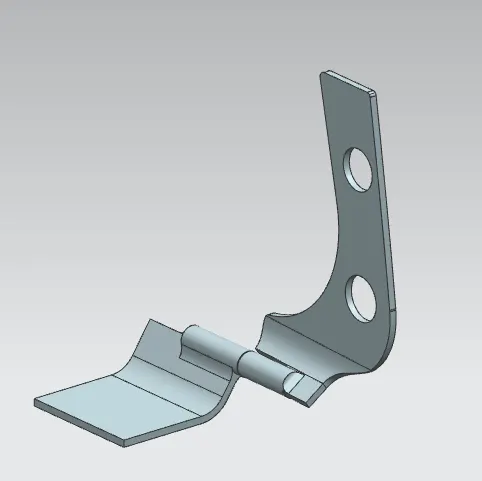
It is a sub-assembly component, which is attached to the hood that helps in providing the angular inclination movement for the hood assembly. This hinge axis is the pivot points for the hood opening and closing motions. This hinge assembly is placed on hood inner panel, where there is a reinforcement region for hinge assembly itself.
- Striker with latch:
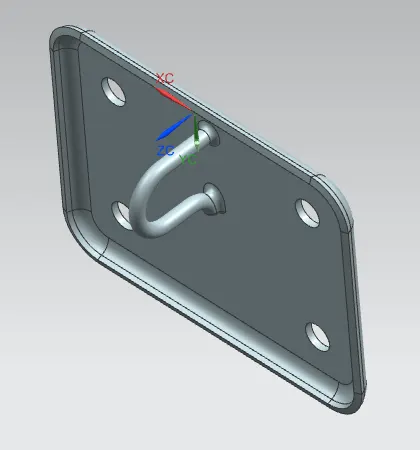
Latch and striker are a single component. Which is attached to hood in order to execute the locking operation of hood. Latch is s flat region which gets aligned to the hood inner panel and striker is an angular bend compartment on the latch. whenever the hood is made to closed this latch and striker assembly would tends to make rigid link with bottom striker holder firmly provided on engine hood assembly bracket.
- Support Rod:
Support rod is a component which helps in holding the hood statically when the hood is opened. Normally this support rod is placed on the engine hood bracket, whenever the hood is opened this rod is lifted from attached points and coupled to the hood at the slots provided in hood. These rods are bent at the middle or at the end such that it can provide better stiffness. the lord length should not cross 35 mm, which is due to if it exceeds it tends to lose its strength due to load offered by the hood.
- Stiffener Pad:
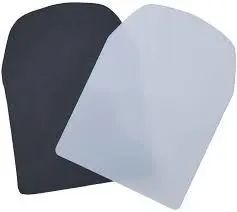
Stiffener pads are the components which are placed in between outer panel and inner panel in order to increase the stiffness of hood. These panels are normally made of rubber sponge materials such that they helps in reducing the NVH issues generated by the hood.
- Latch & hinge reinforcement:
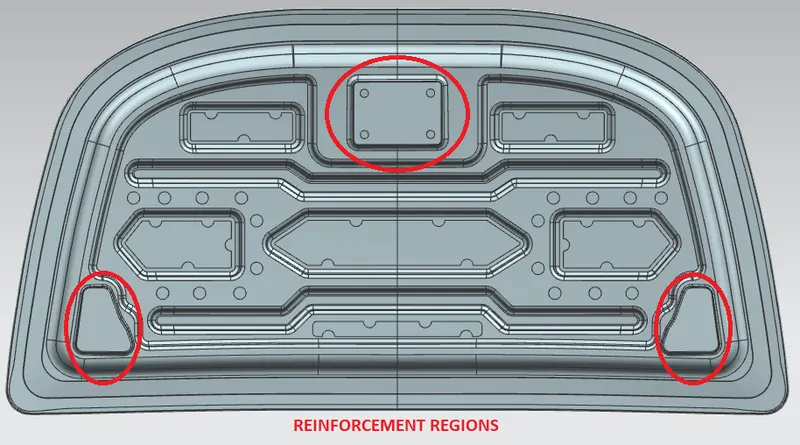
Reinforcement is nothing but increasing in stiffness and strength of material by increasing some material across it. whenever the hood inner panel the material is removed the strength around that region would reduce. But when it comes to the position of latch and hinge points those areas needs to be have more strength. Therefore, at the latch and hinge areas by increasing their thickness. The reinforcement is formed in order to get better strength at those specific regions. The reinforcement materials may be either fibre, filament, glass fibre.
- Latch Trajectory:
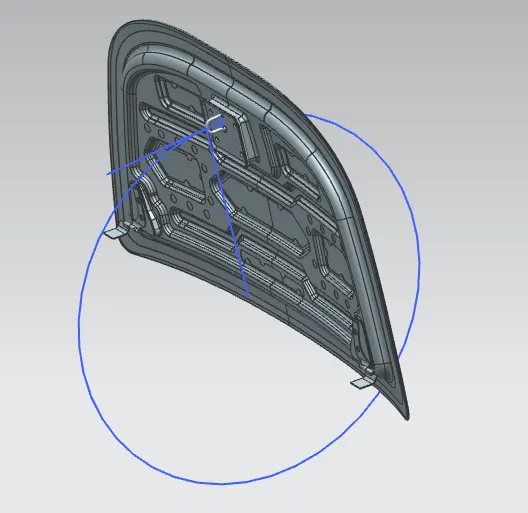
Latch trajectory is a circular path generated in order to place the latch with striker assembly on the hood. This path is created using the reference of hinge axis assembly. The latch and striker must be placed exactly on this trajectory path in order to attain the exact operation without any interferences the latch is not aligned exactly with this trajectory path, then the opening and closing of the hood operation would not execute properly which is due to interference issues. If the hinge axis is perfectly aligned with trajectory path and latch is placed on the hood, it results in exact alignment by clearing interference issues.
- Embossed Surfaces:
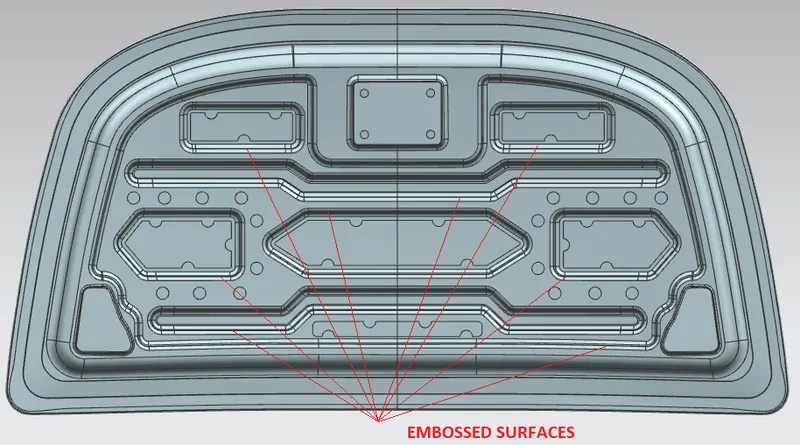
Embossed surfaces are normally generated in hood inner panel of the hood assembly. These embossed surfaces are created on the panel order to improve the crash worthiness of the hood component. Most of the embossed surfaces will be having a draft angle which is in v-section which is due to during any of the impact, the force which is acting towards the hood will be received by inner panel and diverted them towards the corners and edges of the embossed surfaces which results in reducing the impact forces which is travelling towards the passengers inside the cabin.
- Mastic Data:
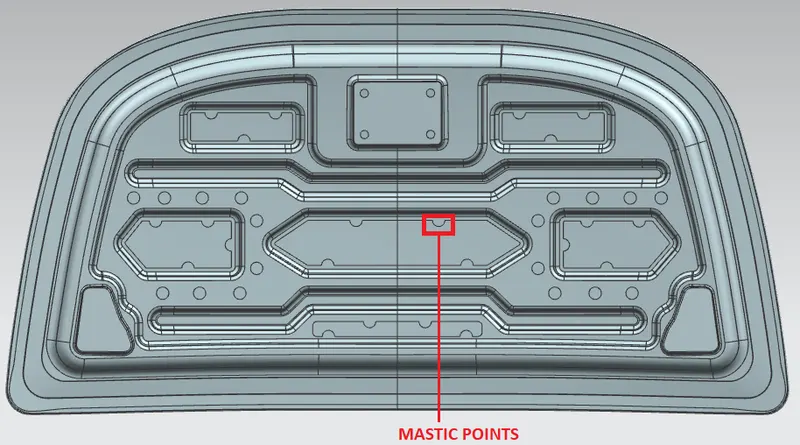
Mastic sealants are elastic compounds which acts as a rubber material when they are heated. These mastic sealants are applied in between the hood outer and inner panel which as distance of 2mm.the main function of this mastic sealants is to merge and blend the outer and inner panel rigidly. This sealant comes as a paste form, and when they are applied and subjected to hot furnace, they get hardened by creating solid blend between components. This sealant has tendency of influencing up to 80mm diameter and can strengthen the hood indirectly. The main intention of using this mastic is, as you know the outer hood is a styled surface and that cannot be joined to inner panel using rivets, which makes the design odd therefore these mastics are used widely. There are specific regions are created in inner panel for mastic sealant known as mastic points.
- Deep Drawing:
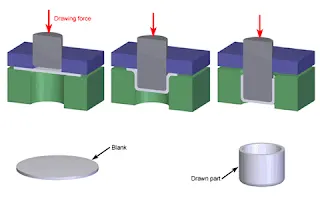
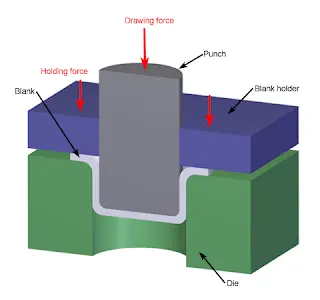
It is a Sheetmetal forming operation, where it can produce the complex design shapes easily and quickly. In this process the workpiece Sheetmetal blank is radially dragged into a forming die by means of punch pressing force actuated by machines. Once the punch is executed the design forming is generated with material retention. deep drawing process used in building automobile BIW components which is due to its precision, production time, and quantity.
- Hemming:
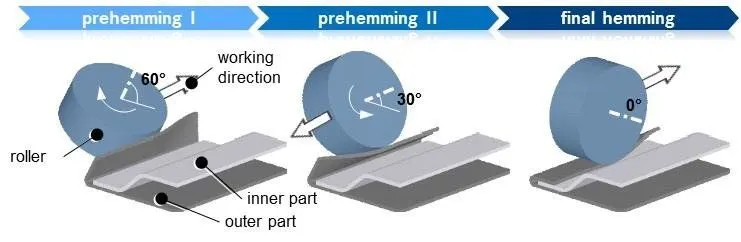
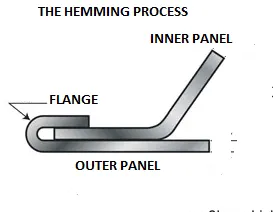
Hemming is a Sheetmetal forming operation, in which the edges of its surfaces are rolled over towards itself. The hood inner panel and outer panel are created using this hemming process in order to avoid the rivets, bolts and nuts on the panels. This hemming process provide accurate and quality joints between two surfaces. After hemming process sealants are applied at the edges of hemming regions in order to gain water tightness. Hemming has different types profile such as open and closed type.
8.Modelled Components:
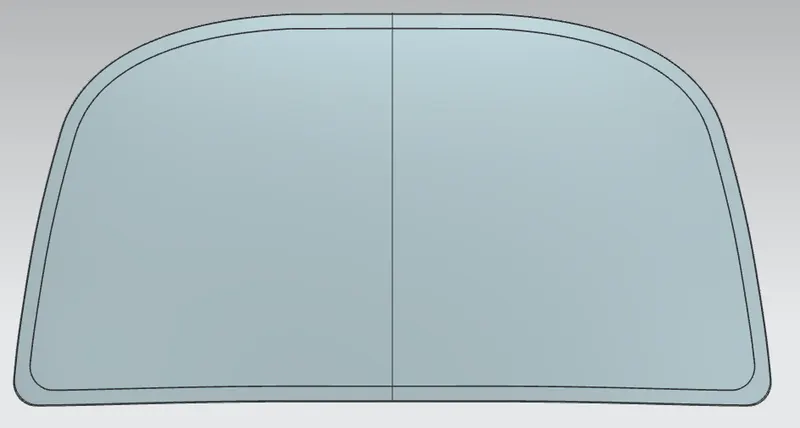 Top view
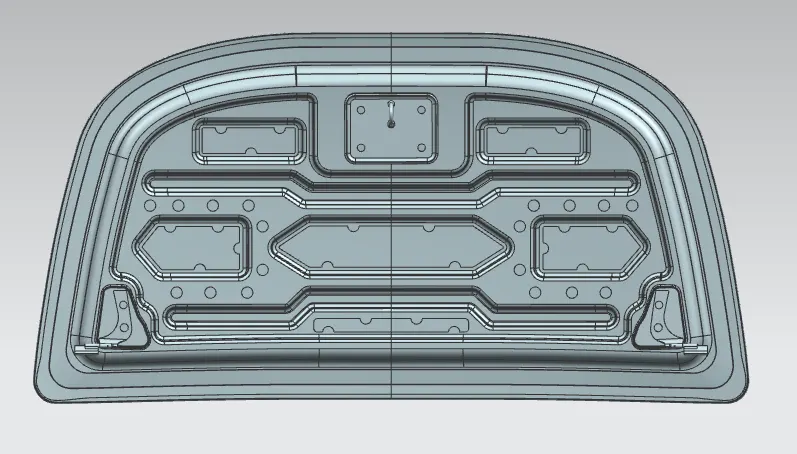 Bottom view
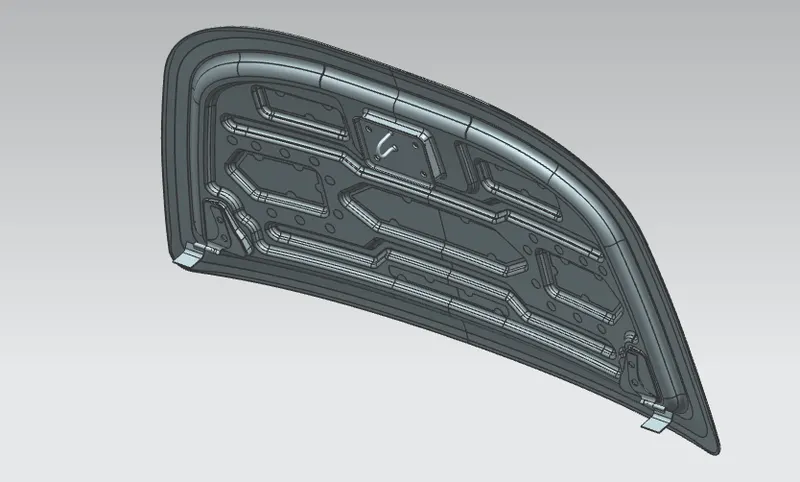 Isometric view
 Front view
 Rear view
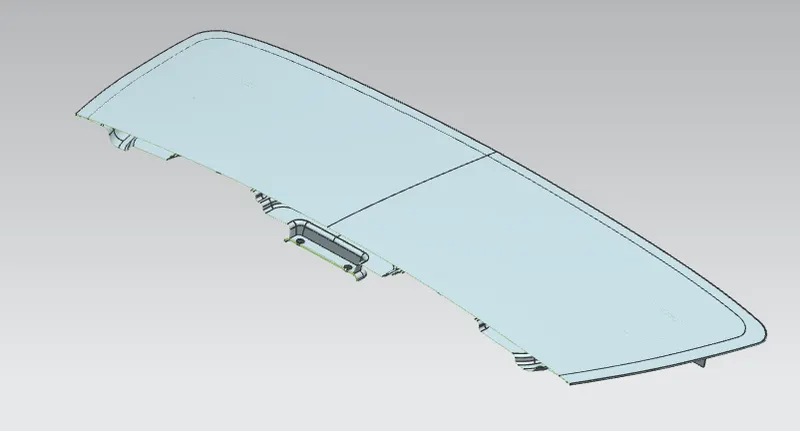 Sectional view
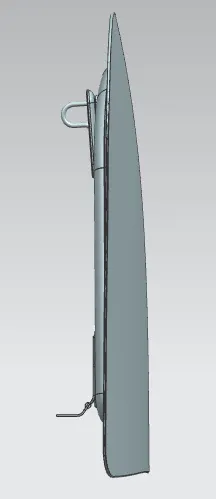 Side view
9.Conclusion:
The design and modelling of Hood assembly has been generated successfully, as per the dimensions provided in master section data using the skin profile model through NX CAD software tool. The final hood assembly component tends to appear as the exact replica of the given reference model. The NX CAD helps to make the design accomplishment easier within time constraint.