Hood design-Week 2
Objective:-Design Hood outer panel, inner panel and the necessary reinforcements by following the Master section.
Data to be used:
Hood Thickness Information
- Outer Panel Thickness = 0.75mm
- Inner Panel Thickness = 0.75mm
- Reinforcement Thickness = 1.5mm
Master Section
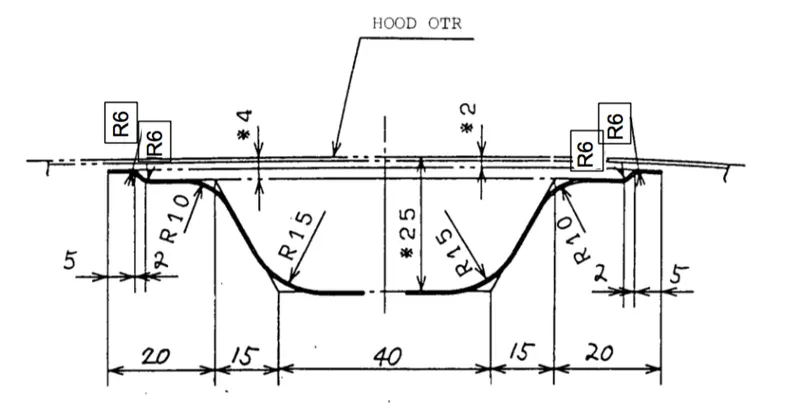
The following task is performed.
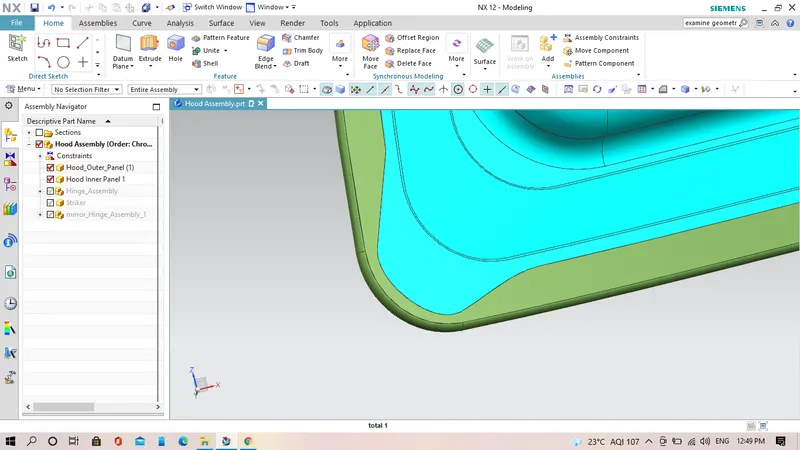
- Design Outer Panel with the Hem.
- Develop the Inner Panel
- Develop all the Necessaey Reinforcements
- Mirror and position the Hinge & Striker
- Provide Mastic Data
- Provide the required Emboss defination
- Develop a detailed Report for the Mastic position and Embosses you have placed.
Hood:
Hood is the component of BIW. The main fuction of hood is to allow the access of engine compartment and other sub systems to occupant like regular services like maintenance. Also, it absorbs most of the frontal impact and transfer or simulate across body pillar to provided safety to occupant of the vehicle.
Designing a hood is always a challenge as it is the first portion that comes in the contact of force of air. Aerodynamics shape is always perferred for front portion of car because it gives benefits like less area of contact so less resistance to motion. Further aesthetic design of hood is also the factor of consideration as user preference of luxurious views of car are increasing day by day.
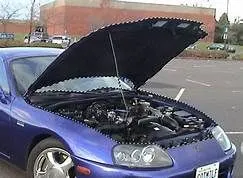
Hood contains following components
1. Hood outer panel
2. Hood inner panel
3. Hinges
4. Strike
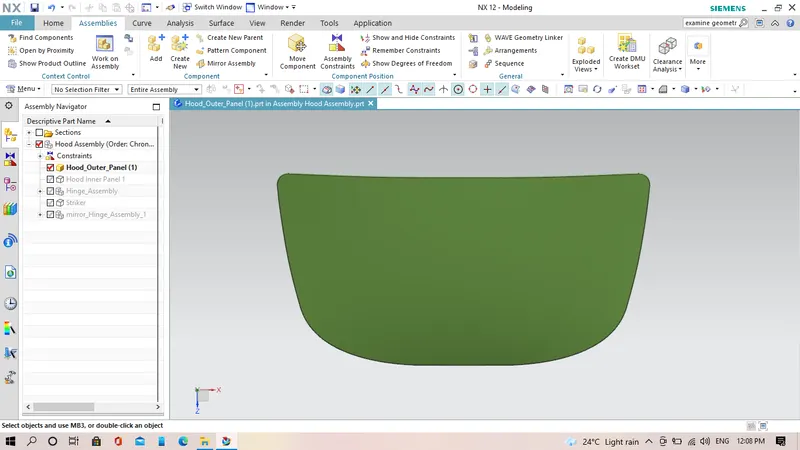
1. Hood Outer Panel
Outer panel is nothing but it is a outer skin of inner panel. Otherwise called as a cover of inner panel. It is a part, which gives luxurious look to the hood or bonnet. Outer panel and inner panel cannot join by any welding process like spot welding or rivet, which spoil the outer look of a car. The outer pannel is generally extracted model from the prototype design.
Hood Inner Panel
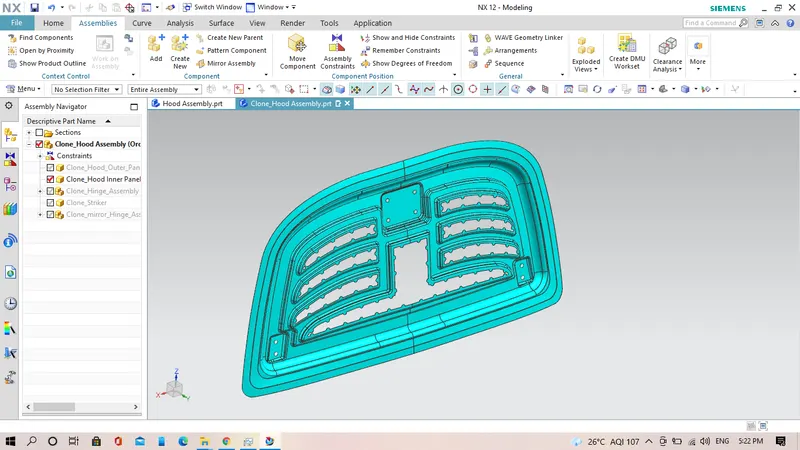
Inner panel support outer. Itr consists of different embosses and hole at different places. Embosses provided stiffness as well as dissipate energy towards hinges. To determine the most effective position of hole, the method of model stiffness is employed. Inner panel is offset of the parent work surface and inner panel thickness is 0.75.
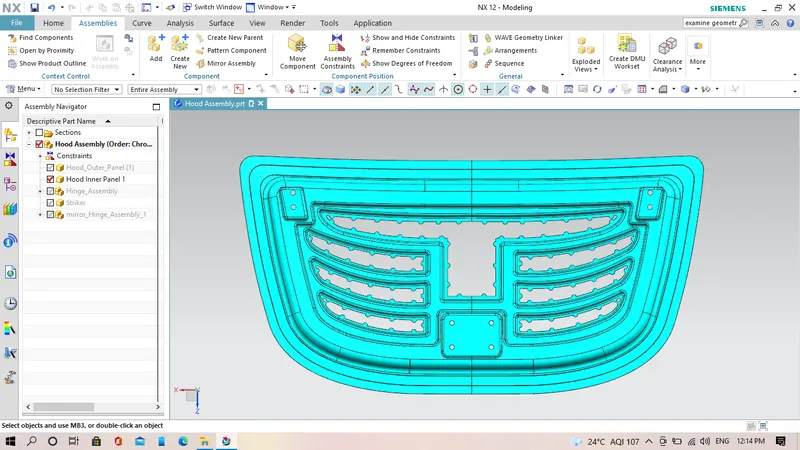
Emboss
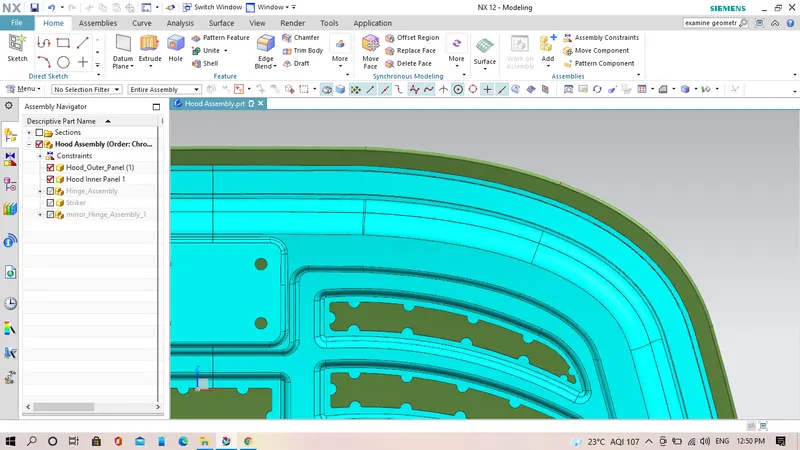
The geometry is created based on the master section that was designed above. After performing the component. The component will be strenghtened based on the master section. When a force impact the hood from the front, it travels in an upward direction. The component is designed to divert the force away from the passengers into the hinges, as shown in the image below. The embosses in the inner panel are made according to the diversion of the load path. The emboss depth is kept at a maximum of 5mm to be on the safer side so that the part is manufacturable.
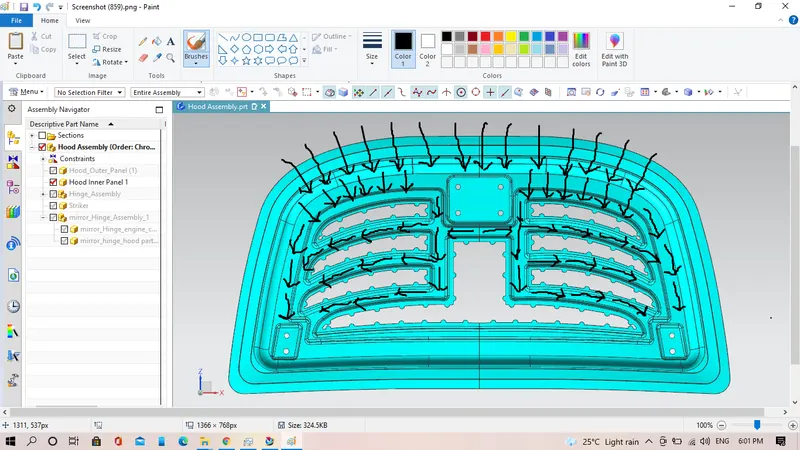 To provide strength to the inner pannel and to distribute the force produced during the impact with pedstrain or other obstacles to ensure the safety of the passengers. The foreces are directeg outwards through the embossing path.
Mastic Sealent:
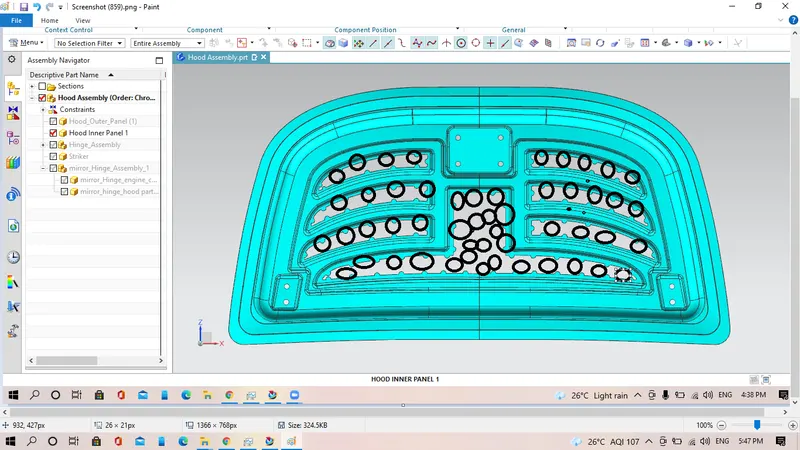
The mastic sealent or the mastic point is an elastic compound that behaves like a rubber. The mastic point are defined on the hood inner panel where the hood can easily deform. They help the hood outer panel to come back to its original shape after it gets deformed. The mastic has an influence area of 80mm.
Hemming Data:
Position of Hinge and Striker:
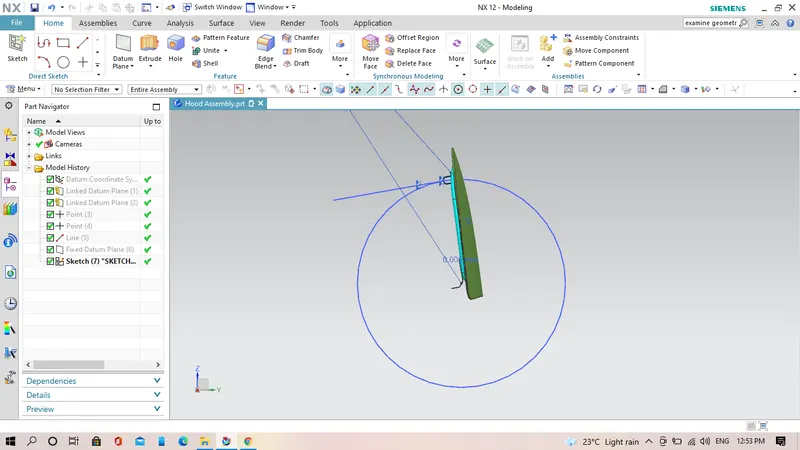
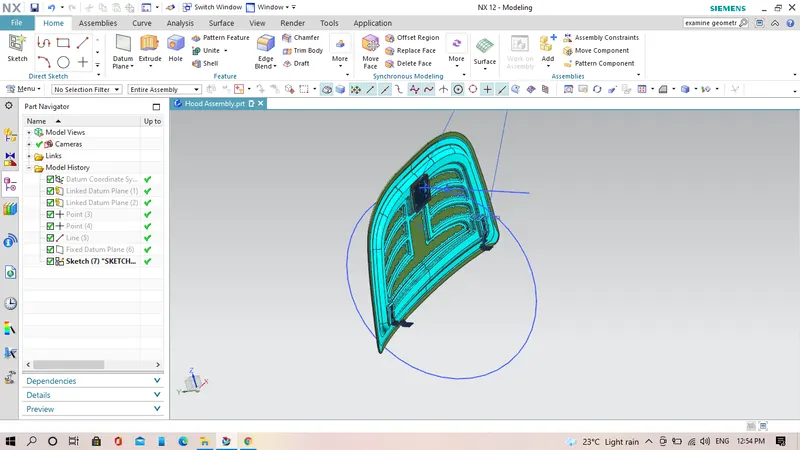
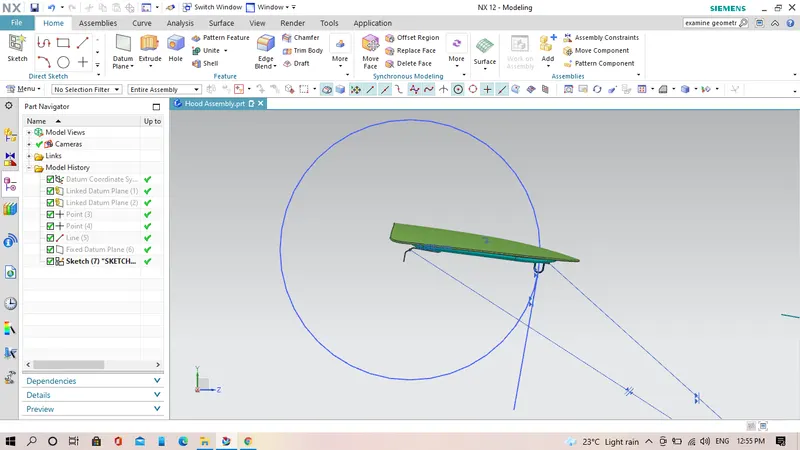
For positioning hinge and striker, we have to place tantatively and take hinge axis point and place position from data taken from the parent car or own. The other major functional of the hood is the opening and closing of the hood. This is done with the help of the latch and striker. To position the latch and striker effectively, we position the hinge and draw the hinge axis. Now using the hinge axis as the center we draw a big circle to the position where we need the latch to be placed. Then, we draw a tangent line to the circle at that point and place the latch in that region.
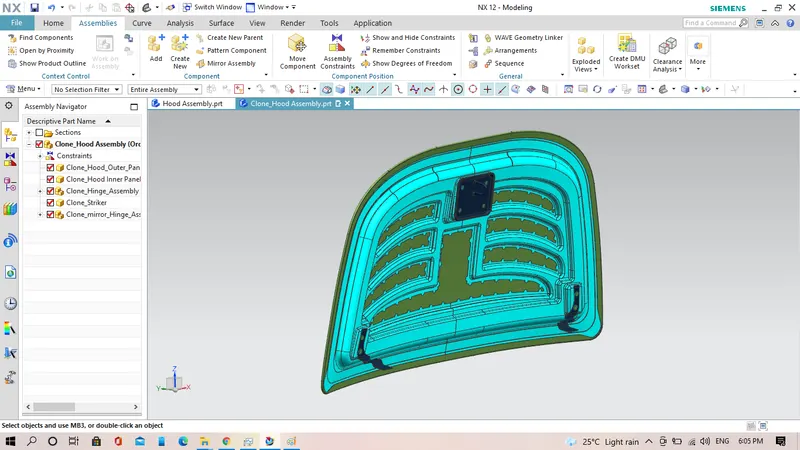
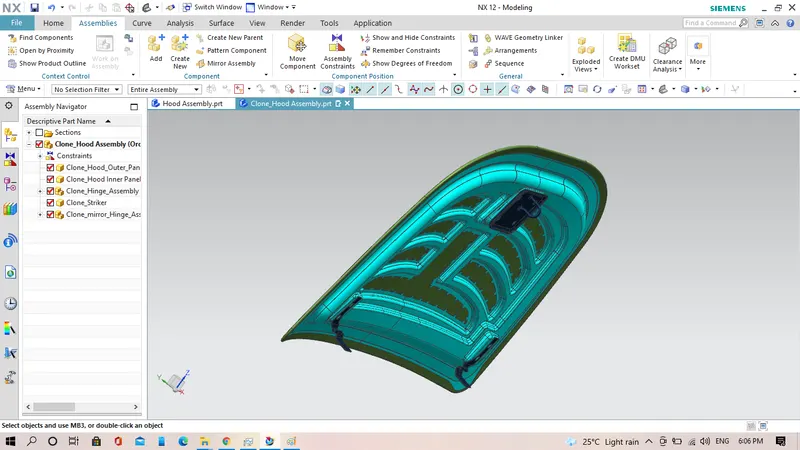
Assembly View
Conclusion:
All the parts of the hood are designed based on the required condition, given values and assembled together to complete the hood design.