Design of Hood
AIM:
To Design hood and its respective components with necessary design parameters so that it absorb and divert the impact force away from the passenger in case of crash .
HOOD:
The hood or bonnet is the hinged cover over the engine of motor vehicles. Hoods can open to allow access to the engine compartment, or trunk on rear-engine and some mid-engine vehicle for maintenance and repair.
Generally it is used to cover car engine, radiator and many other parts, therefore bonnet must be designed in such a way that all the maintenance parts should be ease of access and it should give a minimum impact of external disturbance on the engine.
DESIGN METHODOLOGY:
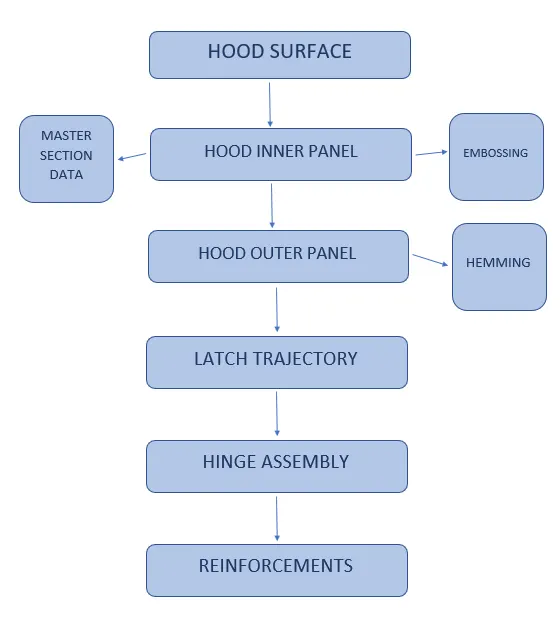
COMPONENTS OF HOOD:
Hood Inner panel:
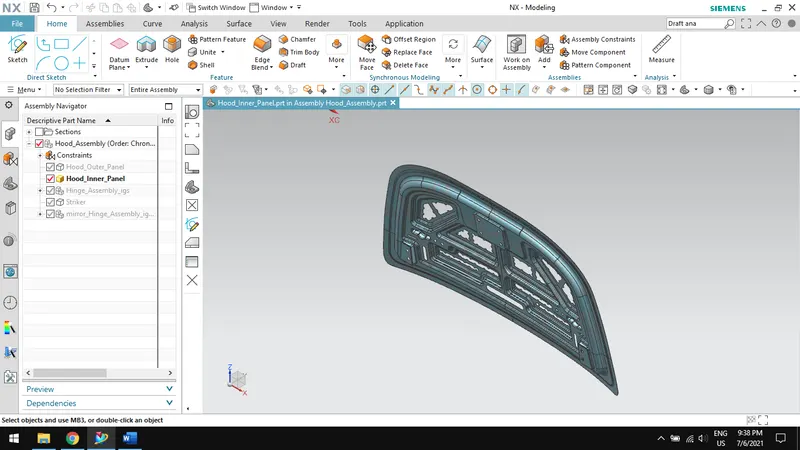
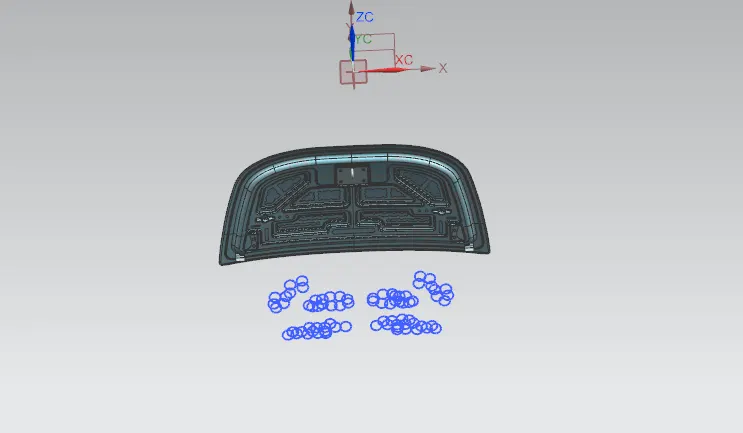
It is the most important component of the hood when it comes to give strength to the hood outer pannel it consist of all features like emboss, reinforcement, hinge assembly and stricker.
Front view:
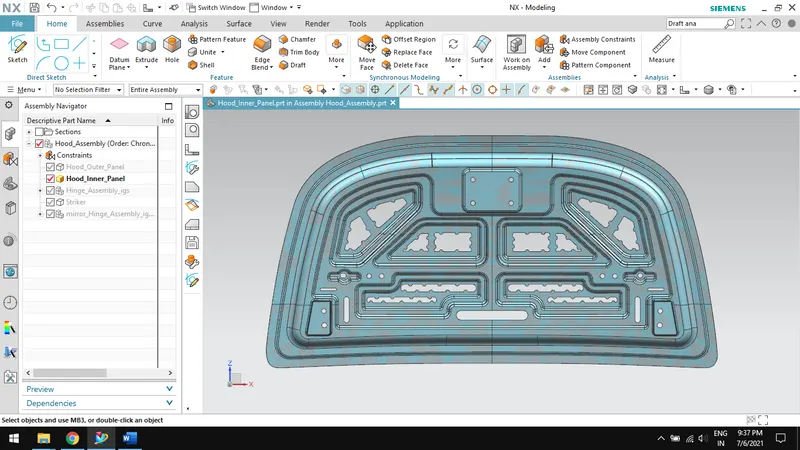
Top view:
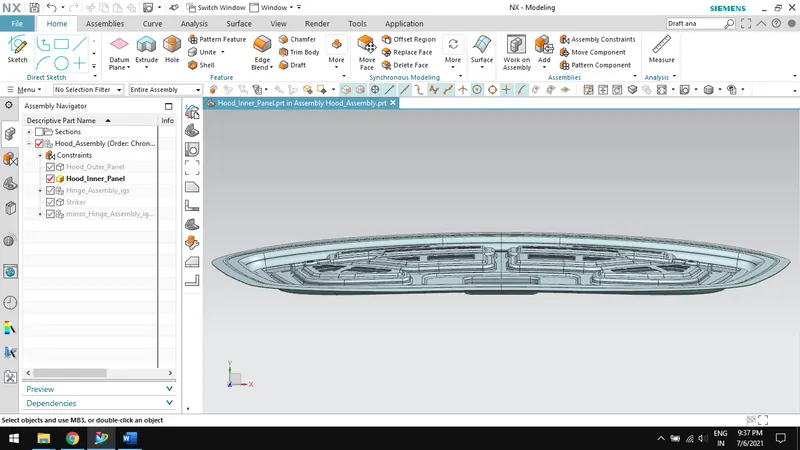
Side view:
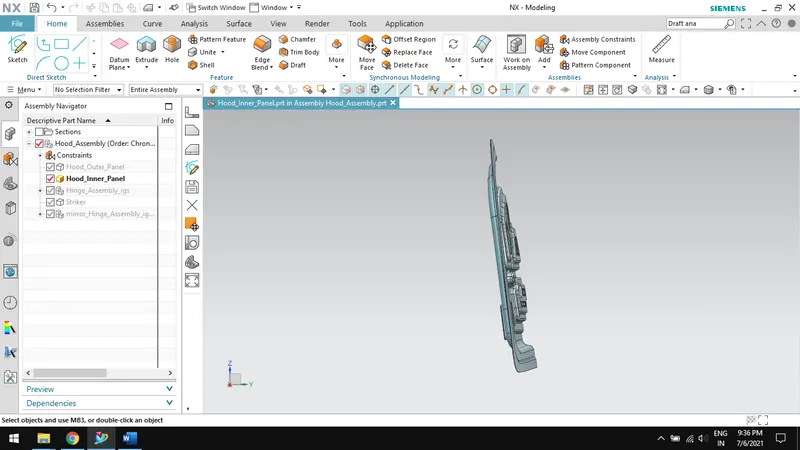
Isometric view:
Embossing:
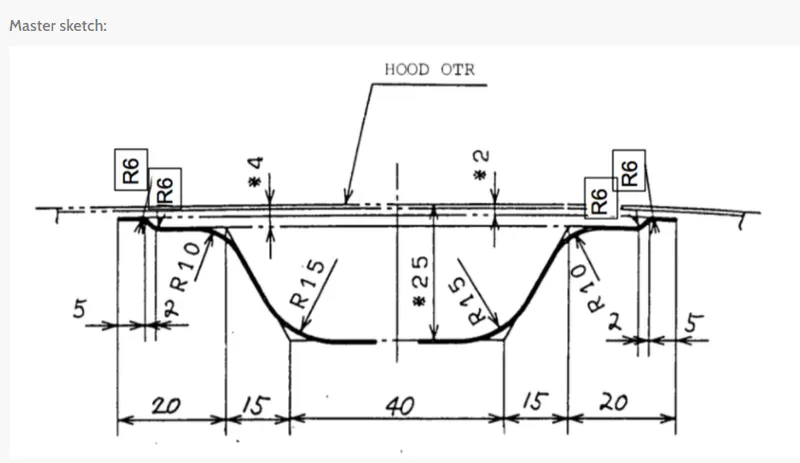
Embossing operation is generally used for providing dimples on sheets to increase their rigidity. The die set consists of a die and punch with the desired contours so that when the punch and die meet the clearance between them is the same as that of the sheet thickness.
Master section:
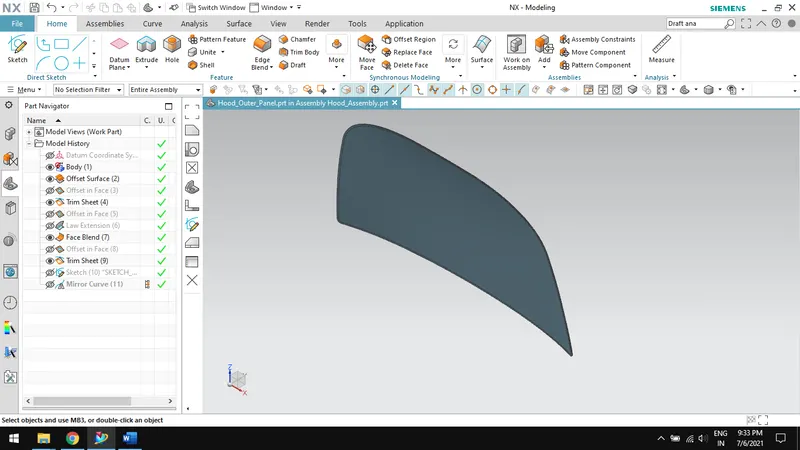
Hood Outer panel:
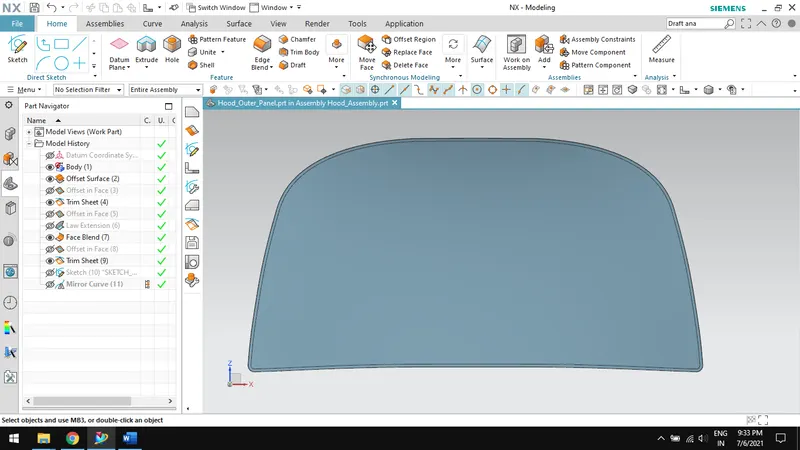
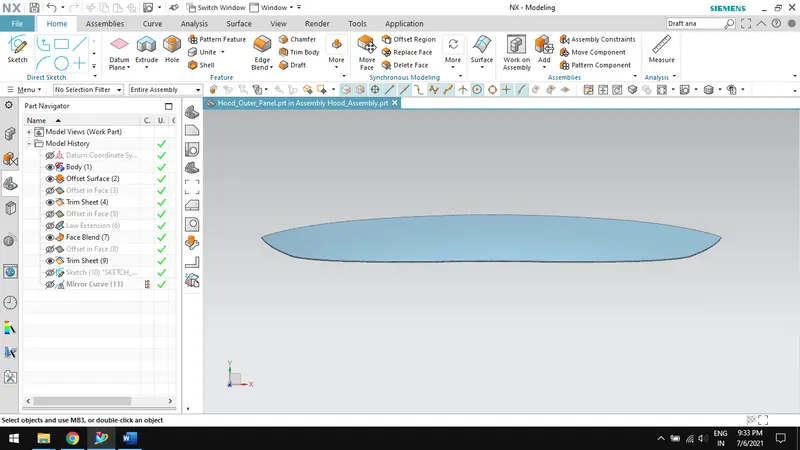
it is the aesthetic apperance of the hood. It is like the skin of the hood and inner pannel is the skeleton of the hood, combine they both provide the strength and good apperance of the car front most part.
Front view:
Top view:
Side view:
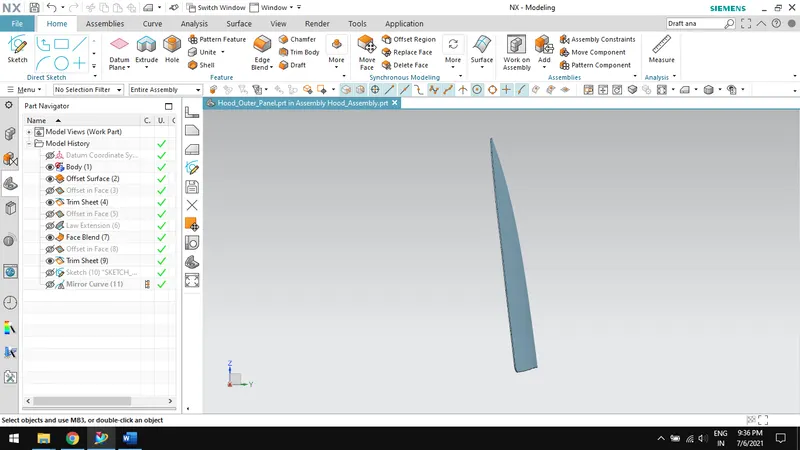
Isometric view:
Hinge assembly & Striker:
REINFORCEMENT:
it is in the inner pannel and provide extra strength and divert the imapct force in case of crash and provide the latch and hinge assembly fixing location.
HOOD ASSEMBLY:
front view:
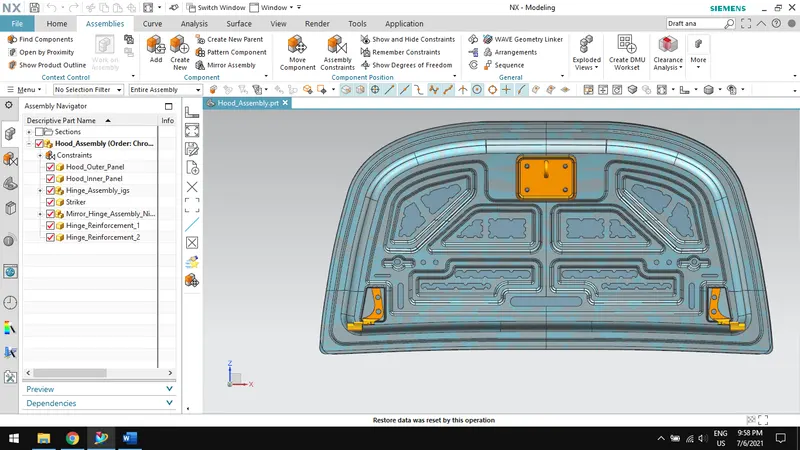
top view:
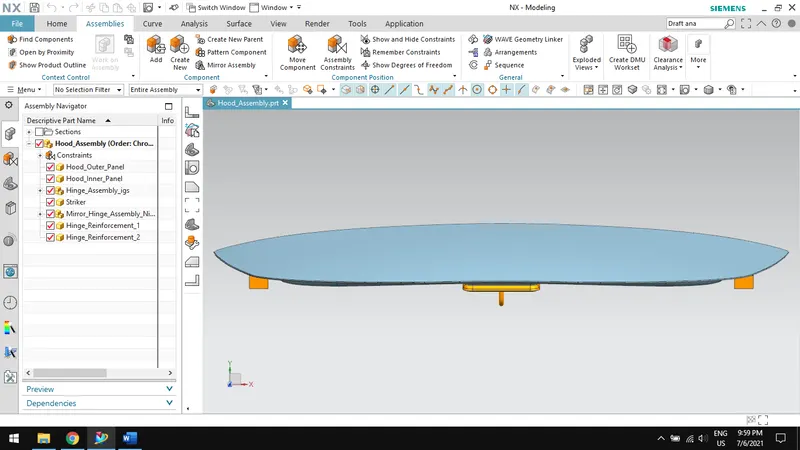
side view:
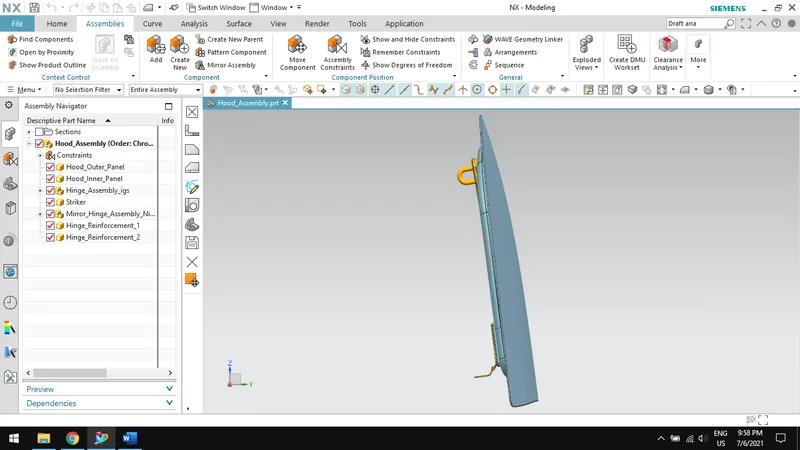
isometric view:
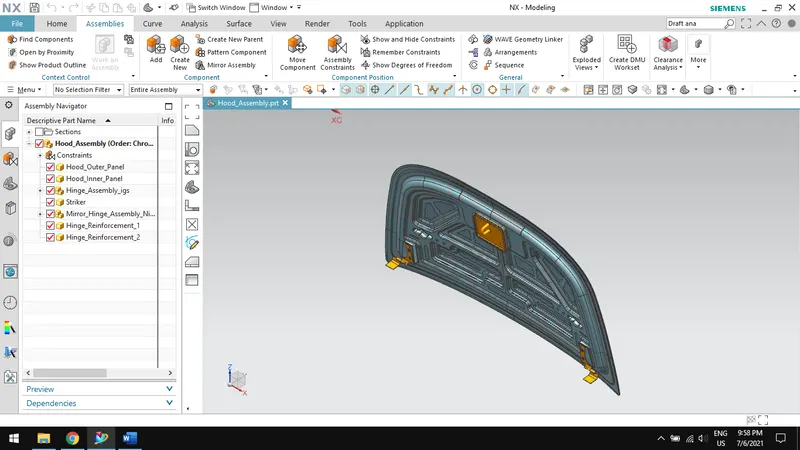
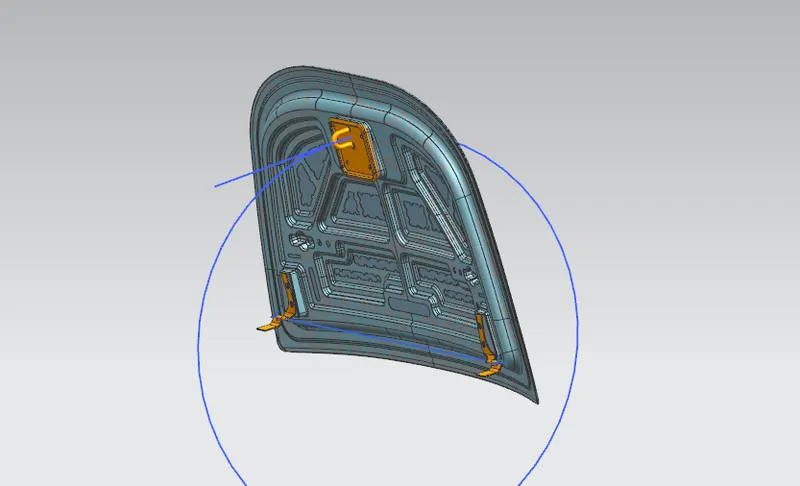
LATCH TRAJECTORY:
MANUFACTURING PROCESS:
DEEP DRAWING
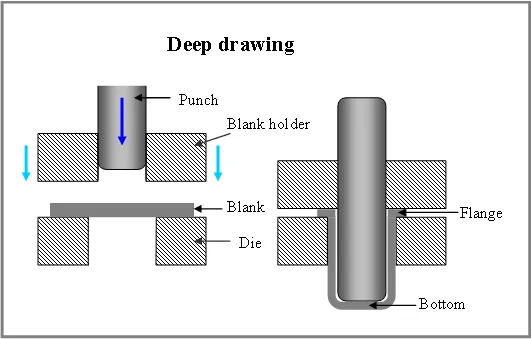
it is a process in which the sheet metal is formed in desired shape by using die and punch.The pressure is applied on the sheet metal with the help of punch and the die has the cavity which gives the shape to the sheet metal.
HEMMING:

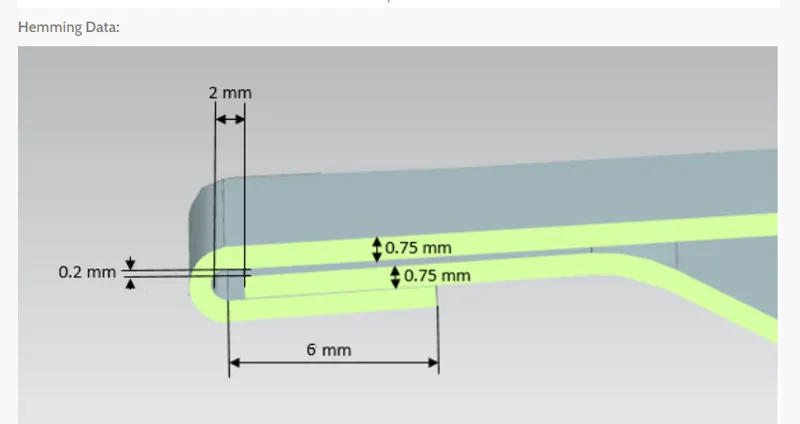
It is the process in which the outer and inner pannel is joined together by folding the outer pannel curves and it is done by rolling ball method.In hood design, hemming is used in assembly as a secondary operation after deep drawing, trimming and flanging operations to join two sheet metal parts (outer and inner) together.
Dimensions for hemming:
Hem Relief:
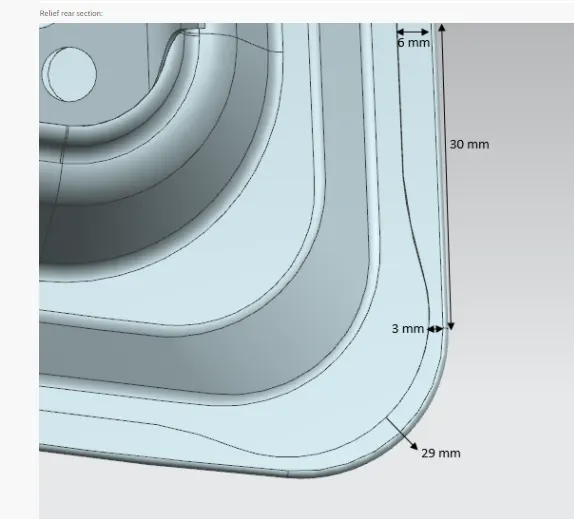
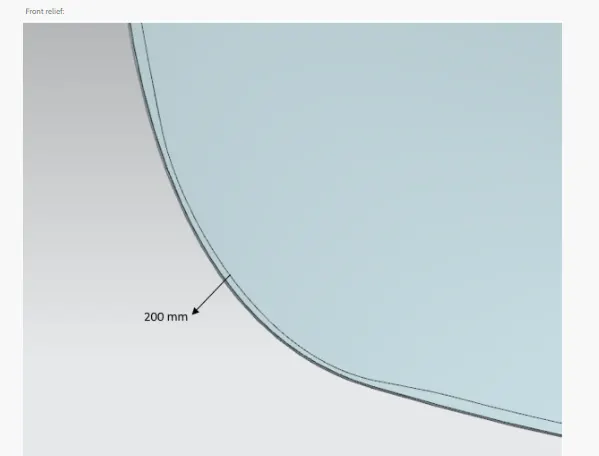
Relief is provided onto the part or component in order to remove any stresses developed in a particular area i.e sharp corners that takes place during the hemming process is carried out. Thus corners are rounded or chamfered.
Mastic Data:
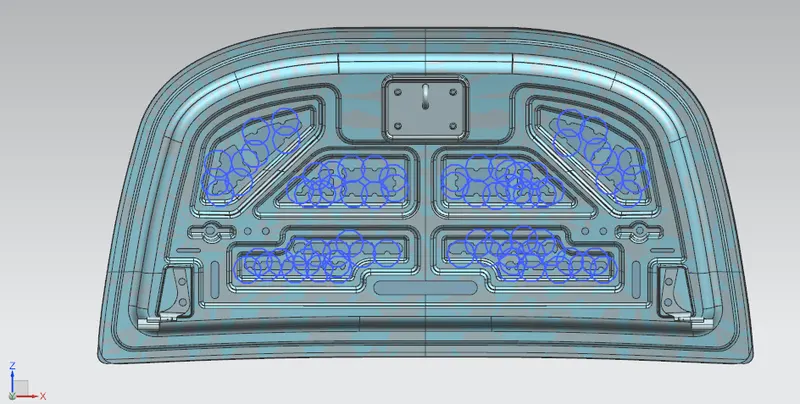
A mastic sealant is a type of liquid sealant that cures in an elastic state, thus making it flexible while holding the bond of the surfaces that have attached together. It adheres to just about any material making an all-purpose type of sealant. Wood, aluminum, glass, marble, and even duct board are all standard applications for mastic sealant.
CONCLUSION:
Thus, Hood and its components are successfully created with necessary design parameters.