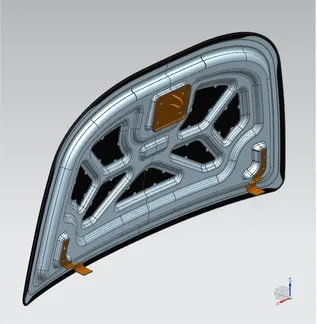
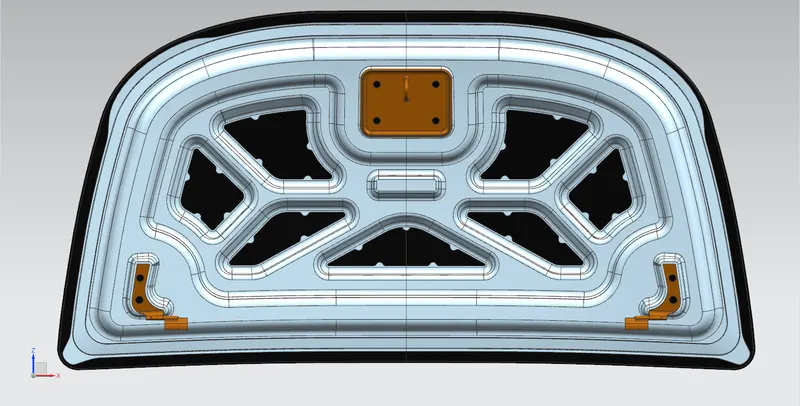
Hood design-Week 2
AIM:
-
To design the Hood or Bonet of the front driving car by using the master section and standard procedure which is used in the OEM Manufacturer's.
Master Section : 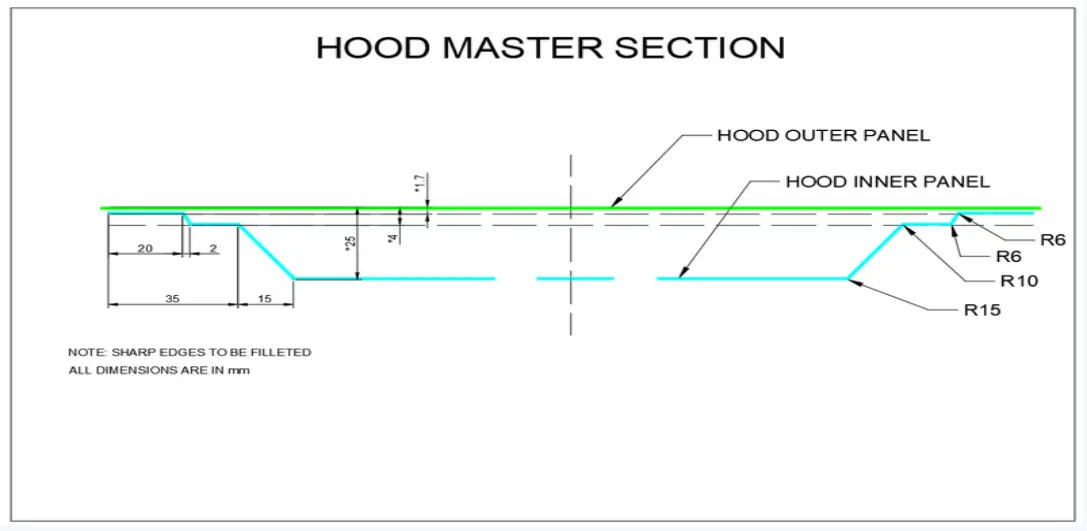
Hood or Bonet
"Hood" and "bonnet" are two terms used to describe the hinged cover that protects and provides access to the engine compartment of a car. In American English, the term "hood" is commonly used, while in British English, "bonnet" is the preferred term. They serve the same function, but the choice of terminology depends on the regional dialect.
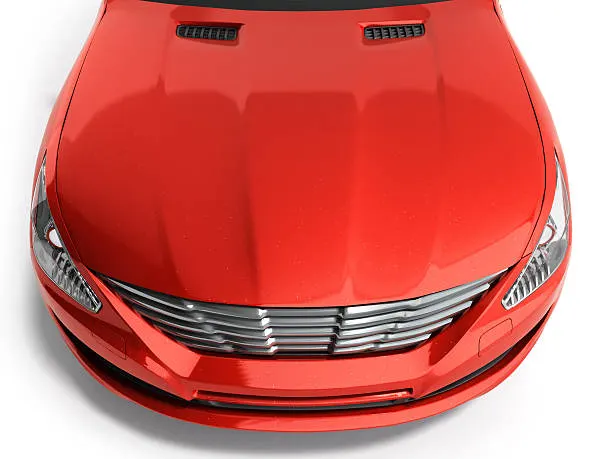
1. Exterior Cover: The hood is the hinged cover located at the front of a vehicle, protecting the engine compartment.
2. Access: It provides access to the engine bay for maintenance and repairs, typically opening and closing via a latch mechanism.
3. Aesthetic and Functional Element: Besides its functional role in protecting the engine, the hood contributes to the vehicle's aesthetic appeal and may feature design elements that enhance airflow and aerodynamics.
Hood Components:
1. Outer Panel: The exterior surface of the hood, is visible when it's closed. It often includes design elements like grilles or air vents for airflow.
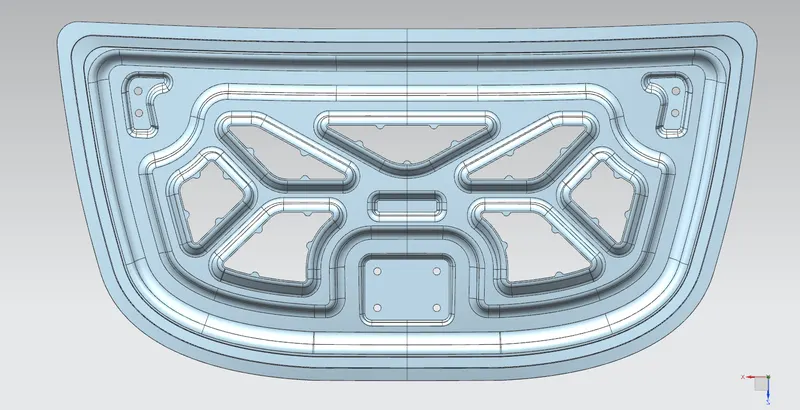
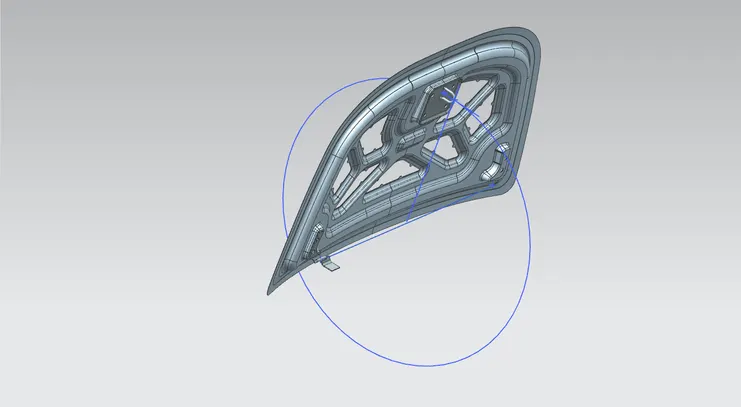
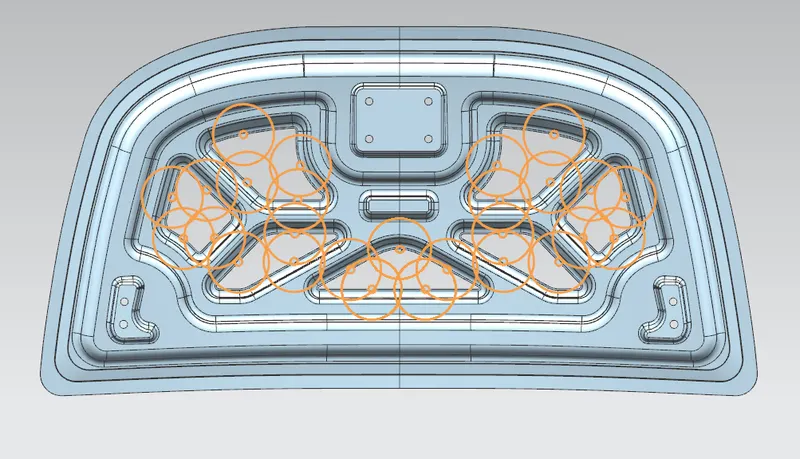
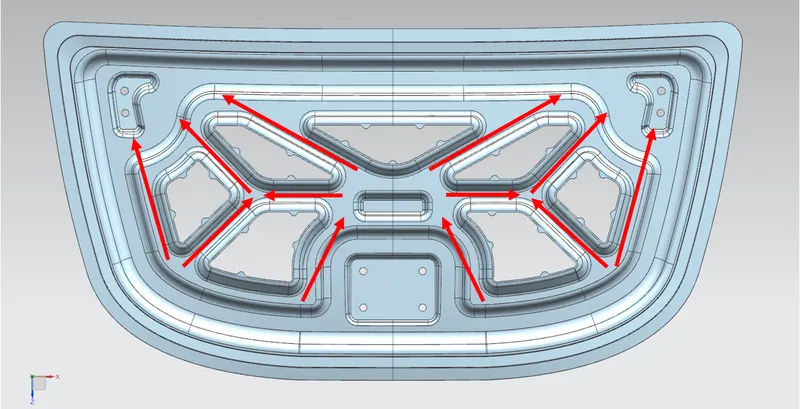
2. Inner Panel: The underside of the hood, faces the engine compartment. It offers structural support and may have reinforcement ribs or braces.
3. Hinges: Mechanisms attaching the hood to the vehicle's body, enabling it to pivot upwards for engine access. They are typically located near the front corners.
4. Latch Mechanism: Ensures the hood remains closed while driving, preventing unexpected opening. It may feature a release lever inside the vehicle.
5. Struts or Supports: Aid in holding the hood open, providing stability for engine compartment access. Often gas-charged for easy lifting.
6. Insulation: Found on some hoods, materials reduce engine noise and heat transfer to the passenger area, enhancing comfort.
7. Emblem or Badge: The manufacturer's branding mounted on the outer panel, contributes to the vehicle's visual identity.
Designing Process:
1. Hemming: Hemming is a metal fabrication method utilized to fold or bend the edge of a metal sheet inward or outward, creating a smooth and secure edge. This technique finds frequent application in the manufacturing of automotive components like doors, hoods, and trunk lids.
2. Embossing: Embossing refers to a manufacturing technique employed to raise or depress designs on a metal sheet or similar material. This process typically involves pressing the material between two dies, one of which contains the desired pattern. Embossing serves decorative purposes or adds textural elements to surfaces.
3. Deep Drawing: Deep drawing is a metal forming process that produces cylindrical or box-shaped components from flat metal sheets. This method entails placing a metal blank, often a disk or rectangle, over a die and utilizing a punch to force the metal into the die cavity, shaping it into the desired form. Deep drawing is commonly used to produce items such as cans, pots, and various automotive parts.
4. Piercing: Piercing, in metalworking, denotes the process of cutting or punching holes in a metal sheet or similar material. Various tools and techniques, including drills, punches, or laser cutting machines, can be utilized for piercing. This technique serves a multitude of purposes, including creating holes for fasteners, ventilation, drainage, or for decorative and aesthetic purposes.