Hood design-Week 2
HOOD DESIGN OF A CAR
AIM :
To design the hood of a car with the given input Outer panel and its dimensions.
Hood Introduction :
The hood (North American English) or bonnet (Commonwealth English) is the hinged cover over the engine of motor vehicles. Hoods can open to allow access to the engine compartment or trunk (boot in Commonwealth English) on rear-engine and some mid-engine vehicles) for maintenance and repair.
A car hood also referred to as a bonnet in some other countries is the hinged cover that rests over the engine of a front-engine vehicle. Its purpose is to provide access to the engine for repair and maintenance. Car hoods are typically constructed from steel and sometimes from aluminum.
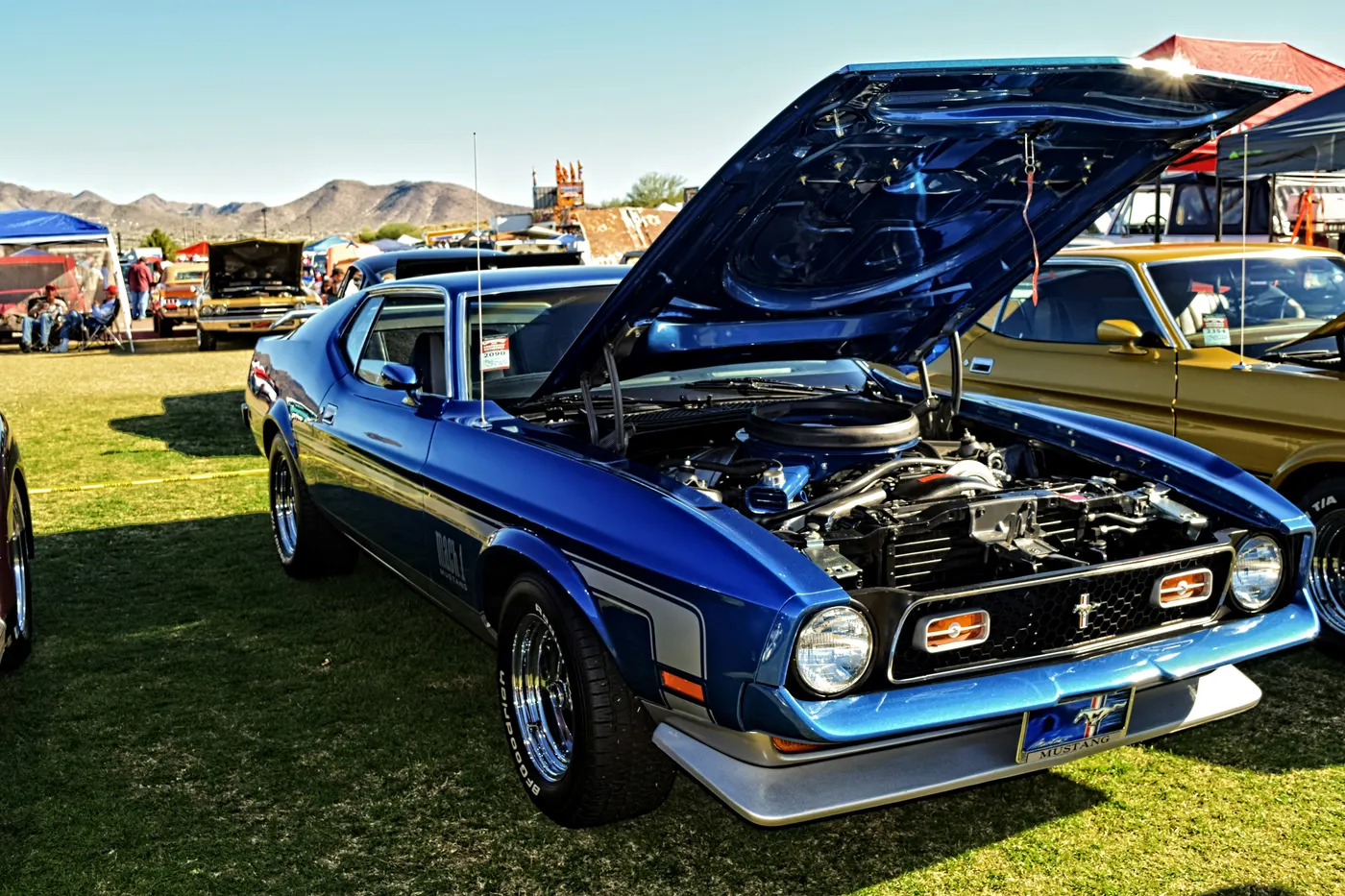
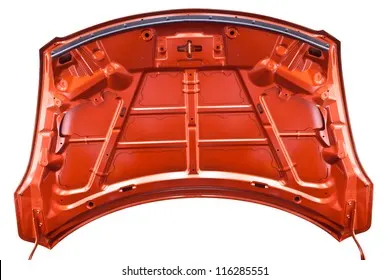
In British parlance, a hood refers to the fabric that covers the passenger compartment of a car (in the US it's called a "roof" or "top"). On many cars produced in the 1930s and 1940s, when you open the hood and look at it from the front, the resemblance to the real one is obvious. They no longer look like head coverings, although they serve the same purpose in modern vehicles.
On front-engined cars, the hood may be hinged at the front or rear. Alternatively, on earlier models (such as the Ford Model T), the hood may be split into two sections, one on each side, hinged along the centerline. A further variation combines the hood and wheel arch into one section, allowing the entire front body to tilt forward around an axis near the front of the car.
The hood is usually made of the same material as the body. It can be made of steel, aluminum, fiberglass or carbon fiber. However, some aftermarket companies produce fiberglass or carbon fiber steel hood replacements to reduce the weight of your vehicle.
Hood release systems are common on most vehicles and usually consist of an internal hood handle/latch, a hood release cable, and a hood lock assembly. The hood lock handle is usually located under the steering wheel, next to the driver's seat, or in the door frame.
Hood design:
There are many things to consider before designing a hood.
The height of the hood is designed according to national standards, because the average height of people varies from place to place.
Material considerations are also needed to increase production cost efficiency.
For pedestrian safety, hoods should be designed to be lightweight so that even if someone were to hit the hood, injury to the person would be minimized.
Inner Panel-
- In the inner panel only we can research & implement the safety of pedestrians & as well as the driver. In this panel only we can attach the reinforcement, embossed, mastic points etc.
- It is an object of the present invention to provide a hood inner panel capable of reduction of a reaction force of the hood inner panel even if a level of deformation of a hood of a vehicle increases, & ensuring a sufficient energy absorption capacity.
Outer Panel-
Hood Design Model:
The Outer Panel Diagram:
We can also call it as cover of inner panel. It is the part, which gives luxurious look to the hood or bonnet. Outer & inner panel can not join by any welding process like spot welding or rivet, which spoil the outer look of a car. The outer panel is generally extracted model from the prototype design.
Hinge Assembly-
Hinge is a component that fixes the hood to the fenders of the car. The latch must be fixed perpendicular to the hinge axis so that the hood opens or closes properly.
Striker Assembly-
Latch & striker is used for locking the hood with the car. It is usually placed on the space provided on the inner panel.
The process involved in designing hood as a sheet metal operations is
- Blanking
- Hemming
- Punch cutting or piercing
- Deep drawing
- Embossing
Hemming-
- Hemming is a sheet metal forming process in which sheets are joined by bending it usually to 180 degree. Automotive body panels & parts such as deck-lids, trunk-lids, doors, hoods & tailgates are formed by hemming processes.
- Roll hemming is carried out incrementally with a hemming roller. An industrial robot guides the hemming roller & forms the flange. Roll hemming operation can also be divided into several pre-hemming & final hemming process steps.
- Coventional die hemming is suitable for mass production. In die hemming, the flange is folded over the entire length with a hemming tool. Normally the actual hemming is a result of a forming operation in which the flange is formed with a hemming tool after the drawing & trimming operations have been completed.
While doing the hemming process a relief angle is formed as a product of hemming when attaining at the corner of the sheet.
Deep Drawing-
- Deep drawing is a manufacturing process that is used extensively in the forming of sheet metal into a cup or box-like structures. Pots & pans for cooking, containers, sinks, automobile parts, such as panel & gas tanks, are among a few of the items manufactured by sheet metal deep drawing.
- A deep drawing of sheet metal is performed with a punch and die. The punch is the desired shape of the base of the part, once drawn. The die cavity matches the punch and is a little wider to allow for its passage, as well as clearance. For many calculations, the sheet metal thickness is assumed to remain constant. There are changes in thickness in certain areas, due to force involved.
Embossing-
- The sheet metal embossing operation is commonly accomplished with a combination of heat & pressure on the sheet metal, depending on what type of embossing is required.
- A sheet metal is drawn through the male & female roller dies, producing a pattern or design on the sheet metal. Depending on the roller dies used, different patterns can be produced on the sheet metal.
Latch trajectory-
While opening or closing the hood, the latch must be perfectly aligned to the fixing or striker point. For that, the latches trajectory must be perpendicular to the hinge axis.
Hood Assembly- Output
Conclusion-
We have designed a hood that falls under the rules & regulations of the manufacturer's standards.