Hood design-Week 2
Design Hood Outer Panel, Inner Panel and the necessary reinforcements by following the Master Section mentioned with the Design parameters explained in the videos.
Submit an ASSEMBLY of Hood Inner Panel, Outer Panel, Latch, Hinge and the Reinforcements.
A detailed report about the Hood Design which includes a detailed explanation about hood and its components, Latch Trajectory, Mastic Data, Emboss Definitions, Manufacturing process like Deep-Drawing and Hemming, and all the parameters followed in the design.
The report should be well-formatted and should have a good flow of content. Add all the relevant images
Data to be used:
Hood Thickness Information
- Outer Panel Thickness = 0.75mm
- Inner Panel Thickness = 0.75mm
- Reinforcement Thickness = 1.5mm
Master Section:
Hemming Data:
Relief rear section:
Front relief:
NOTE :
- Make sure that the Assembly file and Part files are in the same folder before zipping the folder and submitting it as an attachment. Also, attach the STEP (.stp) file of the assembly.
- Attach the zip file. Don’t provide google drive links.
- Refer to the grading policy
- All the challenge help videos are available in video number 12 - The help section.
Introduction:
"Body-in-White" (BIW) is a term commonly used in the automotive industry to refer to the stage in the manufacturing process where a car's body structure is assembled but before it receives its final coat of paint. The term "white" in Body-in-White refers to the unpainted metal of the car's body.
The Body-in-White stage is a critical phase in automobile manufacturing, as it involves assembling the vehicle's structural components, such as the frame, chassis, and body panels. During this stage, the car's body is usually a shell without any interior components, trim, or other non-structural parts.
The assembly of the Body-in-White is a complex process that involves welding or otherwise joining together various stamped metal parts to create the basic structure of the vehicle. Precision is crucial during this stage to ensure that the vehicle meets safety and quality standards. Once the Body-in-White is assembled, the car moves on to subsequent stages in the manufacturing process, such as painting, where the final color is applied, and then final assembly, where the vehicle receives its interior components, electronics, and other finishing touches.
The Body-in-White concept allows for a modular approach to car manufacturing, where different models or variations can share the same basic structural components while varying in terms of features, styles, and sizes. This modular approach contributes to efficiency in production and flexibility in designing and producing different models on the same production line.
Hood:
The term "hood" in the context of a car refers to the hinged cover that protects and provides access to the engine compartment. In some regions, it is also commonly referred to as the "bonnet." The hood is typically located at the front of the vehicle and is designed to be lifted or opened, providing access to the engine bay for maintenance and repairs.
Here are some key features and aspects of a car hood:
- Material: Hoods are commonly made of lightweight materials, such as aluminum or steel, to keep the overall weight of the vehicle down while providing strength and durability.
- Hinges: The hood is attached to the car body through a set of hinges, allowing it to be easily opened and closed. In most cases, the hood is held in the open position by a support mechanism, such as a prop rod or gas struts.
- Latch Mechanism: The hood is secured in the closed position by a latch mechanism, which is typically released from inside the vehicle or through a lever located under the front grille.
- Design Elements: Car hoods are designed not only for functionality but also for aesthetic purposes. They contribute to the overall appearance of the vehicle and often feature contours and lines that complement the car's design.
- Air Vents: Some hoods may have functional air vents or scoops designed to improve airflow to the engine bay, helping to cool the engine and enhance overall performance.
- Insulation: Inside the hood, there may be insulation to help absorb and reduce engine noise and vibrations, contributing to a quieter and more comfortable driving experience.
- Safety: Modern hoods are designed with safety features to minimize the risk of injury in the event of a collision with a pedestrian. These features often include deformable structures and materials to absorb energy.
Hood and its components:
The hood of a car, also known as the bonnet in some regions, is an essential external component that covers and provides access to the engine compartment. It is typically located at the front of the vehicle and is hinged to allow for easy opening and closing. The design and components of a car hood can vary among different makes and models, but several common elements are found in most hoods. Here are some key components associated with a car hood:
- Outer Panel: The outer panel is the visible exterior surface of the hood. It contributes to the vehicle's aesthetics and design. The outer panel can have contours, creases, and styling features that align with the overall design language of the car.
- Inner Panel: Beneath the outer panel, there is an inner panel that provides structural support to the hood. The inner panel is not visible when the hood is closed.
- Hinges: Hinges are the mechanical components that connect the hood to the vehicle's body. They allow the hood to pivot upward for access to the engine compartment. Hinges are typically located near the front fenders.
- Latch Mechanism: The latch mechanism secures the hood in the closed position. It may include a release lever inside the vehicle, usually near the driver's seat, allowing the hood to be opened from inside the car.
- Release Cable: The release cable is part of the hood latch system and is connected to the release lever inside the car. Pulling the release lever activates the release cable, unlocking the hood latch.
- Support Mechanism (Hood Stay): When the hood is open, a support mechanism, often referred to as a hood stay or prop rod, helps keep the hood in the raised position, providing access to the engine bay. Some vehicles use gas struts instead of traditional prop rods.
- Insulation: Insulation materials may be applied to the underside of the hood to absorb and dampen engine noise, reduce vibrations, and provide thermal insulation.
- Safety Catch: The safety catch is an additional safety feature that engages when the hood is closed. It acts as a secondary latch to prevent the hood from accidentally opening while the vehicle is in motion.
- Air Vents or Louvers: Some hoods may have functional air vents or louvers designed to improve airflow to the engine bay, aiding in cooling.
- Weatherstripping: Weatherstripping is a rubber or plastic seal that runs along the edges of the hood. It helps prevent water, dust, and debris from entering the engine compartment and helps maintain a weather-tight seal.
- Badge or Ornament: The front of the hood may feature a badge, emblem, or ornament that displays the vehicle manufacturer's logo or branding.
The design and materials used in these components can vary based on factors such as the vehicle's make, model, and the manufacturer's design choices. Overall, the hood and its components play a crucial role in providing access to the engine compartment, protecting the engine, and contributing to the vehicle's overall aesthetics.
Design consideration for hood:
The hood is an integral part of a vehicle, providing both practical functionality and contributing to the car's overall design aesthetics. The design of a car hood involves various considerations to ensure both functional efficiency and aesthetic appeal.
Here are some key design considerations for car hoods:
- Aerodynamics: The shape and contours of the hood can impact the aerodynamics of the vehicle. Designers often consider aerodynamic factors to minimize drag and enhance fuel efficiency. Some hoods may incorporate features like air vents or scoops to improve airflow to the engine bay.
- Safety Regulations: Hoods must comply with safety regulations to ensure pedestrian safety. Design considerations may include features that help mitigate injury in the event of a collision with a pedestrian, such as energy-absorbing materials or deformable structures.
- Material Selection: The choice of materials for the hood is crucial. Common materials include aluminum and steel, each offering a balance between weight, strength, and cost. Advanced materials, such as carbon fiber, may be used in high-performance or luxury vehicles for weight reduction.
- Structural Integrity: The hood serves a structural purpose in helping to maintain the vehicle's overall rigidity and safety. Designers must ensure that the hood provides sufficient structural integrity to protect occupants in the event of a collision.
- Ease of Access: The design should facilitate easy access to the engine compartment for maintenance and repairs. This includes considerations for the placement and operation of hinges, latch mechanisms, and any support systems used to hold the hood in the open position.
- Aesthetic Integration: The hood contributes significantly to the overall aesthetic appeal of the vehicle. Designers must consider how the hood integrates with the rest of the car's design, including the front grille, headlights, and other styling elements. Consistency in design language enhances the overall visual harmony of the vehicle.
- Weight Considerations: Keeping the weight of the hood within acceptable limits is essential for fuel efficiency and overall vehicle performance. Lightweight materials and efficient design can contribute to achieving weight targets.
- Insulation and Sound Damping: To enhance the driving experience, designers may incorporate insulation and sound-damping materials inside the hood. This helps reduce engine noise and vibrations that reach the cabin.
- Manufacturability: The design should take into account the practical aspects of manufacturing, including the ease of stamping, molding, and assembly. Designing for manufacturability can contribute to cost-effectiveness and production efficiency.
- Brand Identity: The hood design often plays a role in establishing the visual identity of a vehicle and its brand. Distinctive design elements can help differentiate a car model from others in the market.
Balancing these considerations is crucial to creating a hood design that meets functional requirements, regulatory standards, and aesthetic expectations while aligning with the overall design philosophy of the vehicle.
Hood Opening Angle:
The hood opening angle refers to the maximum angle at which a car's hood (bonnet) can be lifted or opened. It is the range through which the hood pivots upward from its closed position, allowing for visibility and convenient access to the engine and other components beneath. This angle is an important design consideration for human comfort factor.
The specific hood opening angle can vary among different vehicle models and manufacturers. It is determined by the design of the hood hinges, the placement of the latch mechanism, and the type of support system used. Engineers and designers carefully consider these factors to optimize accessibility, safety, and aesthetics when determining the hood opening angle for a particular vehicle.
Hood Stay:
A hood stay, also commonly referred to as a hood support, hood prop, or hood rod, is a mechanical device used to keep a car's hood (bonnet) open and in a fixed position when access to the engine compartment is required. The hood stay is part of the support mechanism that prevents the hood from closing unexpectedly during maintenance or inspection tasks. Overall, the hood stay is a critical component for providing stability and safety when working on a vehicle's engine.
Support Rod:
A support rod in the context of a car's hood (bonnet) typically refers to a component that helps keep the hood in the open position, providing support and stability when accessing the engine compartment. It is also known as a hood support rod, hood prop rod, or simply a hood rod. The support rod is part of the hood support mechanism, and it plays a crucial role in ensuring the safety and convenience of working under the hood. Support rods are essential components that contribute to the overall functionality and safety of a car's hood. They make it possible for mechanics and car owners to access the engine compartment easily and perform necessary maintenance tasks with confidence.
Latch Trajectory:
"Latch trajectory" typically refers to the path or motion that a latch follows when a door, hood, or another component is closed and the latch engages to secure it in place. In the context of a car hood, the latch trajectory describes the movement of the latch mechanism as it interacts with the hood and locks it into the closed position. The latch trajectory is a critical aspect of hood design and plays a role in ensuring that the hood is securely closed, protecting the engine compartment and maintaining the safety of the vehicle. Automotive engineers carefully design and test latch systems to meet safety standards and ensure proper functionality throughout the life of the vehicle.
Mastic Data:
In the automotive context, "mastic" usually refers to a type of adhesive or sealant used for various applications in vehicle manufacturing and repair. Mastic materials are designed to provide bonding, sealing, and sound-damping properties. Here are some common uses of mastic in the automotive industry:
- Sealing: Mastic is often used to create a watertight seal in different parts of a vehicle, including seams, joints, and panels. It helps prevent water ingress, which is crucial for maintaining the integrity of the vehicle and preventing corrosion.
- Sound Damping: Automotive manufacturers use mastic materials to reduce vibrations and dampen sound within the vehicle. These materials are applied to various parts of the car, such as the floor, doors, and panels, to improve the overall acoustic comfort for occupants.
- Vibration Control: Mastic is employed to control and dampen vibrations in the car structure. This is particularly important for enhancing ride comfort and reducing noise transmitted from the road or engine.
- Anti-Flutter Applications: Mastic can be used to prevent flutter or vibration in certain vehicle components, such as weatherstrips, moldings, or other flexible materials.
- Bonding: Mastic adhesives are used for bonding various automotive components, including interior trims, weatherstrips, and exterior panels. They provide strong adhesion and contribute to the structural integrity of the vehicle.
- Anti-Corrosion: Some mastics may include corrosion inhibitors, providing an additional layer of protection to metal surfaces and preventing rust or corrosion.
It's worth noting that specific formulations of mastics may vary, and automotive manufacturers may use different products based on their requirements and the characteristics needed for a particular application. Mastic materials contribute to the overall durability, safety, and comfort of vehicles by addressing issues related to sealing, noise reduction, and structural integrity.
Embossing:
The sheet metal embossing process in the automotive field involves creating raised designs or patterns on thin sheets of metal used in various automotive components. This process is employed to enhance the aesthetic appeal, brand identity, and functionality of automotive parts. Based on the chosen design, a die and punch set is designed. The die is a mold with a negative impression of the desired pattern, while the punch is used to press the metal into the shape of the die. The precision of the die and punch set determines the final appearance of the embossed pattern. The sheet metal is prepared for the embossing process. This may involve cleaning the surface, ensuring proper thickness, and cutting the sheet to the required size. The prepared sheet metal is placed between the die and the punch in a hydraulic press or other suitable machinery. The press applies controlled force to the sheet metal, causing it to deform and take the shape of the die. The result is a raised pattern on one side of the sheet and a corresponding indentation on the other side. After embossing, the automotive parts undergo quality control checks to ensure that the embossed patterns meet design specifications. This may involve visual inspections, dimensional measurements, and other quality assurance processes. Depending on the desired appearance and functionality, the embossed sheet metal may undergo additional surface finishing processes. This can include painting, powder coating, or other treatments to enhance the visual appeal and durability of the embossed pattern. Automotive manufacturers can create unique patterns for different vehicle models or apply specific brand elements to enhance brand identity.
Manfacturing Process ( Deep Drawing and Hemming):
Deep drawing and hemming are two distinct sheet metal forming processes commonly used in the manufacturing of automotive components. These processes play a crucial role in shaping metal sheets into specific parts that contribute to the structure and functionality of a vehicle.
Deep Drawing:
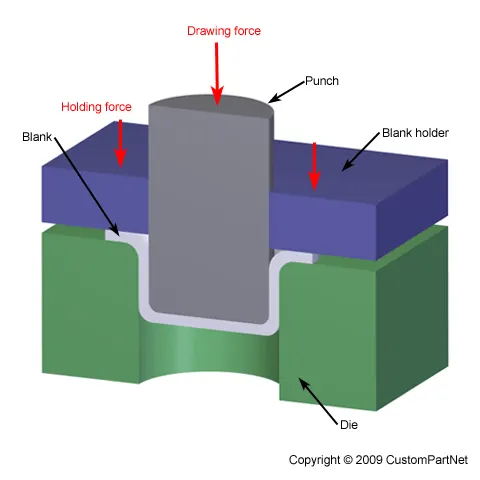
Process Overview: Deep drawing is a metal forming process used to create cup-shaped or box-shaped parts with depth. The process involves placing a metal blank (usually a flat sheet or a pre-cut disc) into a die and then using a punch to deform the sheet into the desired shape.
- Key Steps:
- Blank Preparation: The sheet metal blank is typically coated with lubricants to reduce friction during the forming process.
- Placing the Blank: The blank is positioned over the die, and the punch descends into the die cavity, drawing the sheet into the desired shape.
- Redrawing and Ironing: In some cases, multiple drawing steps may be used to achieve the final shape. Ironing may also be performed to thin the material and increase the part's height.
- Applications in Automotive:
- Deep drawing is commonly used in the automotive industry to manufacture components such as engine parts, fuel tanks, body panels, and various structural elements.
Hemming:
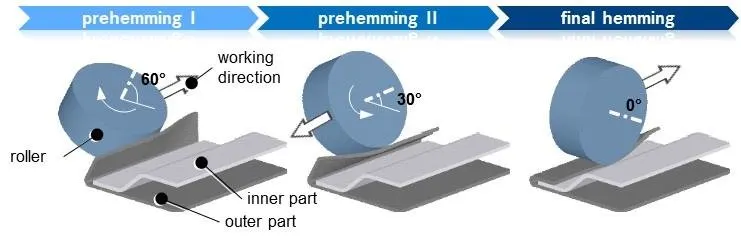
Process Overview: Hemming is a sheet metal forming process that involves folding or bending the edge of a metal sheet over another part. This process is often used to join two or more sheet metal components, creating a secure and visually appealing seam.
- Key Steps:
- Overlap: The edge of one sheet is placed over another, creating an overlap.
- Folding: The overlapping edge is folded or bent over the underlying sheet, forming a hem.
- Securing: The hemmed edge is often secured through methods like clinching, adhesive bonding, or welding.
- Applications in Automotive:
- Hemming is widely used in the automotive industry for assembling body panels, doors, hoods, and other exterior components. It provides a clean and robust seam while contributing to the overall aesthetics of the vehicle.
Both deep drawing and hemming are critical processes in the manufacturing of automotive components, particularly those made from sheet metal. They enable the production of complex shapes, structural elements, and joined assemblies, contributing to the overall structural integrity, safety, and appearance of modern vehicles.
Pedastrian Safety:
Pedestrian safety in the context of automobiles refers to measures taken to reduce the severity of injuries to pedestrians in the event of a collision with a vehicle. Design considerations for pedestrian safety include:
- Hood Design: Vehicle hoods are designed to deform and absorb energy during a collision. This is to minimize the impact force transferred to a pedestrian if they are struck by the front of the vehicle.
- Bumper Design: Bumpers are often designed to have energy-absorbing features, which can help mitigate the severity of injuries in a collision involving a pedestrian.
- Front-End Styling: The styling of the front end of a vehicle may incorporate features that are less likely to cause injury upon impact, such as rounded shapes and softer materials.
- Advanced Driver Assistance Systems (ADAS): Technologies like automatic emergency braking, pedestrian detection systems, and collision avoidance systems can contribute to preventing or mitigating collisions with pedestrians.
Top view of a vehicle marked according to the EuroNCAP Pedestrian testing protocol Version 3.1.1 onward for the head impacts
Top view of a vehicle marked according to the EuroNCAP Pedestrian testing protocol Version 3.1.1 onward for the leg impacts
Wrap Around Distance (WAD):
The term "wrap around distance" may not be a standard term in automotive engineering. However, it's possible that it refers to the relationship between the front end of the vehicle, particularly the hood, and its impact on pedestrian safety. In the context of hood design and pedestrian safety:
- Wrap Around Design: The concept of "wrap around" could be related to designing the front end of the vehicle in a way that minimizes injury to pedestrians upon impact. This might involve creating shapes and contours that guide the pedestrian away from the more rigid and potentially injurious components.
- Clearance and Deformation: Designing hoods with a certain amount of clearance between the hood surface and underlying components can allow for controlled deformation during a collision, absorbing energy and reducing injury severity.
- Sensors and Air Gaps: Some vehicles incorporate sensors that can detect a collision with a pedestrian. Additionally, creating air gaps between the hood and hard components can contribute to energy absorption and reduce injury risks.
Pedestrian safety is a critical consideration in modern vehicle design, and automotive manufacturers often adhere to safety standards and regulations to ensure their vehicles provide a reasonable level of protection in the unfortunate event of a collision with a pedestrian.
Overview of Euro NCAP pedestrian impact protocol tests types on the vehicle front (left); schematic overview of the wrap around distance (WAD) on the vehicle front (right).
Hood Components used in the design:
- Outer Panel
- Inner Panel
- Hinge Assembly
- Striker
- Relief's ( Front & Corner )
Procedure:


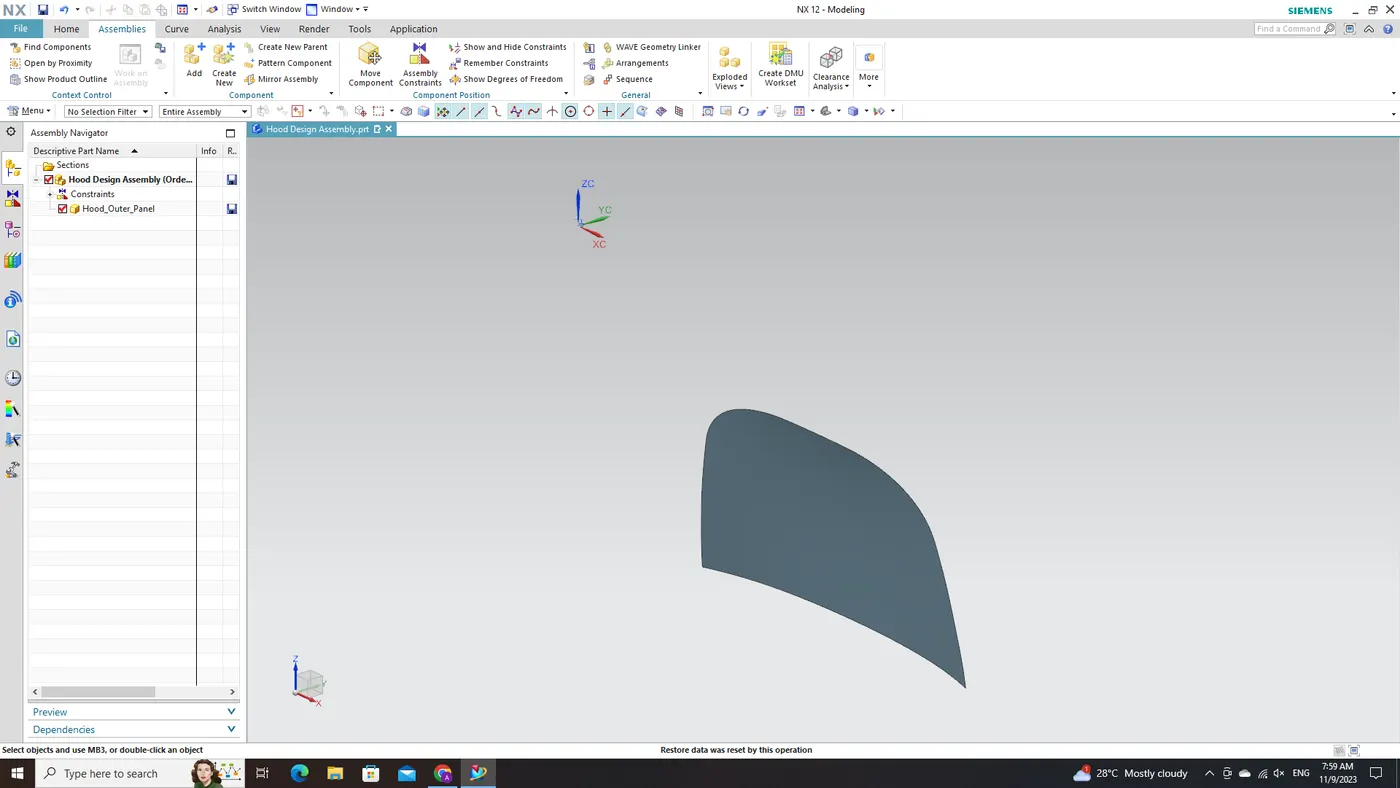
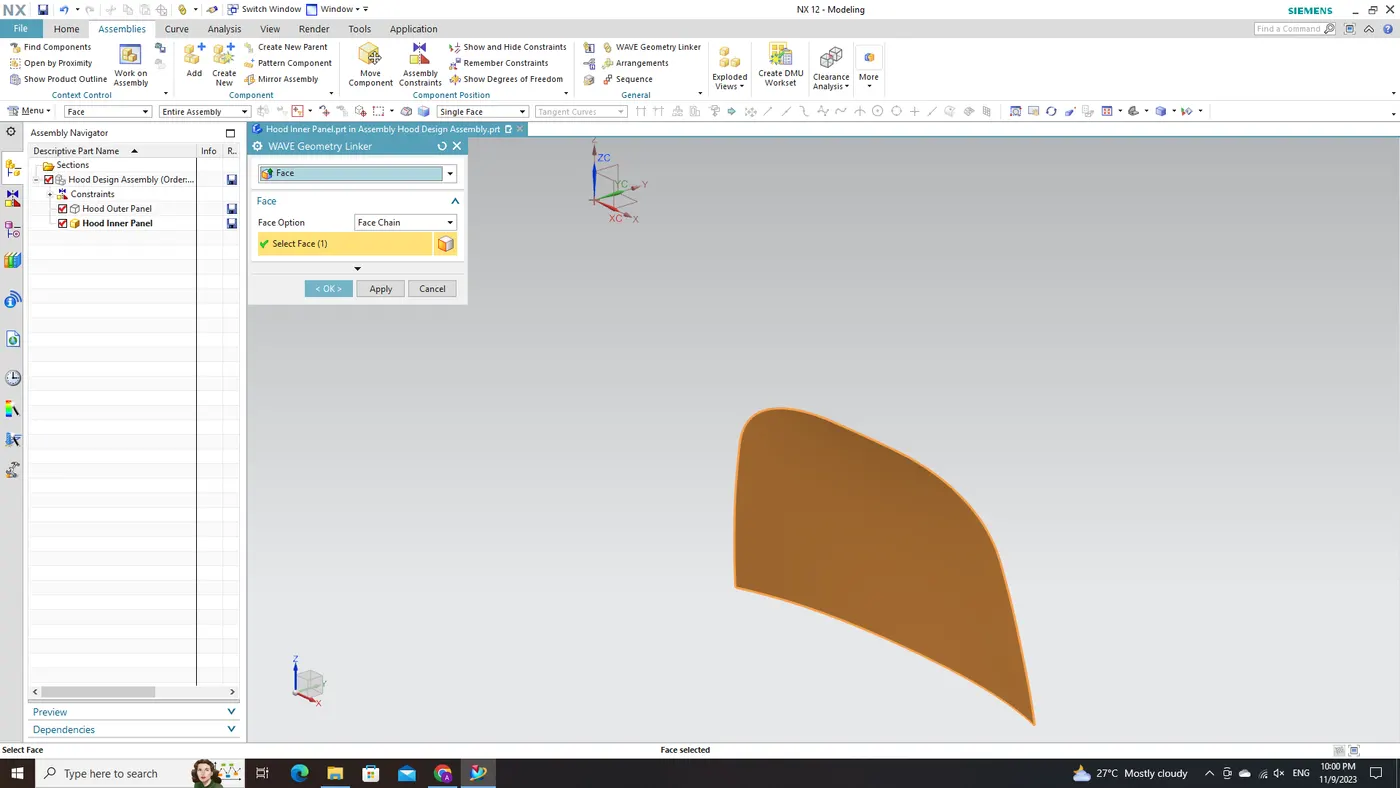
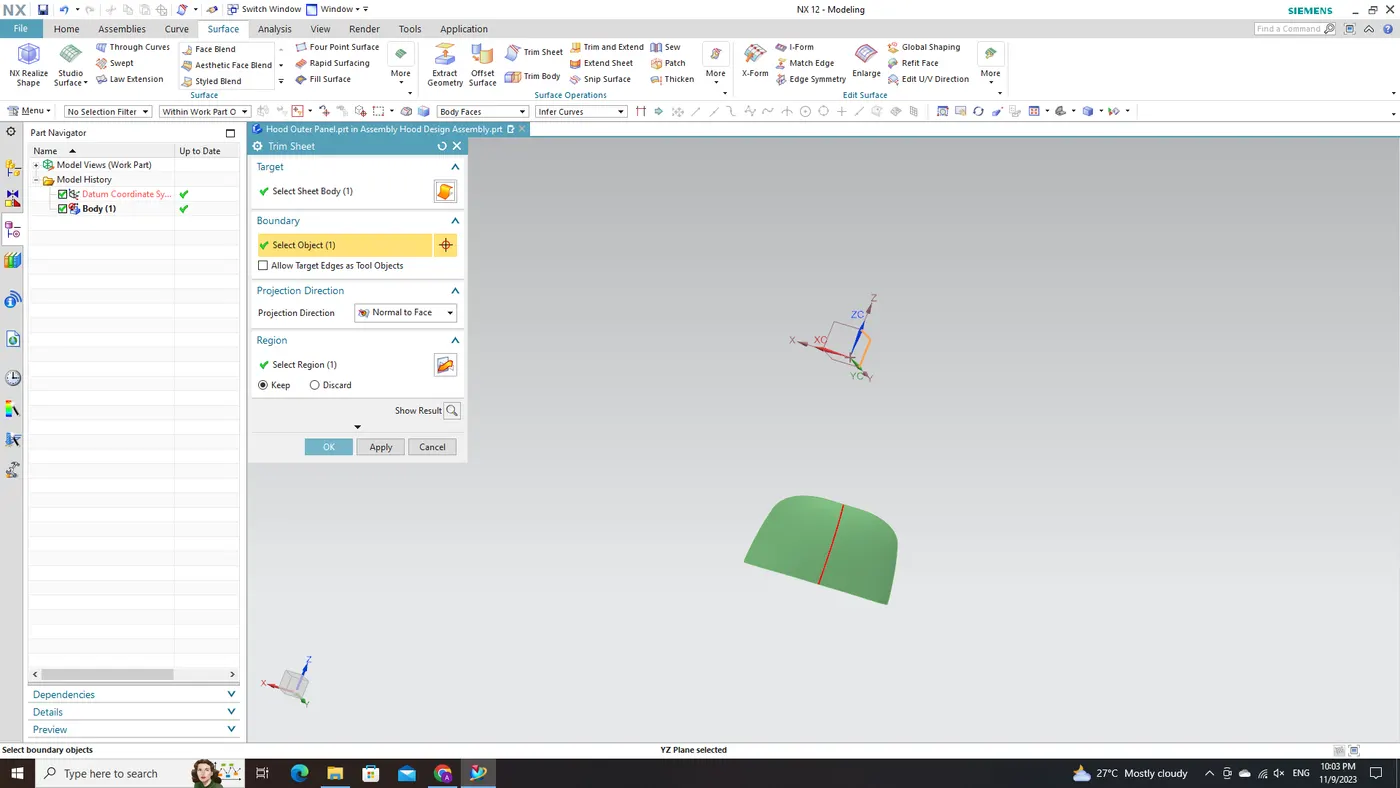
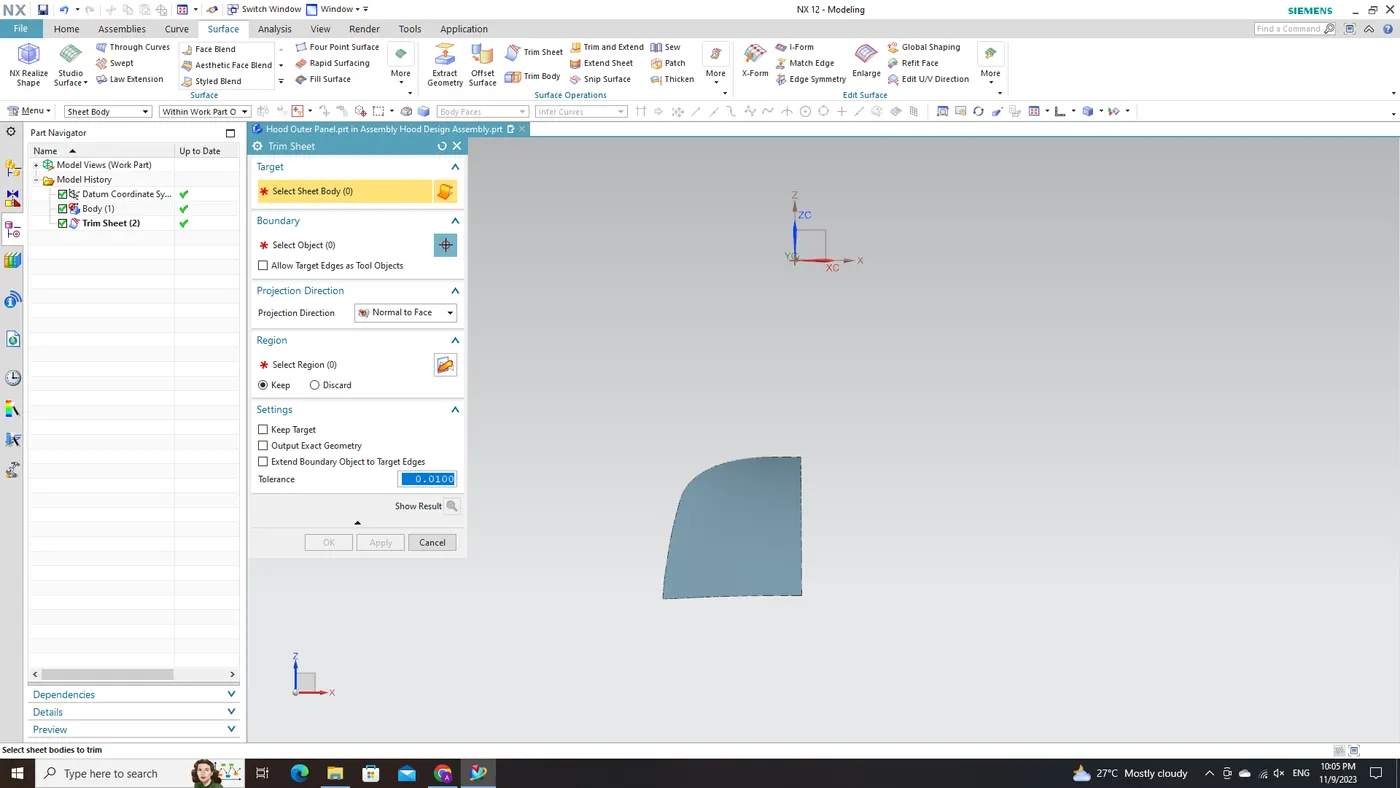
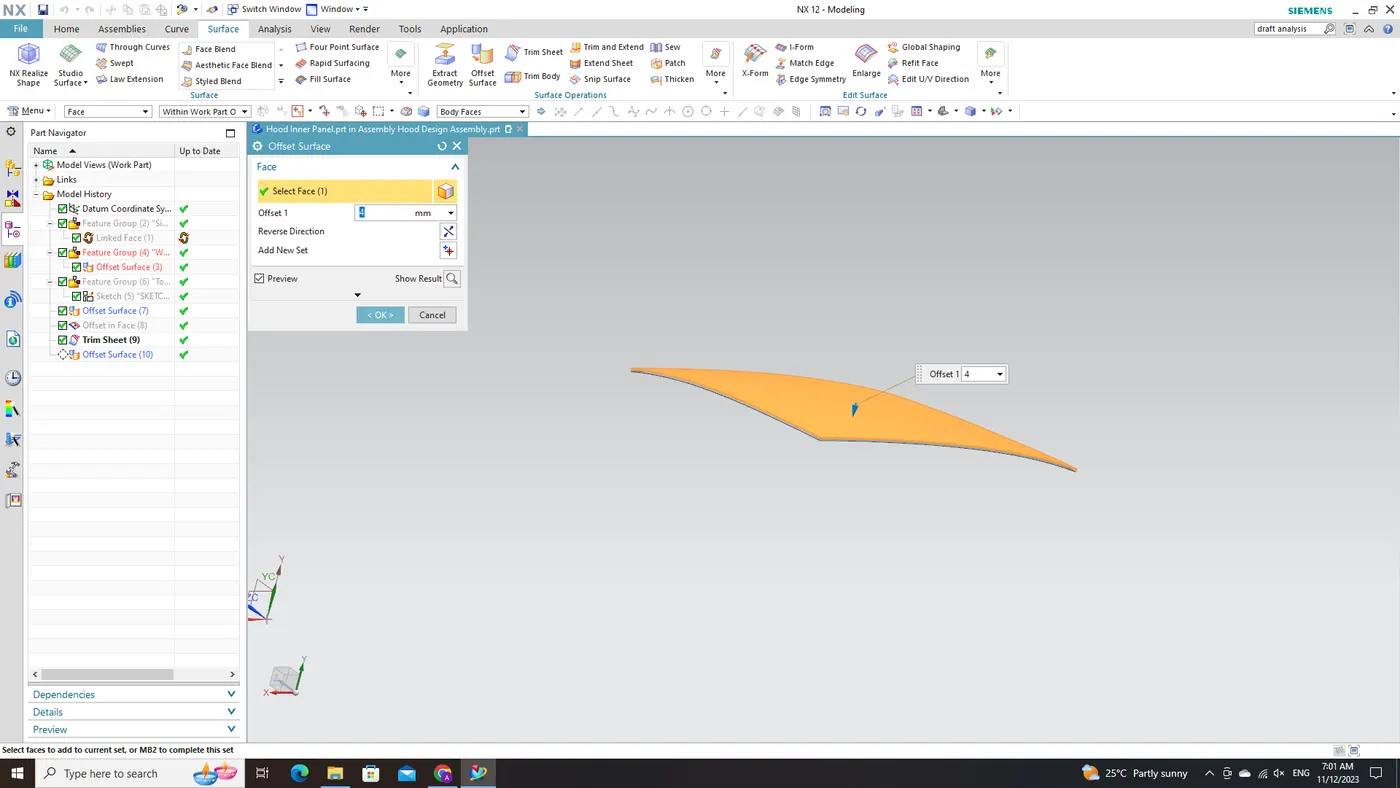
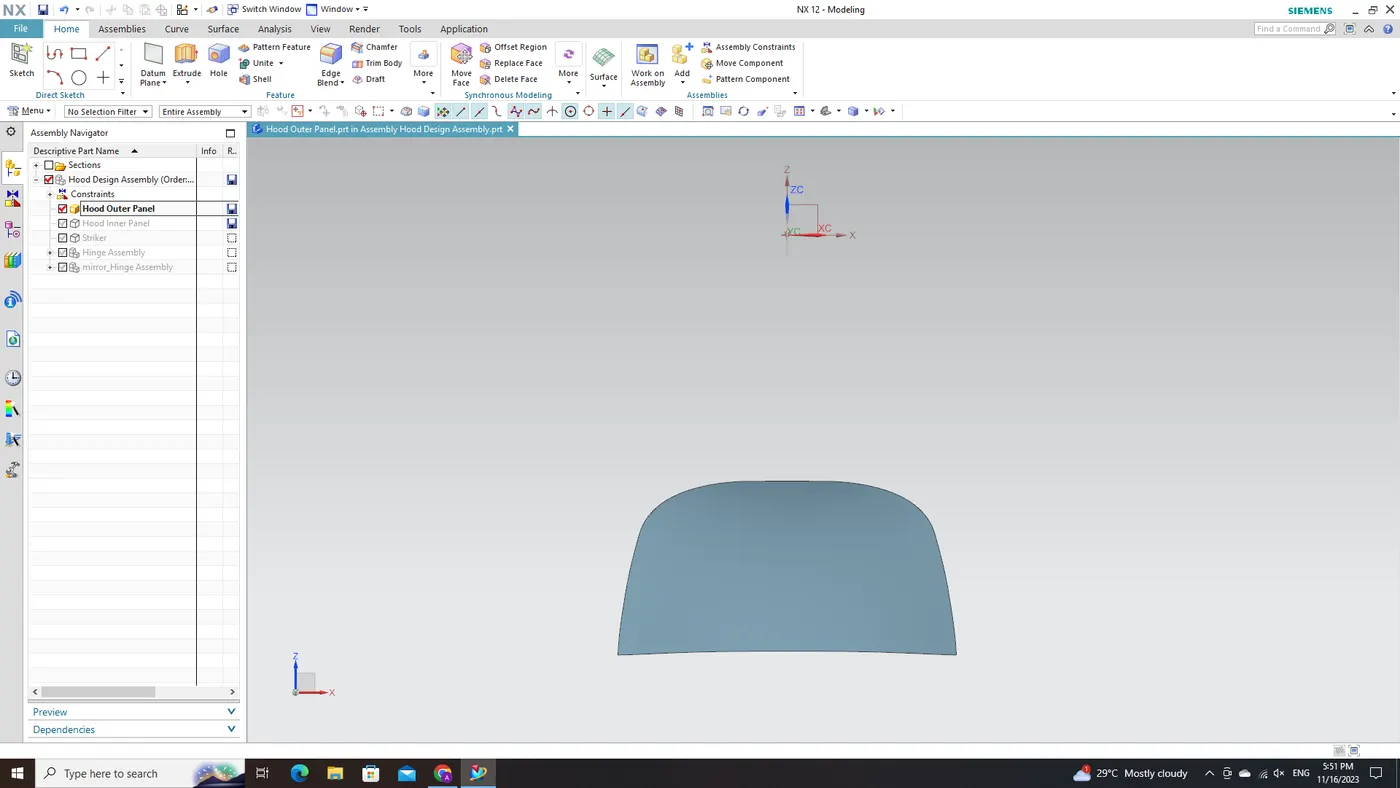
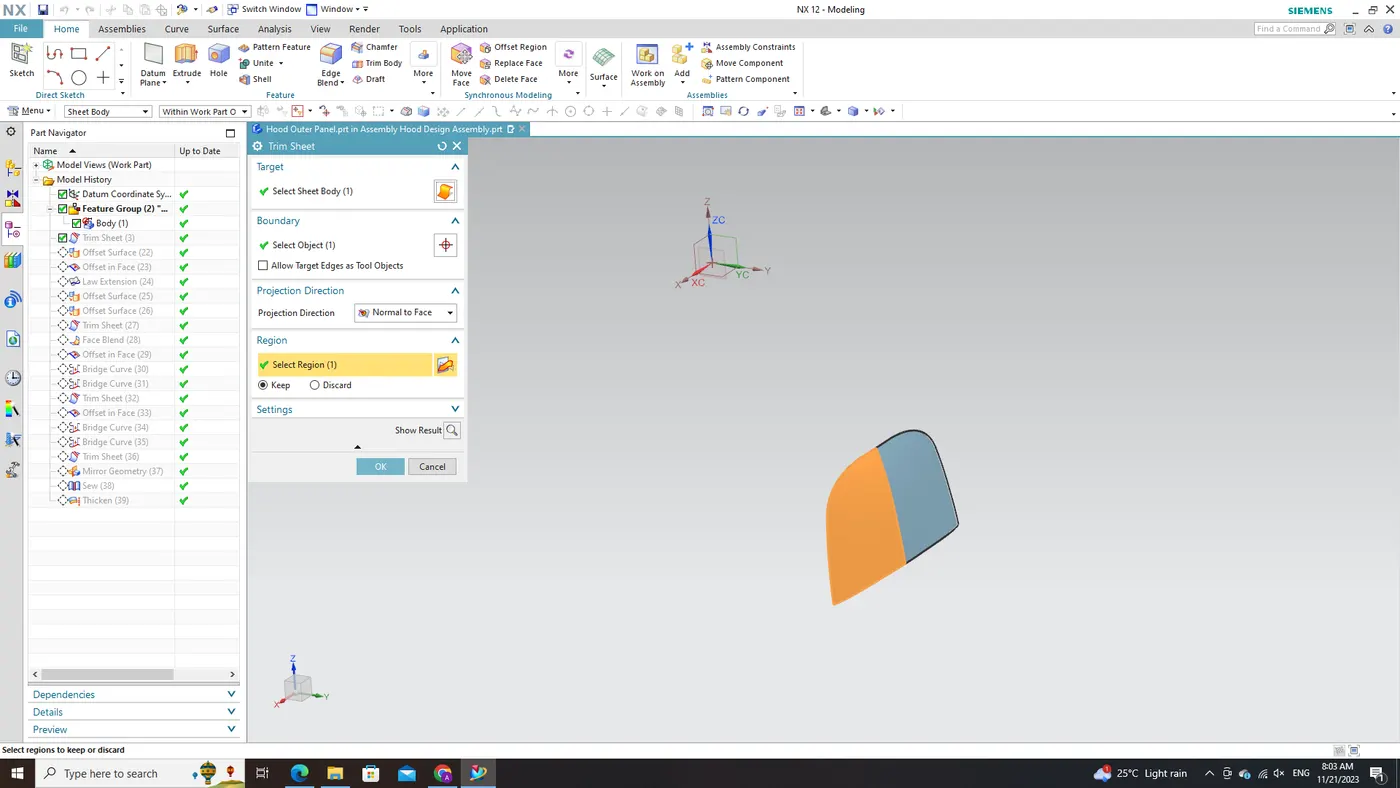
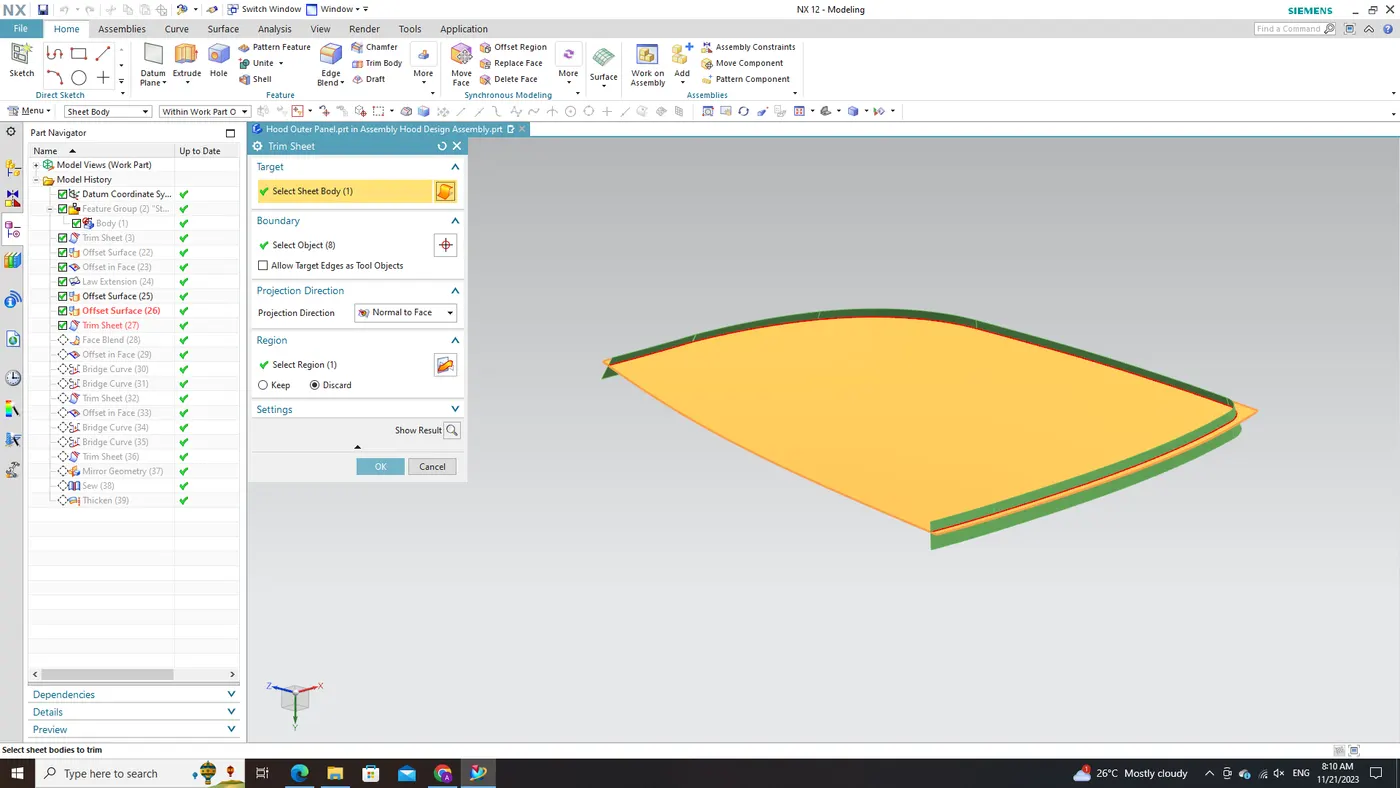
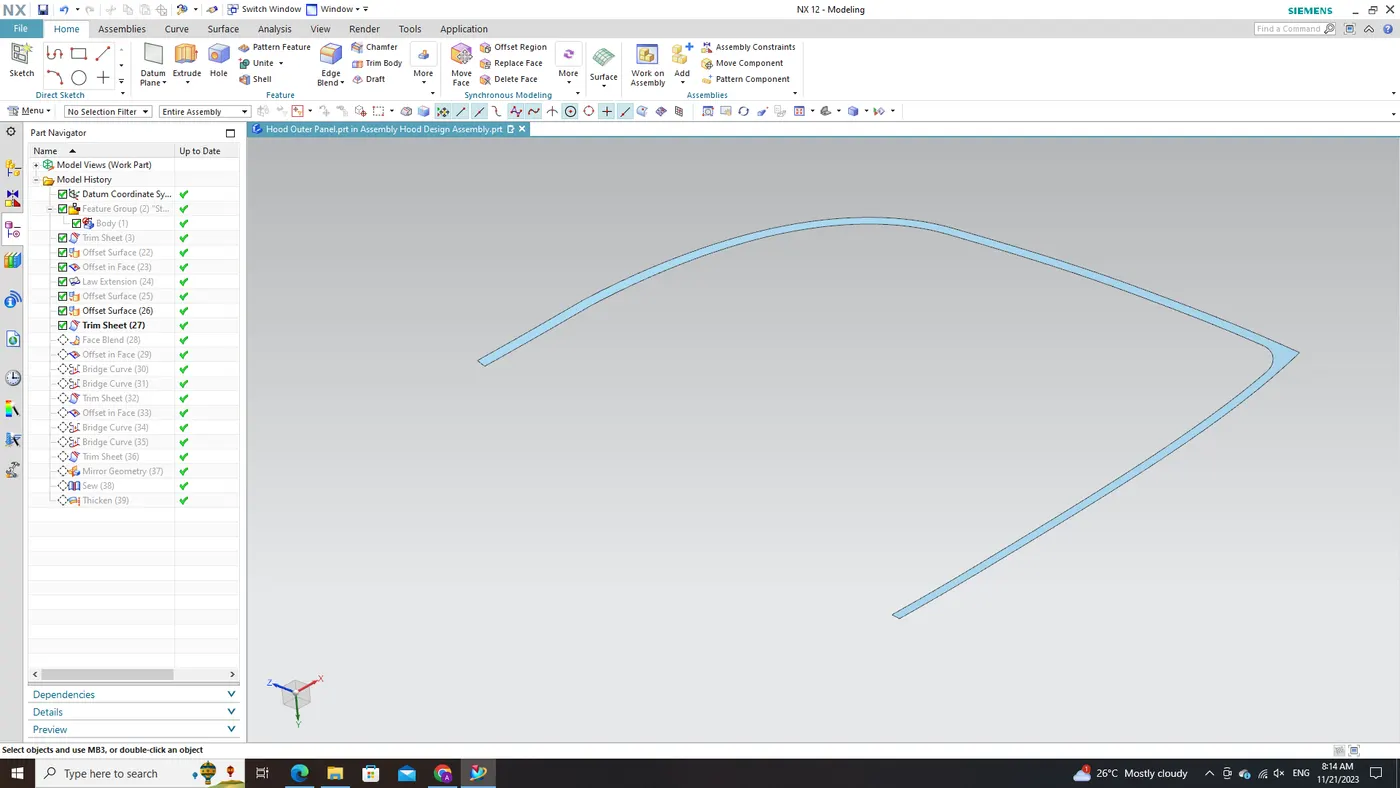
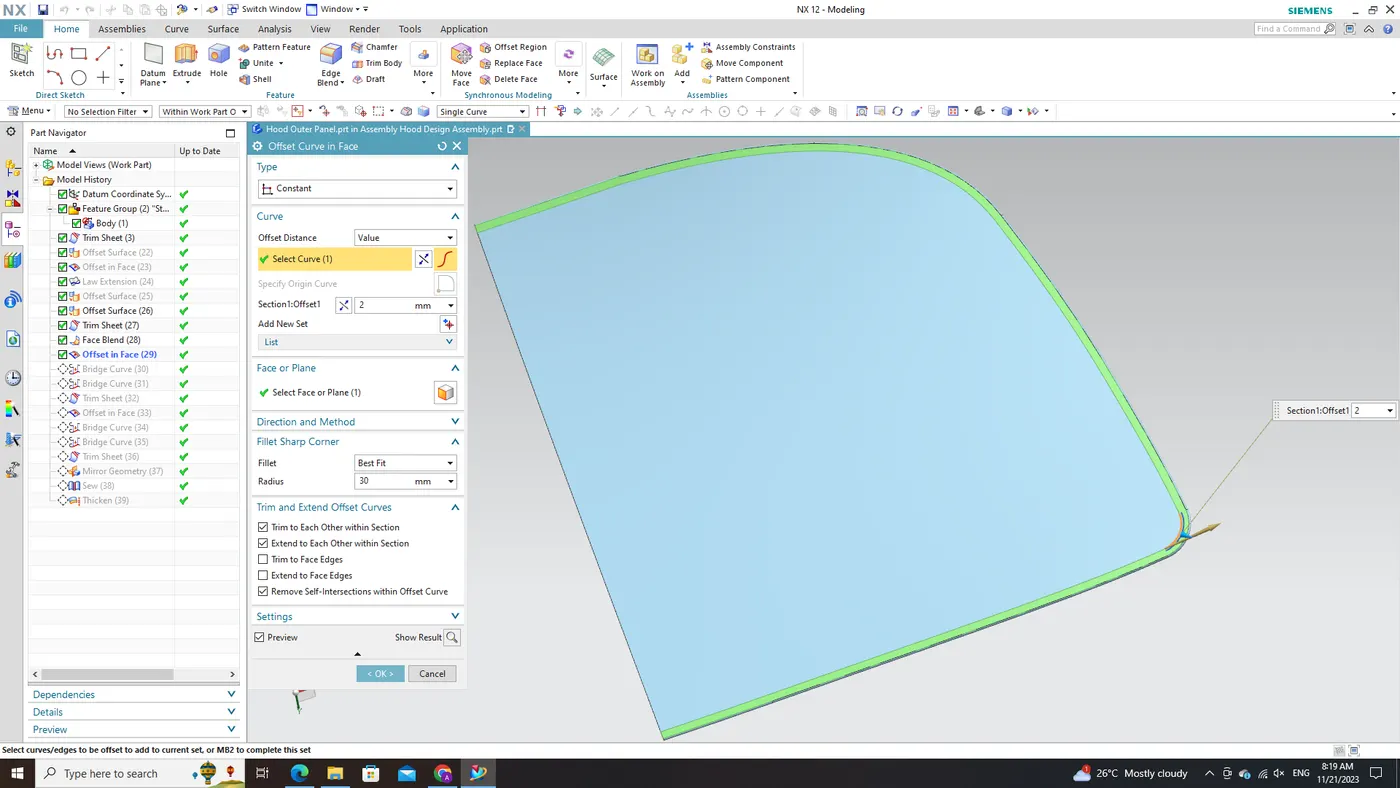
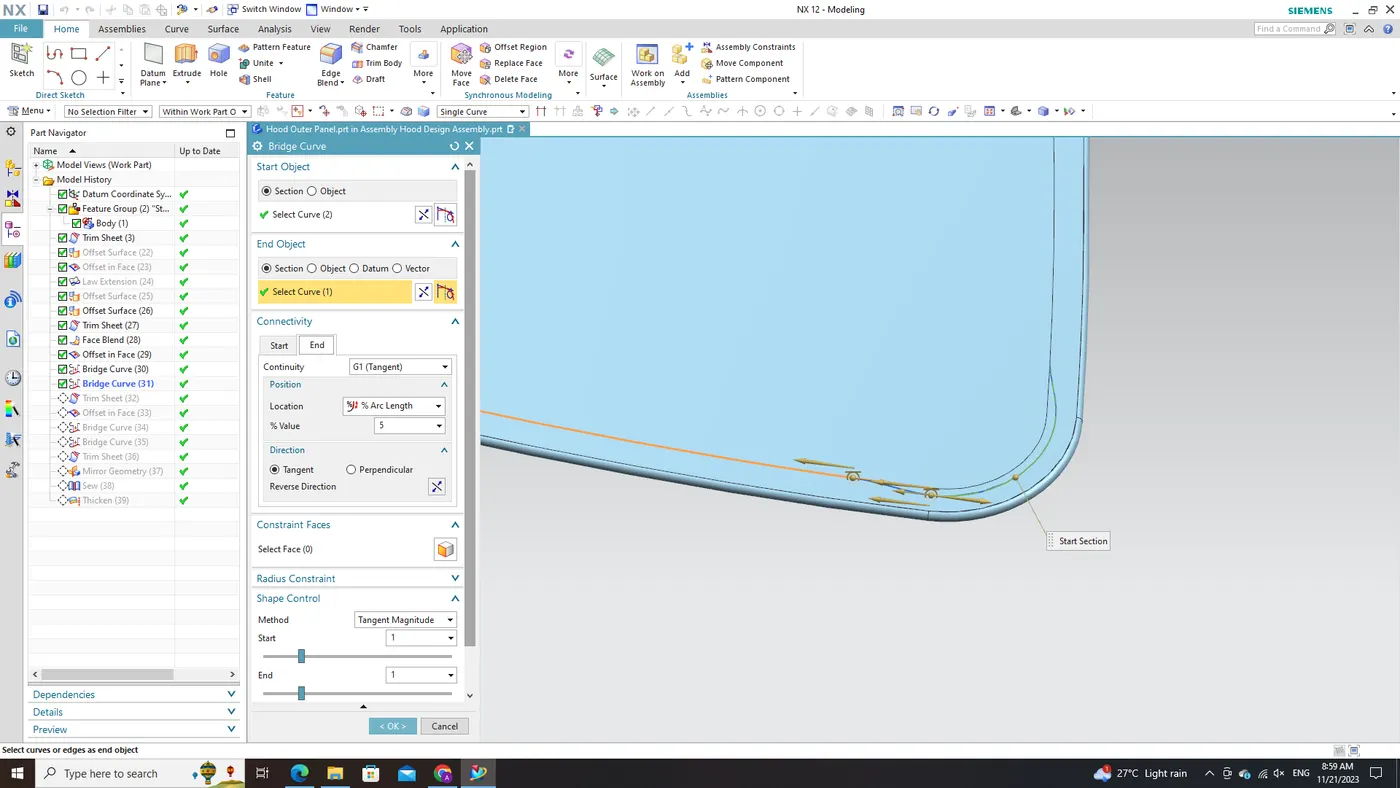
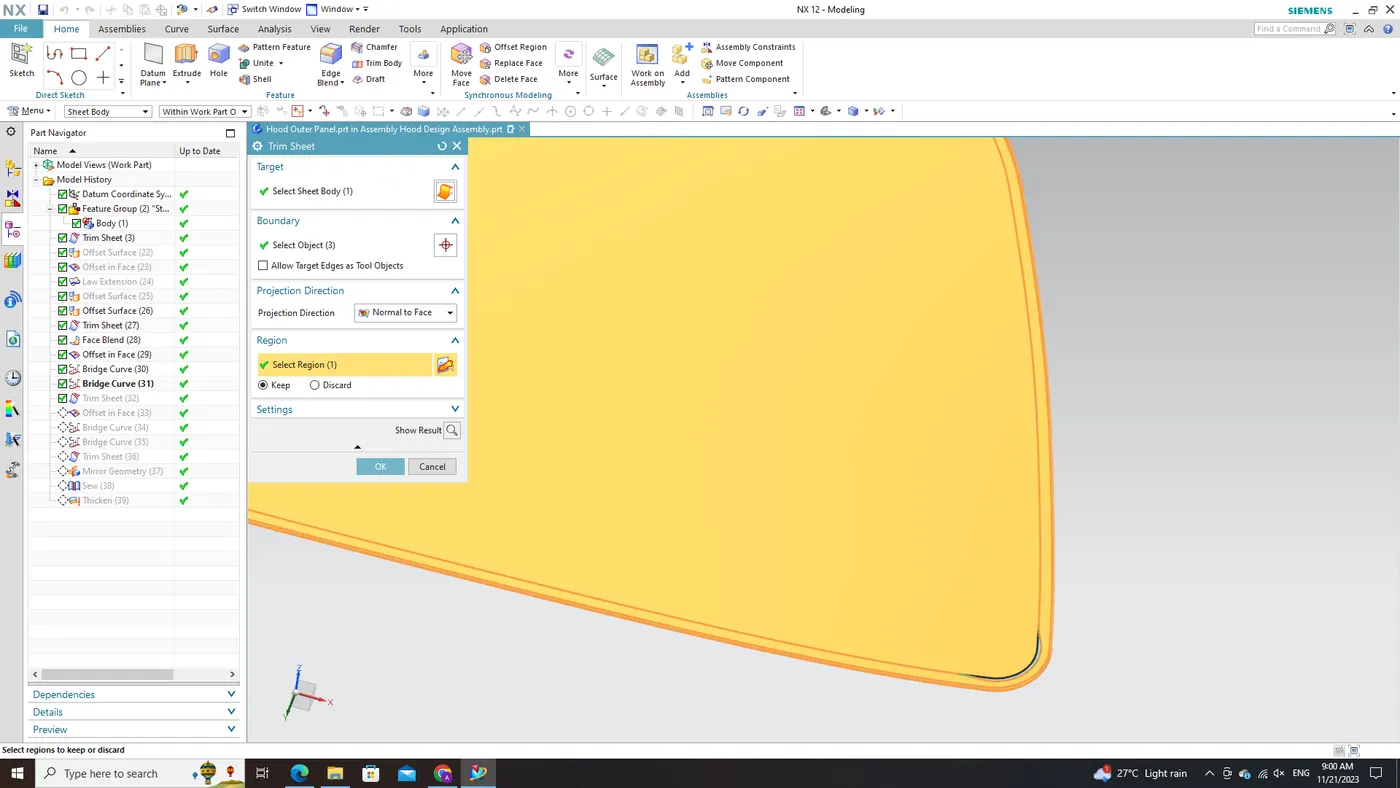
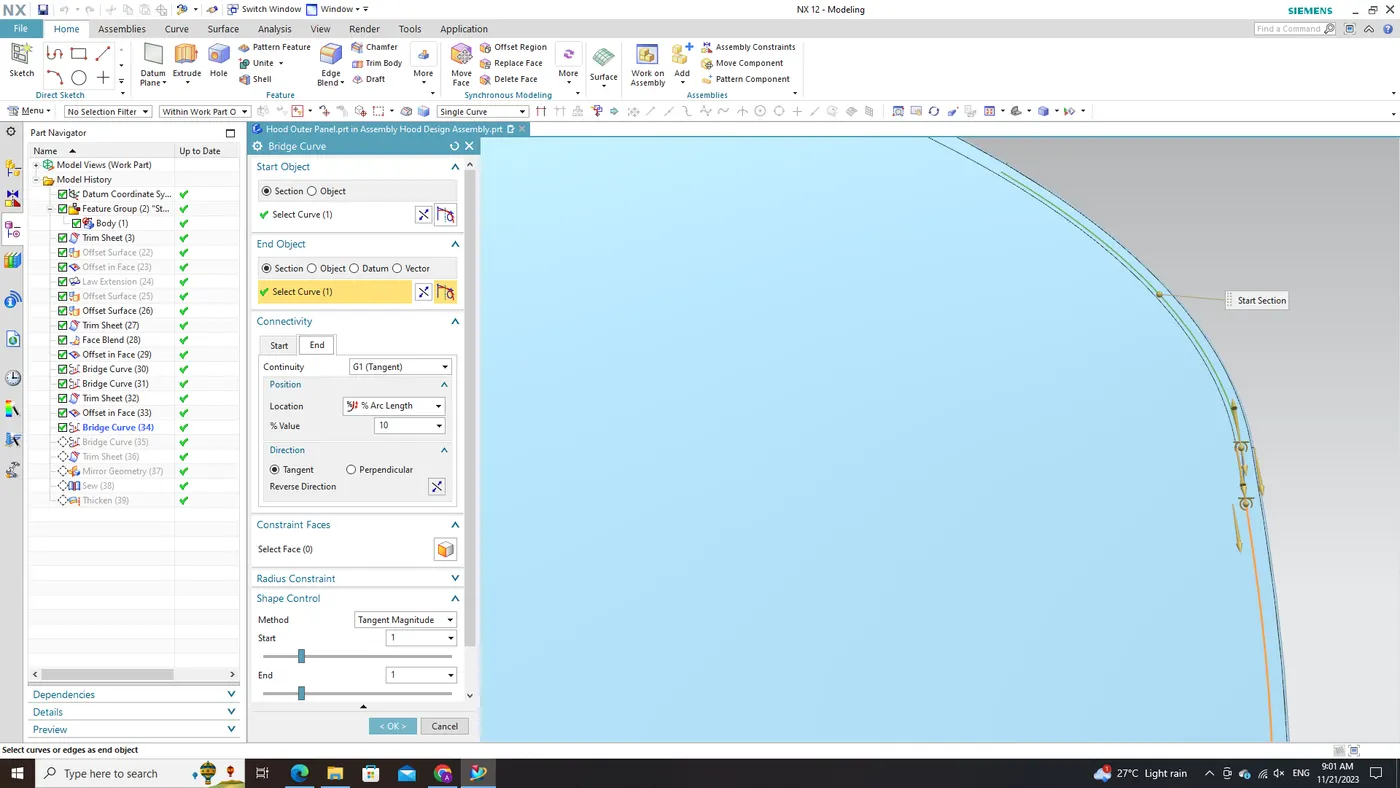
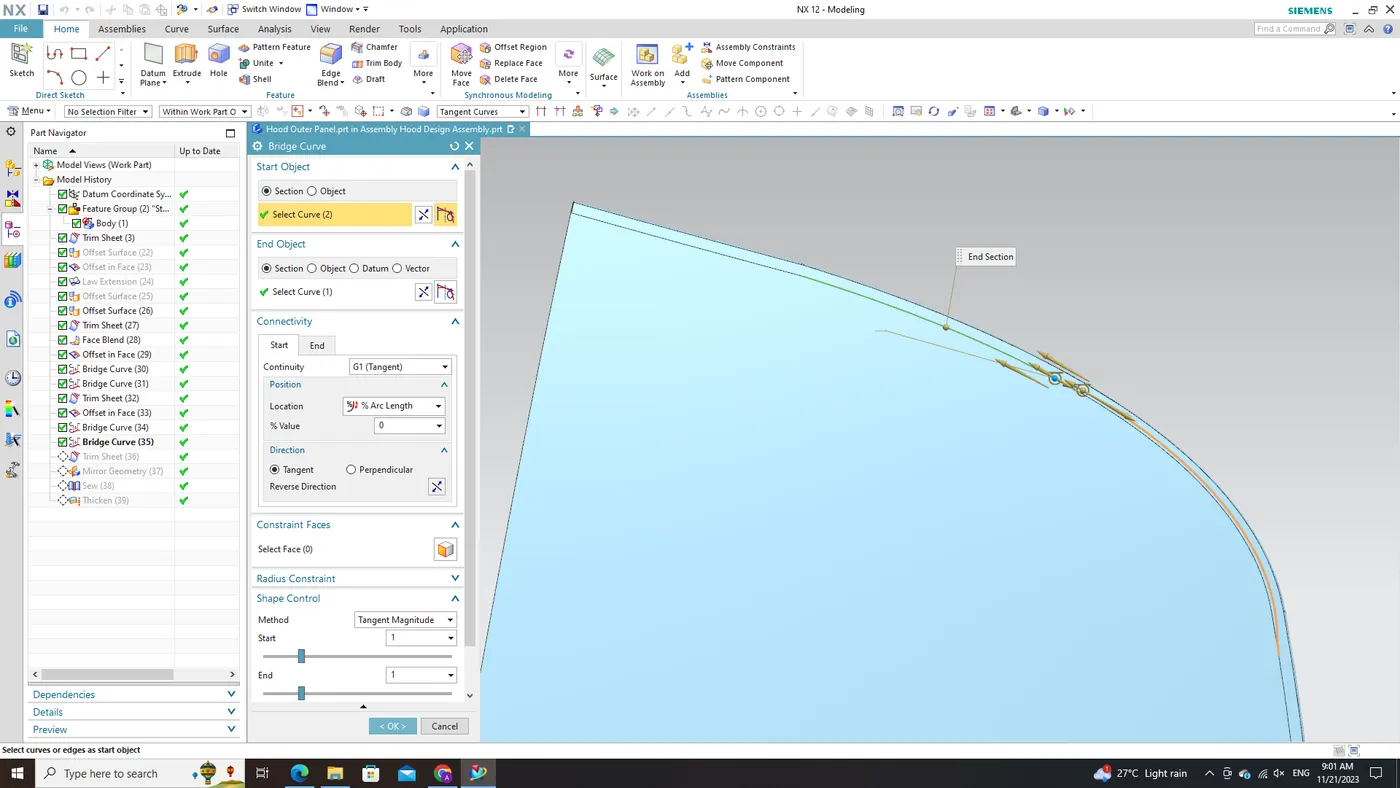
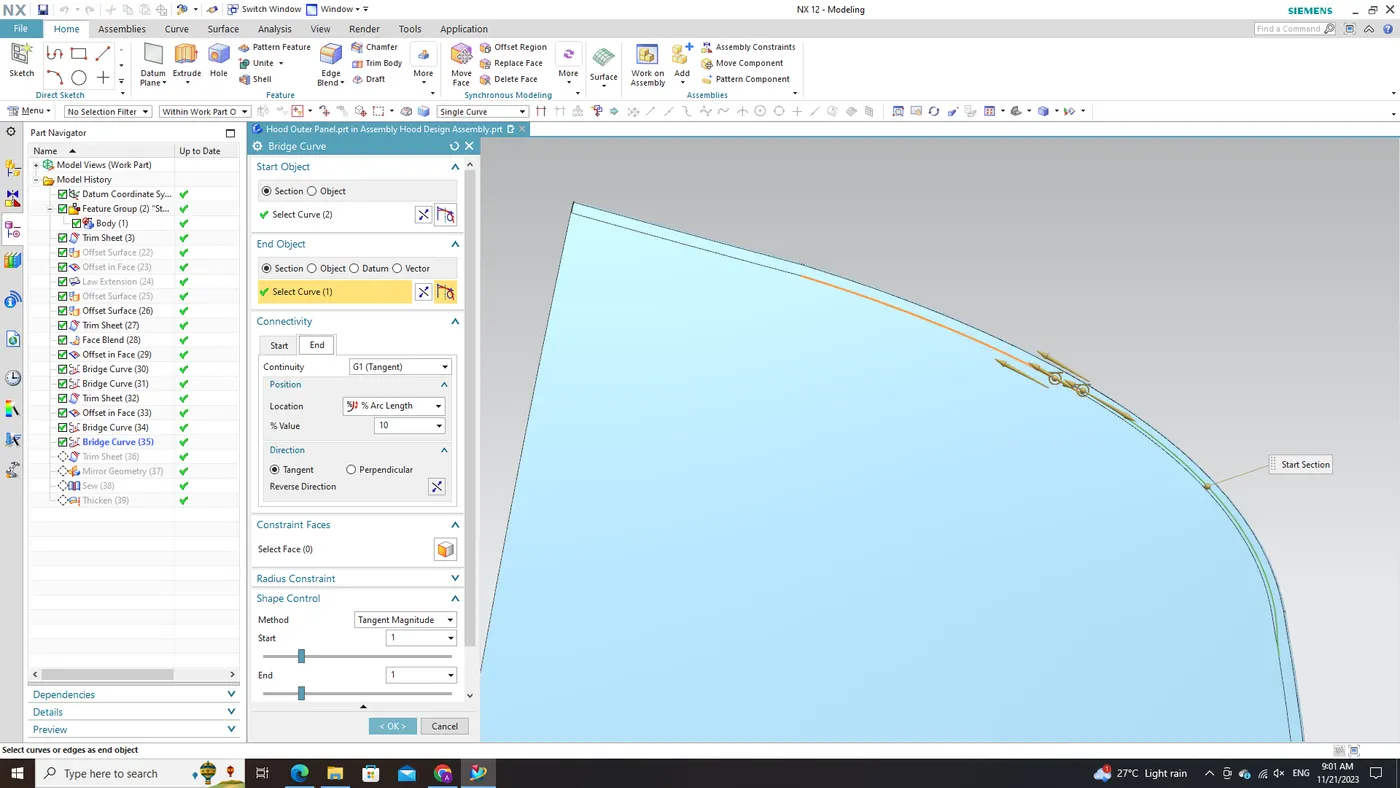
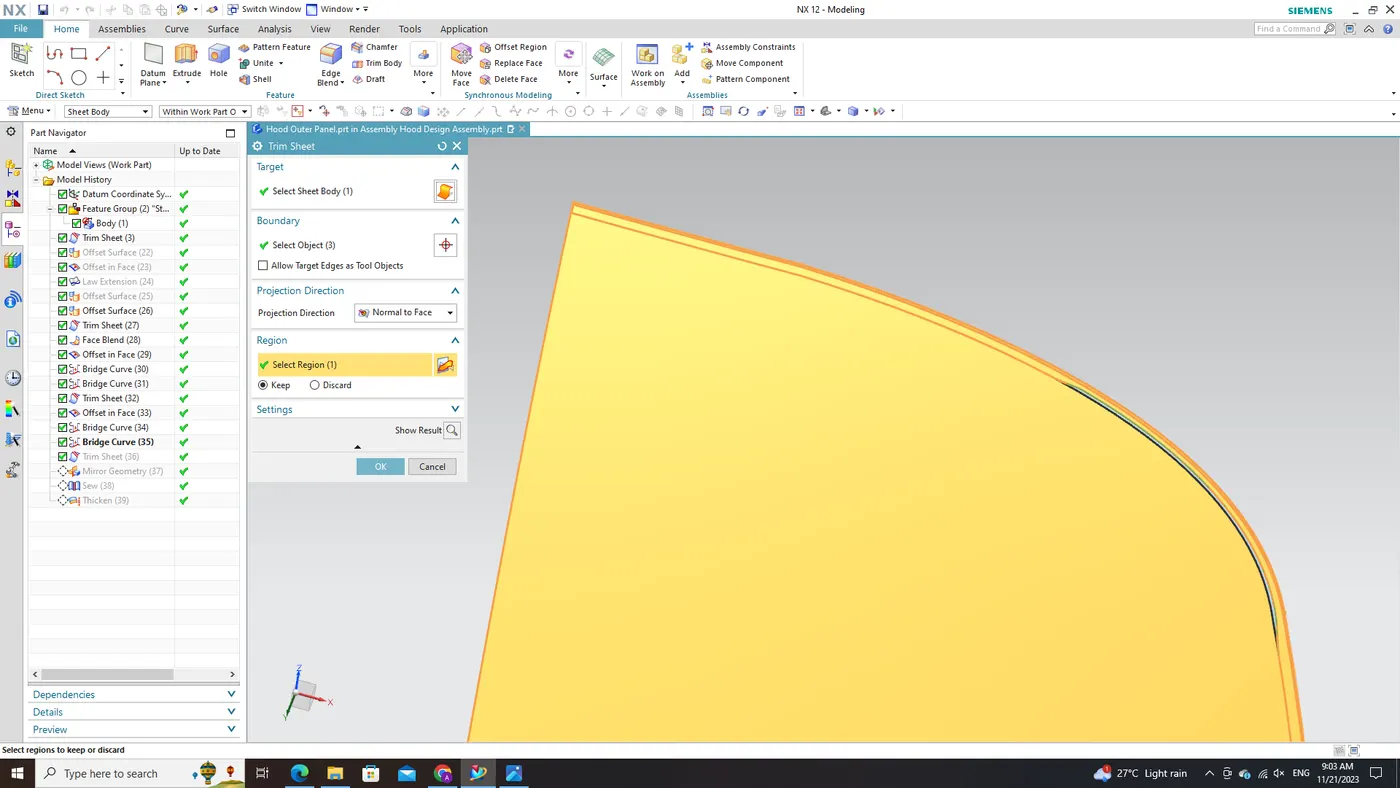
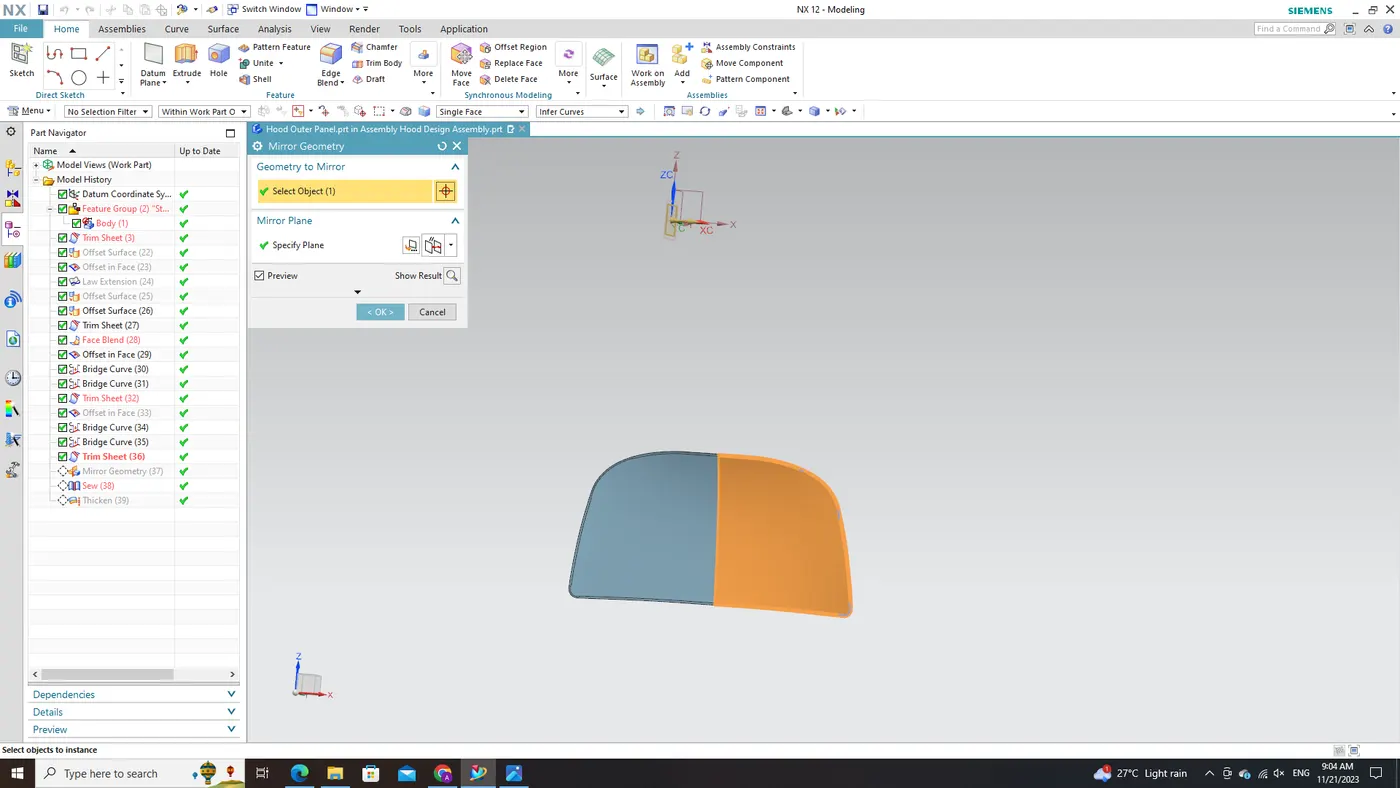
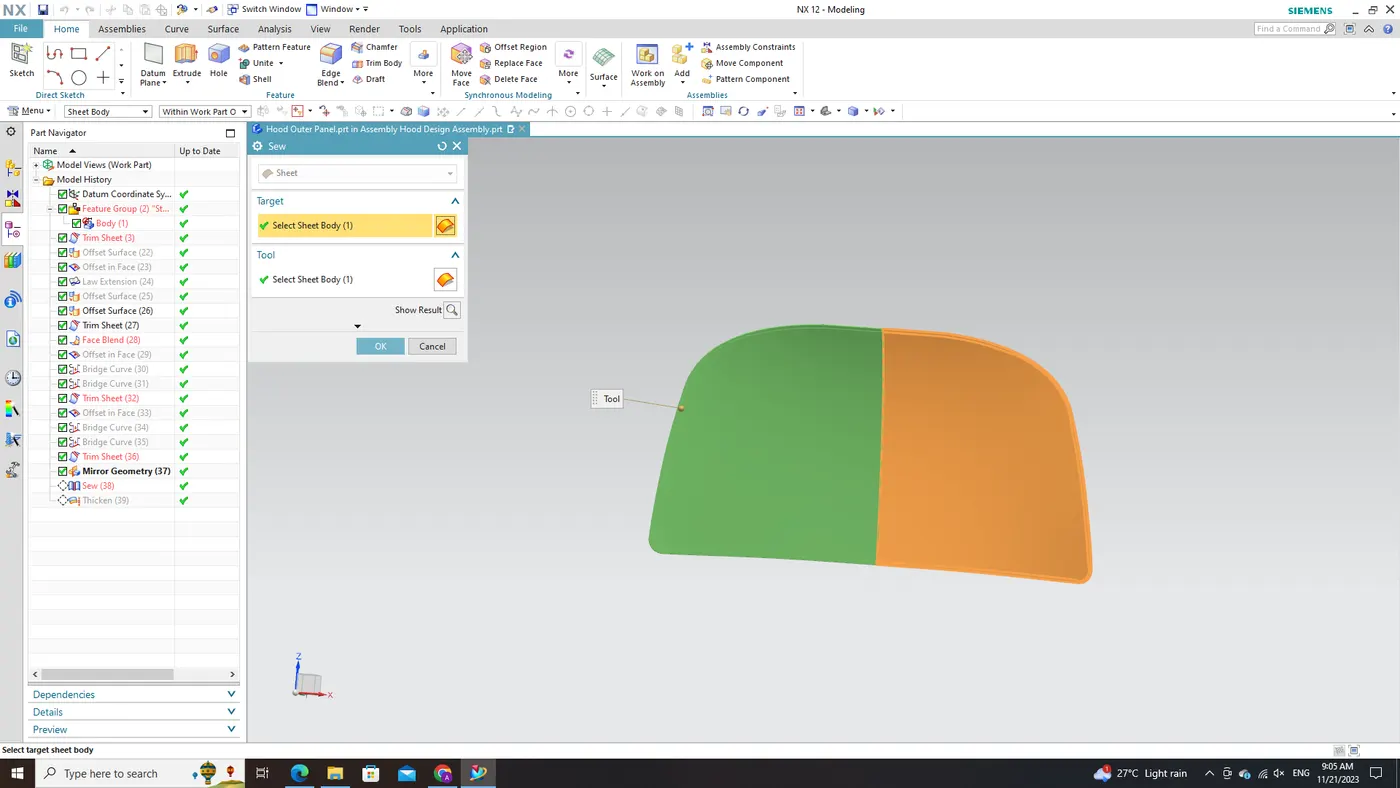
Here, we trim the sheet into two parts in the centre, to make the design flow go smoother which results into mirroring of the designed half surface into a final product.
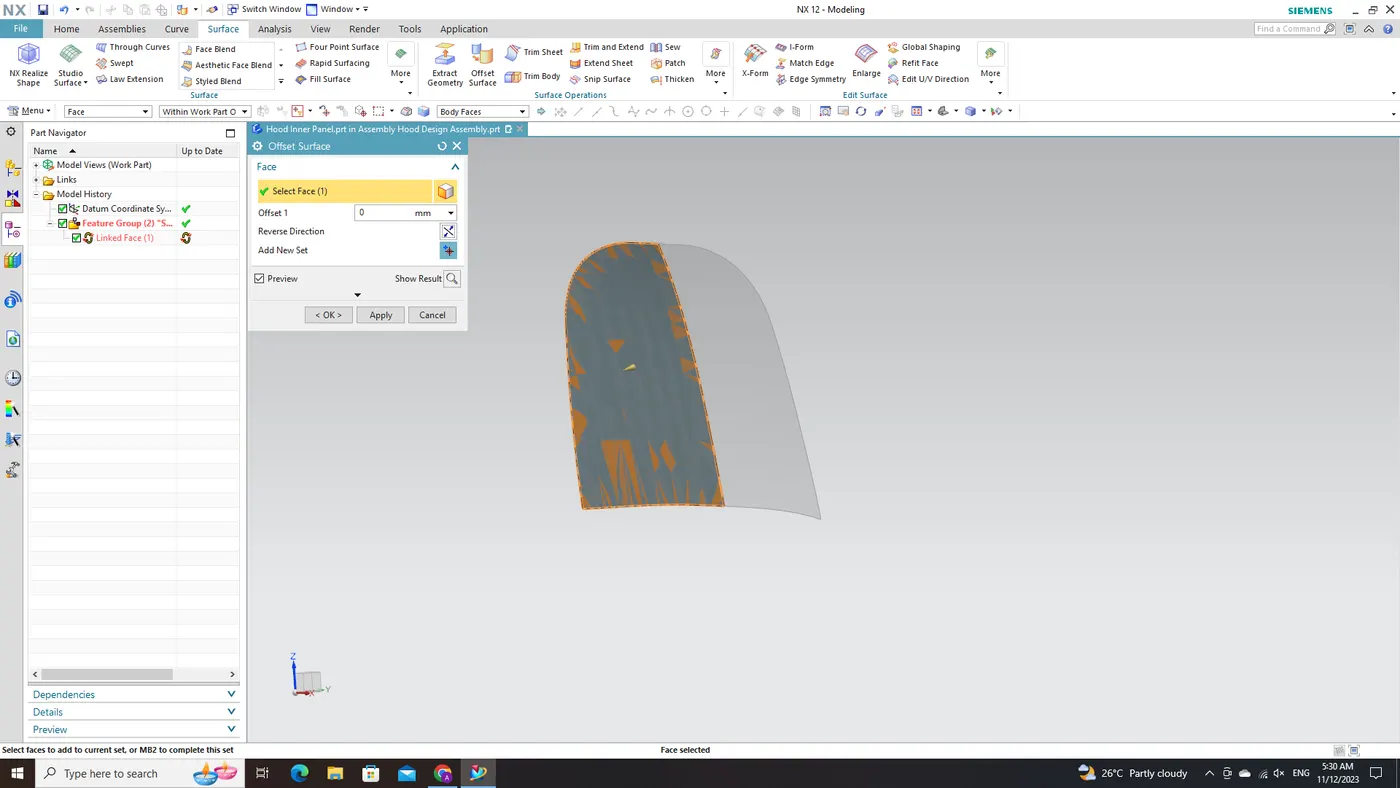
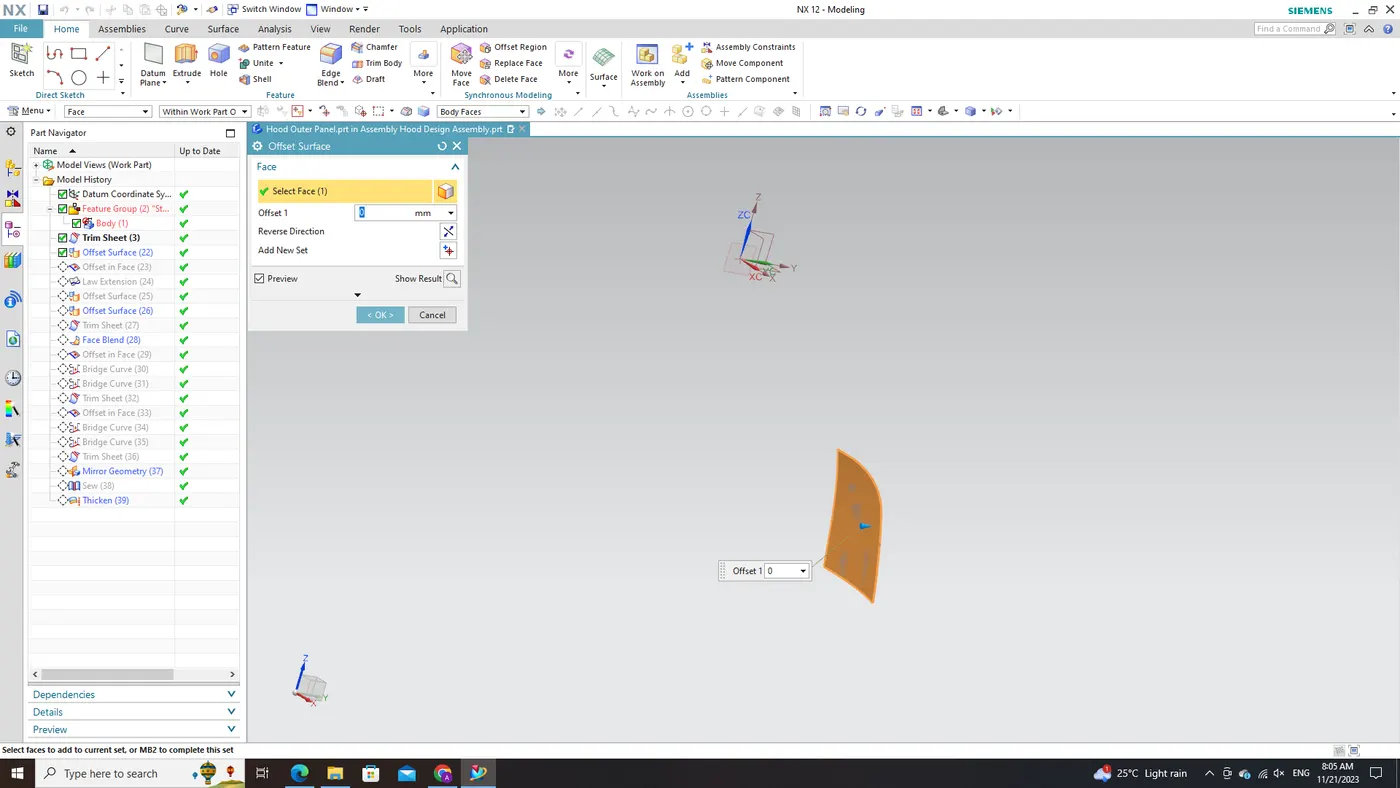
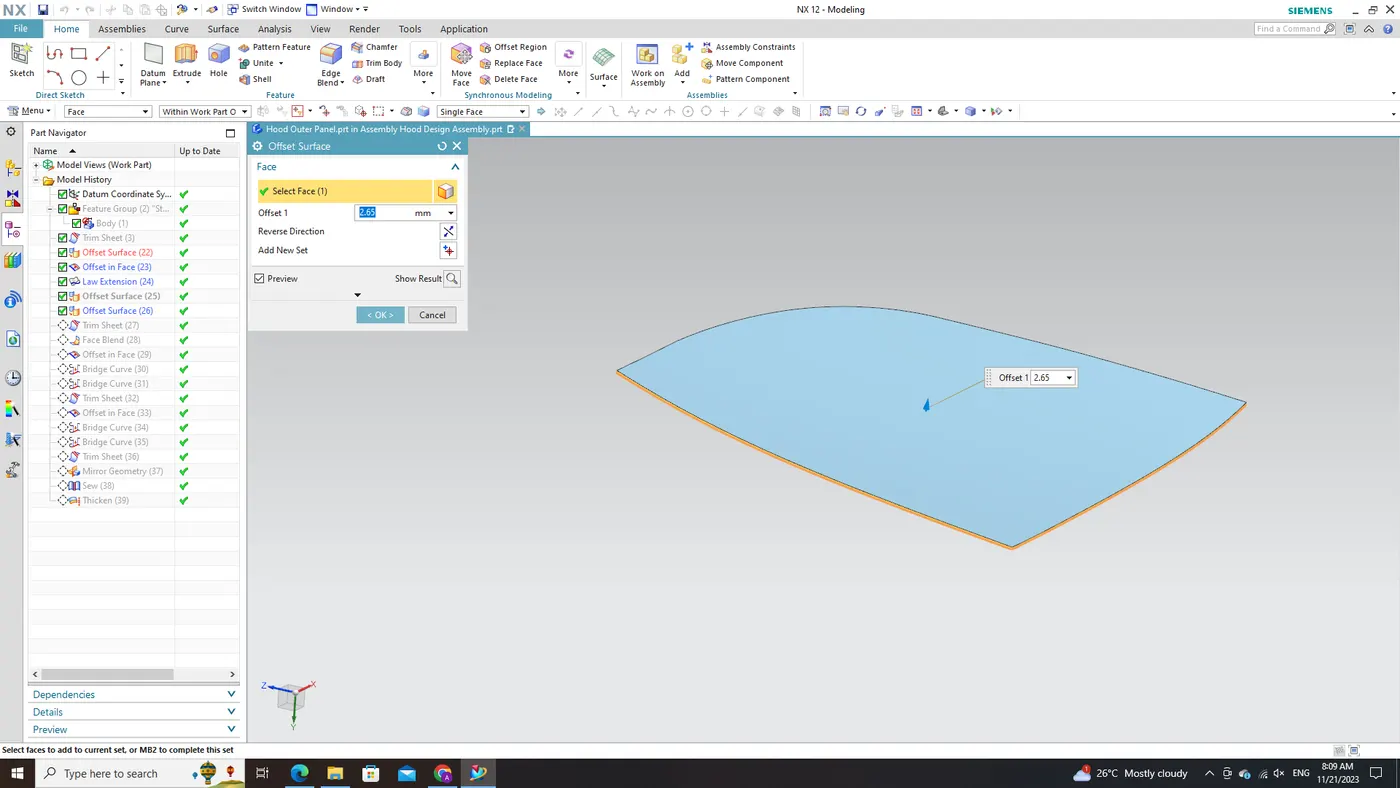
We create a copy of the original surface by using the offset command to make a replica which will be the 'Working Surface'.
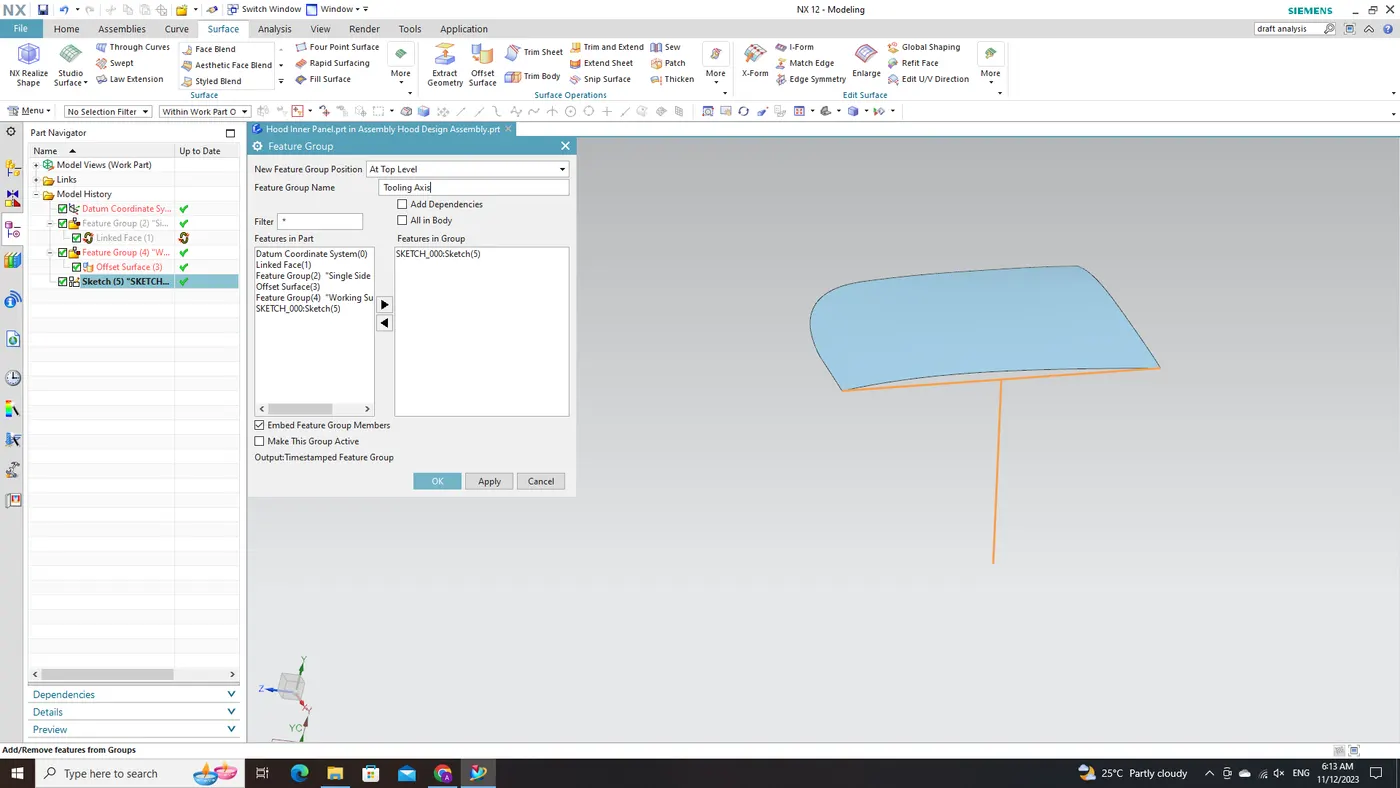
We create the tooling axis for the component.
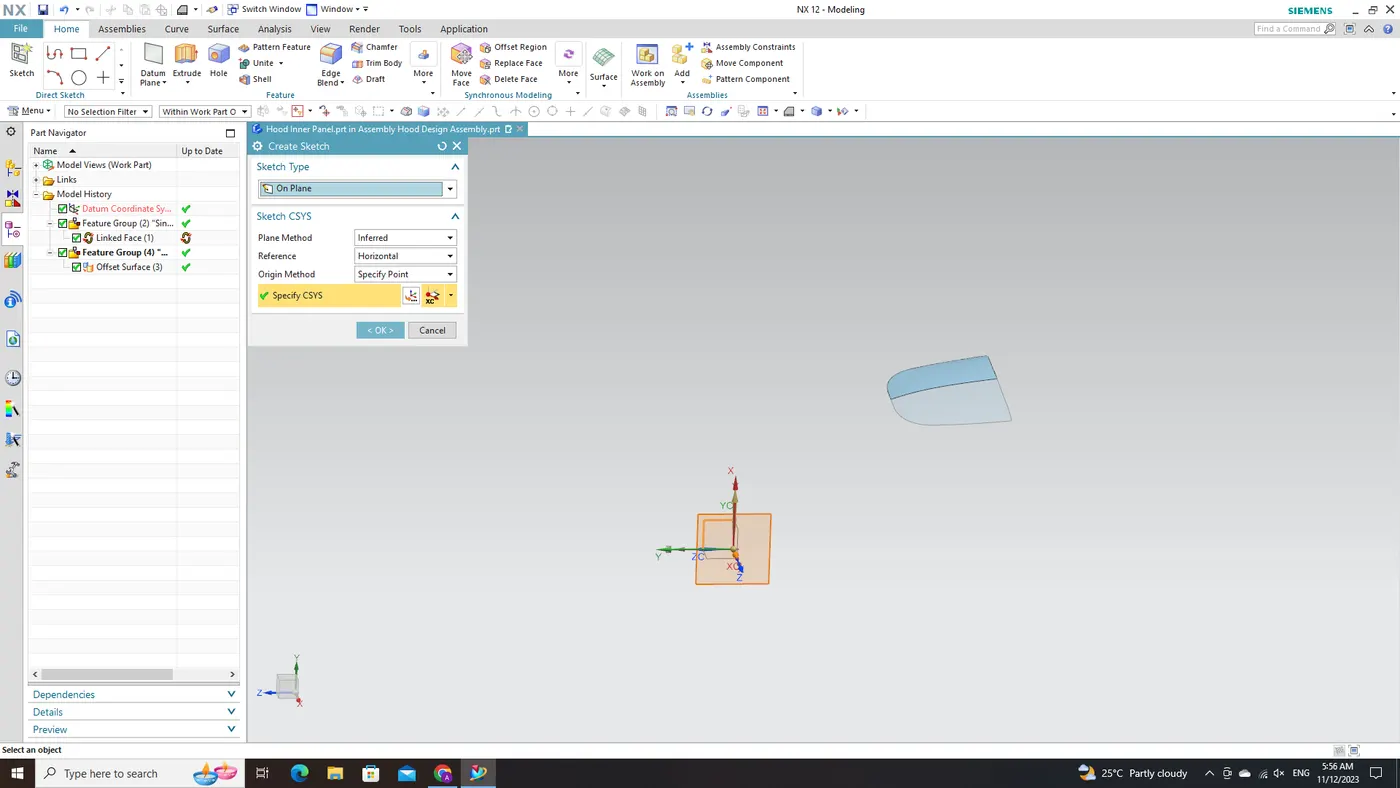
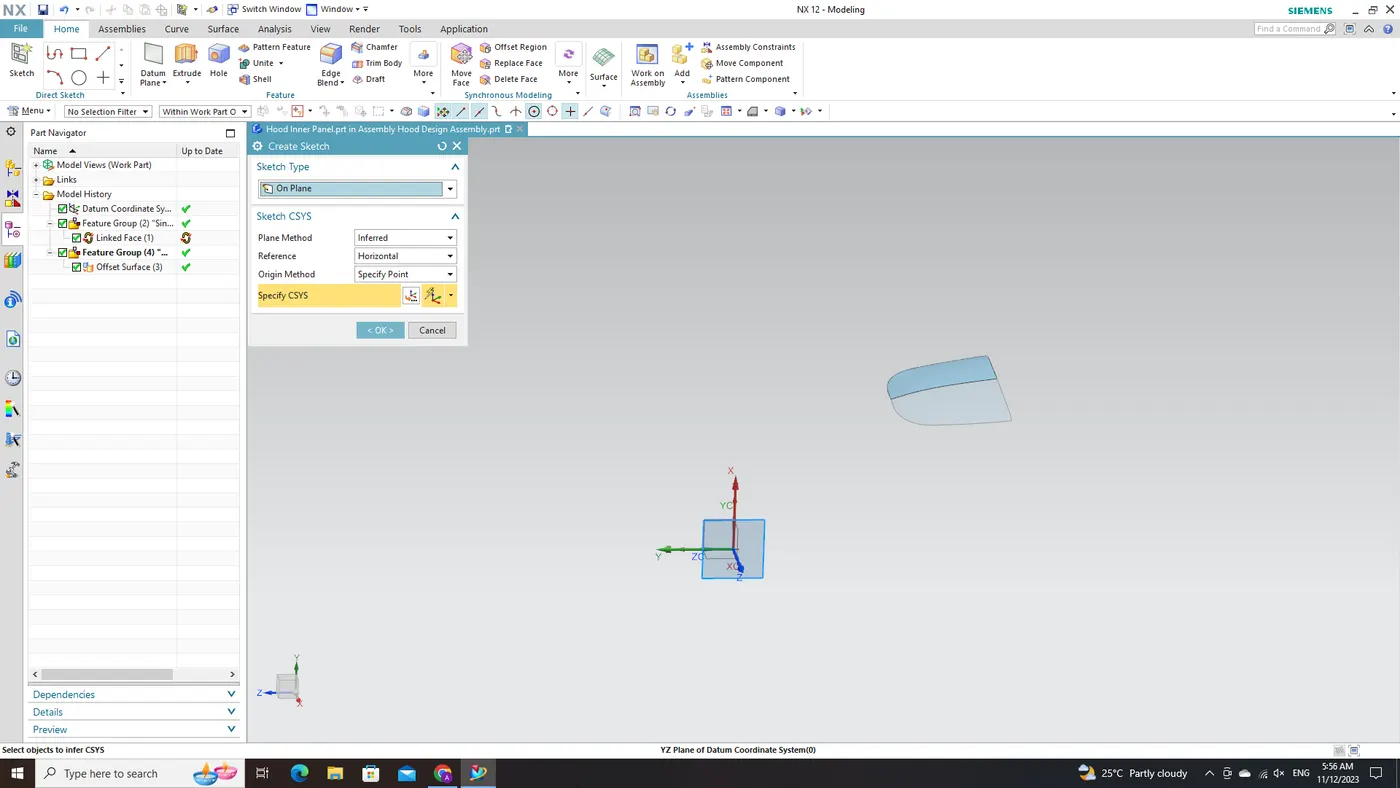
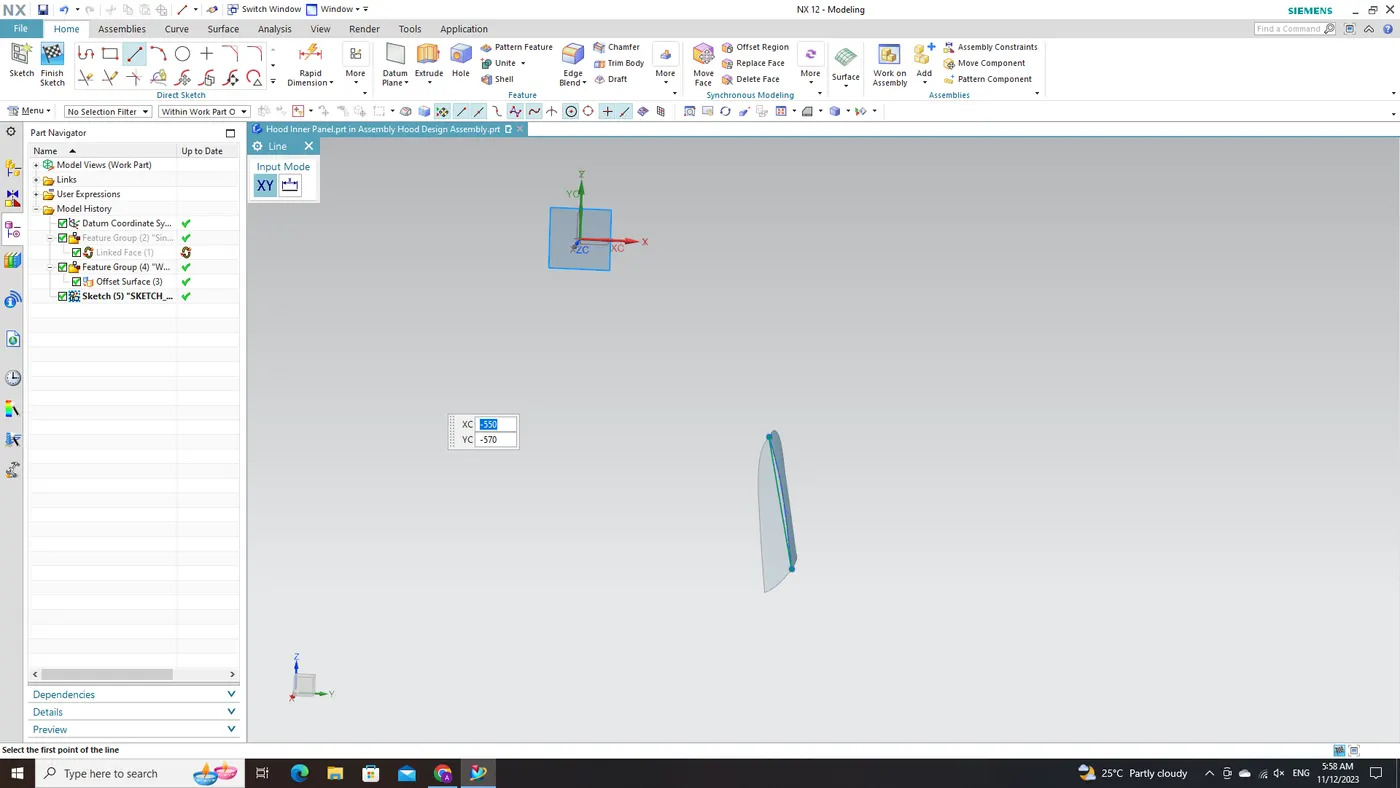
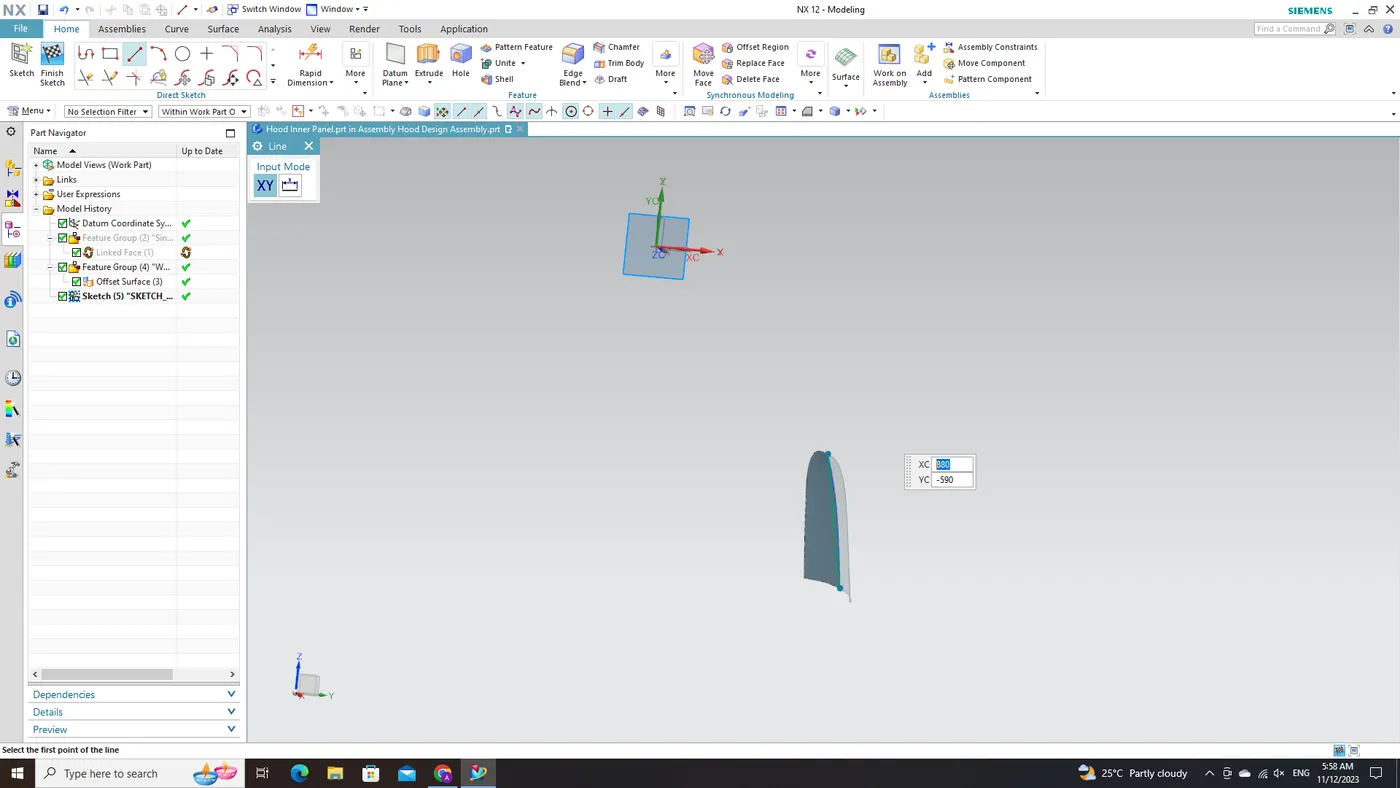
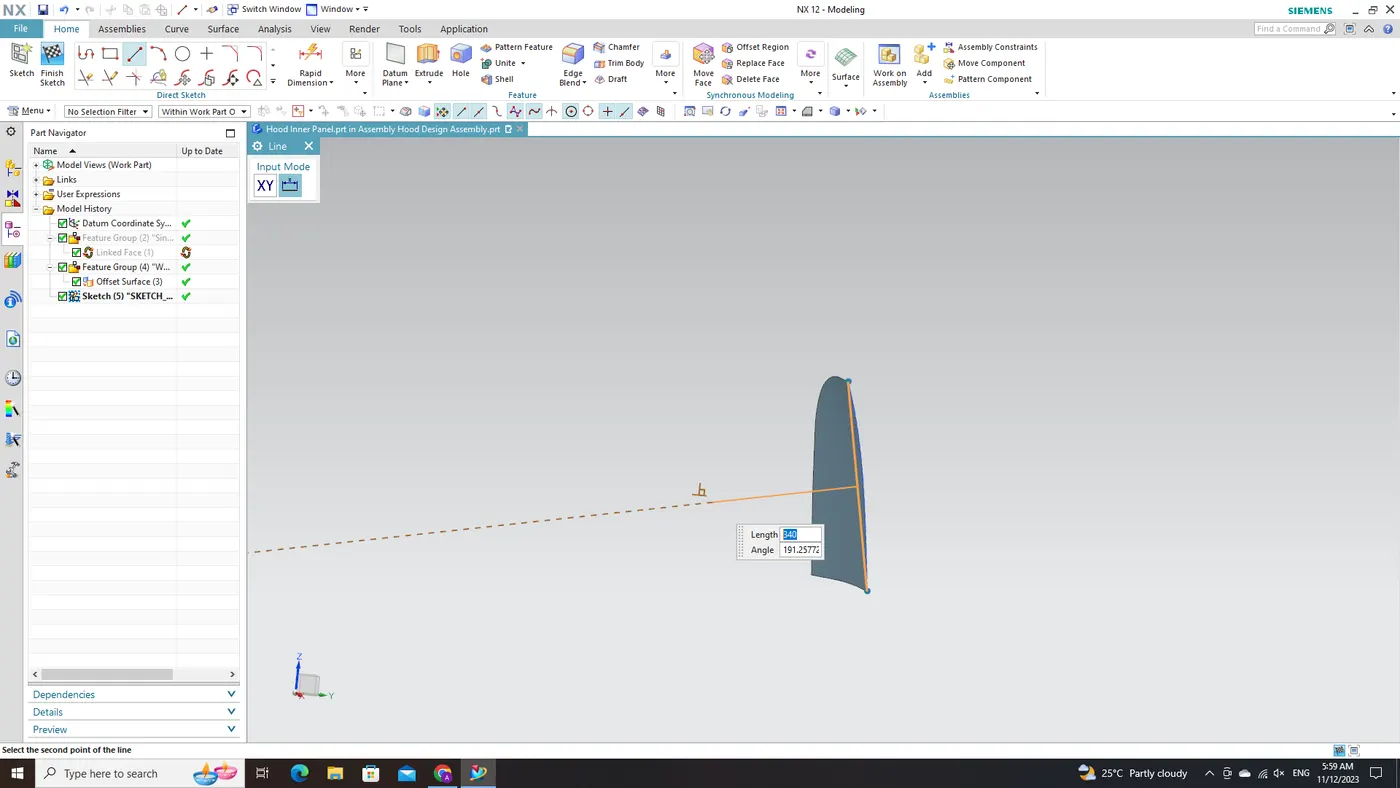
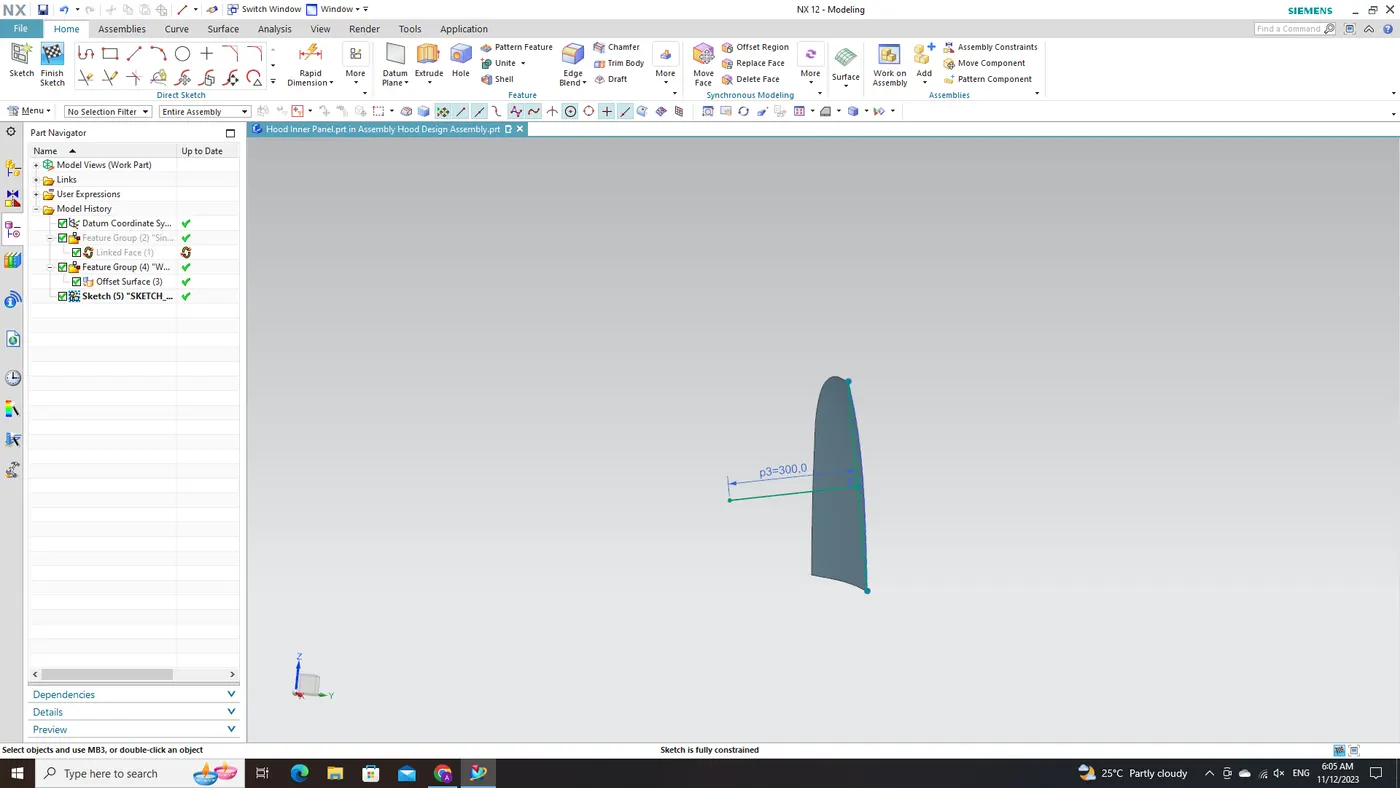
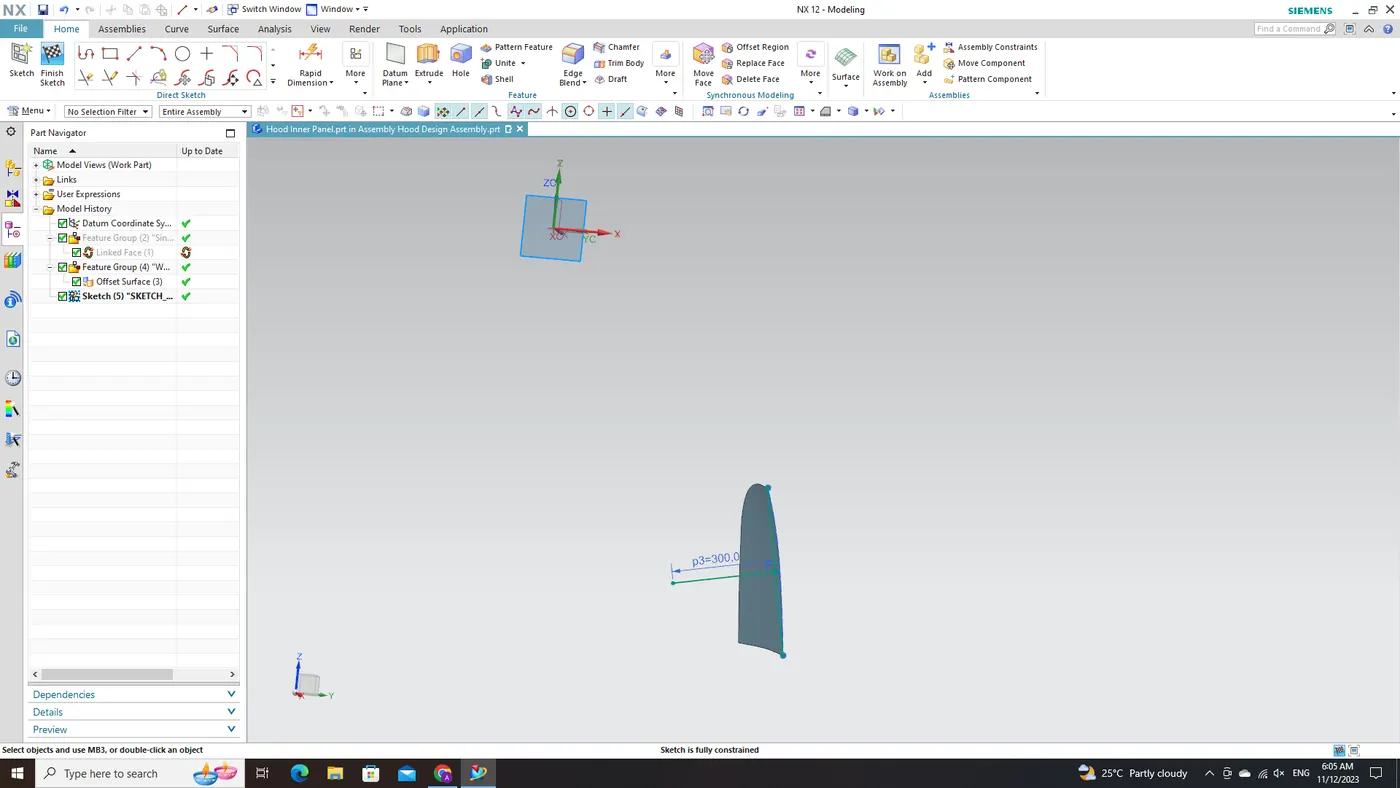
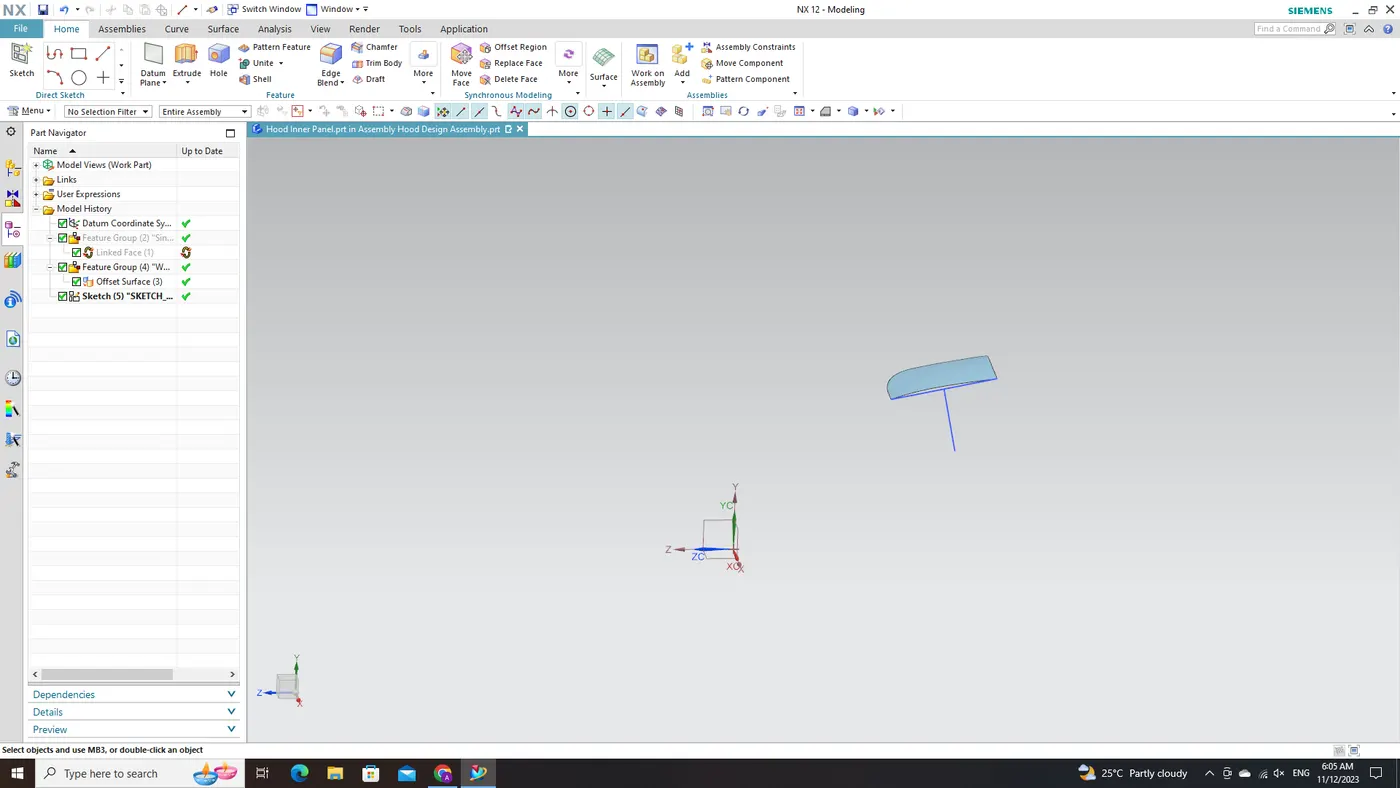
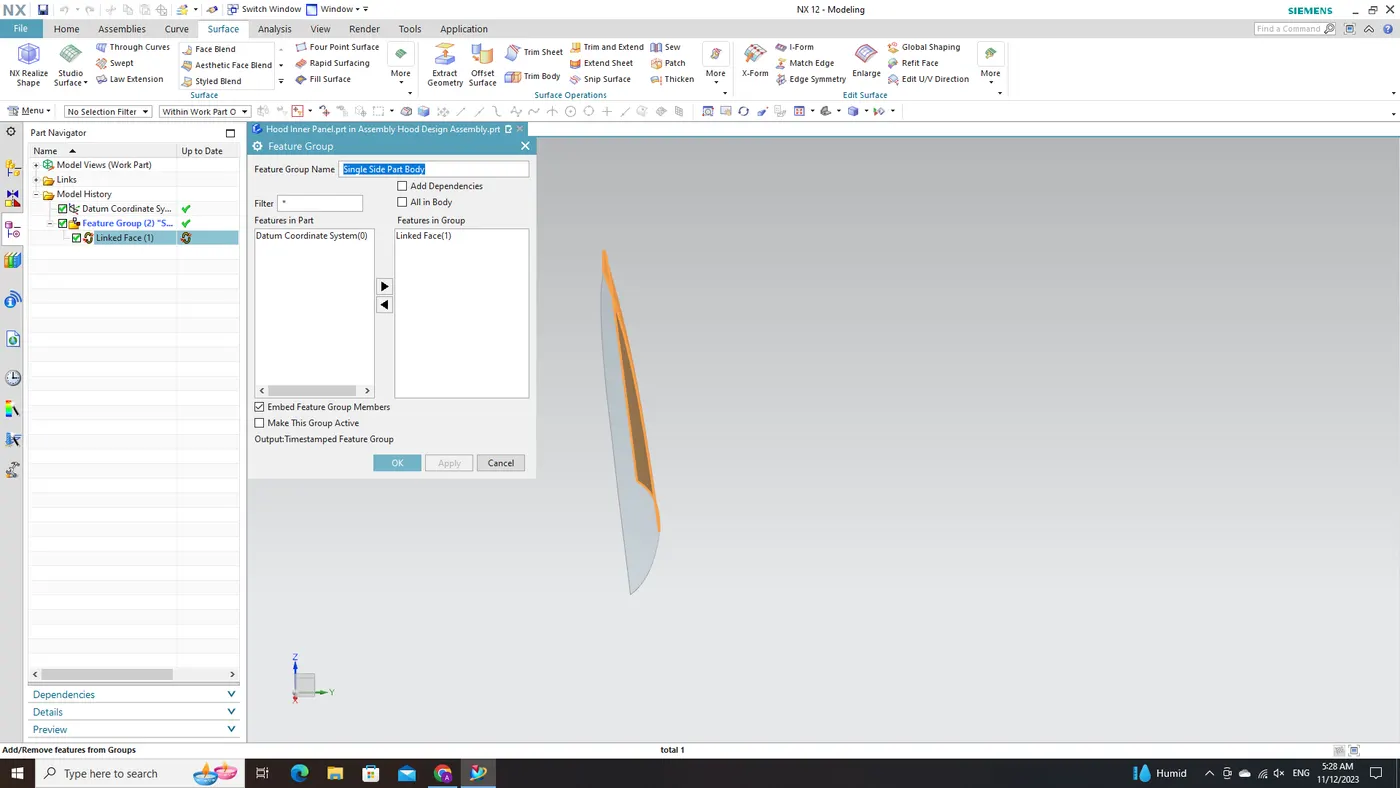
Adding the single or bunch of commands into a group which is called as Feature Group in this software.
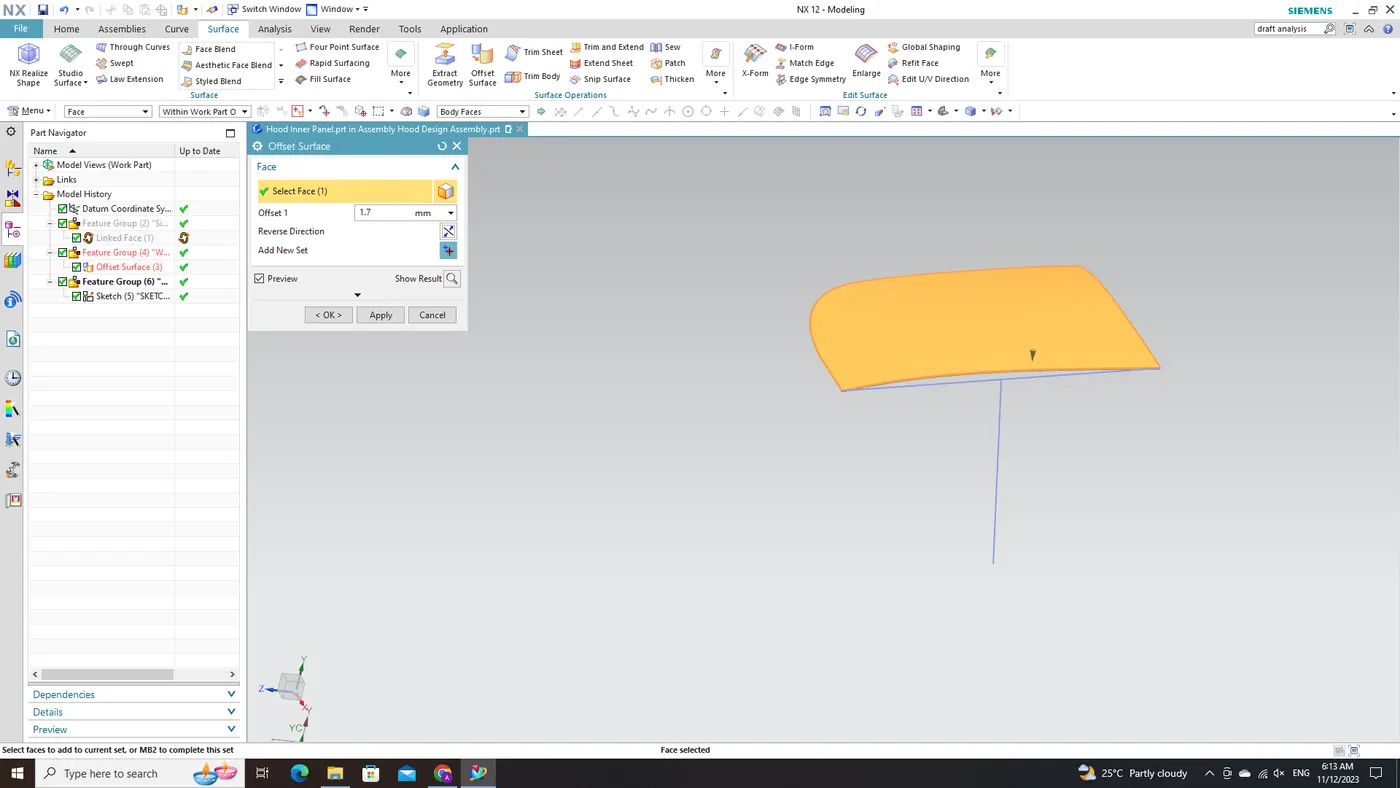
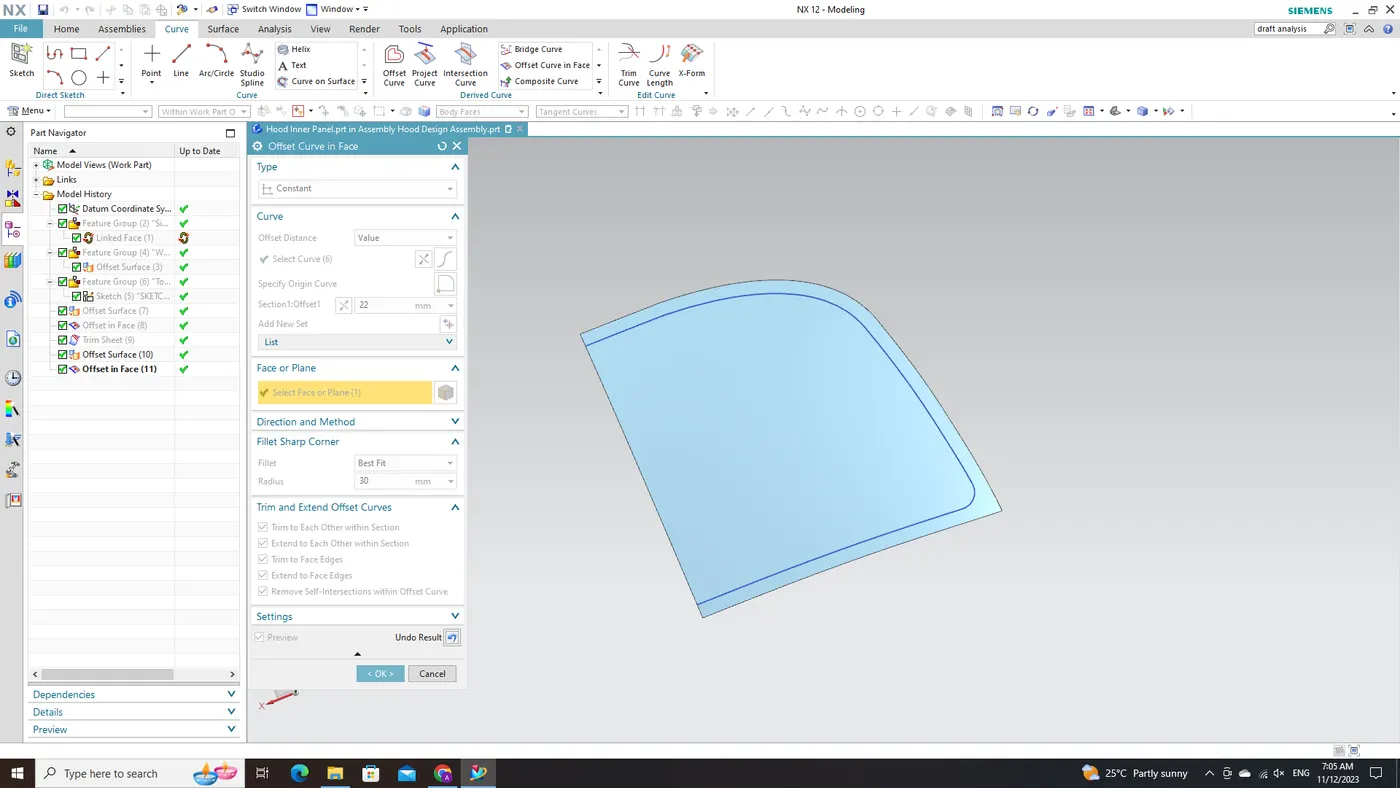
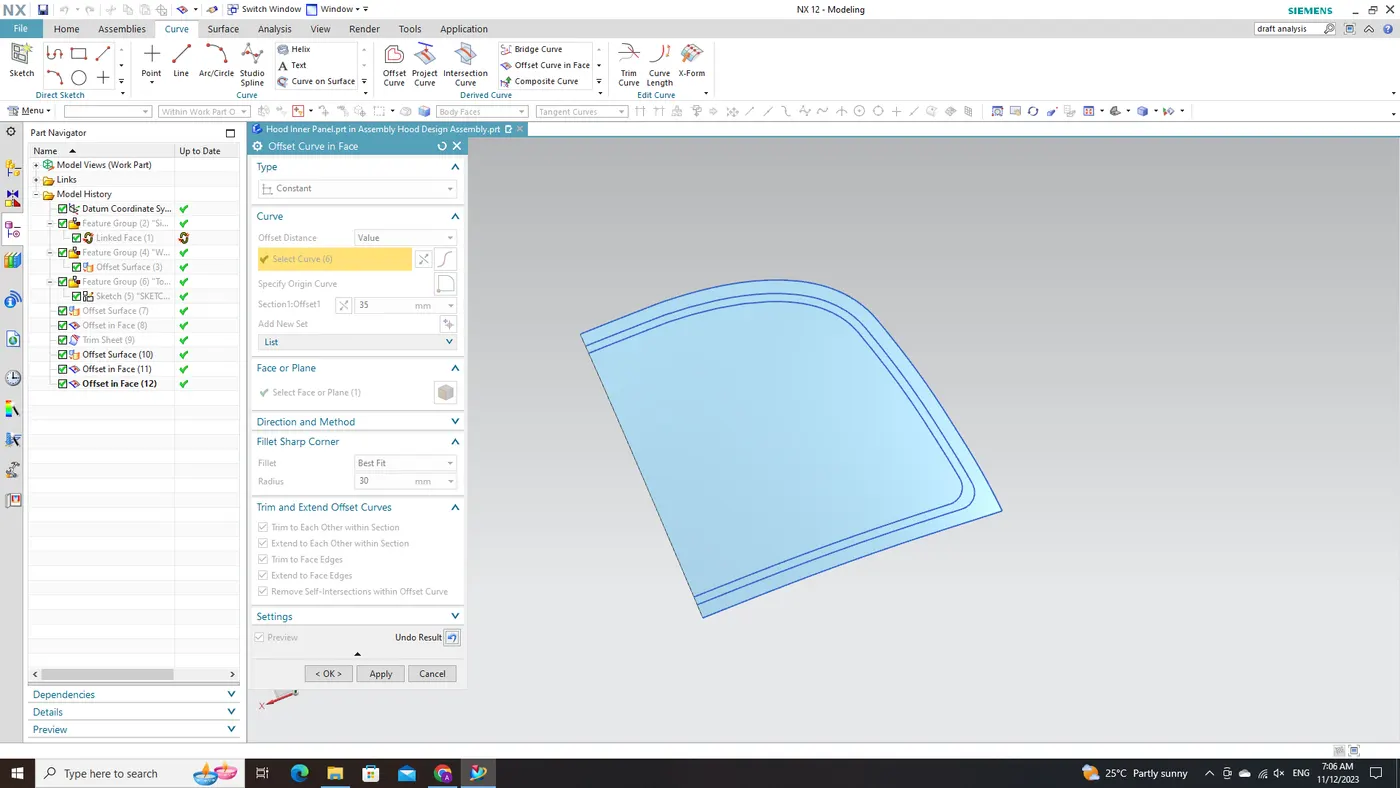
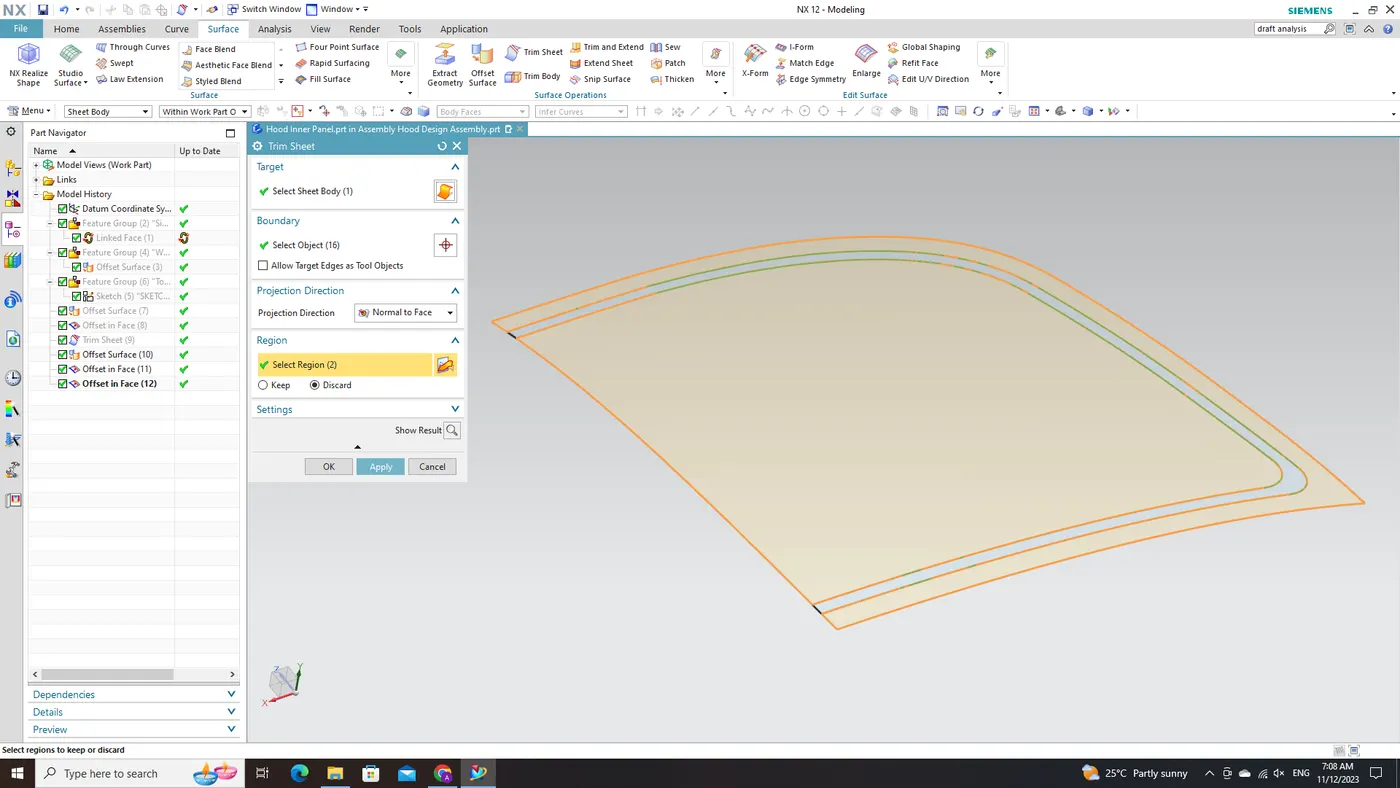
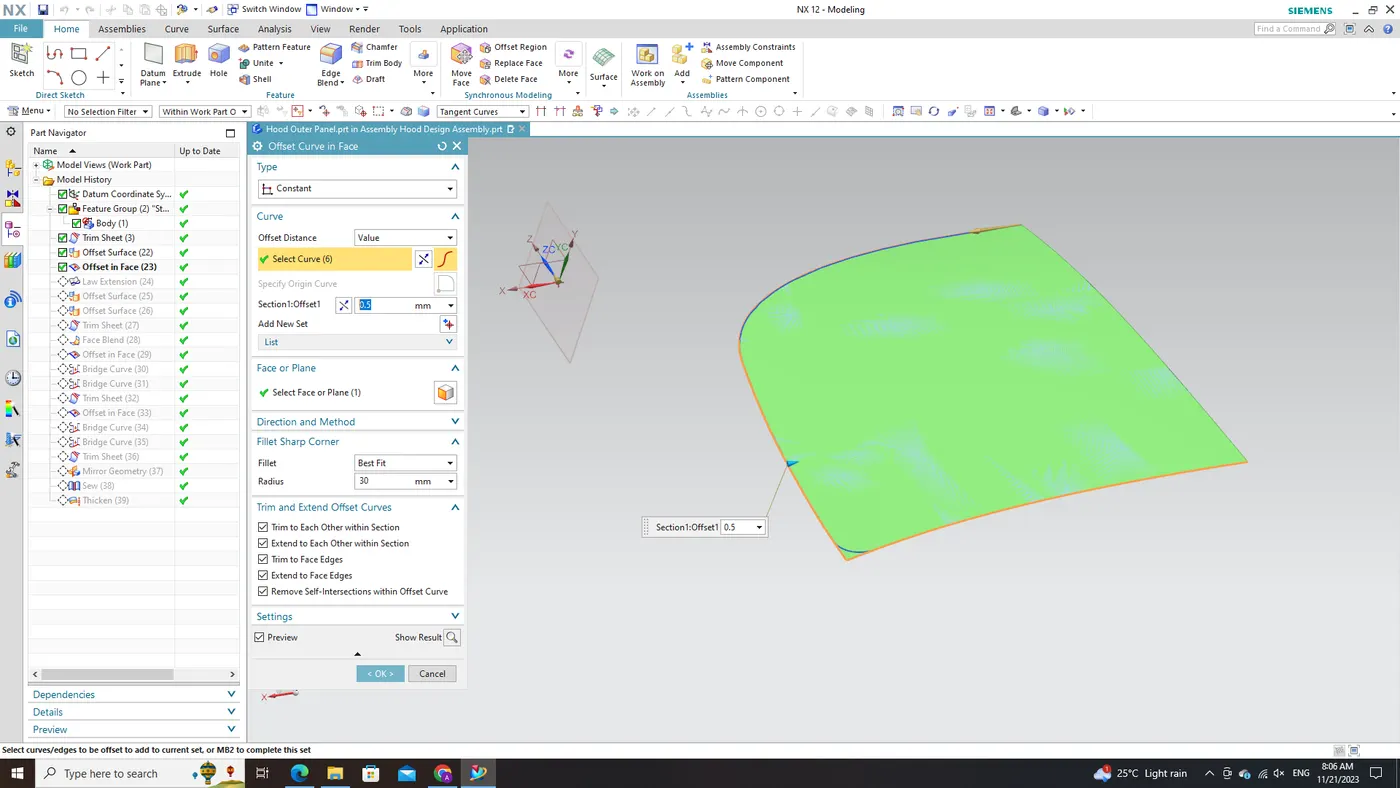
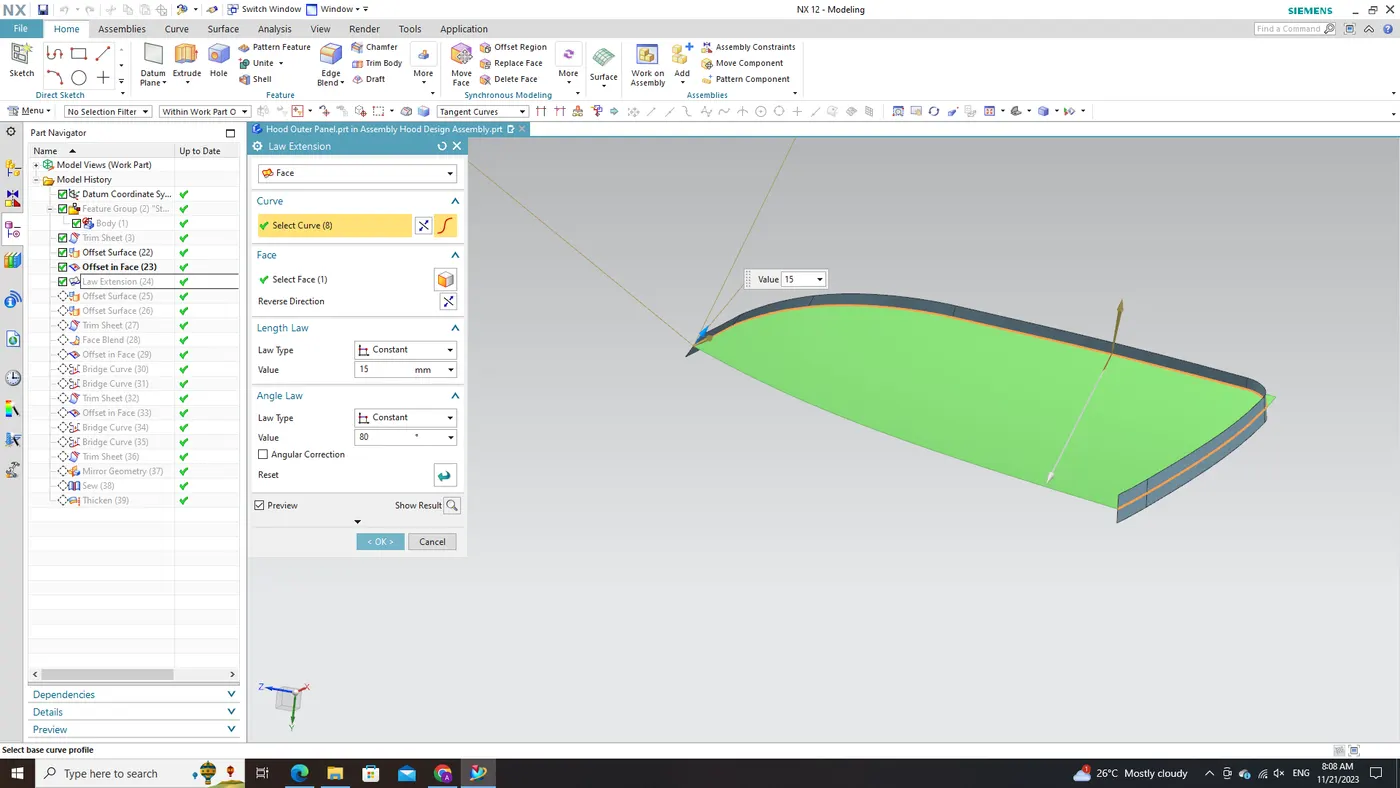
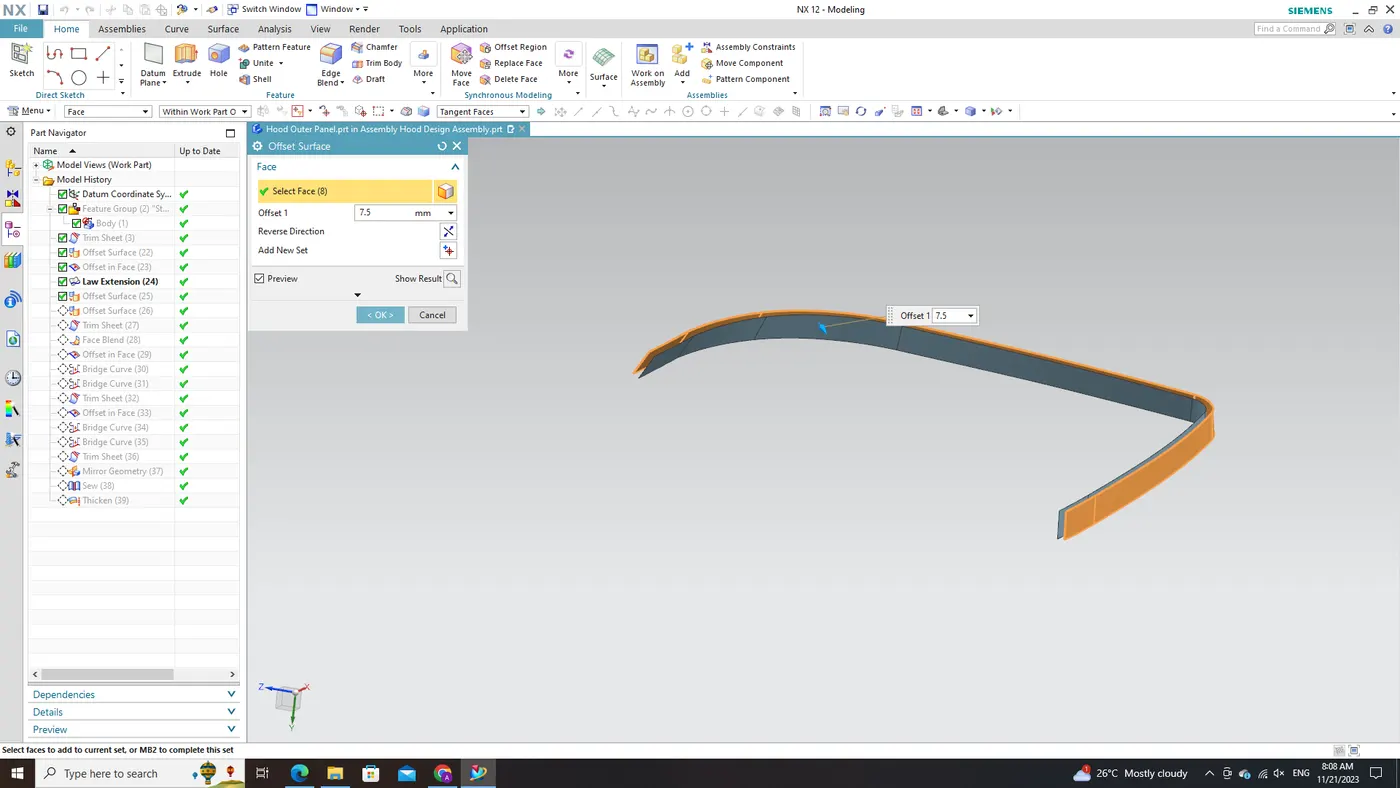
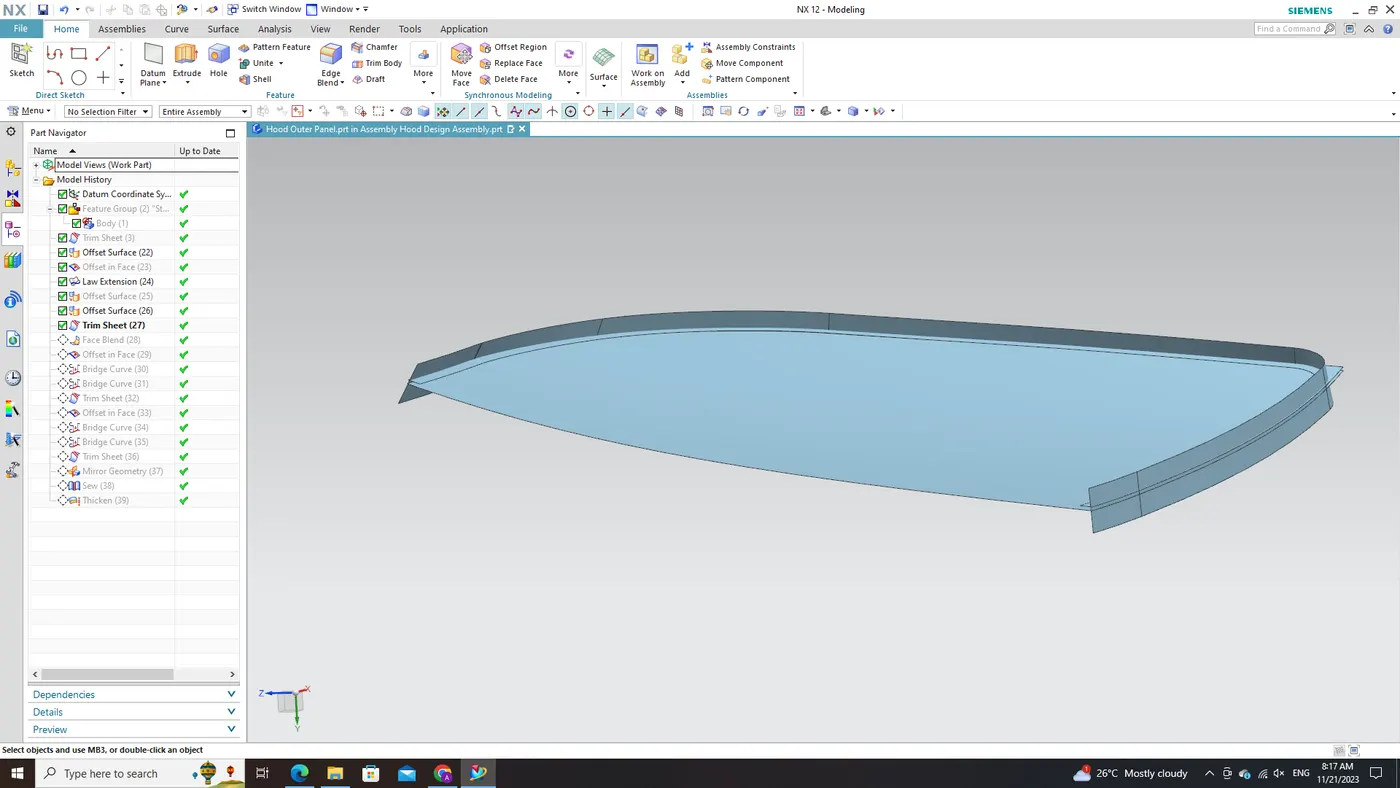
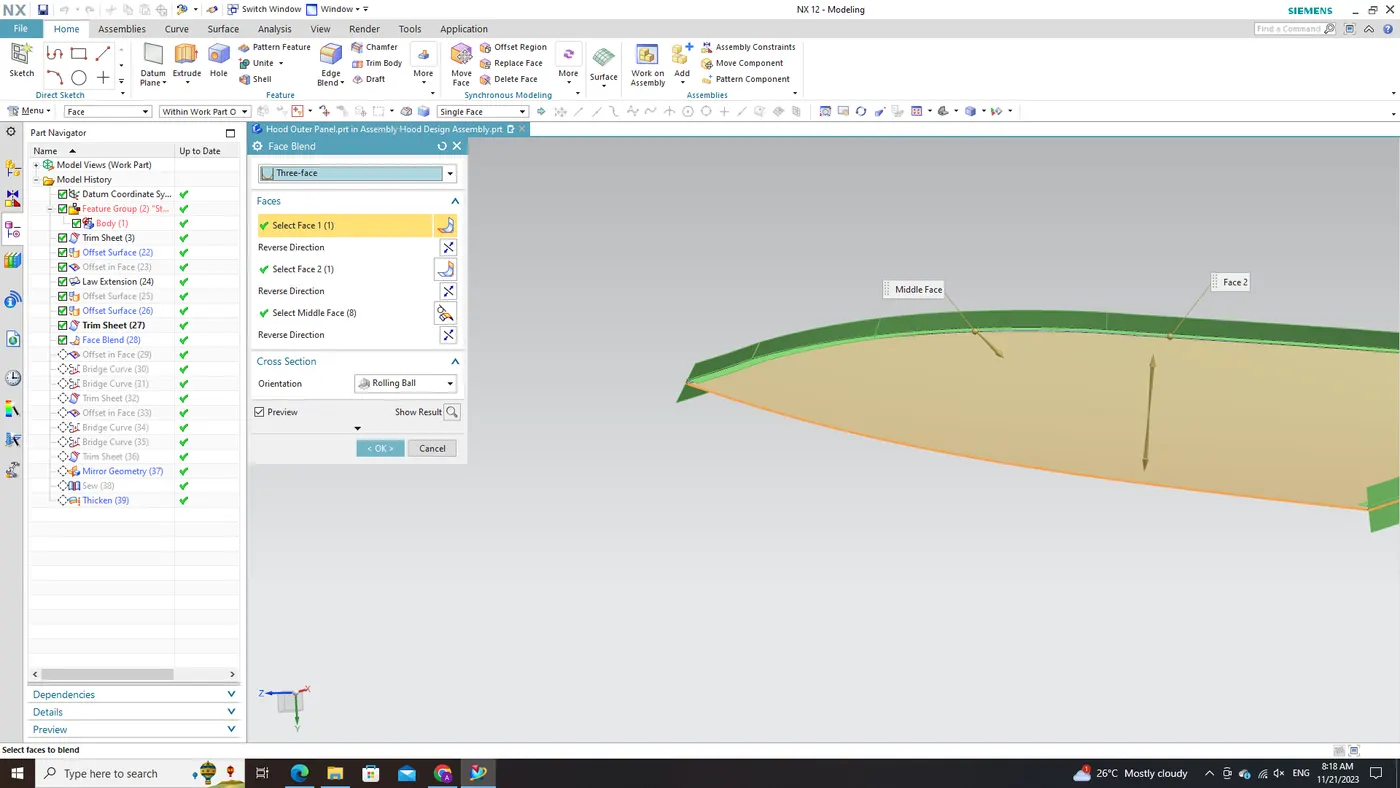
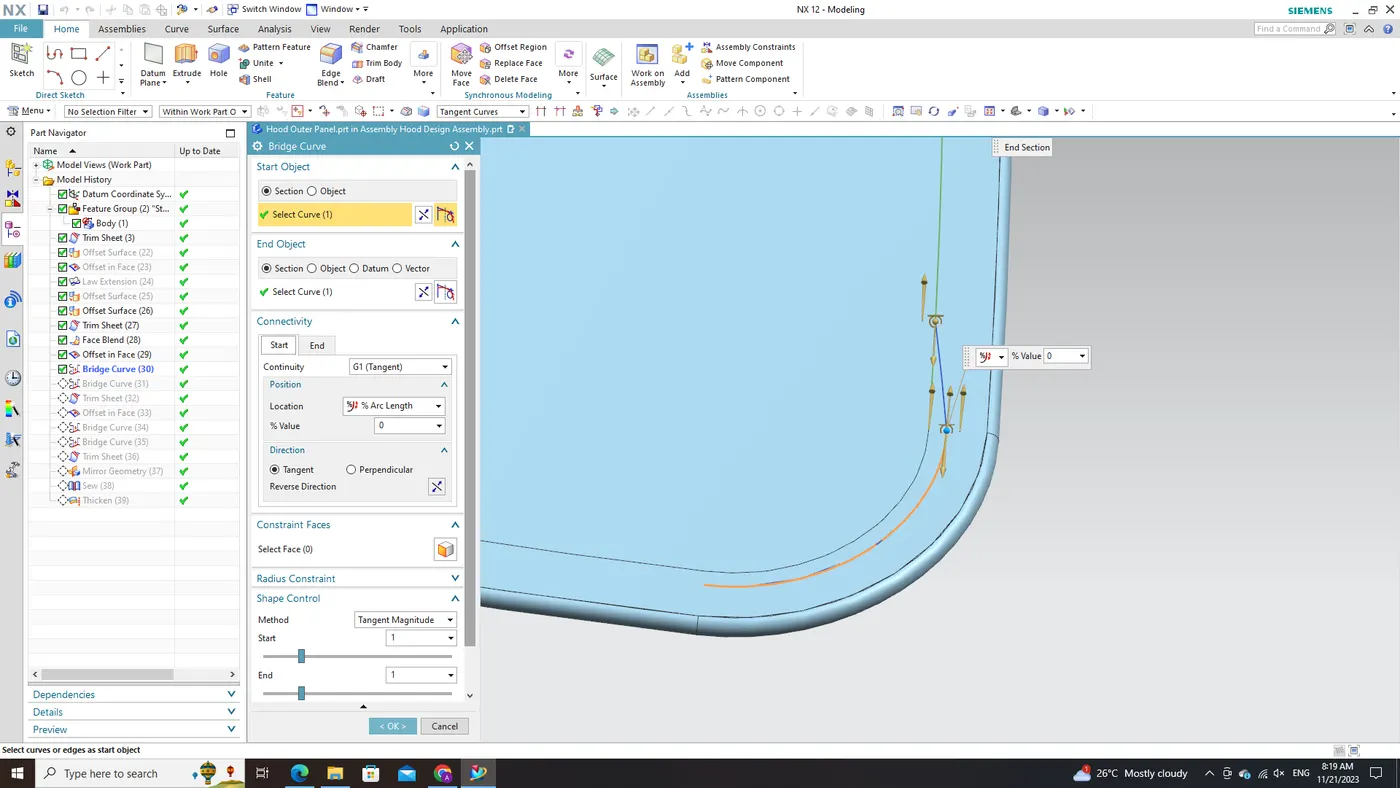
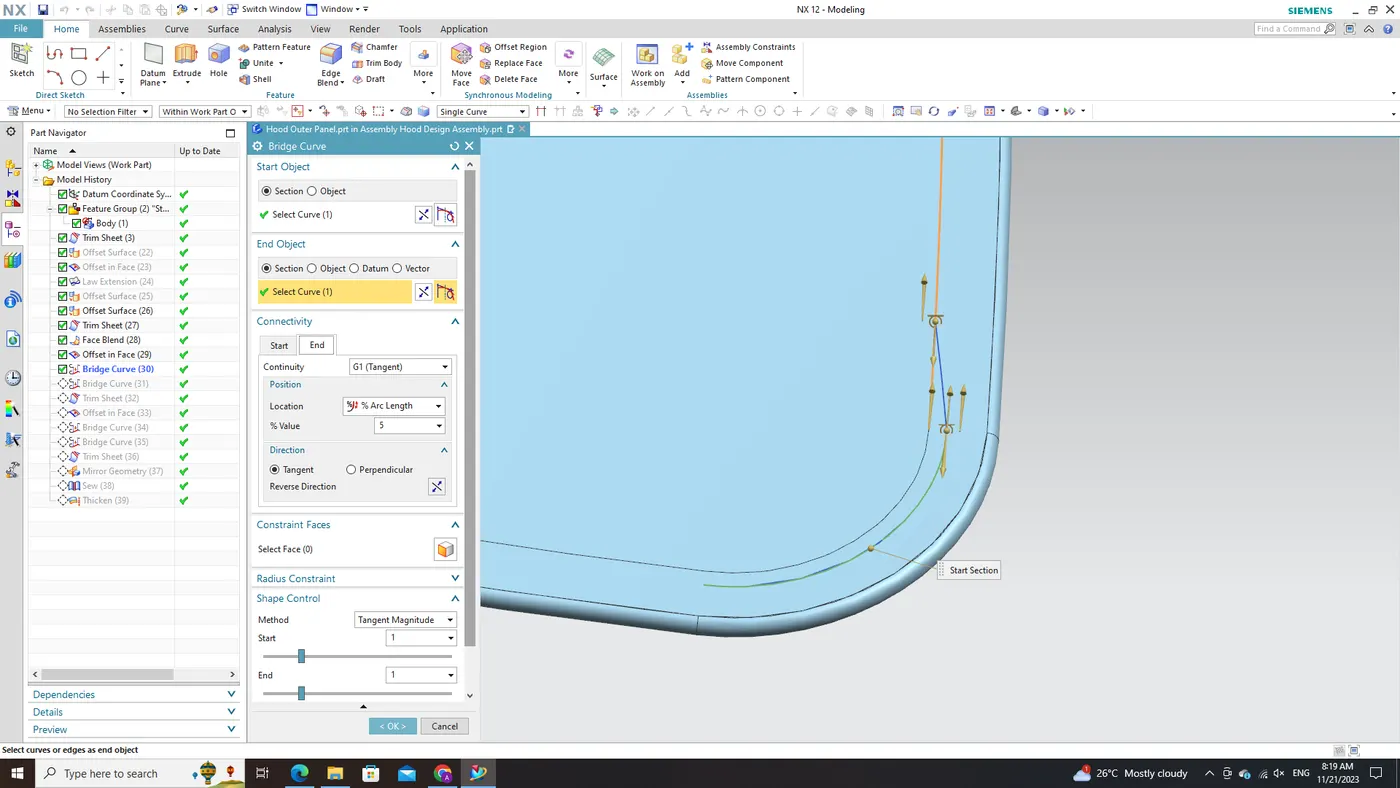
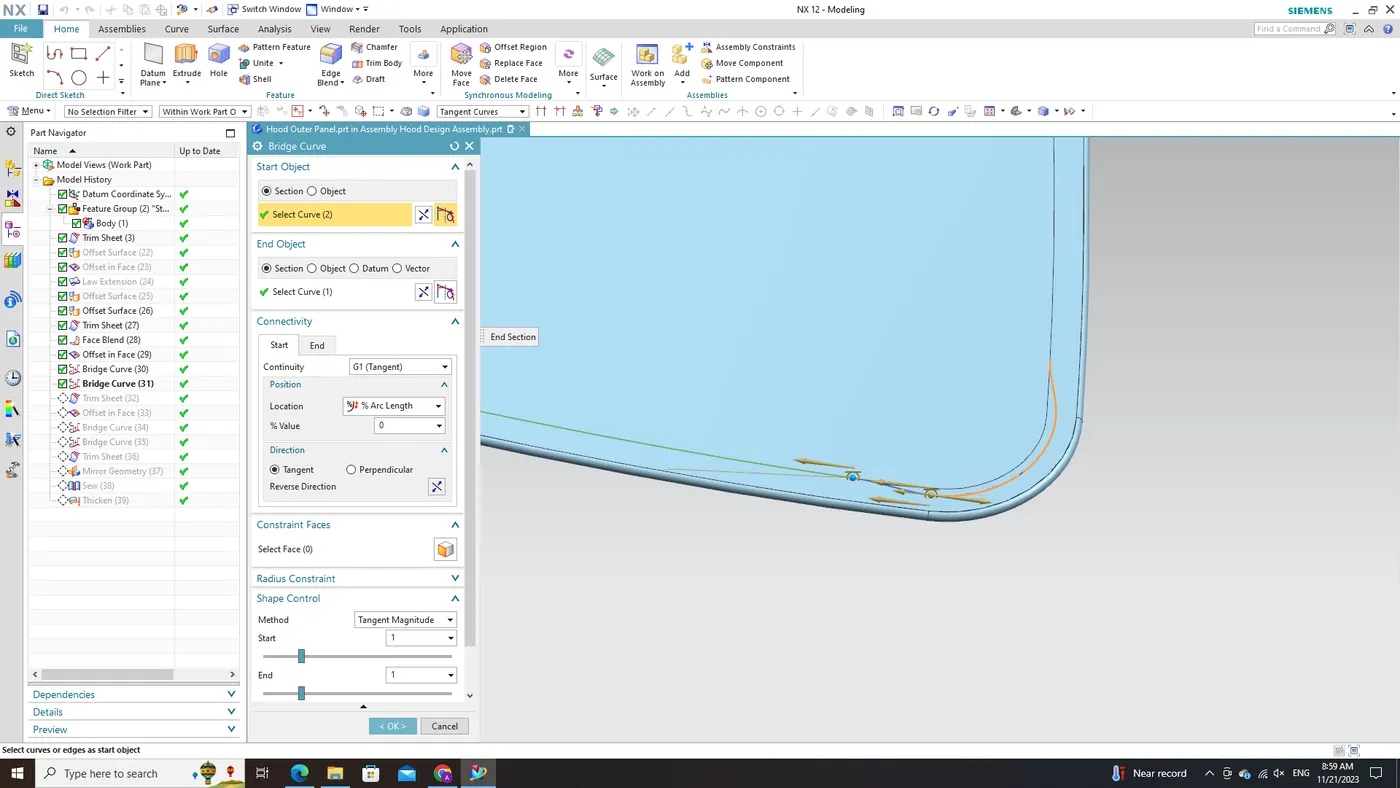
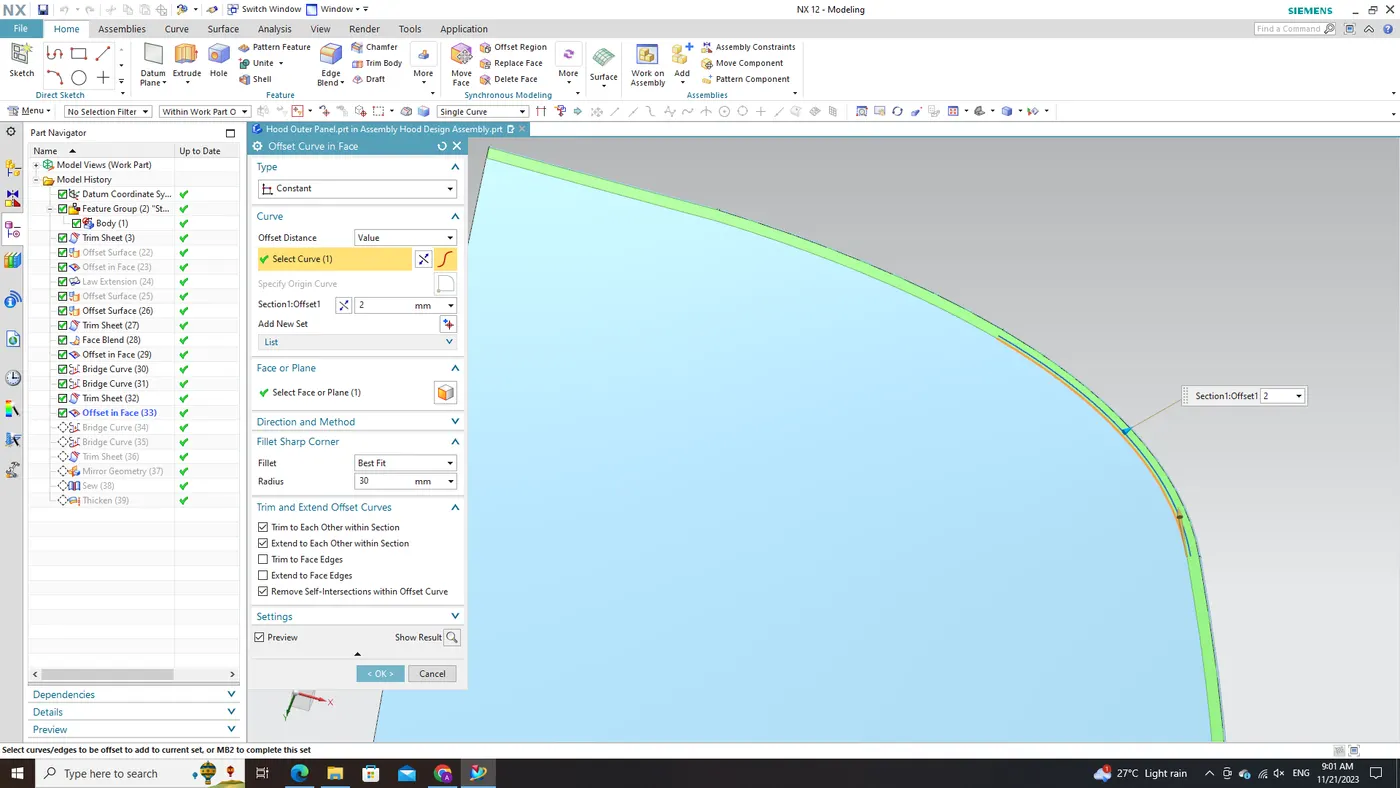
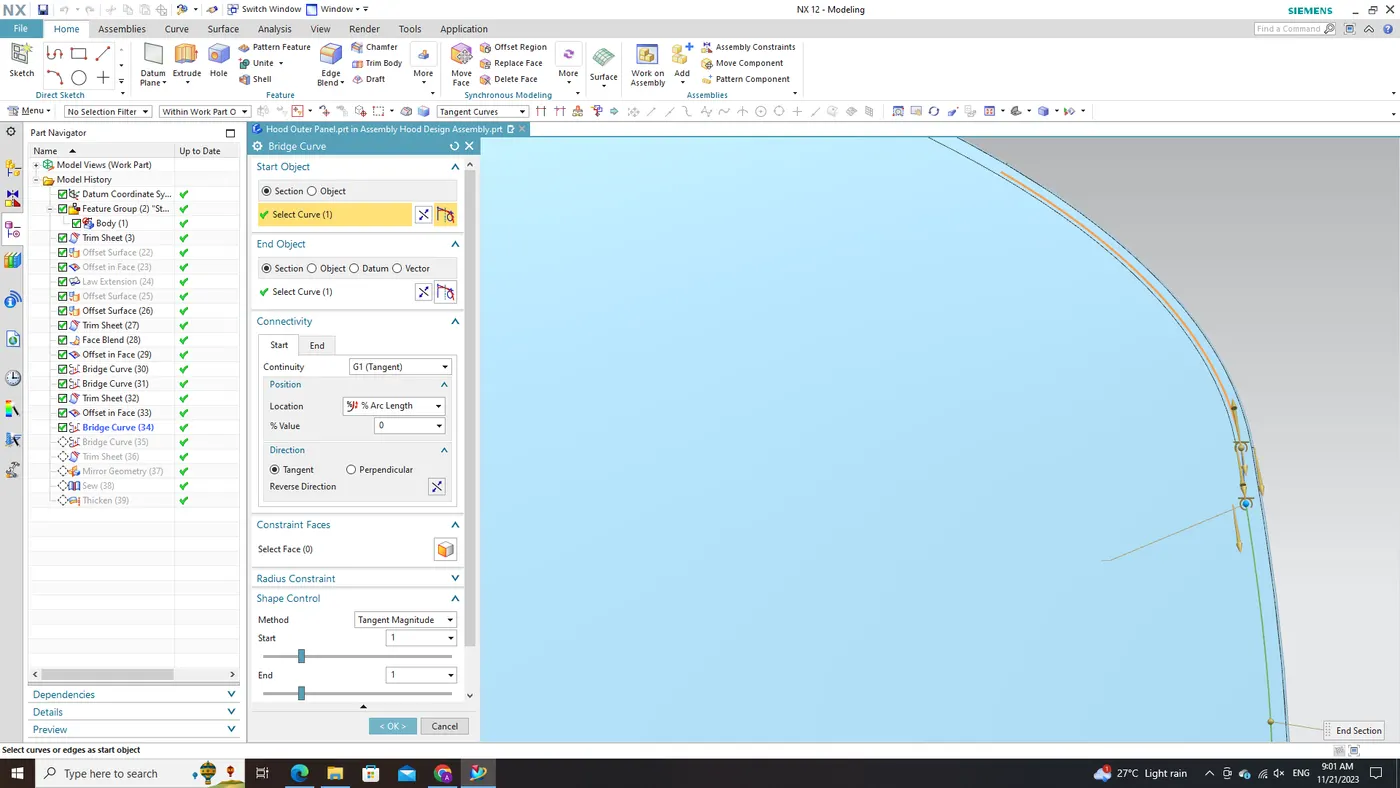
We offset the working surface to get those bends and curves as given in the master section for the design of hood.
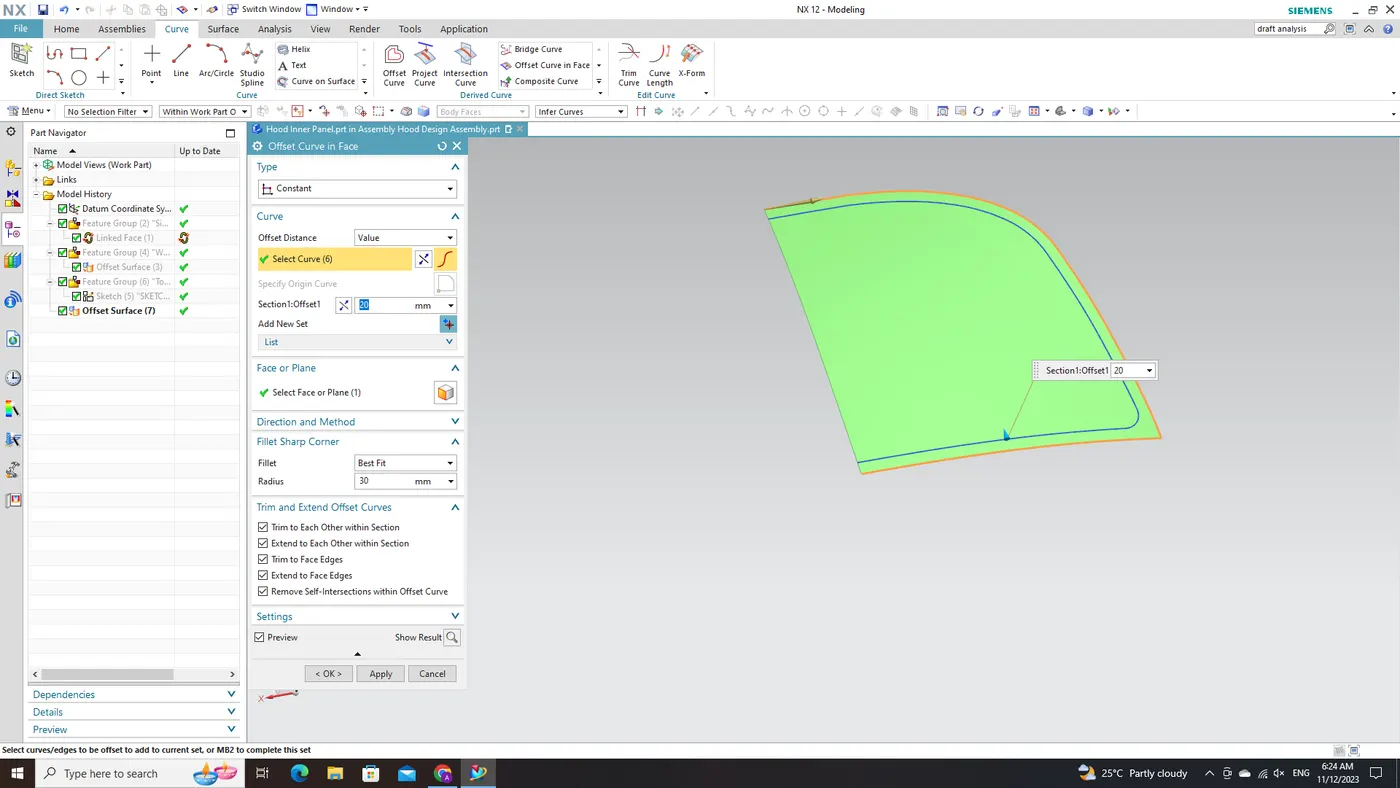
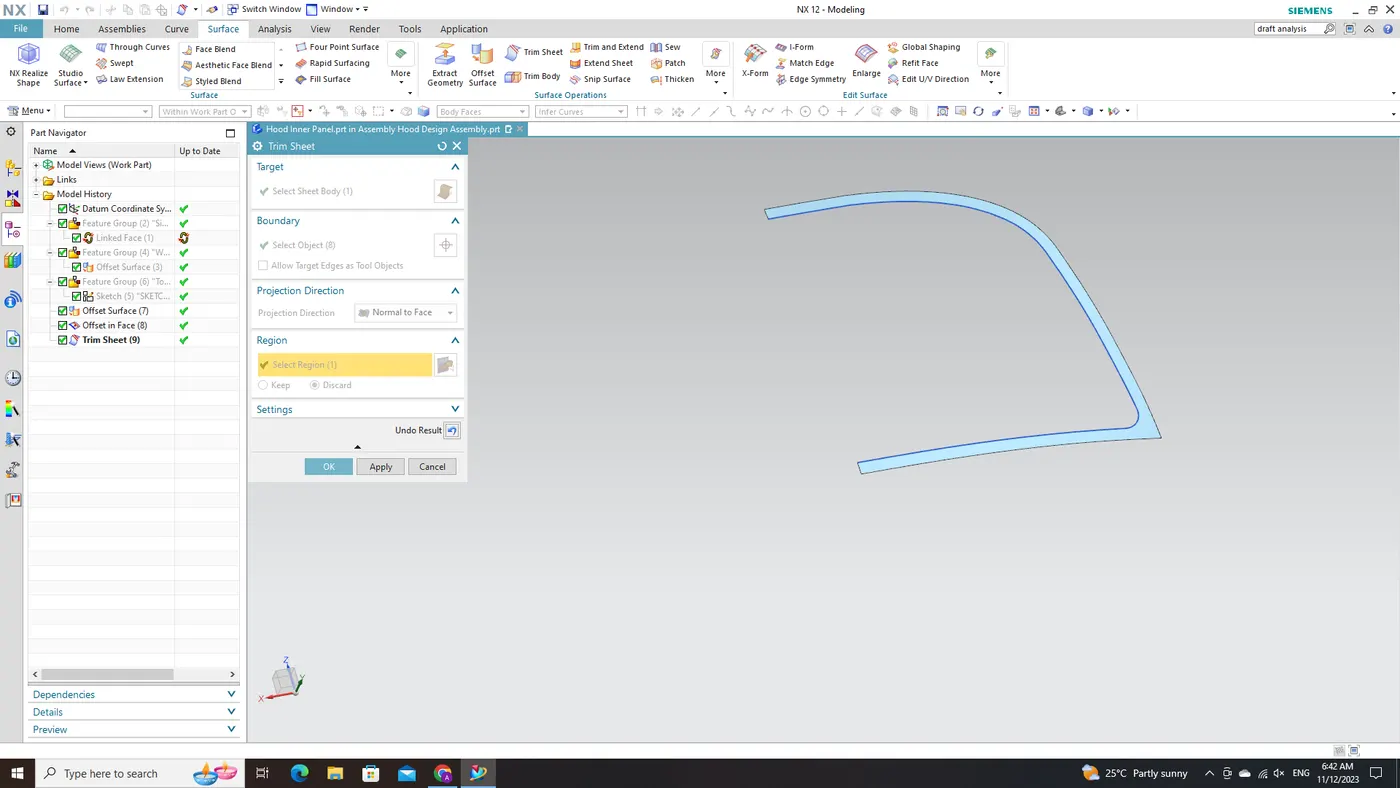
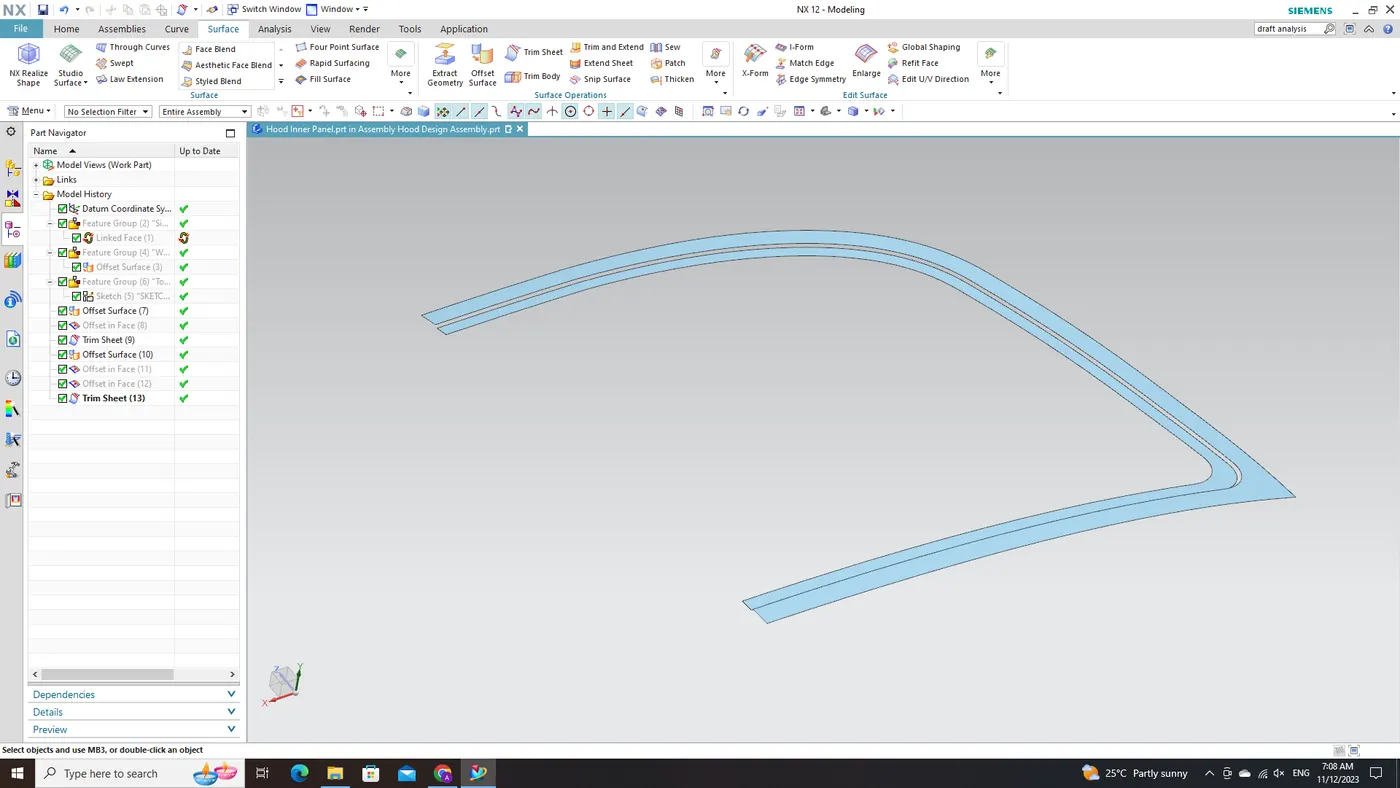
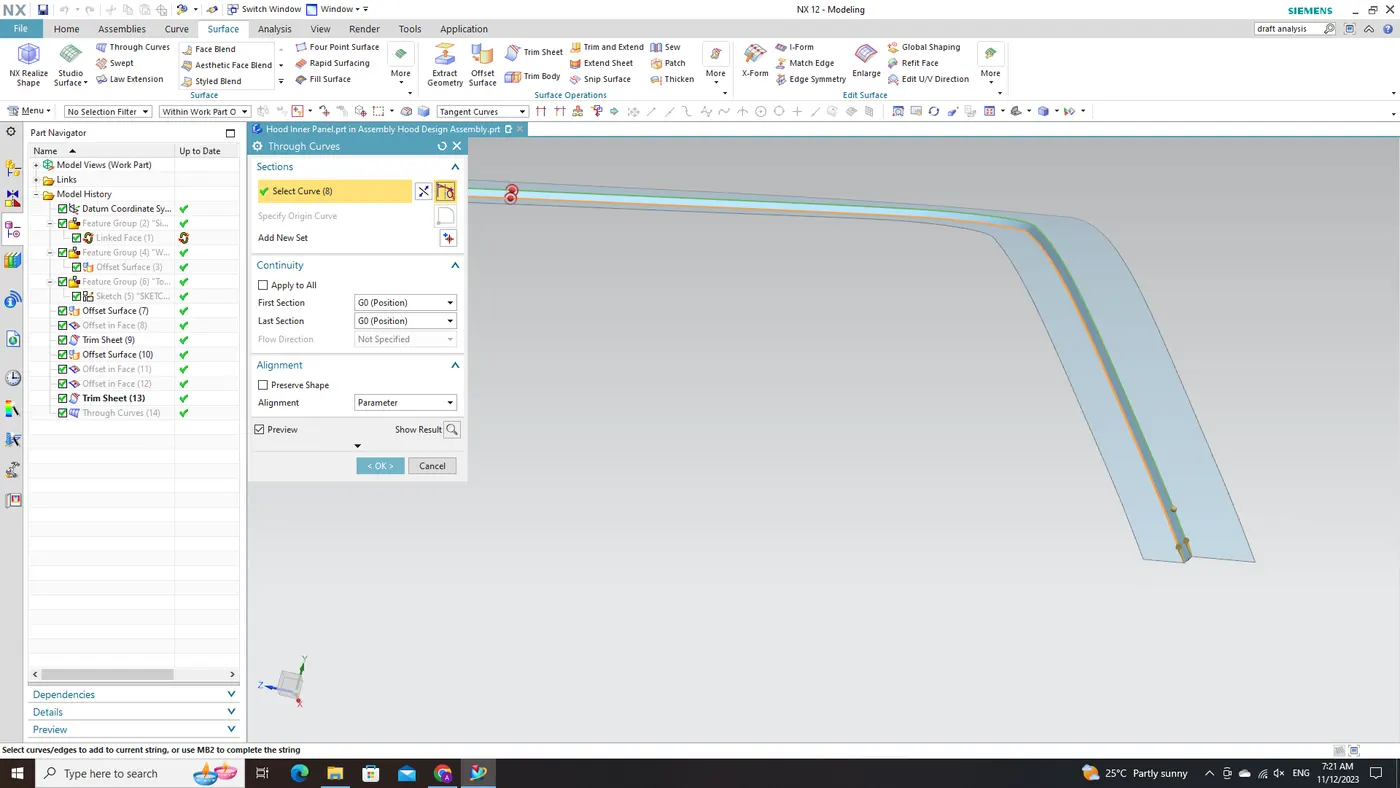
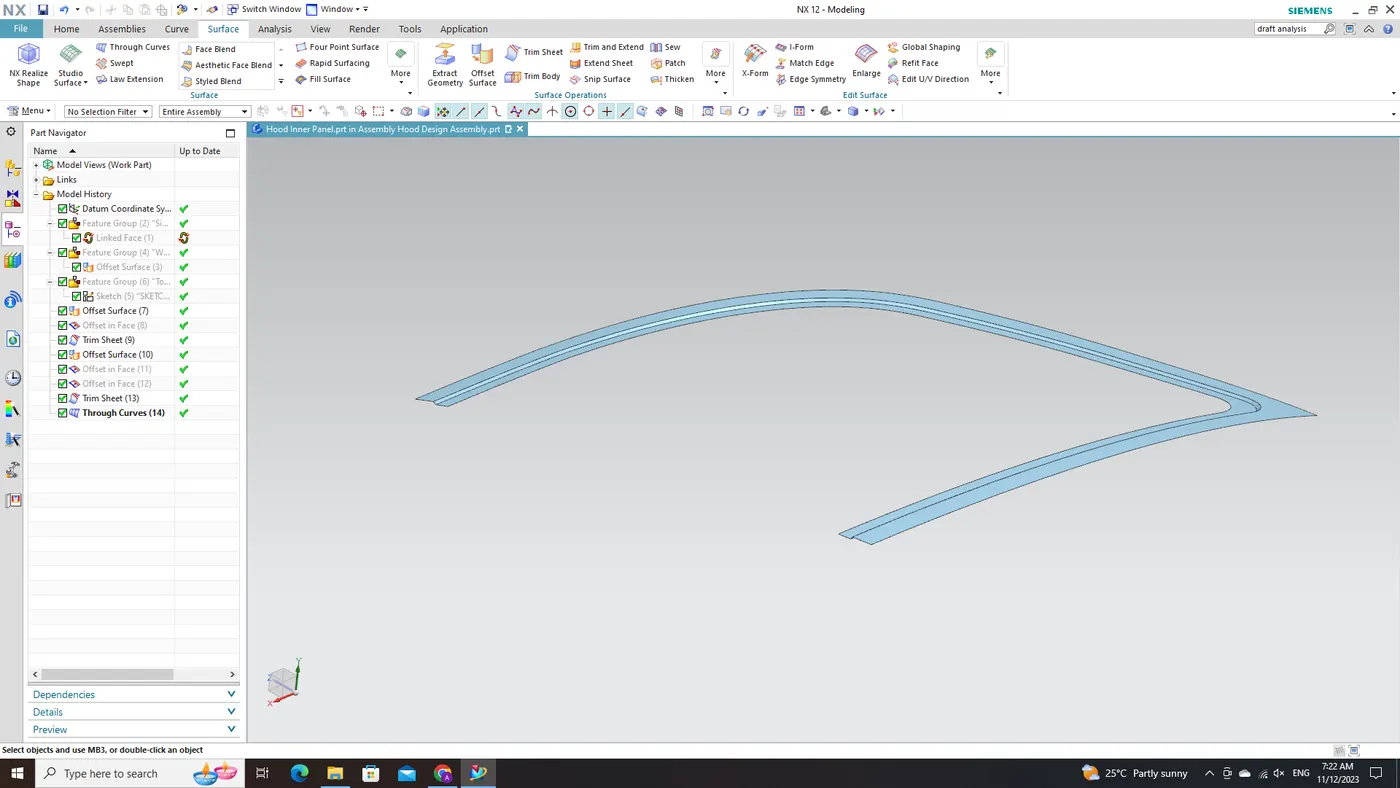
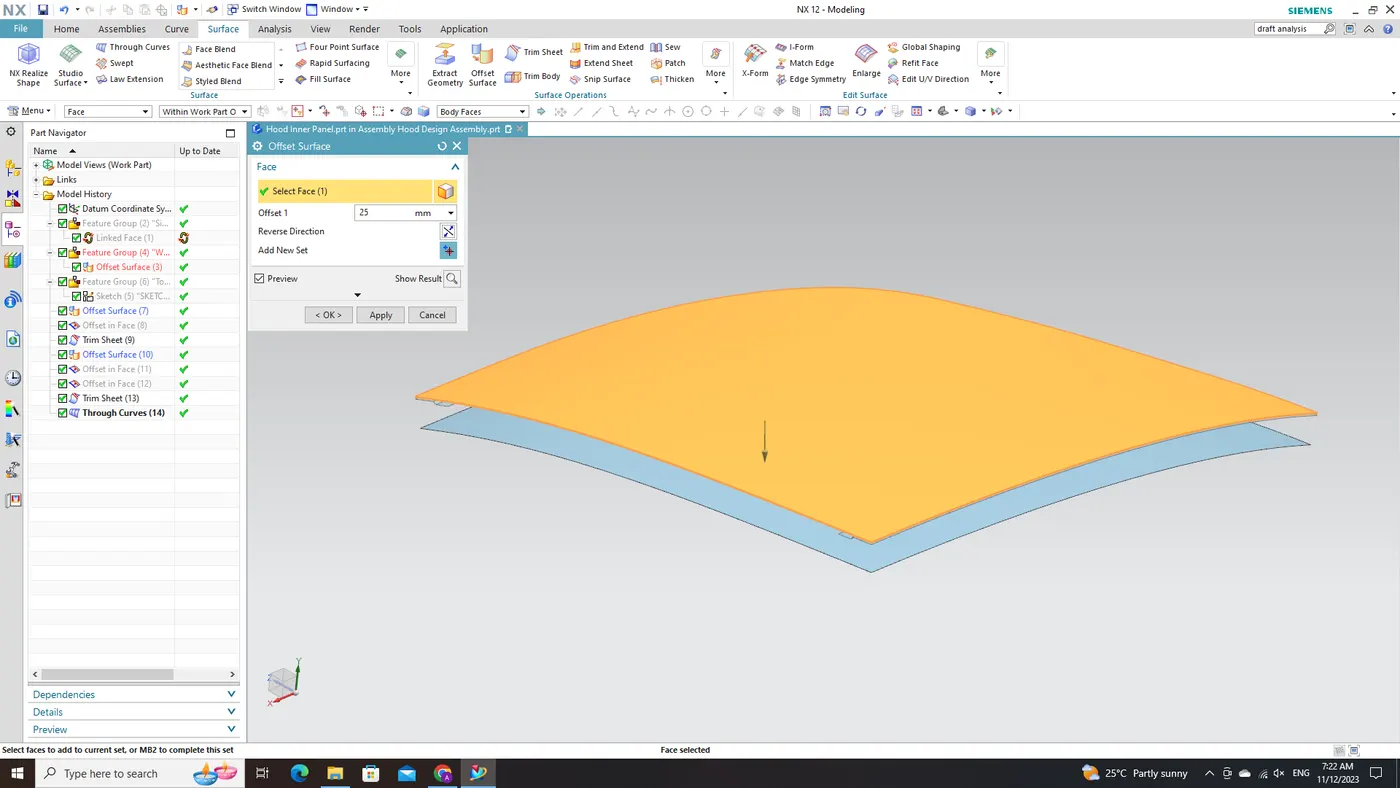
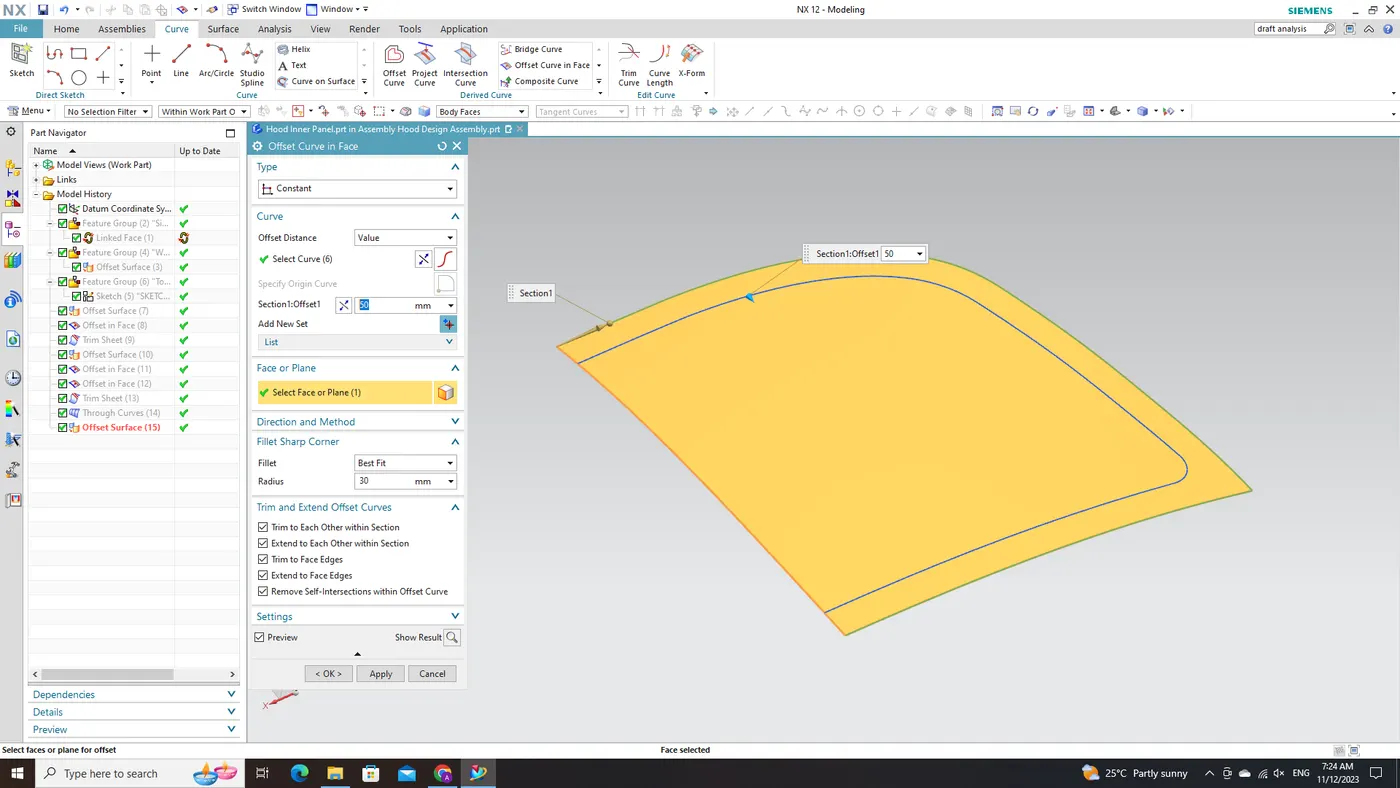
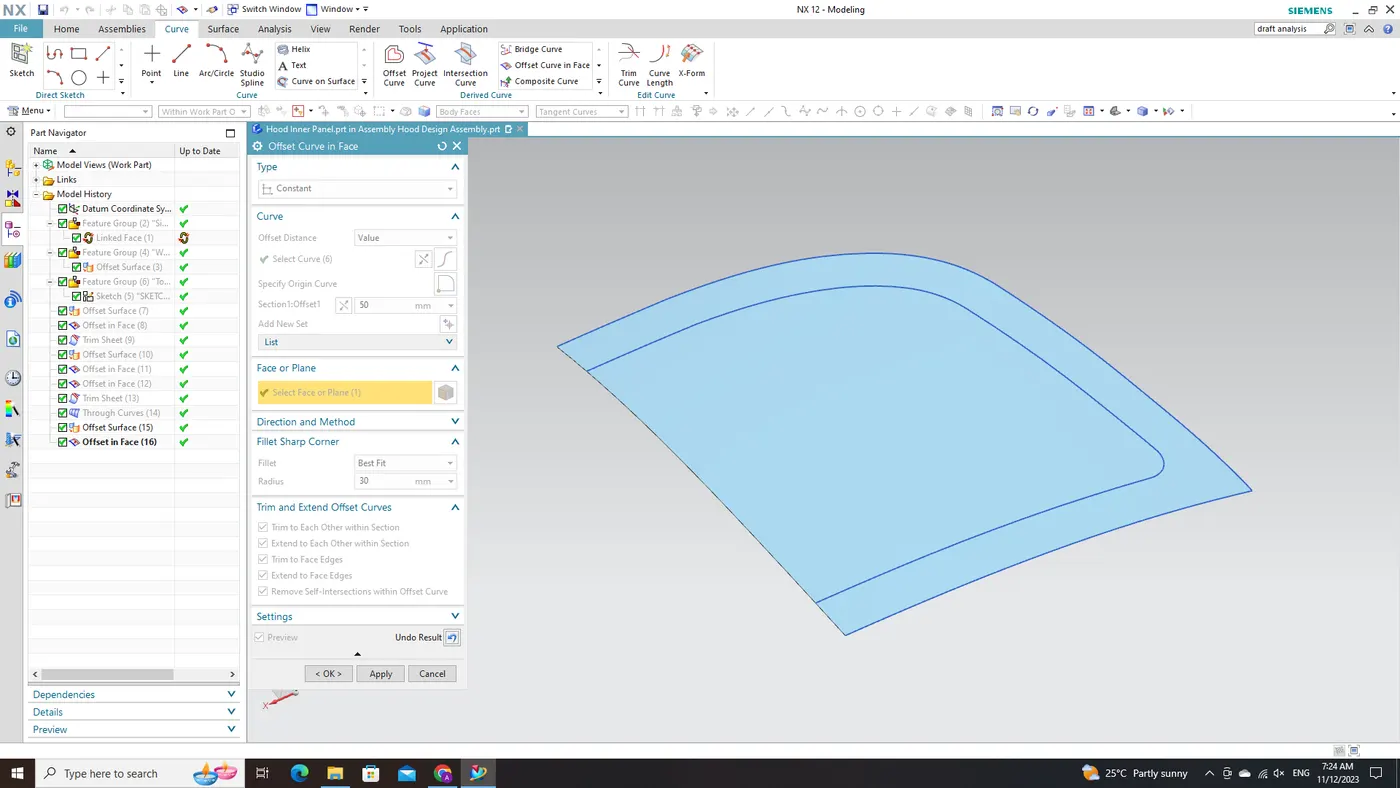
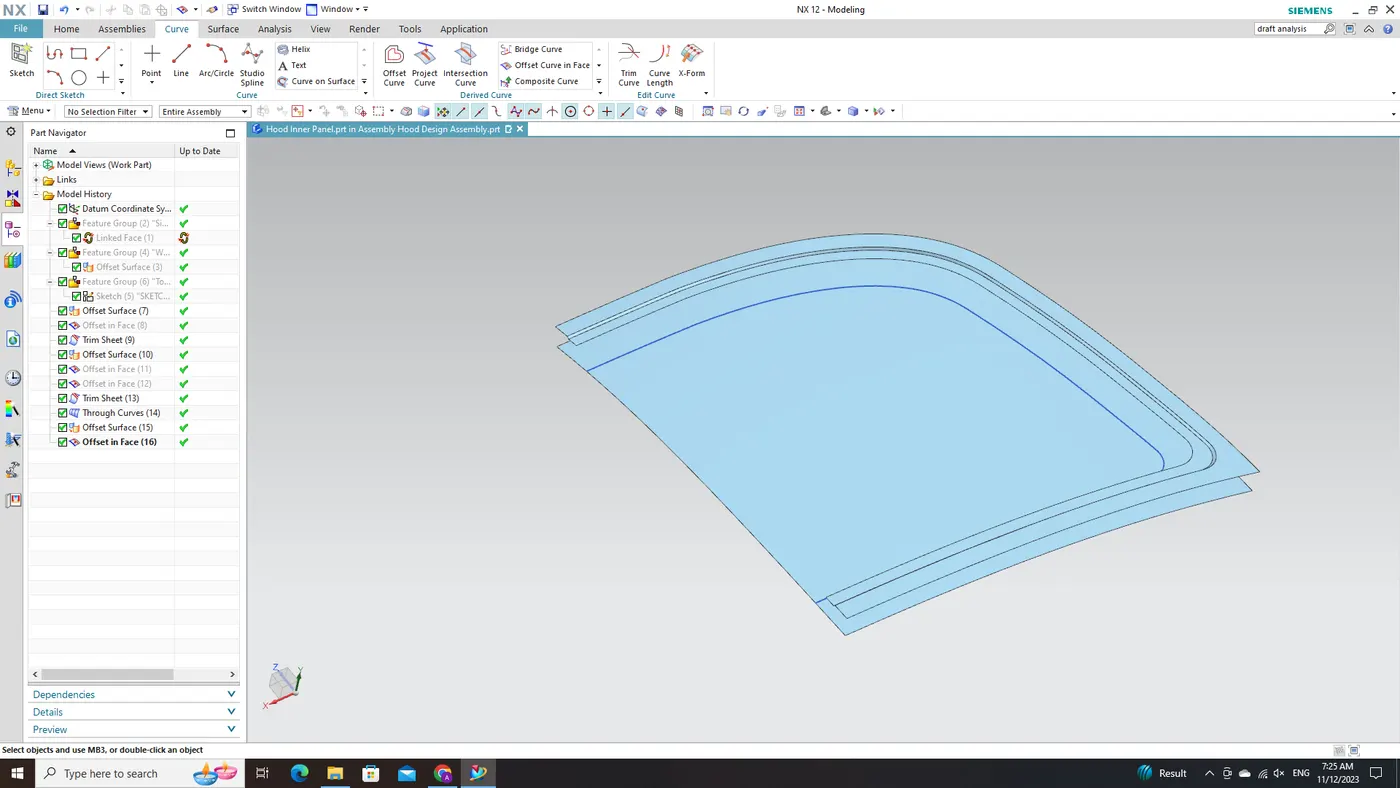
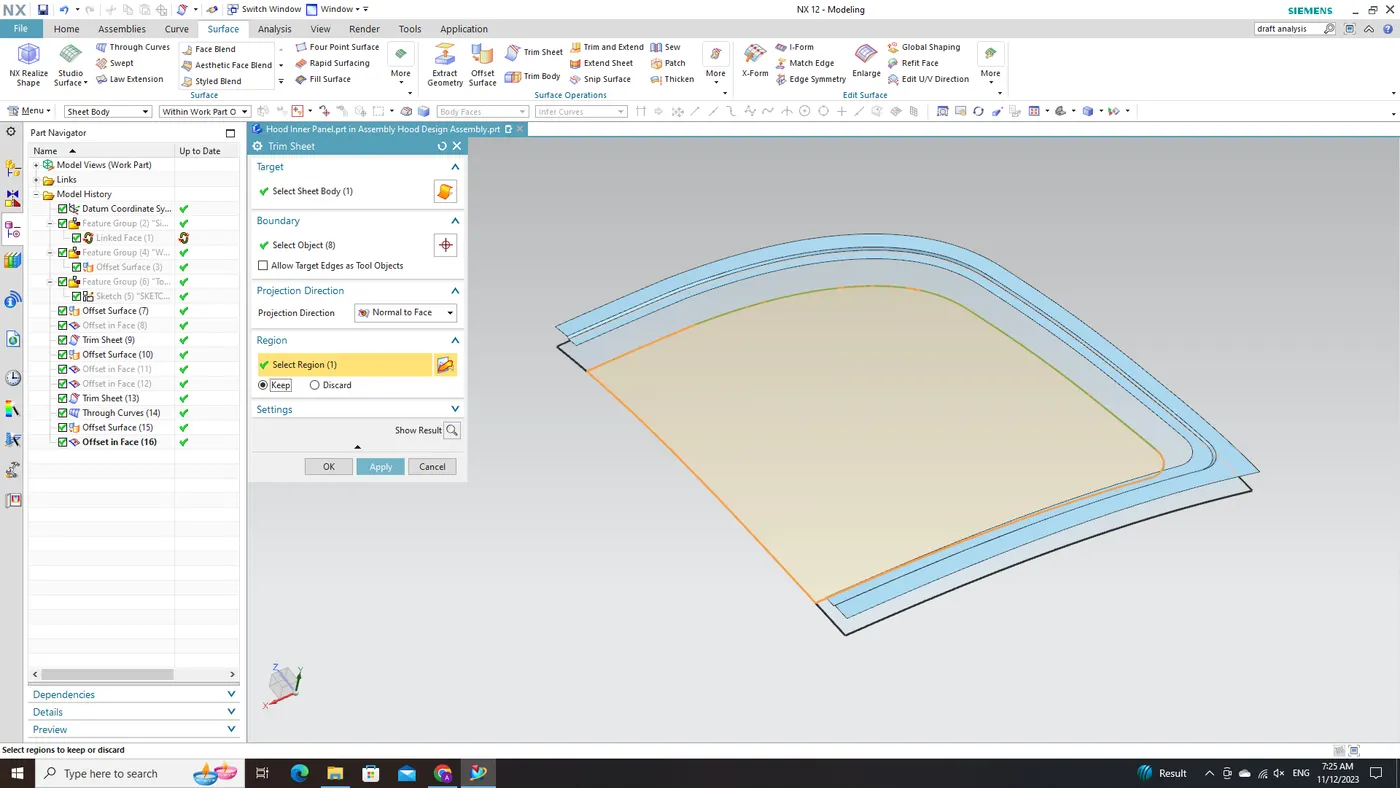
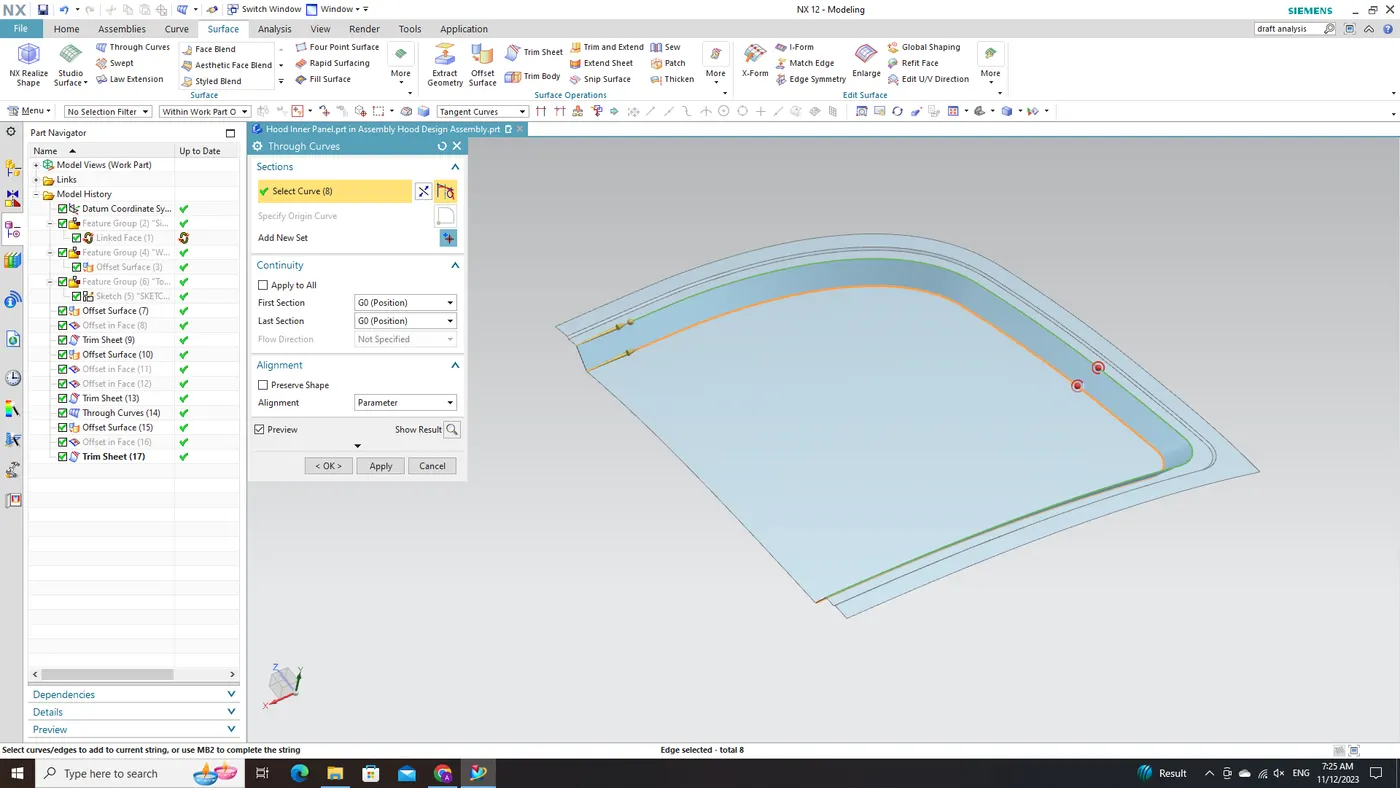
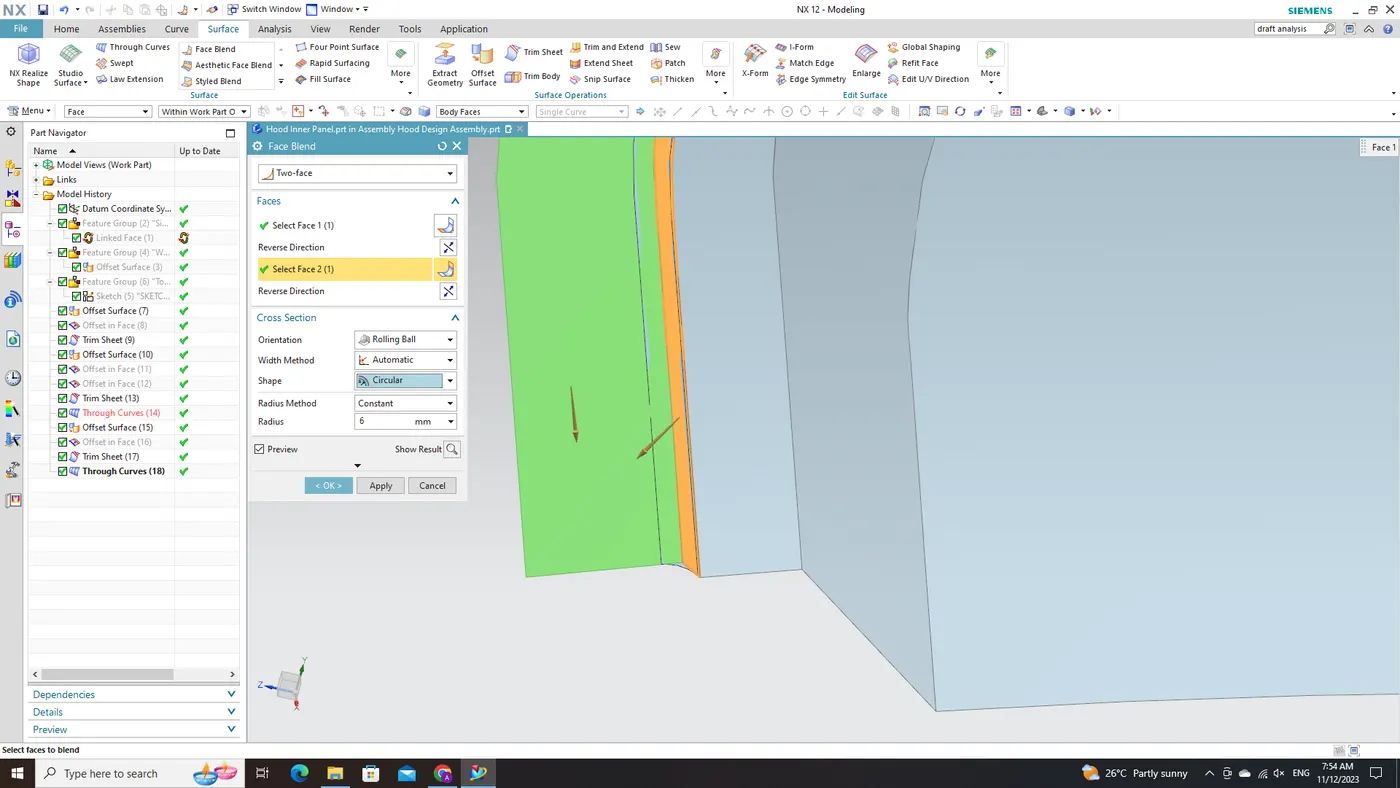
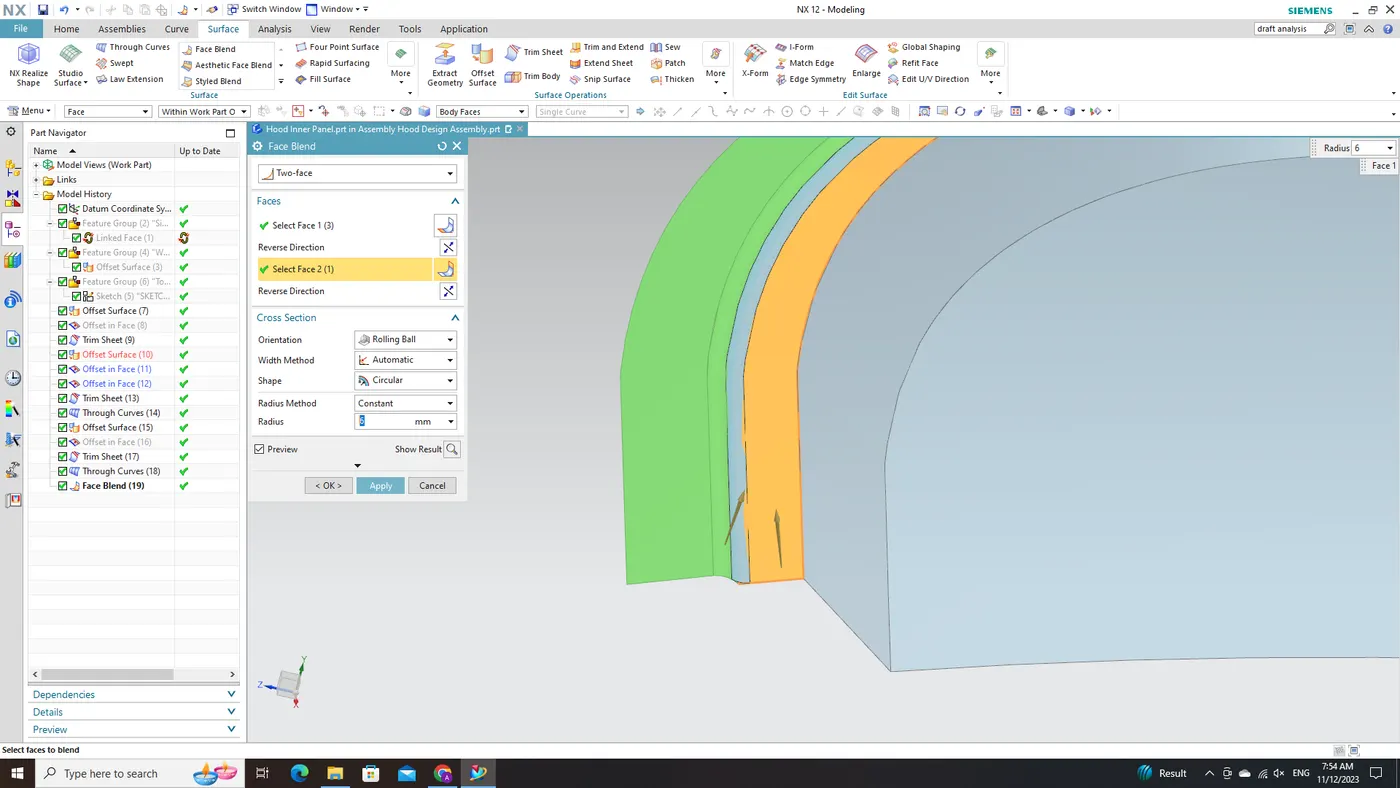
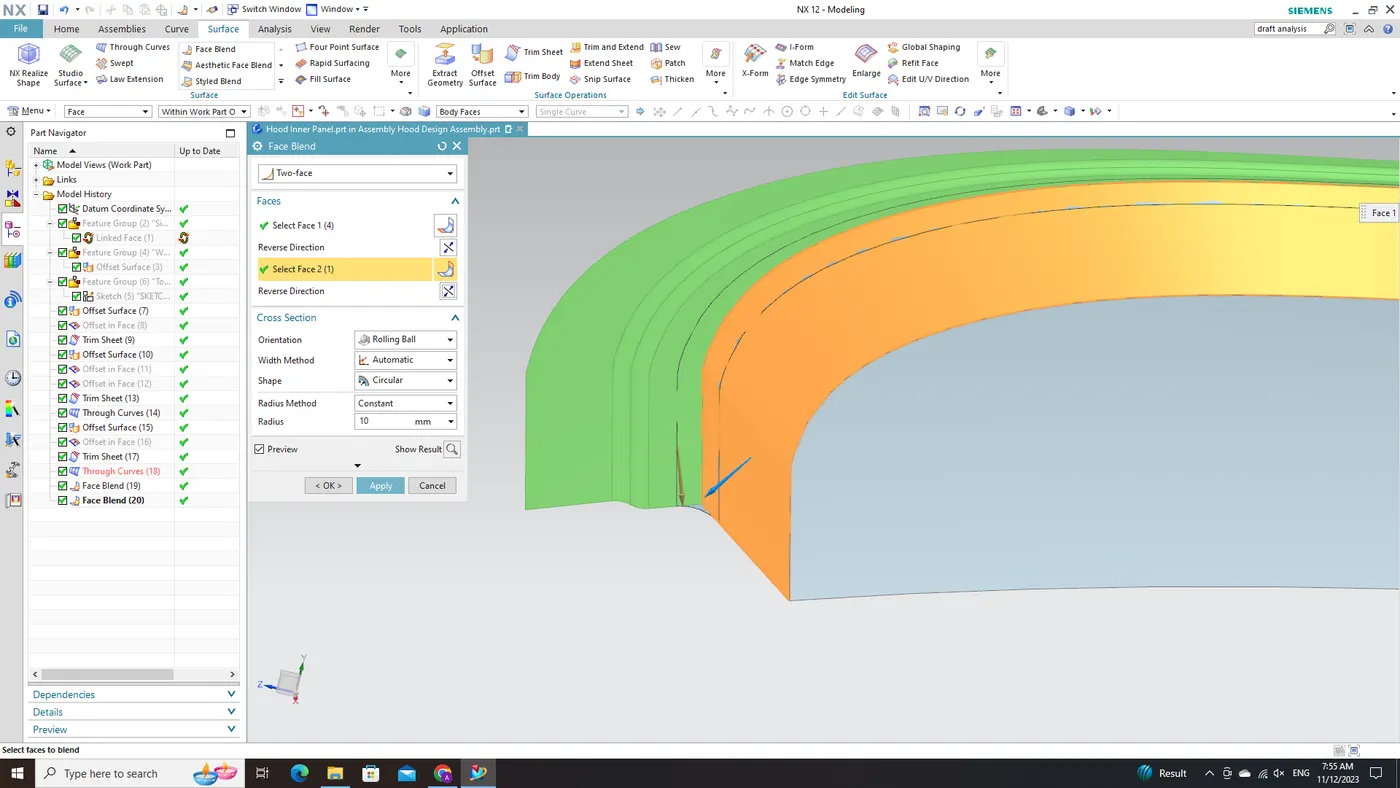
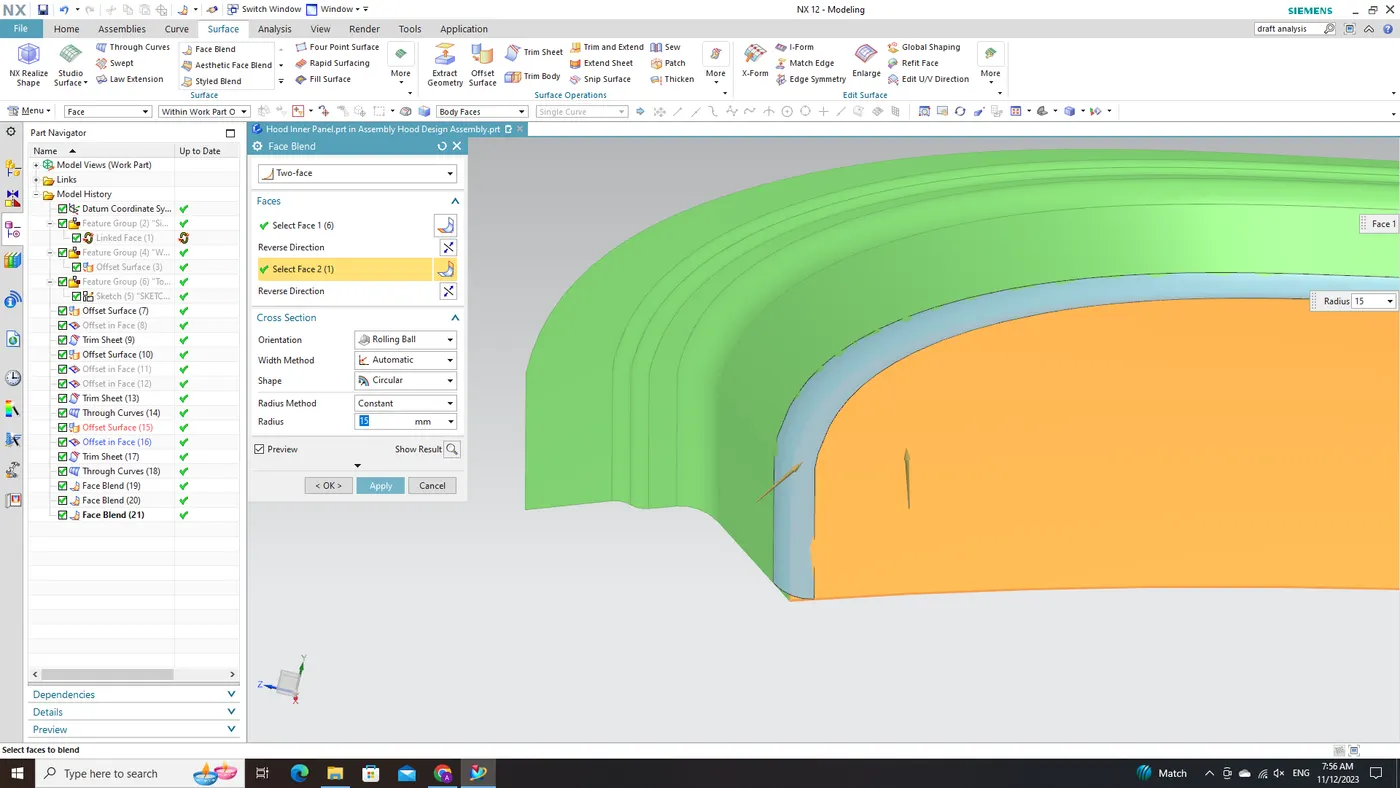
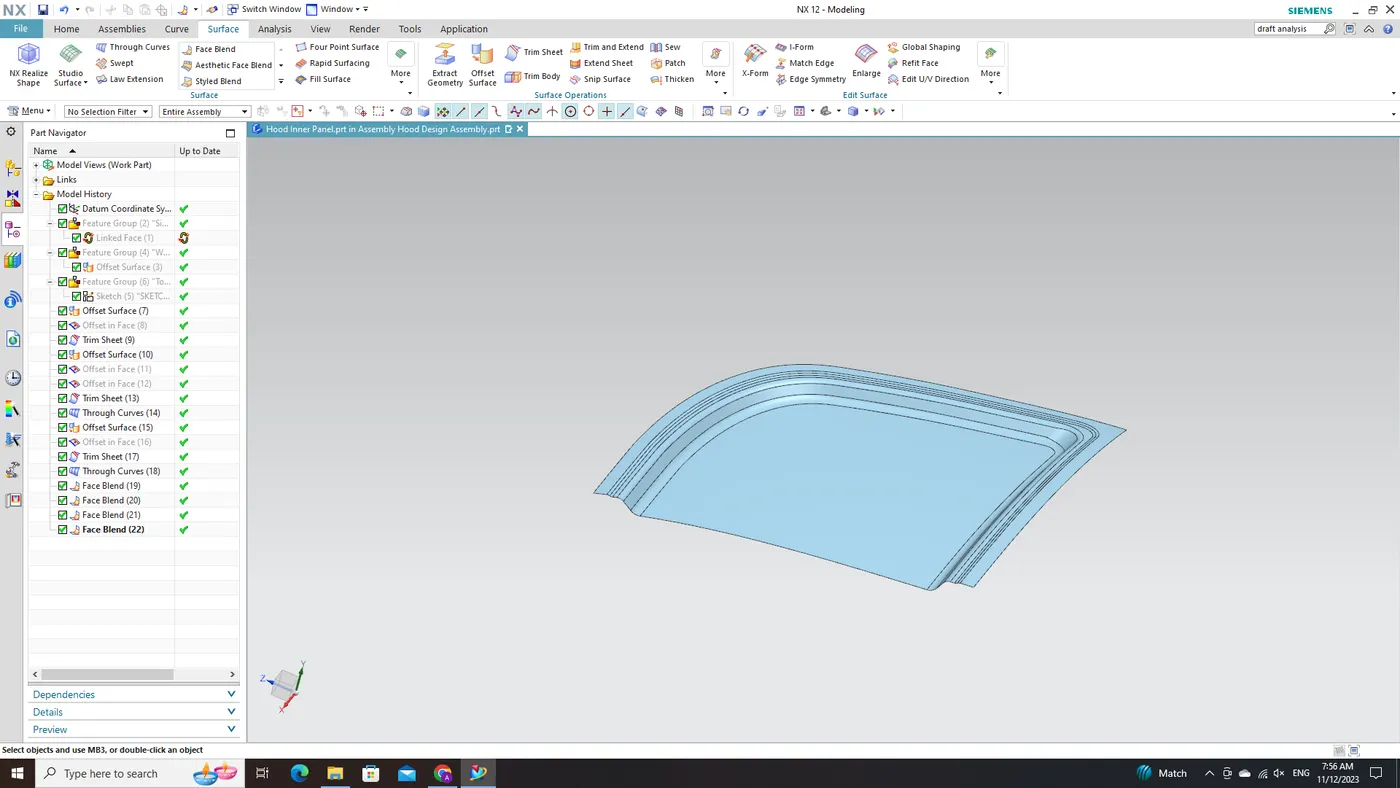
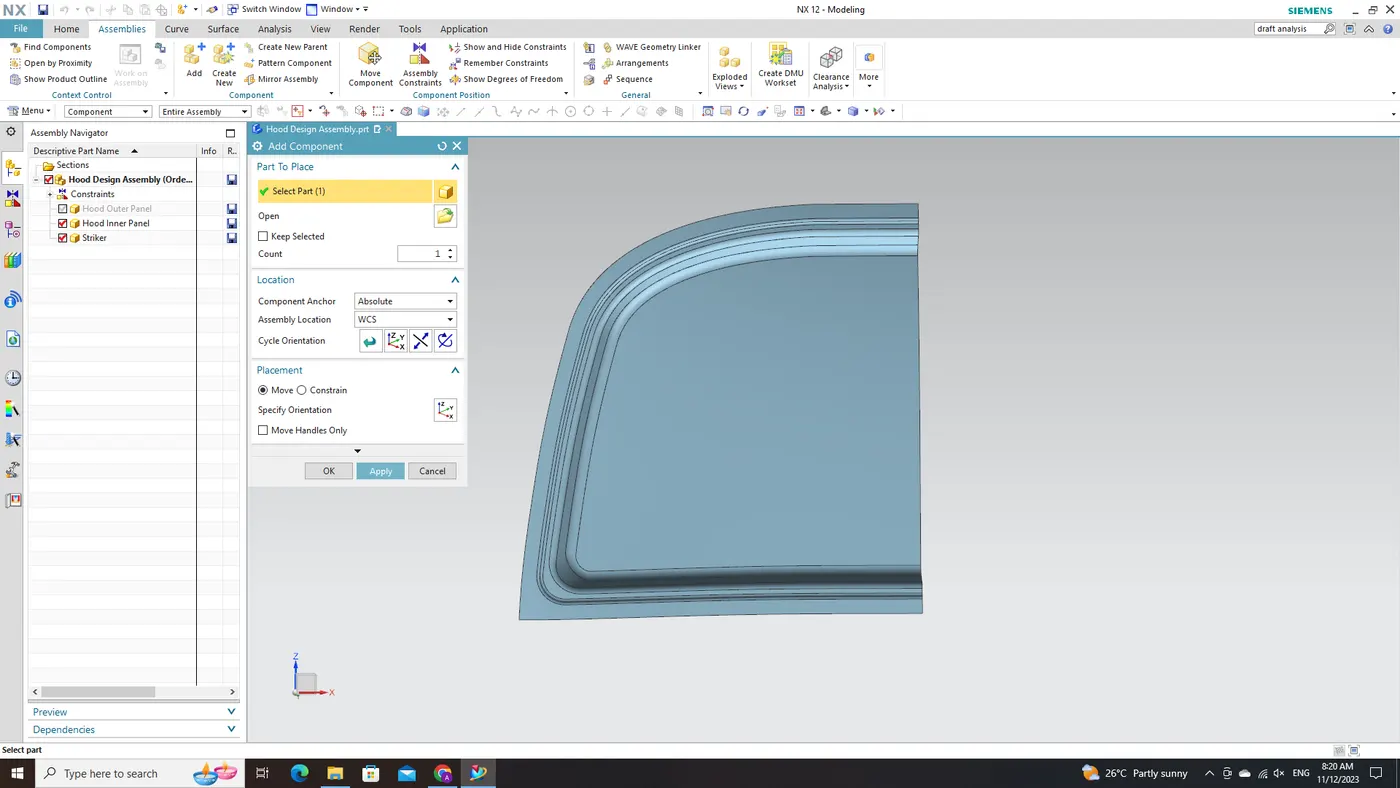
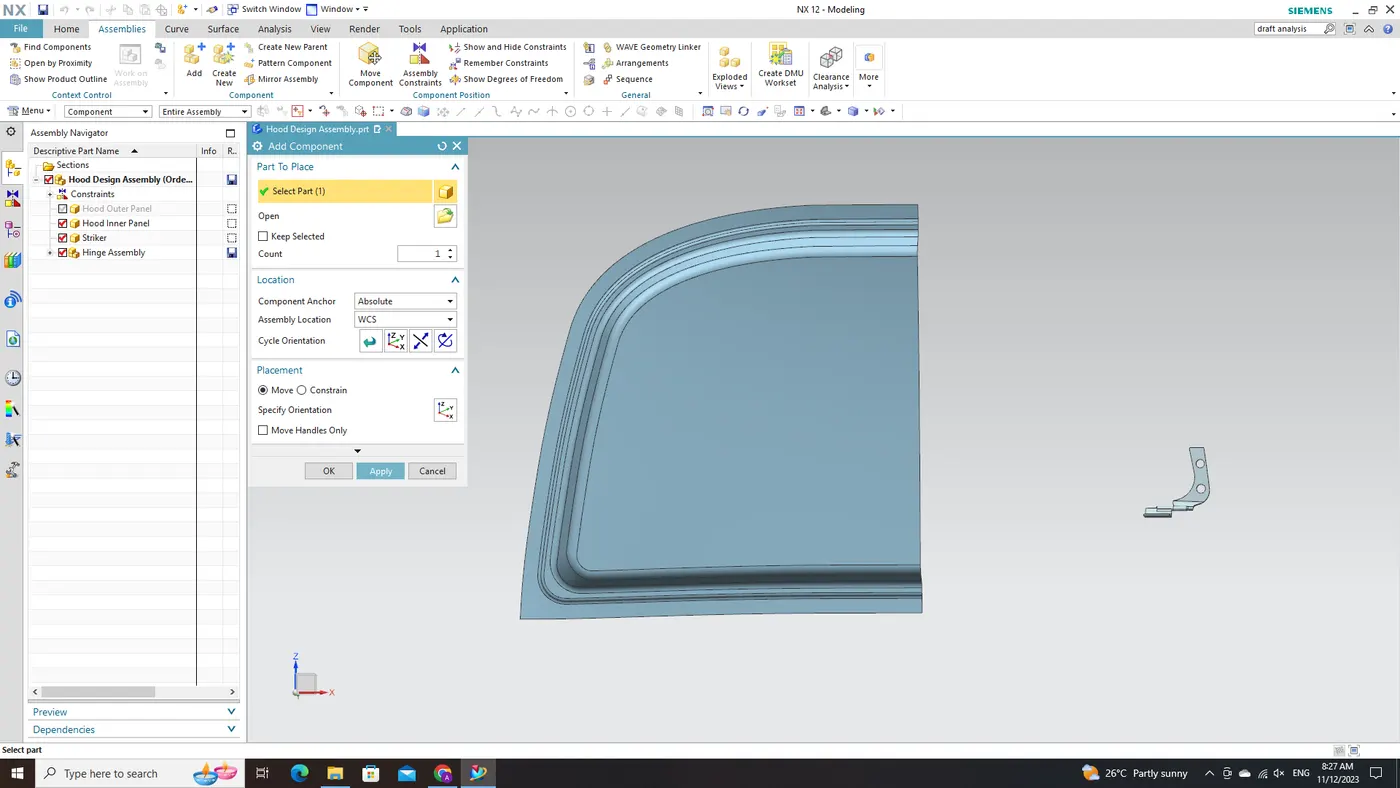
Adding the components 'Hinge Assembly' & 'Striker' to the the main assembly
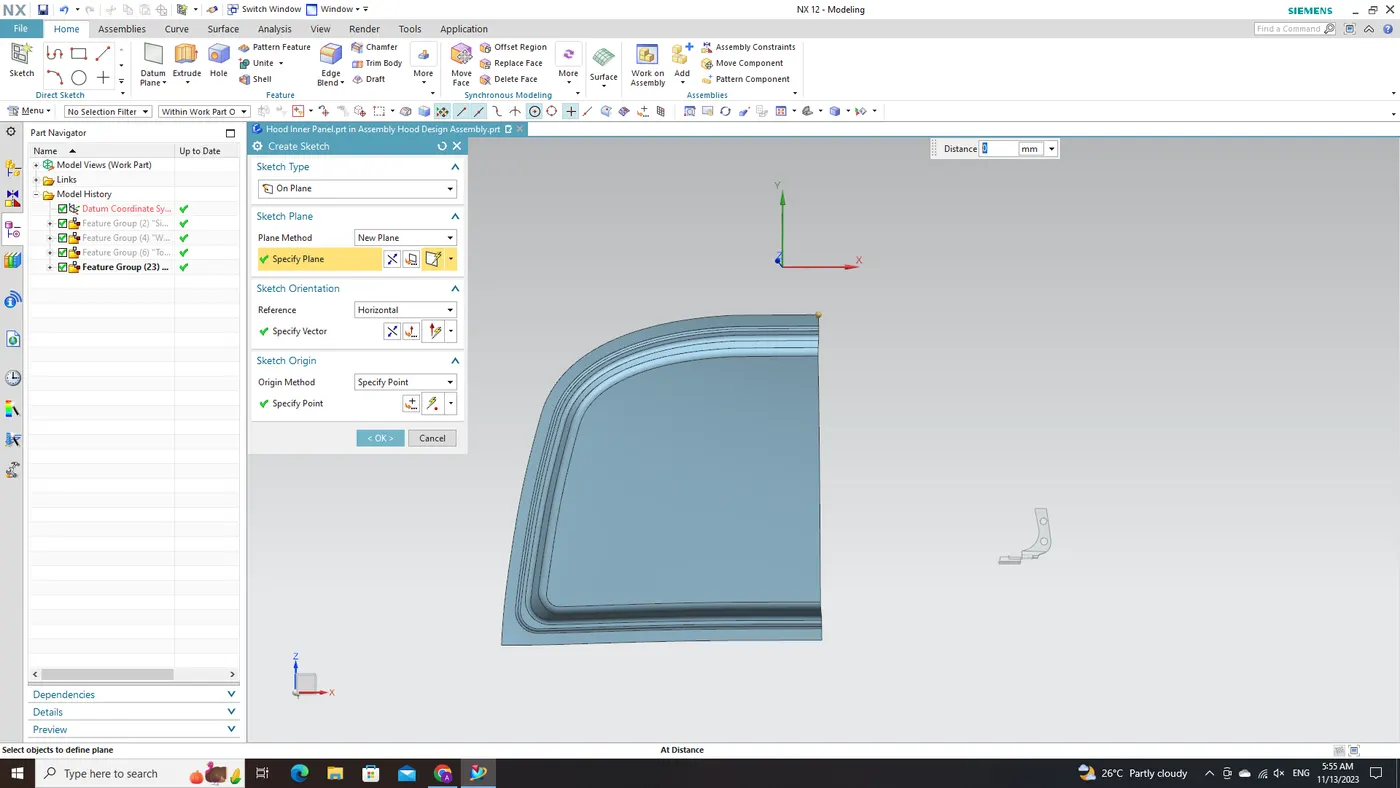
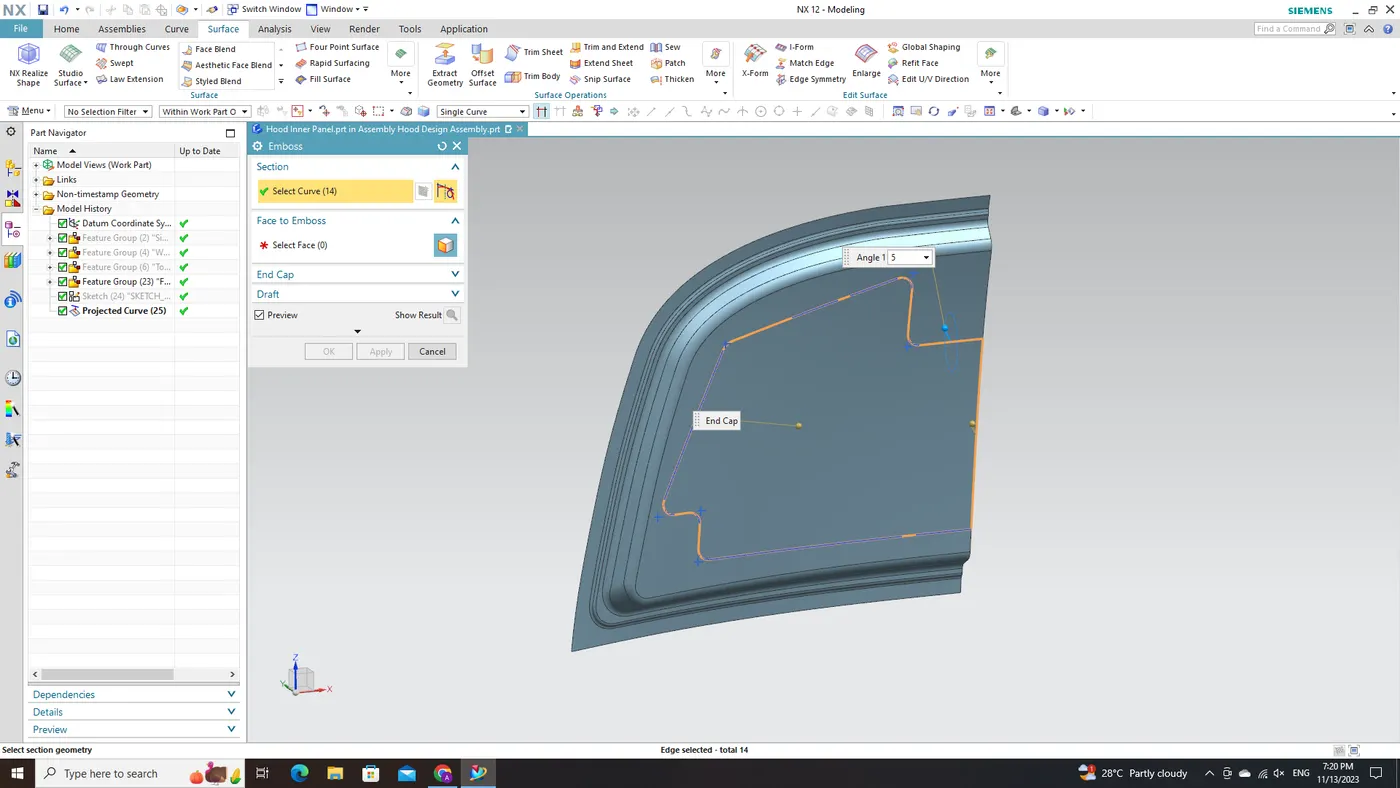
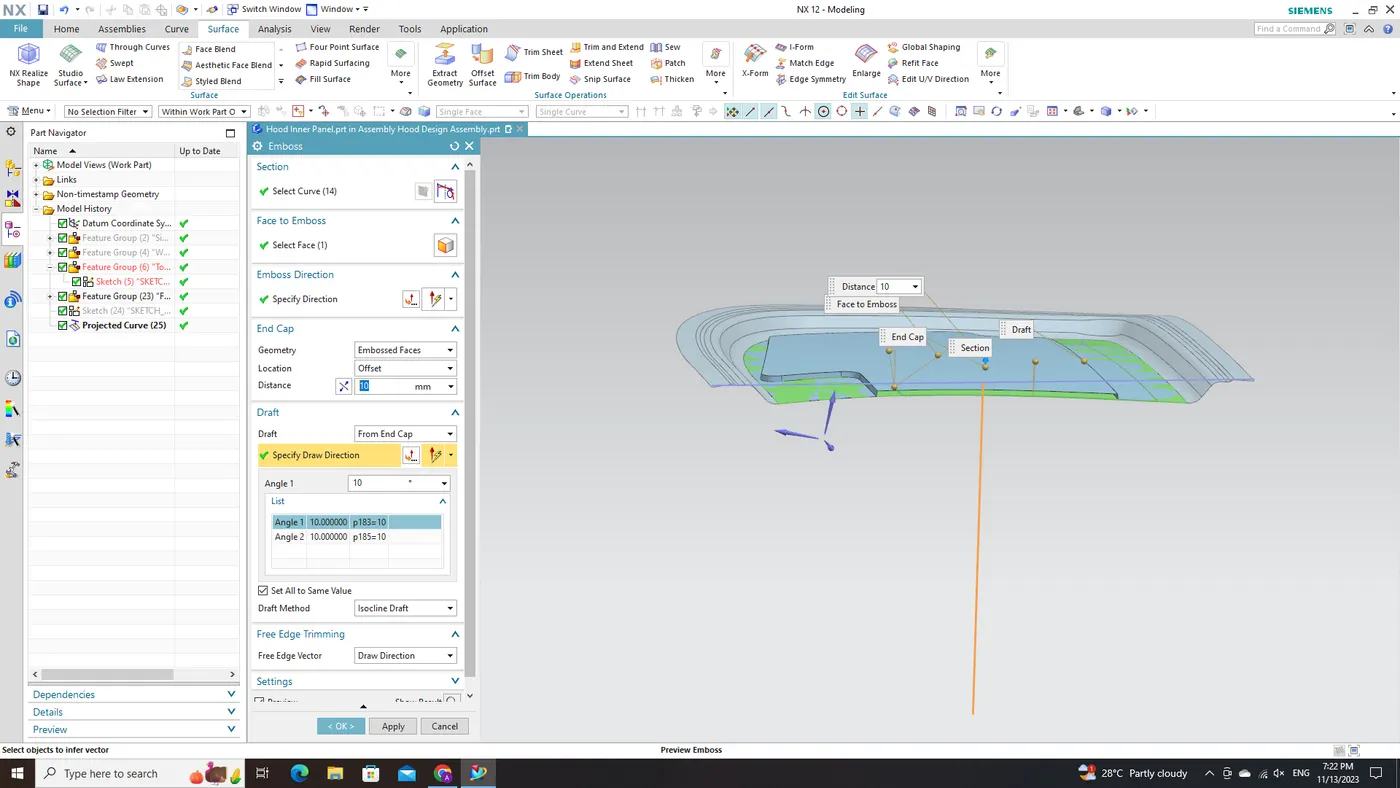
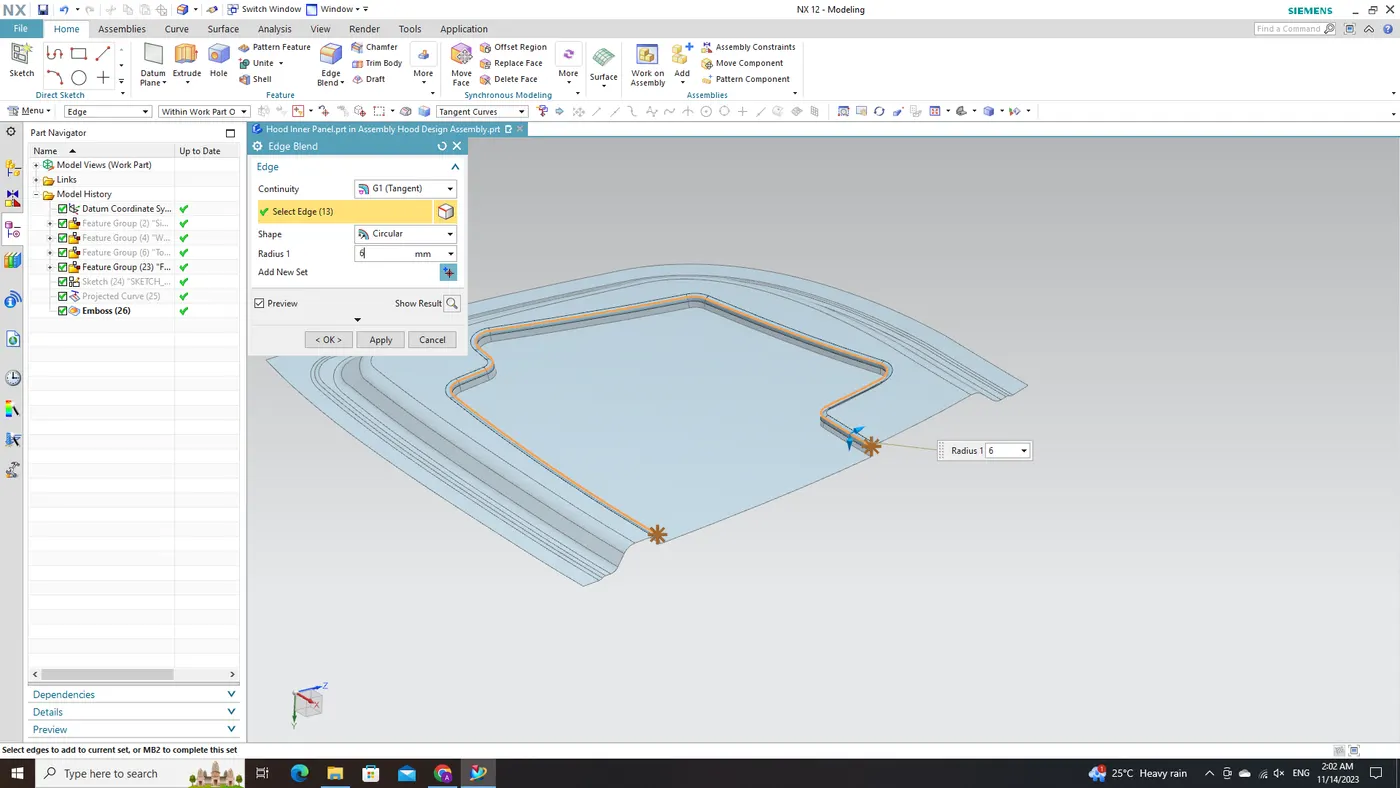
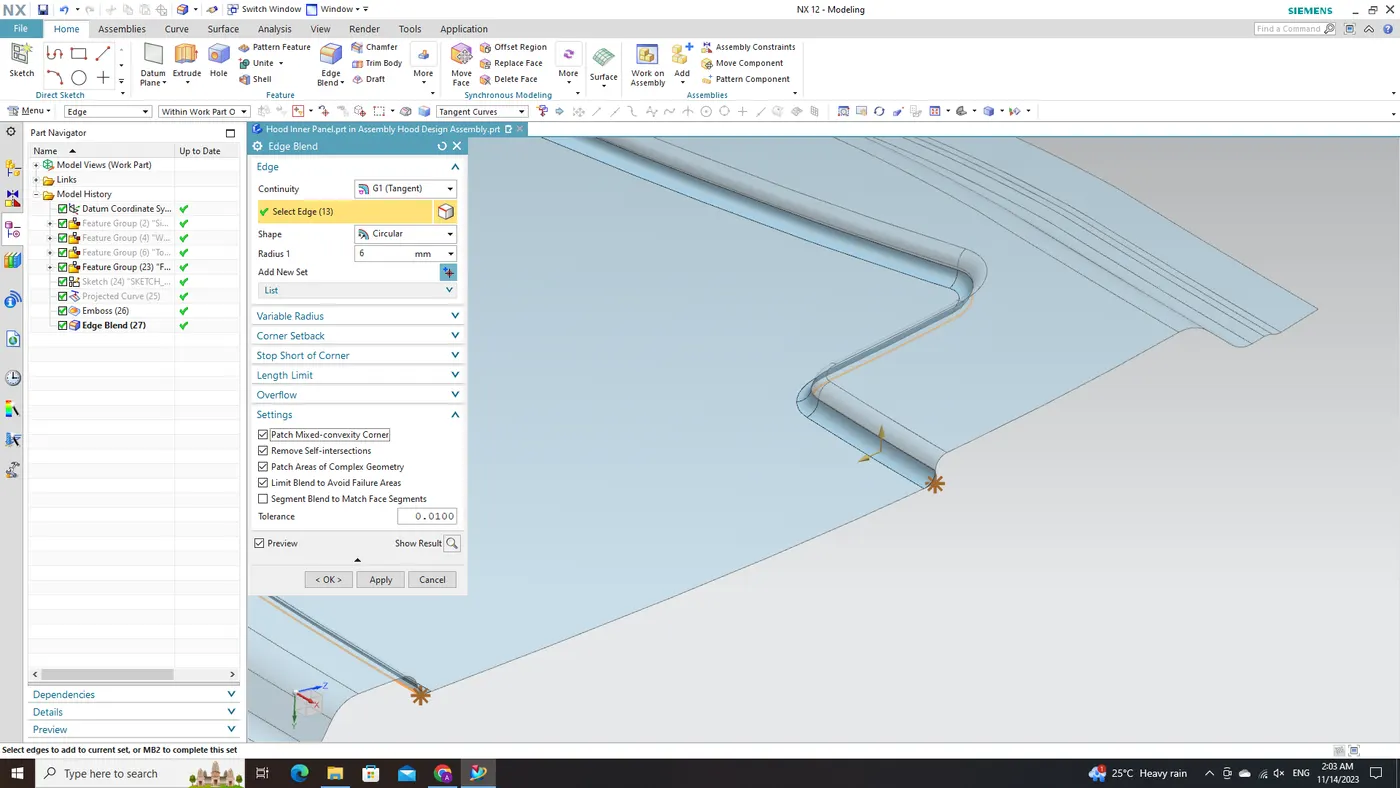
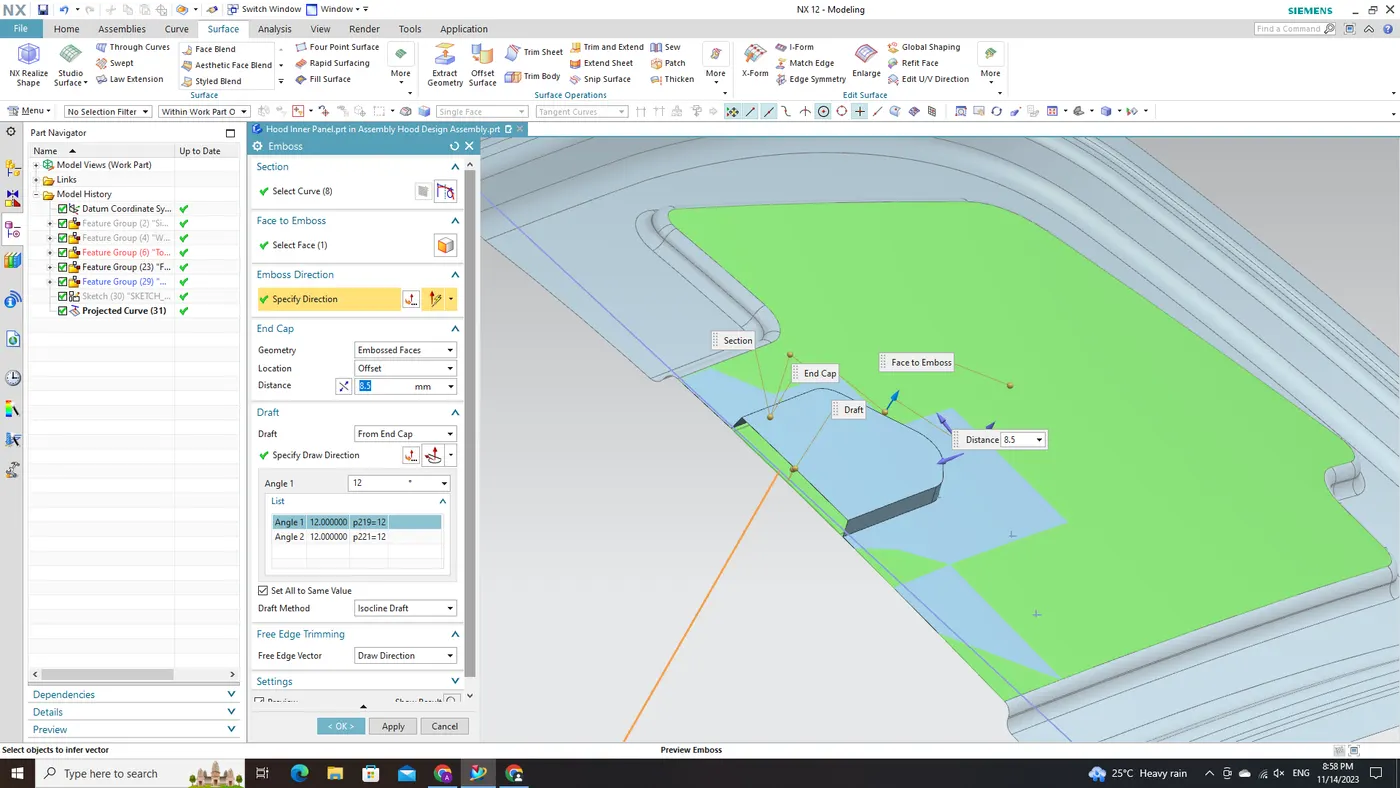
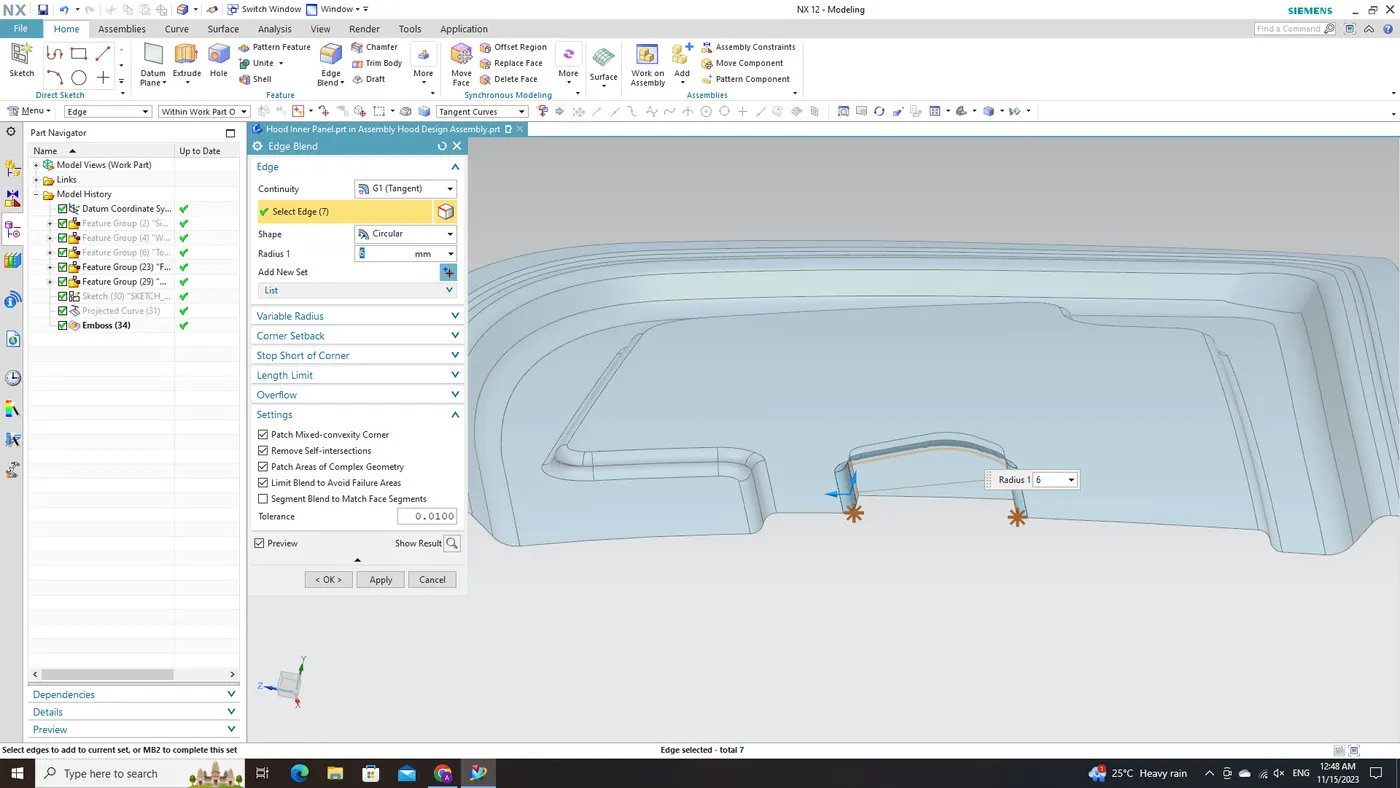
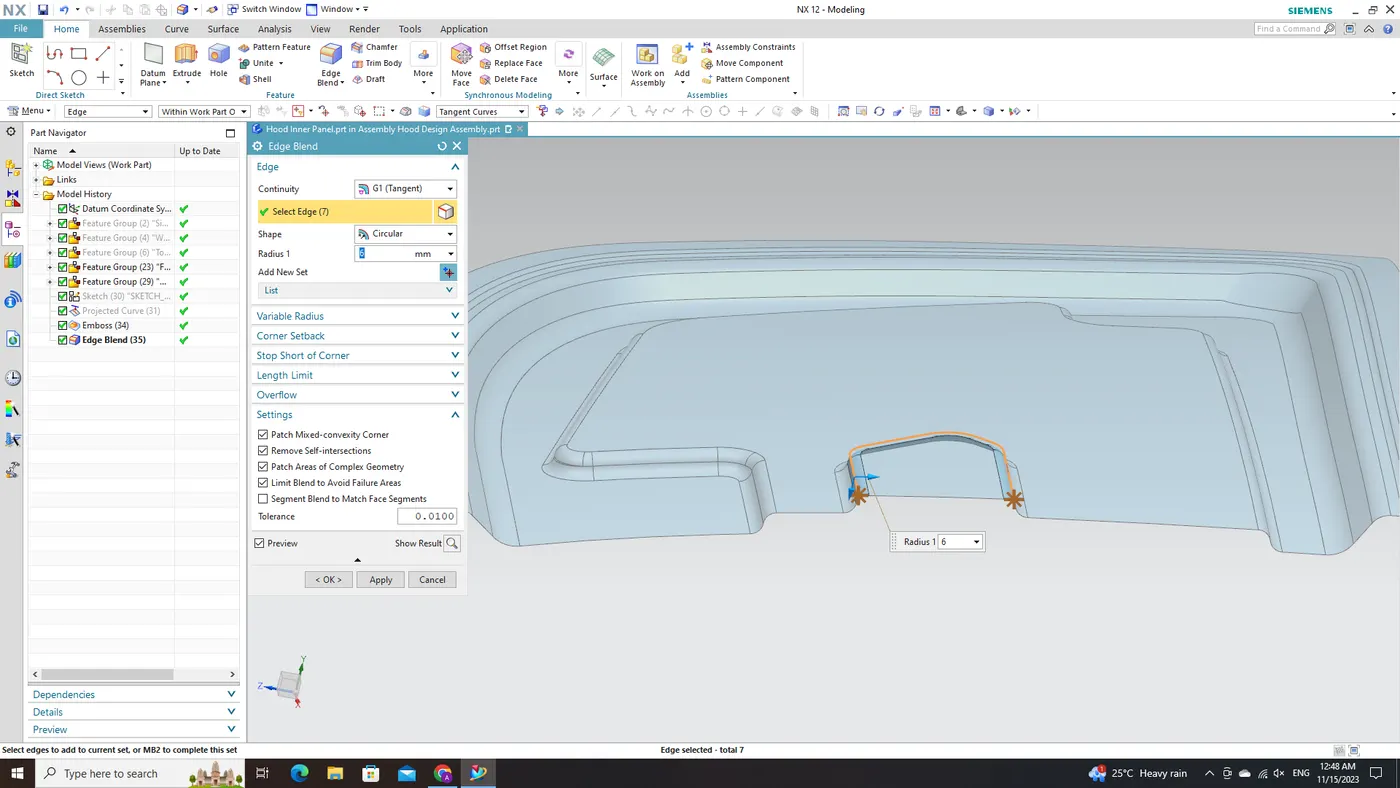
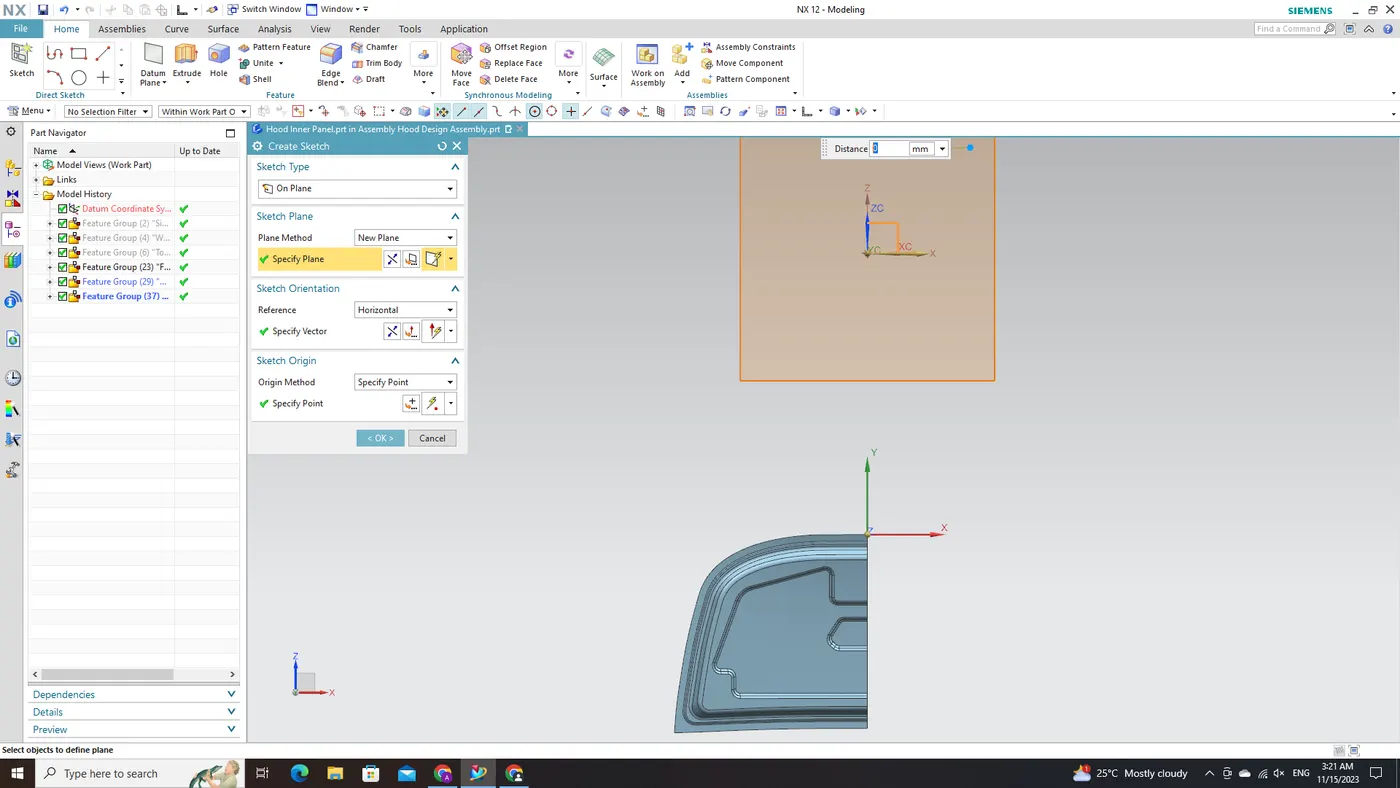
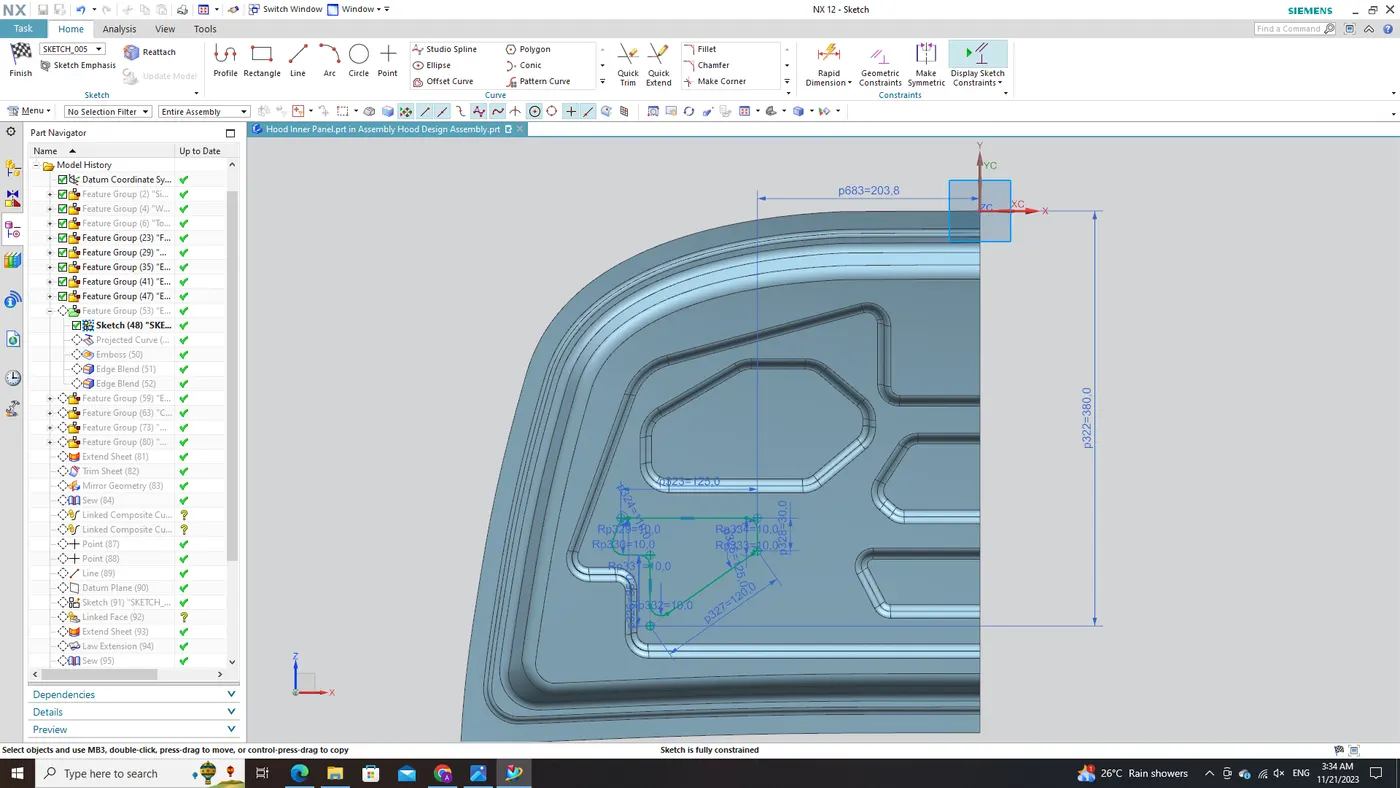
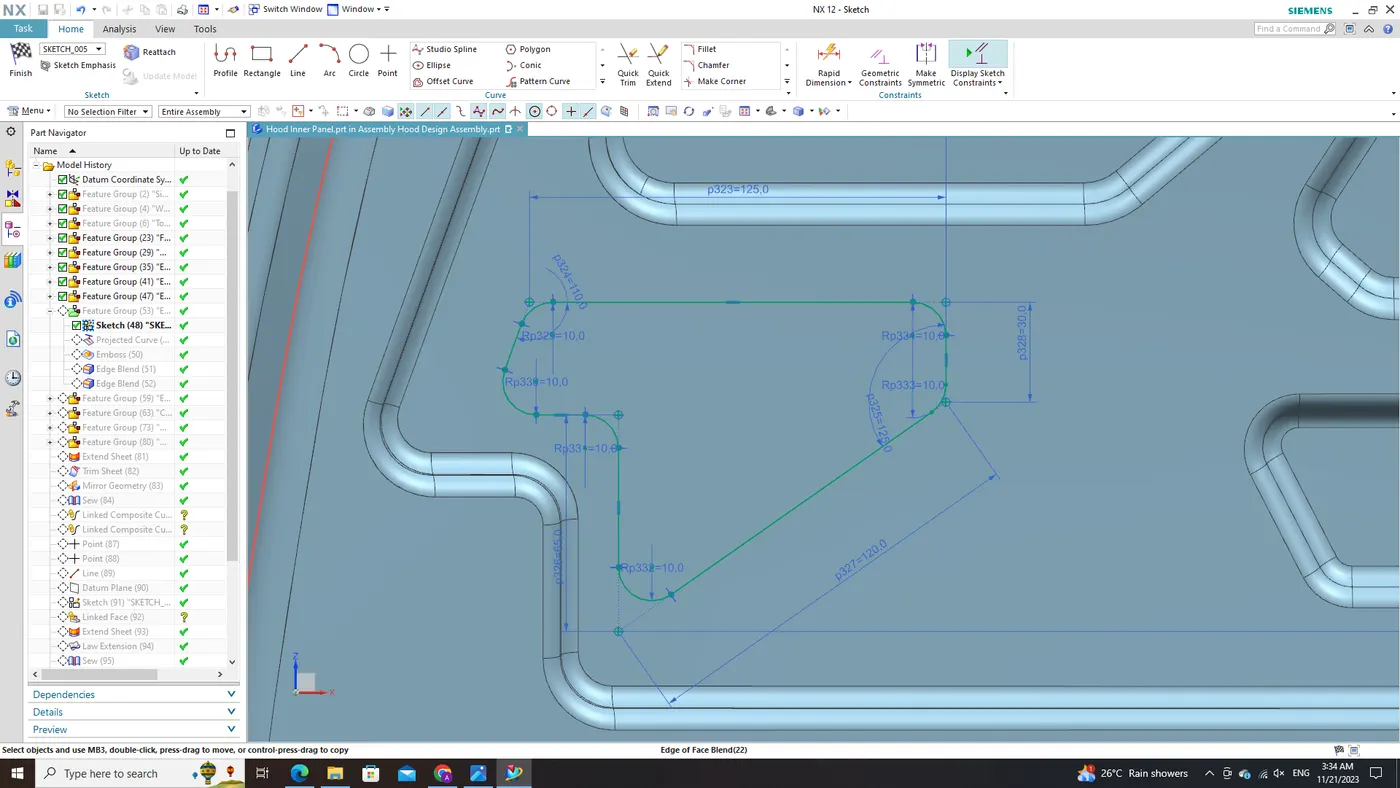
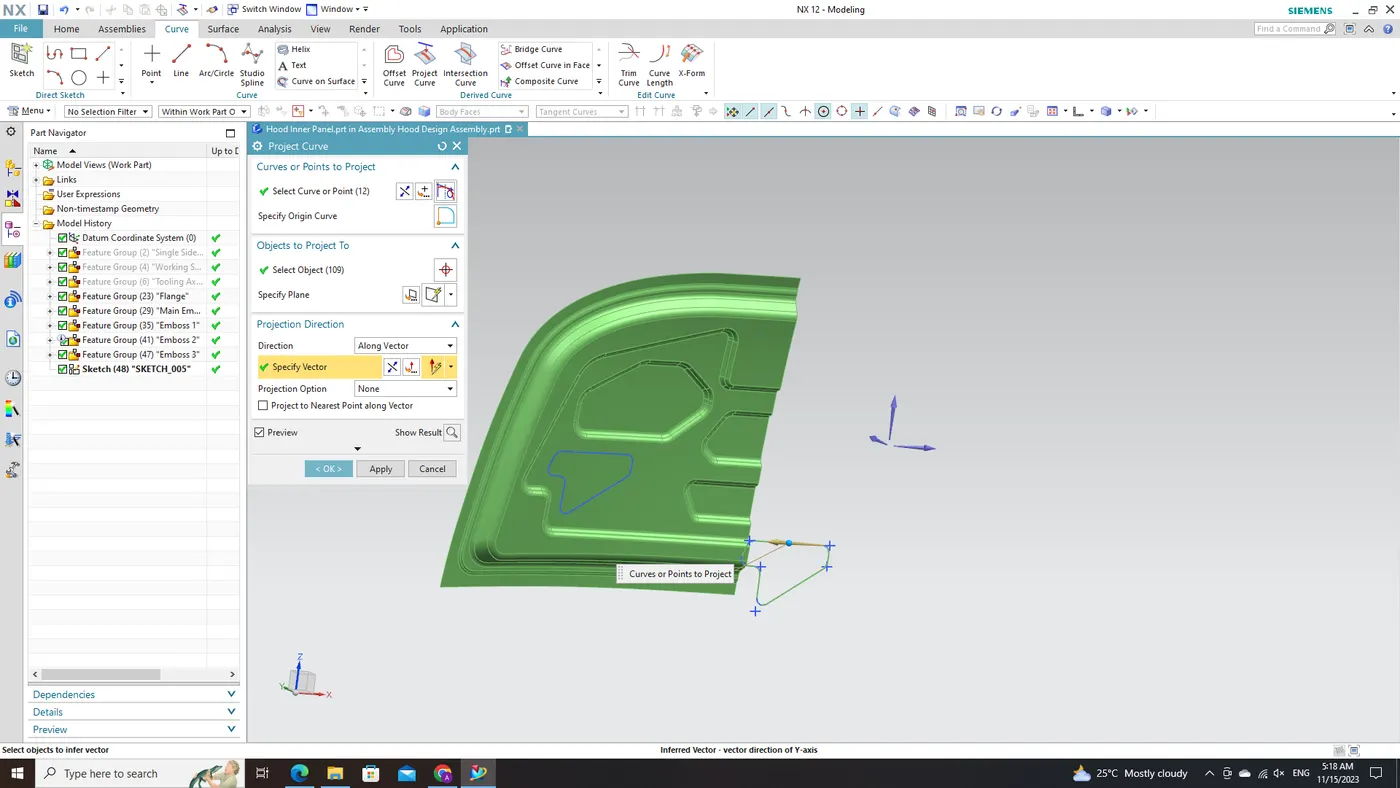
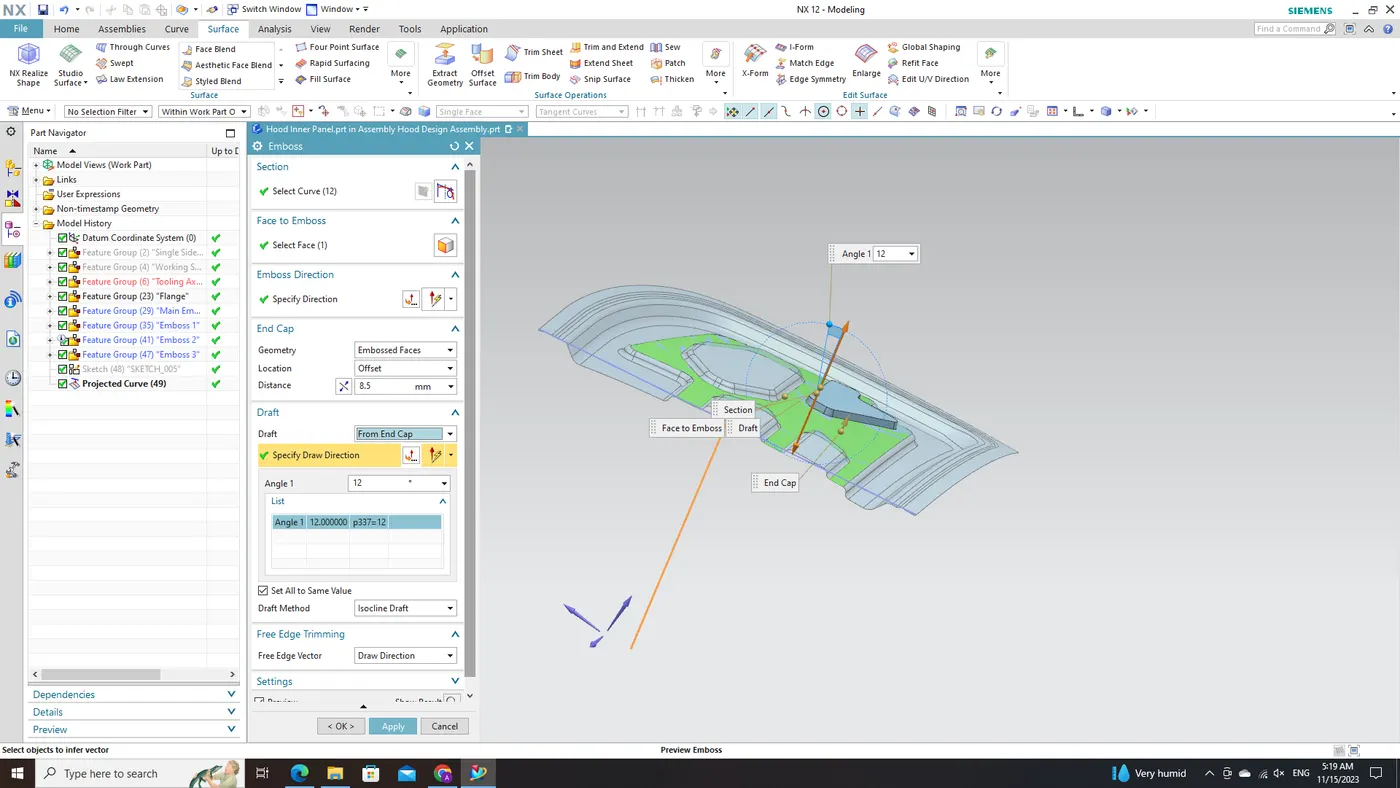
Here, we start the creation of embosses.
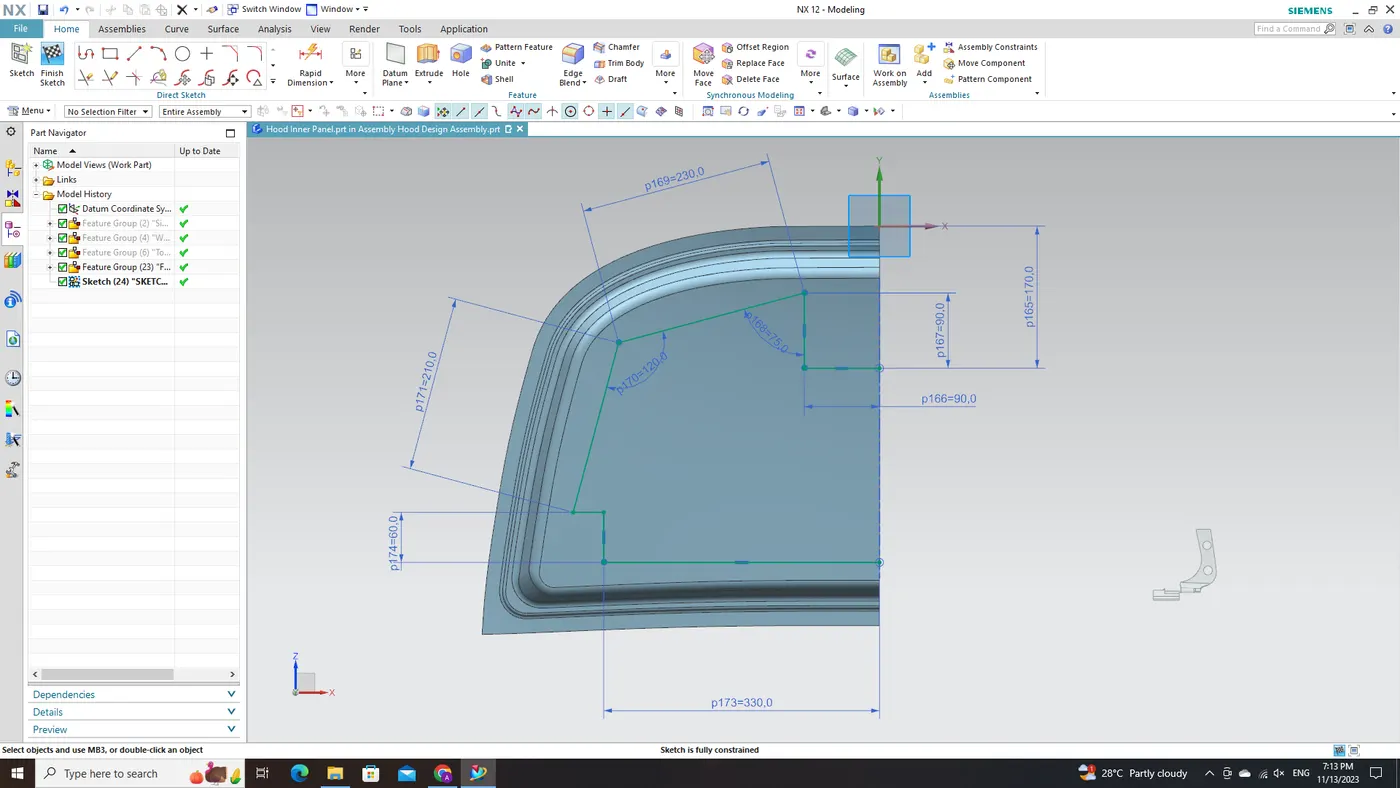
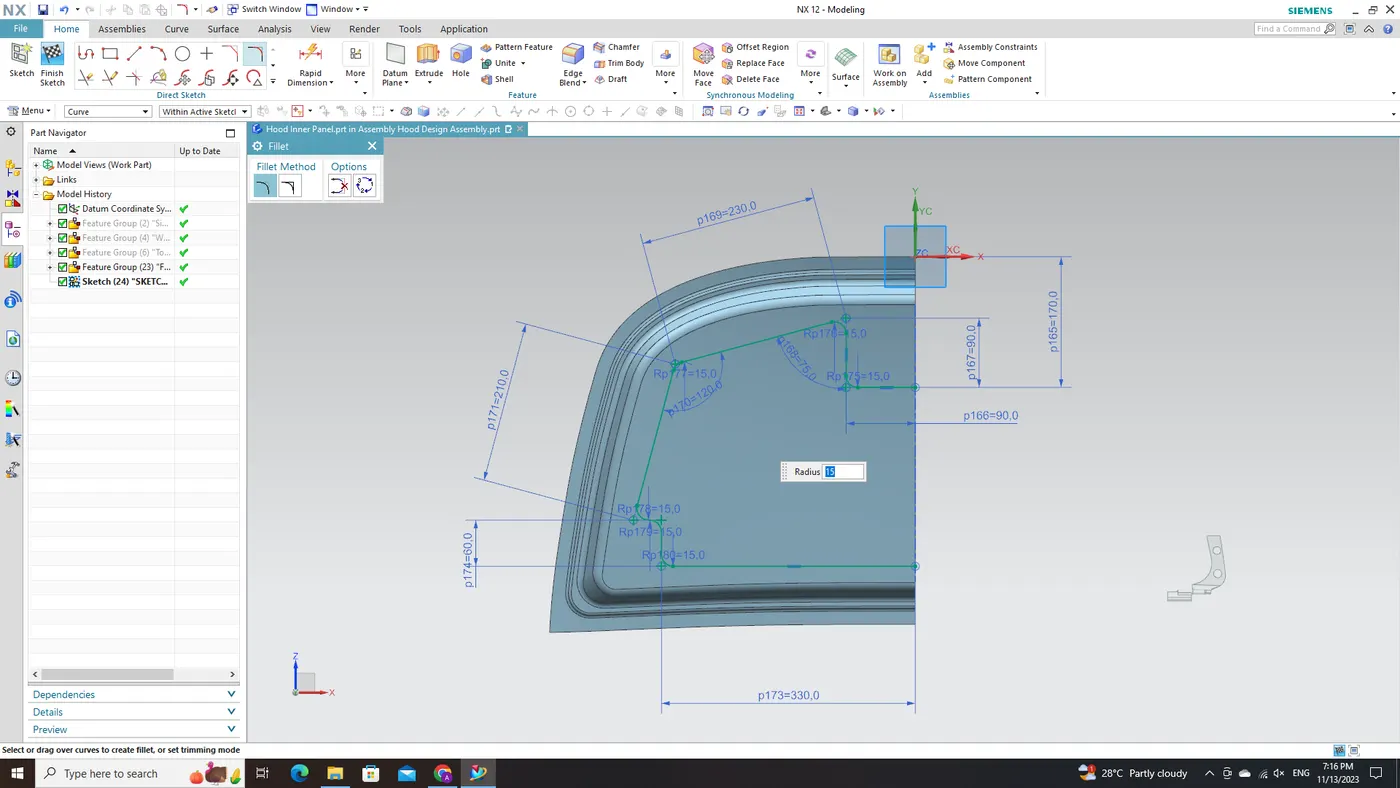
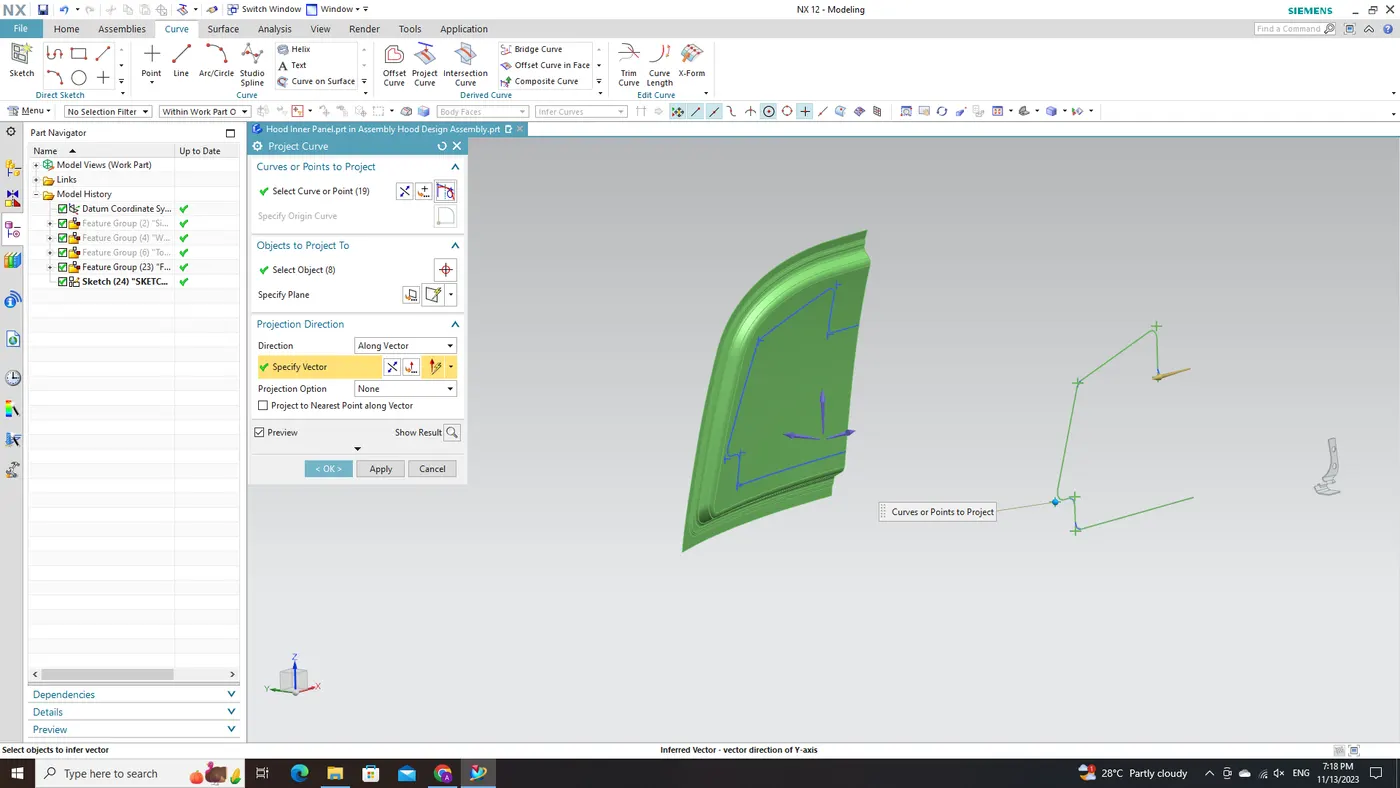
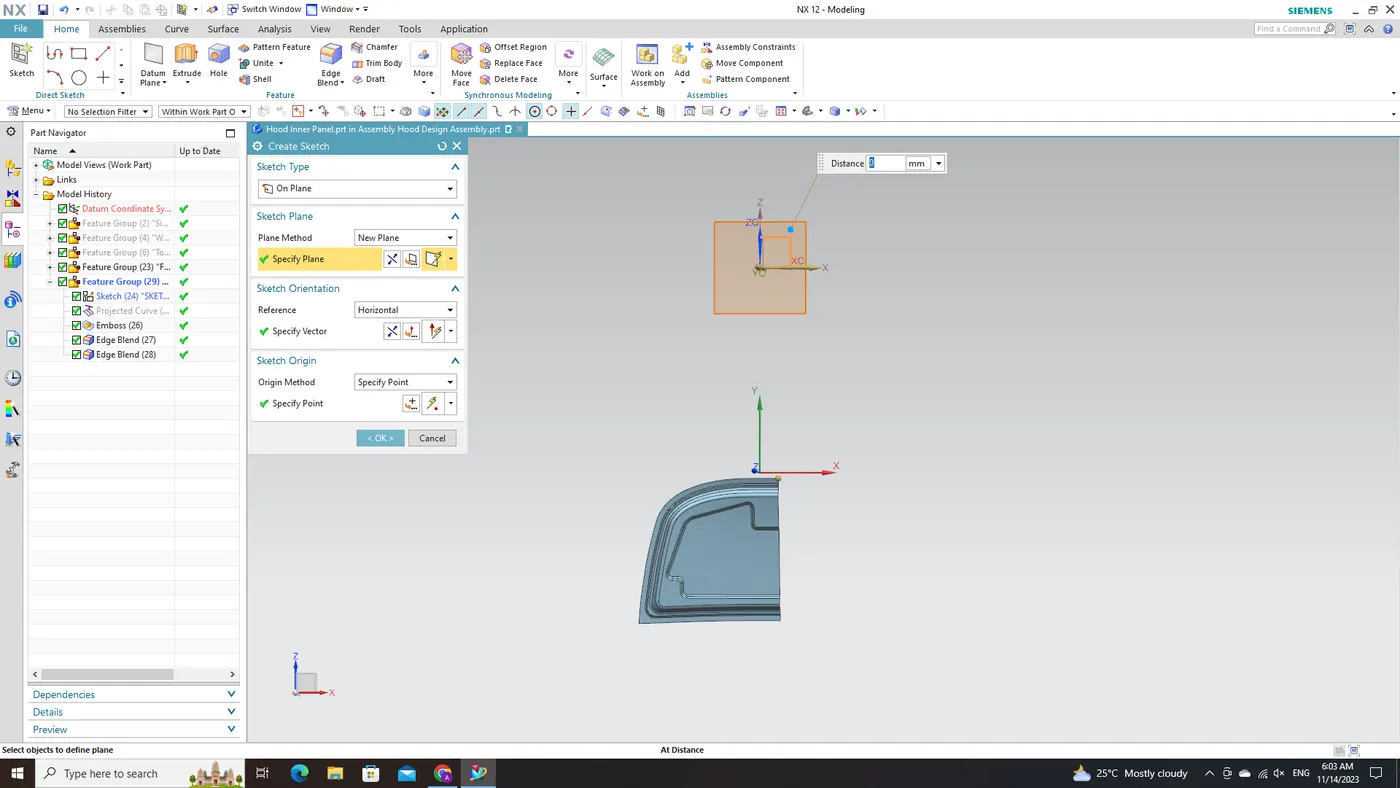
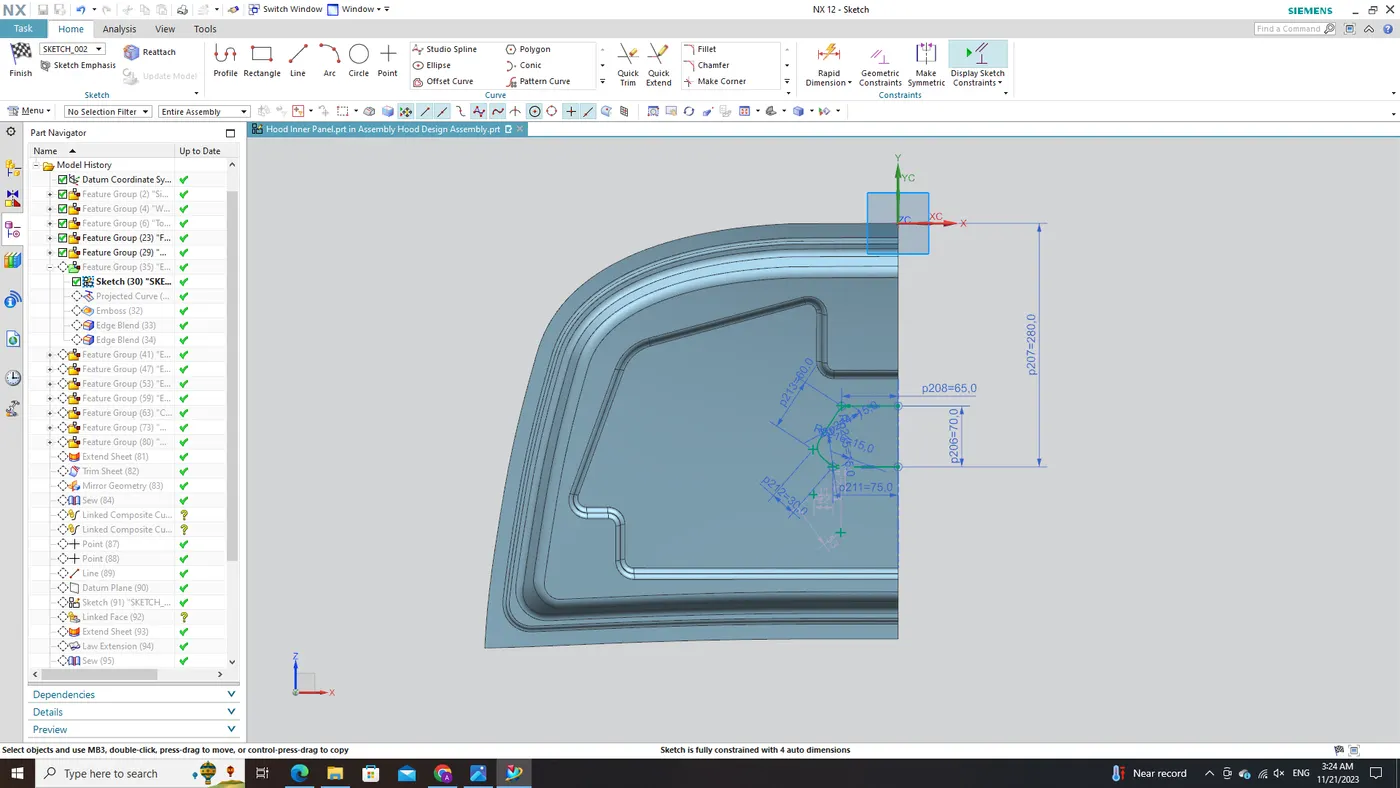
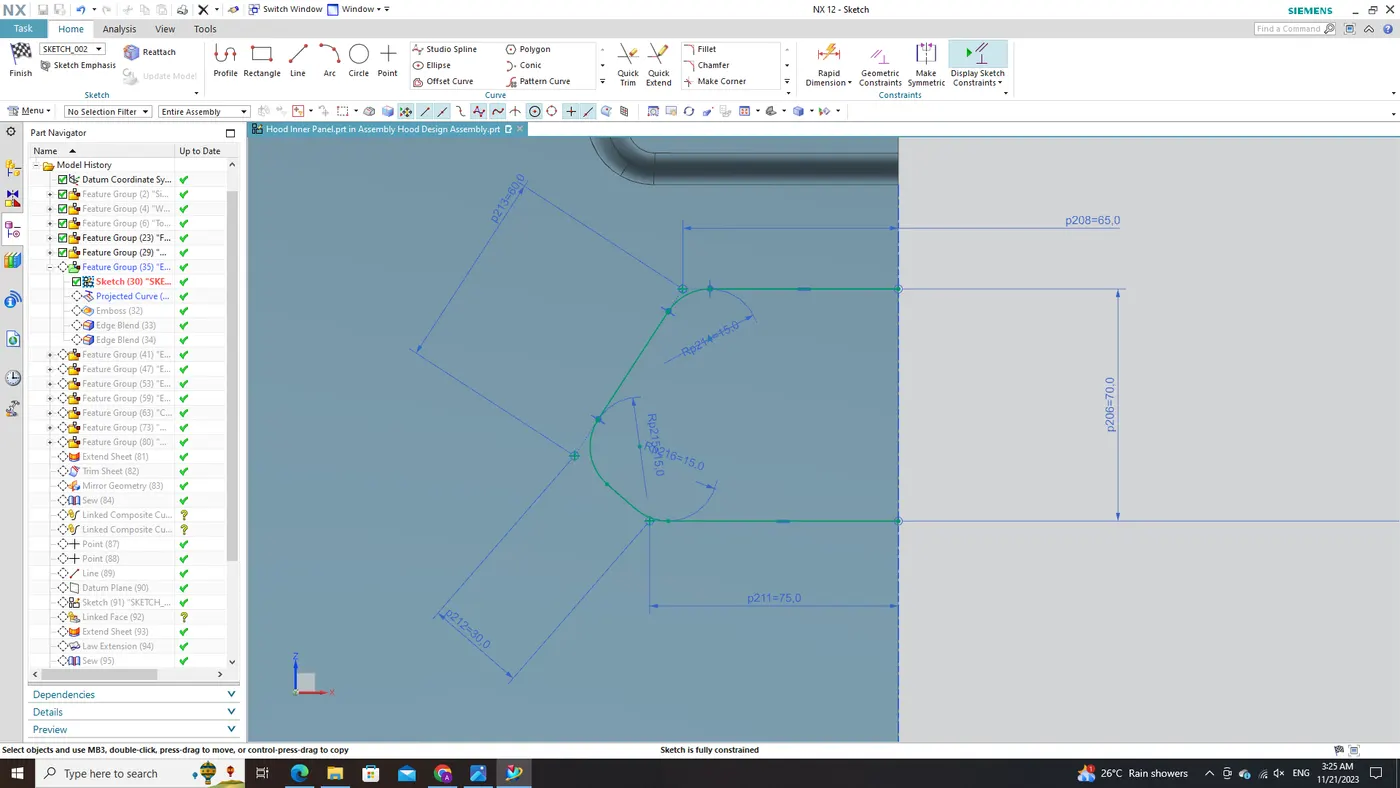
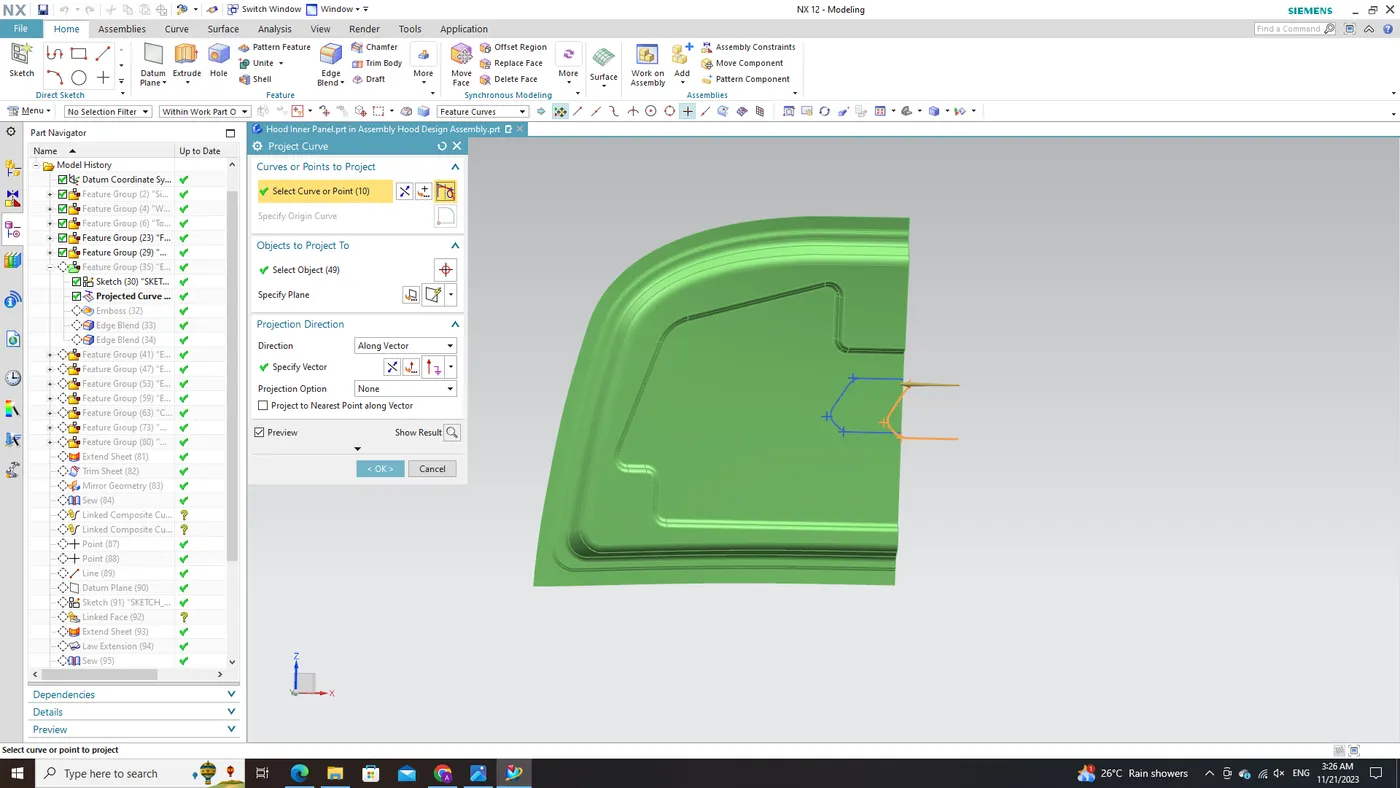
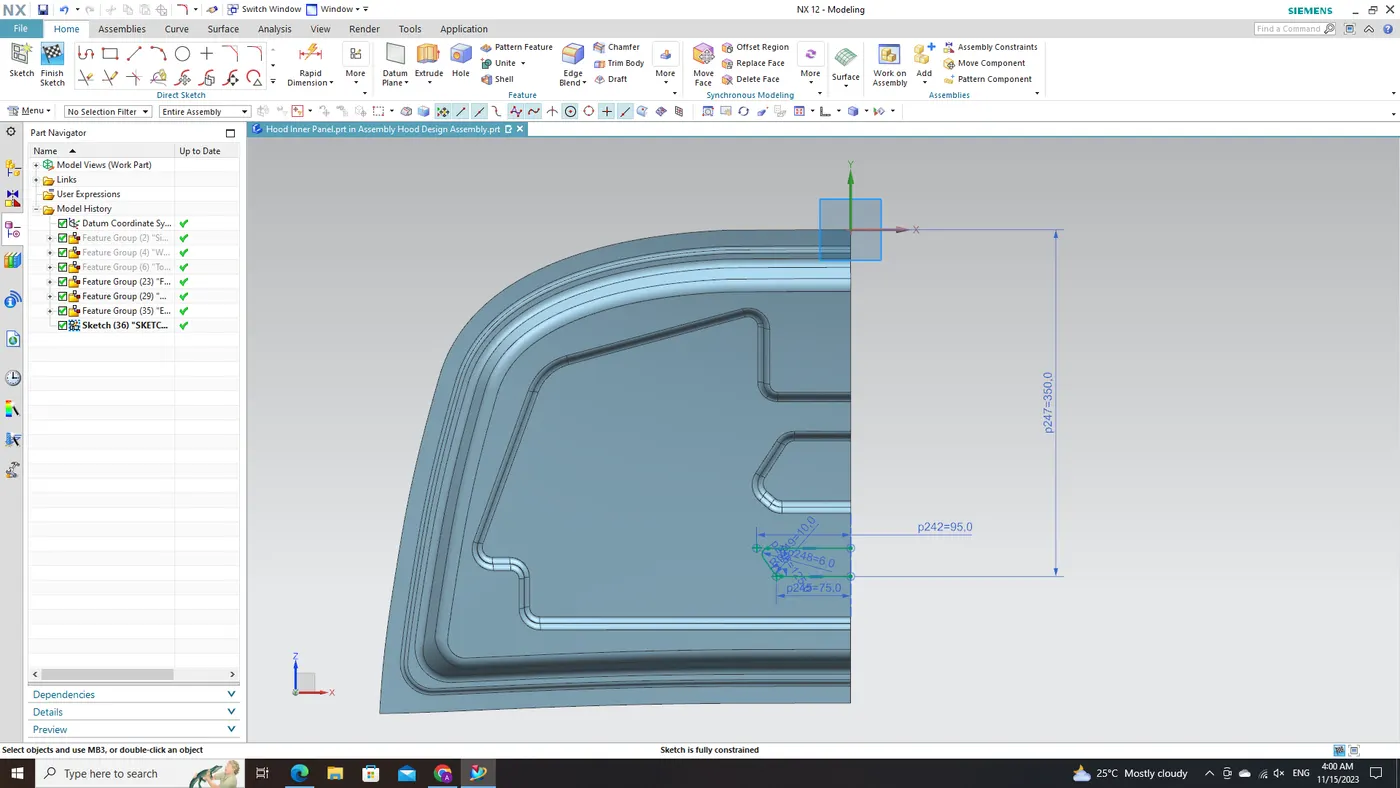
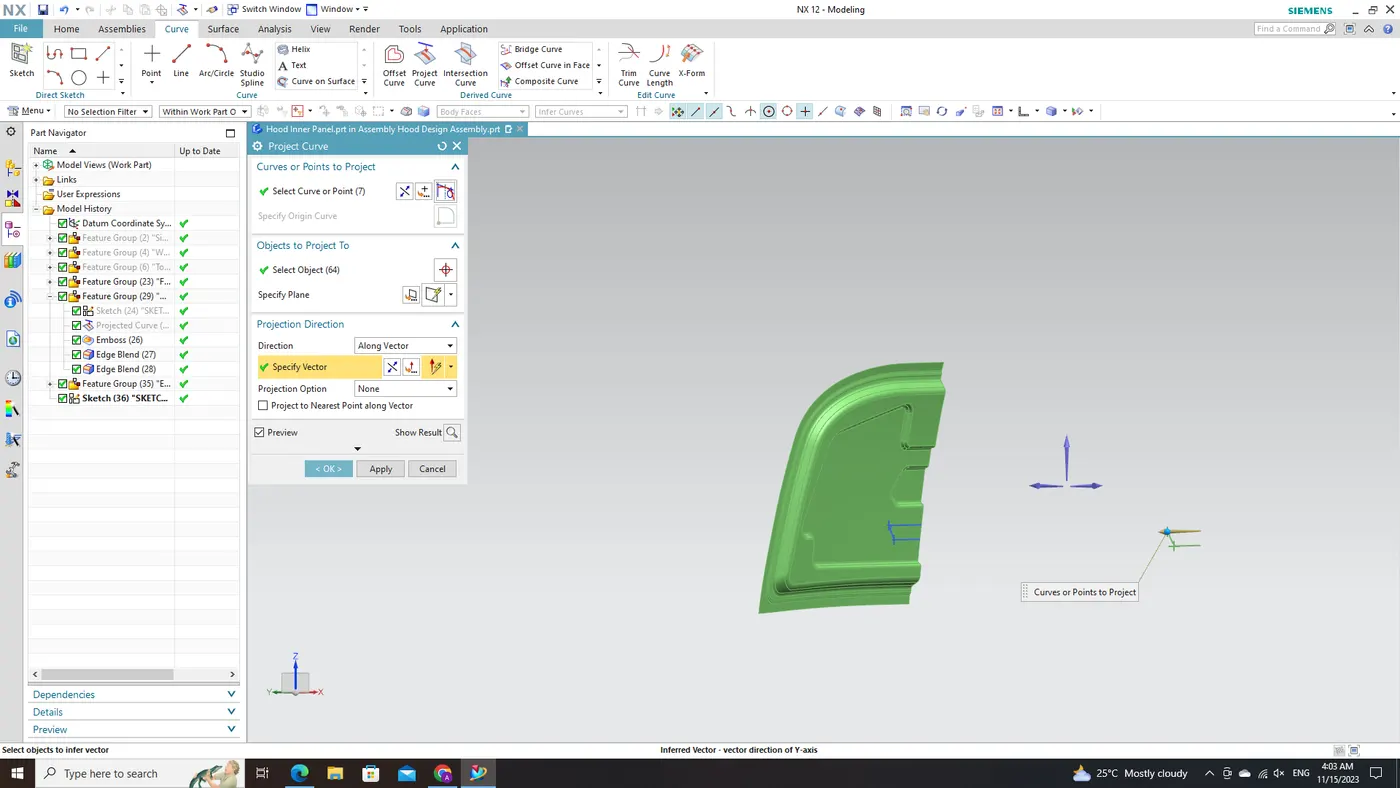
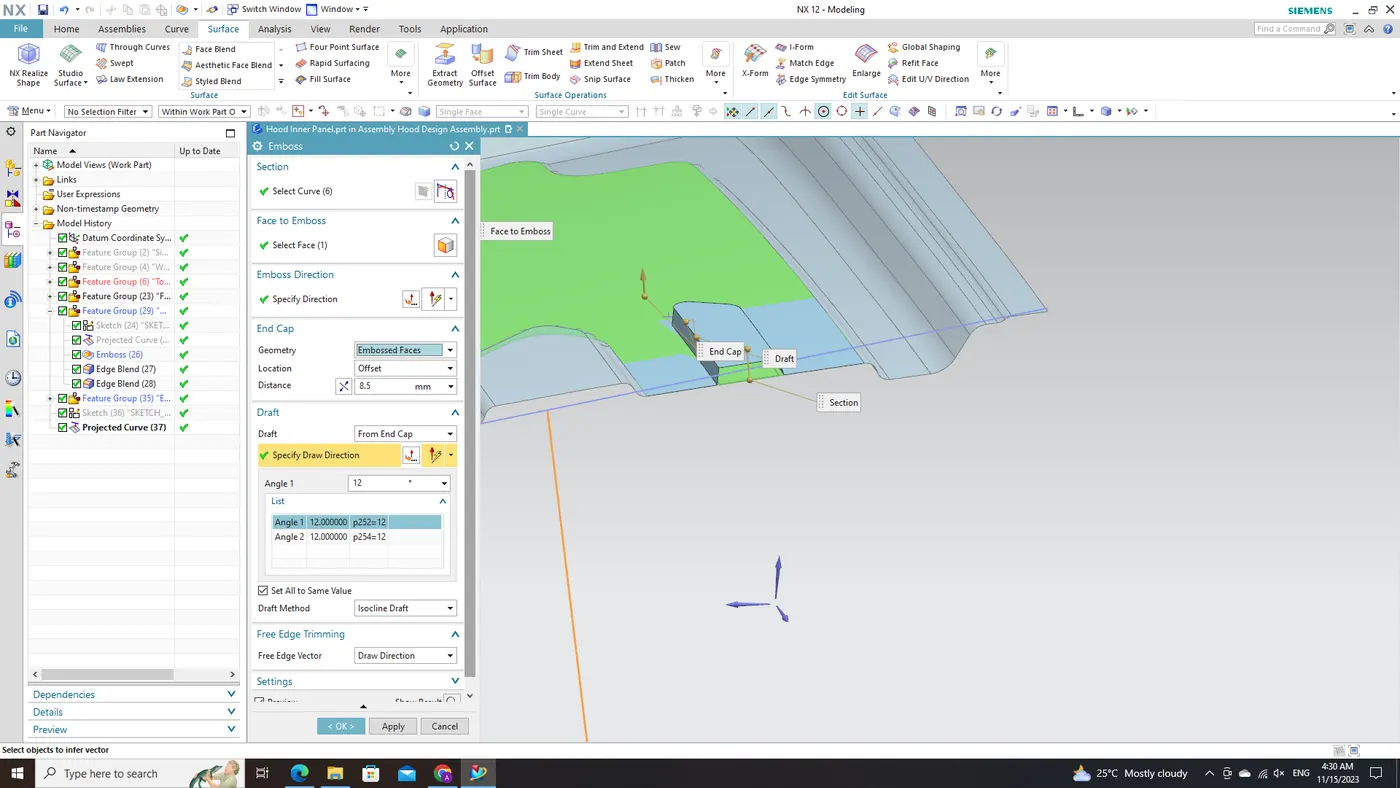
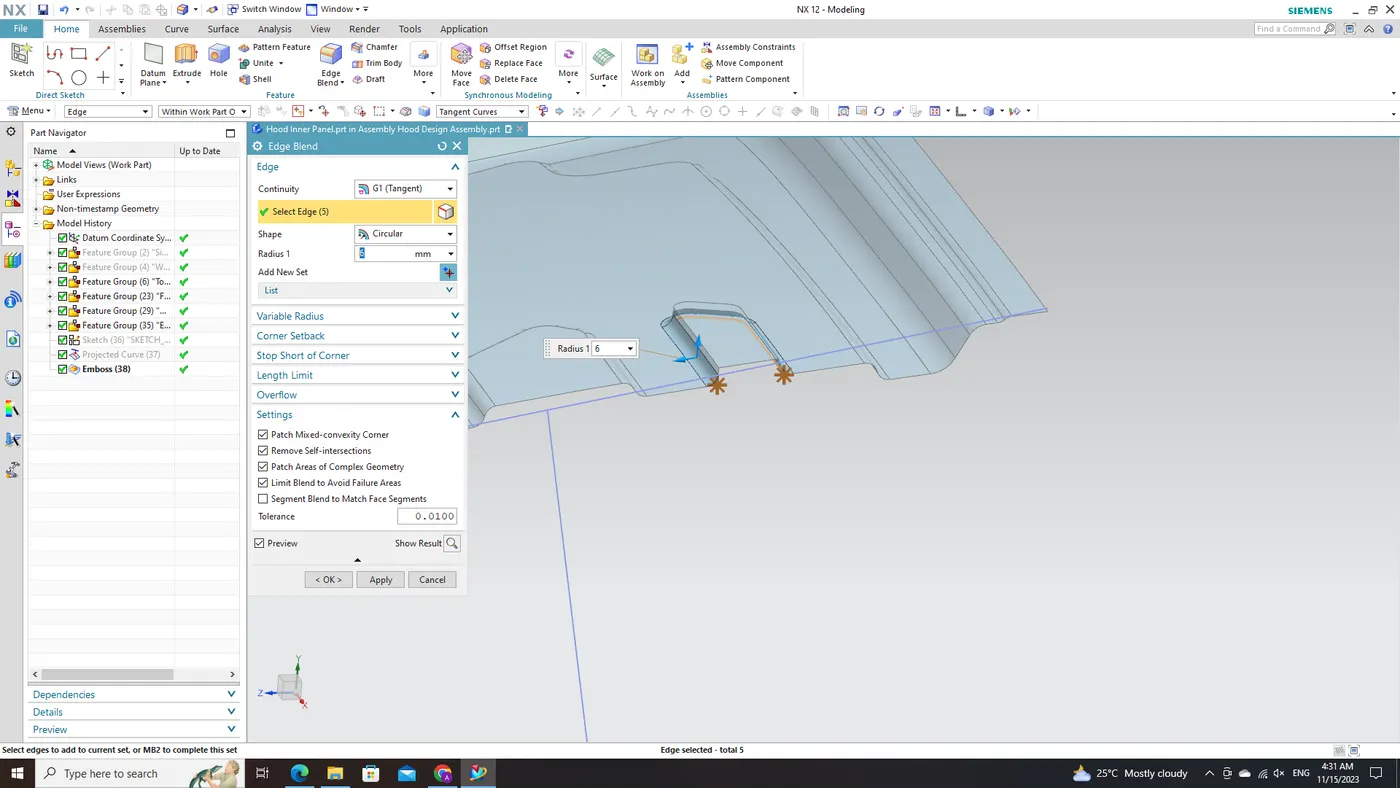
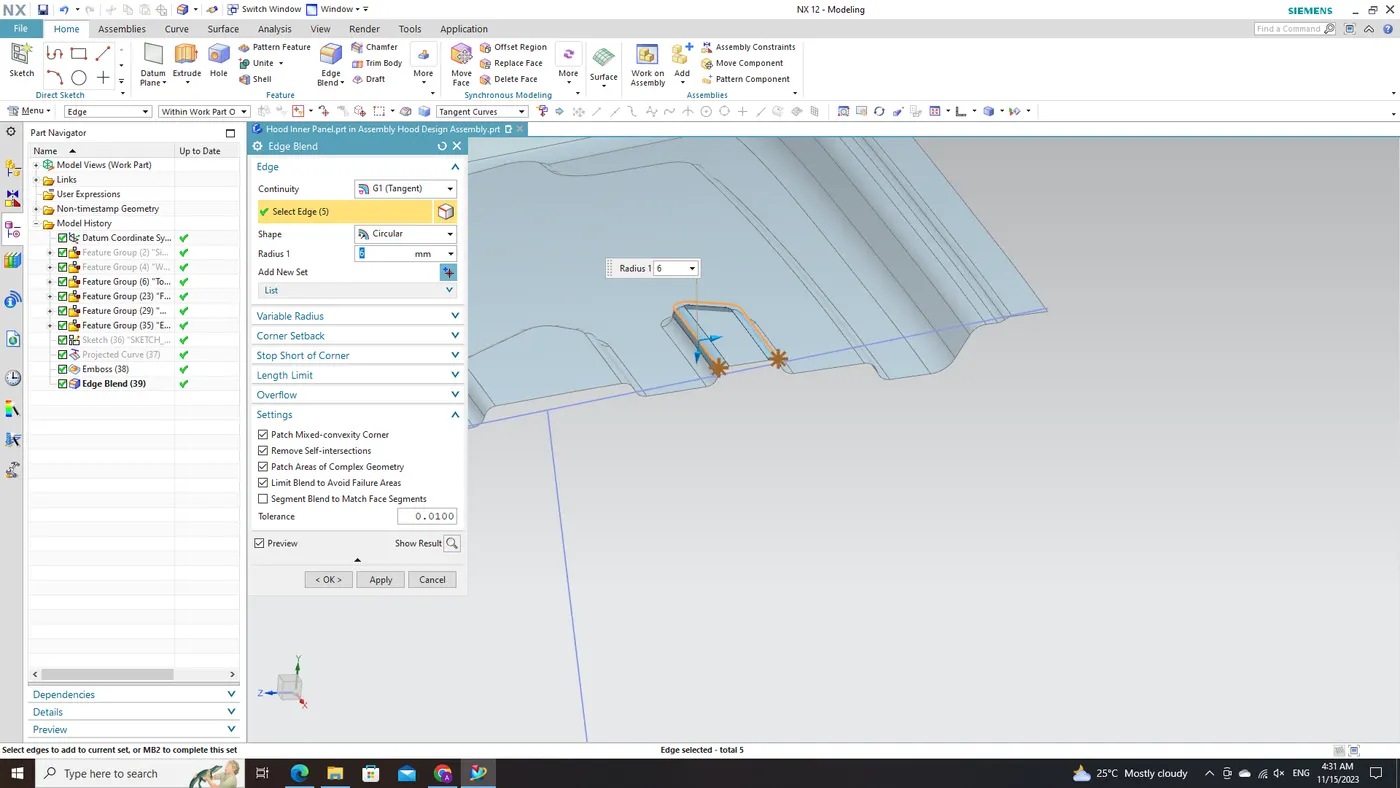
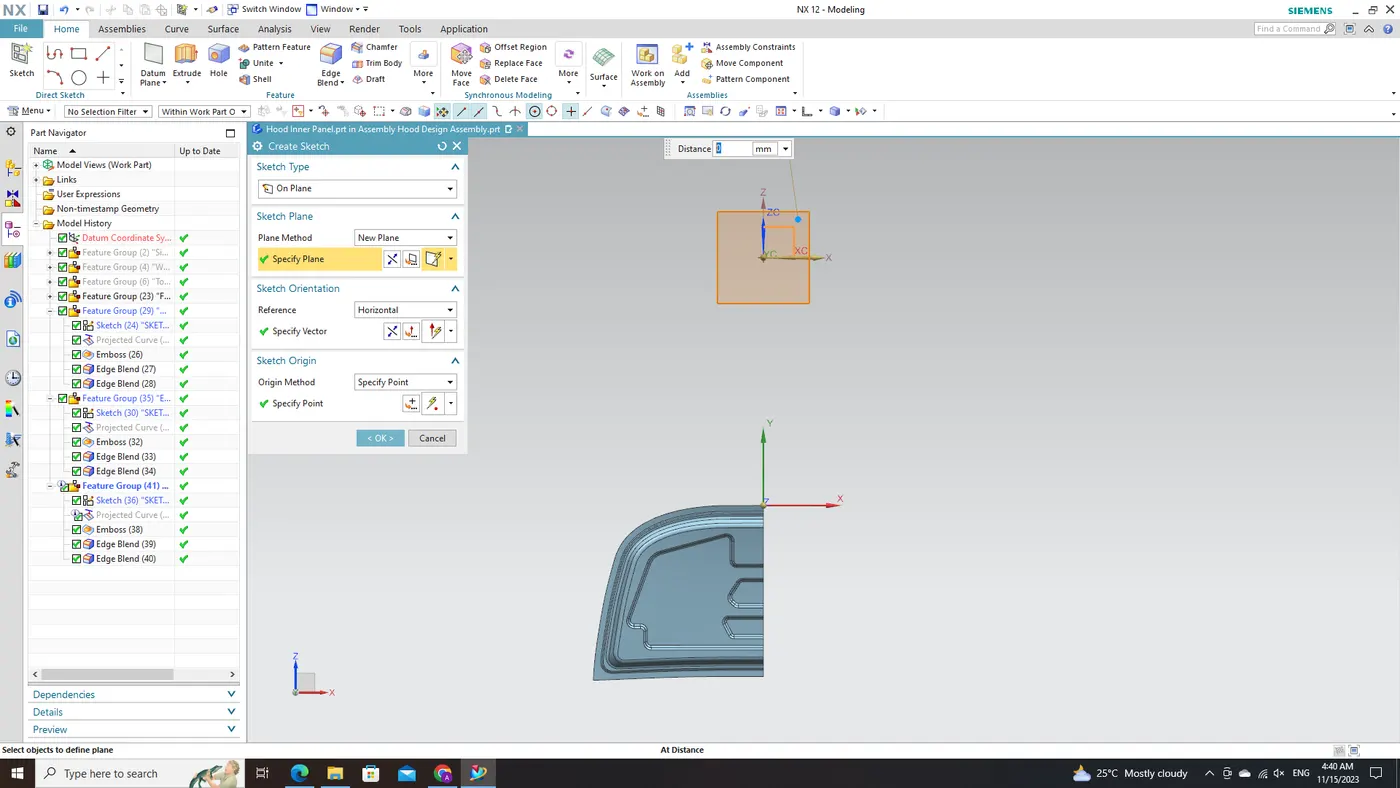
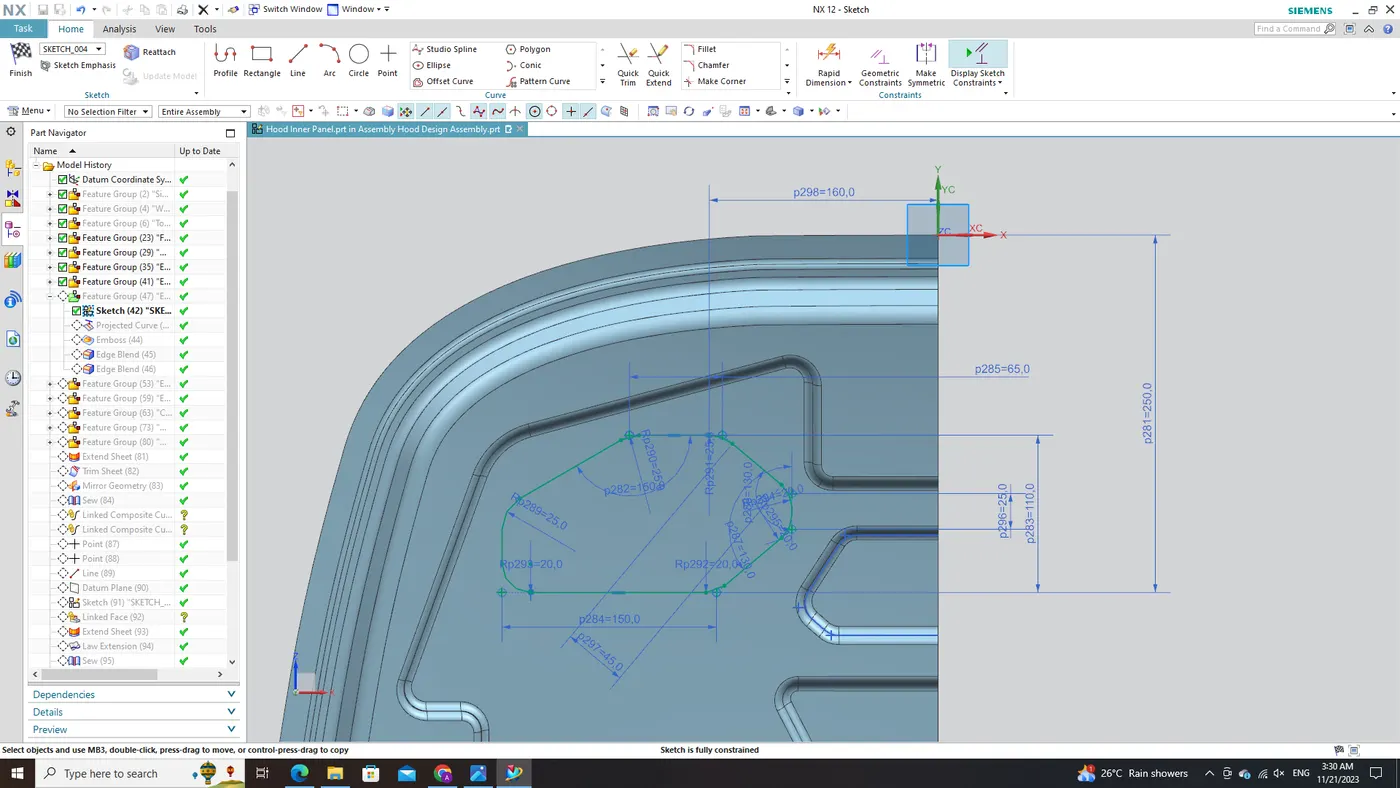
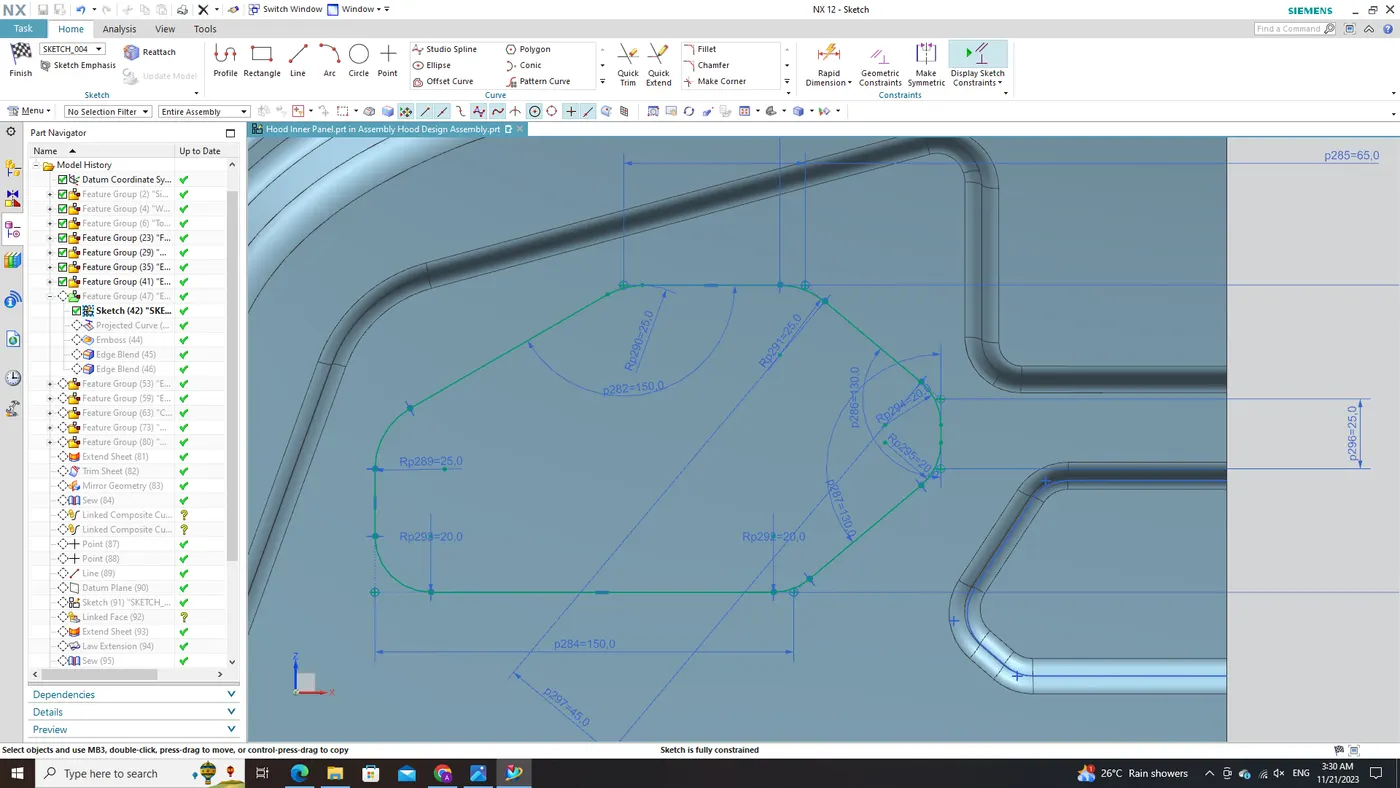
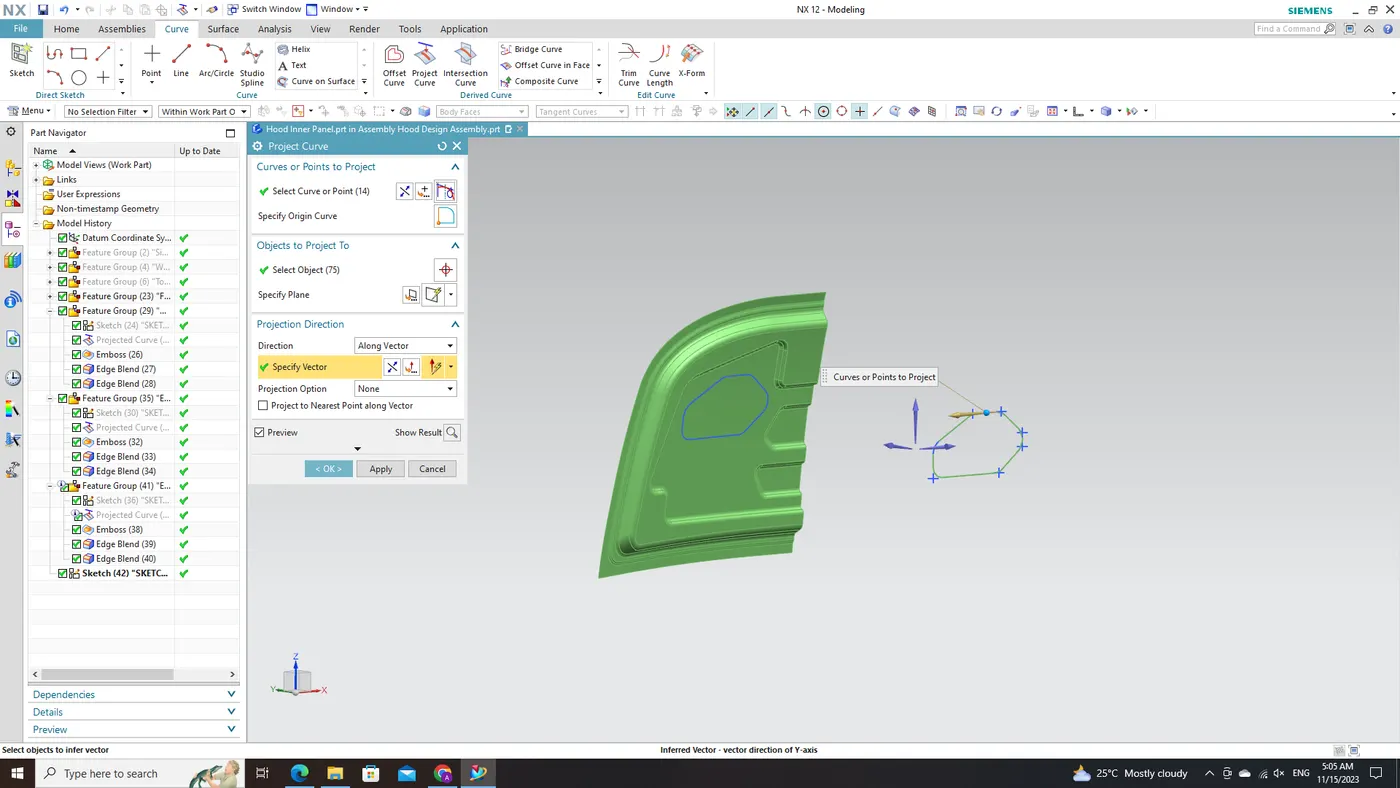
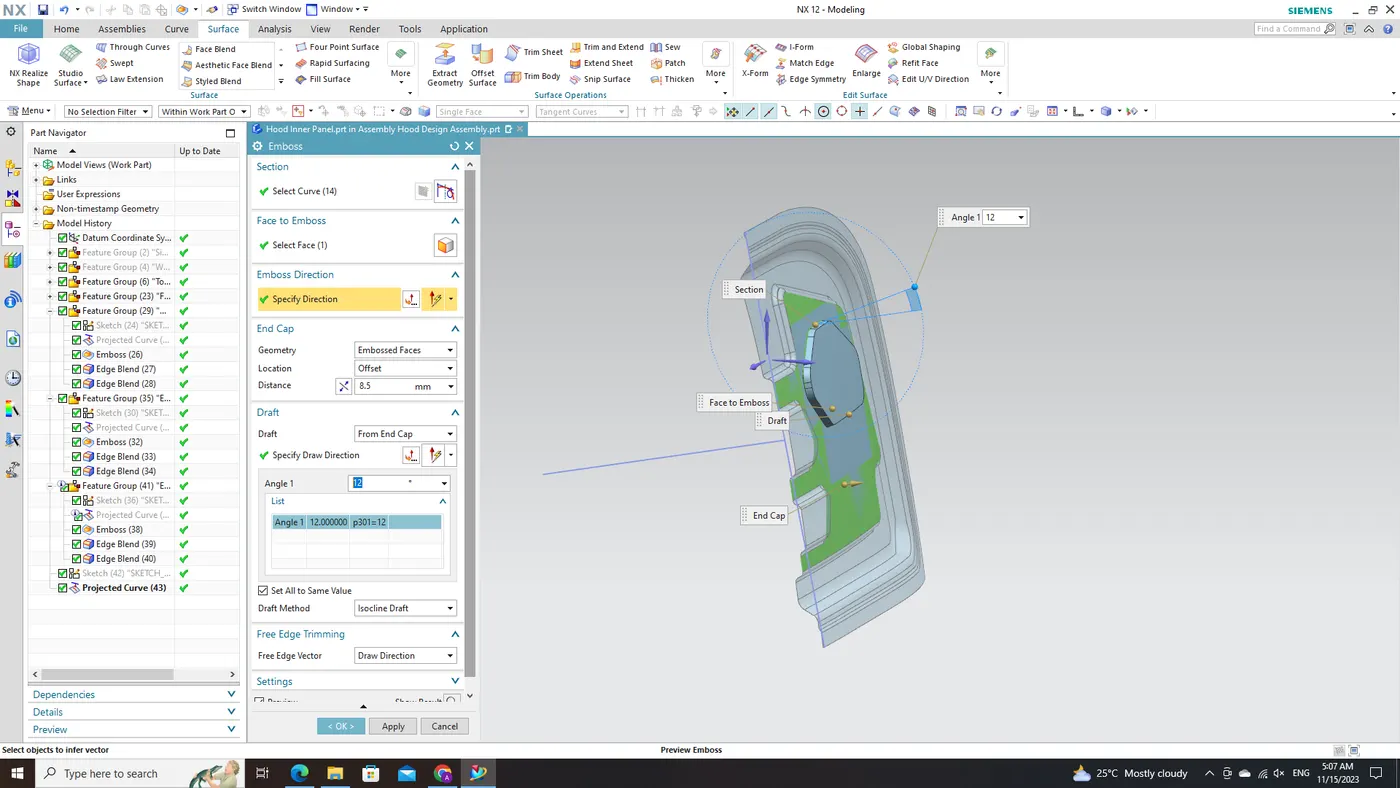
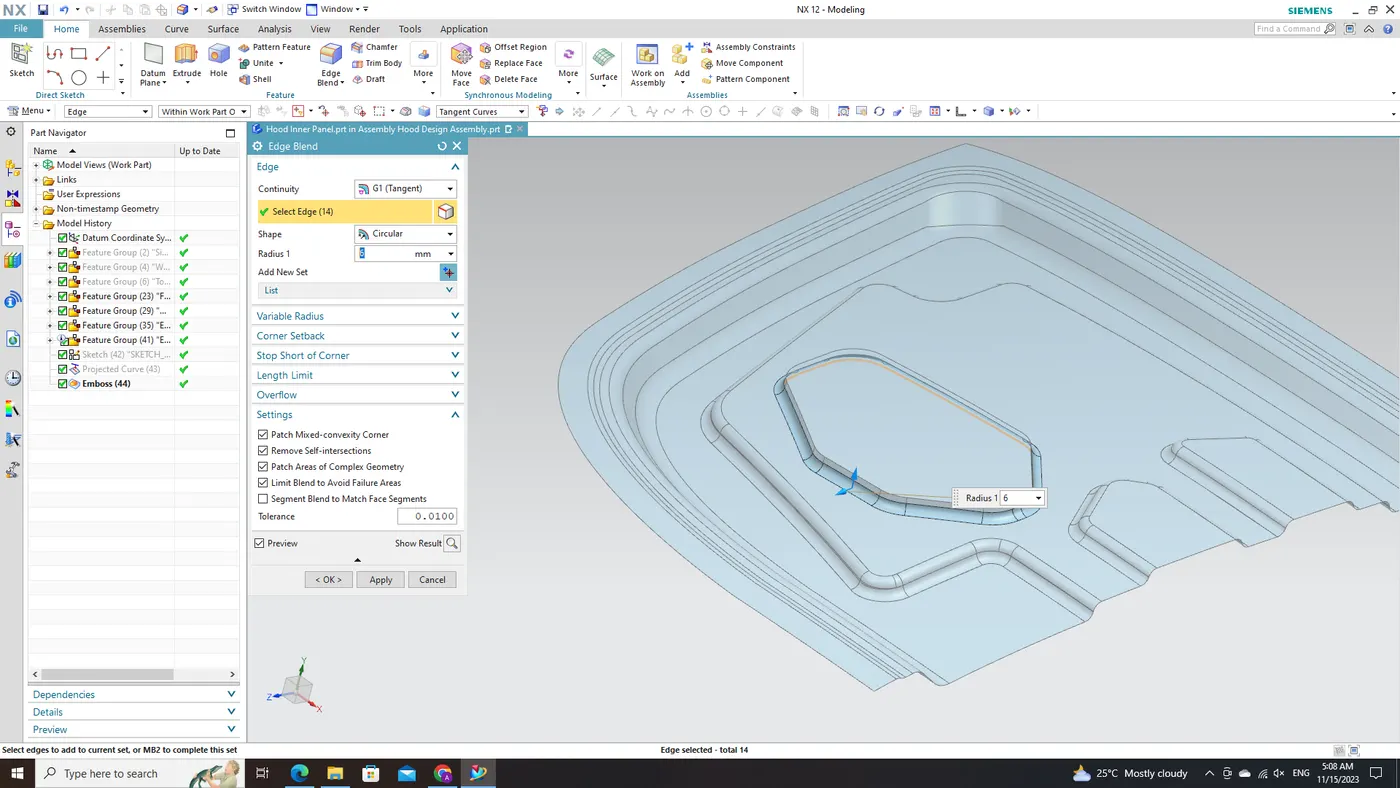
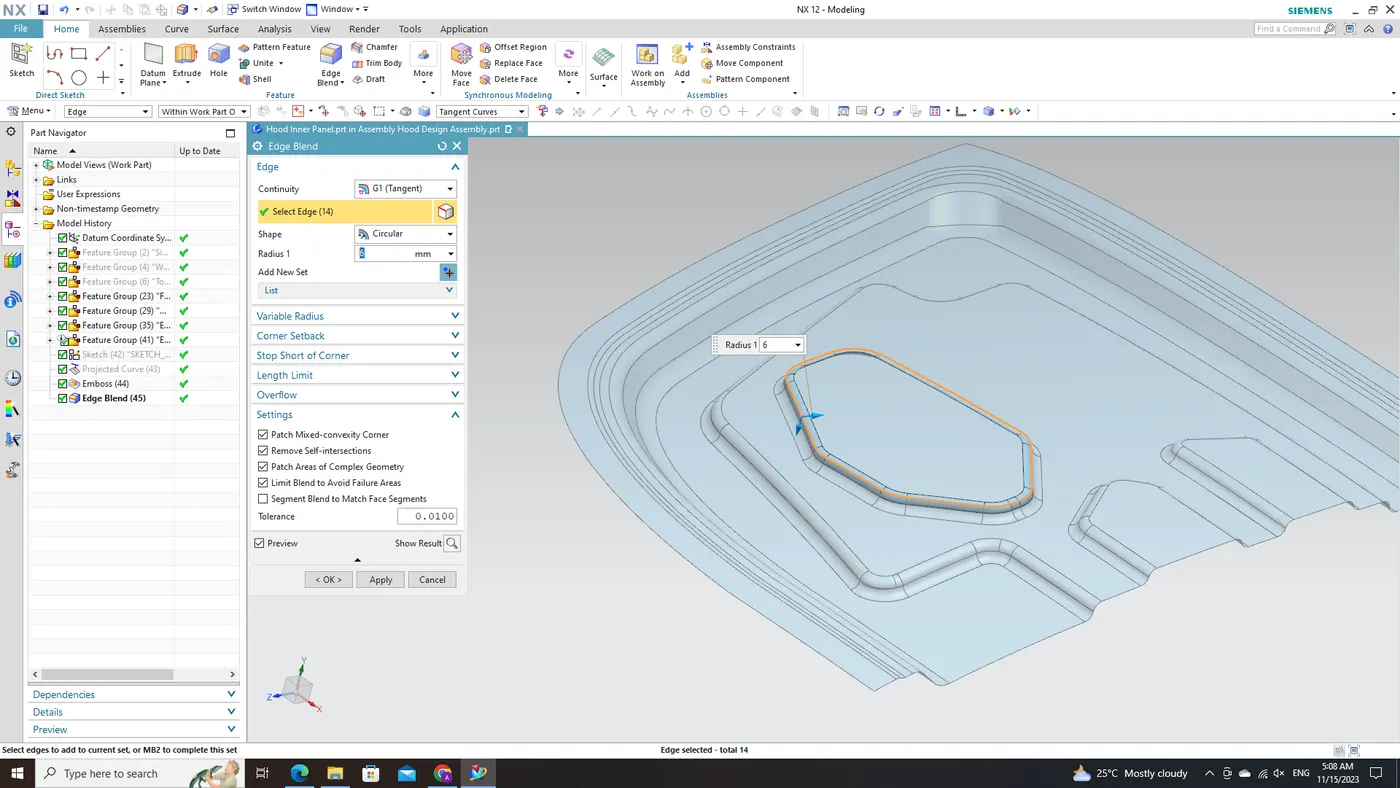
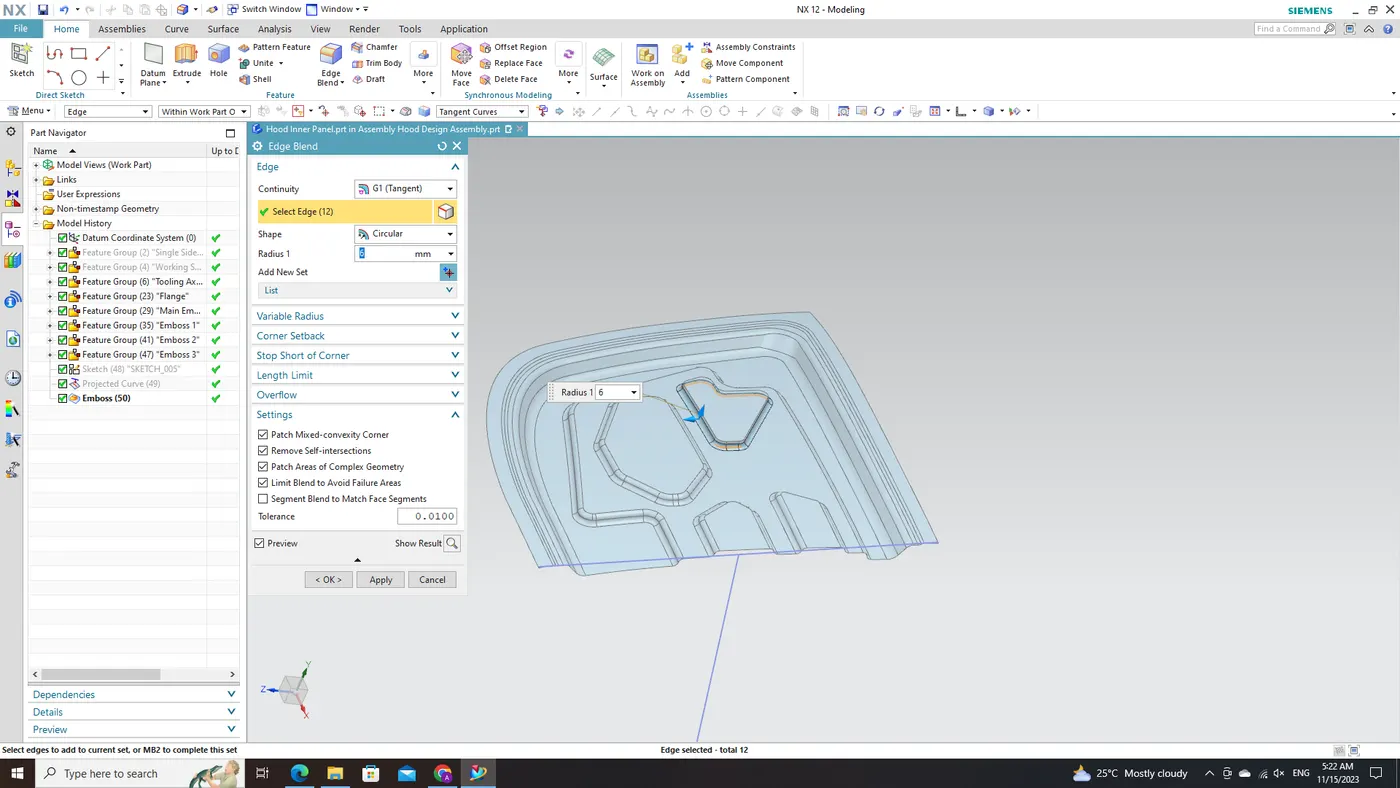
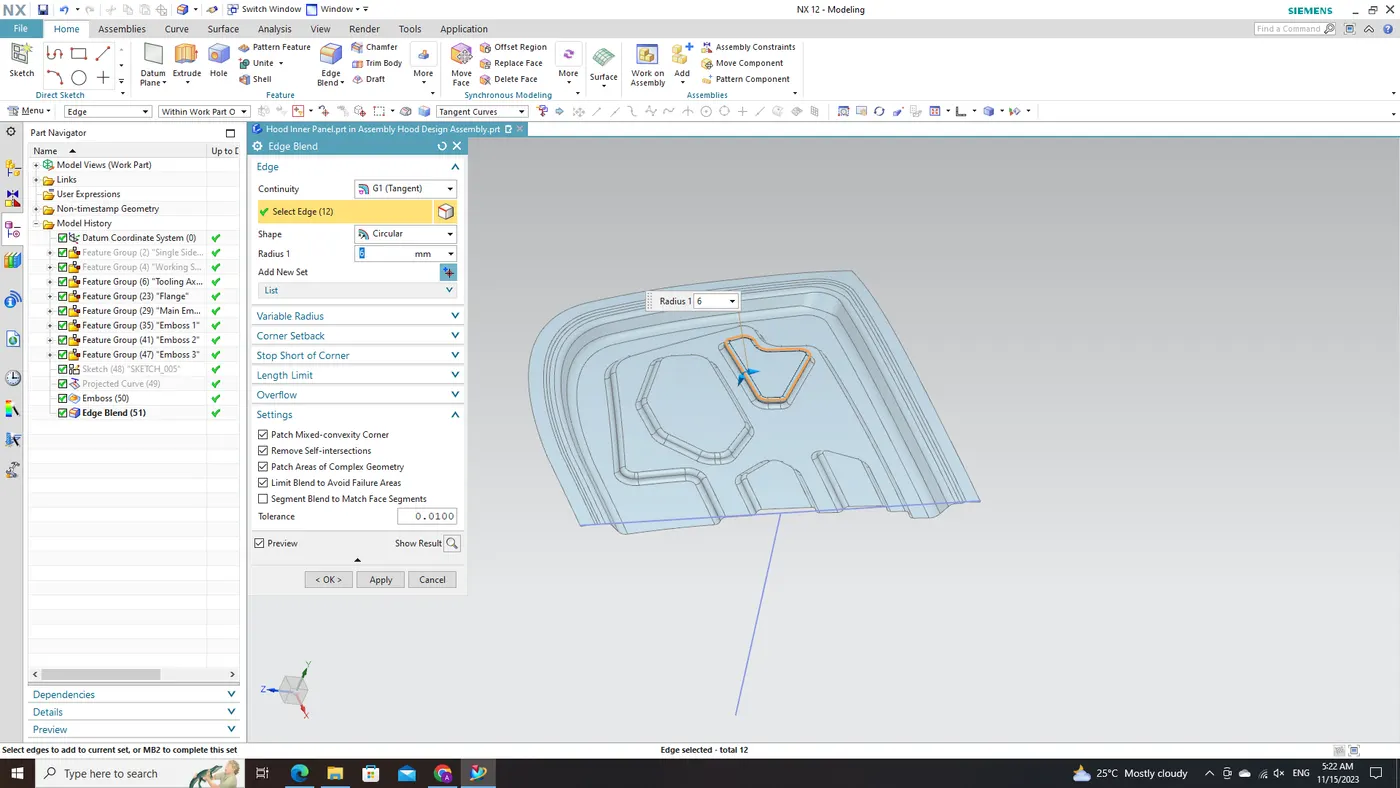
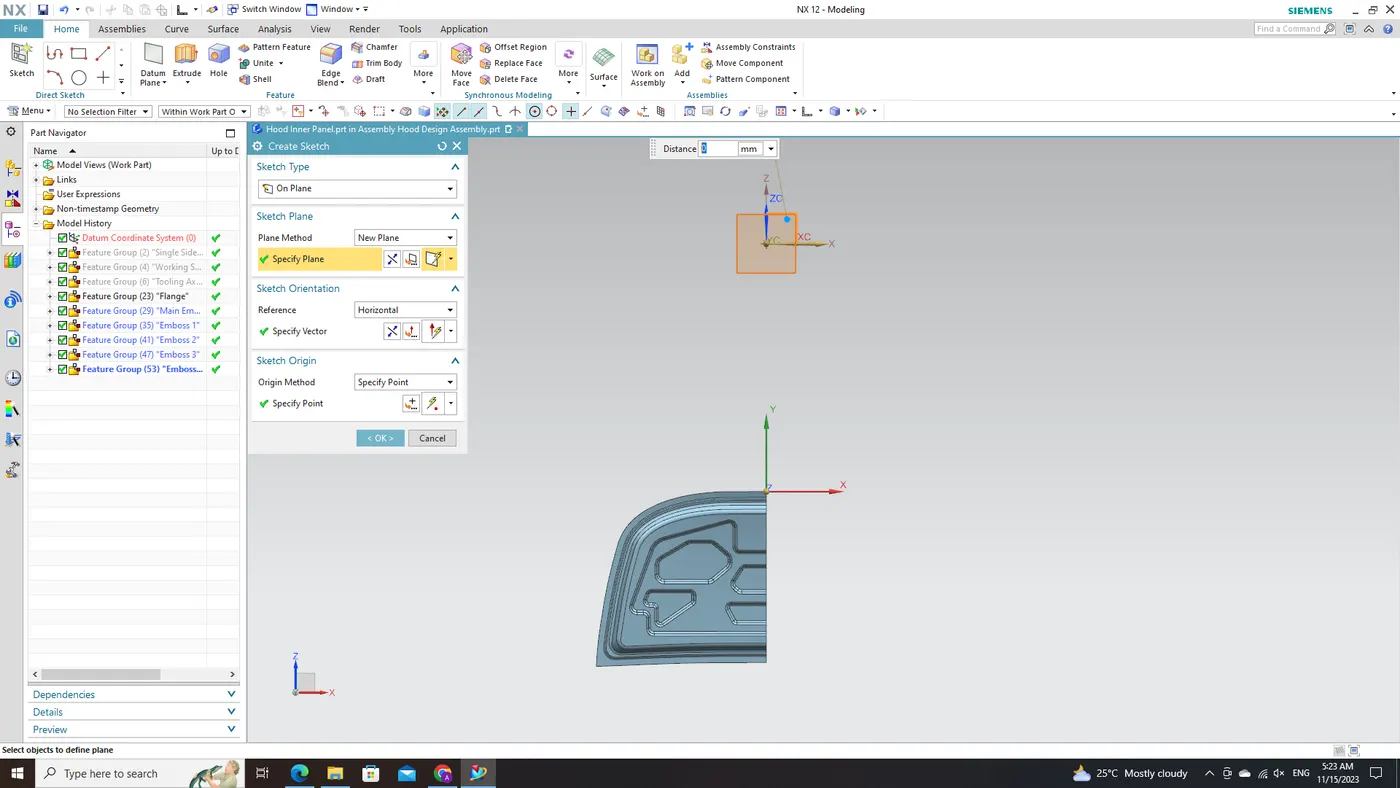
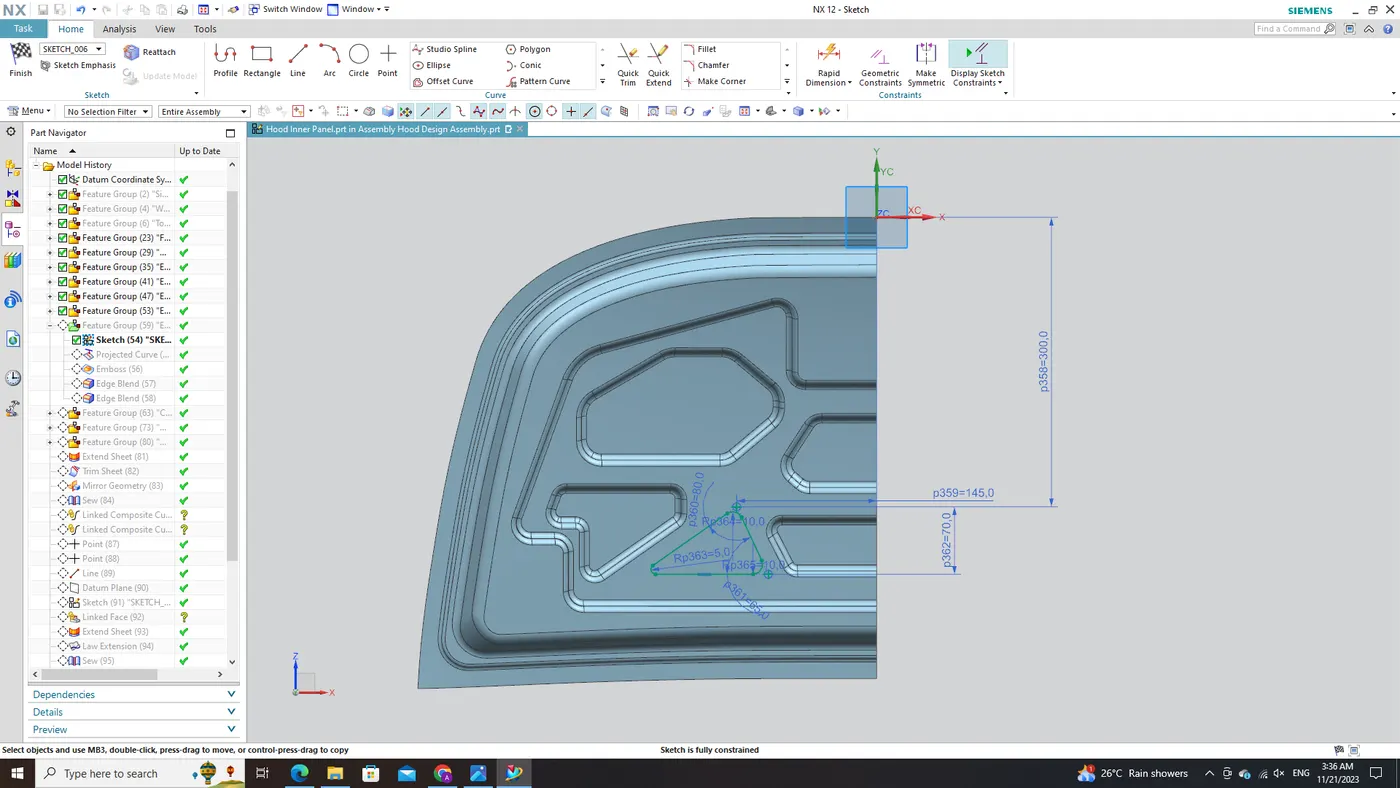
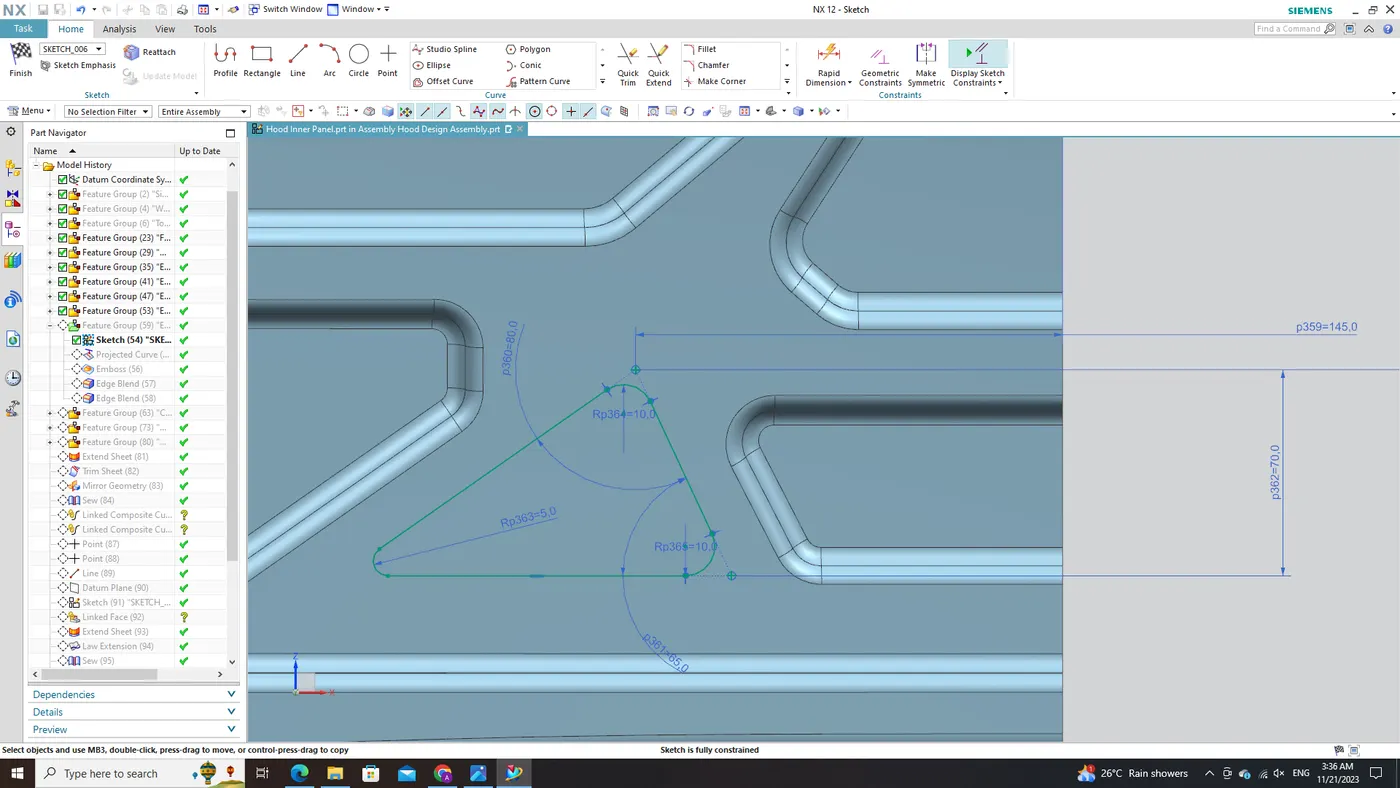
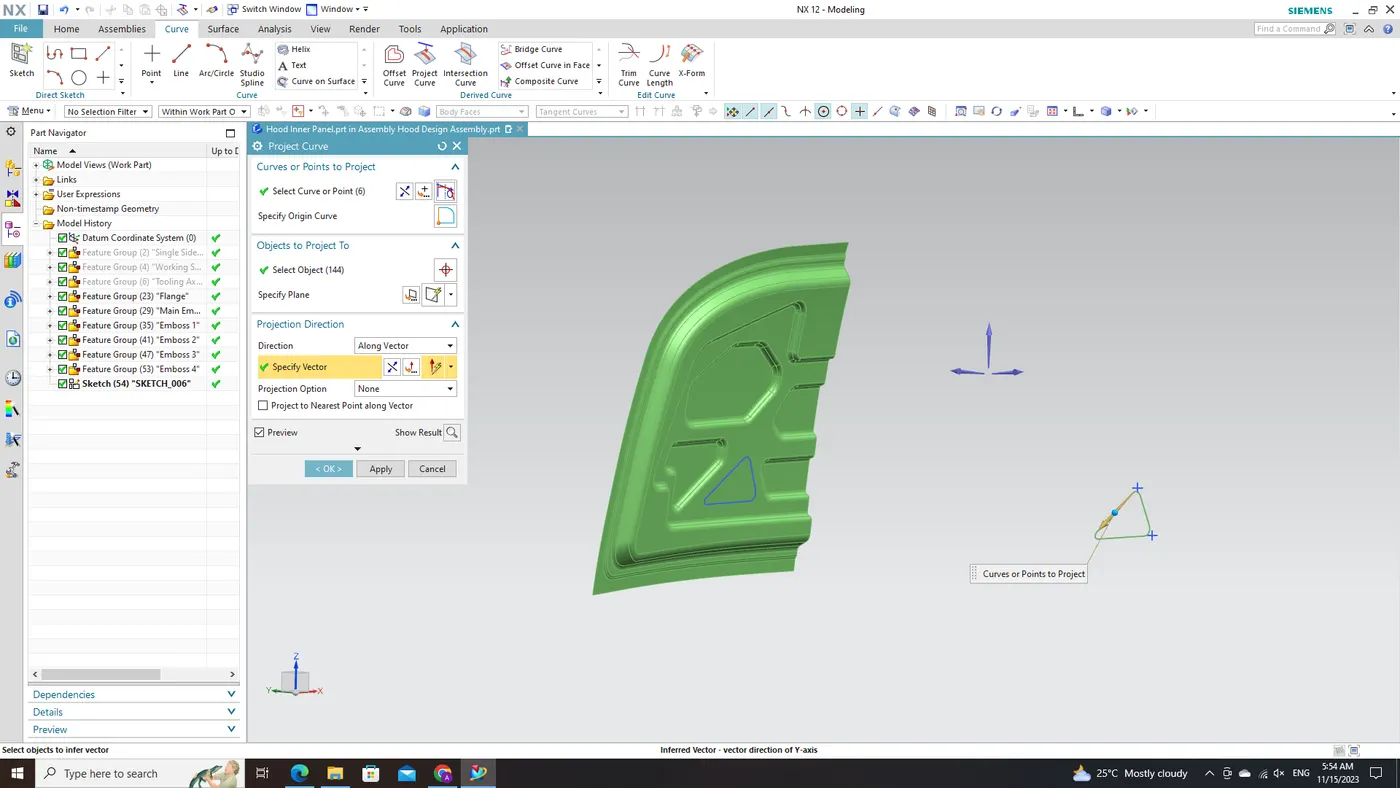
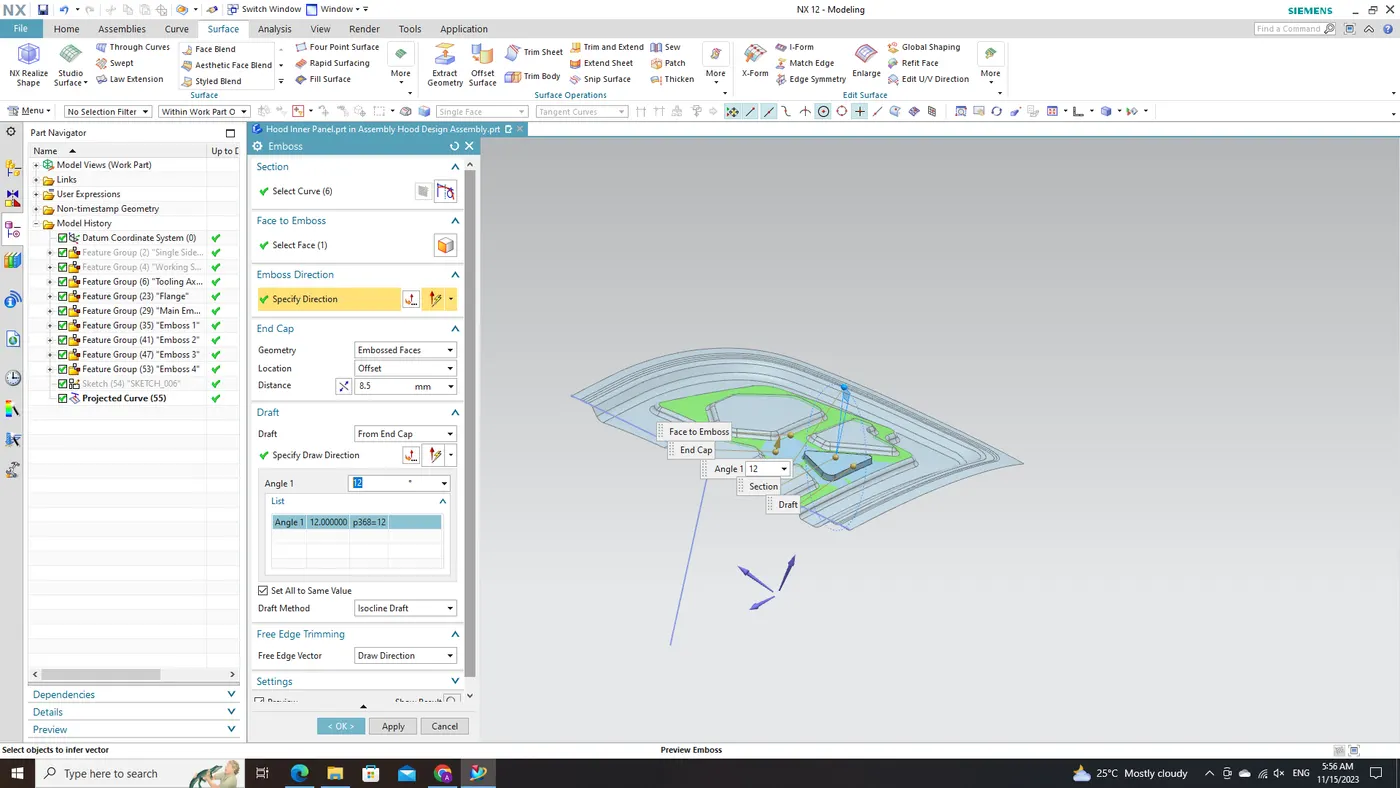
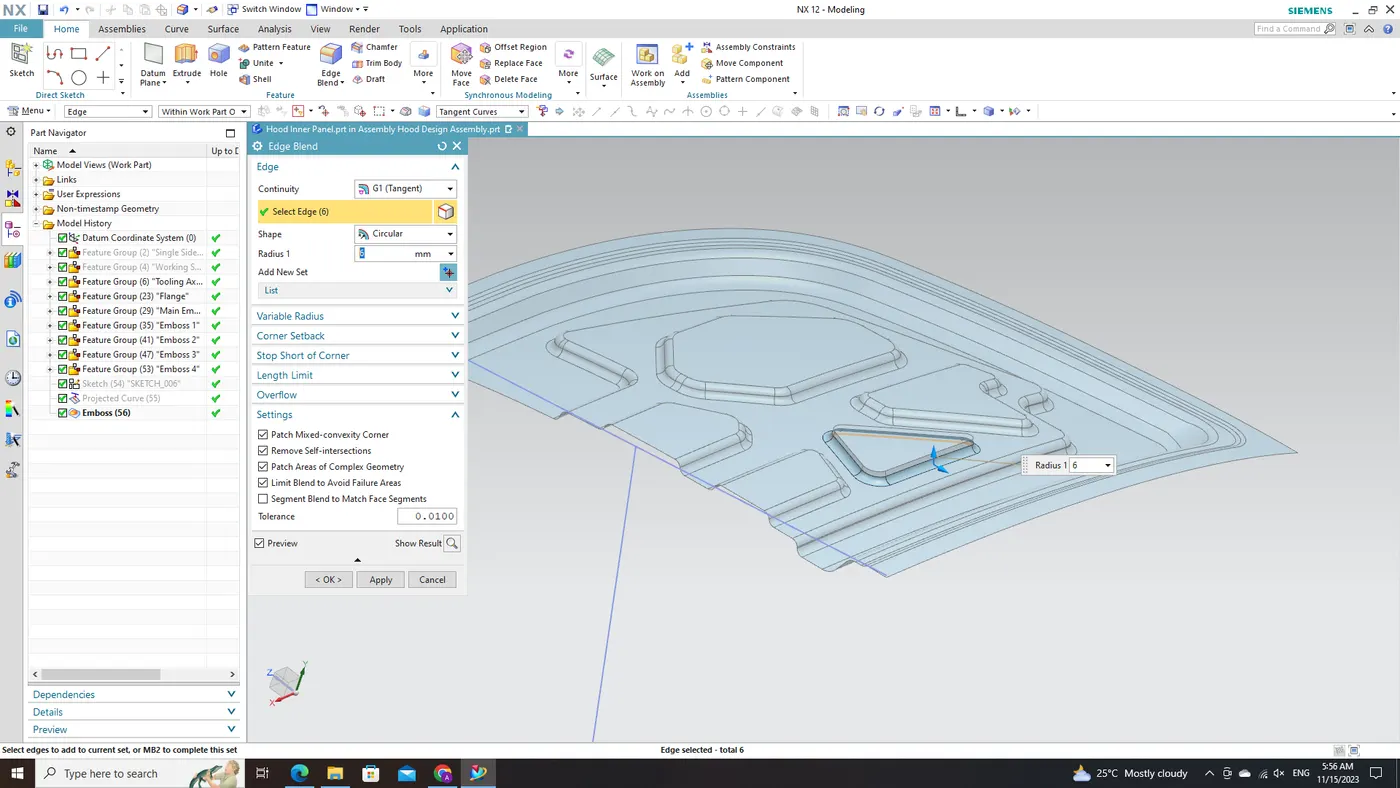
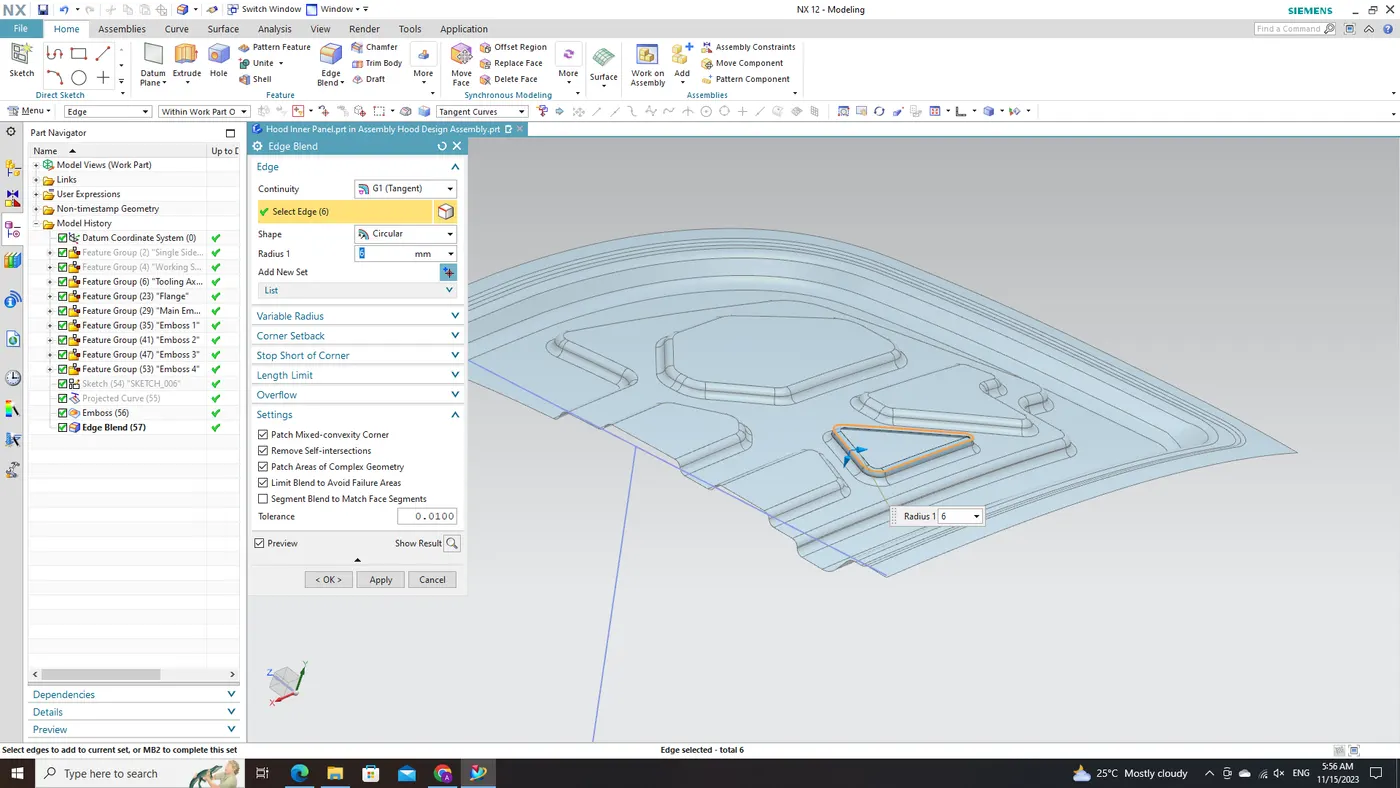
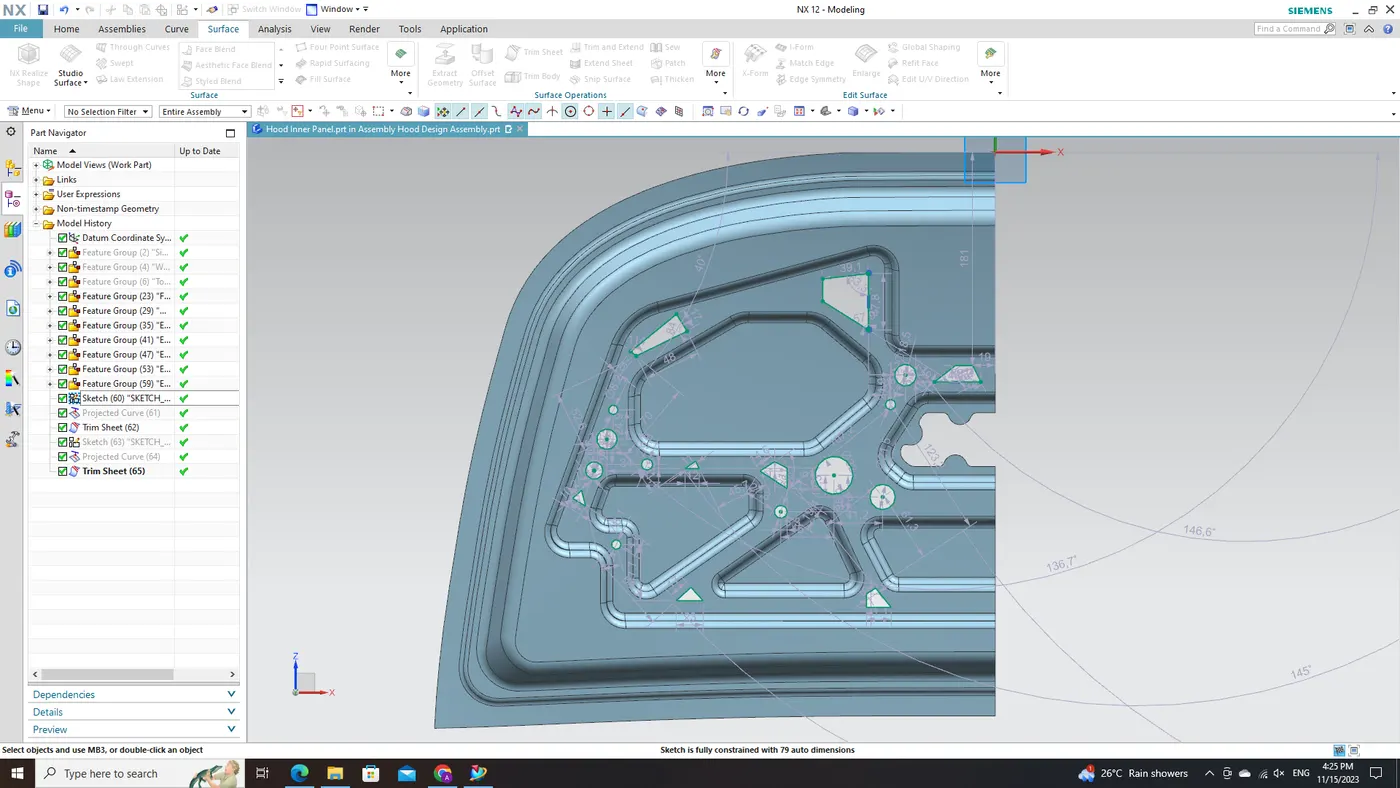
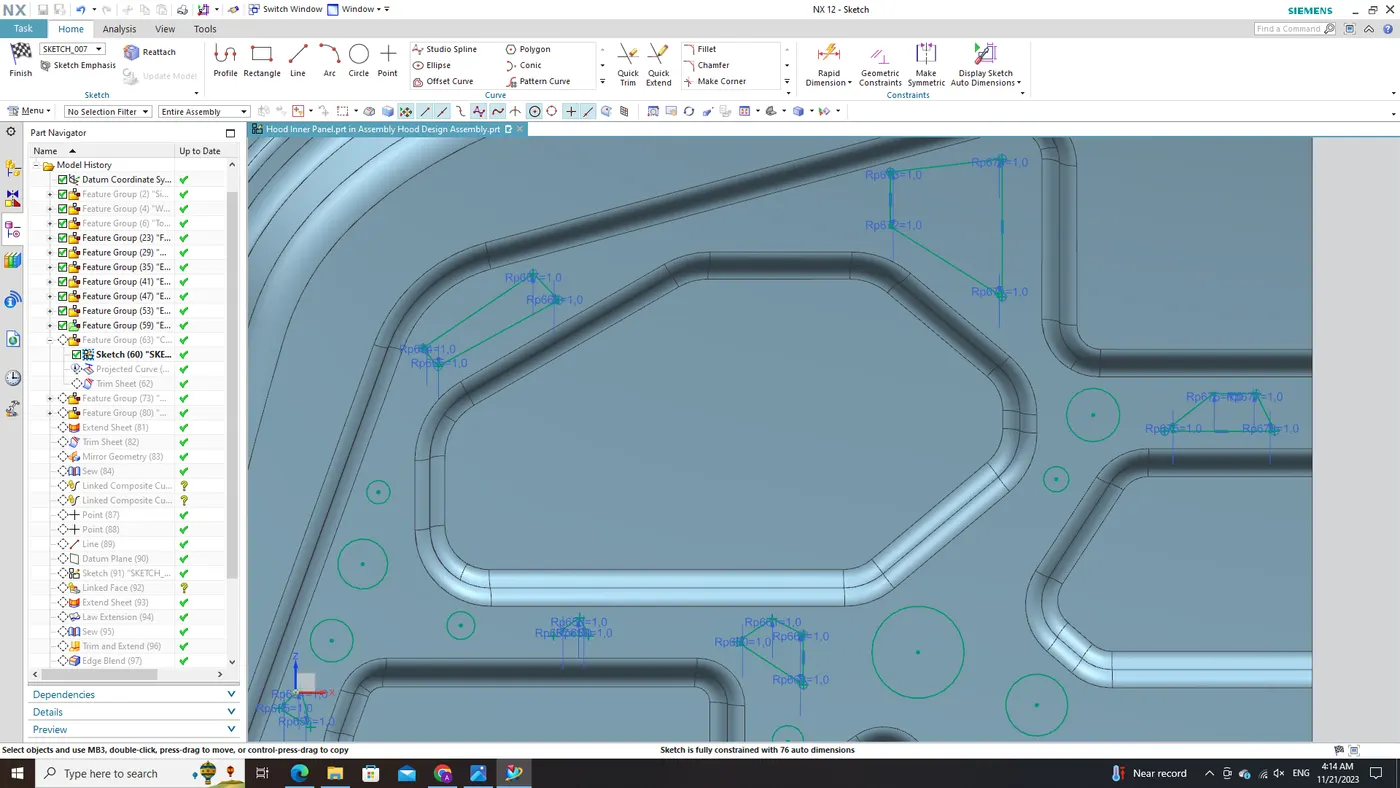
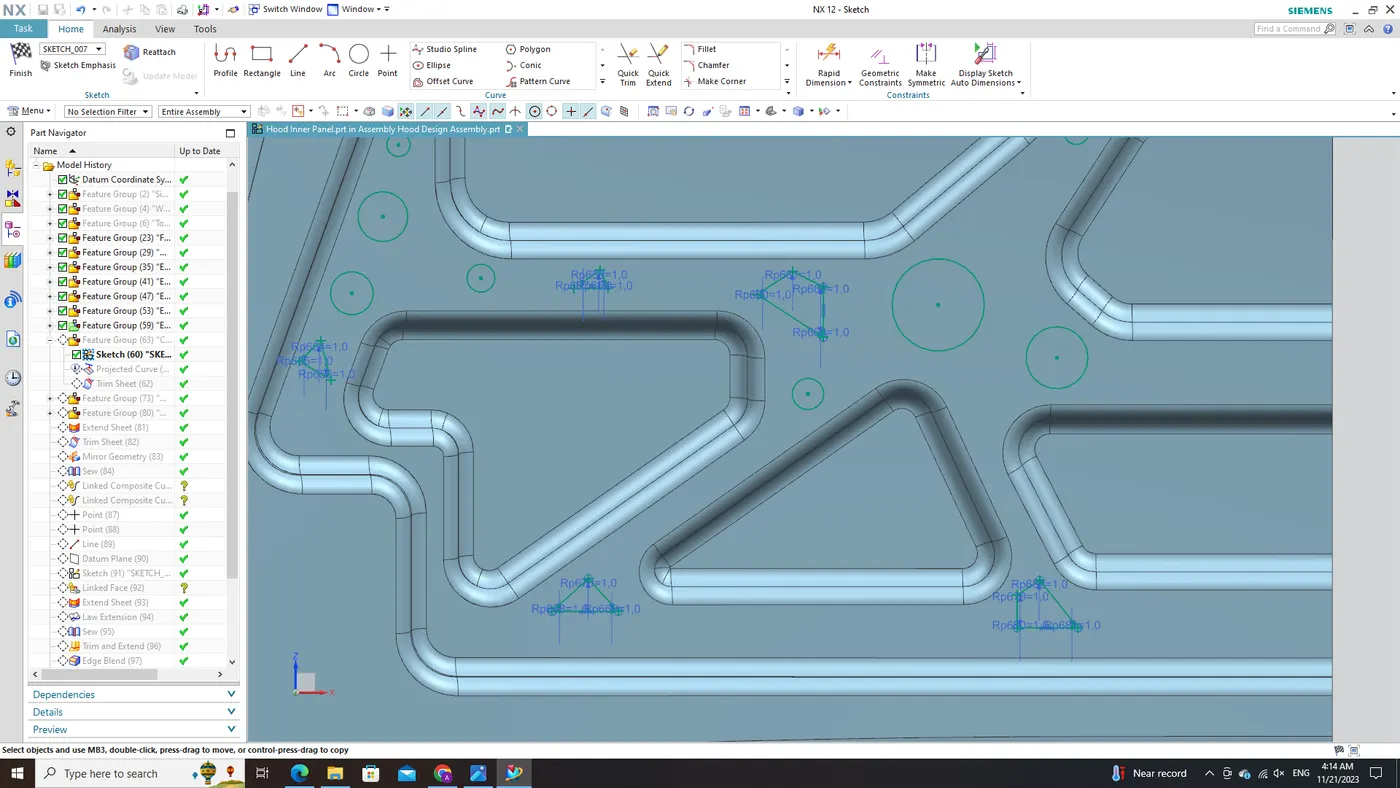
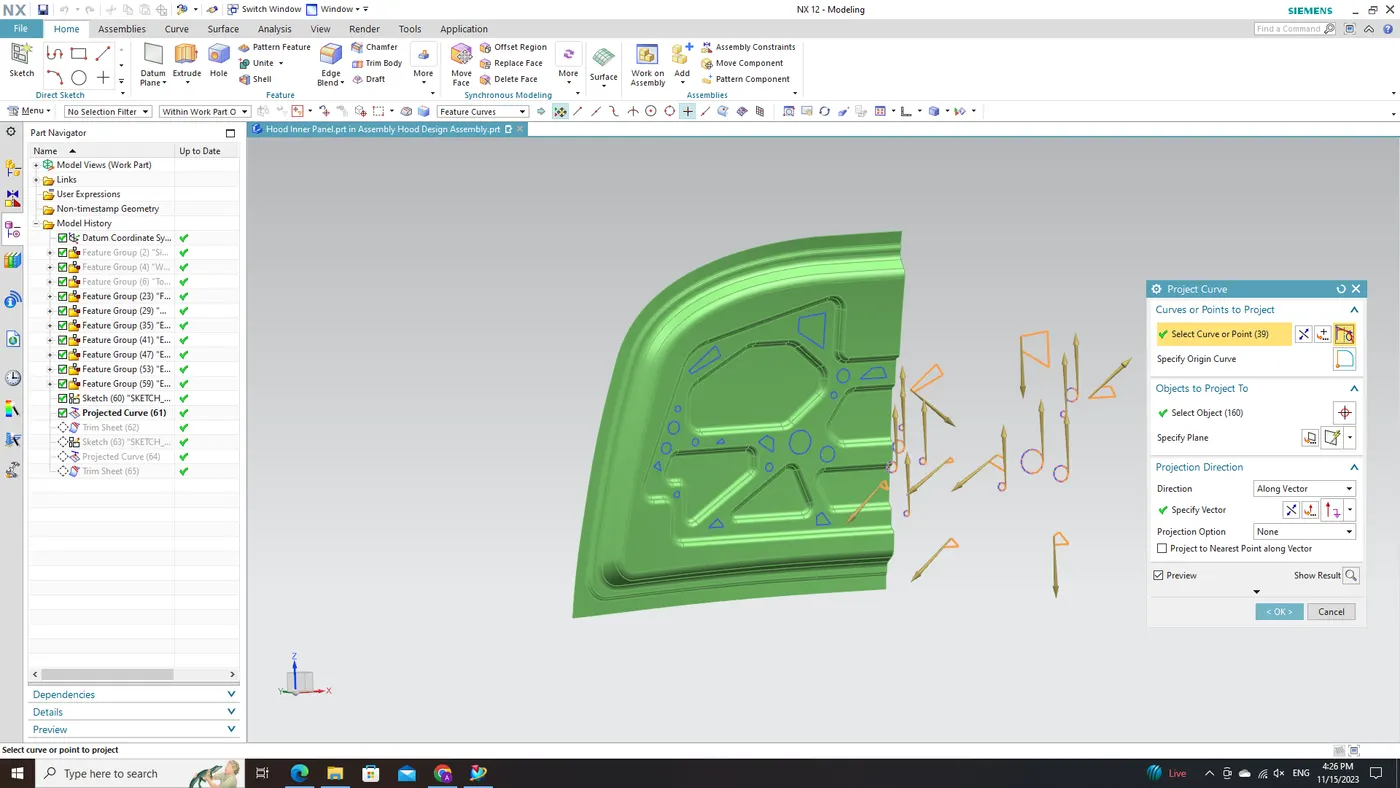
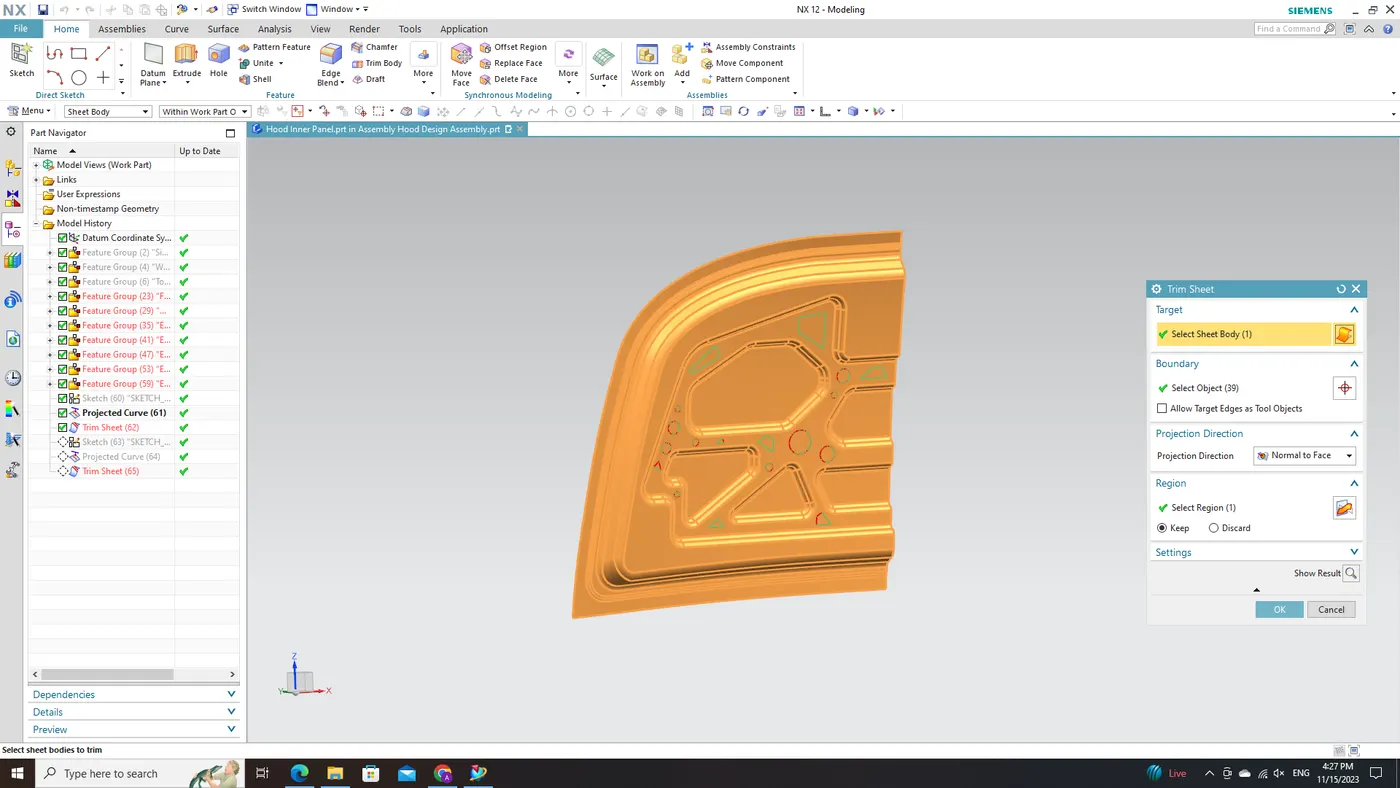
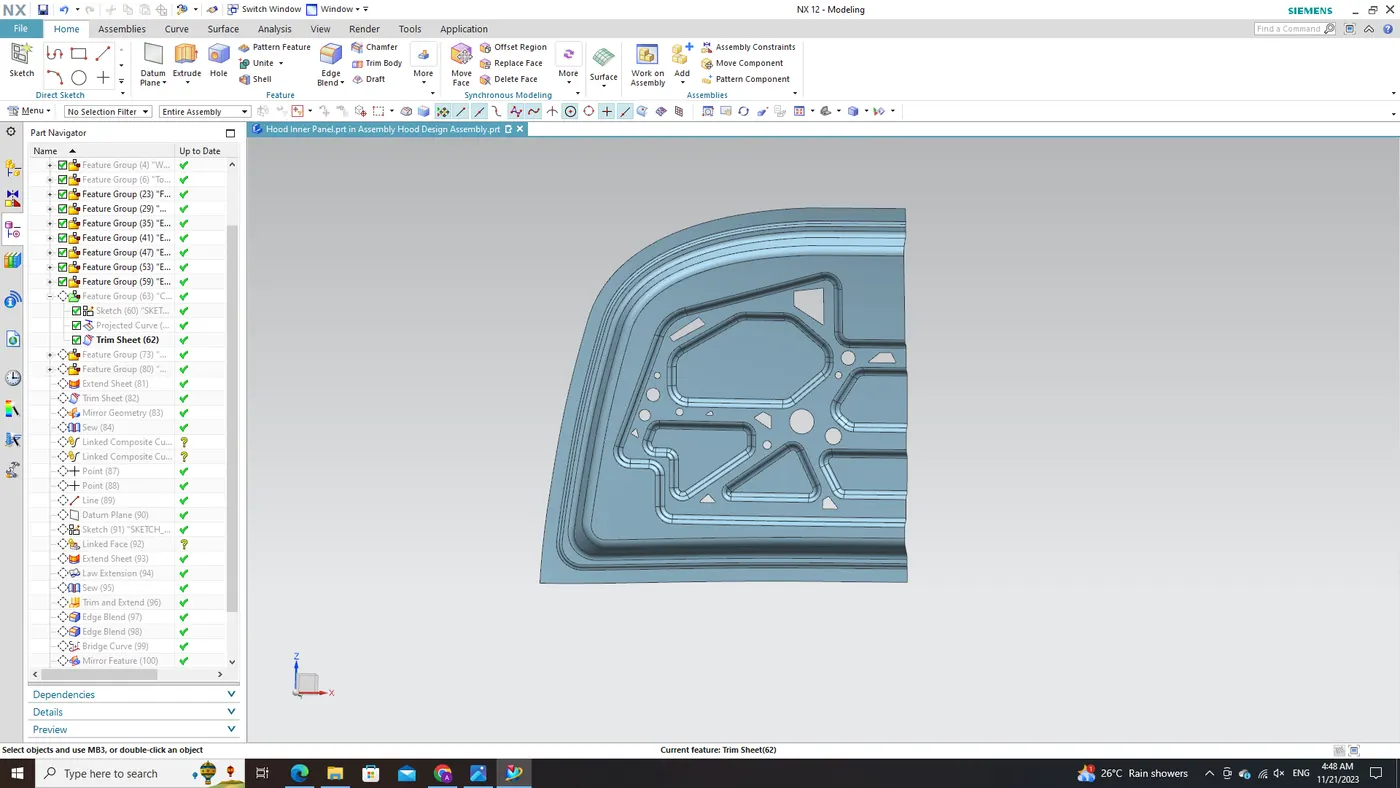
Mastic Data and Points to be placed for the sealant to be applied on to join the outer panel and inner panel.
5mm gap between the thickened inner and outer panel to accommodate the mastic point.
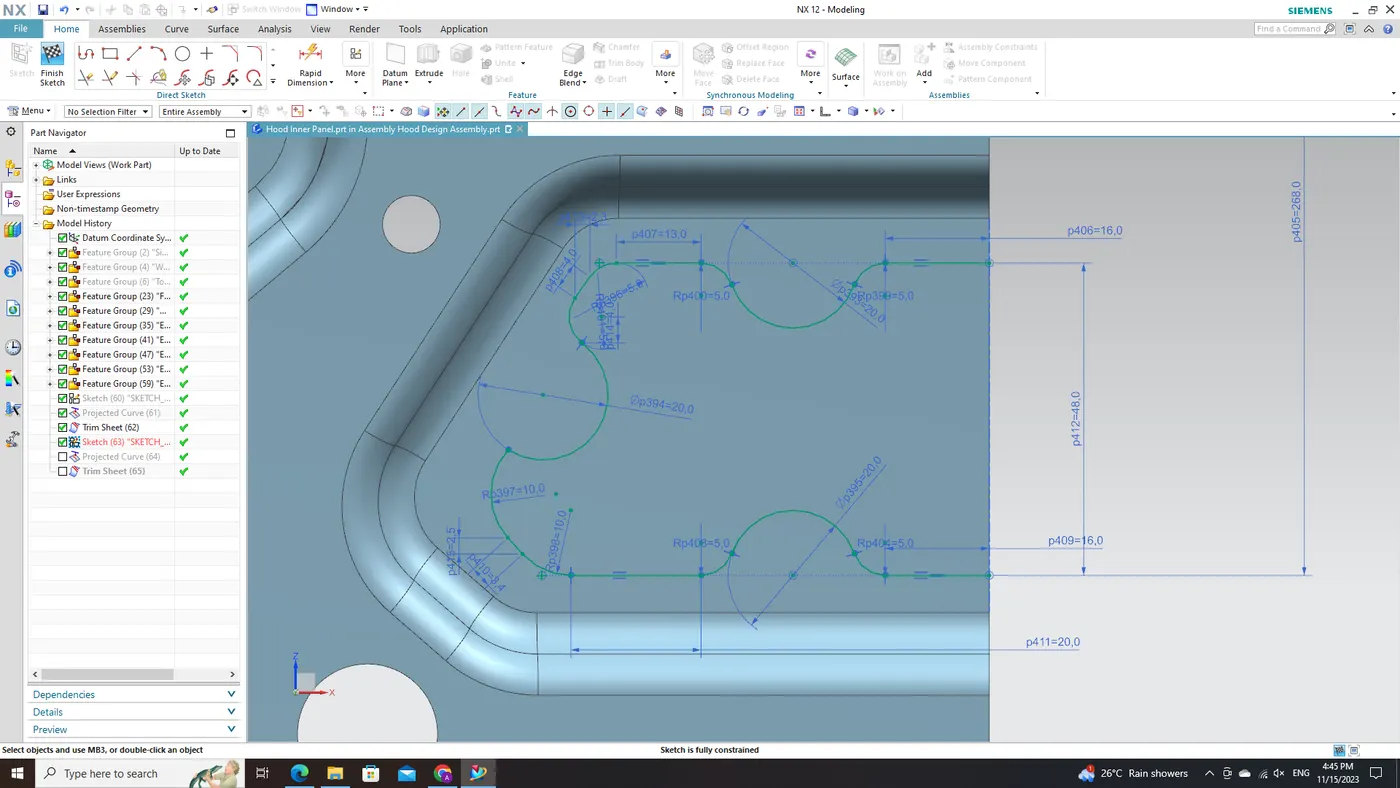
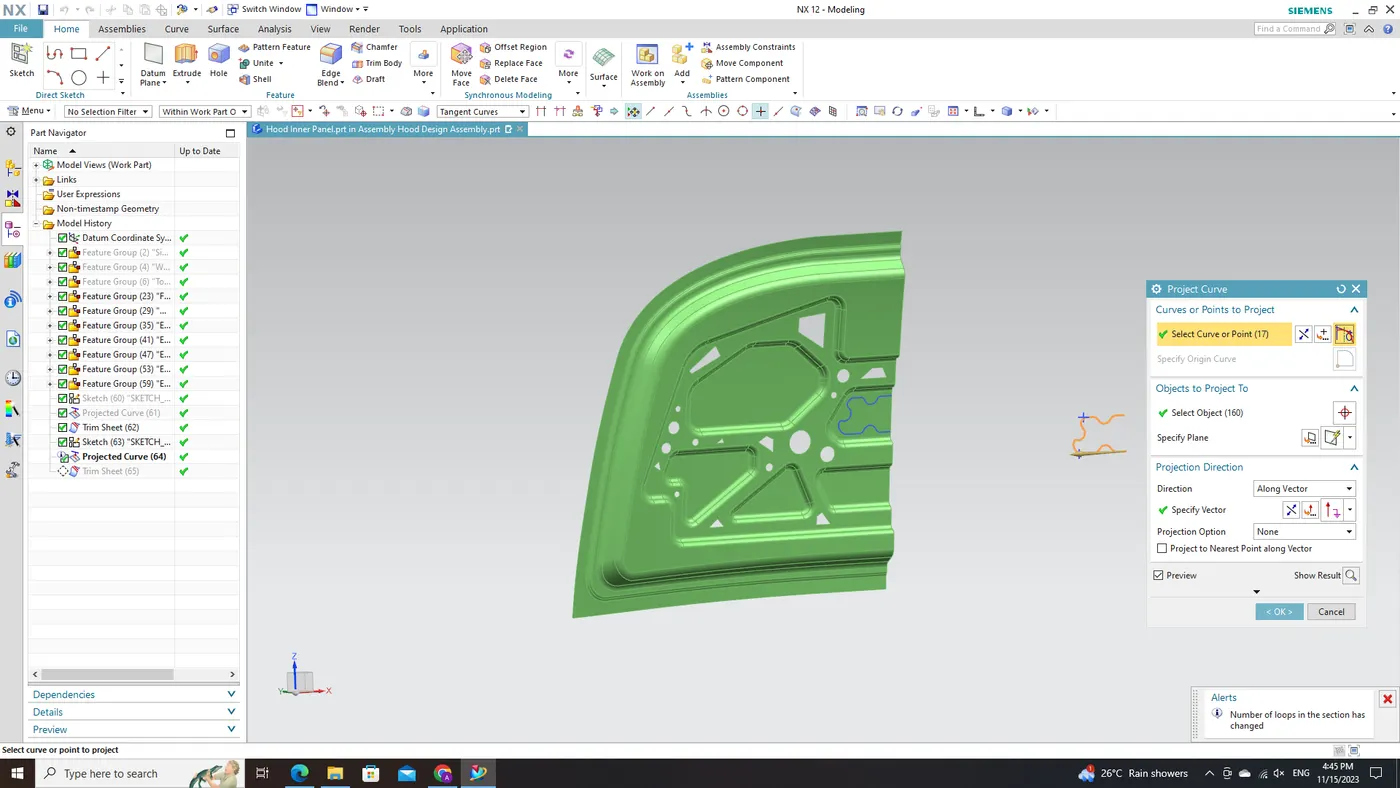
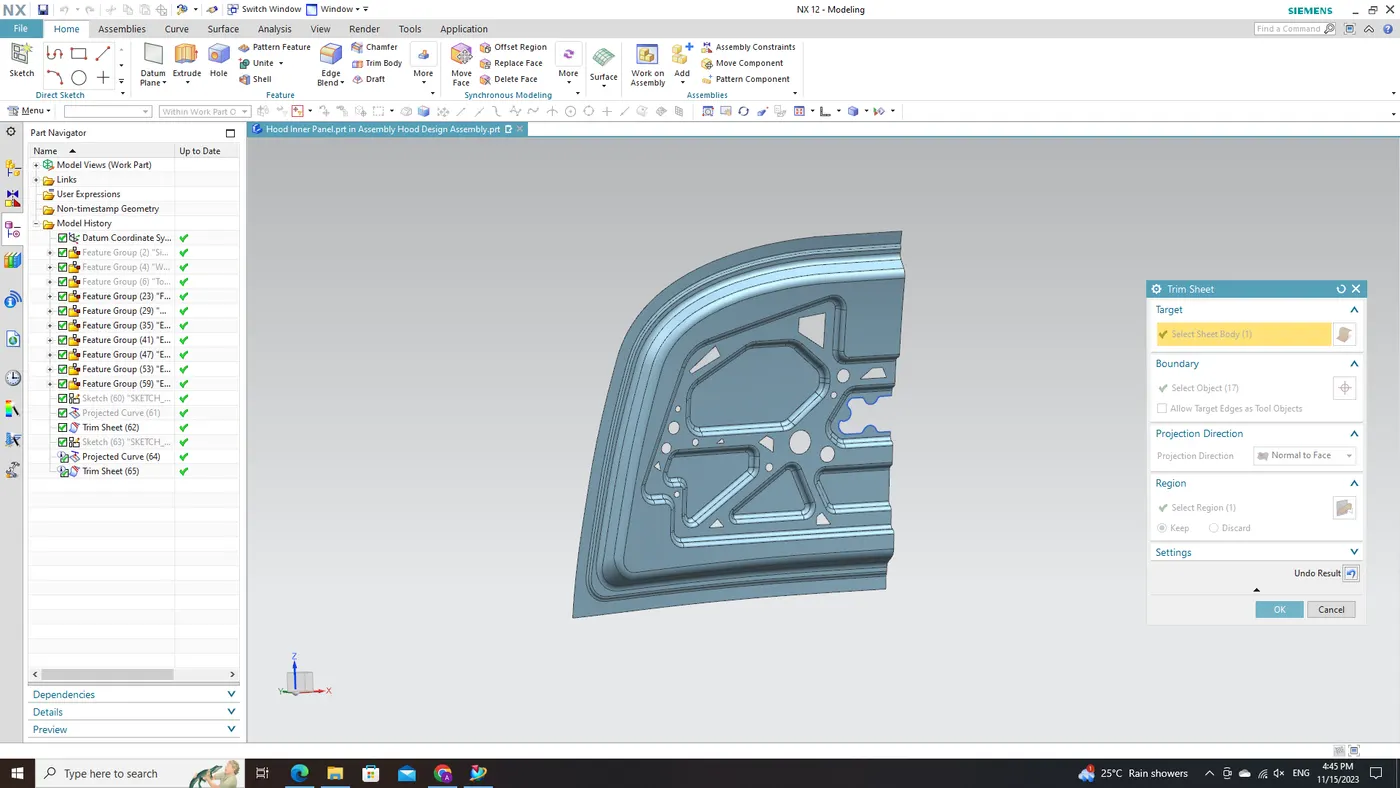
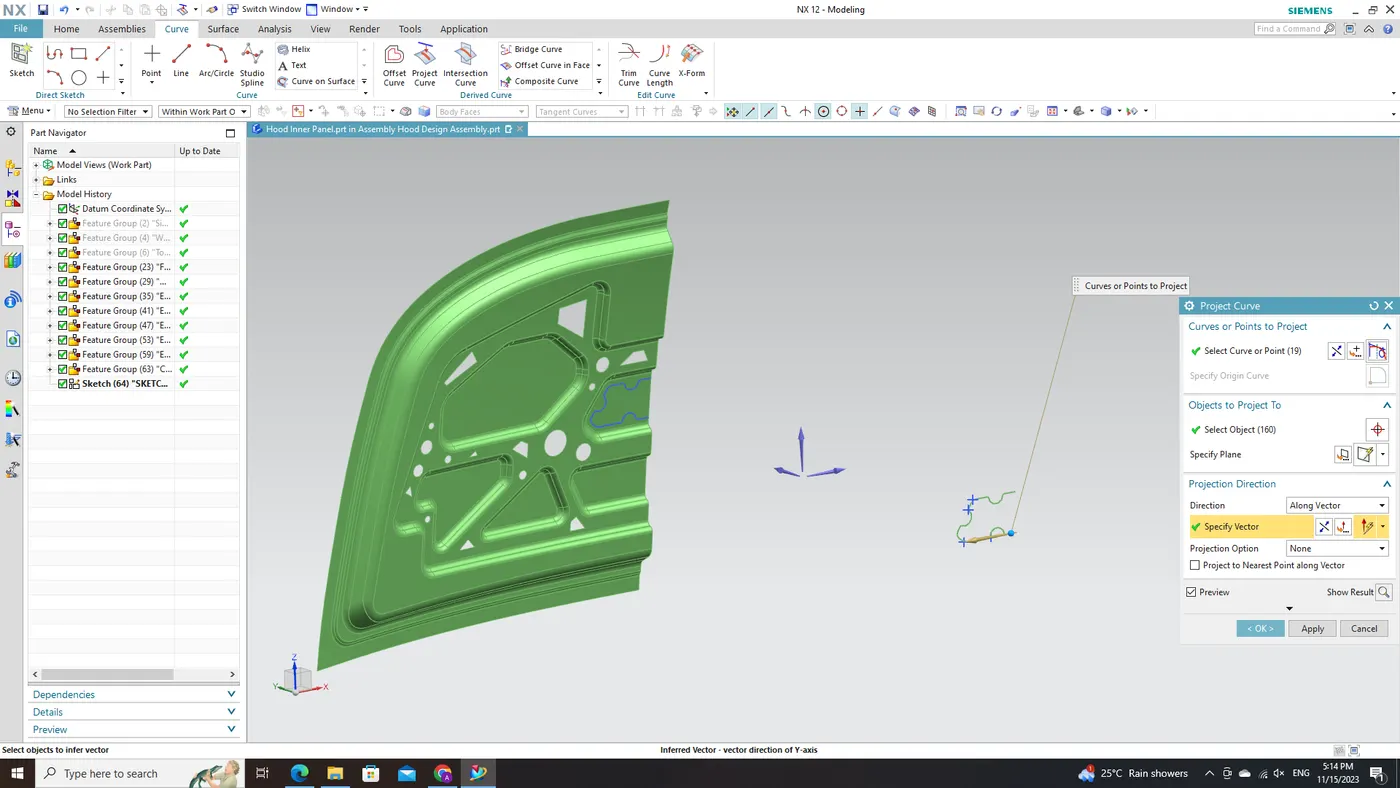
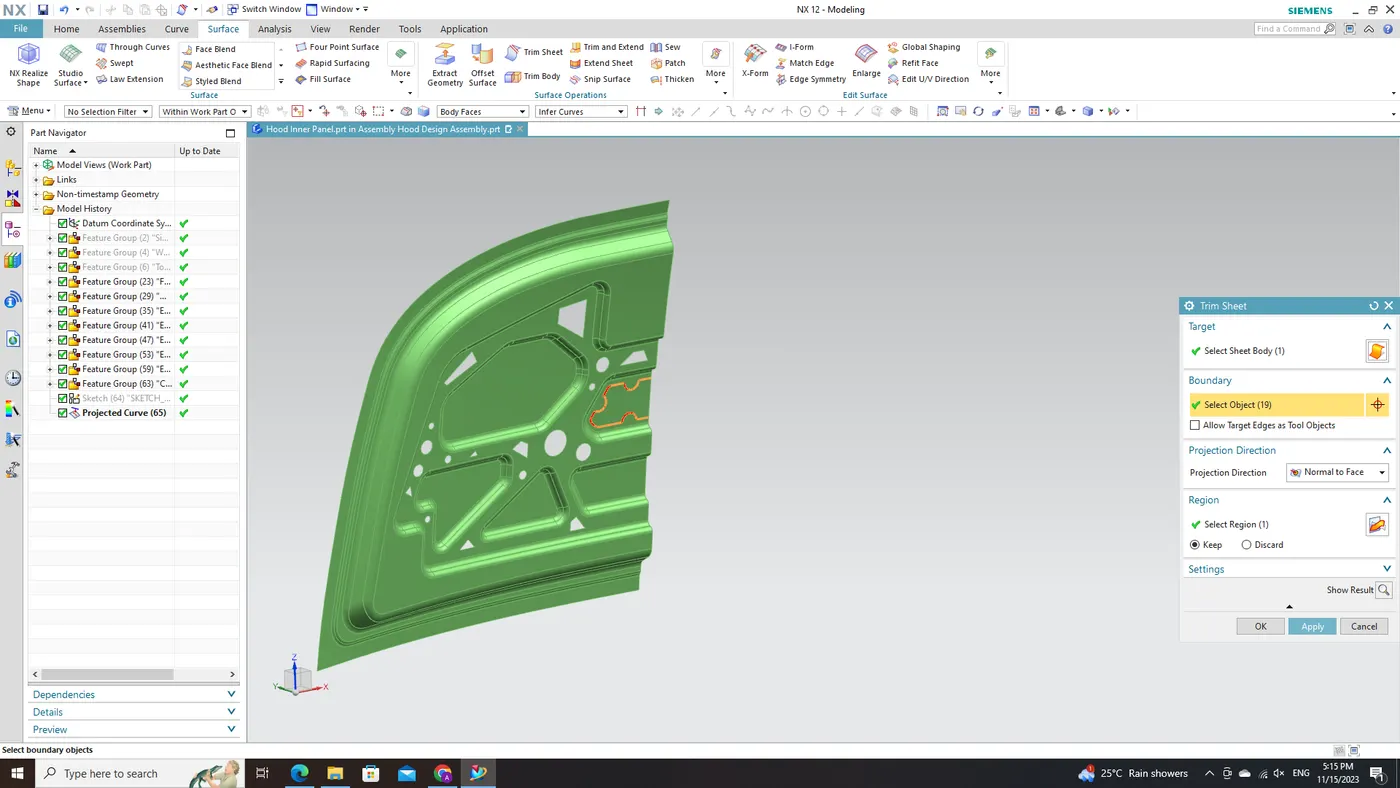
Likewise, I have made all the others mastic points cutouts at each of the embosses.
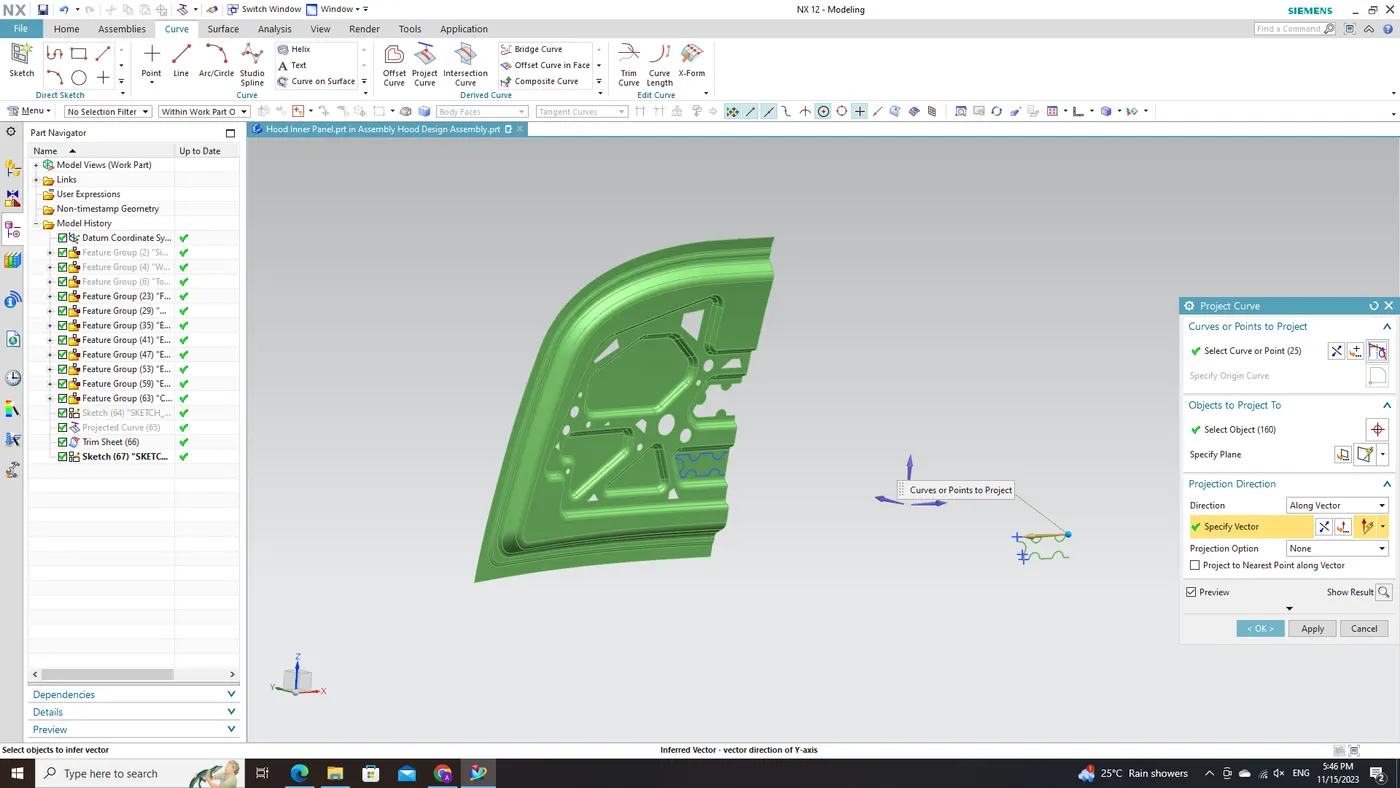
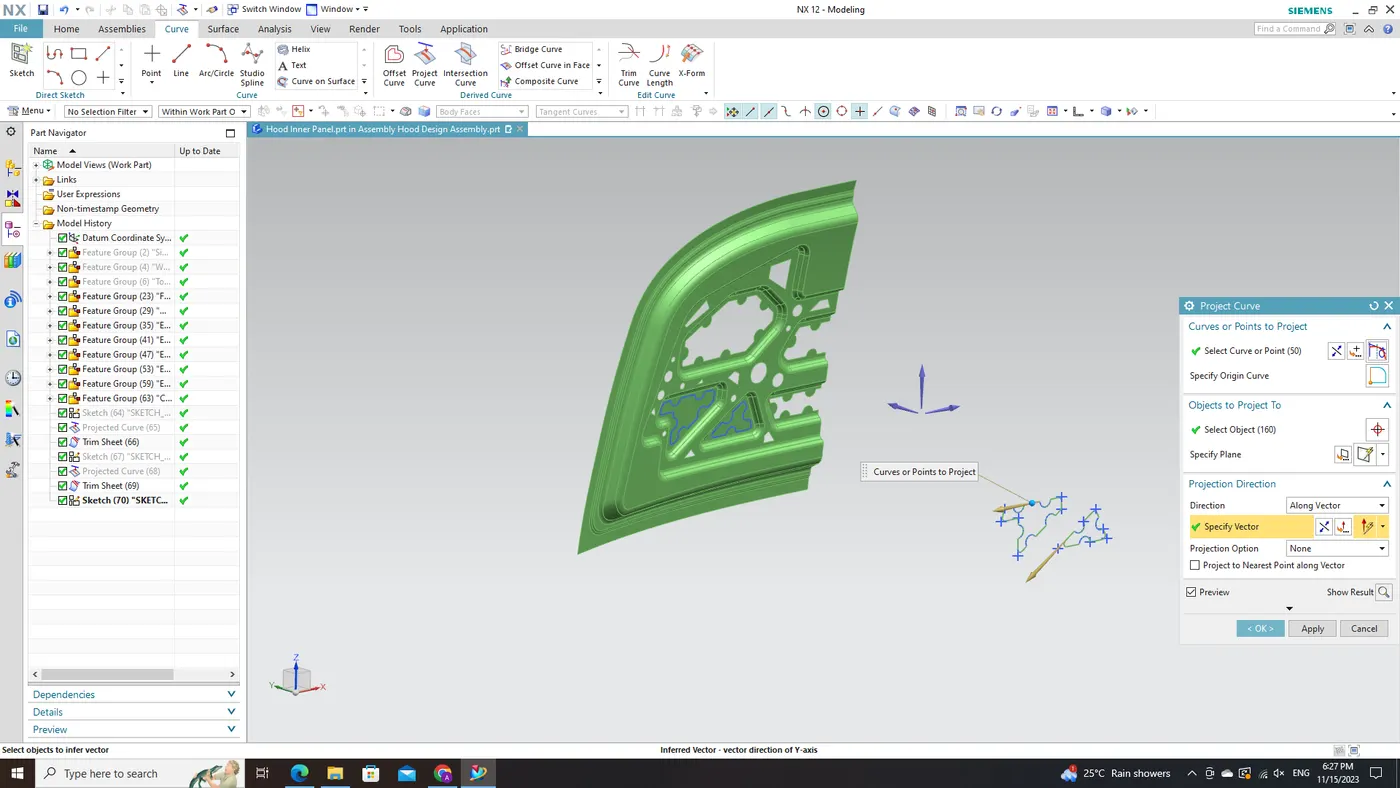
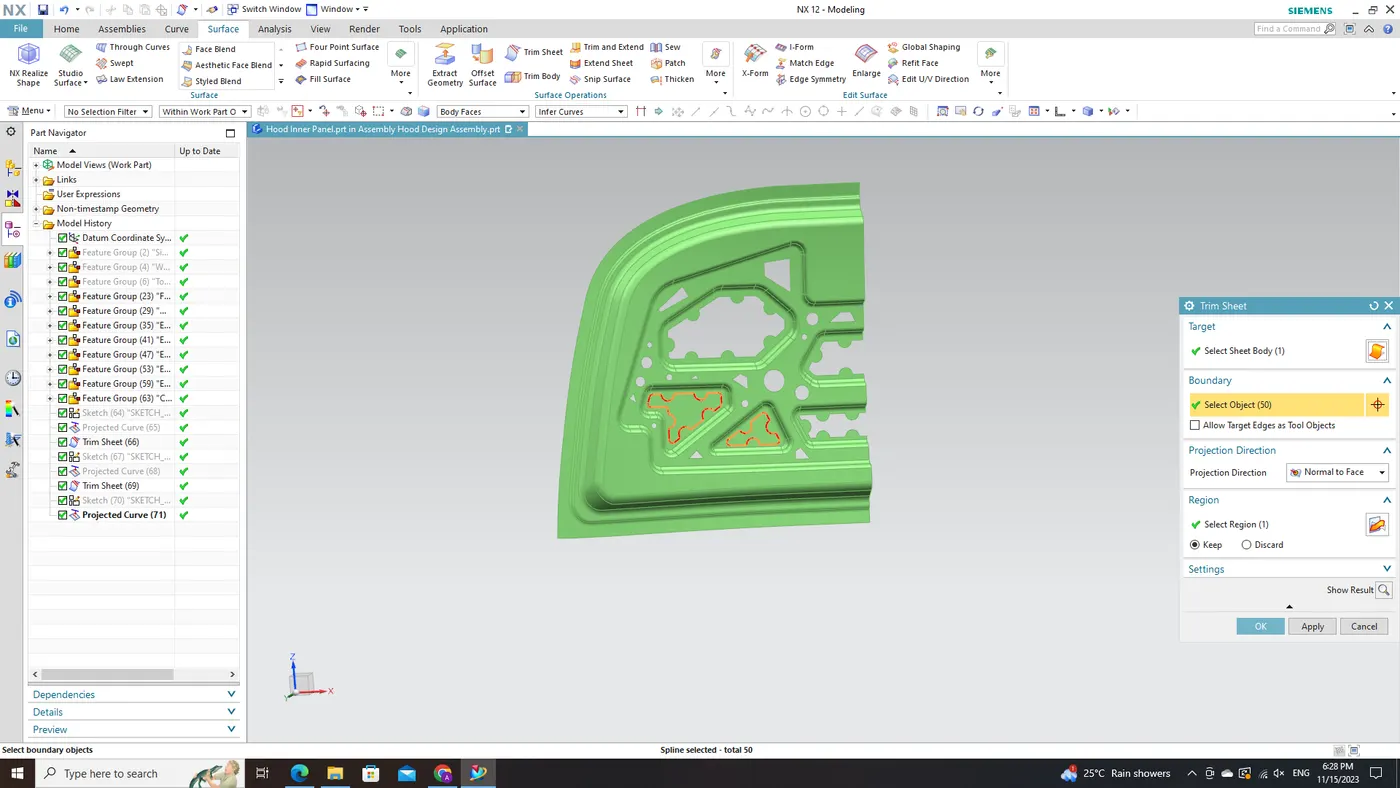
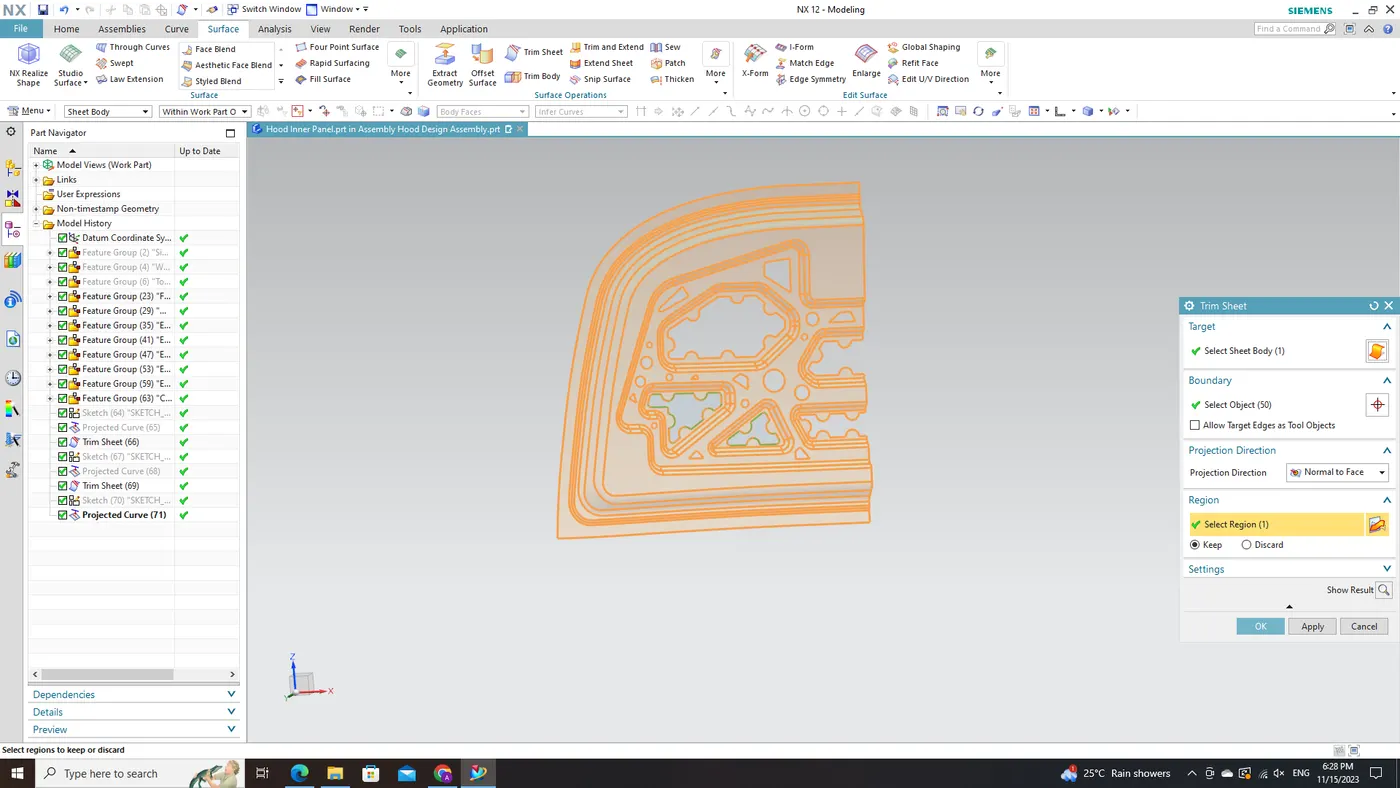
Here, we need to create an Hinge reinforcement area for the hinge assembly to be attached.
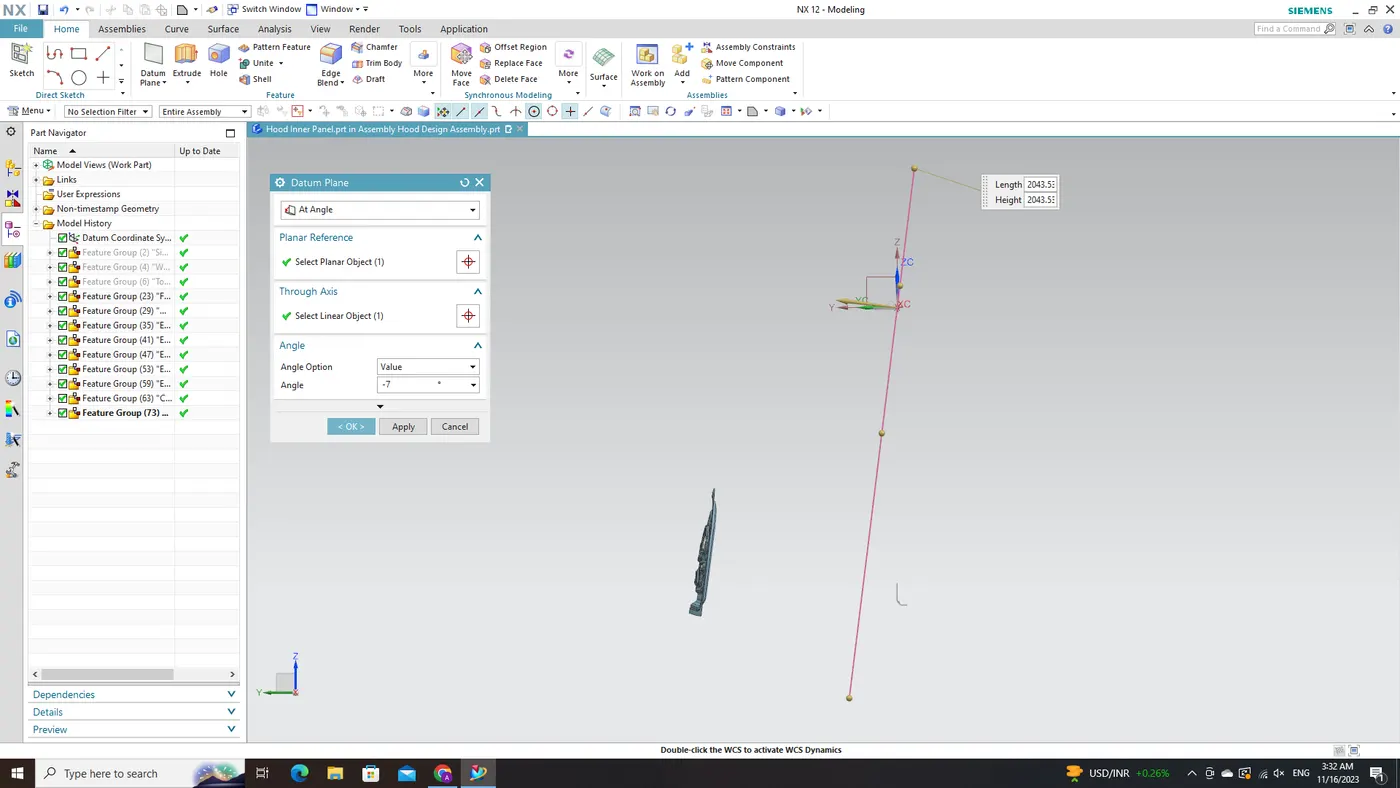
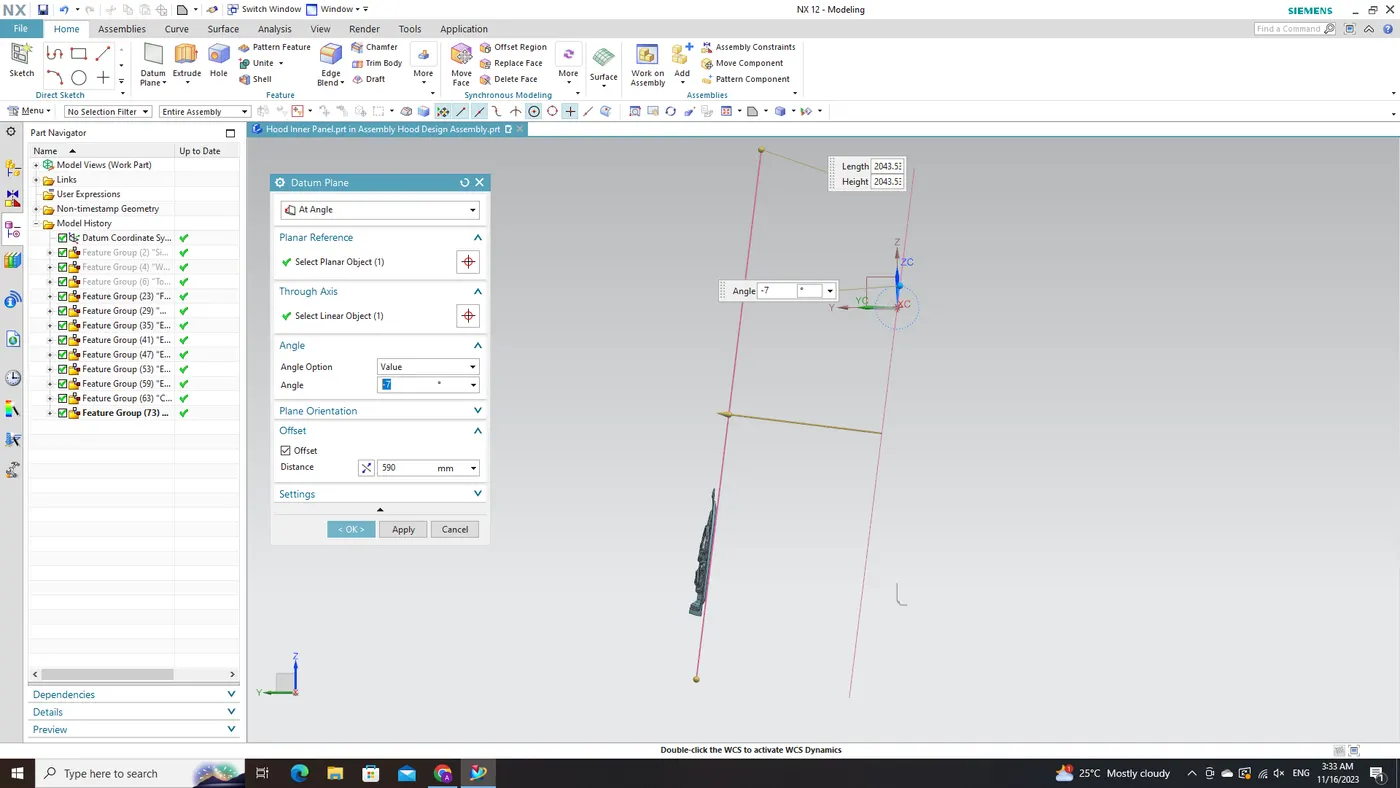
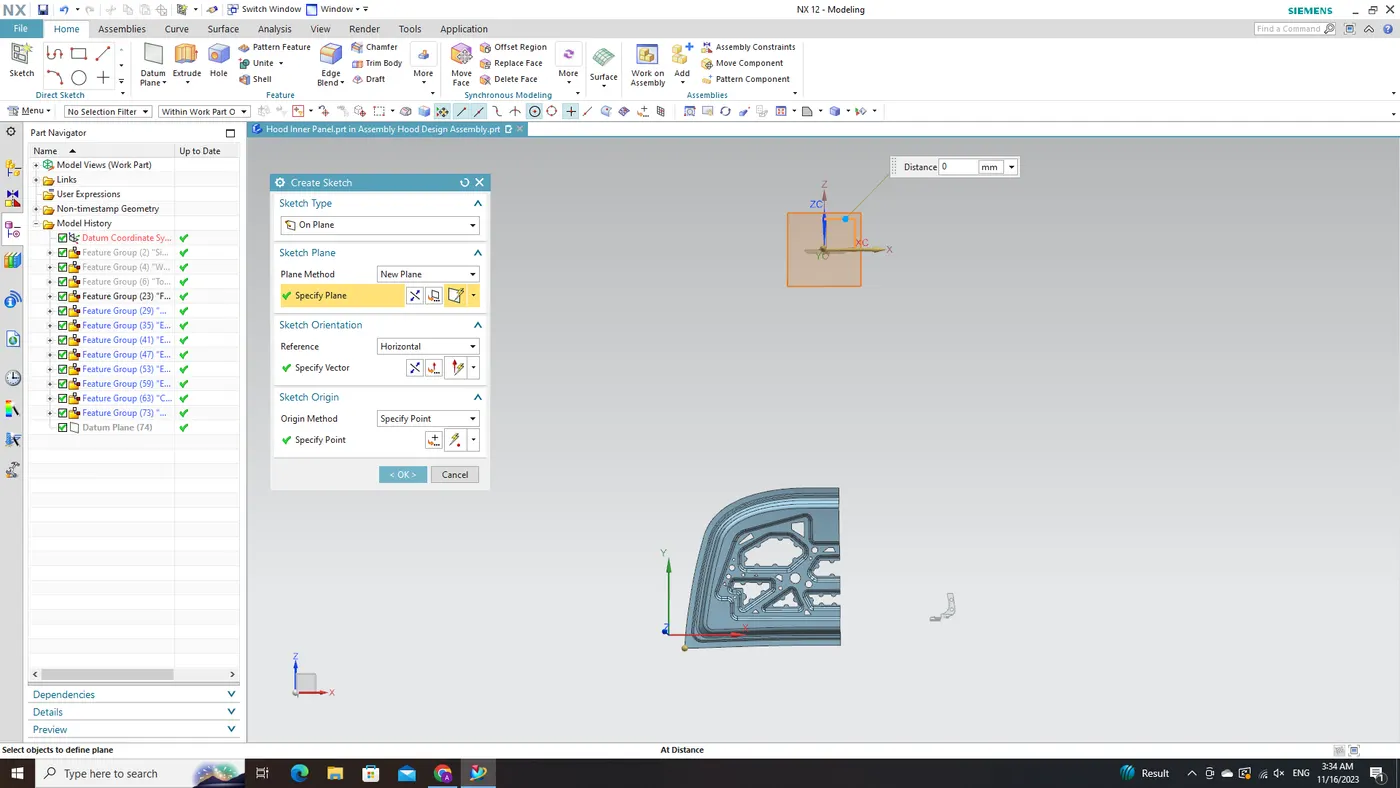
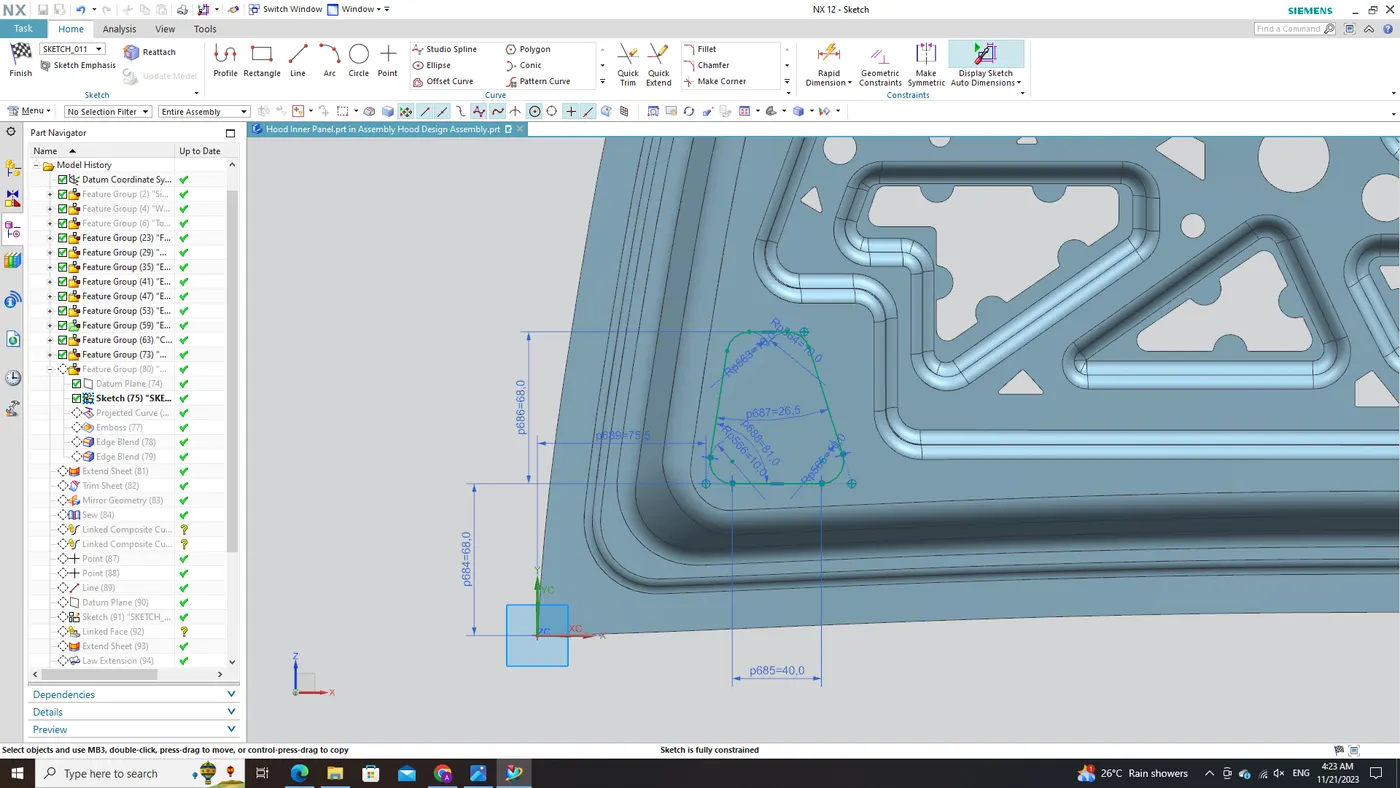
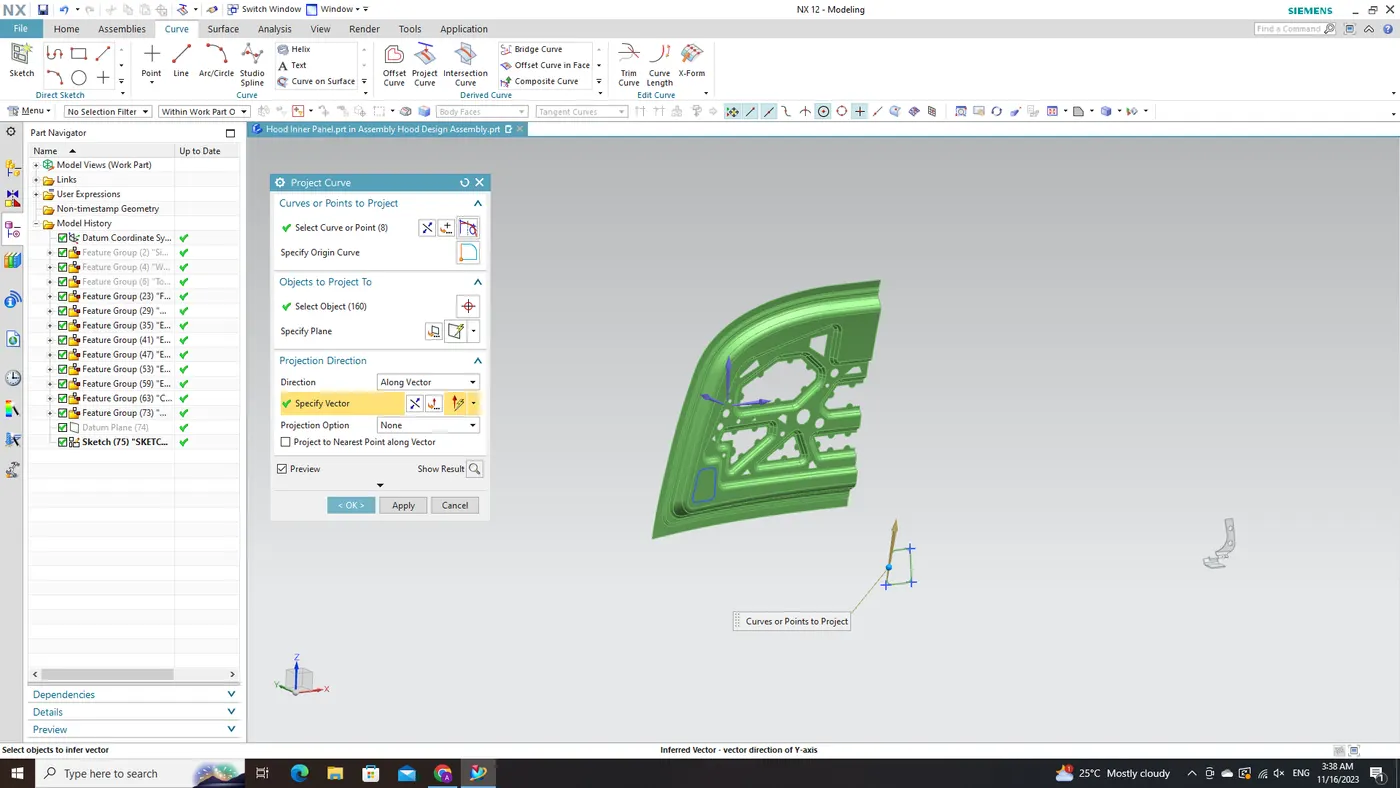
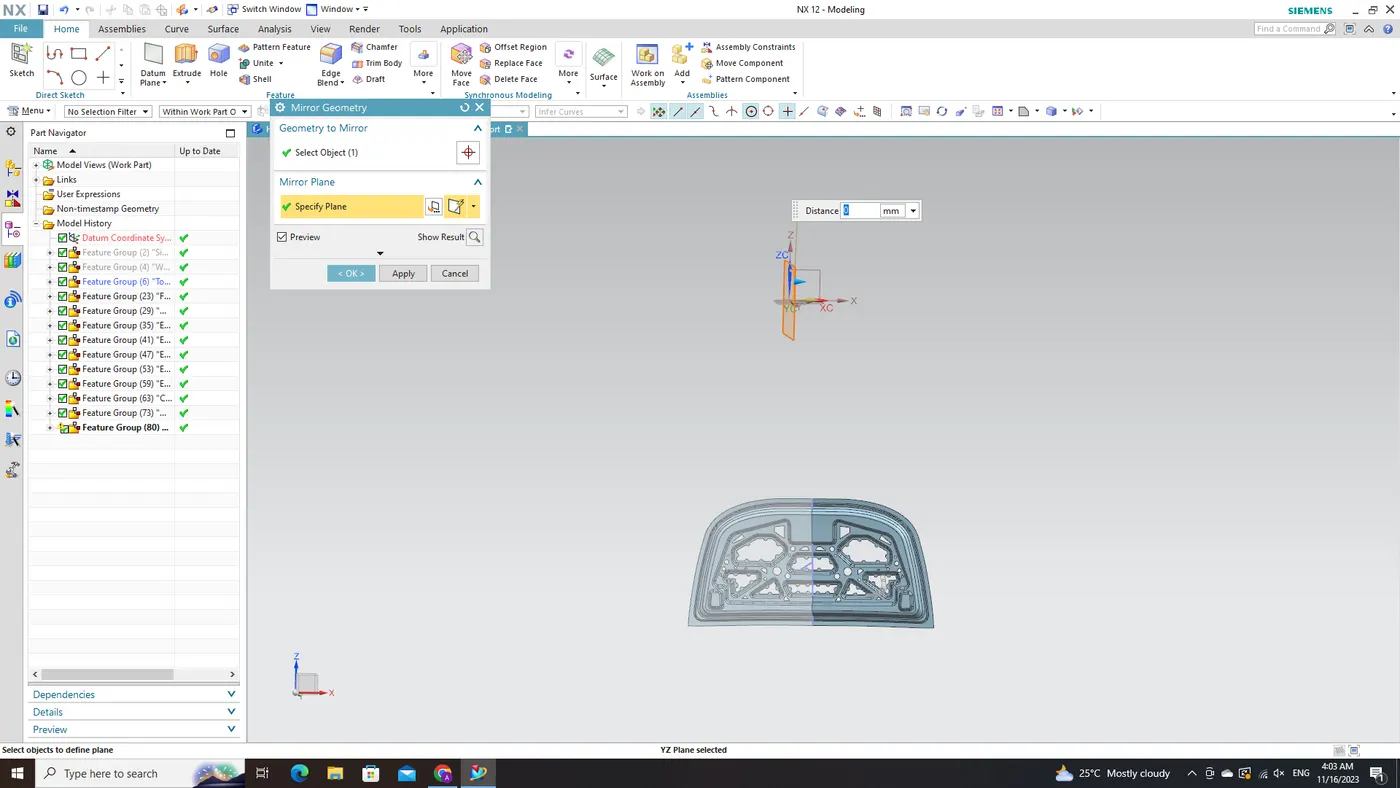
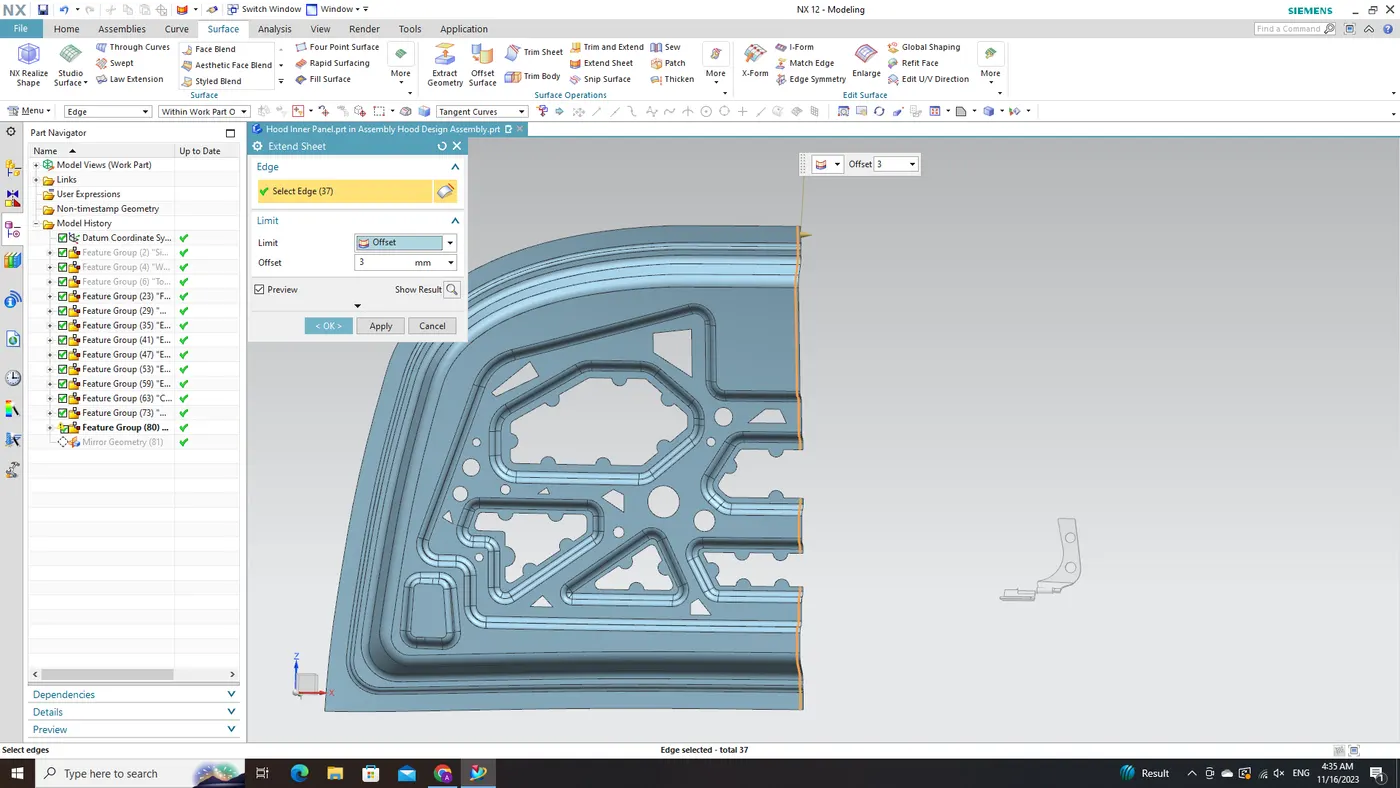
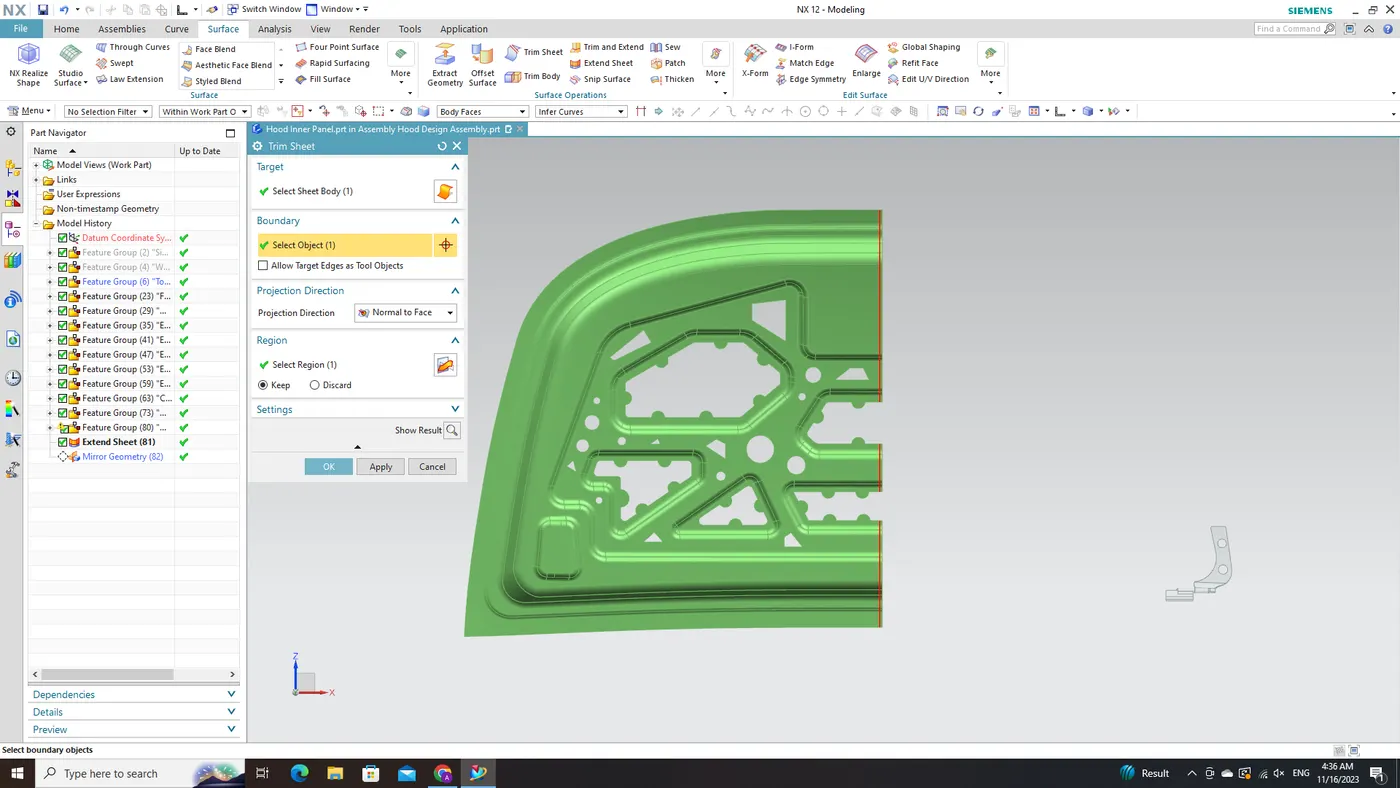
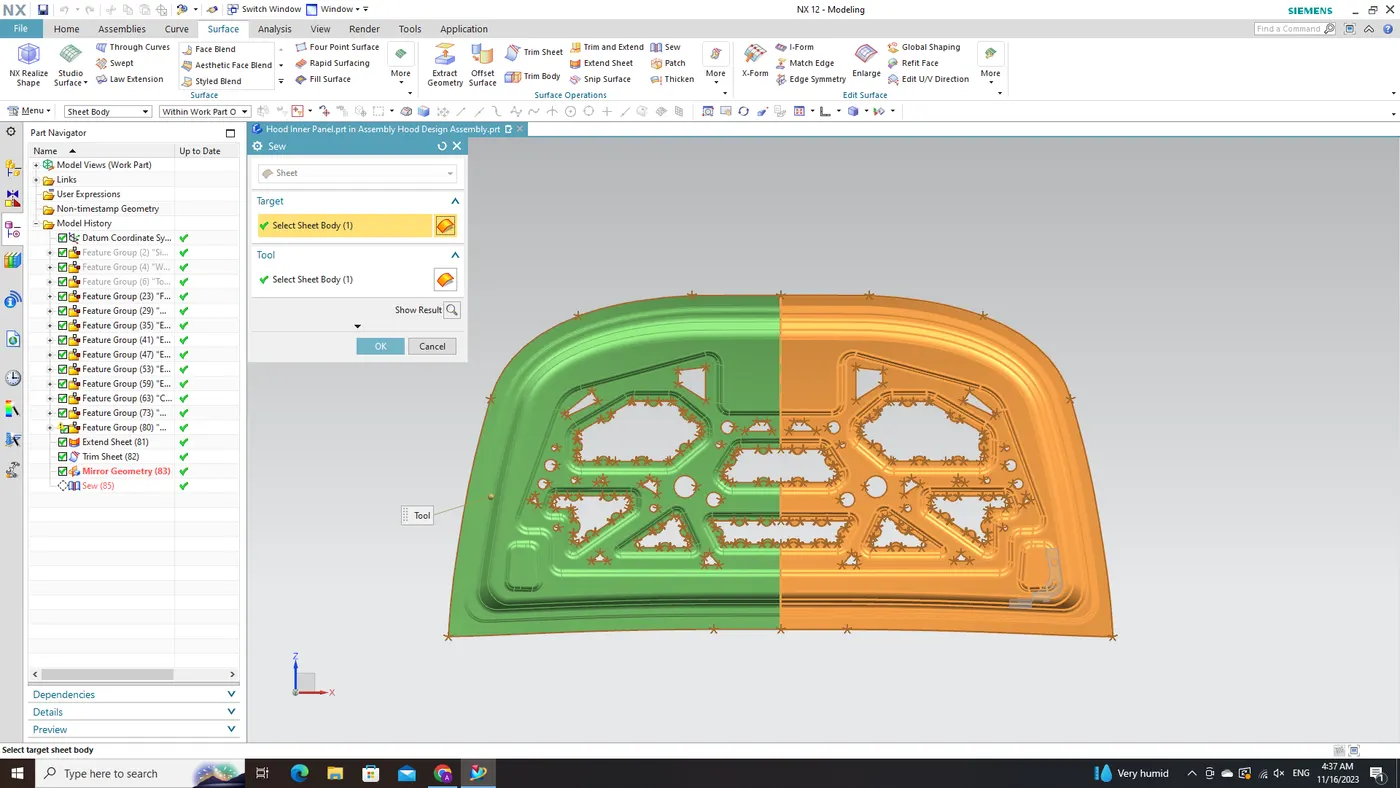
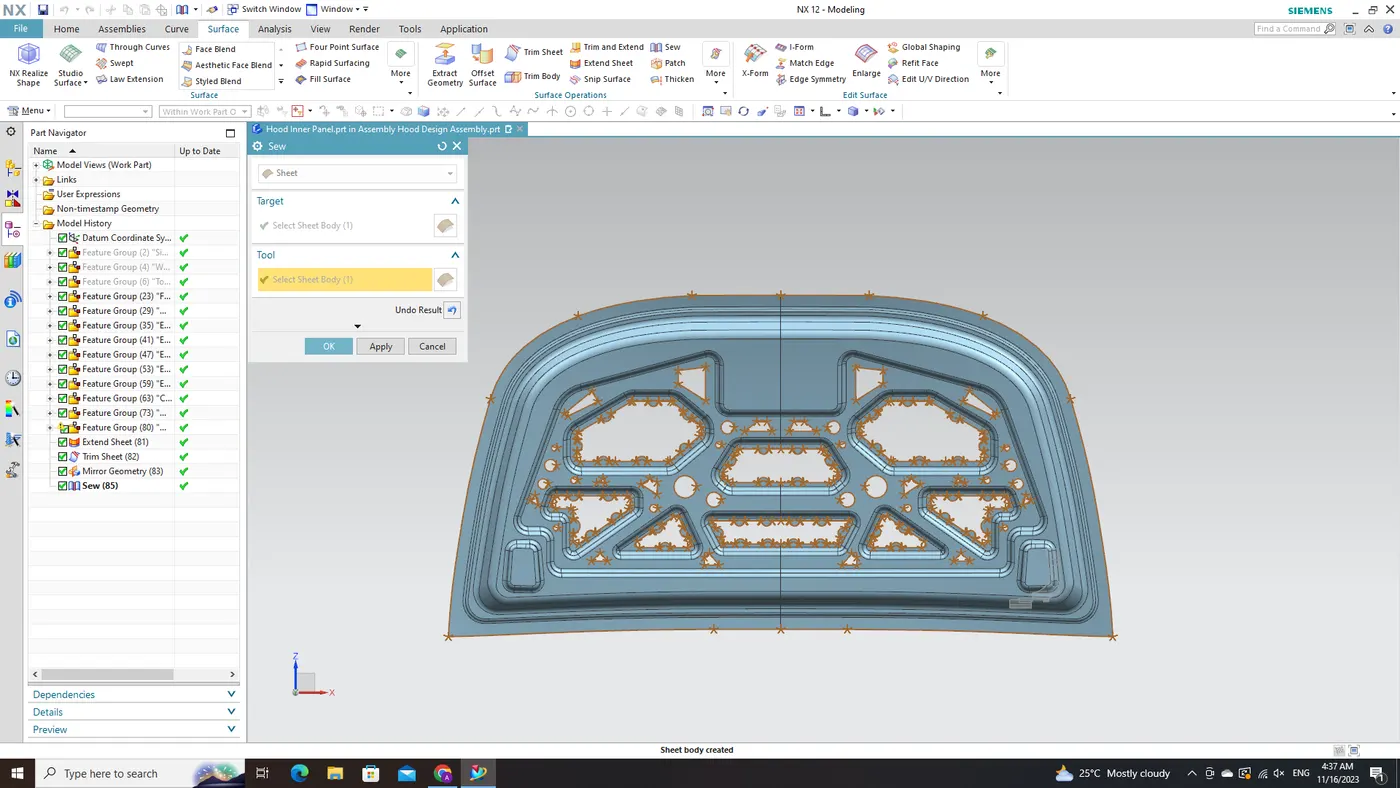
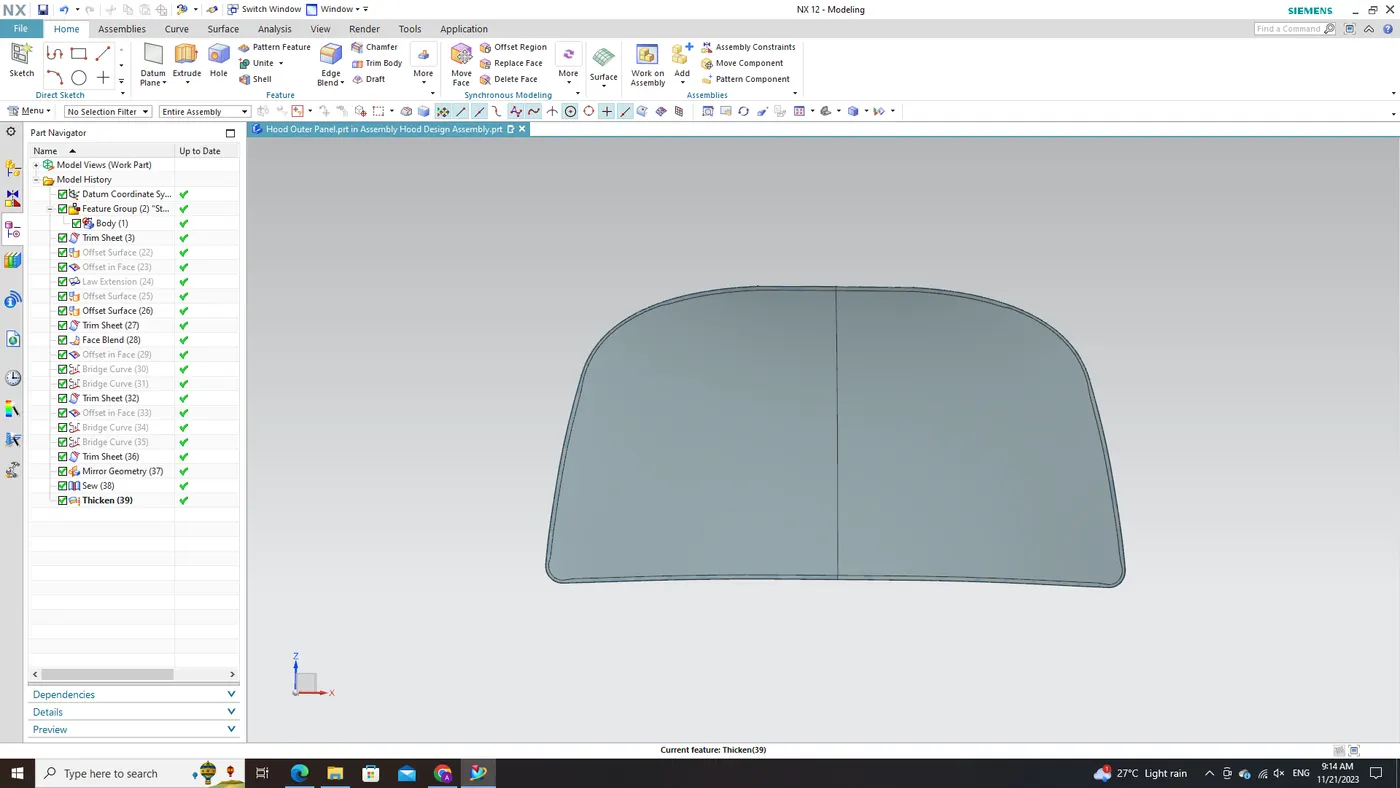
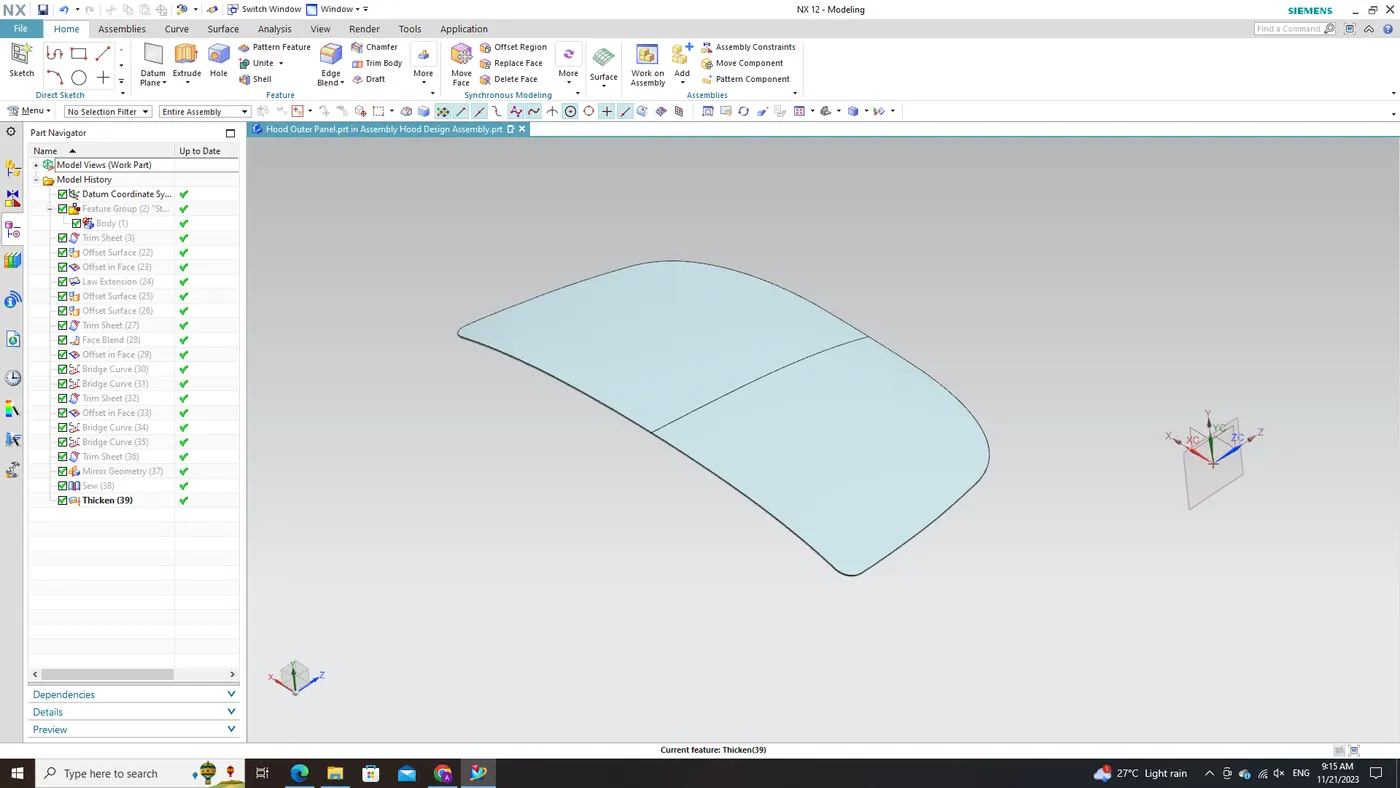
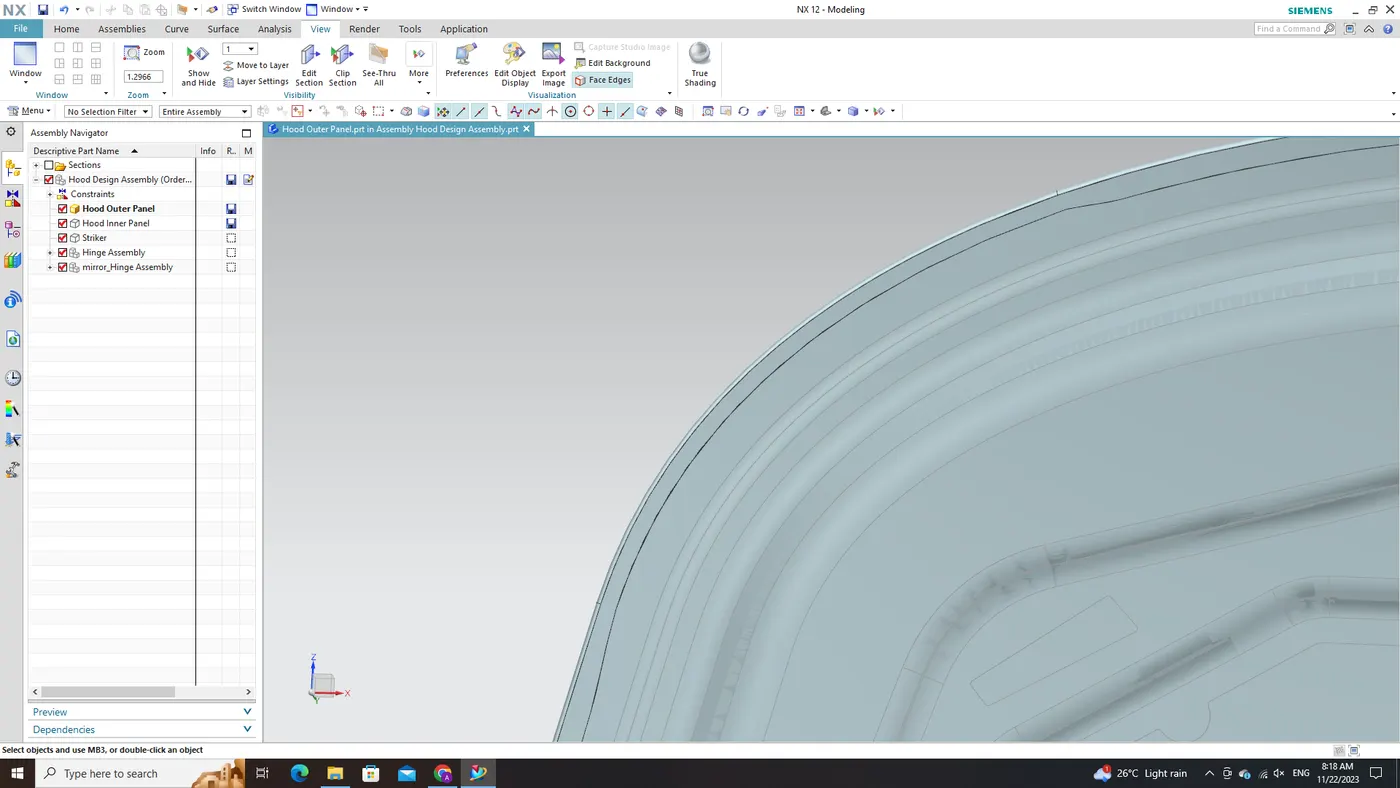
Thus the outer panel of the hood is designed.
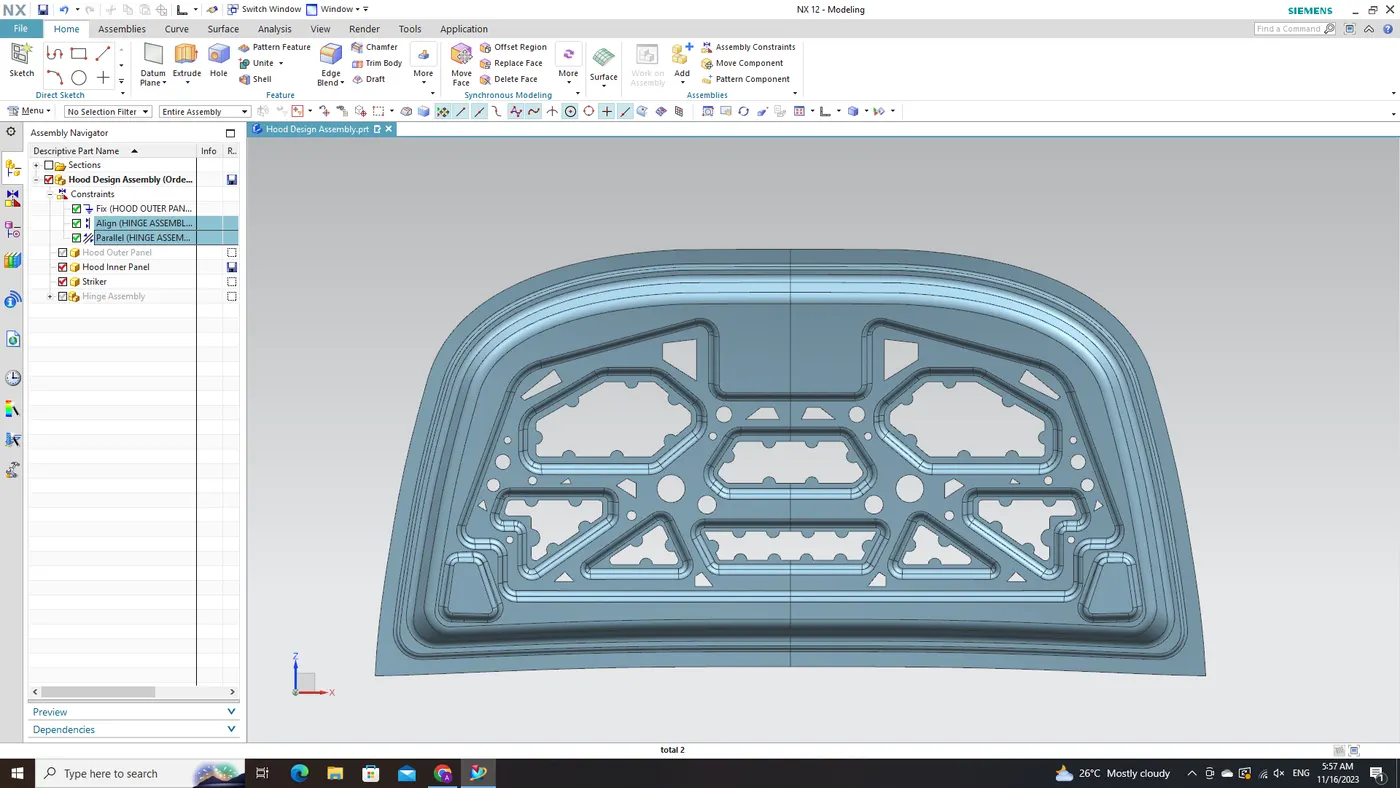
Position and arrangement of Hinge Assembly and the Striker component.
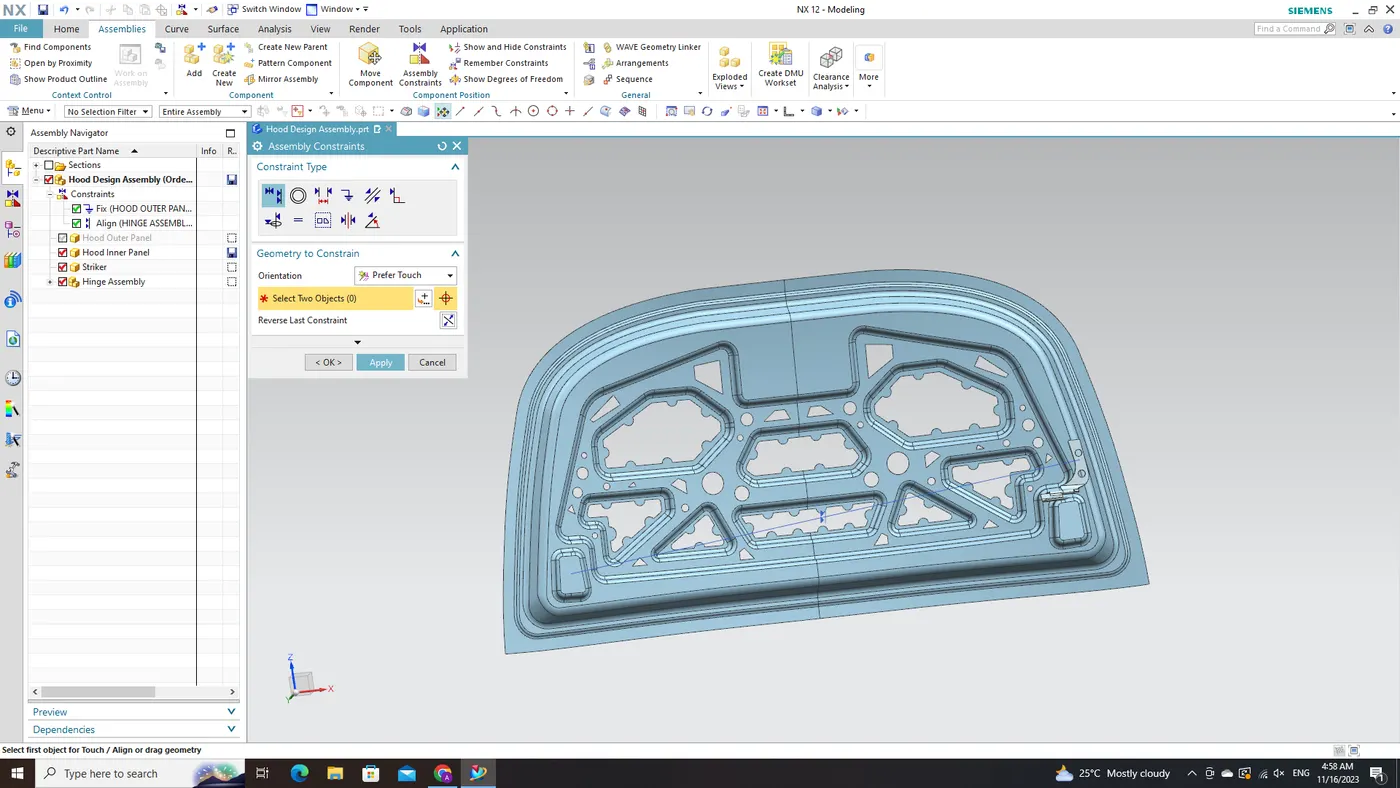
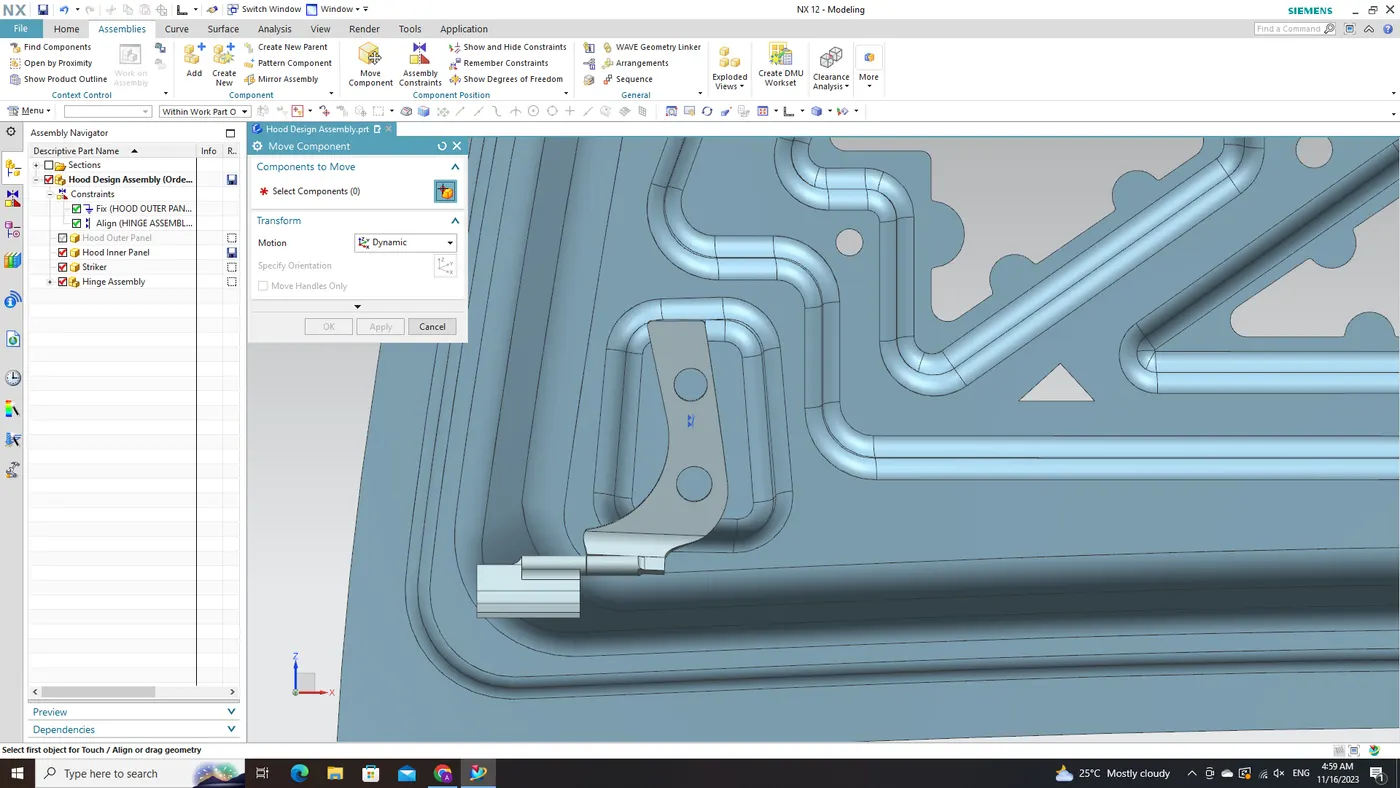
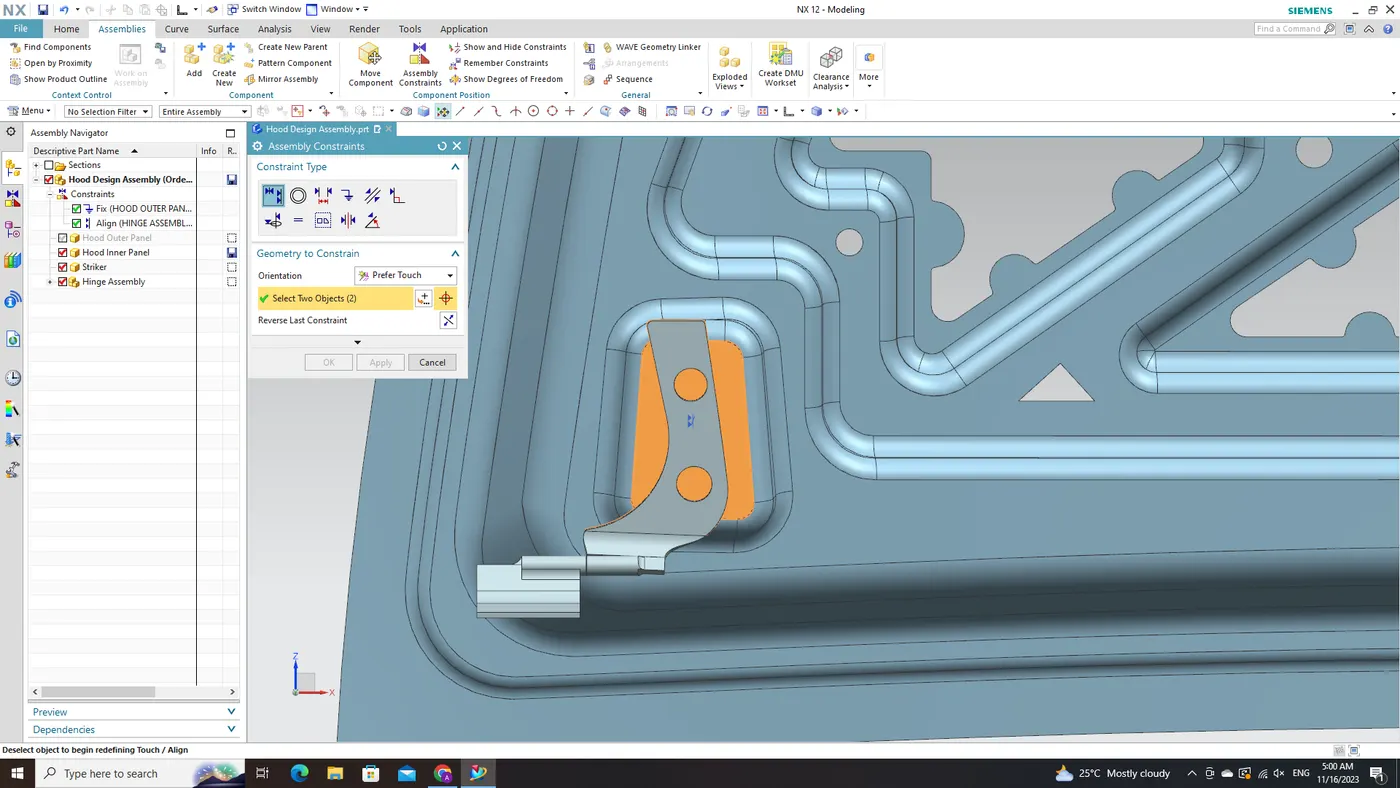
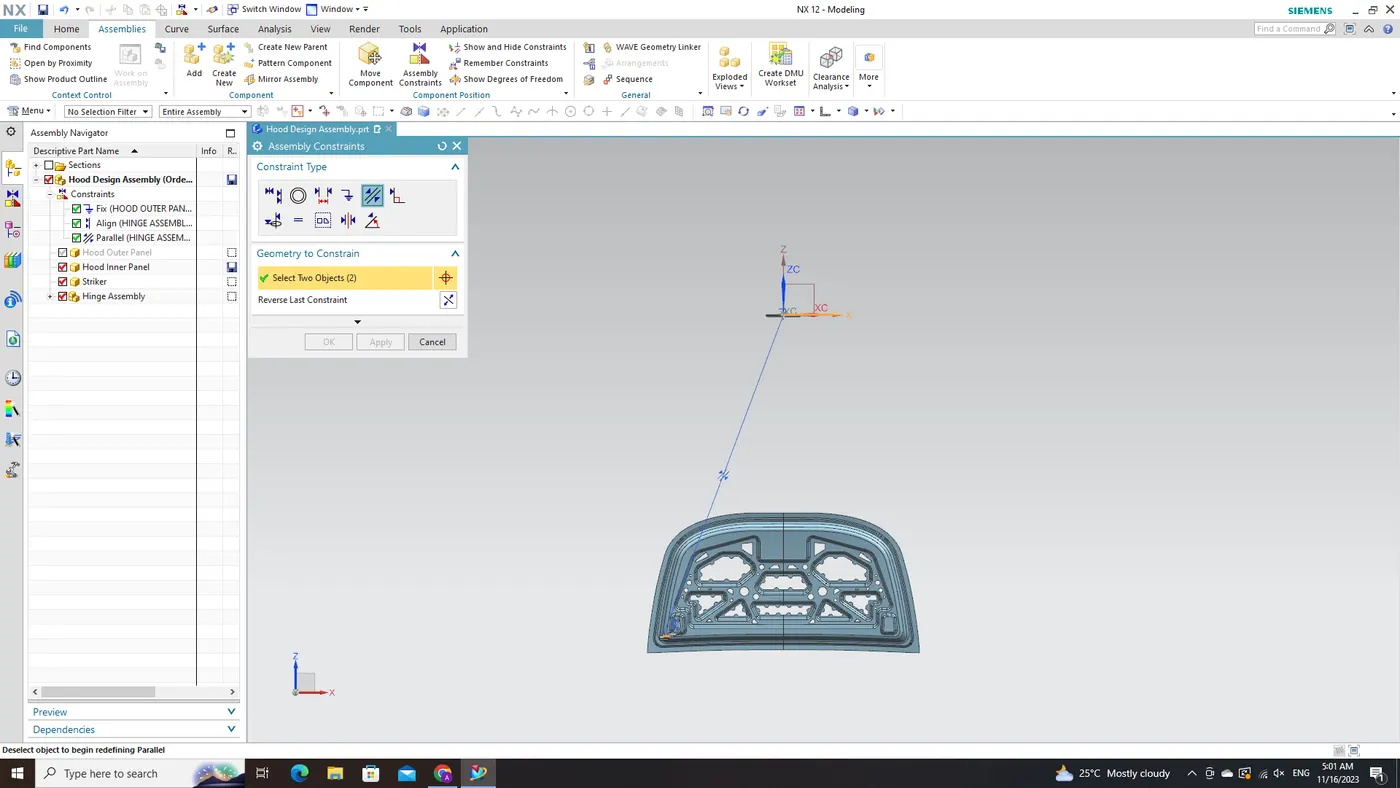
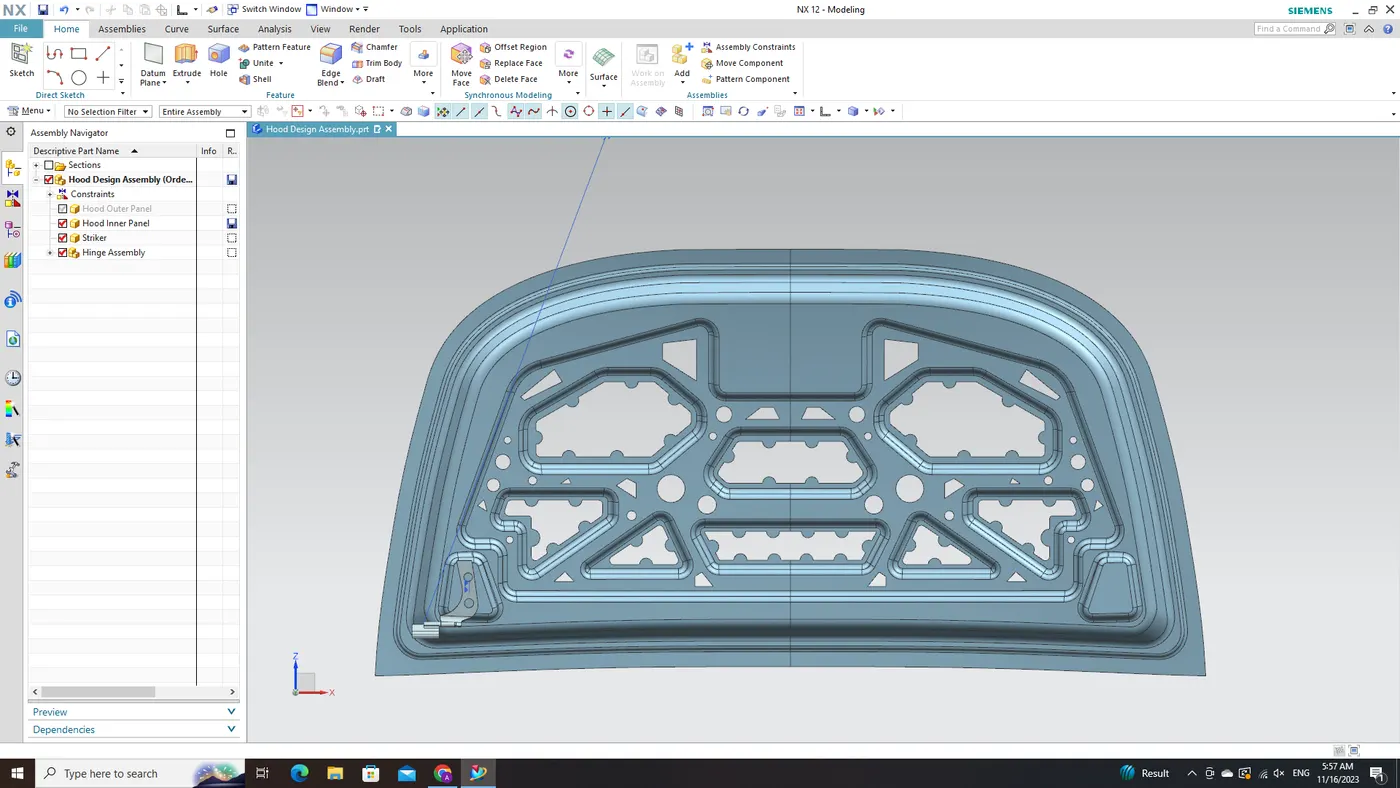
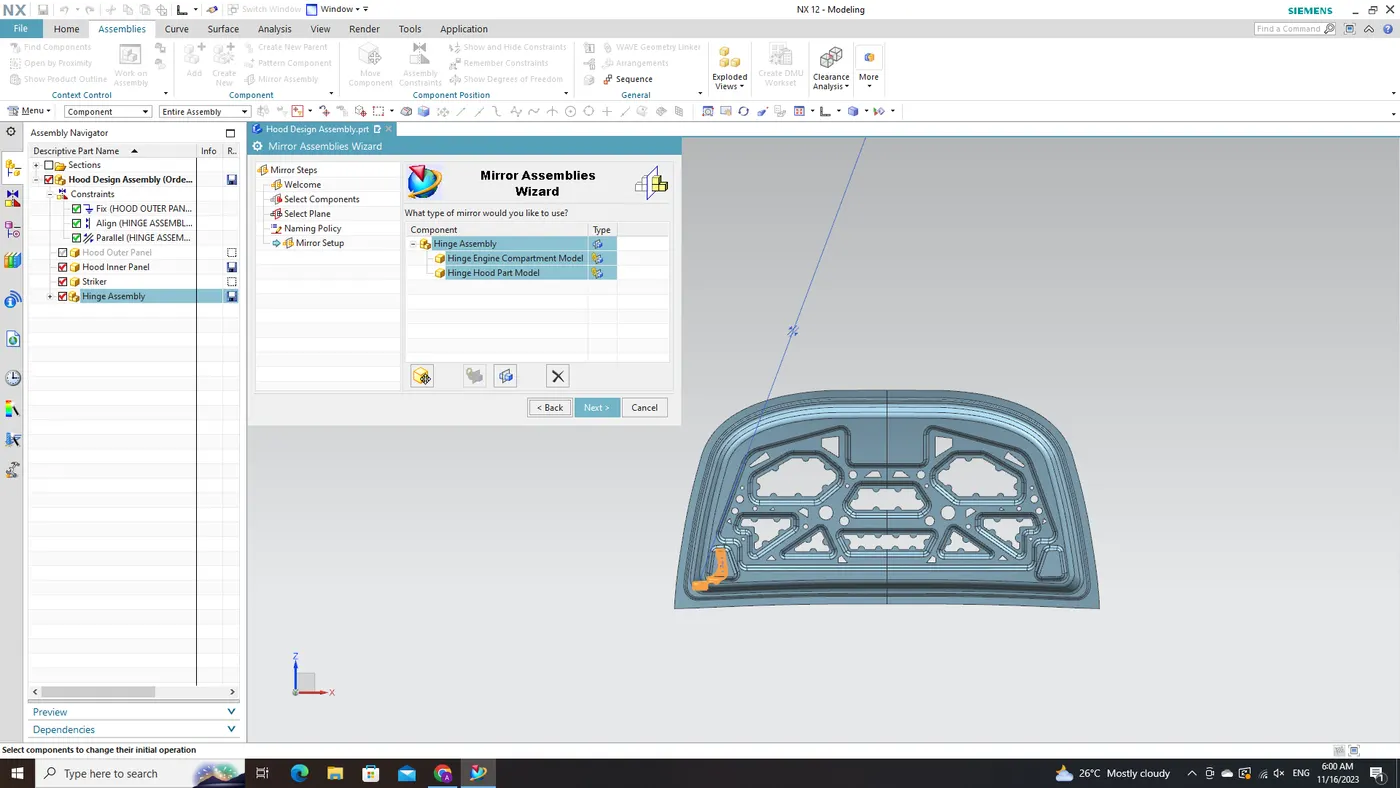
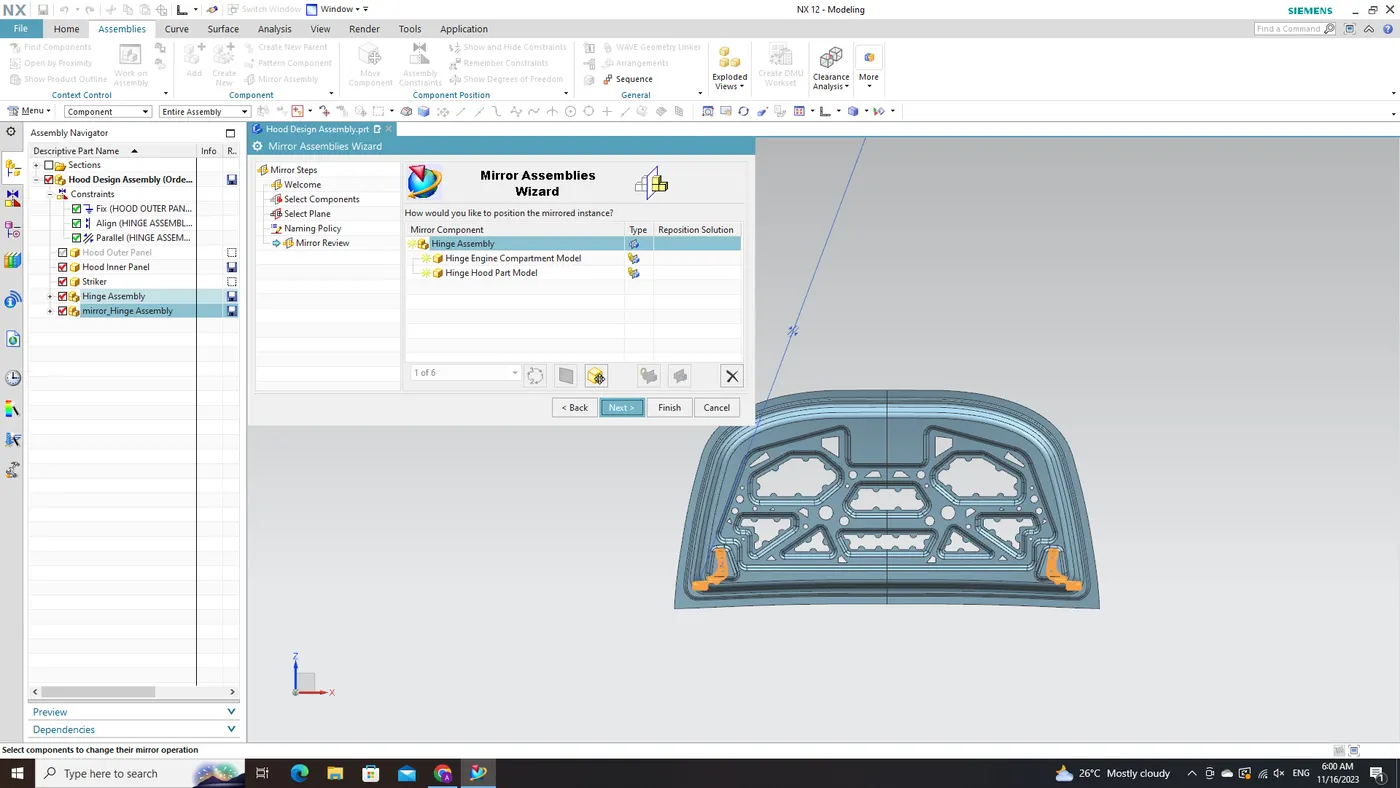
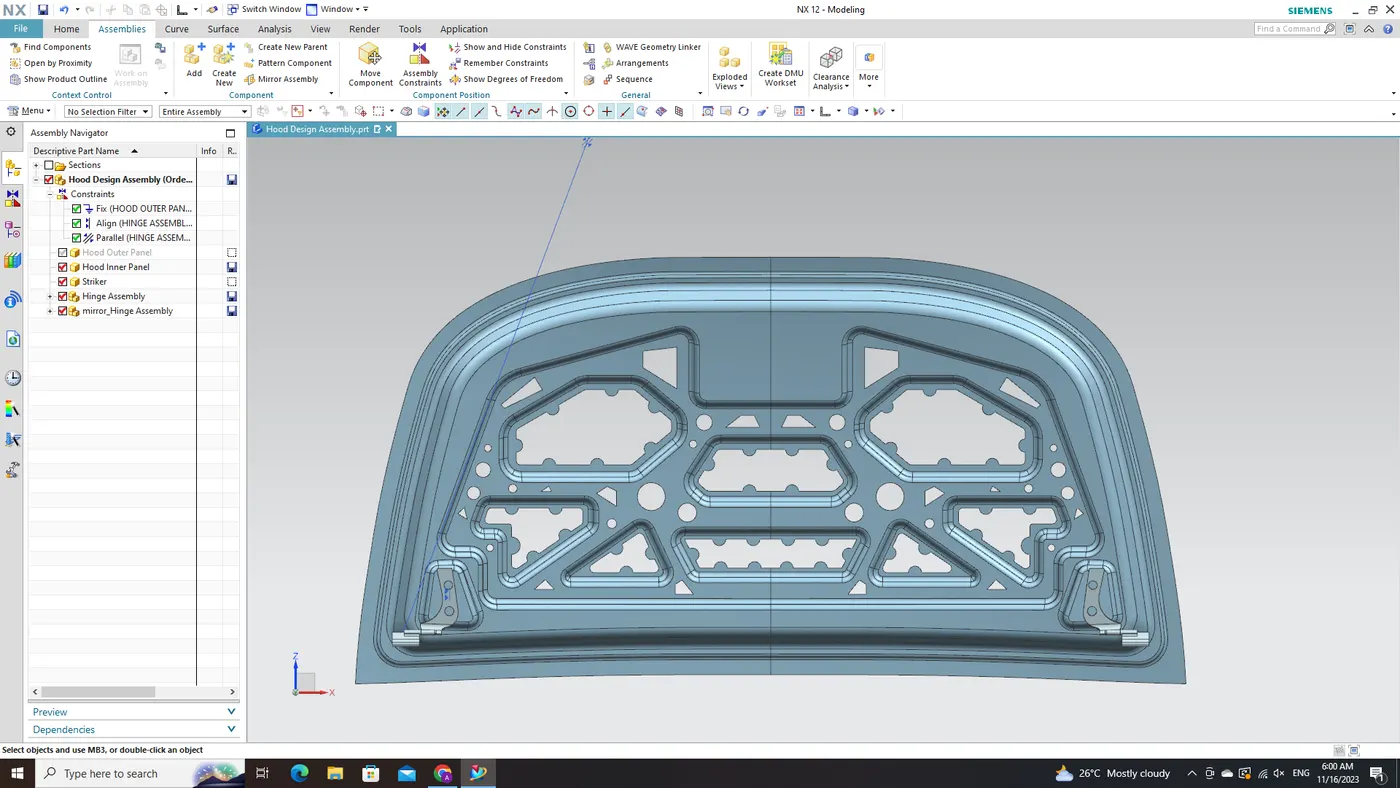
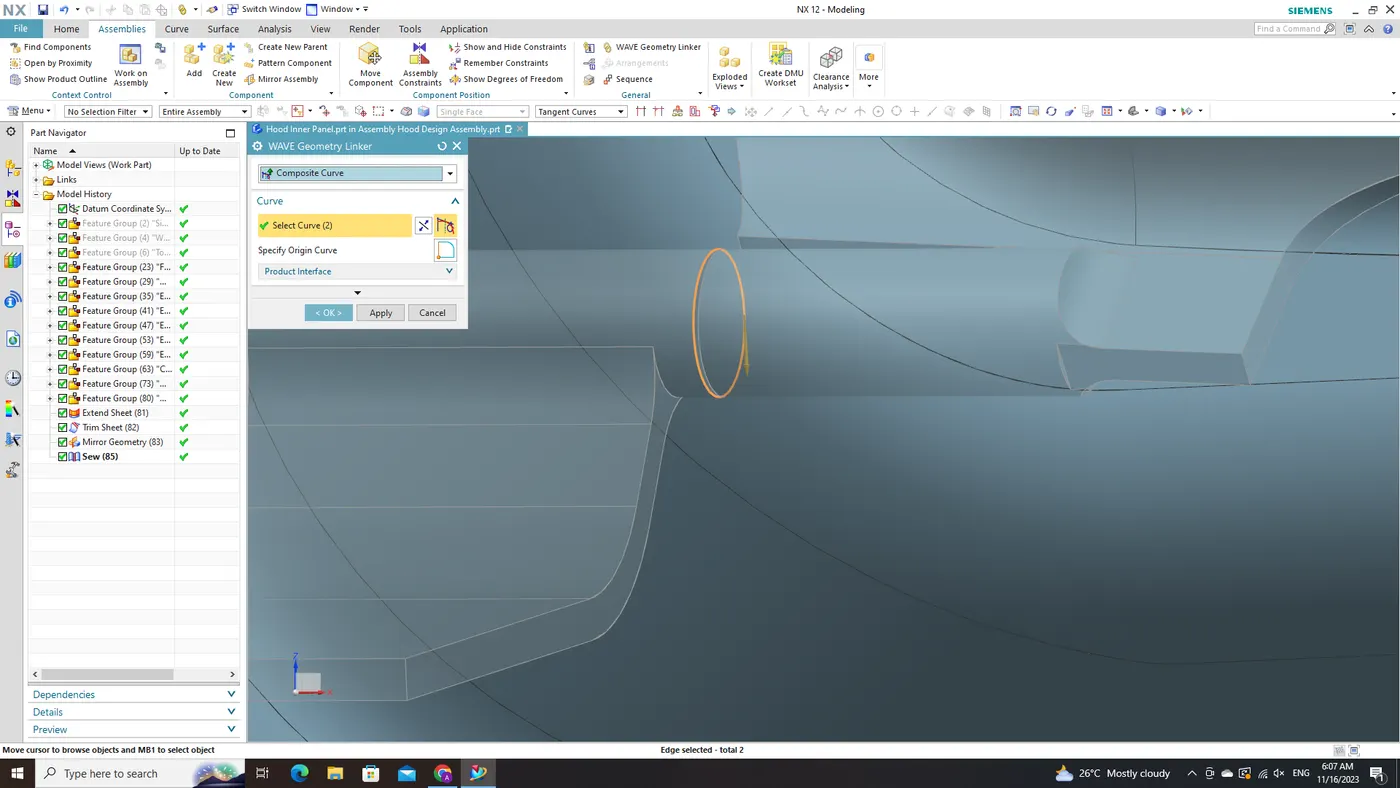
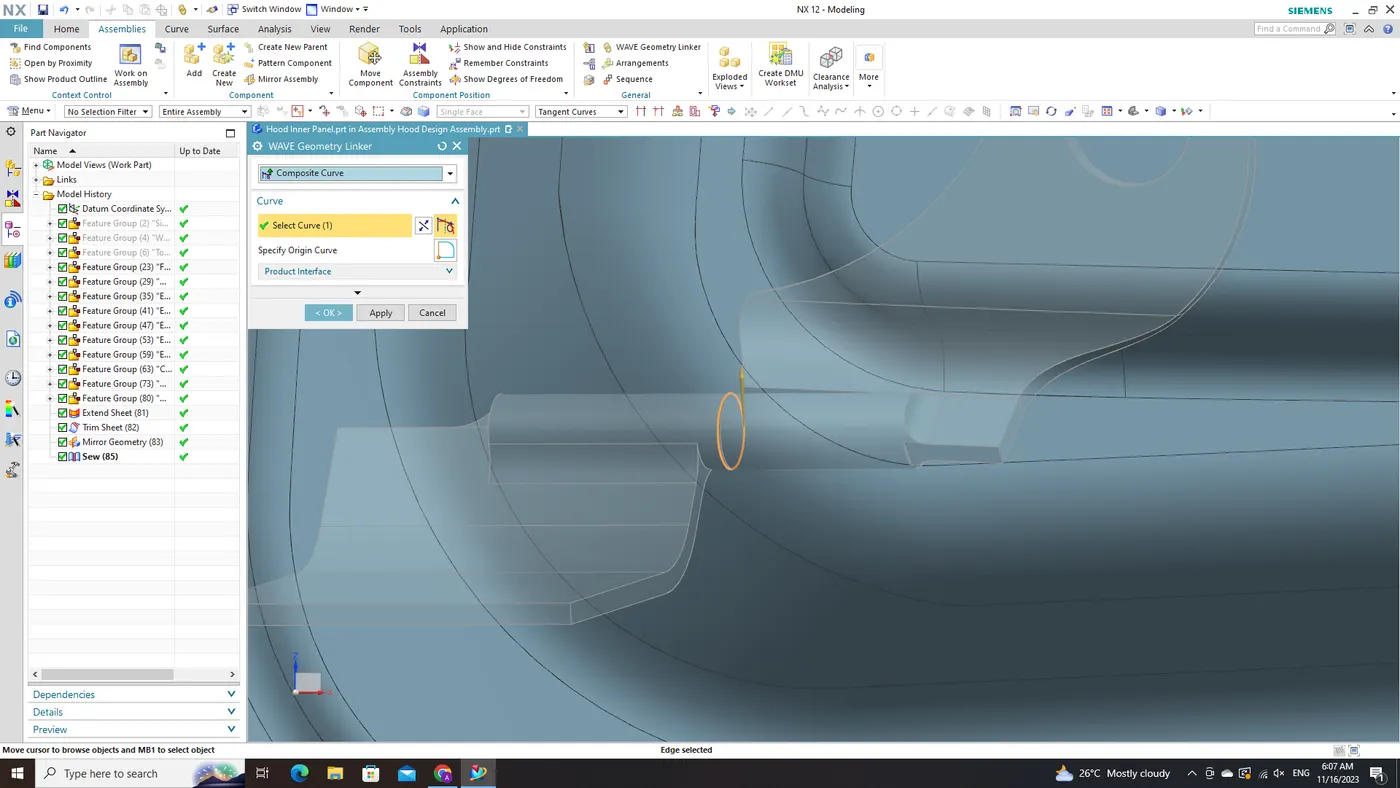
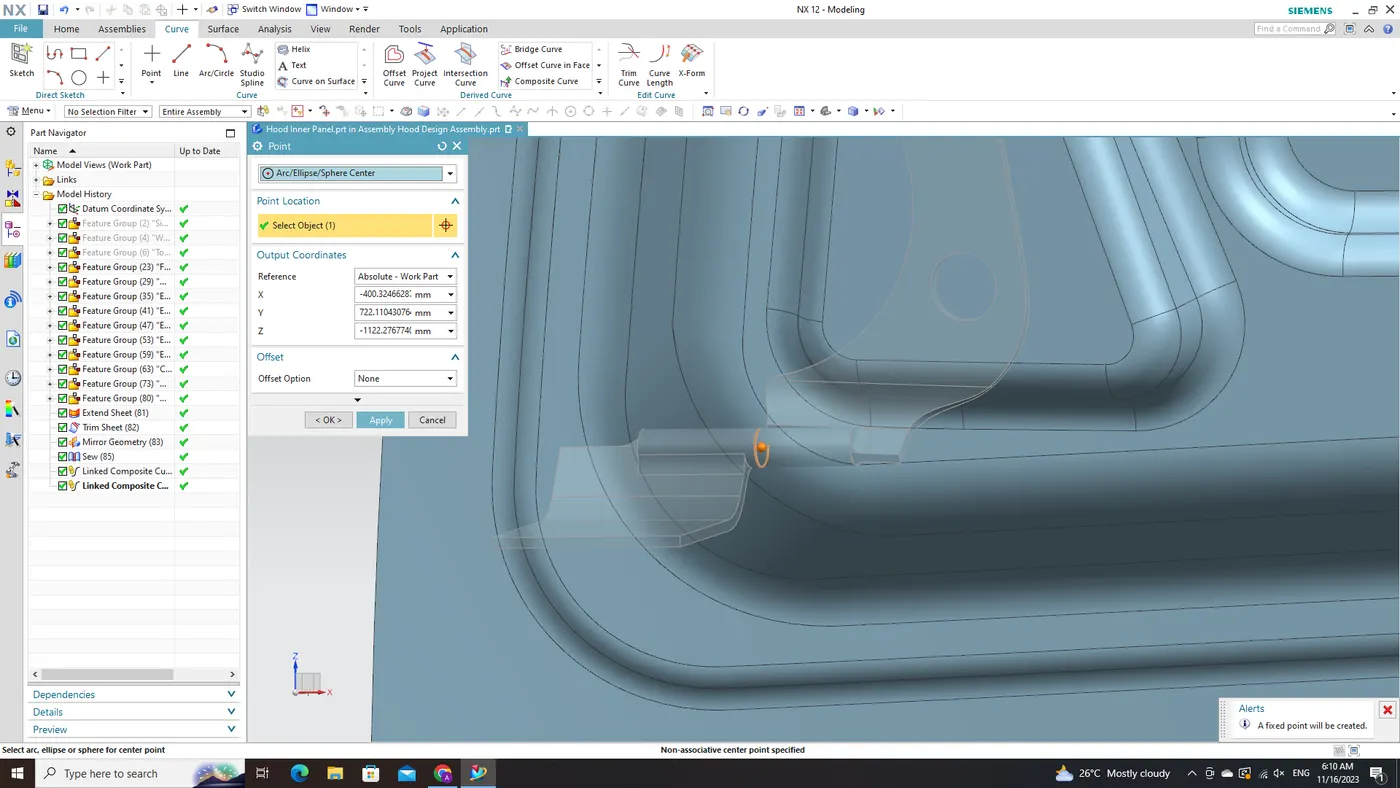
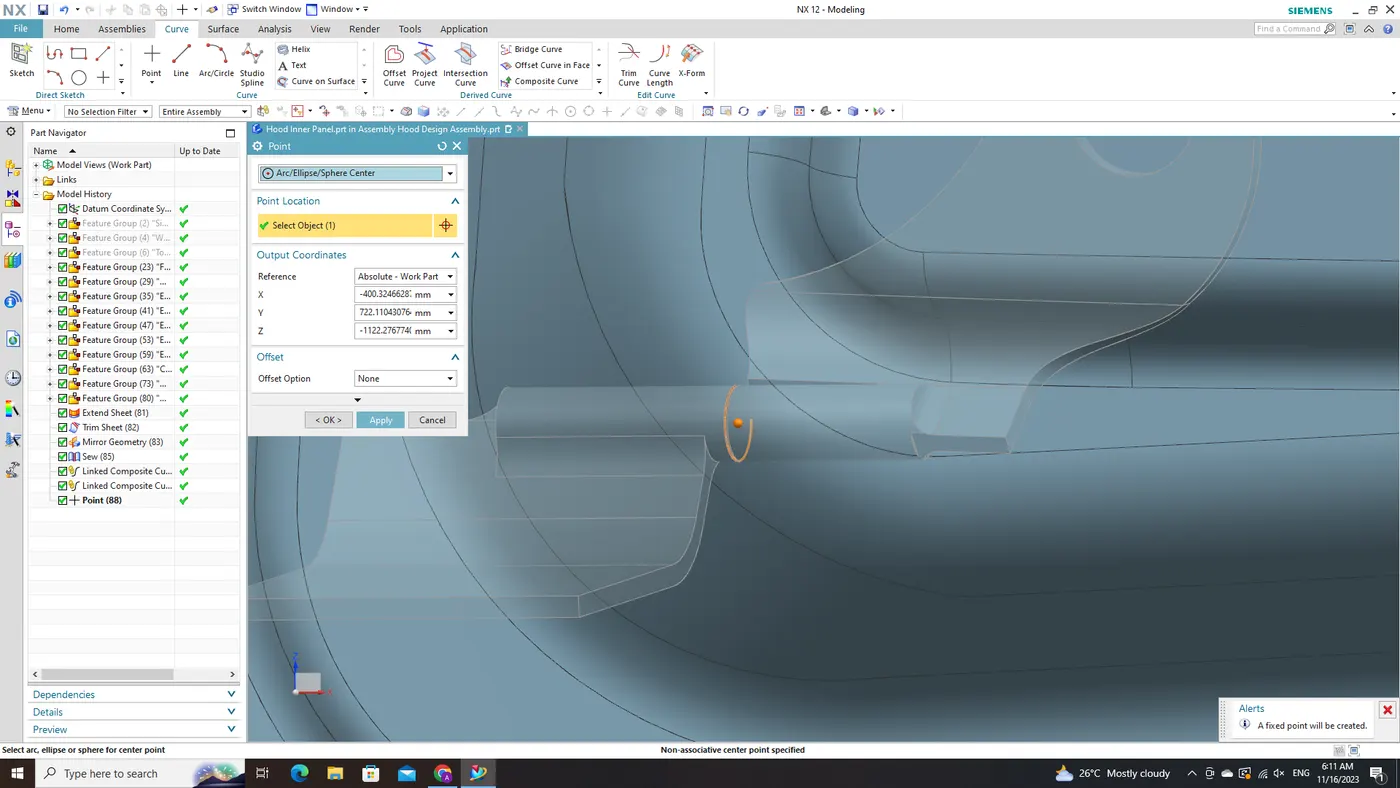
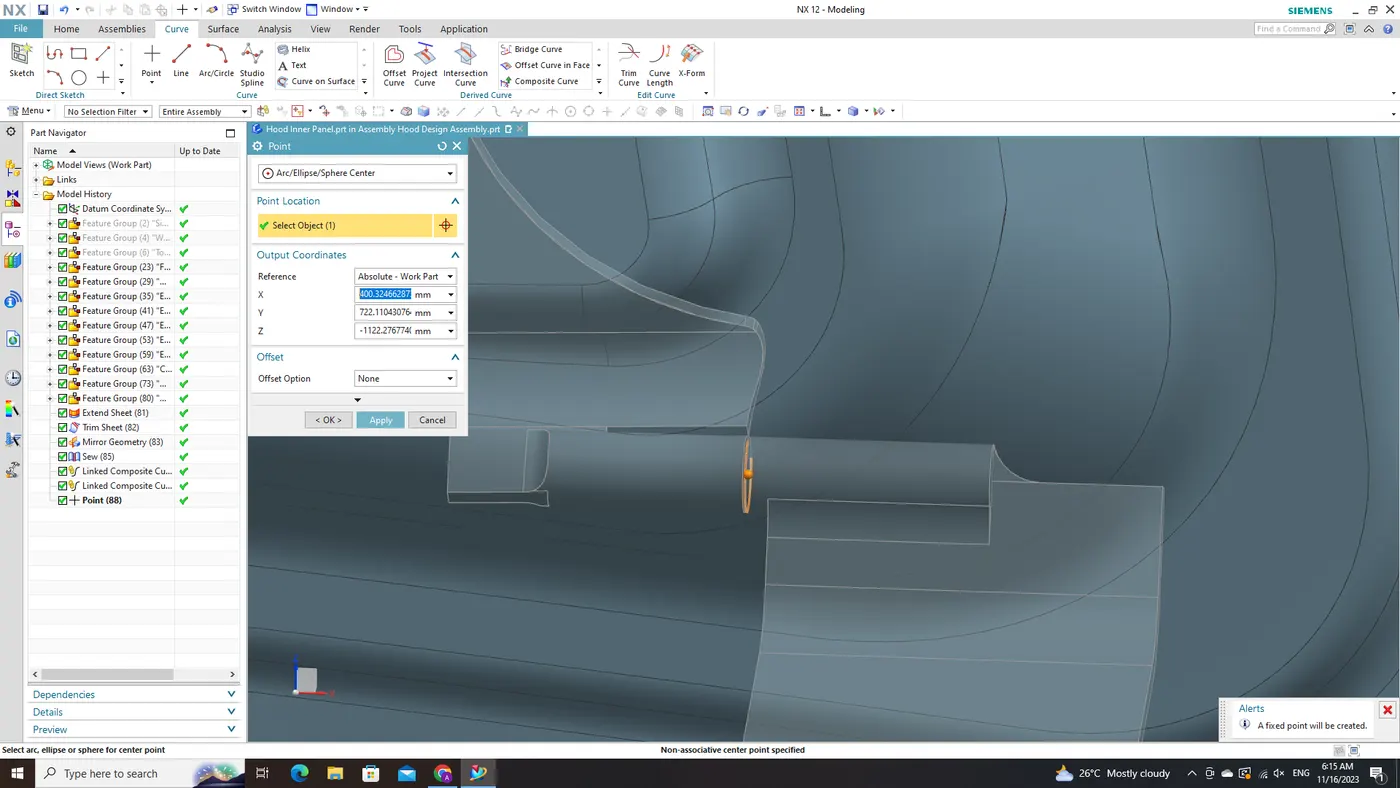
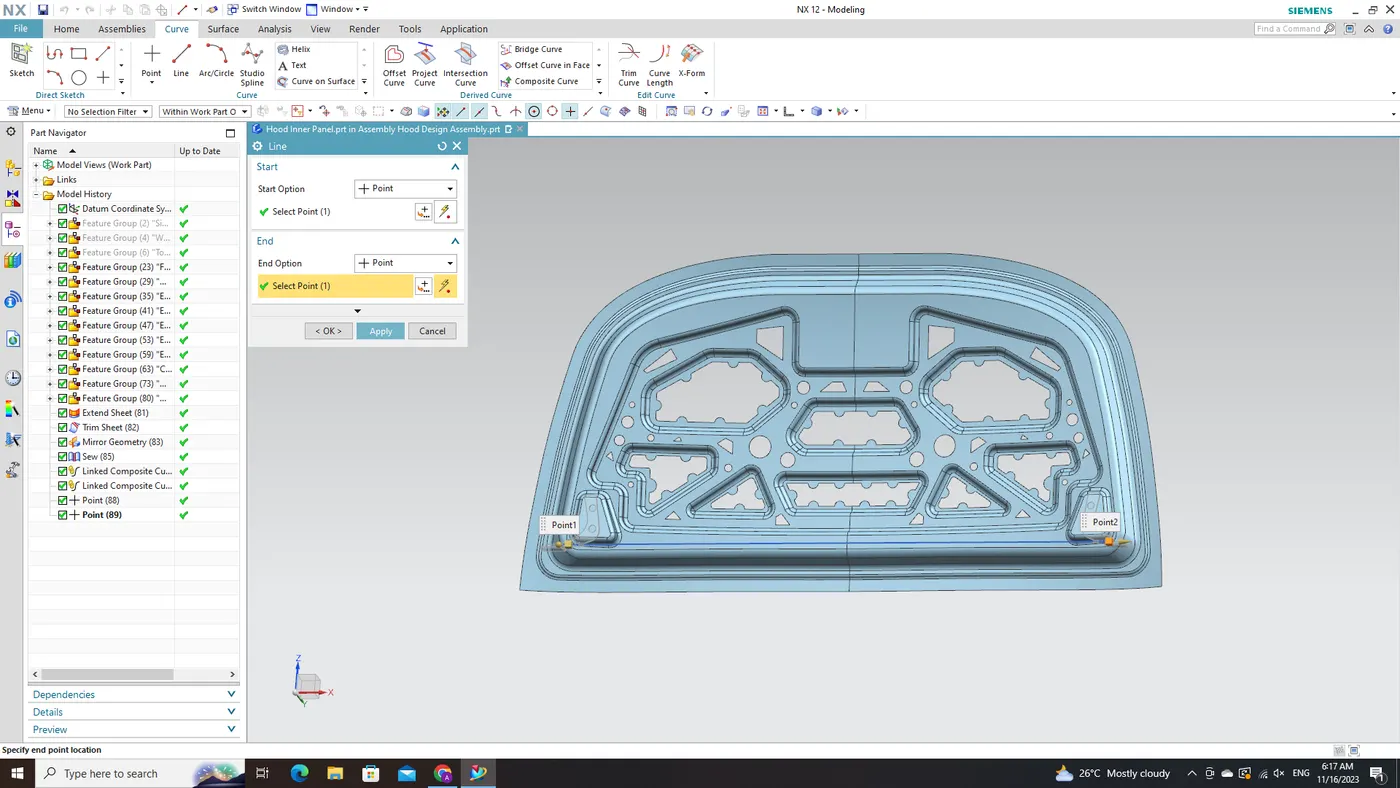
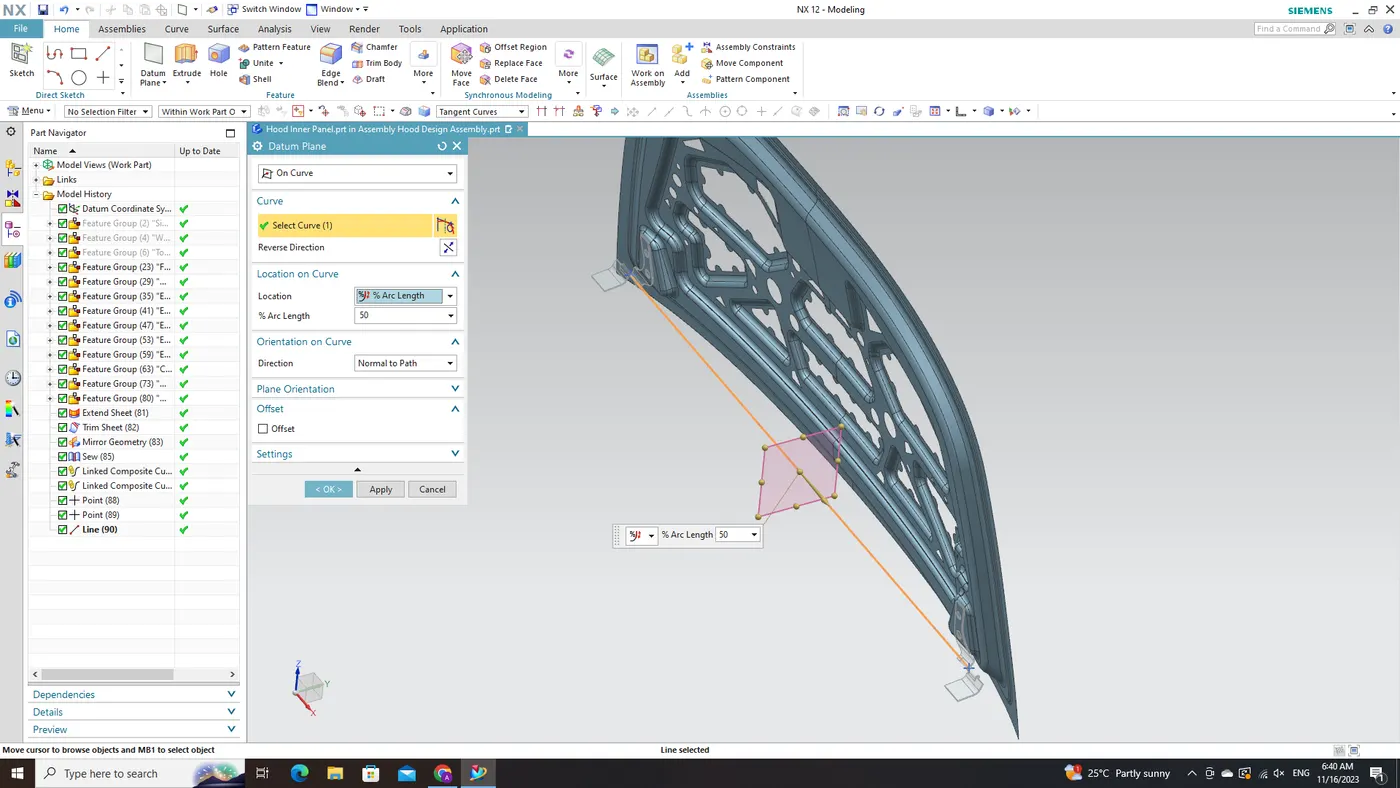
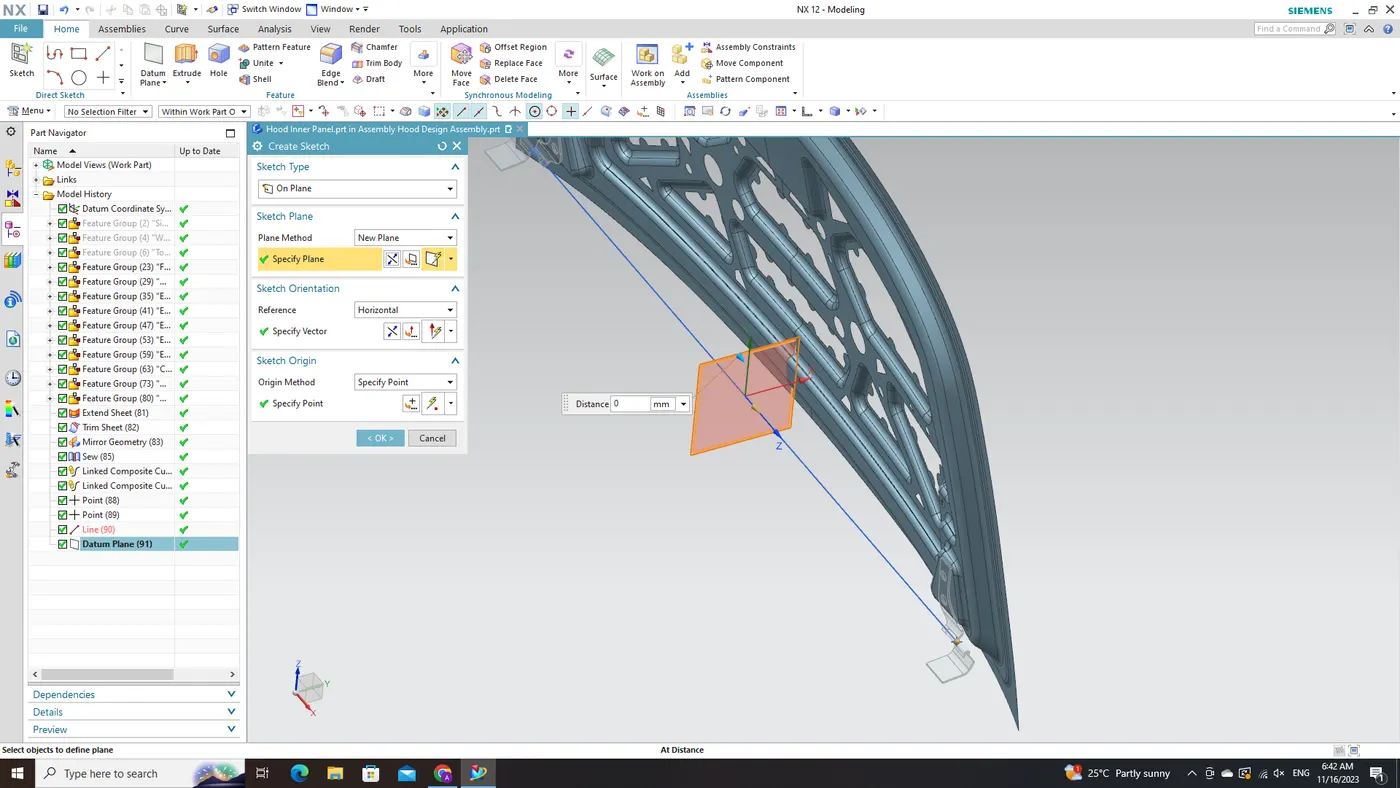
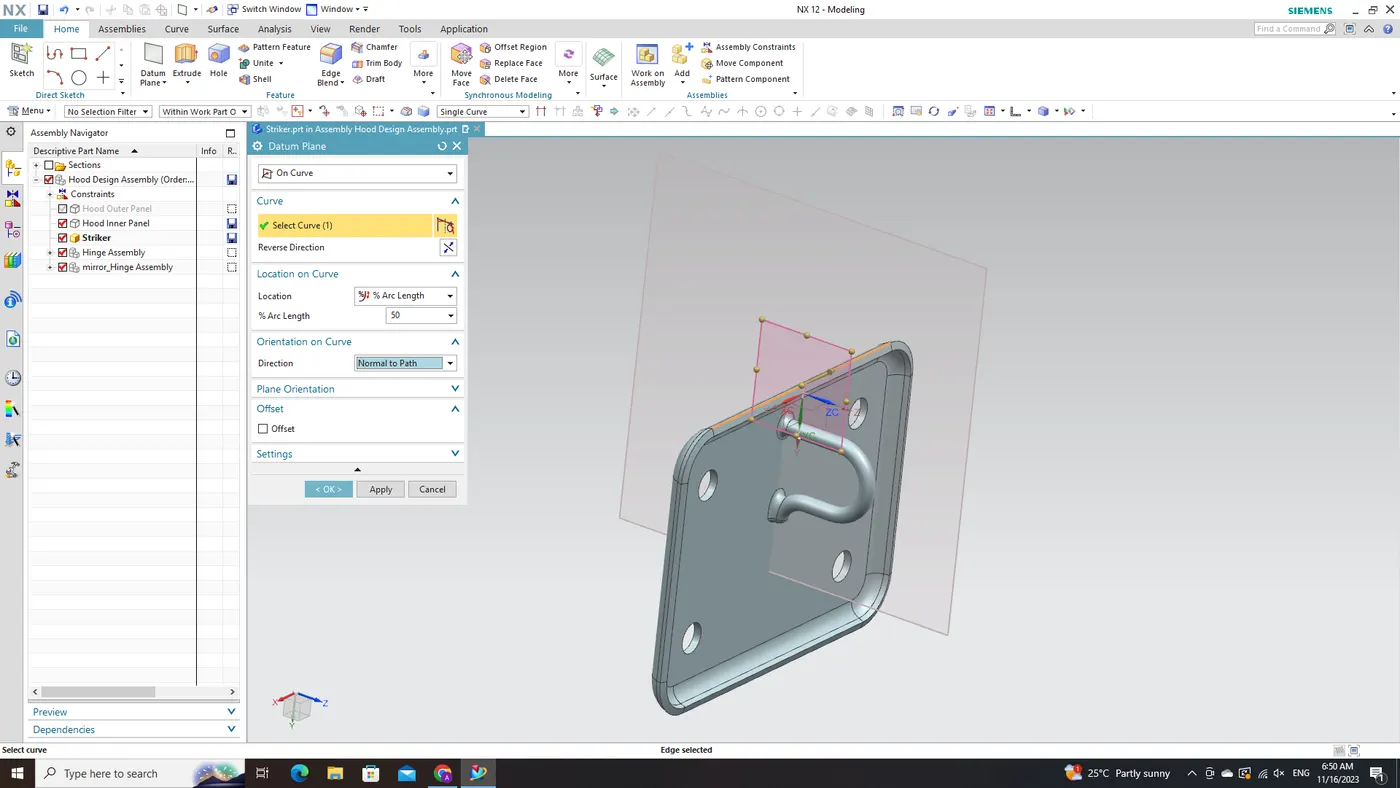
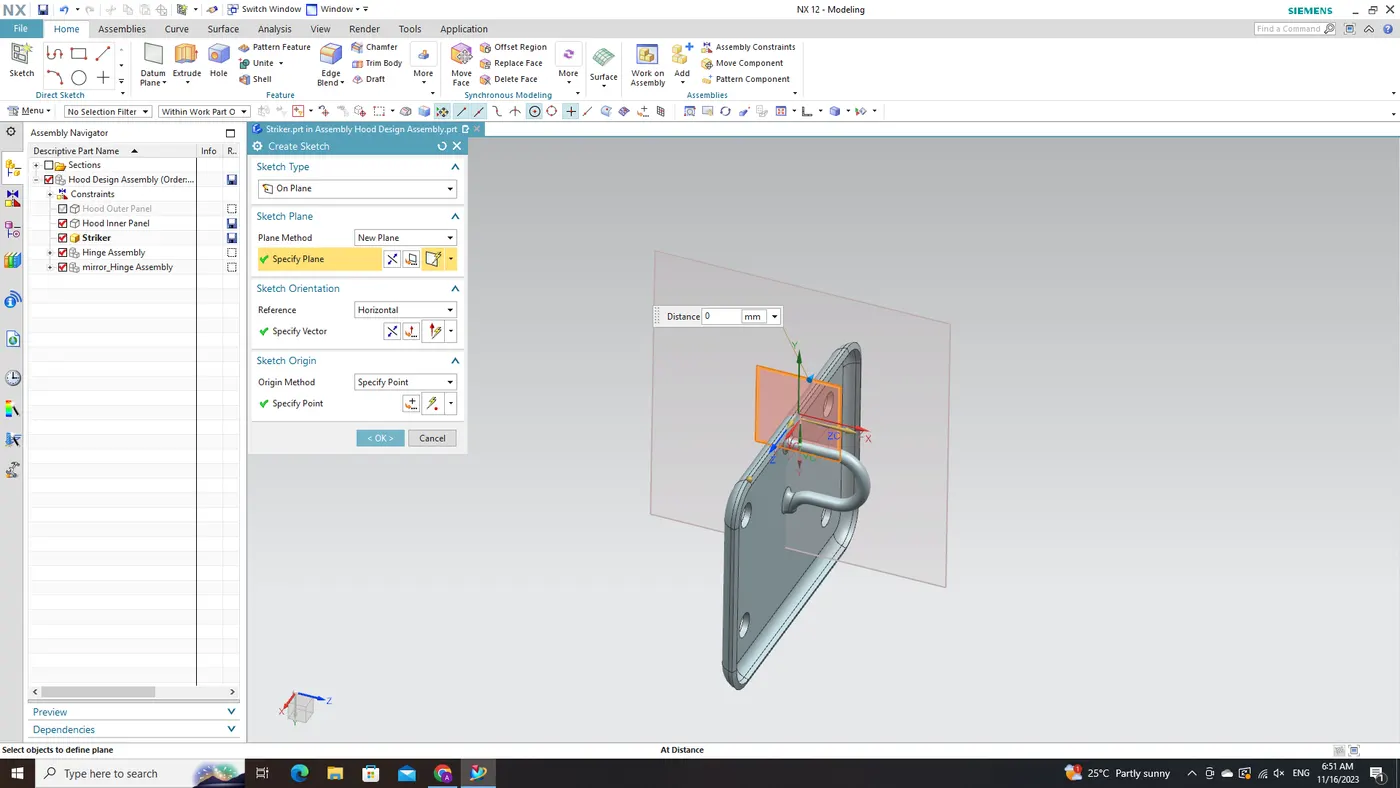
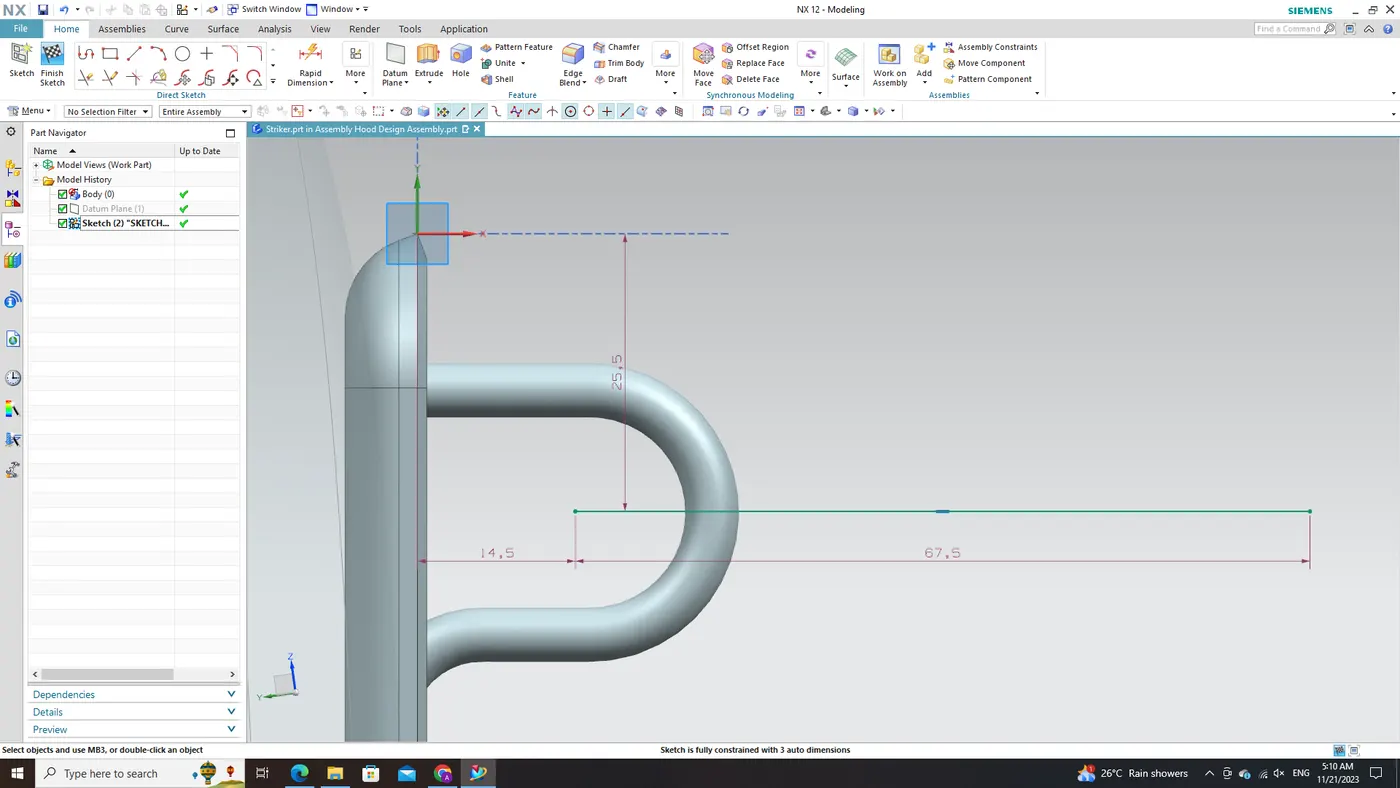
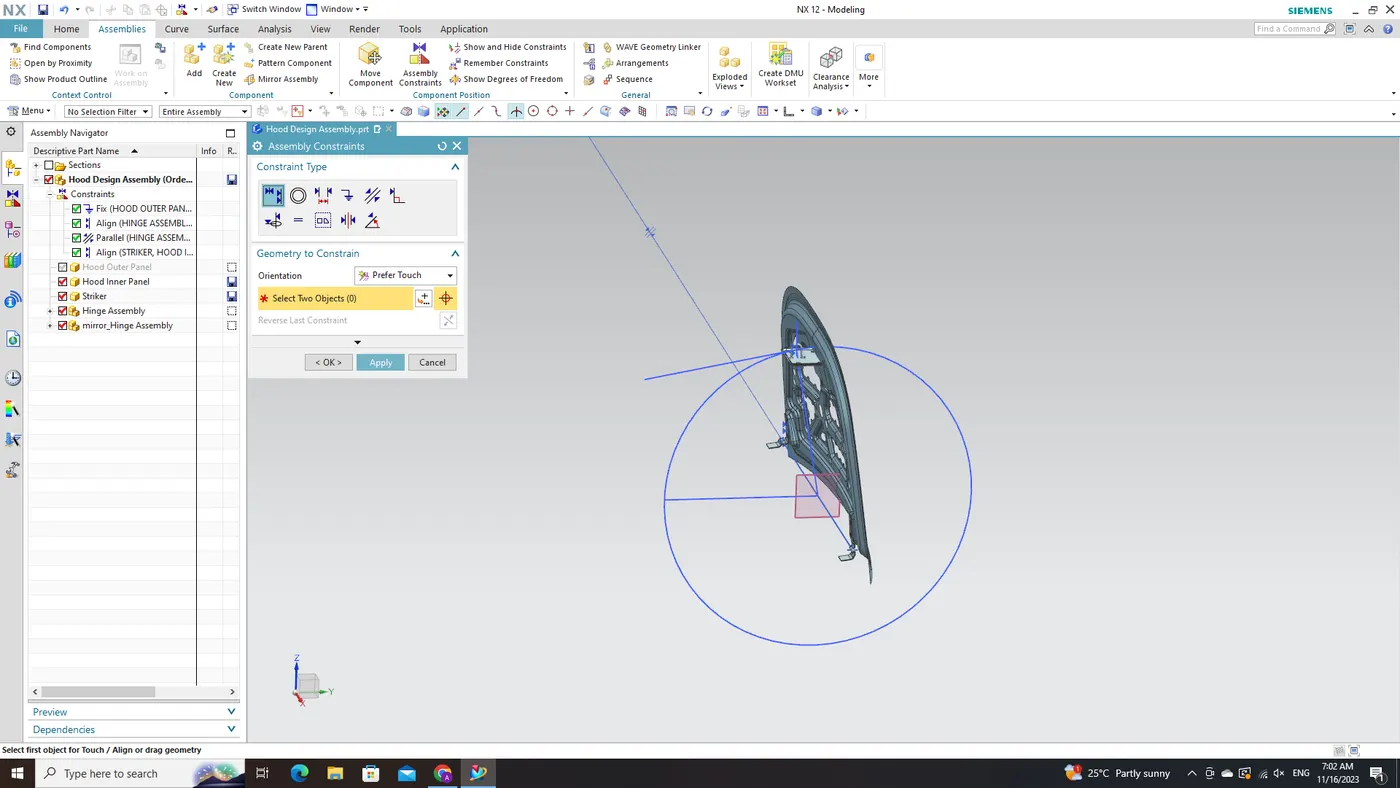
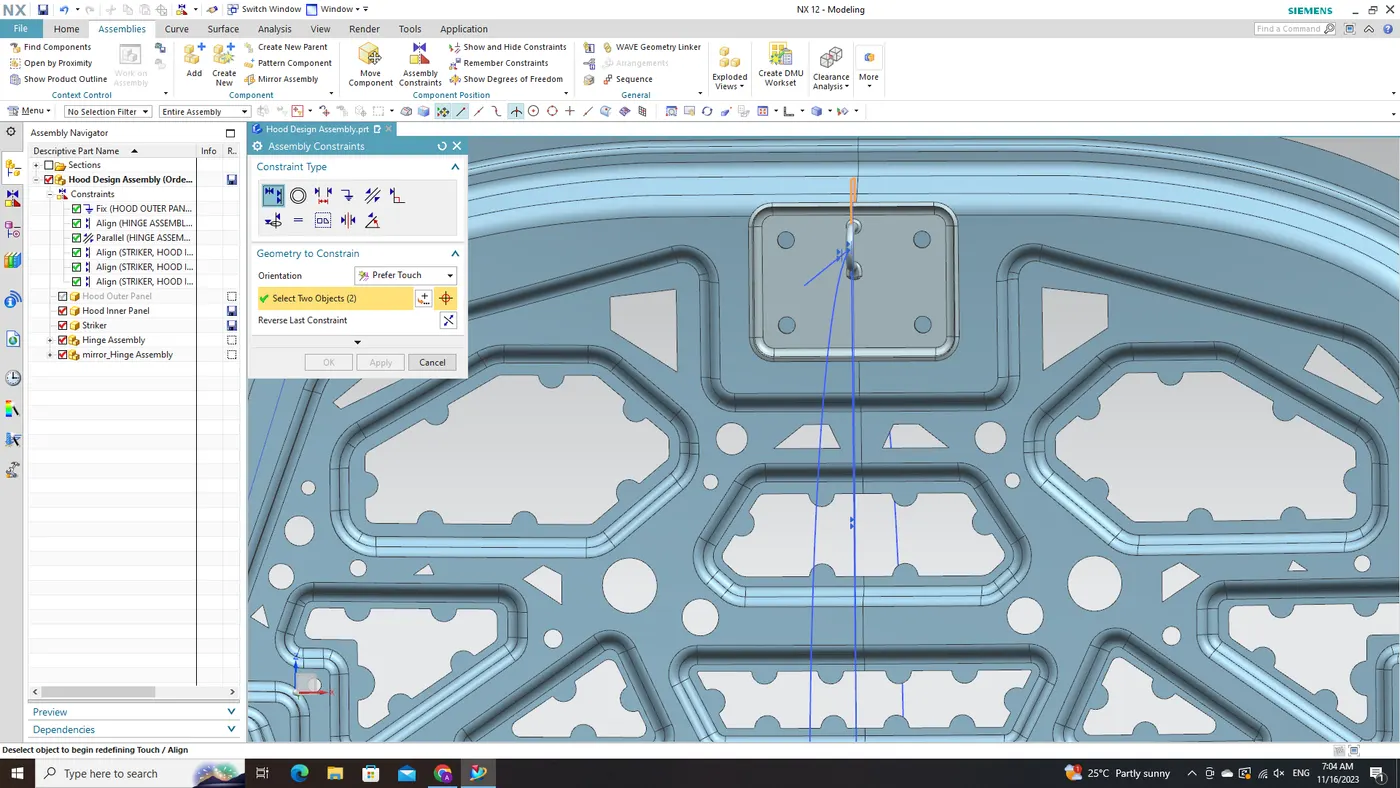
This is the trajectory path created for the hood, latch and striker.
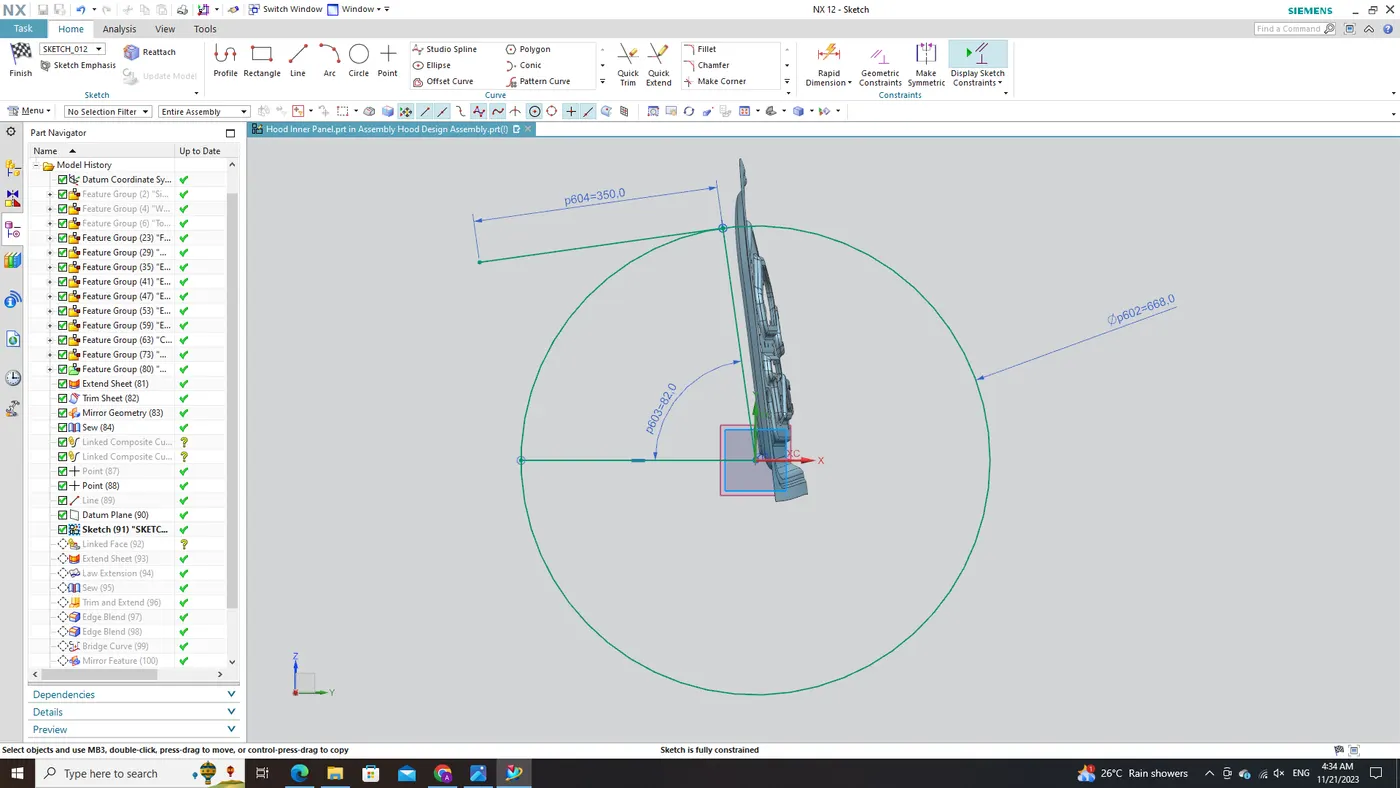
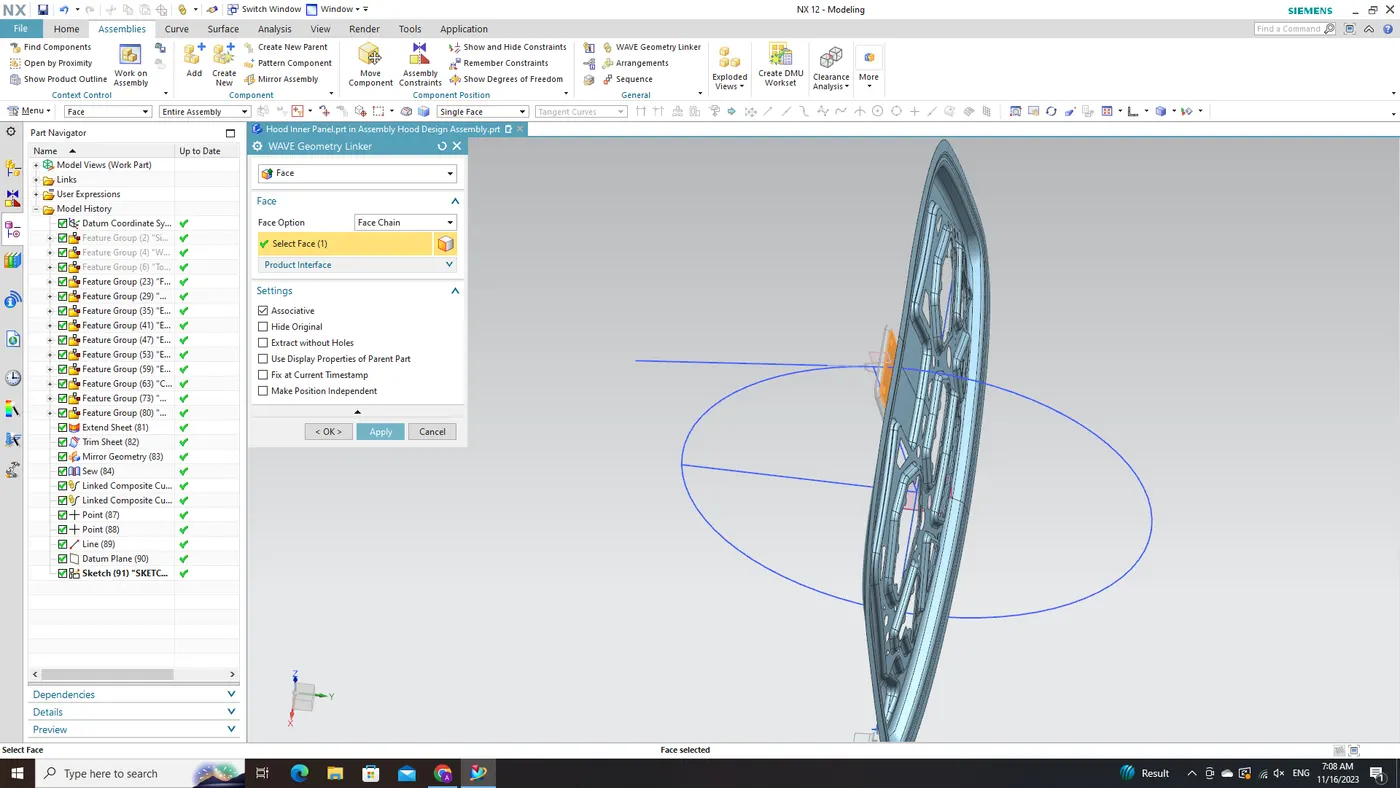
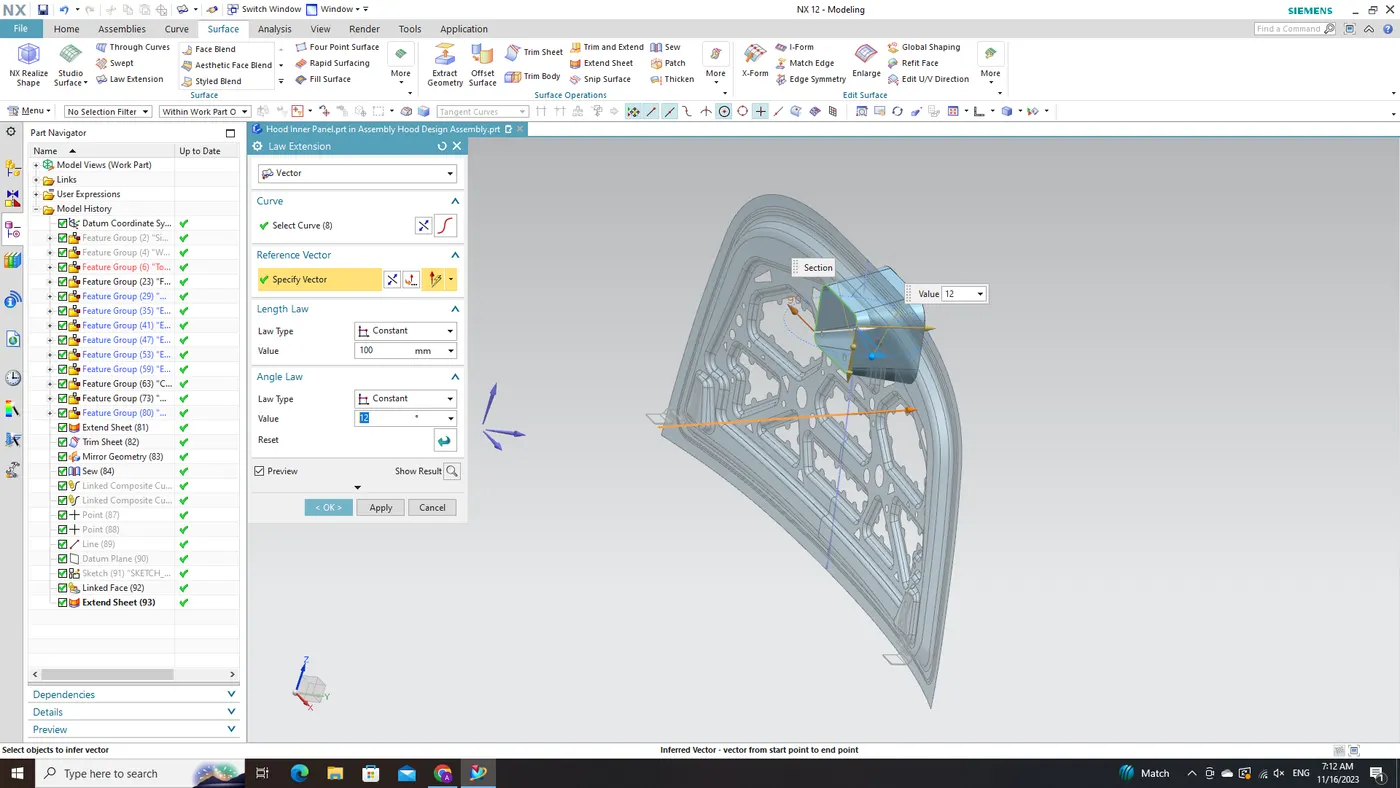
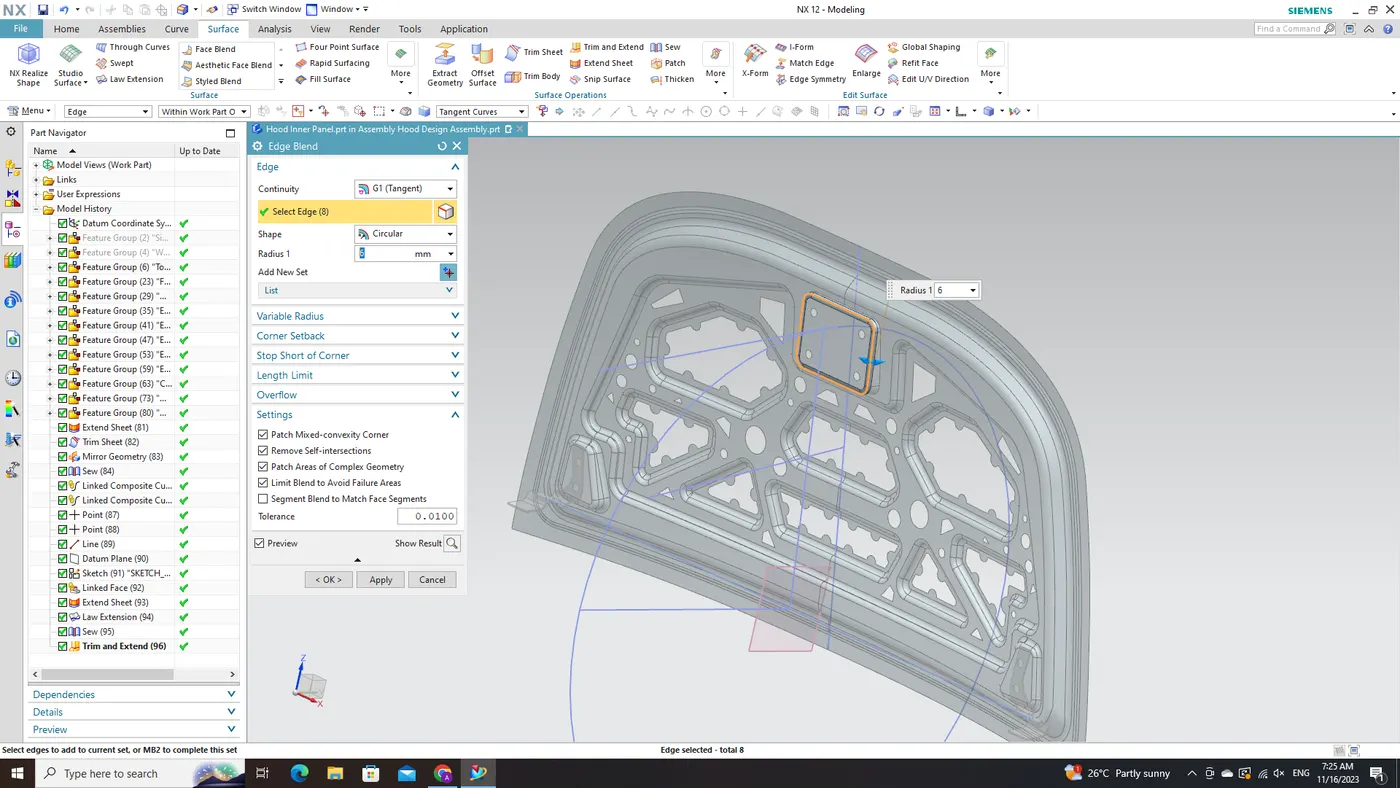
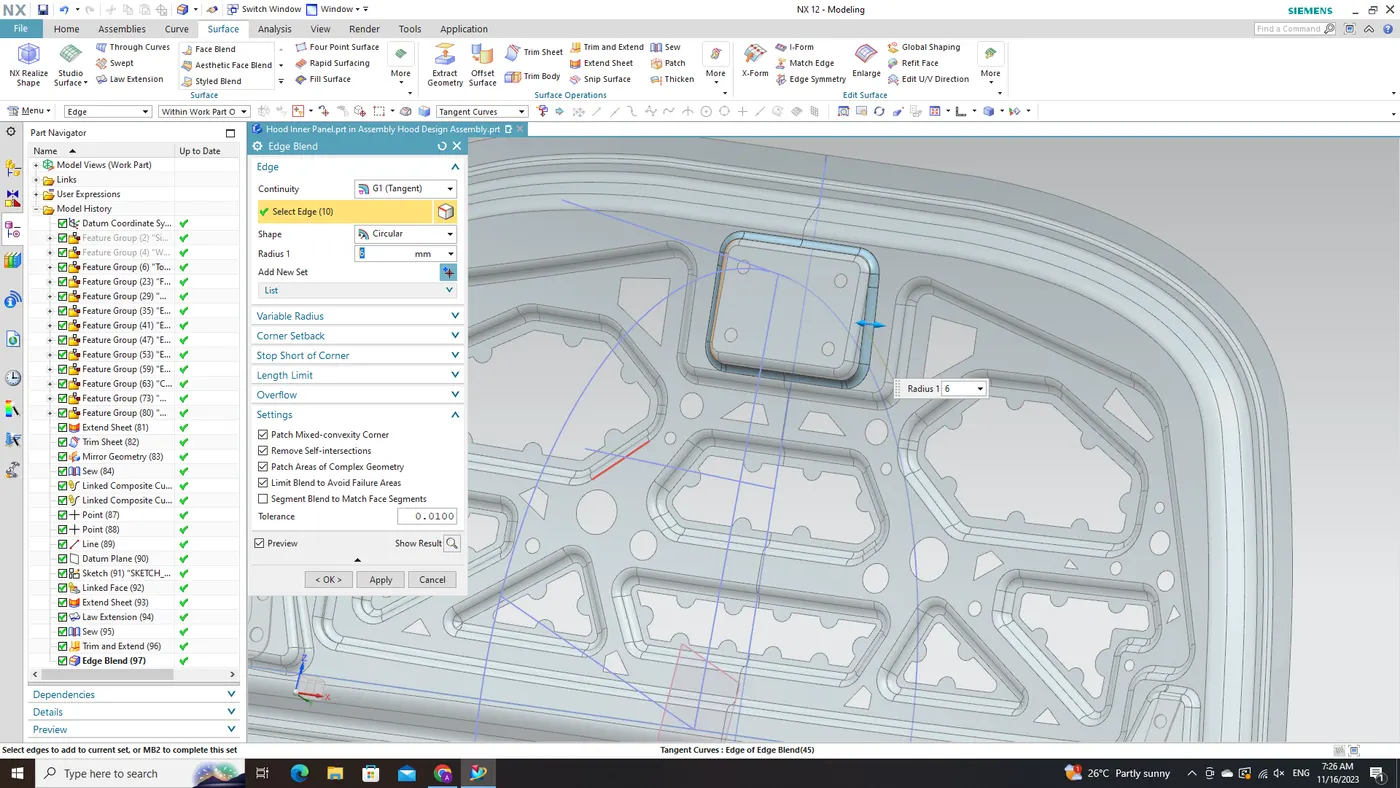
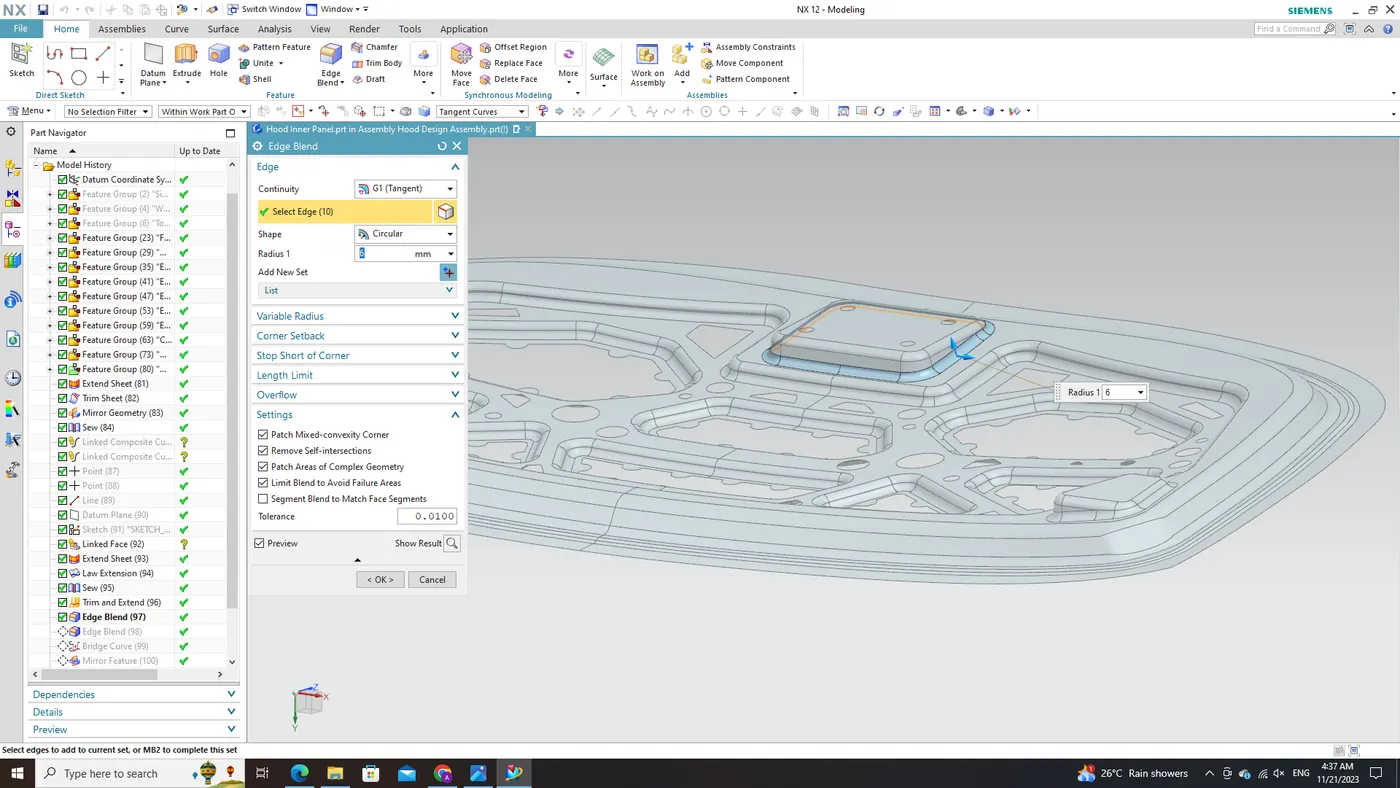
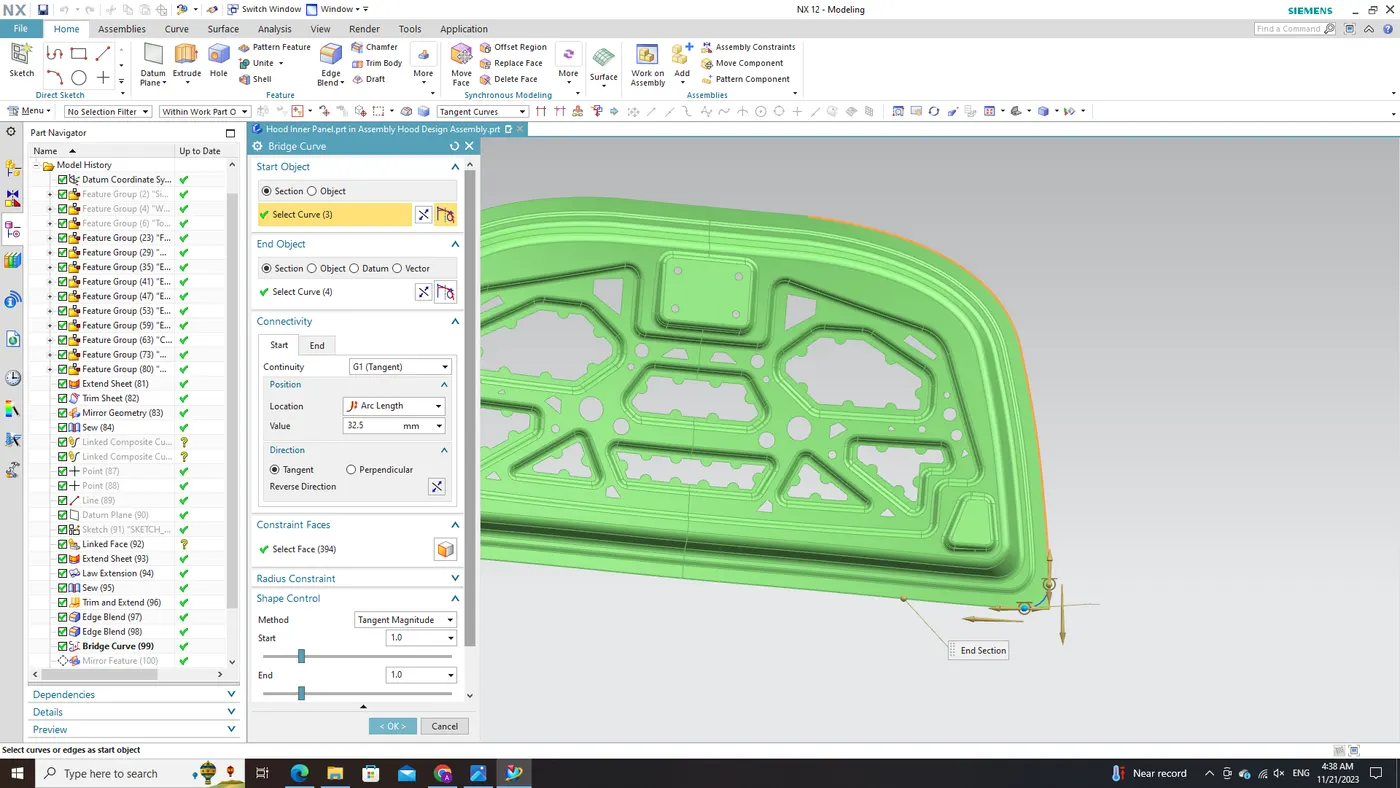
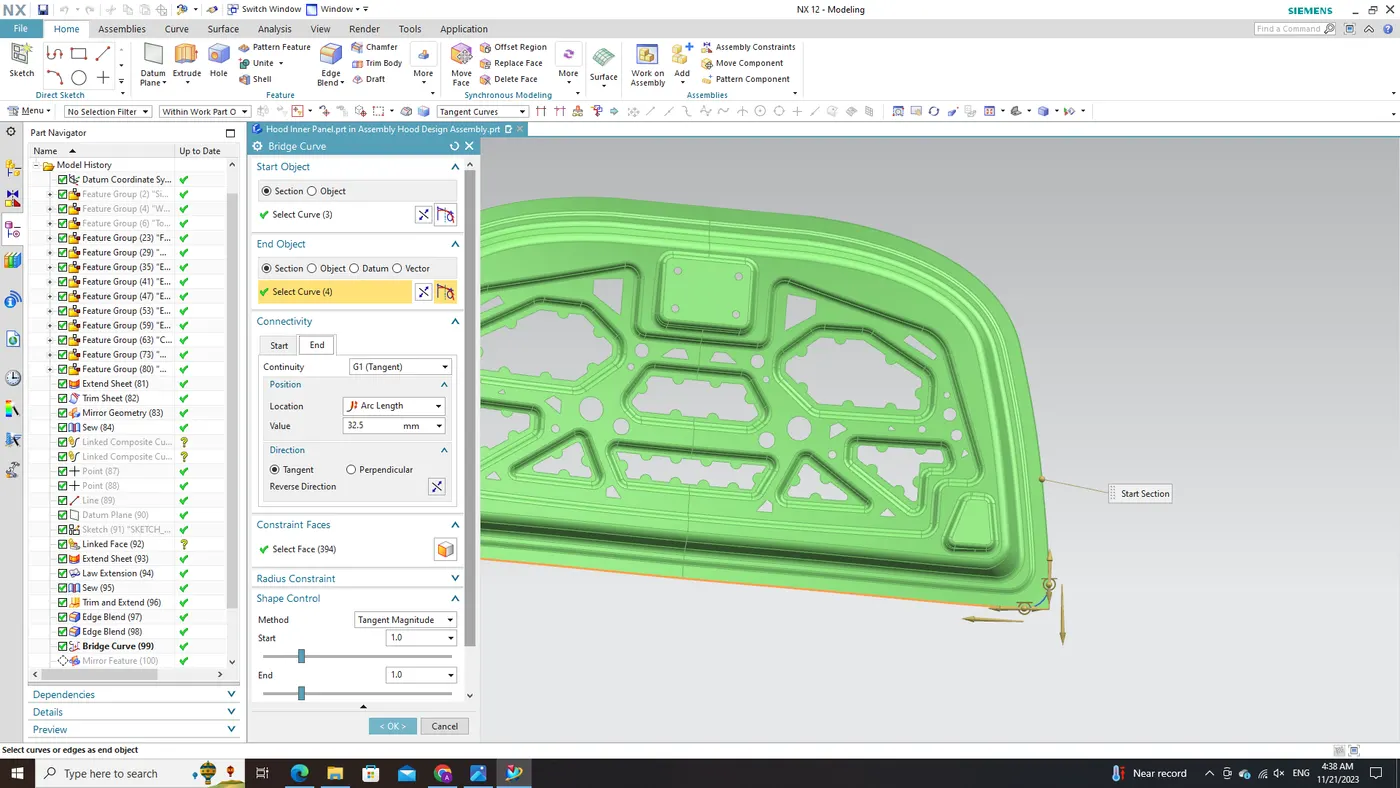
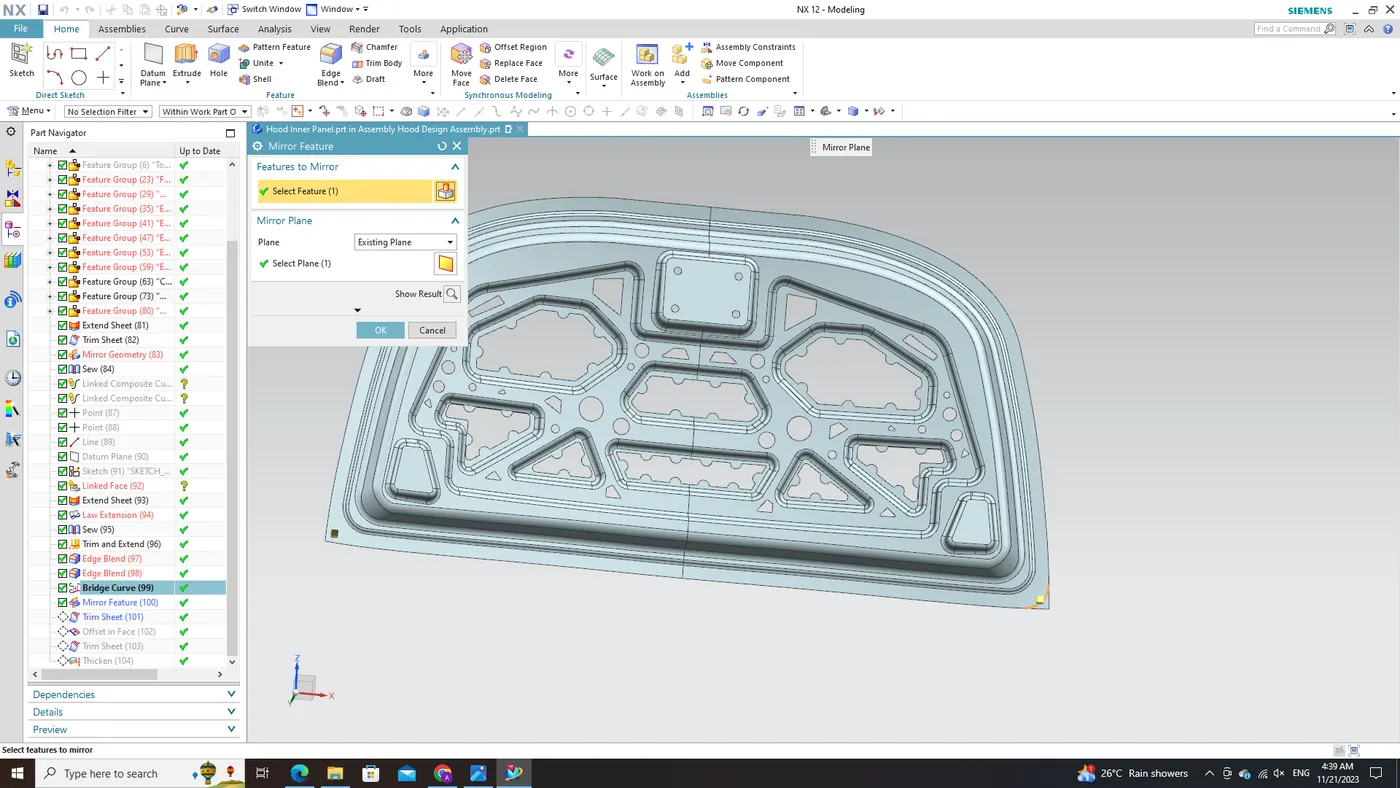
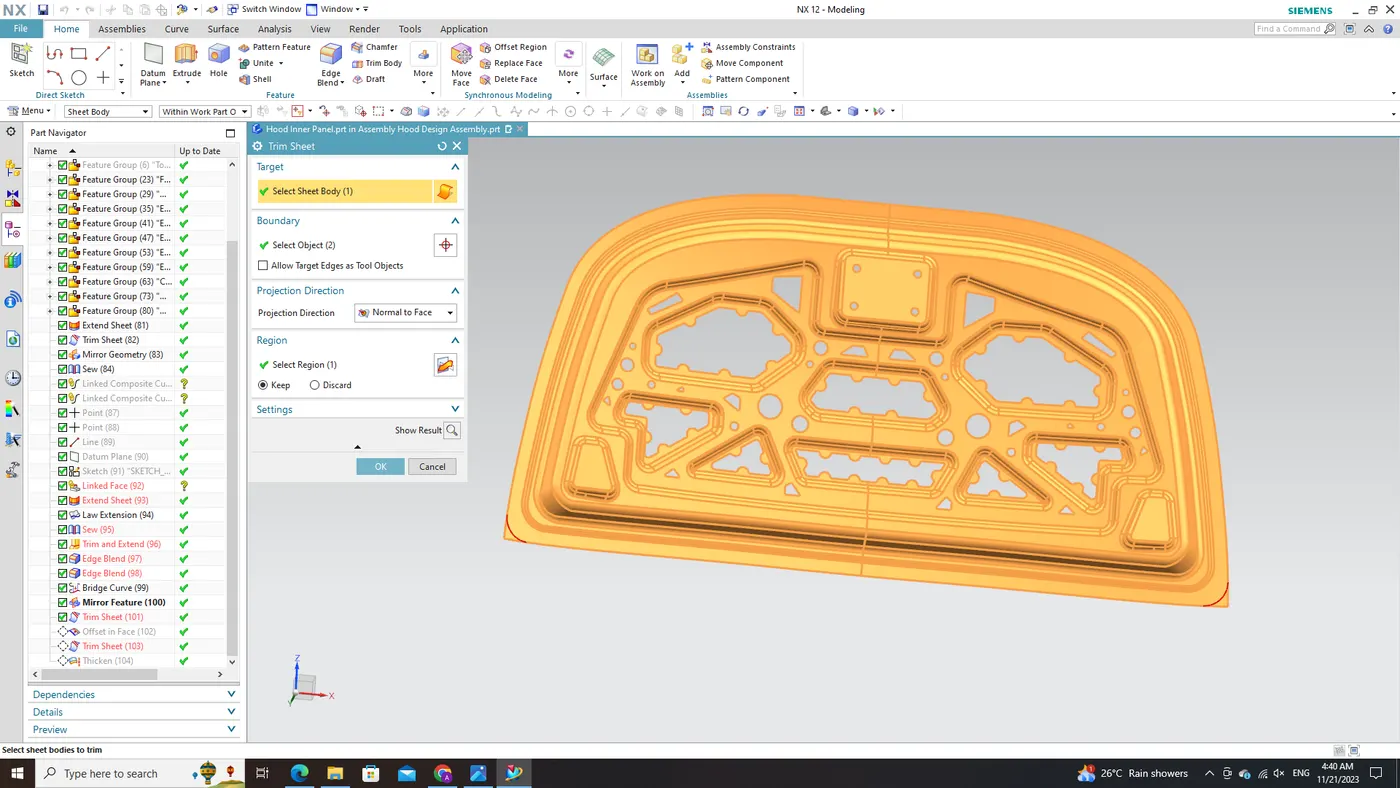
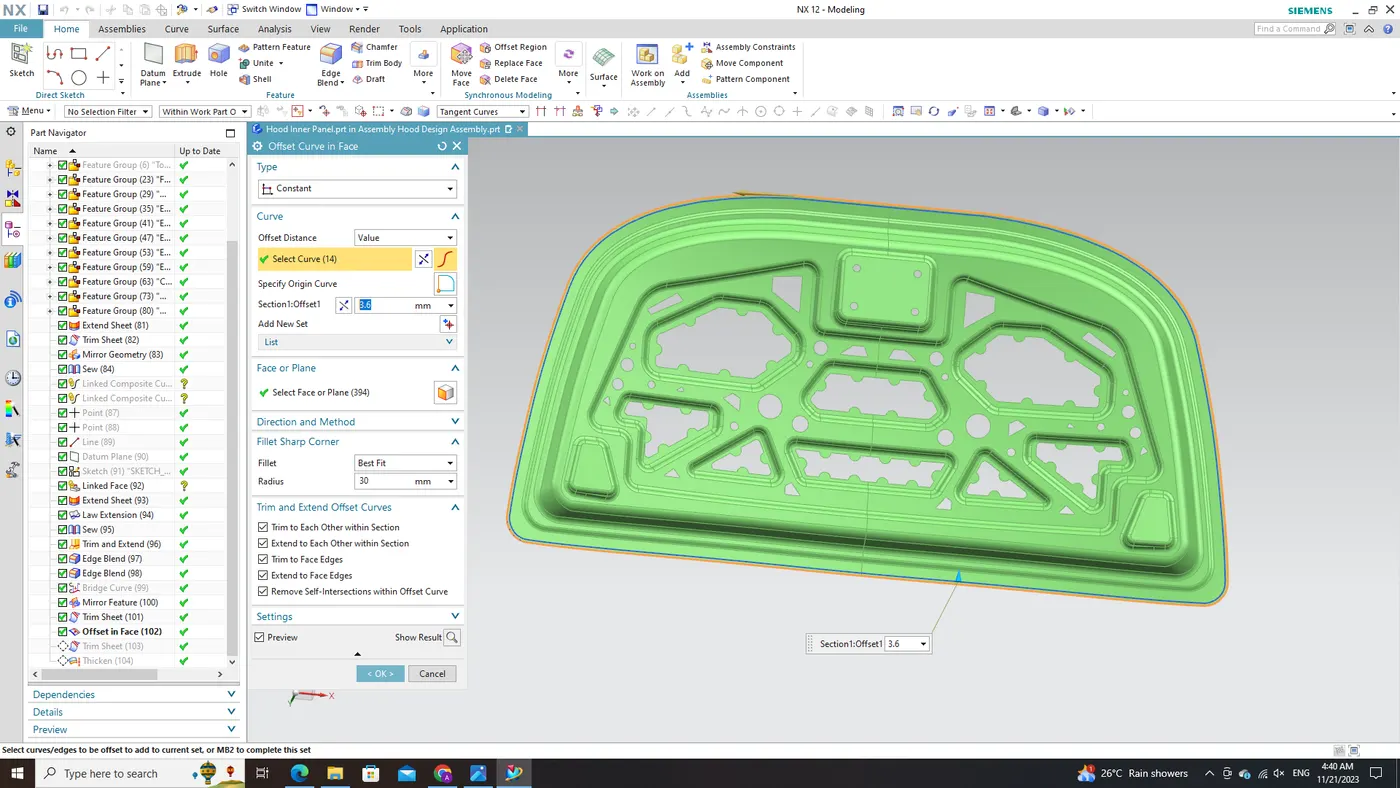
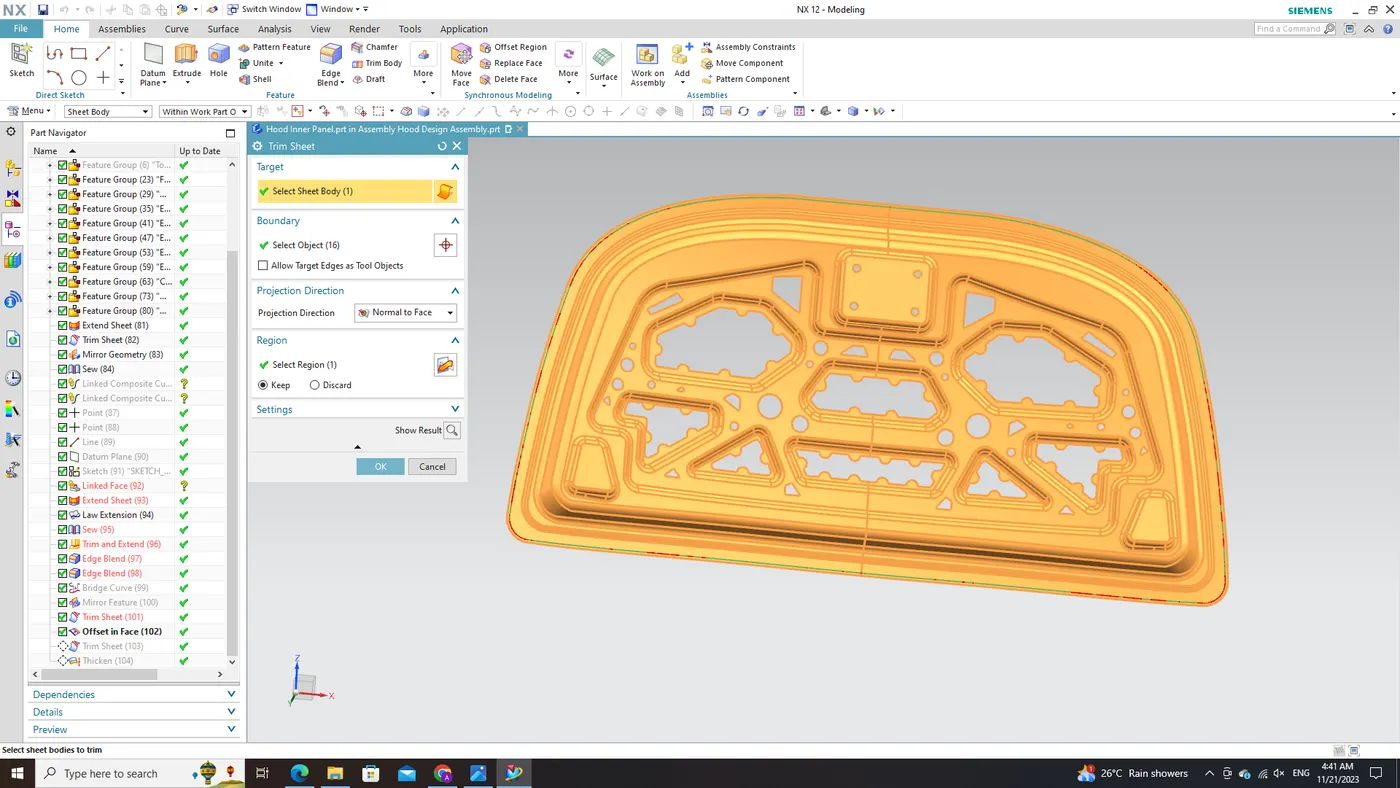
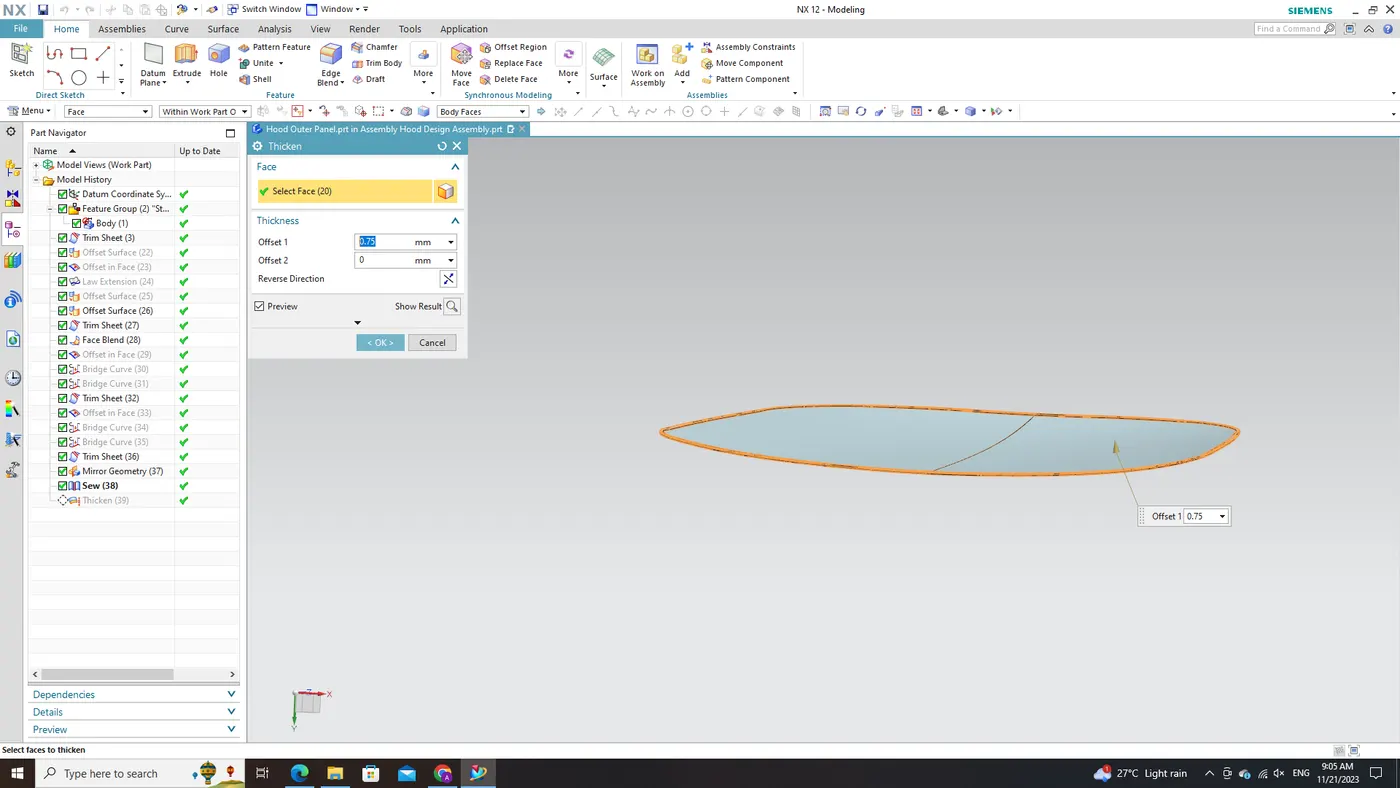
As given design inputs we need to thicken it to 0.75mm.
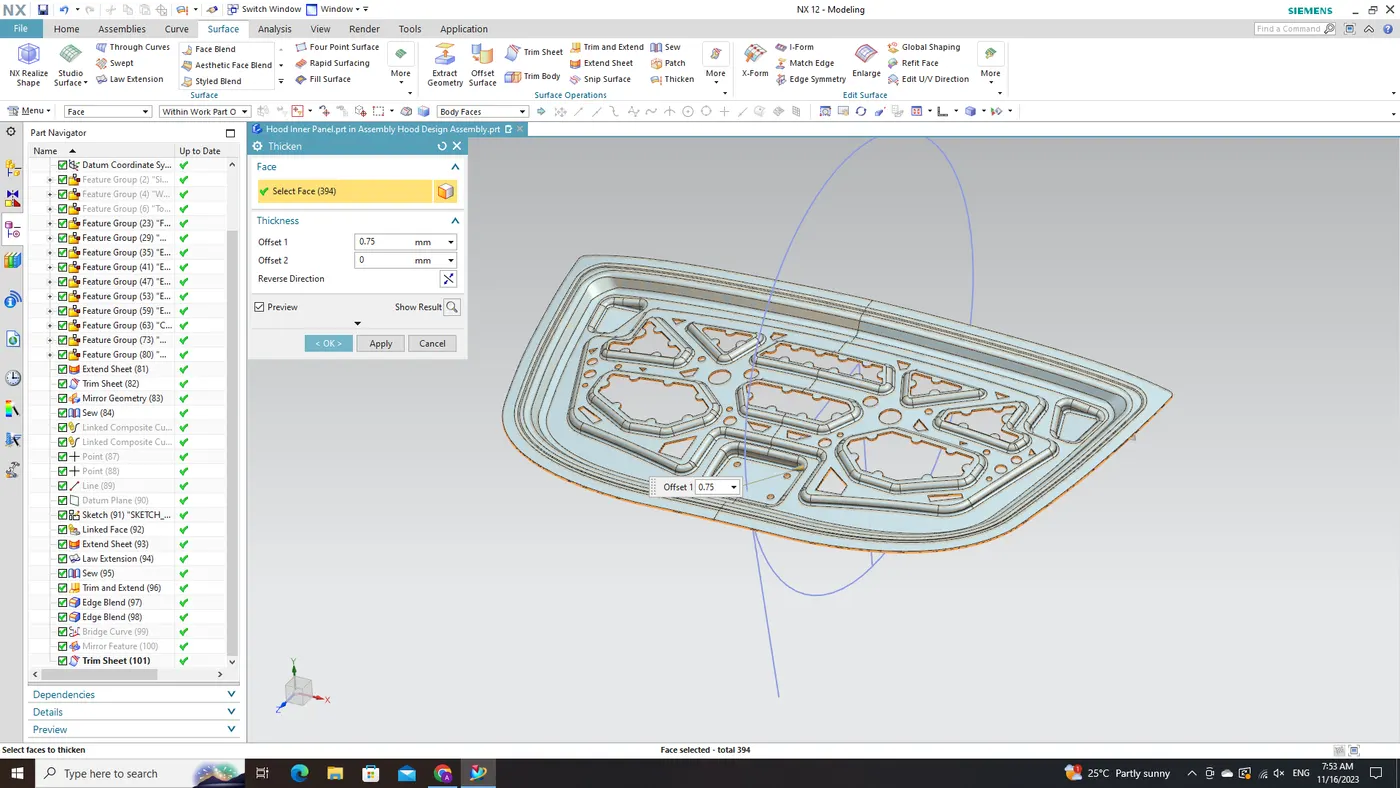
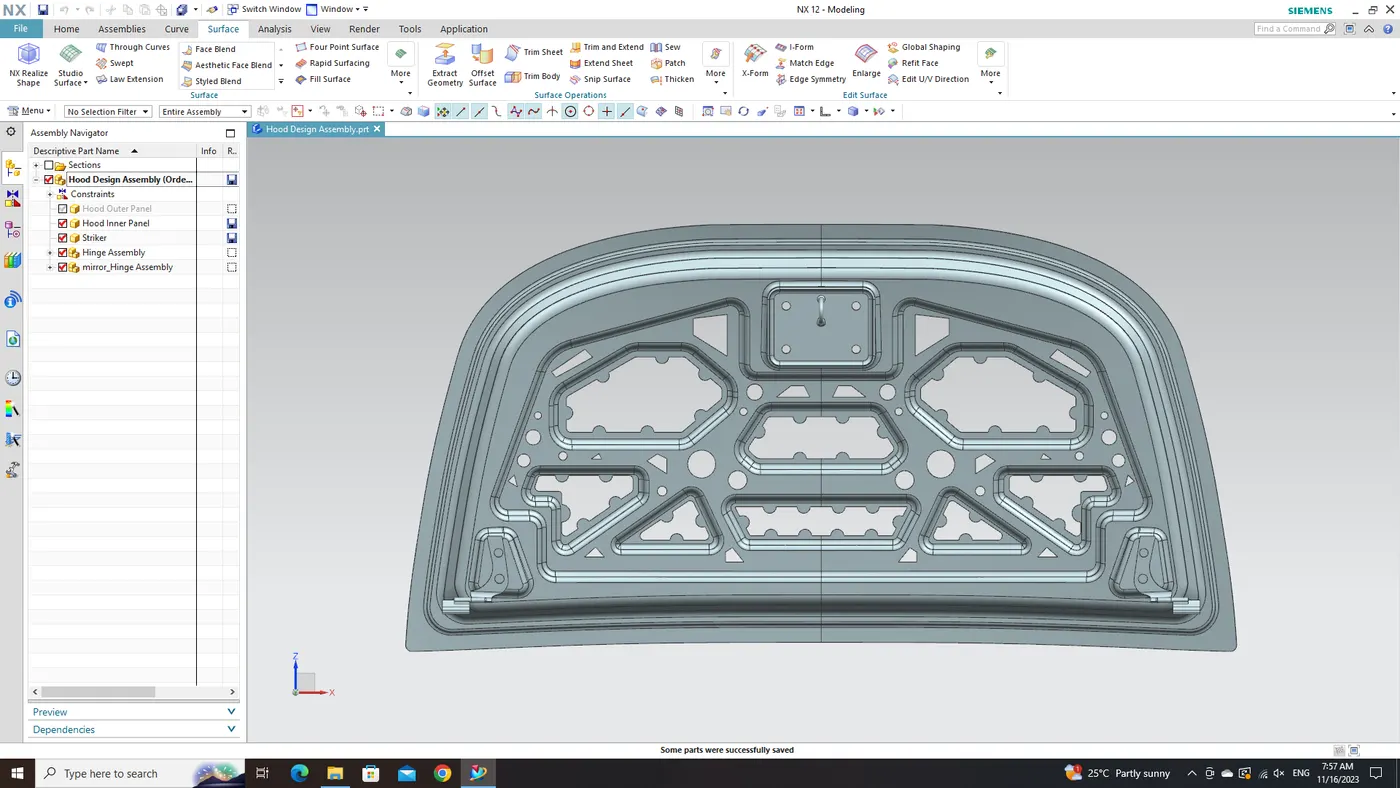
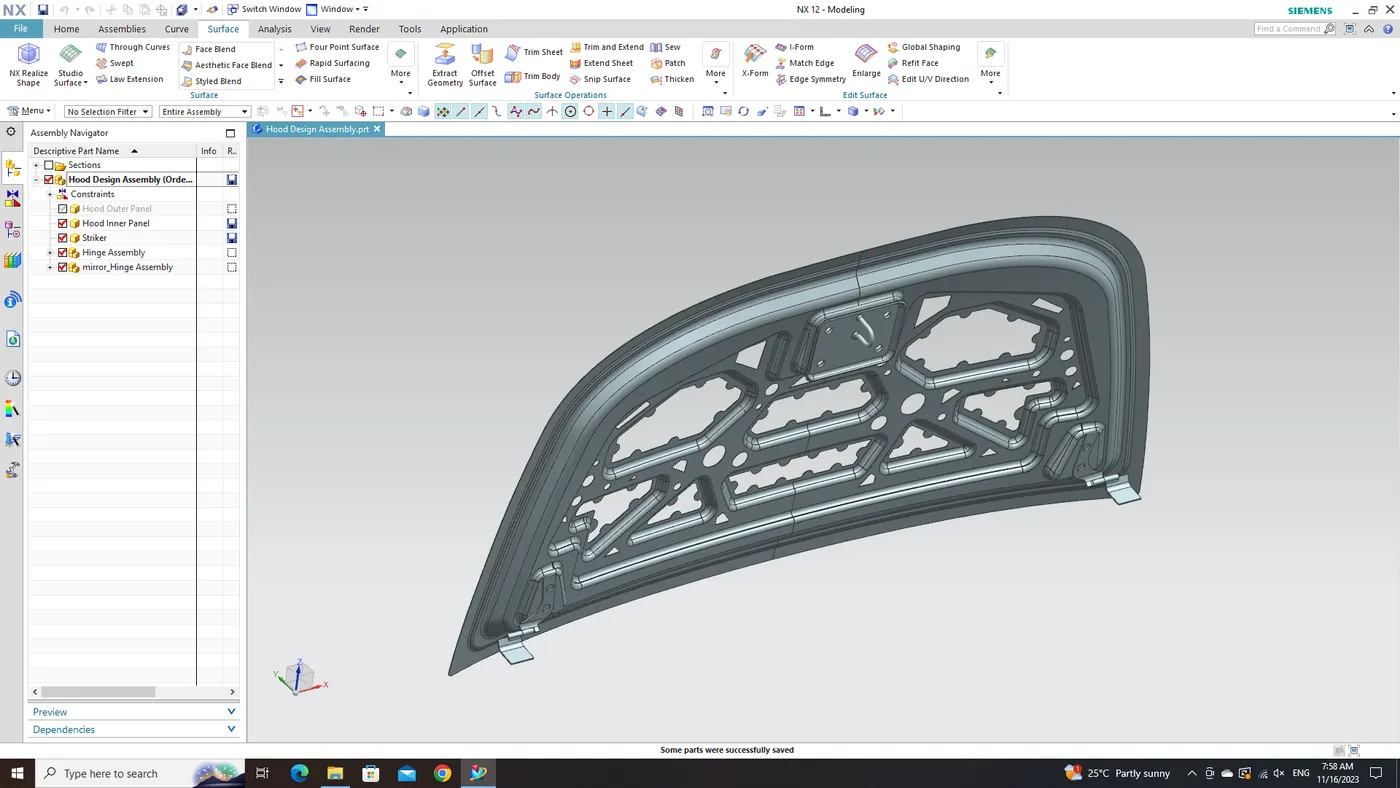
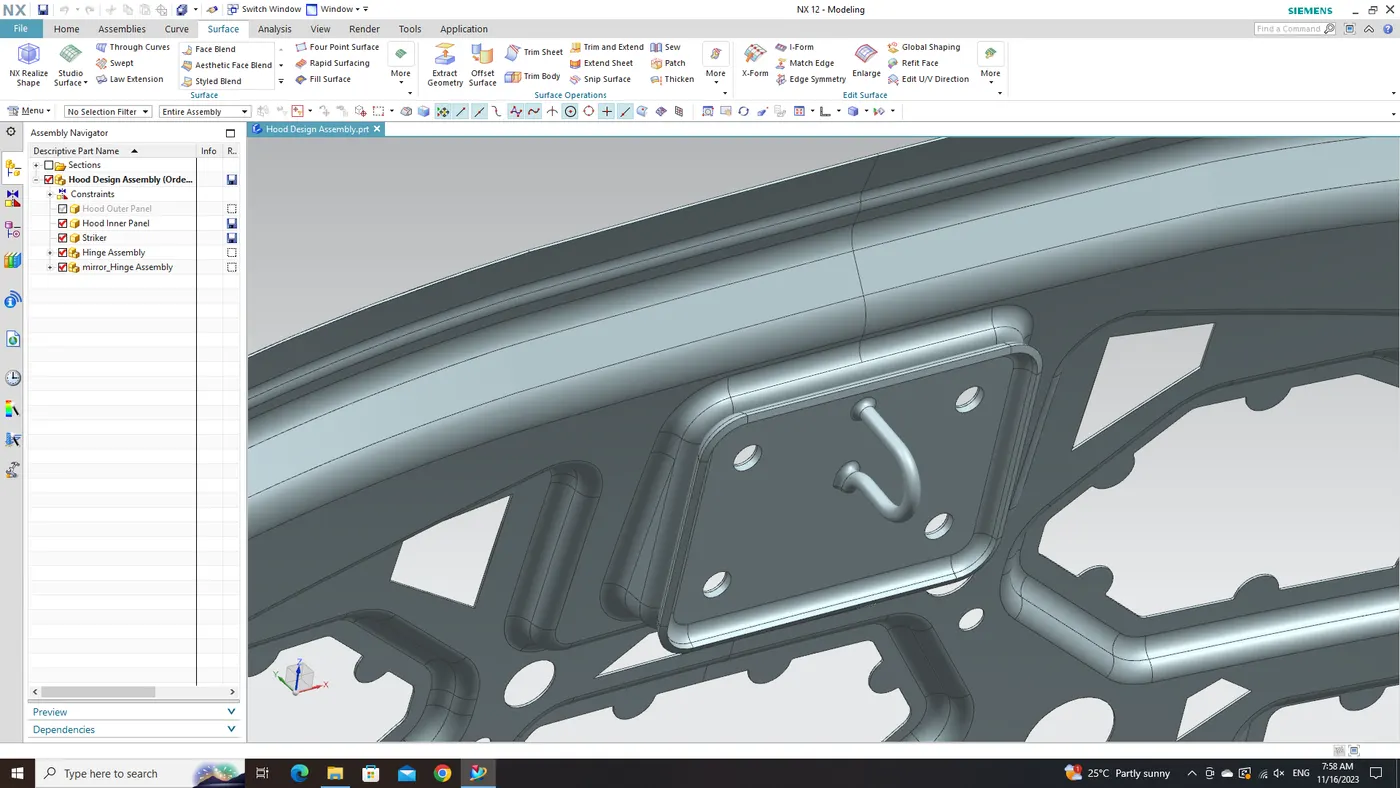
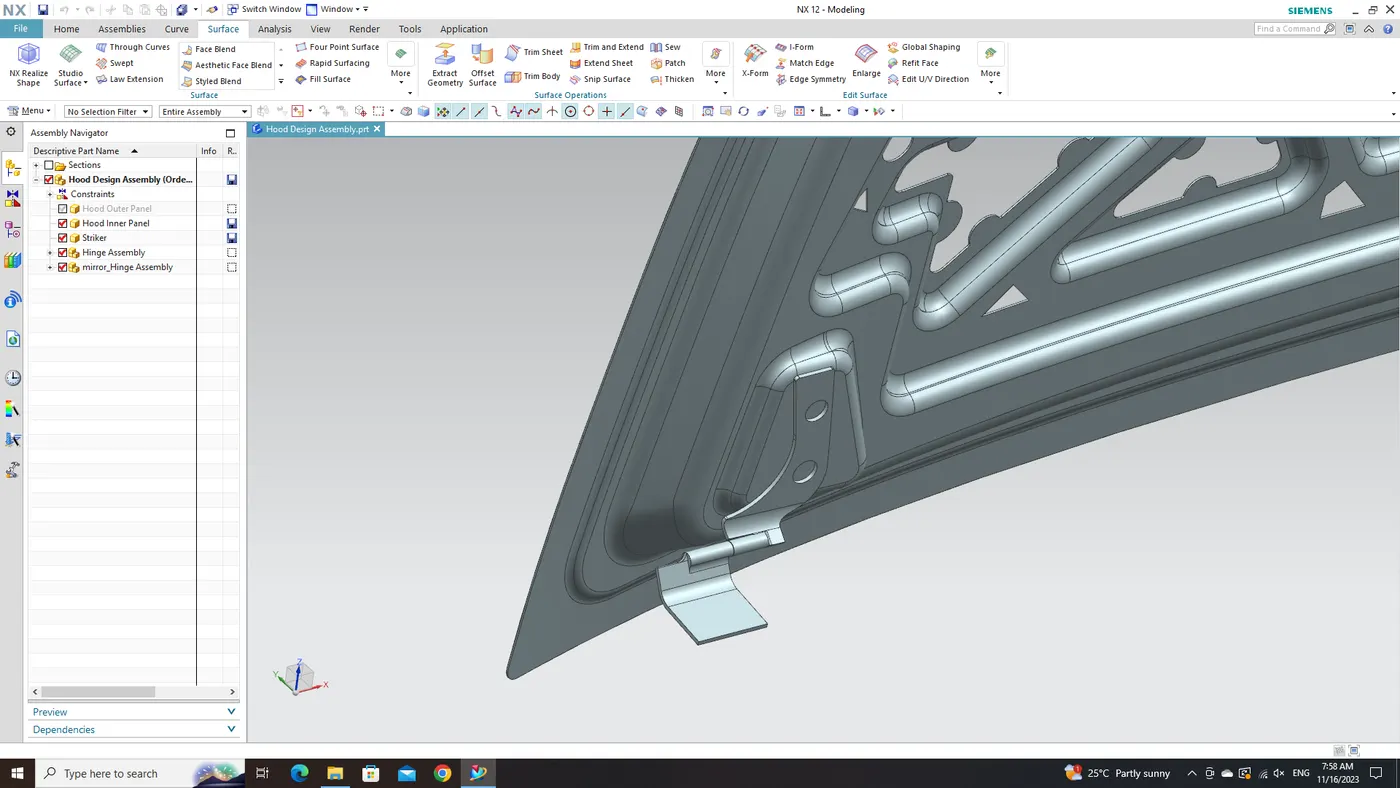
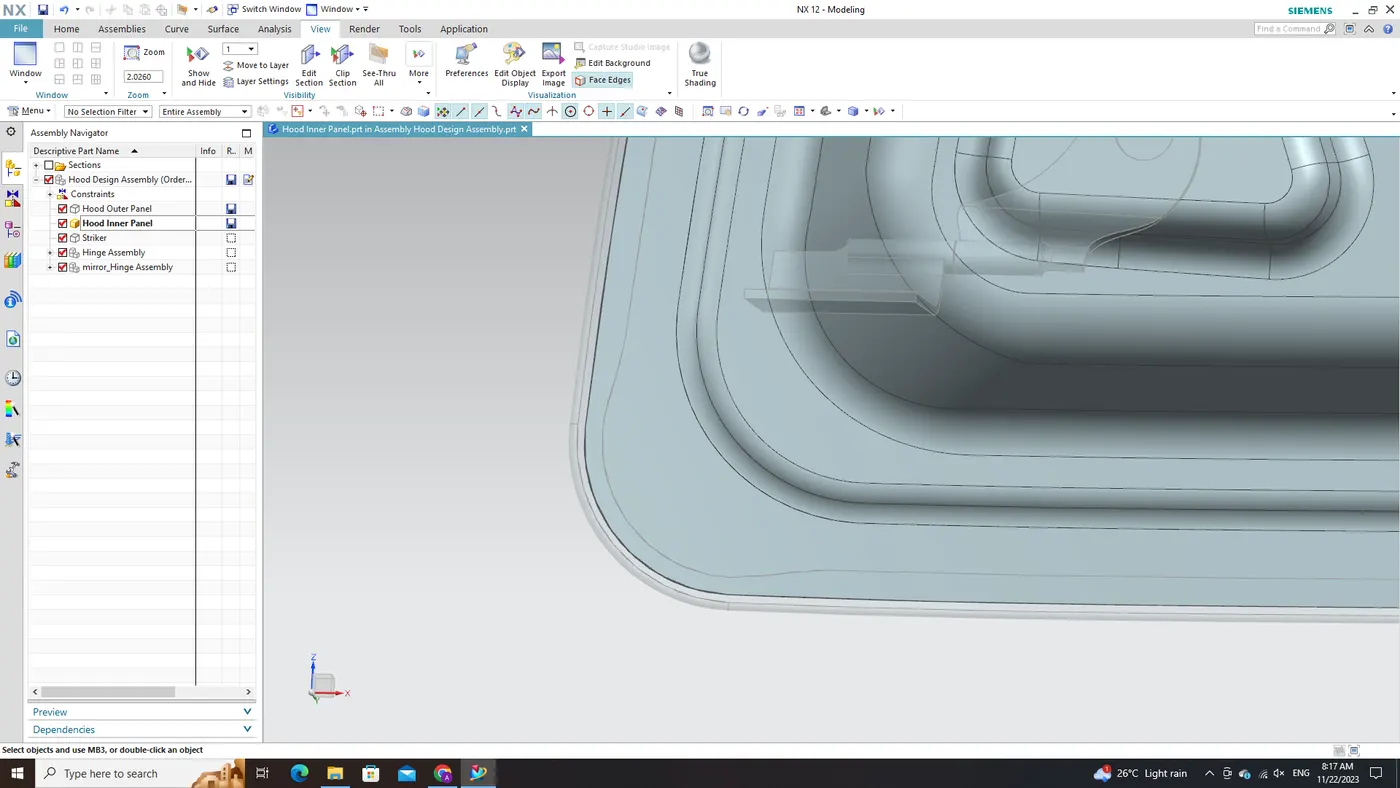
We proceed to create the Hood Inner Panel.
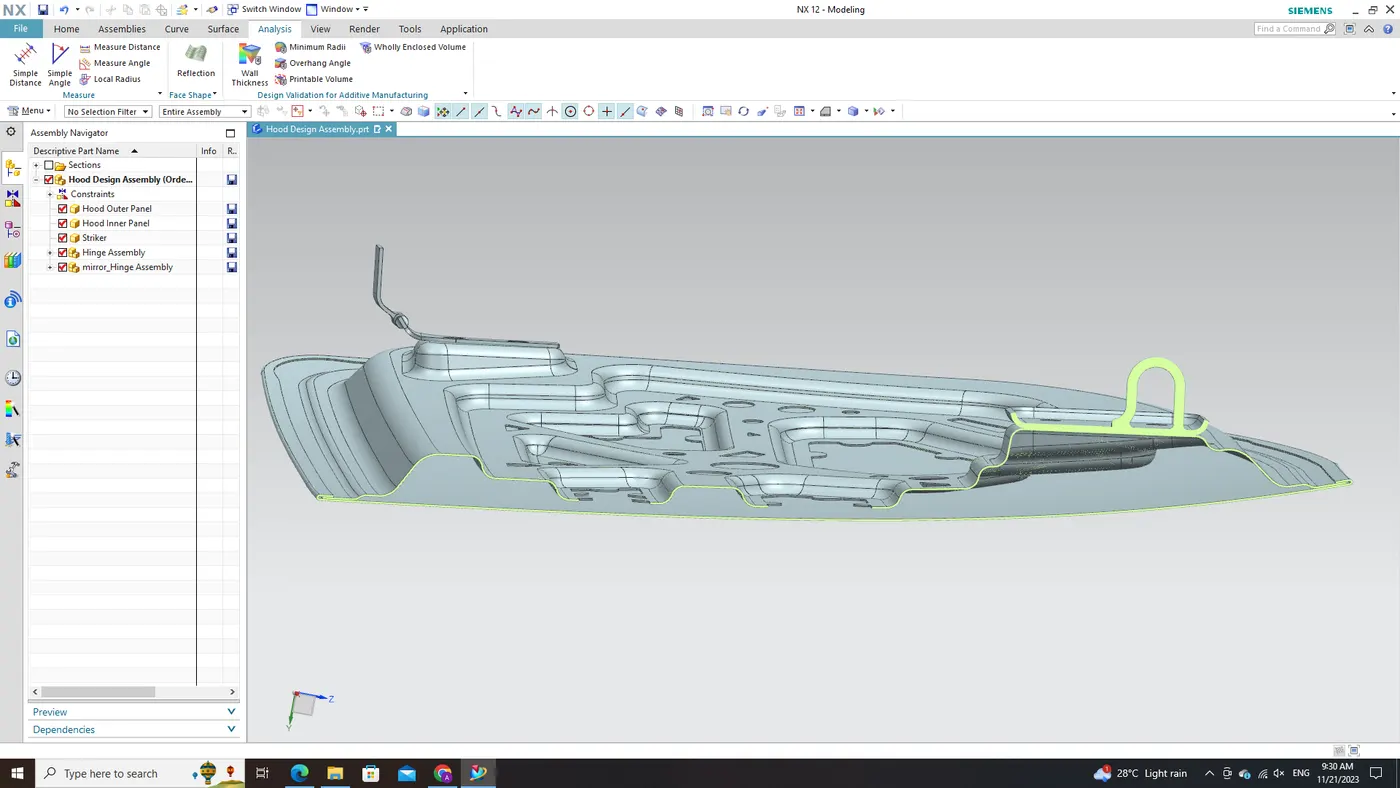
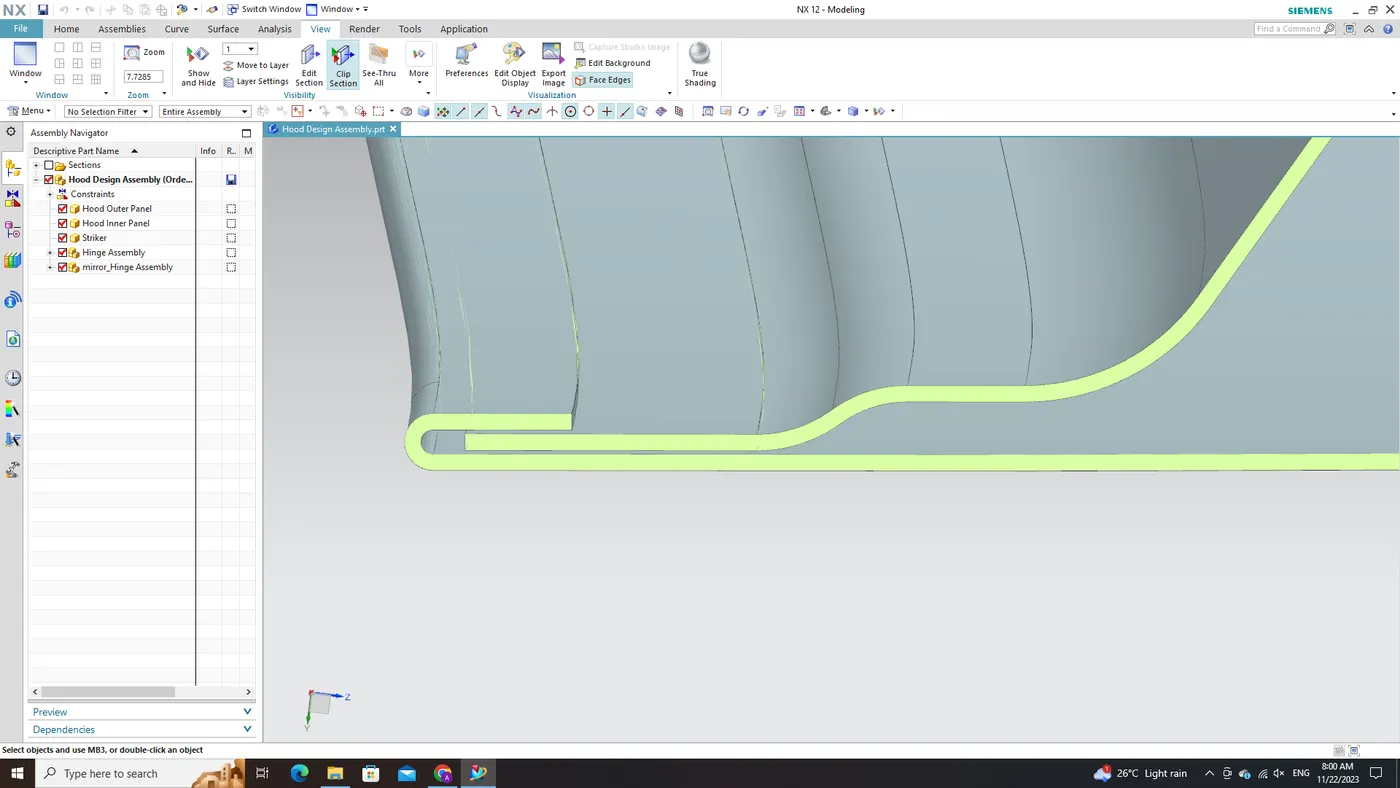
Section - View:
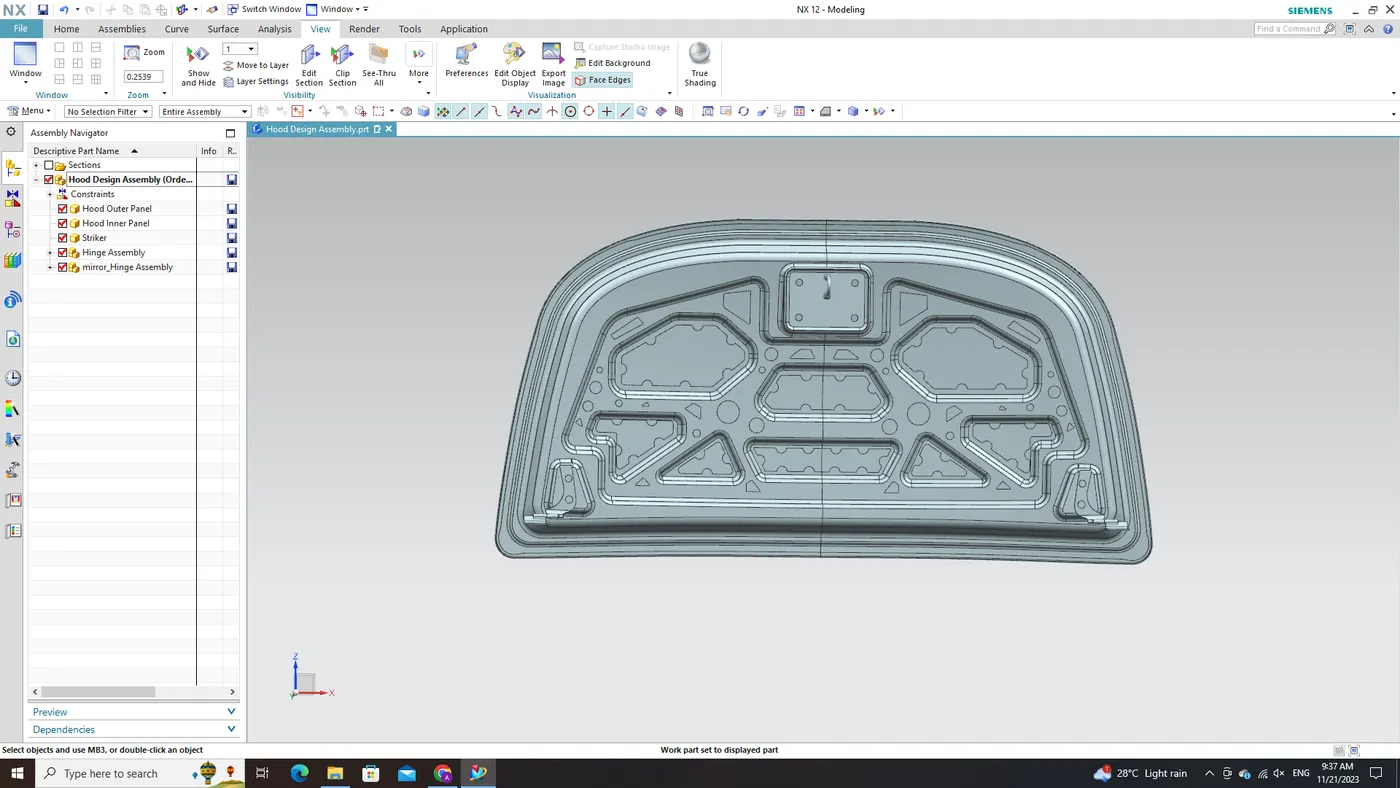
Final Design:
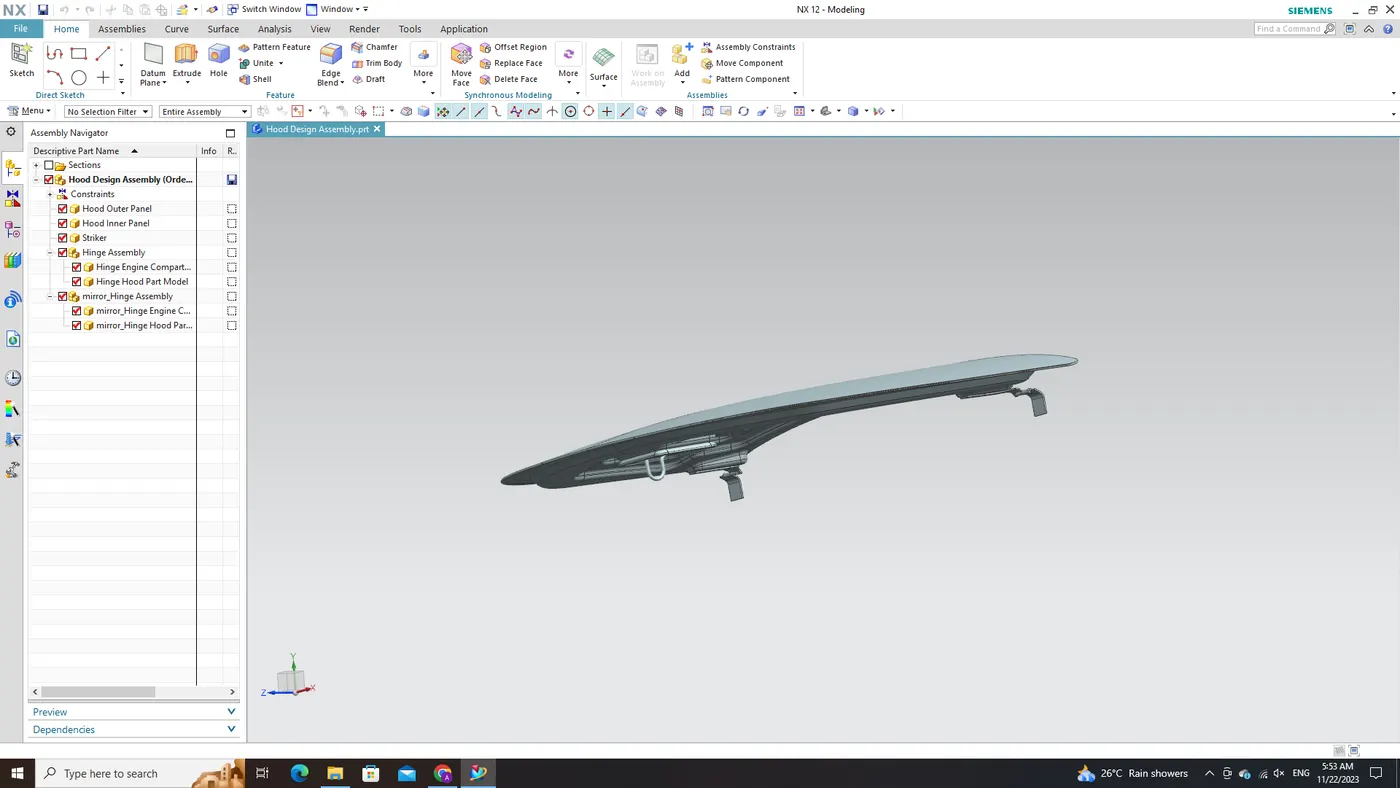
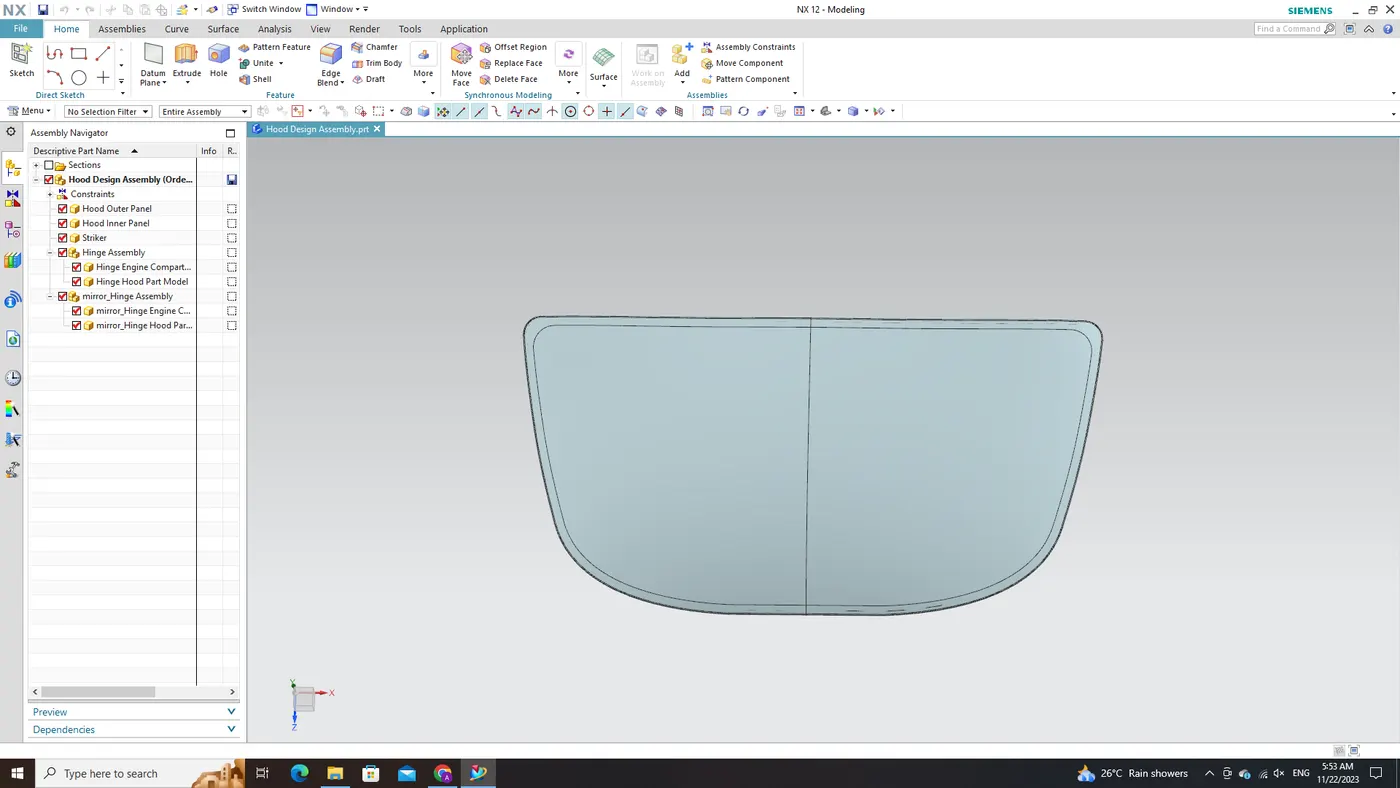
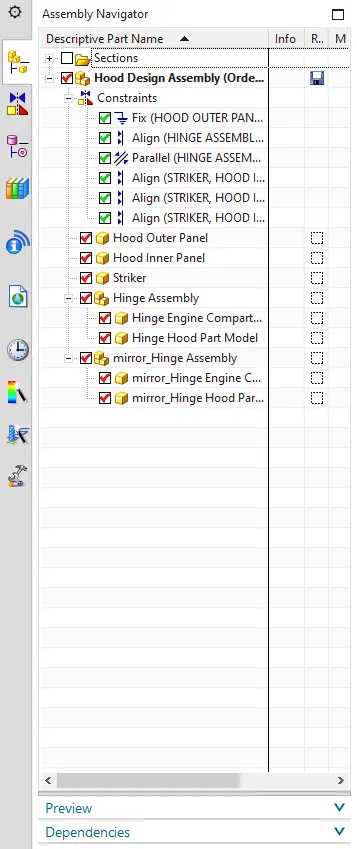
Tree Structure:
NOTE:
As the file size is greater than 20MB, I have uploaded in my google drive and here is the link for it.
https://drive.google.com/file/d/1sGvH_Ev71QW1C47s8SEx_3xdOPvOcyXA/view?usp=sharing