Hood design-Week 2
AIM: Design Hood Outer Panel, Inner Panel and the necessary reinforcements by following the Master Section mentioned with the Design parameters
Introduction
- Hood is the component which is placed over the engine compartment . The design of the hood is not only to enhance the look of the car , it also improves the aerodynamics of the car and the proper design which ensure the pedestrain safety .
- For Serviceability and maintanence of the car , hood is used to access the components like , engine , radiator , battery , etc. ,
- Over the period of time , designers has continously improving the hood design inorder to minimize the injuries of the pedestrain when he / she hits the hood while accident occurs . So it depends upon the material, design and structure of the hood .
Pedestrian Safety measures:
Design constraints to be followed: -
- Passenger safety
- Pedestrian safety
- Manufacturing feasibility
- Position the striker along the Trajectory of the centre of the hinge axis.
- Joining techniques of the inner and outer panel.
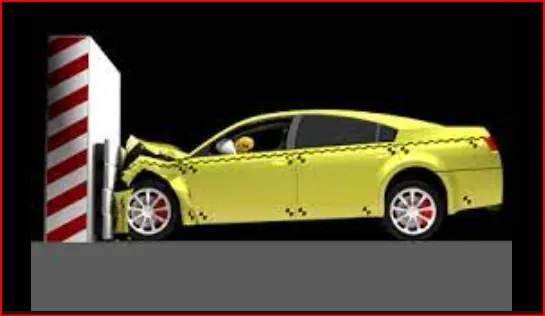
Passenger Safety Whenever a frontal crash occurs in the car, the first part affected will be the hood. So must be designed in such a way that it should not come from the body of the vehicle and must absorb the energy as far as possible ad divert the force towards the side panel of the car so that the amount of force which is sent to the cabin is lesser since the force lesser the passenger will experience less amount of force so that passenger safety is ensured.
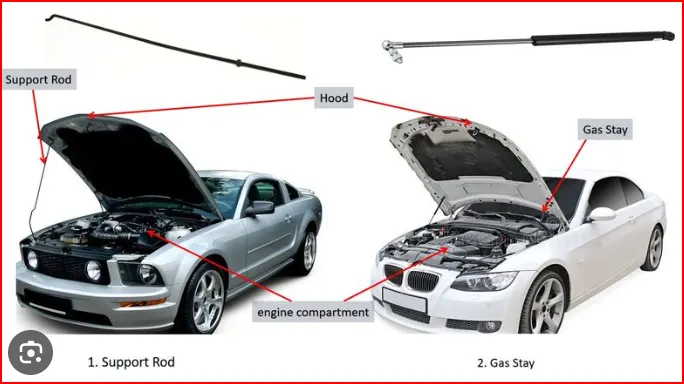
Types of hoods support
There are two types of support available for the hood support
Gas Stay
Gas Stay Gas stay is the device for supporting the engine hood of a motor vehicle in its open position using an actuator activated by gas. This is mainly used when the car hood is heavy. In this, no men's power is required. Spring stays are designed to be used on upward-lifting doors; once the door is open n slightly, the spring will push the entrance to the fully open position. Euro fits stock various size springs depending on the door size requirement.
Support Rod
A support rod is a device for supporting the engine hood of a car in its open position using a rod. This is mainly used where the car bonnet weight is negligible. We have to lift the hood ourselves and place the support provided either in the hood or the engine component.
Components of Hood
1.Outer Panel:
- We can also call it as cover of inner panel. It is the part, which gives luxurious look to the hood or bonnet. Outer & inner panel can not join by any welding process like spot welding or rivet, which spoil the outer look of a car. The outer panel is generally extracted model from the prototype design.
- The outer panel has the aesthetic look to it but on its own is very weak and not capable of handling force during impact. Most automobile hood outer panels are made of traditional steel plates, and their quality does not meet the needs of lightweight development. For this reason, it is necessary to obtain lightweight effects through the application of automotive aluminium sheets. The most widely used car aluminium alloys in the market are deformed aluminium alloys of 6111, 6016, and 5182. The production process of the outer panel of the hood mainly includes blanking, deep drawing, trimming, turnup, and side turnup. Among them, deep drawing is a key process to ensure the quality of parts.
2.Inner Panel:
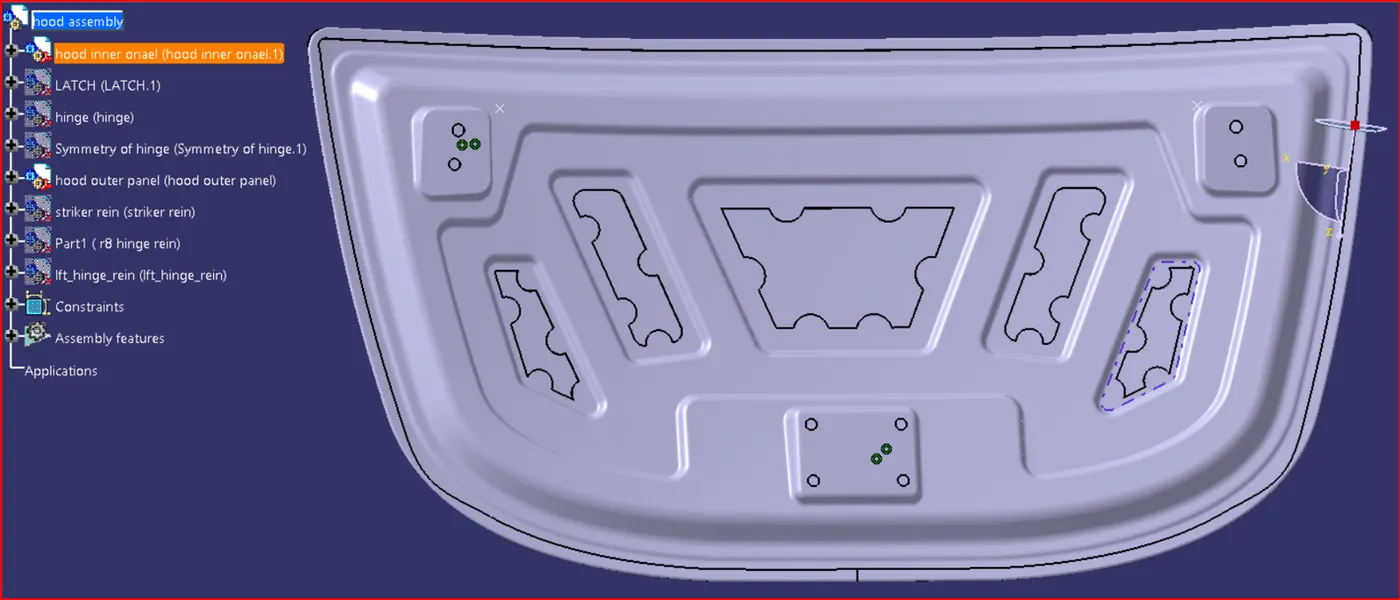
- In the inner panel only we can research & implement the safety of pedestrians & as well as the driver. In this panel only we can attach the reinforcement, embossed, mastic points etc.It is an object of the present invention to provide a hood inner panel capable of reduction of a reaction force of the hood inner panel even if a level of deformation of a hood of a vehicle increases, & ensuring a sufficient energy absorption capacity. The inner panel of the hood is not visible to the customer, but this is the engineering feature of the outer panel. The hood panel is required to have a high initial reaction force against the impact exerted on the hood to enhance the energy absorption capacity.
- The hood is further required to minimize a reduction of a reaction force by deformation in a collision. A hood inner panel according includes an inner panel main body forming part of a hood of a vehicle, a front bead provided on the inner panel main body and extending along a vehicle width direction, and a rear bead provided on the inner panel main body, located on a rear side of the front bead and extending along the vehicle width direction.
- The front bead includes a centre portion in the vehicle width direction that is curved toward the front of the vehicle and located in front of each end portion in the vehicle width direction, and the rear bead includes a centre portion in the vehicle width direction that is curved toward the back of the vehicle and located behind each end the portion in the vehicle width direction.
3.Hinge
- Hinge is a component that fixes the hood to the fenders of the car. The latch must be fixed perpendicular to the hinge axis so that the hood opens or closes properly.
- A hinge is a machine element that connects two bodies allowing angular movement about a fixed axis of rotation, all the while preventing translations and rotations on the remaining two axes. A hinge can be considered as a journal bearing with only one degree of freedom where a shaft is rotating in a hole.
- Hinges only allow one rotation, either yawing (the most common), pitching, or rolling.Hinges are a jointed and flexible device that is attached to any swinging part.Hinges are mechanical bearings that are used to connect two swinging objects or points and give them the freedom to move relative to each other. Hinges have limited movement, allowing the joint to move only at one angle and restricting the other movements of swinging parts.
4.Latch and striker
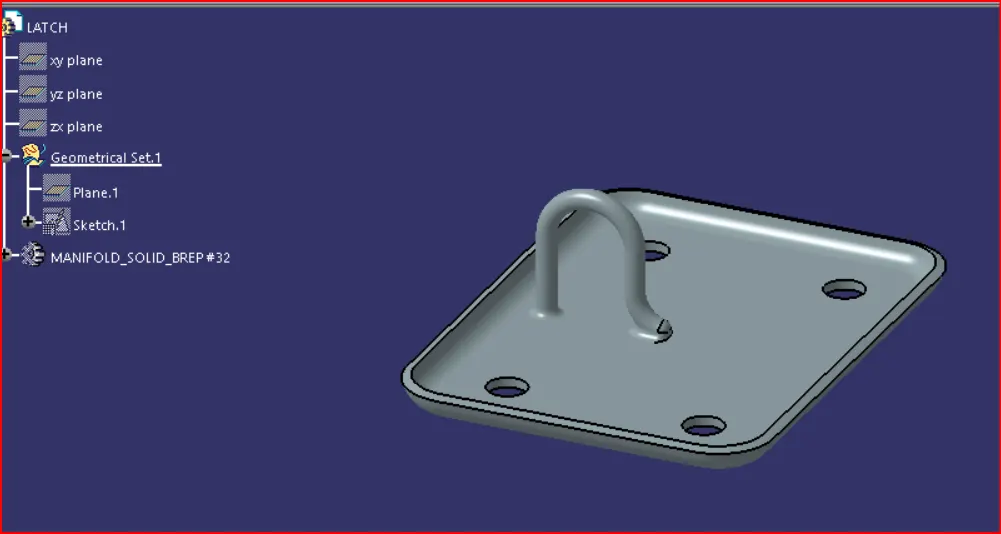
- Latch & striker is used for locking the hood with the car. It is usually placed on the space provided on the inner panel.
- The striker is attached to the bottom of the inner panel and hits the latch and lock with it when the hood is closed and to open it the lever is given by the driver side inside the cabin which is used to open the hood.
5.Reinforcement
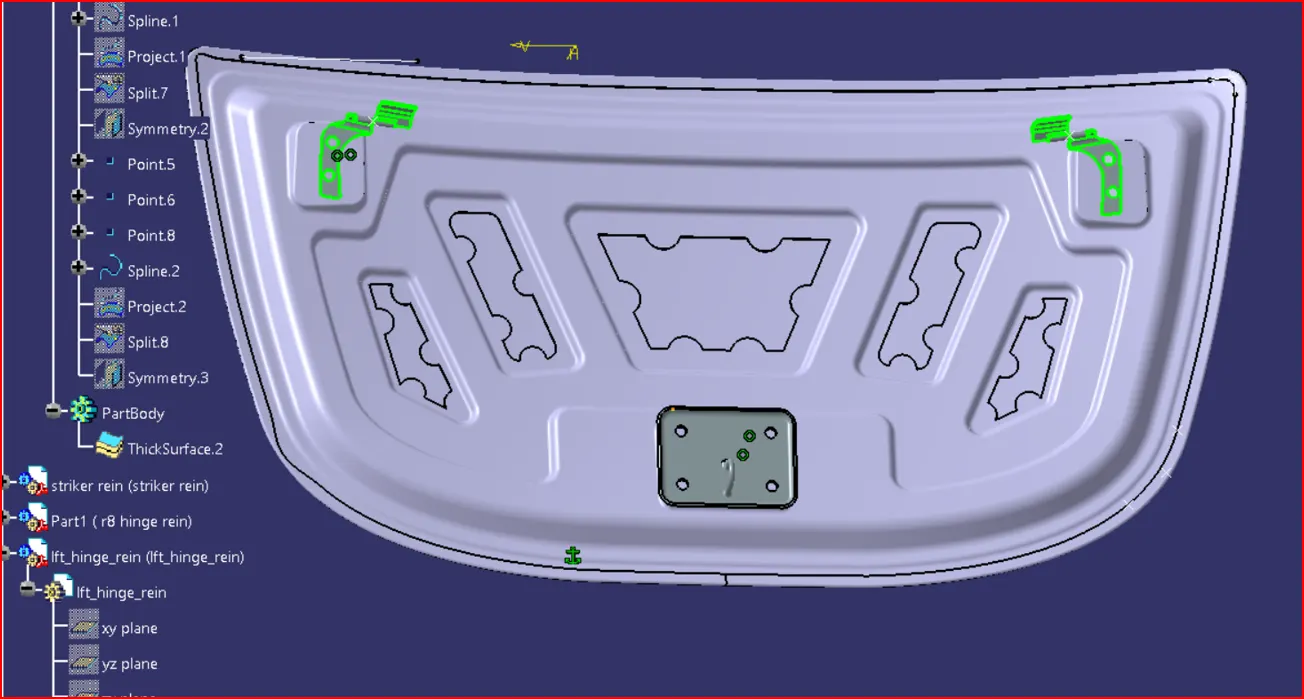
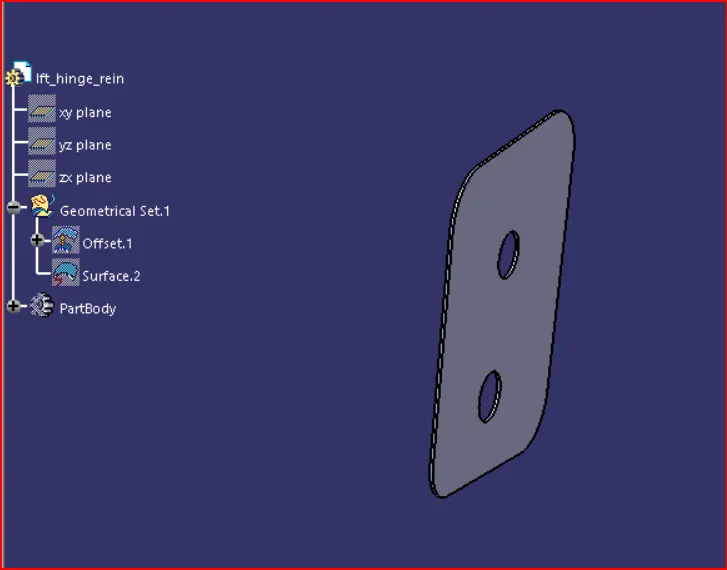
- It can be done by directly giving reinforcements so that more stress can act at the particular area in the inner panel , it may cause deformation of the inner panel at that particular region . So that the reinforcement comes in and placed between the striker and the hood , hinge and the hood . It can able to reduce to deformation and strengthening the inner panel at that particular region .
The process involved in designing hood as a sheet metal operations is
- Blanking
- Hemming
- Punch cutting or piercing
- Deep drawing
- Embossing
MASTER SECTION GIVEN TO DEVELOP THE PART:
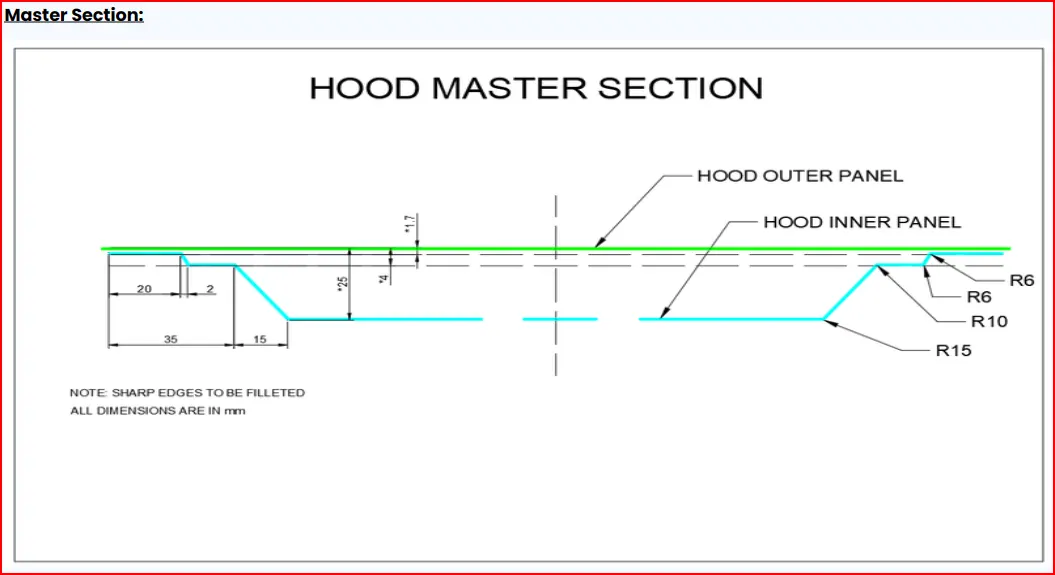
Hood Thickness Information
- Outer Panel Thickness = 0.75mm
- Inner Panel Thickness = 0.75mm
- Reinforcement Thickness = 1.5mm
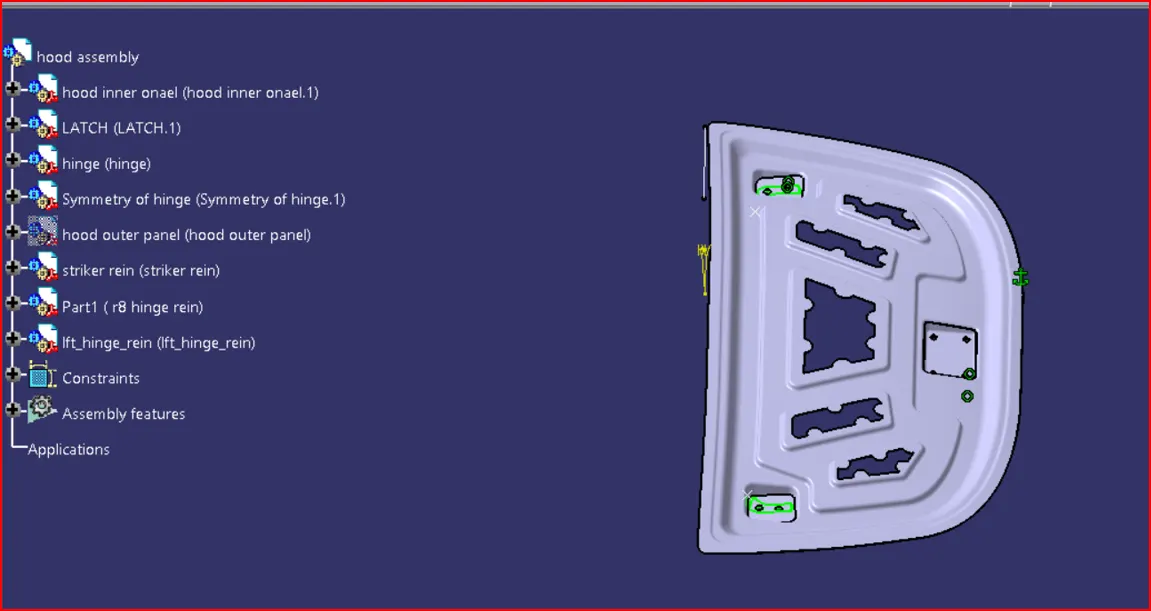
Screenshot of the hood design:
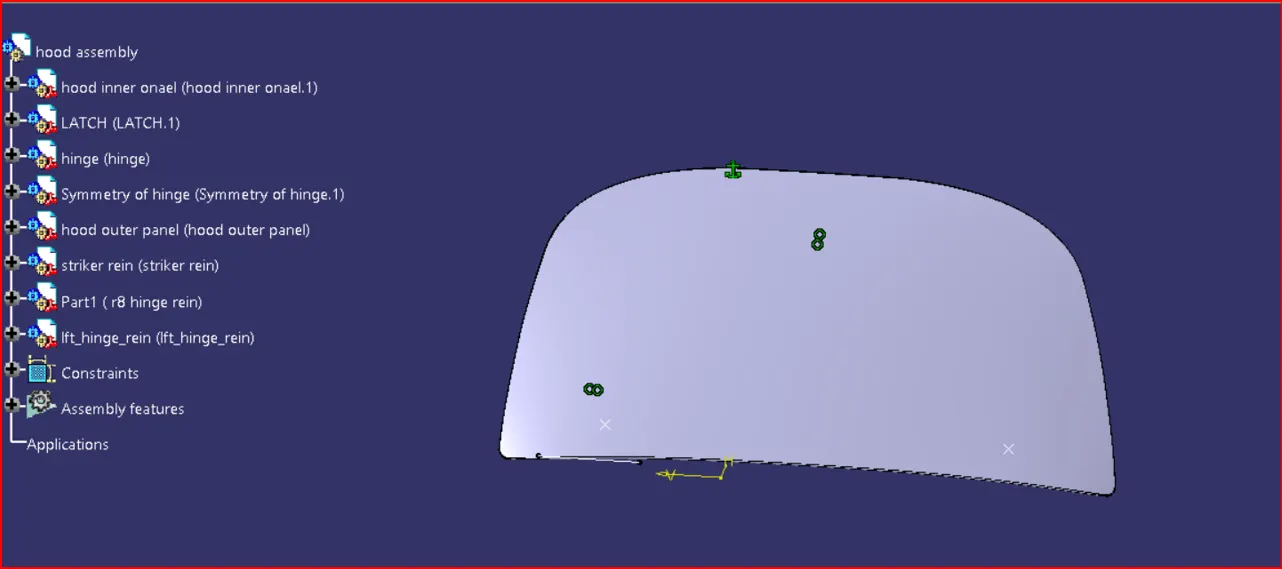
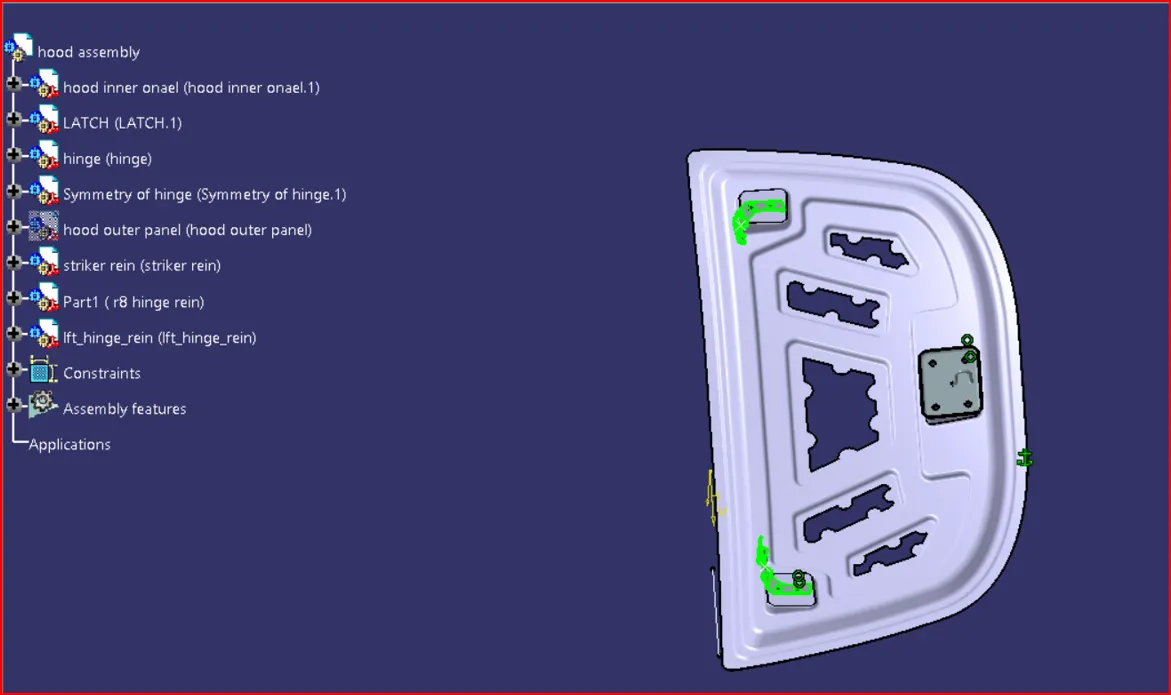
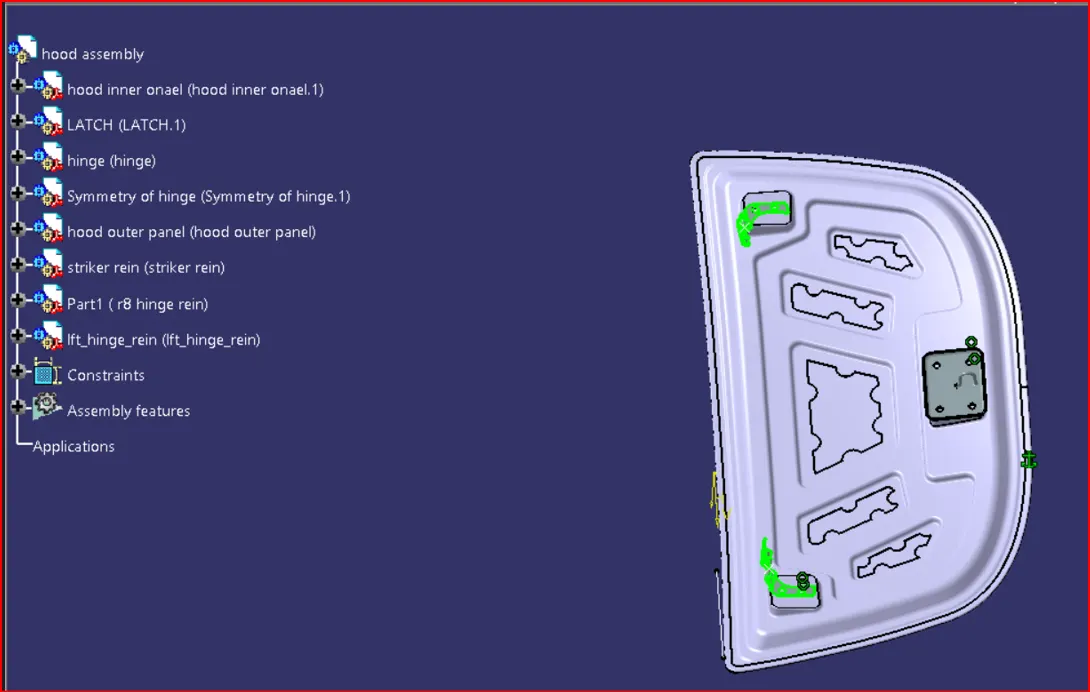
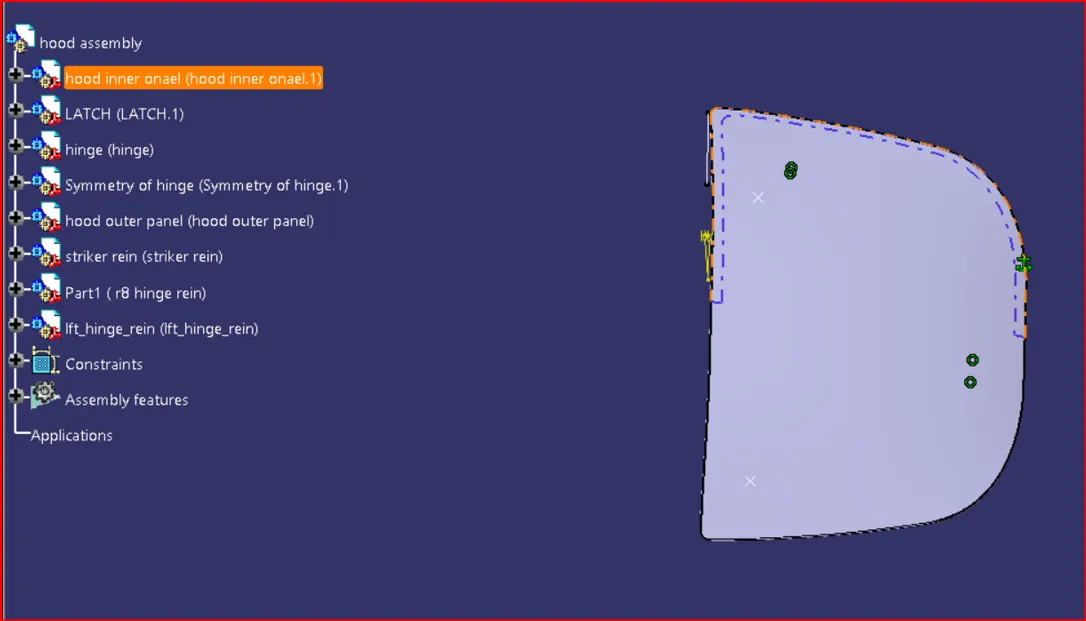
Conclusion:
The Design Hood Outer Panel, Inner Panel and the necessary reinforcements by following the Master Section mentioned with the Design parameters has been completed.Assembly and part files are attached along with this report.
Thank you.