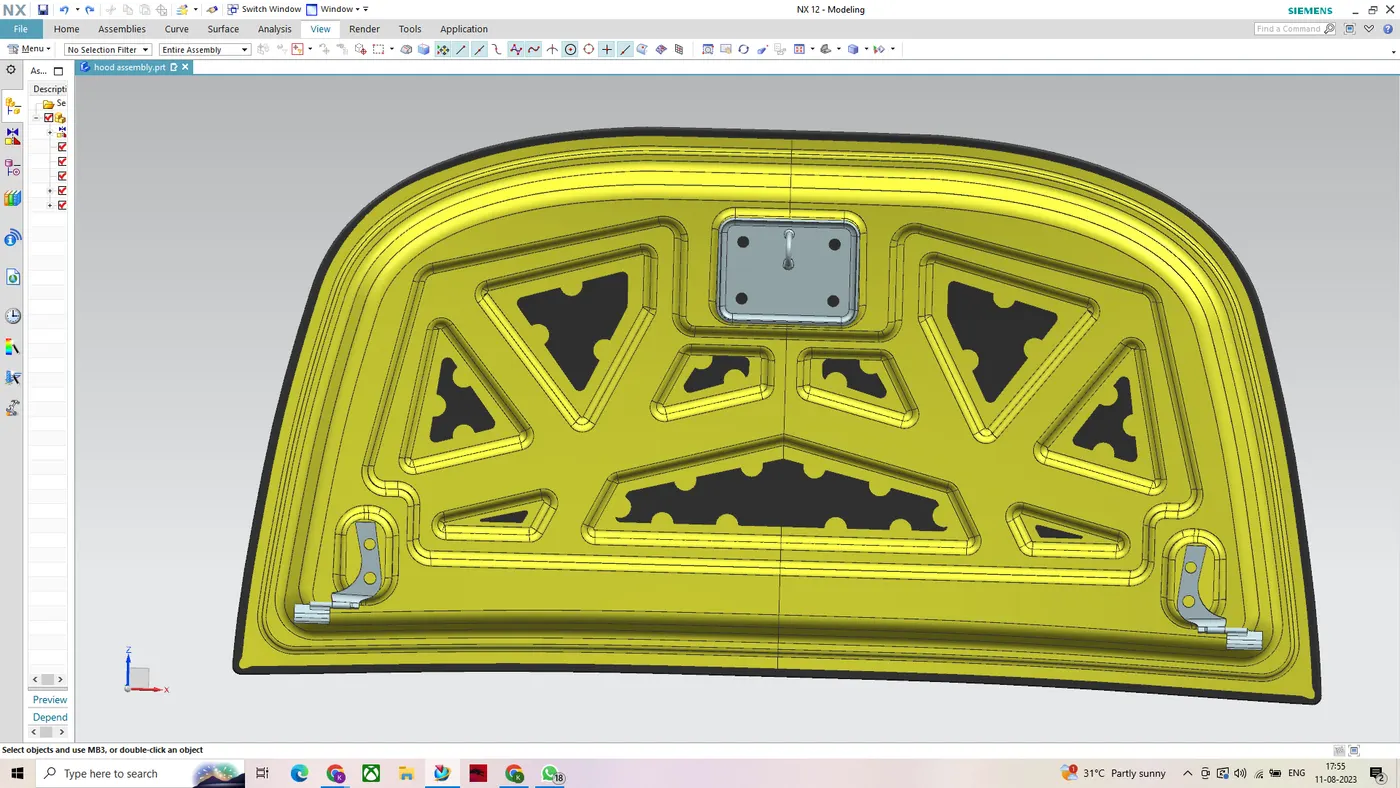
Hood design-Week 2
Hood design
AIM- To Design Hood Outer Panel, Inner Panel and the necessary reinforcements by following the Master Section mentioned while considering Design parameters .
PROCEEDURE
- Preparation of inner panel from the outer panel while considering given mastersection .
- Emboss been created on the inner panel of the hood using emboss command with the sketch.
- Removal of material from the emboss to decrease the stiffness of inner panel and applied mastic positions.
- Creating mounting postions for the additional components by setting latch trajectory.
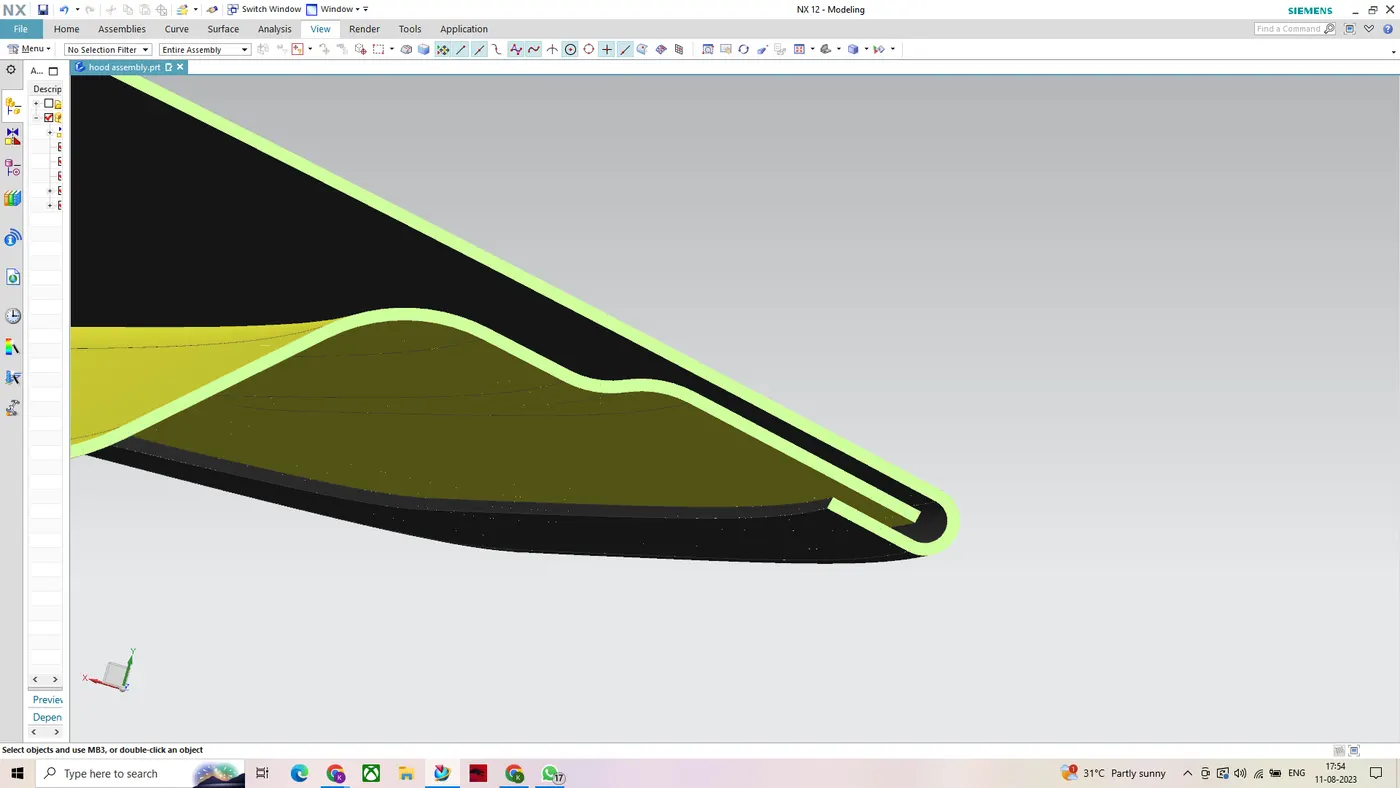
- Hemming the outer panel with inner panel of the hood .
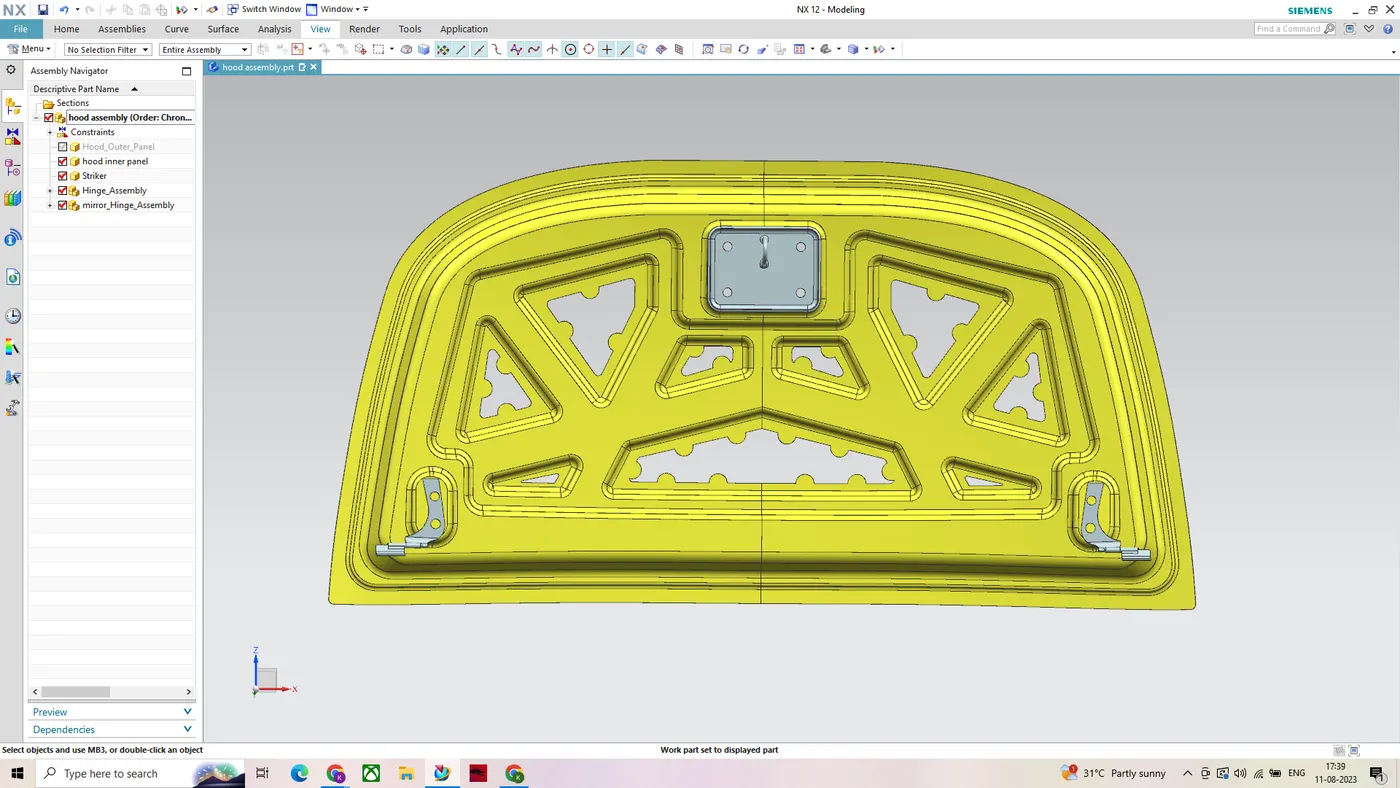
- Assembling all the components to the hood using assembly.
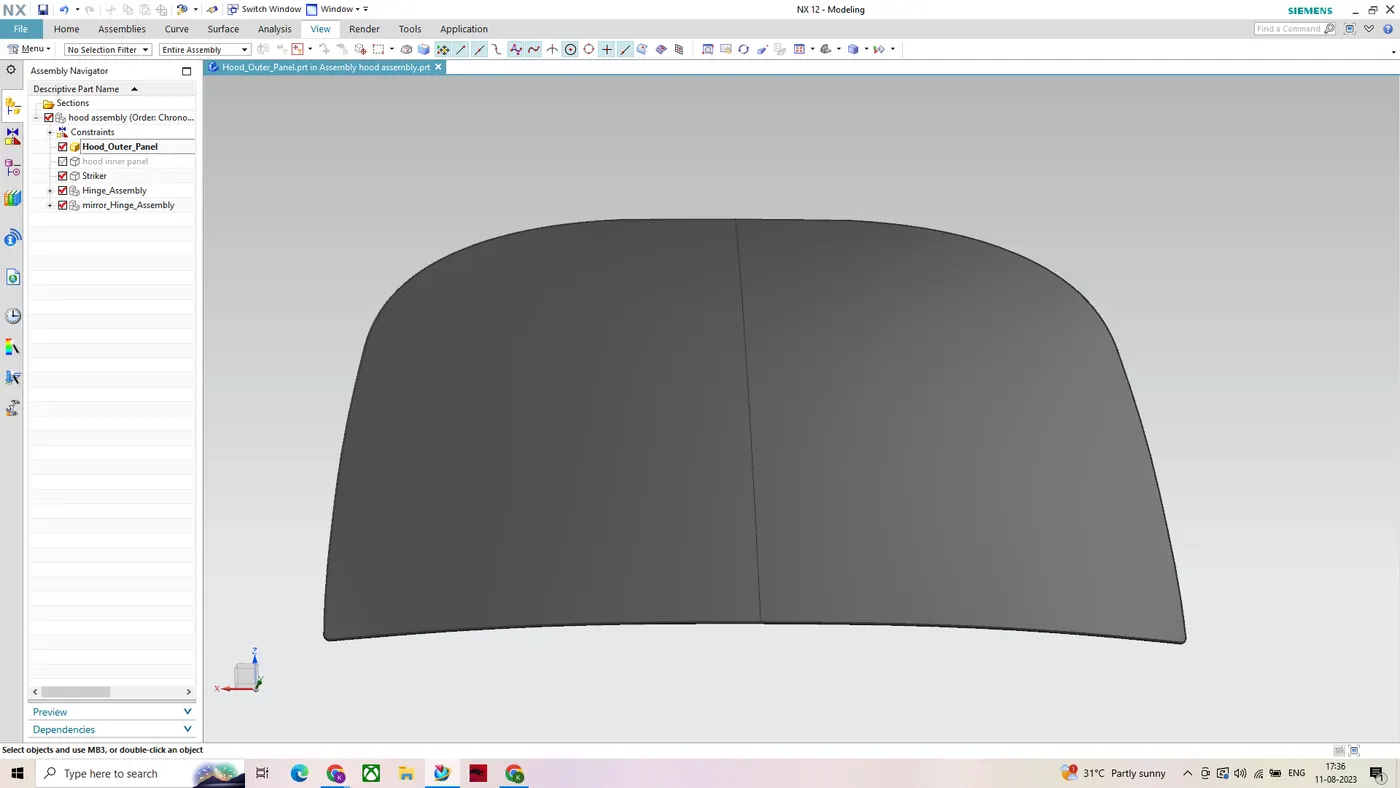
HOOD OUTER PANEL
A car hood, also known as a bonnet in some regions, is an essential component of an automobile that covers and protects the engine compartment. car hoods are a critical component of a vehicle's design, offering a blend of strength, safety, aesthetics, and functionality. Their materials and design are carefully chosen to meet the demands of modern vehicles while enhancing the driving experience and ensuring passenger safety. Car hoods are typically made from metal (such as steel or aluminum) or composite materials. They are designed to be lightweight yet sturdy, with the strength necessary to withstand wind forces, minor impacts, and the weight of other components placed on top.
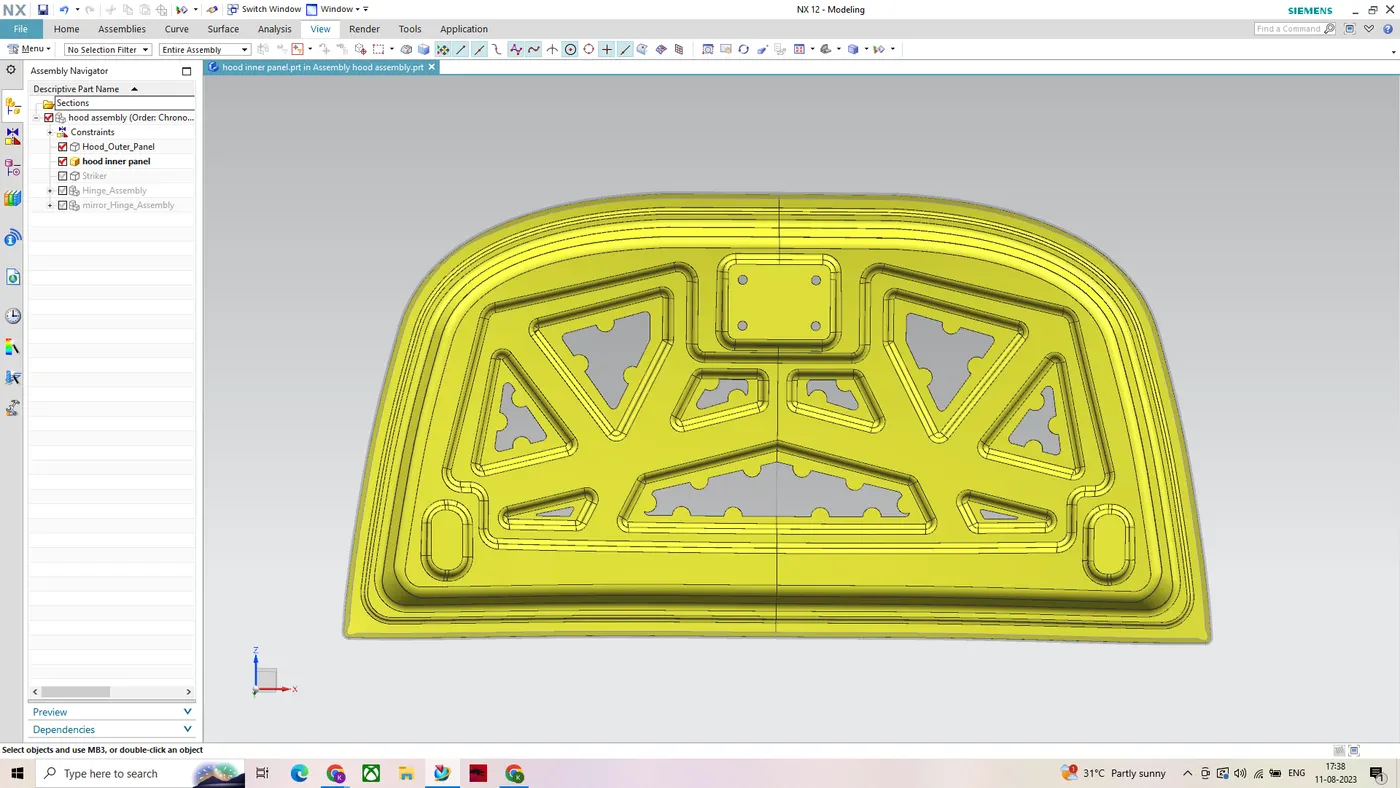
HOOD INNER PANEL
Hood inner panel reinforcements are structural components added to the inner surface of a vehicle's hood to enhance its strength, rigidity, and safety. These reinforcements are strategically placed to improve the overall performance and durability of the hood.Components such as hinges, latches, and struts are typically attached to these reinforcements.
Emboss Definitions
Embossing certain areas of the inner panel can provide additional structural strength and rigidity to the hood, contributing to its overall durability. These were designed in such a way that the entire collision force been distributed outside of the panel resulting in deformation.
Mastic locations
mastic is often used in various locations on a hood inner panel to achieve different objectives related to sealing, noise reduction, and structural integrity. This helps create a watertight and airtight seal, preventing water, dust, and air from entering the engine compartment or the vehicle interior. Mastic might be applied to specific areas of the hood inner panel to reduce noise transmission. This is especially important in areas where vibrations could lead to noise generation.
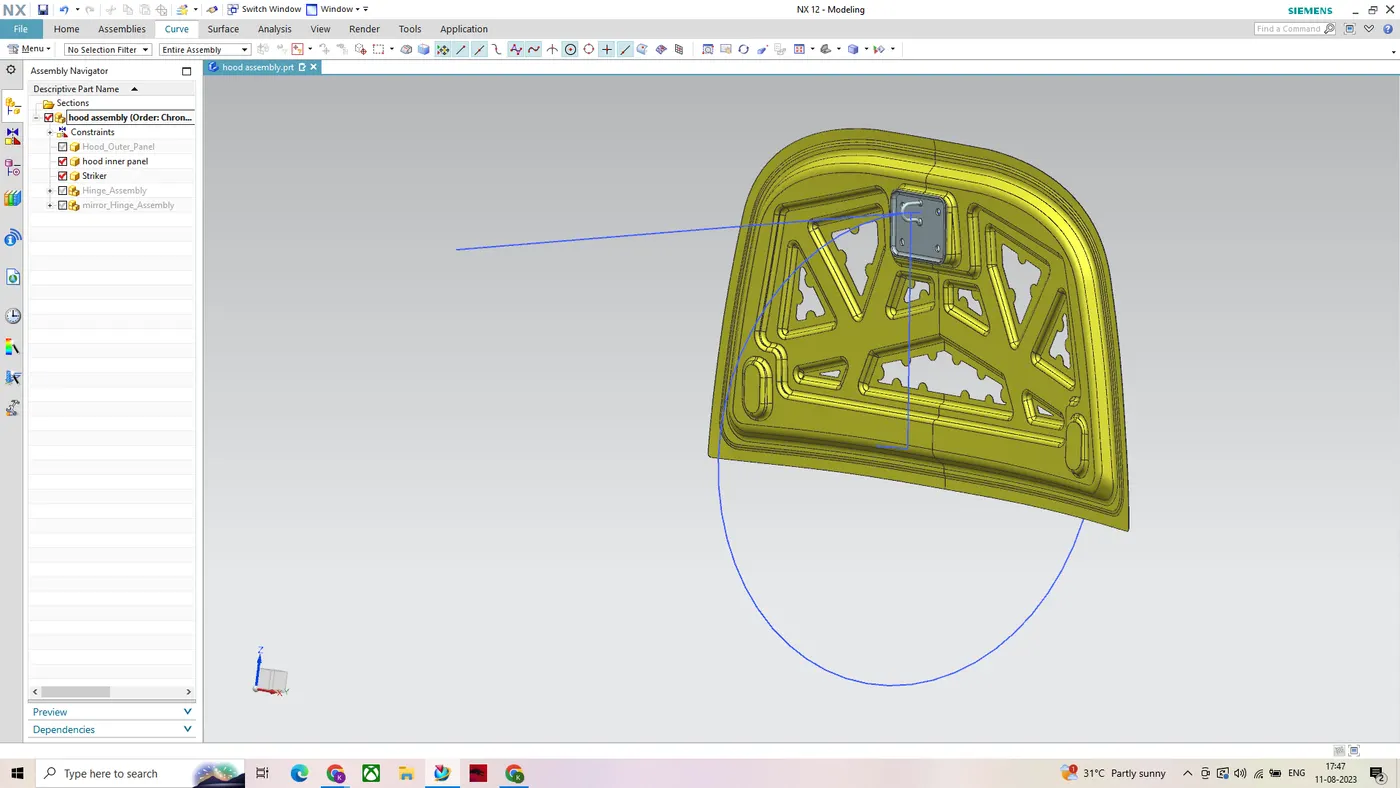
Latch trajectory
Latch trajectory refers to the precise route and movement taken by a latch mechanism during the process of engaging or disengaging a locking component. This action occurs when closing or opening a vehicle's hood and is of paramount importance for ensuring the effective operation of locking mechanisms. The trajectory defines how the latch makes contact with the striker, resulting in a secure and steadfast hold on the hood.
Hinges: Hinges allow the hood to pivot smoothly when opening or closing. They are attached to both the hood and the vehicle's body. latch and striker with the hindges assembled on the inner panel considering design rules.
HEMMING
Hemming is a versatile and effective method for joining automotive panels, and it offers several benefits when used in the assembly of hood outer and inner panels. This process involves folding and joining the edges of two metal sheets to create a stronger and more rigid connection. It can simplify the joining process by eliminating the need for additional fasteners or adhesives along the edges.
HOOD ASSEMBLY