Hood design-Week 2
A car hood, also known as a bonnet, is the hinged cover that protects the engine compartment of a vehicle. It is typically located at the front of the vehicle and can be opened to allow access to the engine for maintenance or repairs. The design and construction of a car hood take into consideration various factors to ensure functionality, safety, and aesthetics.
Components of a Car Hood:
1) Outer Panel:
The hood's outer panel is the visible external surface of the hood assembly. It is the panel that faces the front of the vehicle and is exposed to environmental elements, such as sunlight, rain, and debris. The design considerations for the hood outer panel include:
- Aesthetic Appeal: The outer panel plays a significant role in defining the vehicle's exterior appearance. It needs to be designed to match the overall styling and design language of the vehicle, ensuring a cohesive and visually appealing look.
- Aerodynamics: The shape and contours of the outer panel can impact the vehicle's aerodynamic performance.
- Structural Integrity: The outer panel needs to have sufficient strength and rigidity to withstand various loads and stresses encountered during vehicle operation.
Typically, a thickness of 0.65-0.75mm sheet is used to manufacture Outer Panel.

2) Inner Panel :
The hood inner panel is the panel located on the underside of the hood assembly, facing the engine compartment. It provides structural support, houses various components, and contributes to safety and functional aspects. The Inner Panel is a big reinforcement for hood's Outer Panel. The design considerations for the hood inner panel include:
- Structural Support: The inner panel needs to provide structural integrity and support to the overall hood assembly. It should be designed to resist bending, twisting, and other deformations, ensuring that the hood maintains its shape and alignment under different driving conditions.
- Component Integration: The inner panel often incorporates various components, such as hinges, latches, insulation, and reinforcement structures. The design should accommodate these components and ensure their proper installation, functionality, and serviceability.
- Heat and Noise Insulation: The inner panel can incorporate insulation materials to minimize heat transfer from the engine compartment to the vehicle cabin.
- Safety Considerations: The inner panel should contribute to the safety of the vehicle by providing additional protection to the engine compartment and occupants. Design considerations may include crashworthiness, pedestrian safety, and proper integration with other safety systems, such as hood release mechanisms and hood prop supports.
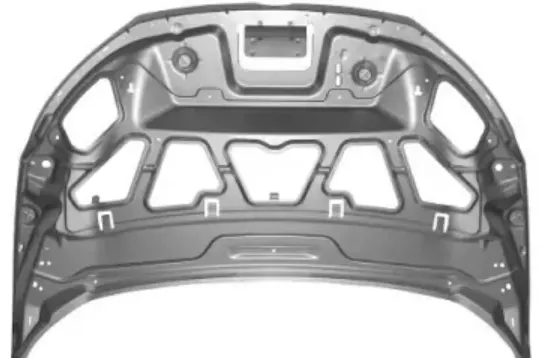
Typically, a thickness of 0.65-0.75mm sheet is used to manufacture Inner Panel.
3) Hood Stay :
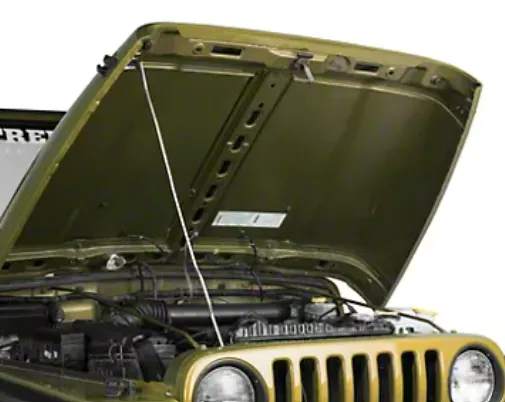
The hood stay rod is a mechanical support mechanism that keeps the hood open. It is typically attached to the hood and can be inserted into a designated hole on the vehicle's. Bendings are provided in rod to make it more rigid. The bending deflection should be less than 35mm so that it can withstand the load. Grommet is used to hold the rod during hood close condition. Typically, the rod is mounted on opposite side of battery so to avoid collsion during battery interchangeability.
4) Gas Stay :
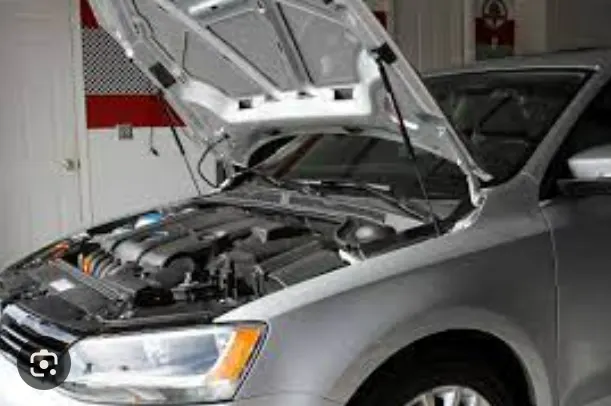
Gas stays, also known as gas struts or hood lift supports, are hydraulic or pneumatic devices that assist in holding the hood open. They counterbalance the weight of the hood, making it easier to lift and keep it in the open position. The selection of Gas Stay depends upon the weight of hood and its accessibility zone. Stud-Ball are used to mount the gas stay. Additional bracket is also added to provide necessary reinforcemnts. Gas Stay length can be determined by displacement of mounting points while opening the hood.
5) Striker Lock :
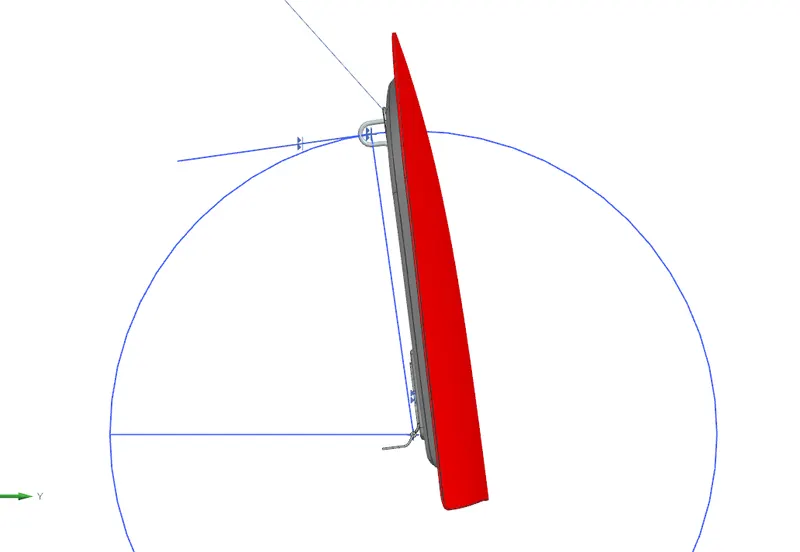
The striker lock is a component located at the front end of the hood, which latches onto the corresponding latch mechanism on the vehicle's body. It secures the hood in the closed position and prevents it from opening unintentionally while driving. The positioning of the striker should be such that it should be always perpendicular to its trajectory curvature. Also, it should be mounted at flat surface. The striker trajectory can be draw by using hinge axis as center.
6) Hinges:
Hinges are the mechanical components that allow the hood to pivot open and closed. They are typically located on both sides of the hood and are designed to provide smooth and controlled movement. They should always be mounted at flat surfaces.
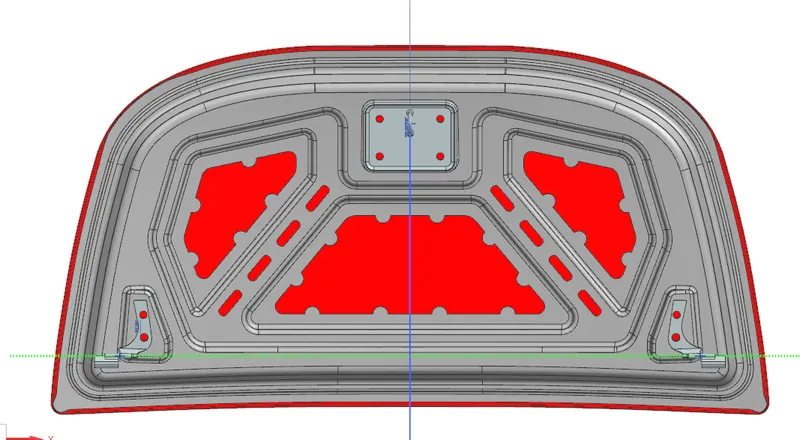
7) Mastic pad :
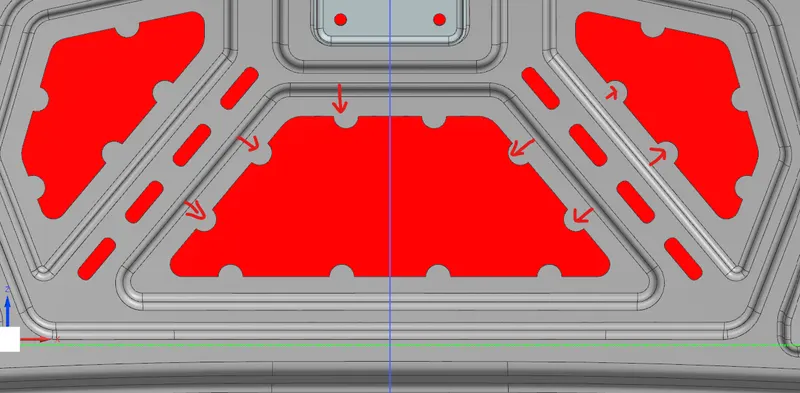
Mastic data refers to the application of adhesive foam pads, commonly known as mastic, to the underside of the hood. These pads serve as sound deadeners and vibration dampeners, reducing noise and minimizing vibrations produced by the engine. Mastic data improves the overall comfort and refinement of the vehicle's cabin by reducing NVH levels. It is applied between Outer & Inner Panel. The distance betweem them should be around 5mm. Mastic points should be uniformly distributed. Mastic points can be easily determind my semi-circle create din inner panel.
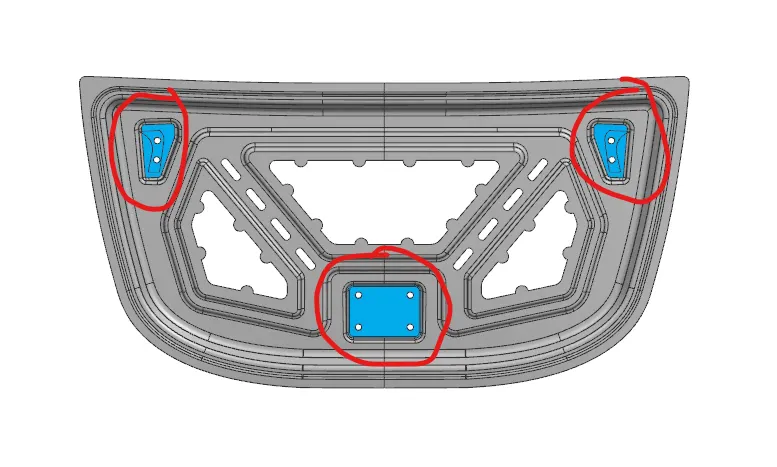
8)Reinforcements :
Reinforcements are structural components integrated into the hood design to enhance its strength and rigidity. They are strategically placed to distribute loads and prevent deformation or flexing of the hood under normal driving conditions or in the event of a collision. The thickness of reinforcement plated depends upon point of application. Typically its between 1-1.5mm.
Hemming :
Hemming is a sheet metal forming process used in the automotive industry to create a secure and visually appealing joint between two panels. It involves folding and overlapping the edge of one panel over the edge of another panel and then securing them together. Hemming is commonly used in the construction of car doors, hoods, trunks, and other body panels. The process provides several advantages, such as increased strength, improved sealing, and enhanced aesthetics.
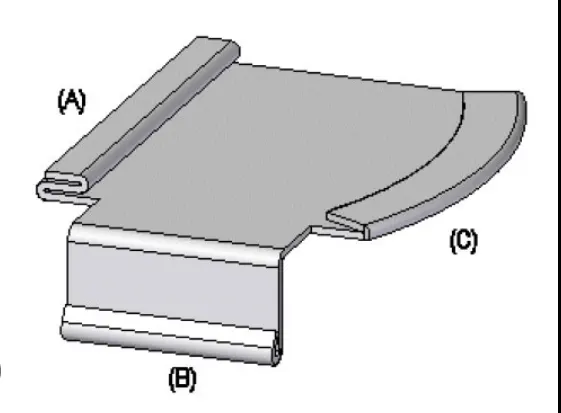
Types of Hem
-
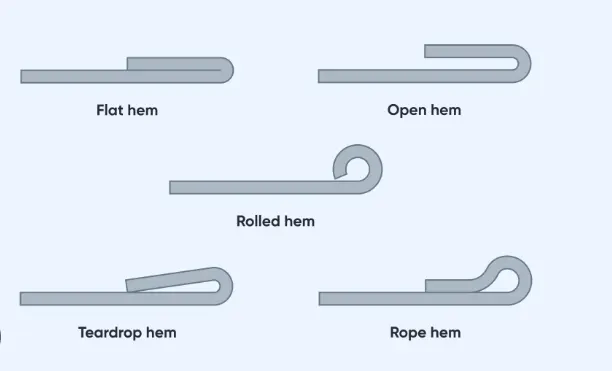
Open Hem: In an open hem, the edge of one panel is folded over the edge of another panel, leaving the hemmed area visible from the outside. This type of hem is often used for aesthetic purposes or when access to the hemmed area is required. The minimum flange length for an open hem is typically around (4x)(Thickness of the sheet), and the inner radius is usually (0.5x) of material thickness.
-
Closed Hem: In a closed hem, the edge of one panel is folded over the edge of another panel, creating a completely enclosed hem. This type of hem provides enhanced strength and improved sealing. The minimum flange length for hem is typically around (4x)(Thickness of sheet), there is no radius the flange overlaps and touches the sheet.
-
Tear-Drop Hem: A tear-drop hem have hemmed area has a tear-drop shape. It offers similar benefits of strength and sealing as a closed hem but with a more rounded and aesthetically pleasing appearance. The minimum flange length for hem is typically around (4x)(Thickness of sheet), and the inner radius is usually (0.5x) of material thickness. There is an opening of mininmum (025x) of thickness.
-
Rolled Hem: A rolled hem involves gradually bending the edge of one panel over the edge of another panel in a rolling motion. This process creates a smooth, rounded joint without any visible edges. Rolled hems are commonly used in applications where a seamless and clean appearance is desired. There is no flange in rolled hem & its outer dia is (2x) of material thickness.
Sheet Metal Embossing:
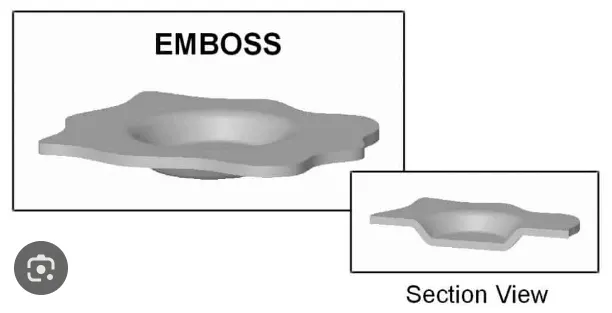
Sheet metal embossing is a manufacturing process that involves creating raised or recessed patterns on metal surfaces. It can be used to improve the rigidity, strength, and visual appearance of automotive components, including hoods, doors, and fenders. The embossed patterns can be customized to match the design language of the vehicle, providing a distinctive and appealing look.
Design Considerations In Hood Designing :
1) NVH :
Noise, Vibration & Harness should be optimized for any vehicle component. Mastic Pads, Gormmet, Rigid Mounts, Embossing etc. also used to provide rigidity to components and improve its NVH Level.
2) Gas/Rod Stay :
The length should be such that the hood does not collide with person while exaimining. The Gas Stay should be used when the load is above 8.5kg. It should be mounted opposite side of the battery to avoid hinderance.
3) Latch/Striker :
Both should be mounted on flat surface for proper contact support. The positioning of the striker should be such that it should be always perpendicular to its trajectory curvature. Also, it should be mounted at flat surface. The striker trajectory can be draw by using the hinge axis as center. Proper reinforcements should be used for Lath & Striker.
4) Deformable Brackets:
The brackets should be design such that is gets deformed under impact load like pedestrian collision.
5) Euro-Ncap Regulations:
Euro NCAP primarily evaluates vehicle safety by conducting a series of tests and assessments that cover various aspects, including adult occupant protection, child occupant protection, pedestrian protection, and safety assist systems.The regulations consists of Pedestrian safety guidelines. The head impact zone for child and adult is designed such that it get deformed nad absorbs energy during colloison.
6) Hemming:
There should not be any sharp edges on any part of hood. Hemming used to remove sharp corners and provide fixation between outer and inner plate. A 0.2mm clearance should be kept between plates for hemming. Relief should be given at corners.