Hood design-Week 2
Aim: To design a Hood outer panel, inner panel and the necessary reinforcements by the given Master section and design parameters.
GIVEN MASTER SECTION:
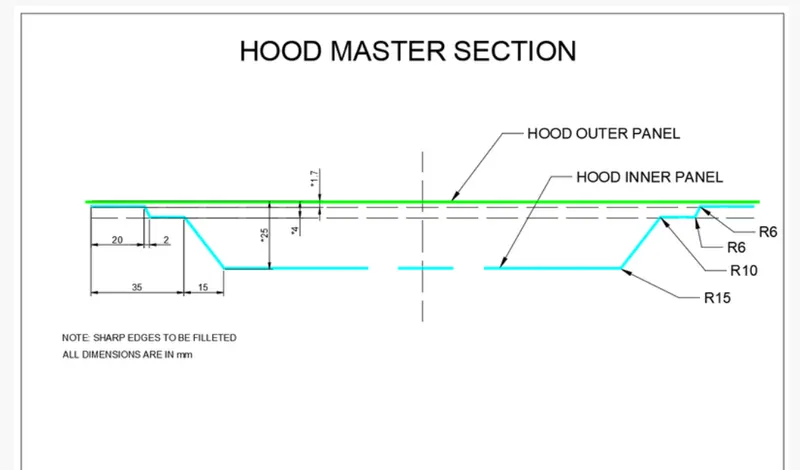
Design parameters:
Hood Thickness Information
Outer Panel Thickness = 0.75mm
Inner Panel Thickness = 0.75mm
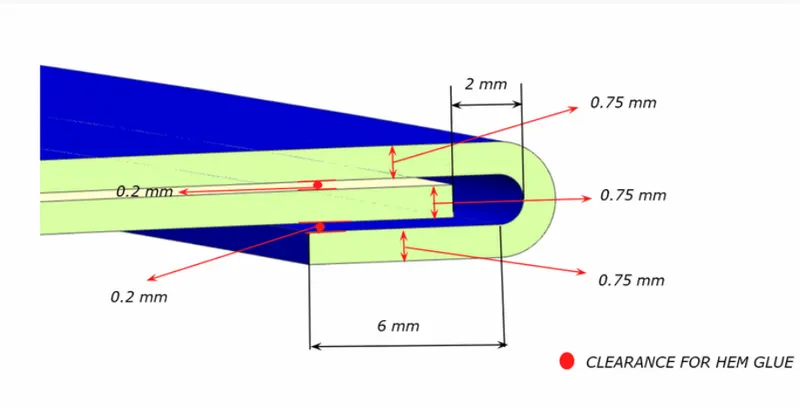
Design considerations:-
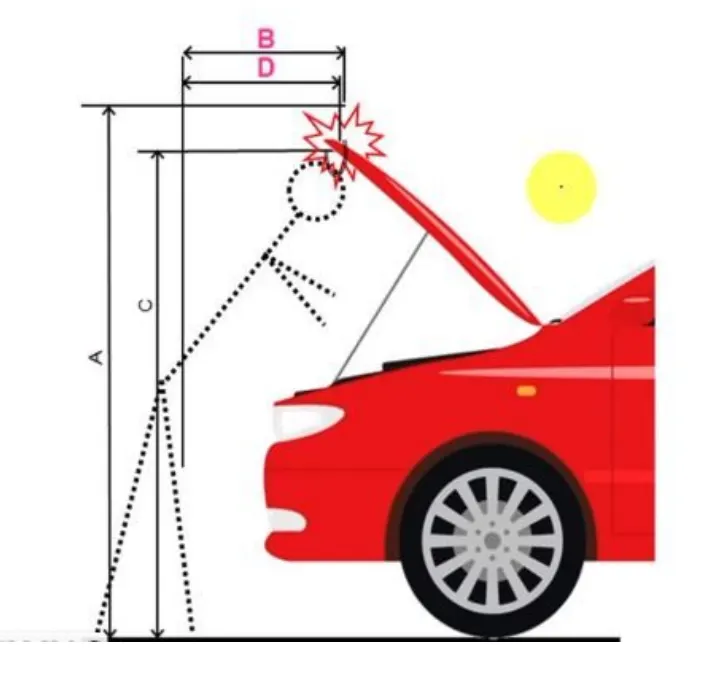
The most important aspect of automobile design is human comfort. It is a strategy for safeguarding and safeguarding space for the human user as well as essential vehicle components. Throughout this process, all safety regulations are adhered to. The clearance of the hood, the angle of the hood opening, and the position of the support rod or gas stay are all ergonomic considerations.
The angle of the hood opening varies by country or region. It is determined by the average height of people living in that nation.
Safety requirements:-
Frontal collision is the most significant safety requirement.
It ought to endure high impact powers as well as it ought to redirect the powers in the outward course so the power of crash powers would be decreased to the lodge side of the vehicle.

Car Hood has the following components:
- Outer Panel
- Inner Panel
- Striker and Hinge asm Reinforcement
- Latch Trajectory
- Mastic's
1. Hood outer panel:
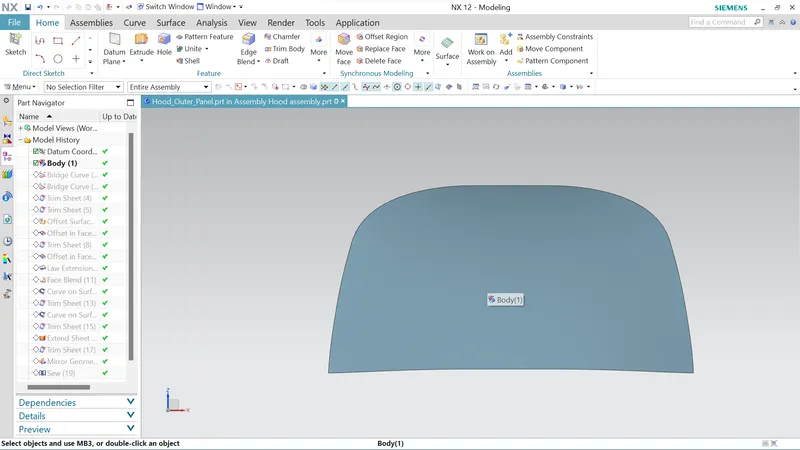
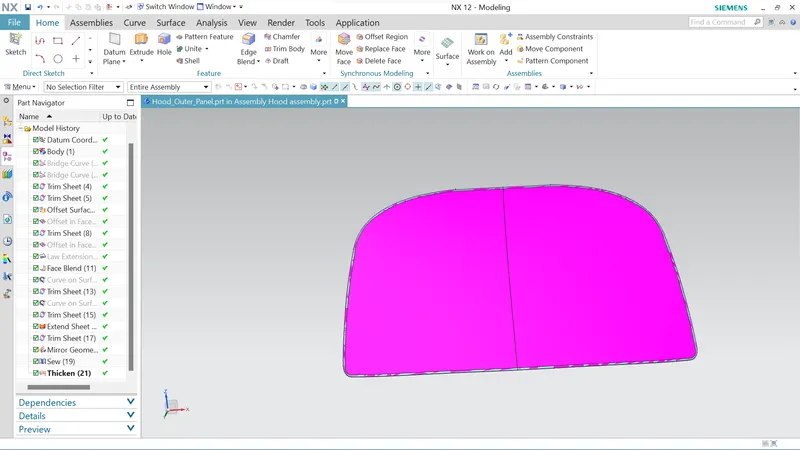
A car's exterior panels are what makes it look good. It is the styling group that gives the skin to the external board. The shape, position and size of the hood ought to fulfil the security standards. So while planning the hood we ought to give more significance to walker security. Hemming is used to join the inner panel to the outer panel. As a result, the hemming operation necessitates the provision of the necessary hemming flange and reliefs. In addition, we offer vibration-reducing mastic sealants between the inner panel and the outer panel.
Initial
Final
2. Hood inner panel:
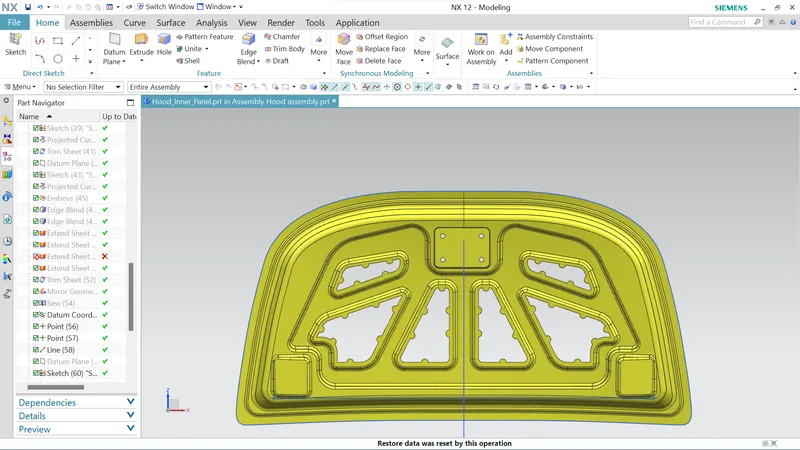
The inward board is the part that invigorates inflexibility to the external board. The initial emboss's shape and size are represented by the master section. After securing the location, we provide the latch and hinge components emboss.
3. Striker and Hinge asm Reinforcement:
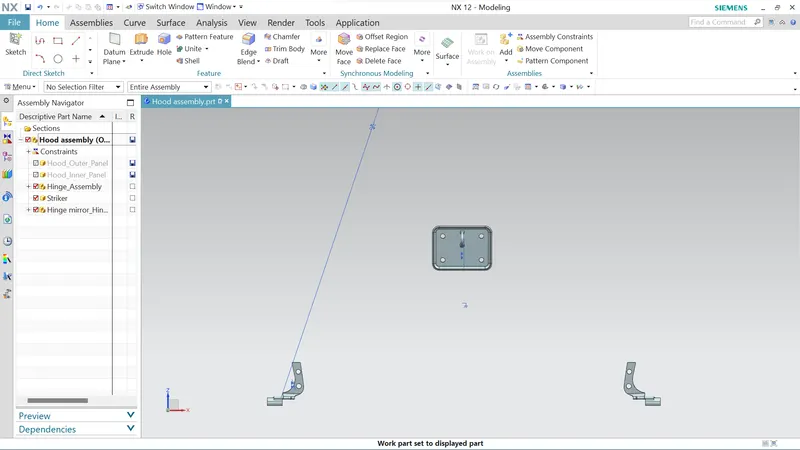
Fortifications are given by the plan prerequisites. It is primarily provided at the latch and hinge regions to boost local strength. The value of reinforcements varies depending on cost and need, typically having a thicker layer than inner panels. The thickness of the hinge and latch reinforcements is 1.5 millimetres, as required by the design here.
4. Latch Trajectory:
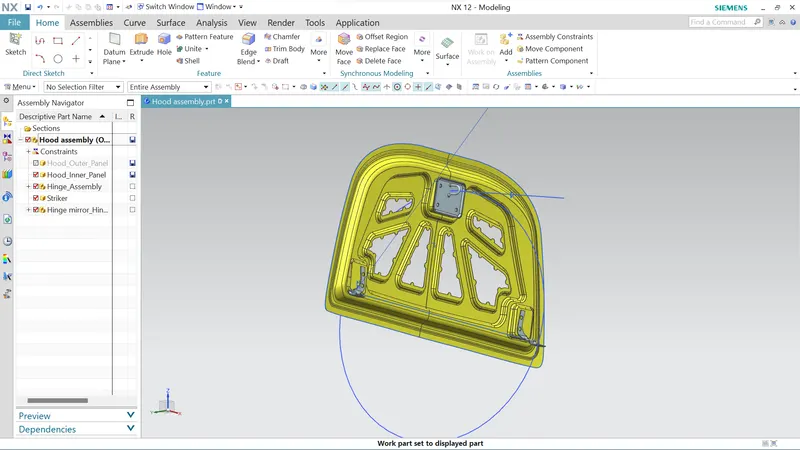
The latch trajectory is given by the circle drawn from the hinge axis point. The hinge axis point is the centre point of the hinge axis. First, we can fix either the latch or the hinge. If we have fixed the hinge position, we should plot the Trajectory circle for the latch. For proper mating conditions, the striker axis through the tip of the striker should be tangential to the latch trajectory.
Mastic Data
Hoods typically have a large surface area, so hemming is only possible through their boundary. We are unable to use any other methods of joining, such as welding, riveting, etc., because these methods leave marks on the outer panel that detract from its aesthetic appeal. As a result, the inner surfaces of the outer panel and inner panel are adhered to with mastic sealants. Mastic sealants are a type of rubber-like elastic compound. It is applied between the internal and external boards at determined spots. Each mastic sealant spot affects an 80-millimetre-diameter circular area. Subsequently, the mastic focuses are organized so that it covers the regions from the sewing which are more helpless against vibration.
Sheet Metal Operations :
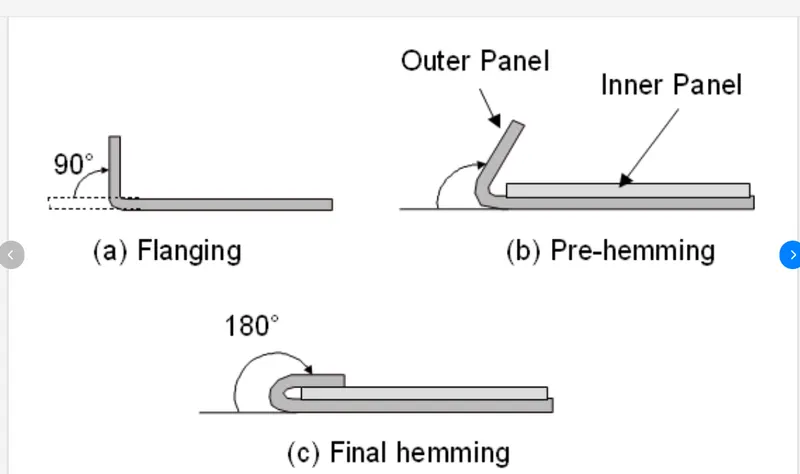
1. Hemming :
Hemming is a fabric finishing technique that involves folding and sewing the raw edge of a fabric to create a clean, finished appearance.
The hemming process typically follows these steps:
-
Marking: The desired hem length is marked on the sheet.
-
Folding: The fabric is folded along the marked line, aligning the raw edge with the fold. The width of the hem depends on the desired finished look and the sheet thickness.
-
Pressing: The folded hem is pressed with an iron to create a crisp crease, helping to keep the fold in place during sewing.
-
Securing: The folded hem is sewn in place.
2 Deep Drawing :
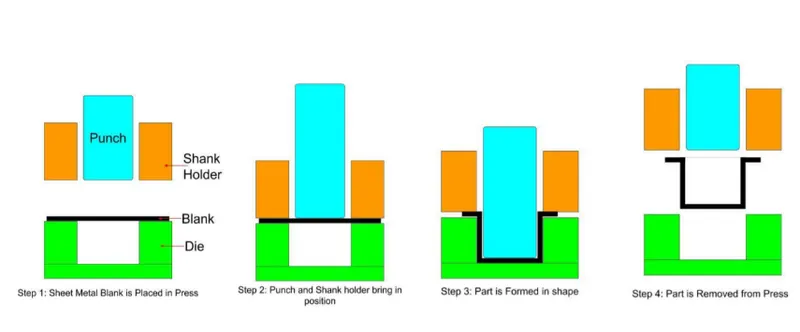
- Deep Drawing is the sheet metal forming process. It is quite similar to the punching process.
- Deep Drawing - The required sheet metal is to be clamped and the die with the required shape has to be kept below the sheet metal, then the sheet metal blank is drawn into that forming die by the pressure applied by the punch.
3. Embossing :
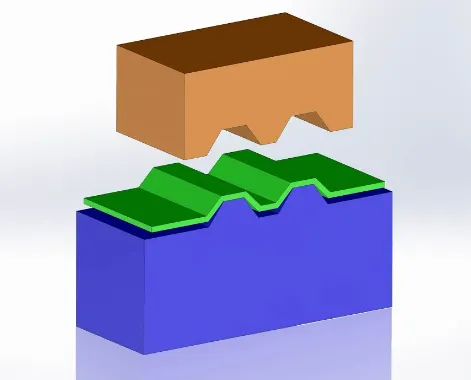
- Emboosing is a kind of stamping process. It is the process of applying pressure to the flat sheet metal by the forming tool to create the projection on that sheet metal wherever required.
- In the Hood design, the inner panel of the hood has more embosses to improve the panel's strengthening. Based on the design structure, the embosses are created or we can say projected on the inner panel sheet metal.
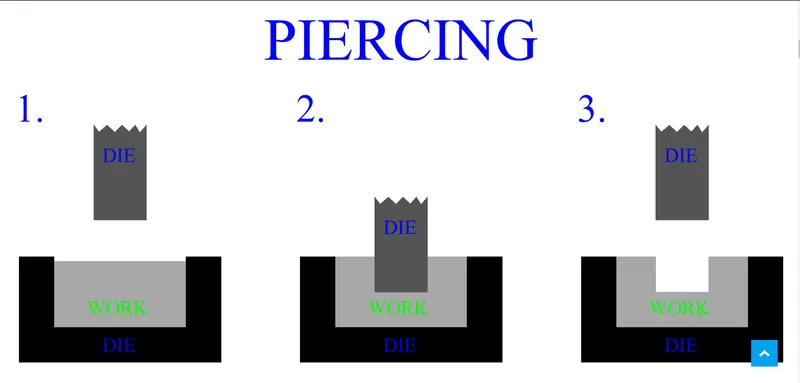
4. Piercing :
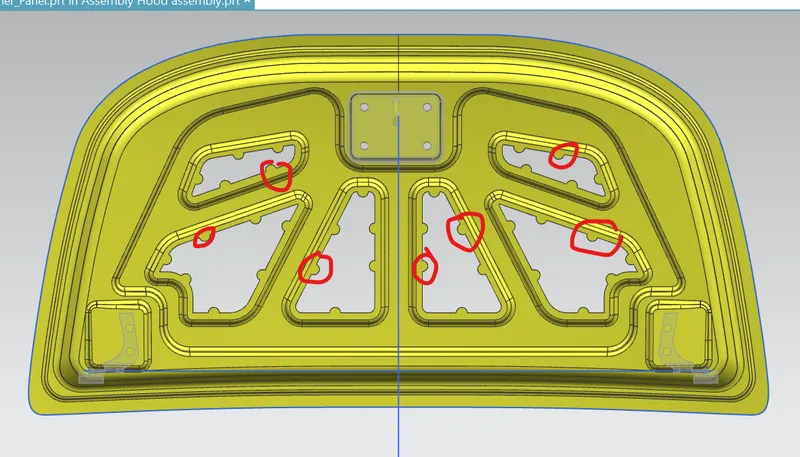
- Embosses in the inner panel have ensured the inner panel is strengthened by trying to distribute the impact force outwards of the hood when the collision occurs. As per this hood design the impact distribution directions are mentioned in the below picture.
Conclusion:
At long last, the hood configuration has been finished by thinking about the rules, aspects, techniques and norms. This design has taught me about hood mountings, sheet metal operations like hemming, embossing, deep drawing, and piercing, and Pedestrian safety and ratings.