Hood design-Week 2
AIM
Design Hood Outer Panel, Inner Panel and the necessary reinforcements by following the Master Section mentioned with the Design parameters explained in the videos.
Submit an ASSEMBLY of Hood Inner Panel, Outer Panel, Latch, Hinge and the Reinforcements.
A detailed report about the Hood Design which includes a detailed explanation about hood and its components, Latch Trajectory, Mastic Data, Emboss Definitions, Manufacturing process like Deep-Drawing and Hemming, and all the parameters followed in the design.
Introduction:-
Hood is main component of a car at the front portion. It is used to decorate the car & add luxurious look. The shape of the bonnet is made aerodynamic in order to minimize the air effect.
Importance of Hoods in a Car
- In simple words, the hood of the car is responsible for the safety of the car.
- All engine parts and radiators of the car are protected by the hood or bonnet.
- Car hoods are also used in sports cars as an aerodynamic mechanism by reducing the Air effect.
- Car hoods provide relatively easy access to the engines in case any maintenance is required.
- Having a hood on your car also reduces engine noise, which helps you drive more quietly.
- Keeping the paint under the hood longer can also help keep it in good condition.
- Getting out of the car before the hood catches fire can give motorists time to escape that is why a proper and strong hood is necessary.
Different Types of Hoods for Cars mention in below
Hood Opening and Closing Mechanics
A standard hood on a modern car with an engine in the bonnet has hinges on the edge facing the windshield and a latch near the center of the bumper edge that holds it in place.
This design is simple and intuitive, but it does pose a risk of airflow pushing the hood upwards and backwards – right onto the windshield and roof of your vehicle before potentially ripping away altogether.
A well-fitted hood will connect with its latch and have a flush edge with the rest of the vehicle’s body. Extra space may indicate a bad fit or an improperly latched hood.
Lifting the hood lightly and reaching towards the middle of the bumper should reveal the latch enough to release it. Some vehicles have hoods with hinges near the bumper.
When opened, the hood tilts forward and exposes most of the engine block; this style is common on big rigs. Even more rarely, two-panel hoods with a split down the middle of the vehicle are used, but they are typically a cosmetic decision.
Hood Materials
Because the hood is usually detachable from the rest of the frame with relatively minimal effort, vehicles may sport hoods made from different materials than the rest of the body.
Hood Shapes
The shape of the vehicle’s body decides much of the hood’s general shape, but there are two common shapes for the broad plane of the hood. Flat hoods are intuitively named, possessing minimal curvature or extra features.
Hood design consideration:-
The hood of a car is considered as the frontal BIW enclosure component. Bonnets are designed to reduce air resistance as the air flows around the car. Apart from this, bonnets are also designed to meet several other requirements. They serve a great deal of purpose in protecting the passengers inside the car & the pedestrians in the event of an accident. It also acts as the cover for the engine.
The European New Car Assessment Programme (Euro NCAP) is a European car safety performance assessment program which has developed test specifications & rating systems for assessing pedestrian injuries during impacts with the front of vehicles such test include a series of tests using impacts designed to bio-mimic a collision at speed of 60 km/h.
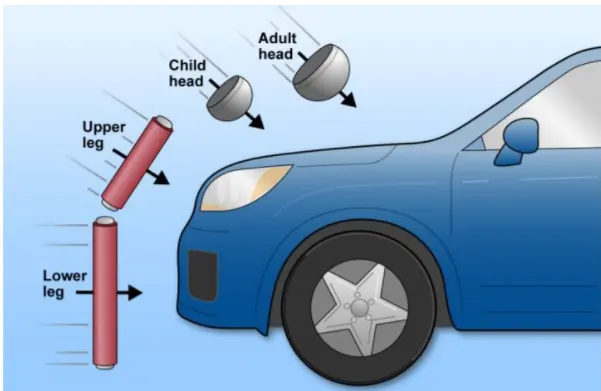
They describe a situation in which a pedestrian is situated laterally & a car first hits one of his legs. Test are conducted on the leg, upper leg & most importantly the head, as head trauma is most commonly responsible for casualties.
So to avoid severe injuries to the head, the high impact area for adults & children are subjected to less thickness. Also no reinforcement should be provided in that area as during head collision, the hood will absorb the head impact energy leading to collapse of the hood & thus protecting severe head injury.
Another important criteria for the hood design is the protection of the occupants inside the car during front collision. The design of the hood should be in a such a way that the during the collision, the force should travel in the upward direction through the embosses & directed towards the body of car. Thus protecting the occupants inside.
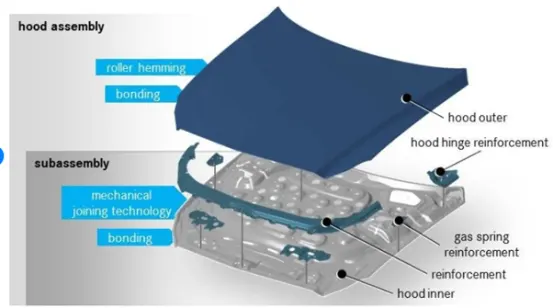
Following parts are using in hood assembly for this report,
Hood outer panel
Hood inner panel
Hinge assembly
Striker assembly
Hood thickness-
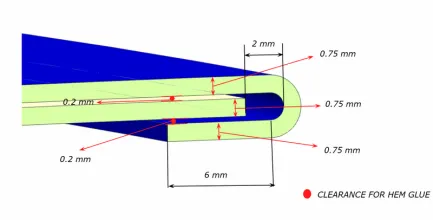
Outer panel thickness= 0.75 mm
Inner panel thickness= 0.75 mm
Reinforcement thickness= 1.5 mm
Inner Panel-
In the inner panel only we can research & implement the safety of pedestrians & as well as the driver. In this panel only we can attach the reinforcement, embossed, mastic points etc.
It is an object of the present invention to provide a hood inner panel capable of reduction of a reaction force of the hood inner panel even if a level of deformation of a hood of a vehicle increases, & ensuring a sufficient energy absorption capacity.
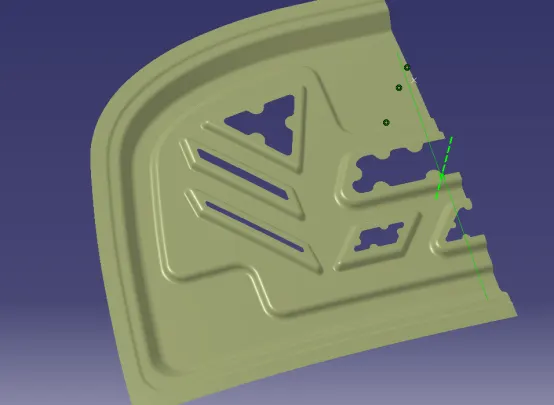
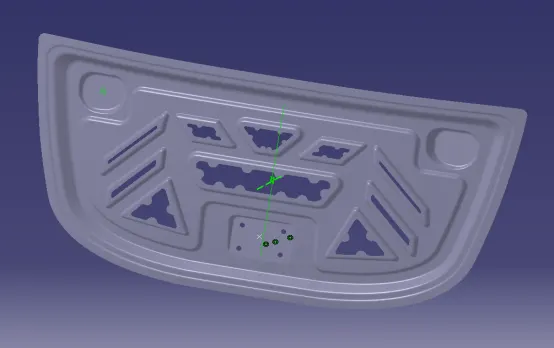
Hood inner pannel has to define the latch mounting & hinge mount on the inner pannel we have to define it and the assembly it
Emboos are to improve the strength and moment of inertia so we make the emboos
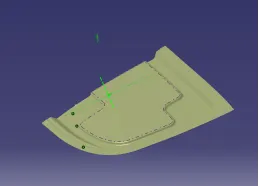
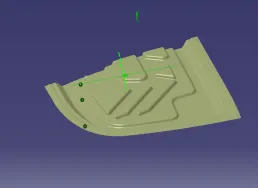
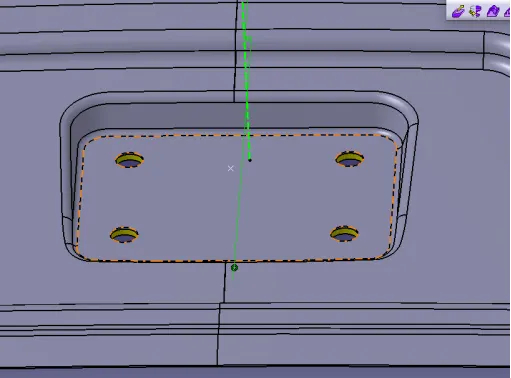
Once the emboss are ready give the cut out and make the mount for mastic sealant to avoid the vibration
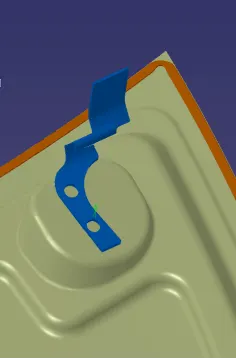
Hinge mount creation & Assembly-
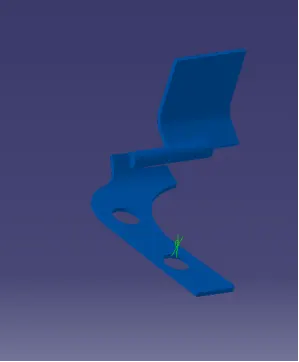
Hinge is a component that fixes the hood to the fenders of the car. The latch must be fixed perpendicular to the hinge axis so that the hood opens or closes properly.
Deep Drawing-
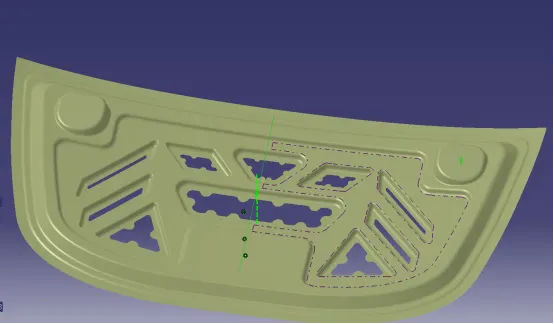
Deep drawing is a manufacturing process that is used extensively in the forming of sheet metal into a cup or box-like structures. Pots & pans for cooking, containers, sinks, automobile parts, such as panel & gas tanks, are among a few of the items manufactured by sheet metal deep drawing.
A deep drawing of sheet metal is performed with a punch and die. The punch is the desired shape of the base of the part, once drawn. The die cavity matches the punch and is a little wider to allow for its passage, as well as clearance. For many calculations, the sheet metal thickness is assumed to remain constant. There are changes in thickness in certain areas, due to force involved
Latch trajectory-
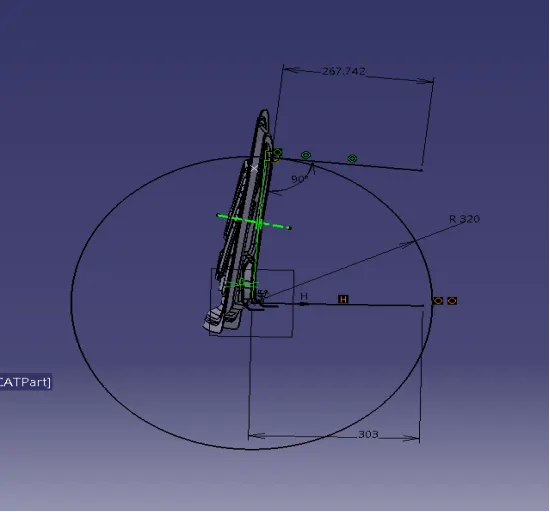
While opening or closing the hood, the latch must be perfectly aligned to the fixing or striker point. For that, the latches trajectory must be perpendicular to the hinge axis.
Outer Panel-
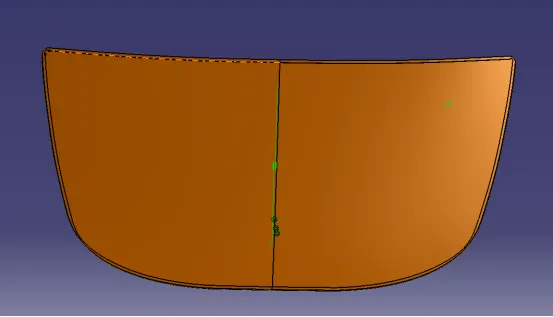
We can also call it as cover of inner panel. It is the part, which gives luxurious look to the hood or bonnet. Outer & inner panel can not join by any welding process like spot welding or rivet, which spoil the outer look of a car. The outer panel is generally extracted model from the prototype design.
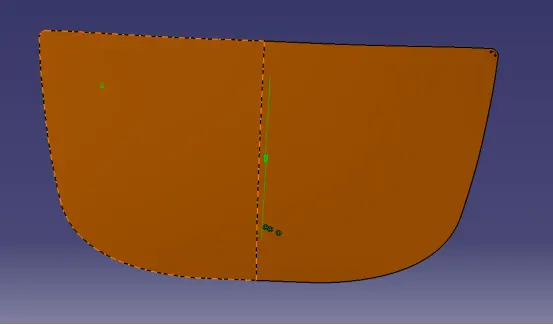
Relief rear section
To give the relief for reducing the stress concentration
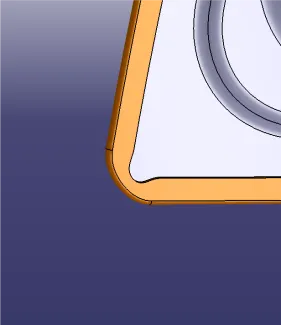
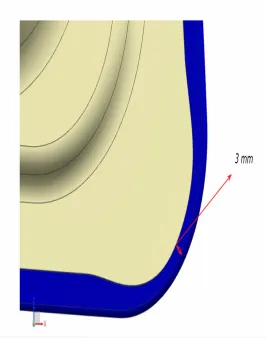
Front relief:
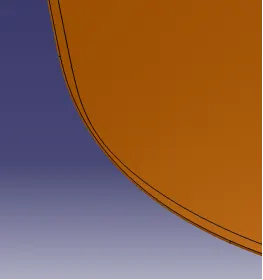
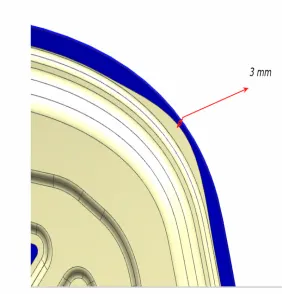
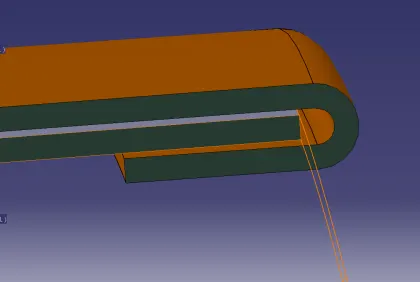
Hemming creation :
Hemming process to lock the inner and outer pannel and in between the gap fill by hem glue to reduce the vibration
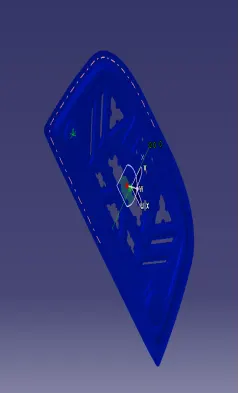
Report of draft analysis
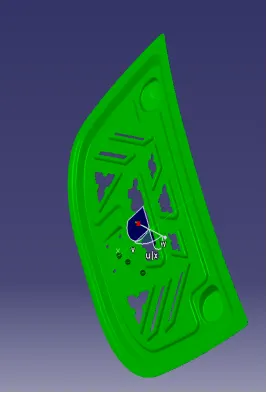
In a draft analysis we have to position the tool direction on surface inner pannel and the compass should be lock in the tool direction and then check the analysis under running point should check the draft angel on the surface oh the outer pannel
If the
red represent - no draft
Green represent - positive draft on cavity side
Blue represent - negative draft on core side
Please check the report in given below attached file for draft analysis
Conclusion:
We have to design the hood as per the given standard and guidelines for manufacturing done successfully