Hood design
HOOD DESIGN
INTRODUCTION:-
The car hood, also known as the bonnet, is a crucial part of a car's bodywork that covers the engine compartment. The hood is typically located at the front of the car and is attached to the vehicle's chassis by hinges, which allow it to be lifted for engine access.
The hood is usually made of steel or aluminum and is designed to be lightweight yet strong enough to provide adequate protection to the engine and other components in the engine bay. It may also have a layer of insulation or soundproofing material underneath to help reduce engine noise and heat transfer.
The hood is secured in place by a latch mechanism located at the front of the car, which is typically released from inside the car using a lever or button. Some newer car models may have electronic hood release systems, which allow the hood to be opened remotely using a key fob or button.
The hood may also have additional features, such as a hood scoop, which is a raised section on the hood that directs air into the engine bay to improve engine performance. Some hoods may also have vents or louvers to help release hot air from the engine compartment, further improving engine cooling.
Overall, the car hood serves an essential role in protecting the engine and other components, while also contributing to the car's aesthetic design. It's important to maintain the hood and its components, including the hinges, latch, and any insulation or soundproofing material, to ensure proper function and protection.

HOOD DESIGN CONSIDERATION:-
The frontal BIW enclosure component of an automobile is the hood. Bonnets are intended to minimize air resistance as it flows around the vehicle. Aside from that,bonnets are intended to safety a variety of additional criteria. They play an important role in safeguarding the occupants inside the automobile as well as pedestrians in the case of an accident.It also serves as the engine cover.
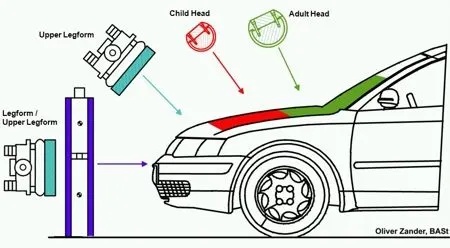
- The European New Car Assessment Programme (Euro NCAP) is a European car safety performance assessment program that has developed test specifications and rating systems for assessing pedestrian injuries during impacts with the front of vehicles. These tests include a series of tests that use impacts designed to bio-mimic a collison at 40 km/h.
They depict a circumstance in which a pedestrian is positioned laterally and an automobile strikes one of his legs first. Tests are performed on his leg, upper leg, and significantly the brain ,as head trauma is the leading cause of fatalities.
- To minimize serious head injuries, the high- impact region for adults and children is exposed to the reduced thickenss. Also, no reinforcement should be supplied in that location. Since, in the event of a head collision, the hood will absorb the impact energy,causing the hood to collapse and so protecting the head from serious harm.
- Another essential consideration for hood design is the protection of the persons within the vehicle in the event of a frontal accident. The hood should be designed in such a way that upon a collision, the force should move upward via the embosses and be directed towards the body of the automobile.
The following components are used in the assembly for this report.
- Hood outer panel
- Hood inner panel
- Hinge assembly
- Striker assembly
HOOD THICKNESS
Outer panel thickness = 0.75 mm
Inner panel thickness = 0.75 mm
Reinforcement thickness =1.5 mm
INNER PANEL :-
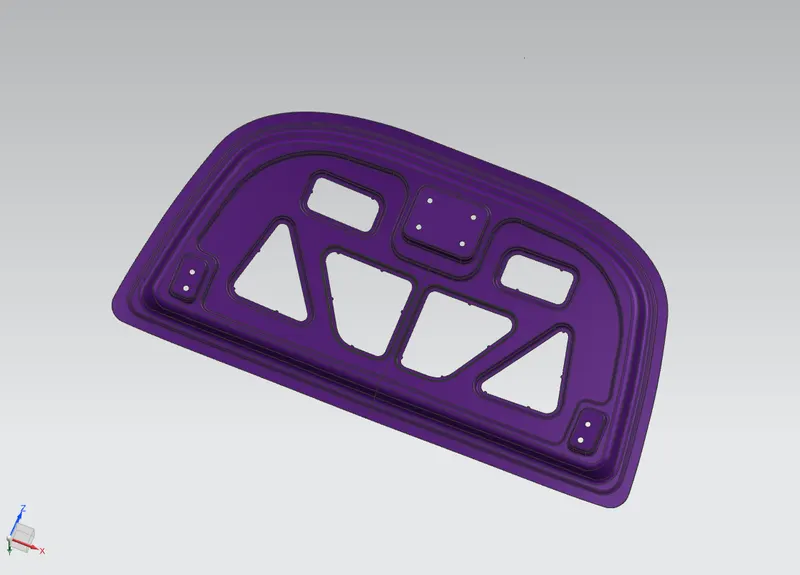
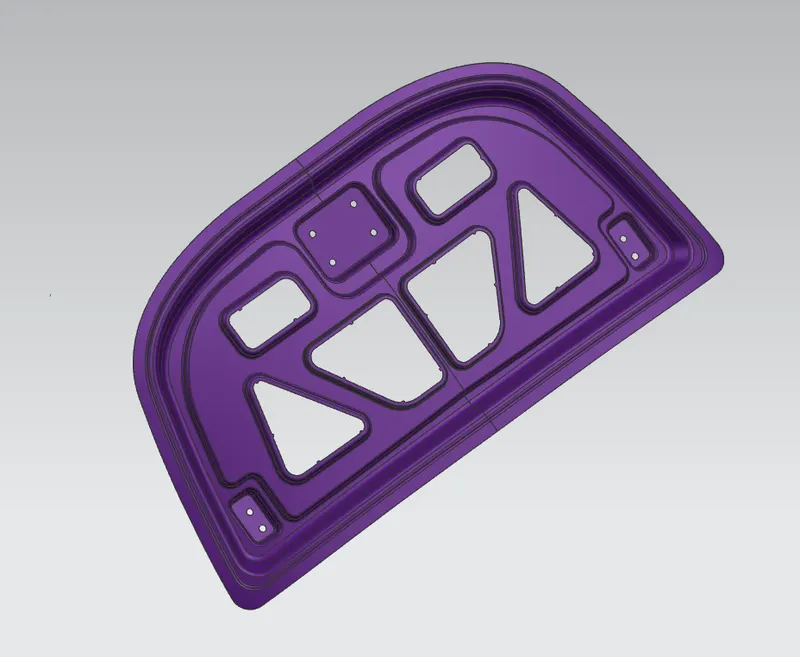
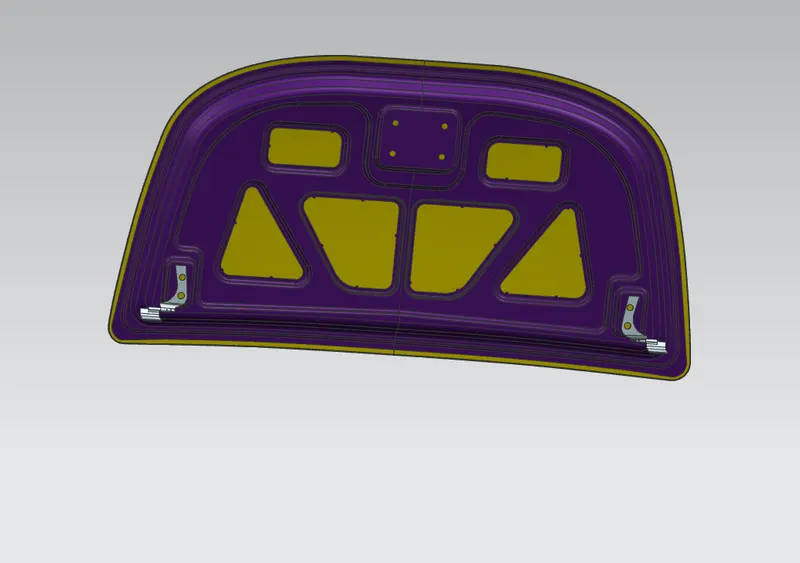
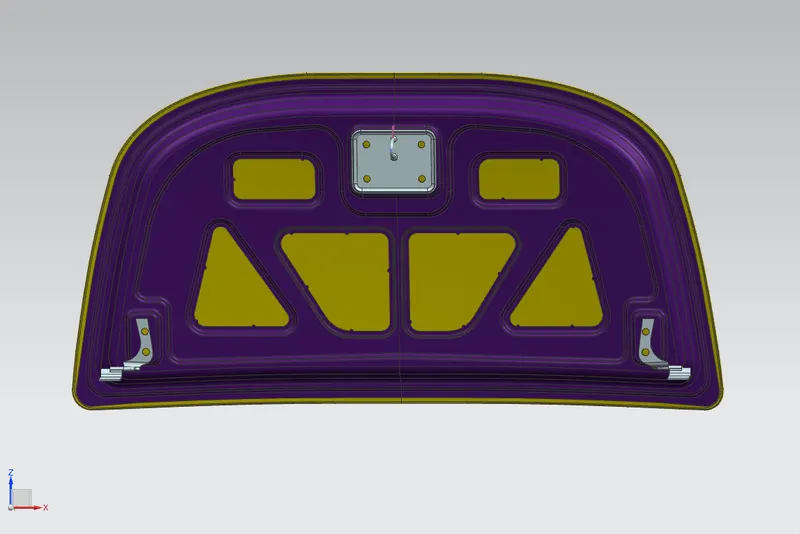
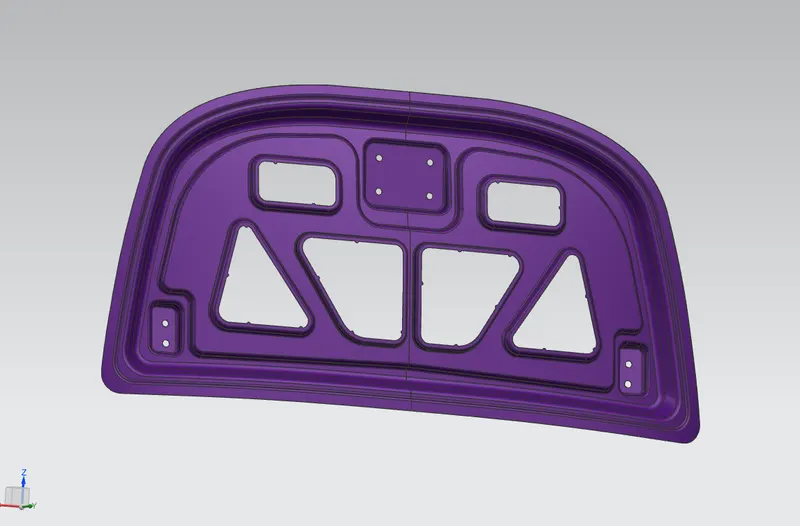
- Only on the inner panel can we explore and apply pedestrian and motorist safety. Only in this panel may we connect reinforcing, embossing, mastic points, and so forth.
- The current invention seeks to offer a hood inner panel capable of reducing a response force of the hood inner panel even while the amount of deformation of a vehicle's hood grows. While still providing adequate energy absorption capacity.
OUTER PANEL:-
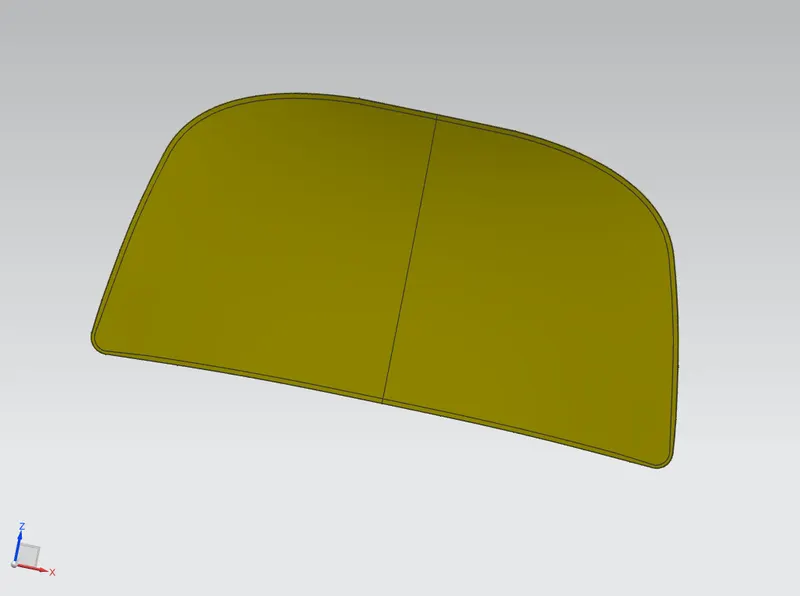
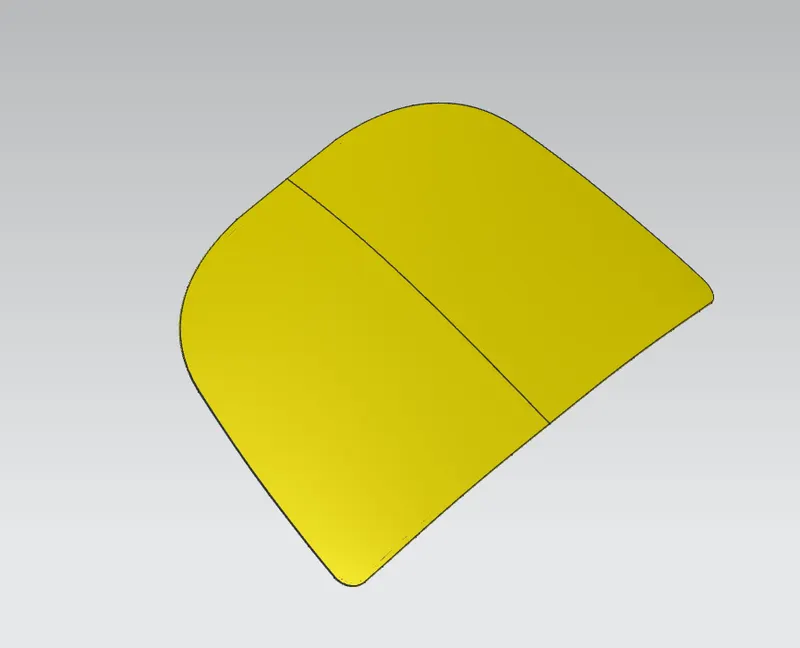
It is also known as the lid of the inner panel. It is the component that provides the hood or bonnet a luxury appearance. Any welding procedure, such as spot welding or riveting, cannot link the exterior and inner panels, which detracts from the overall appearance of the vehicle. The outer panel is often a model taken from the protype design
HINGE ASSEMBLY:-
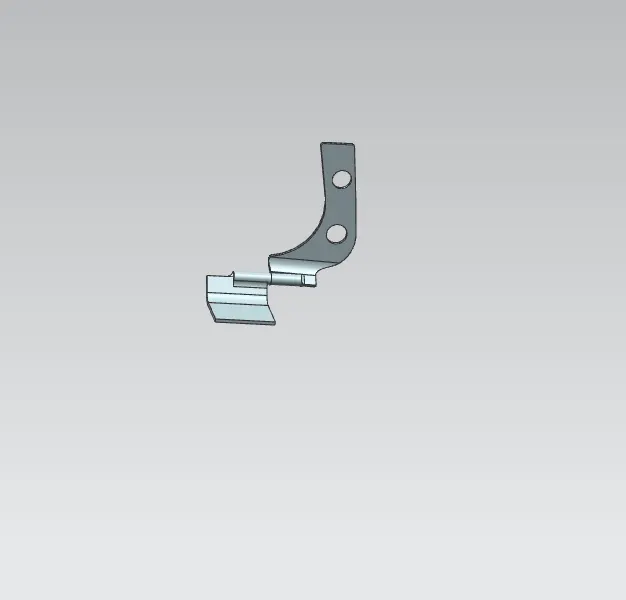
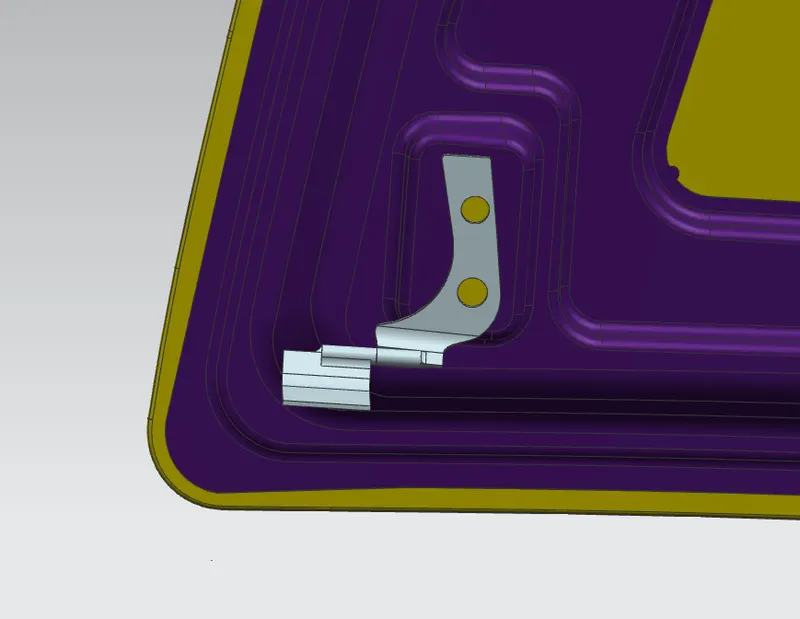
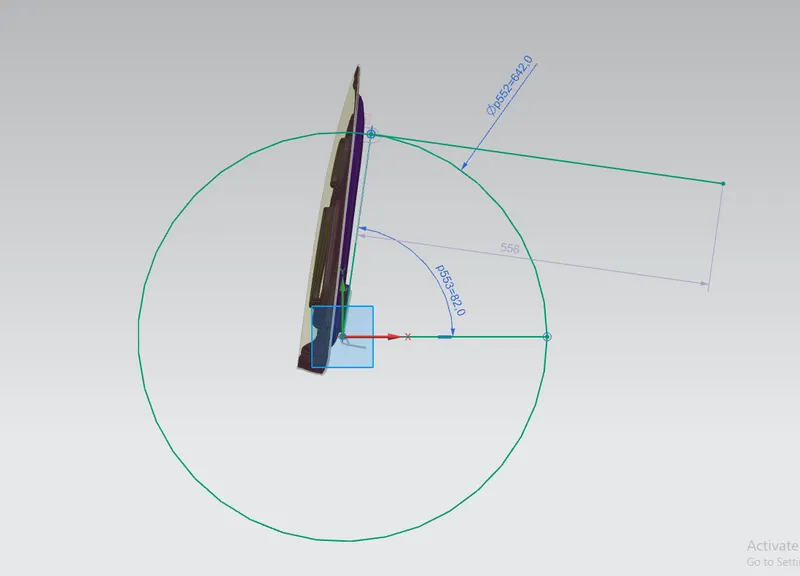
A hinge is a component that connects the hood to the cars fenders. To ensure that the hood opens and shuts properly, the latch must be placed perpendicular to the hinge axixs.
STRIKER:-
The latch and striker are used to secure the hood to the automobile. It is often positioned in the area given on the inner panel
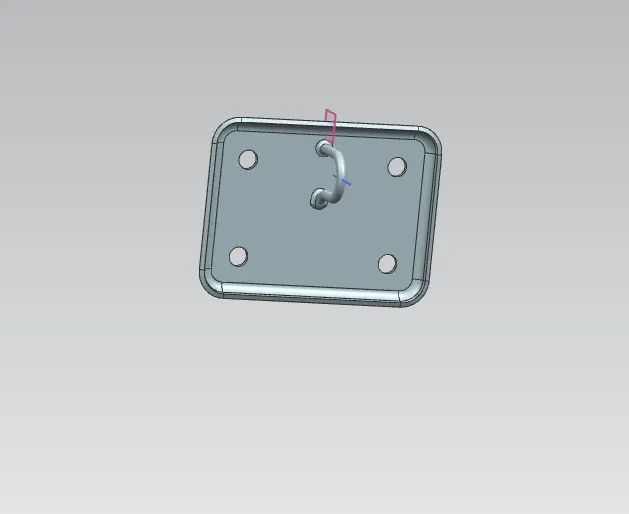
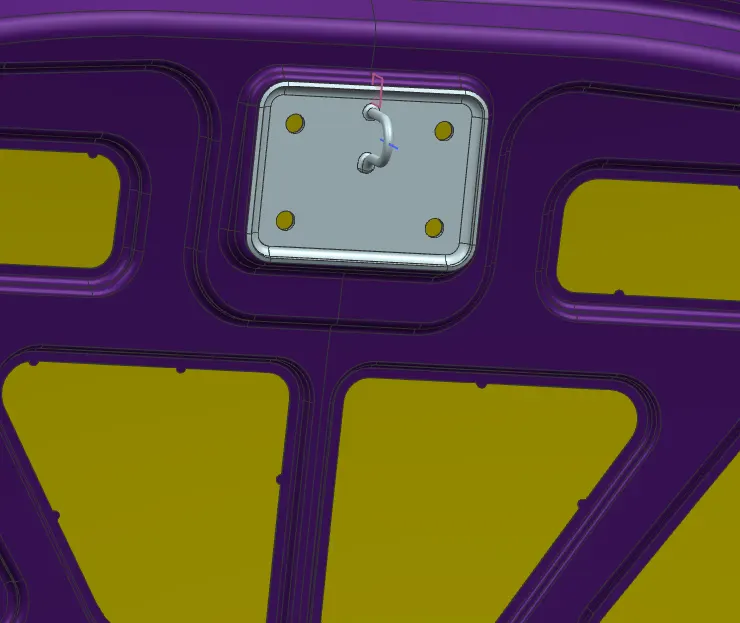
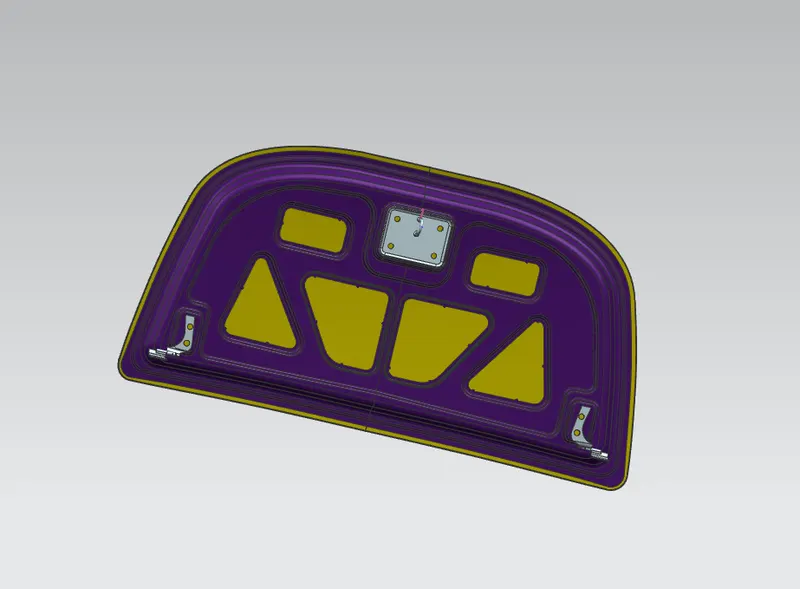
The process of designing a hood as a sheet metal operation is described below.
- Blanking
- Hemming
- Punch cutting or piercing
- Deep drawing
- Embossing
HEMMING:-
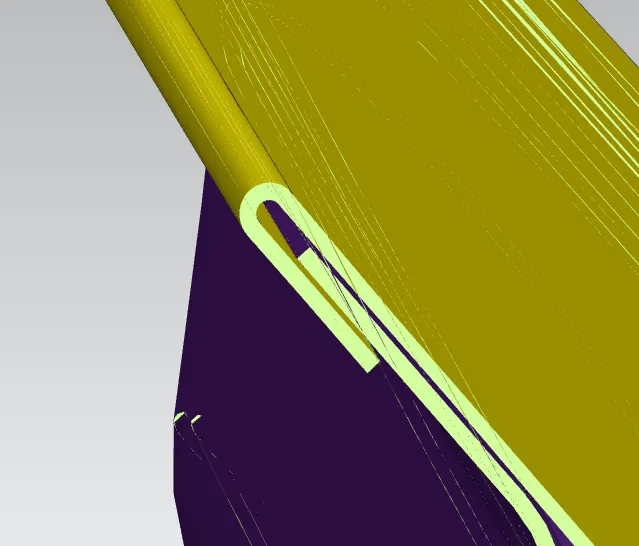
- Hemming is a sheet metal forming methid that involves joining sheets by bending them to a 90-degree angle. Hemming methods are used to produce a automotive body panels and pieces such as decklids, truck lids, doors, hoods, and tailgates.
- Roll hemming is done in stages using a hemming roller. The hemming roller is guided by an industrial robot, which also produces the flange. The roll hemming process can also be separated into multiple pre-hemming and final hemming processess.
- Traditionally die hemming is appropriate for mass manufacuring. Die hemming involves folding the fiange across the full length with a hemming tool. The actual hemming is usually the product of a forming process in which the flange is created using a hemming tool after the drawing and trimming procedures are done.
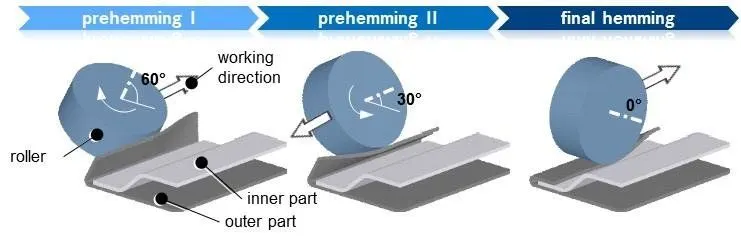
When hemming at the corner of the sheet, a relief angle is generated as a result of the hemming process.
DEEP DRAWING:-
- Deep drawing is a manufacuring procedure that is commonly used to shape sheet metal into cup or box-like forms. Sheet metal deep drawing produces products such as cooking pots and pans, containers, sinks and vehicle elements such as panel and gas tanks.
- A punch and die are used to perform a deep drawing on sheet metal. Once drawn, the punch is the desired form of the parts base. The die cavity is the same size as the punch and slightly broader to allow for its passage as well as clearance . for many computations, the thickness of the sheet metal is considered to be constant. Because of the force involved, there are variation in thickness in some loctaions.
EMBOSSING:-
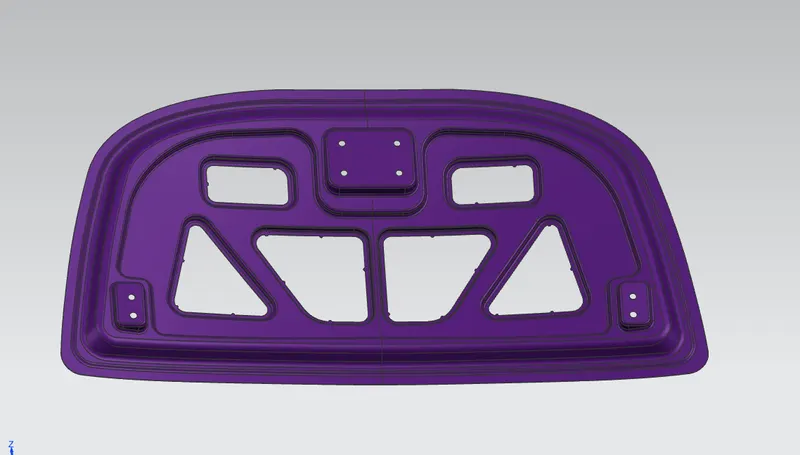
- Depending on the type of embossing required, the sheet metal embossing procedure is generally achieved with a combination of heat and pressure on the sheet metal.
- A sheet of metal is dropped between male and female roller dies, resulting in a pattern or design on the sheet metal. Various designs can be formed on the sheet metal depending on the roller dies used.
LATCH TRAJECTORY :-
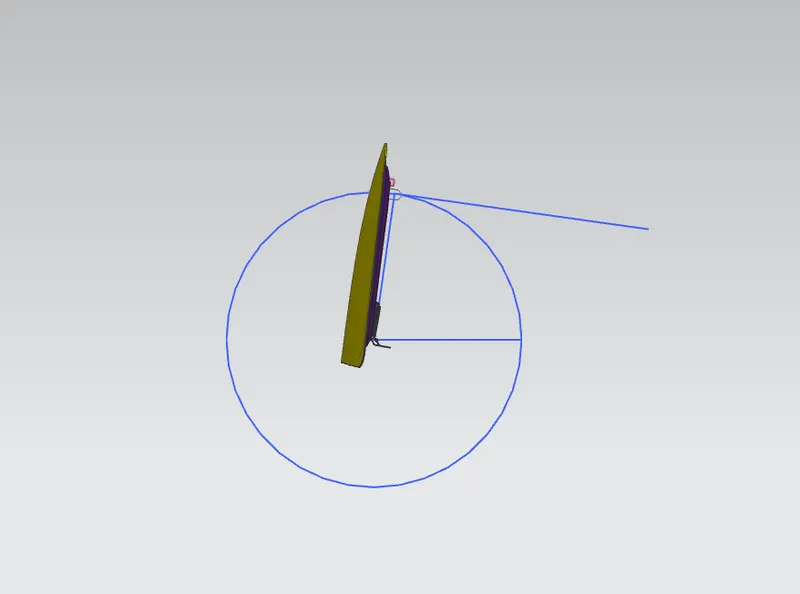
The latch must be completely aligned to the fastening or striking point while opening or shutting the hood. The latches trajectory must be perpendicular to the hinge axis for this to happen.
CONCLUSION:-
The hood is designed with norms and regulations of the manufacturer's specification.