Hood design
Hood design useing Nx Cad
A engine is mounted on front side of car body along with radiators and battery, this all parths are enclosed with a component called as hood . hood mainly consumes the accident forces from passing towards the passengers cabin. also it provides the good looks to car body
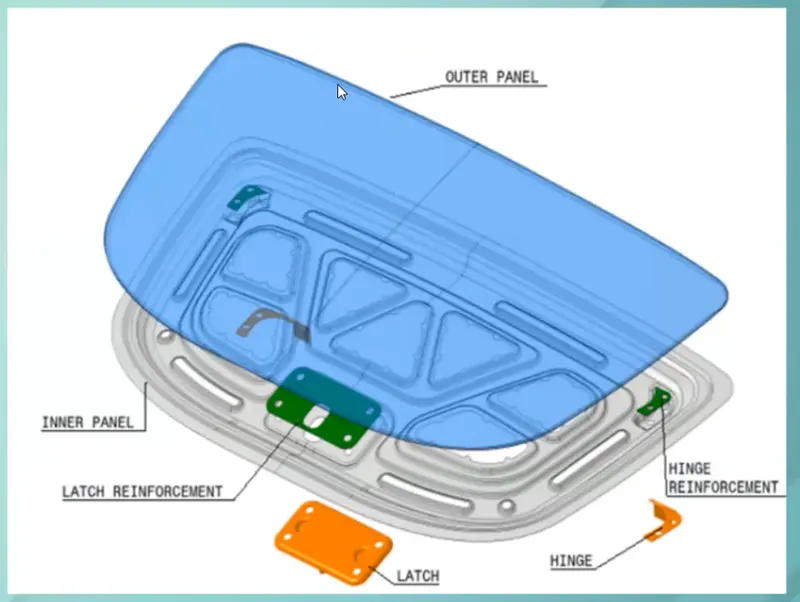
Hood is manufactured with the sheet metal ranging between 0.65 to 0.75 mm in thickness. hood consist of sub parts like mastics, primary emboss, secondary emboss cut outs, hinges and srtiker
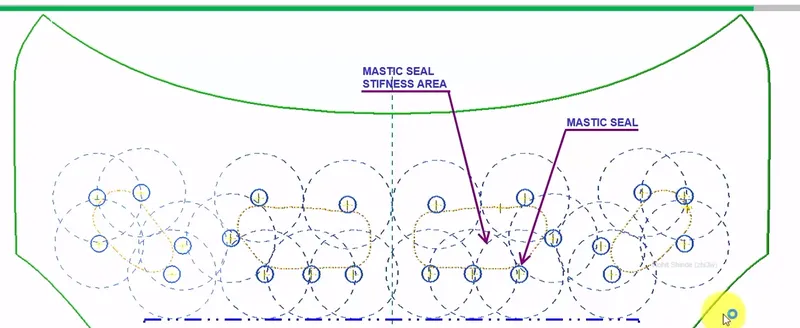
Mastics are the organic glue made up of resins looks like tooth paste which are applied betweeen 5 mm gap between outer panel and inner pannel . when heat is applied to the mastic sealents they expands for 5 mm vertically and effective in a radius of 80 mm horizontally to form a hard rubber like entity.tyey absorbs the heat and acts as a heat insulator they also provide strength to the hood .in order to reduce the cost of component optimum mastic points to be considered dureing design .mastics provide better NVH
Primary emboss- on the surface of hood inner panel we require to mount the hinges and striker . to construct the area for installation of striker and hinges .bottom most surface of hood inner panel is embossed .
Secondary emboss-in case of a car crash the impact forces should not reach to the passenger cabin . this obstruction of forces is done by desingning secondary emboss that are inclined towards A pillars. also these emboss provides strength to the panel. distance between two edges or flat faces to be maintained between 8 mm .also edge fillet all the sharp edges to avoid stress concentration.some portions of secondary emboss is trimmed out to provide mastic points and reduce the weight of the hood
Hinges - hinge component connects the hood assembly to the car body( a pillars )
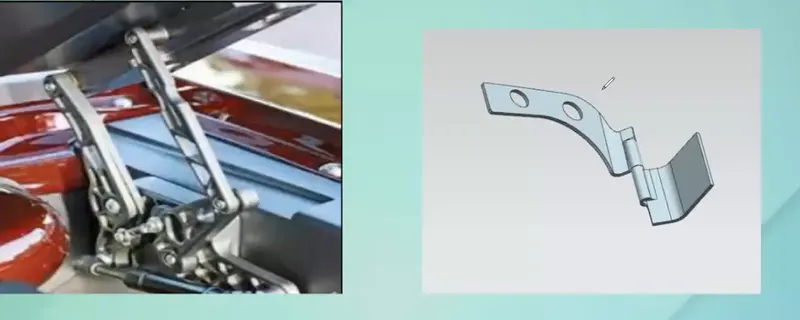
Striker - for closeing and opening of hood striker assembly is an important component .It is very important that the sriker should assemble with latch after closeing the hood , and should follow the pre defined path called as latch tragectary .
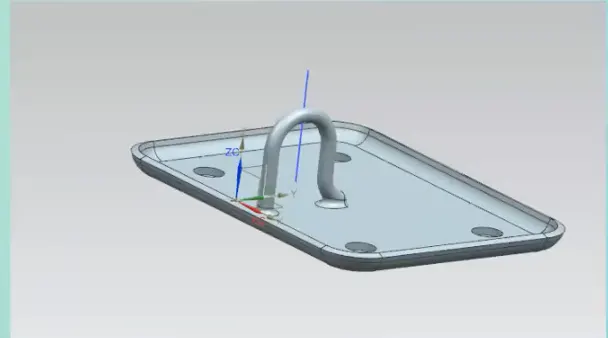
- to construct a latch tragectory ,a circle is drawn by takeing middle point of hinge axis as centre and centre of striker hook as a radius that is drawn on zx plane . a inclined line is drawn at an angle of 80 degrees from centre of circle other tangent line is to be drawn to the previous line .for tangent line give touch constraintand coincidance constraind which will aline the striker with the tangent line and will follow the circular path by changeing the angle .
mastic data -
effective area of mastic is vertically 5 mm and radially 80 mm . it is used to seal the gap between 2 surfaces
Design consideration for designing hood
1.Pedesterian safety
2. good heat decipeation towards the outside
3.frontal crash, force distribution and reduction in force intensity.
4. opening angle and proper gap to be kept between striker and head and is decided based on region height.
Sheet metal manufactureing process.
Deep drawing process
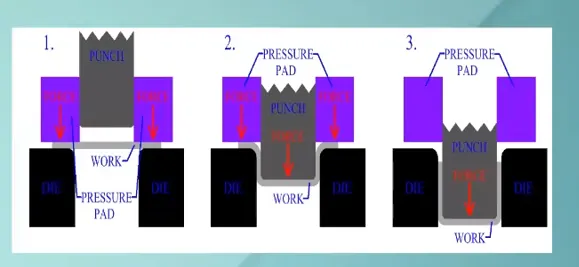
deep drawing is a sheet metal forming process that producess the high dimensional accuracy and smooth surface finish products
when high degree of accuracy is required then deep drawing process is used .
deep drawing is effective till the depth of 40 mm and if we continue to increase the depth above 40 mm we will have to face the spring back effect .
on an average , deep drawn cases have thinner cross sections than stamped cases due to metal flow dureing the forming of process. the material is re distributed throught the process , eliminating the material accumulation on the mould walls for even distribution
Sheet metal joining process
Hemming
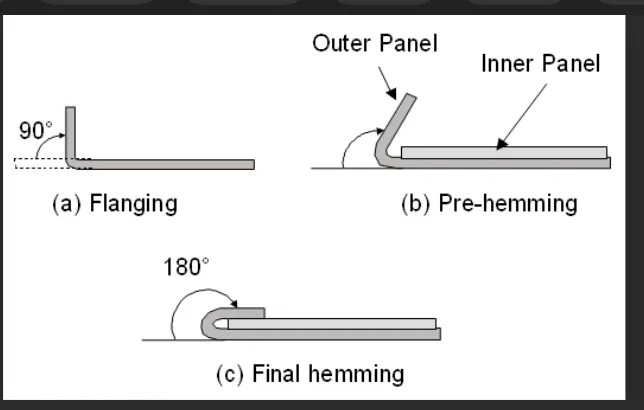
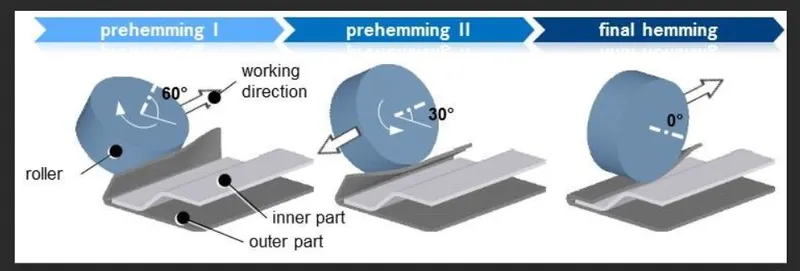
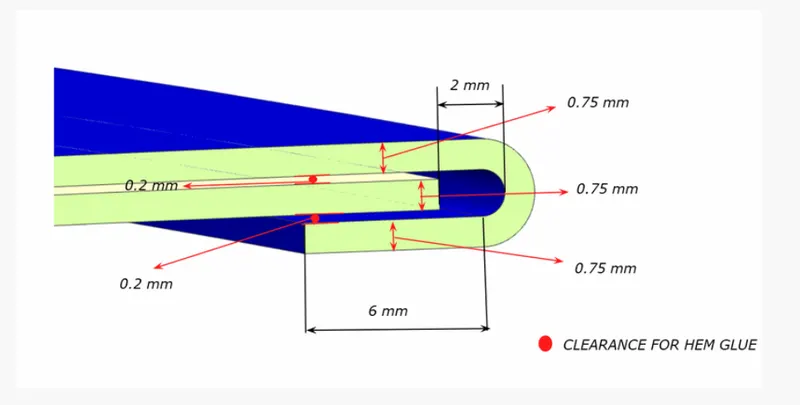
Hemming is sheet metal joining process in which the edges of outer sheet are wrapped around the inner sheet at an angle of 180 degrees.