Hood design-Week 2
PROJECT 1
HOOD DESIGN
AIM: To create Hood Outer Panel, Inner Panel and the necessary reinforcements by following the Master Section mentioned with the Design parameters and create an assembly
Theory:
Hoods are typically made of the same material as the rest of the body work. This may include steel, aluminum, fiberglass or carbon fiber. Some aftermarket companies produce replacements for steel hoods in fiberglass or carbon fiber to reduce vehicle weight.
The hood release system is common on most vehicles and usually consists of an interior hood latch handle, hood release cable and hood latch assembly. The hood latch handle is usually located below the steering wheel, beside the driver's seat or set into the door frame. On race cars or cars with aftermarket hoods (that do not use the factory latch system) the hood may be held down by hood pins. Some aftermarket hoods that have a latch system are still equipped with hood pins to hold the hood buttoned down if the latch fails.
HOOD:
Hood is an opening body panel that covers the engine in a front-engine vehicle. The is also considered as another type of door in a vehicle as it consists of an outer panel and inner panel.
The inner panel provides the strength while the outer functions as the metal cover. Hood is the critical component because of its frontal crash and pedestrian safety.
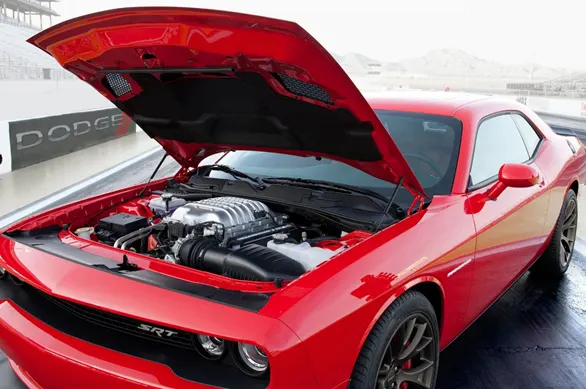
TYPES OF HOOD:
- Inlaid hood or built-in type
- Wrap around the hood
DESIGN CONSIDERATIONS OF HOOD:
CHOOSING OF MATERIALS:
Hoods are typically made of the same material as the rest of the bodywork. This may include steel, aluminium, fiberglass, or carbon fibber. However, some aftermarket companies produce replacements for steel hoods in fiberglass or carbon fibber to make the vehicle lighter.
HOOD HEAD ZONE CRITERIA:
Head zone criteria is one of the important parameter while designing the hood. Hood opening angle varies from the person to person and the country to country. For example the average height of Indians is 5.8 feet, whereas the average height of the Europeans is 6 feet, based on this heights the hood open angle may varies from country to country.
This hood open angle is considered as important because if the opening angle is less, then there will be chance of head injury to the human . hood requires a separate support stay rod to set the open angle according to the country’s average human height.
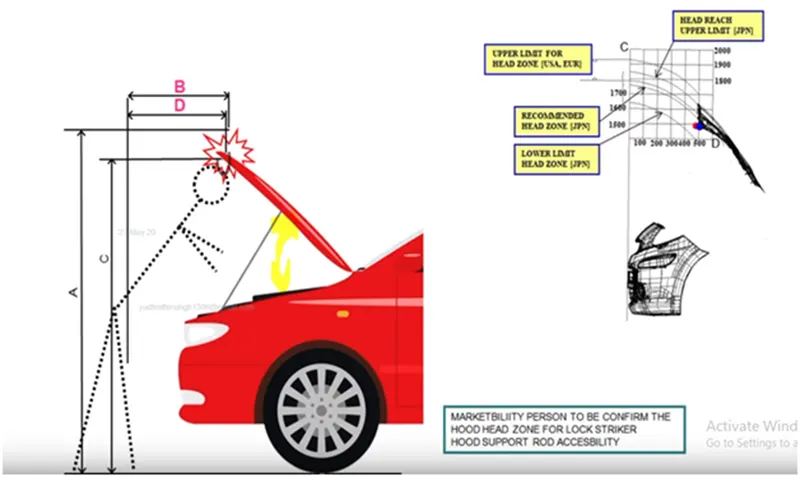
This image shows the height of hood based on the Japan and European countries to the average human height. This is an important criteria for design of hood.
REINFORCEMENT:
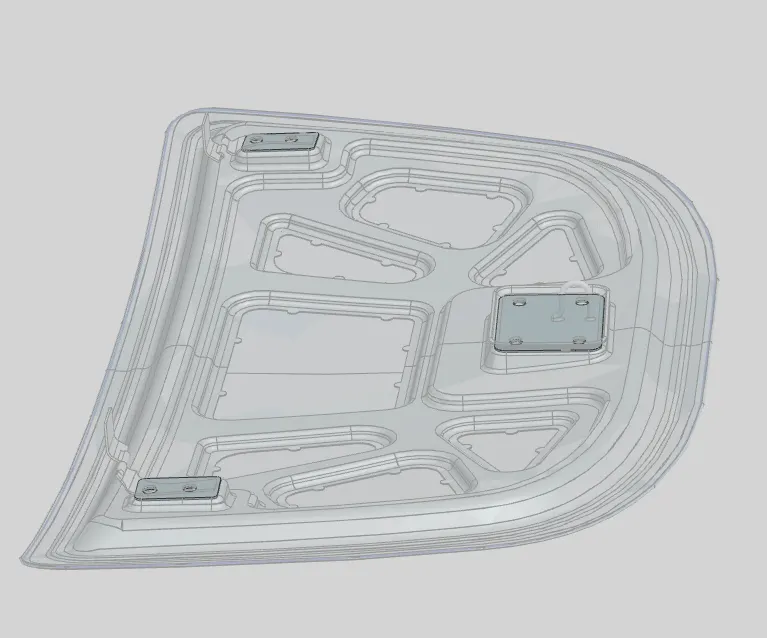
Vehicle hood reinforcement structures as provided to reduce impact in collisions. In one embodiment, the structure is to include a lower reinforcement panel configured to mount to a vehicle chassis and an upper reinforcement panel welded to the lower reinforcement panel wherein the deflection of a front deformable wall of the upper reinforcement panel is configured to trigger deflection of rear deformable wall of the lower reinforcement panel.
SAFETY REQUIREMENTS:
Safety is one of the most important criteria in the automobile designs which concentrates on both the pedestrians and occupants safety.
EURP NCAP REQUIREMENTS:
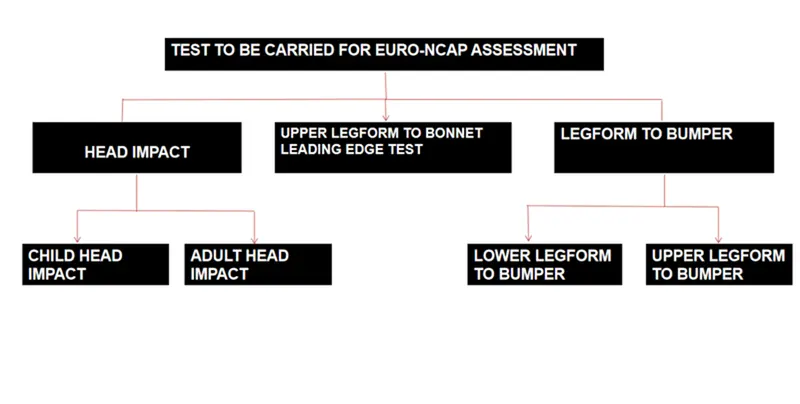
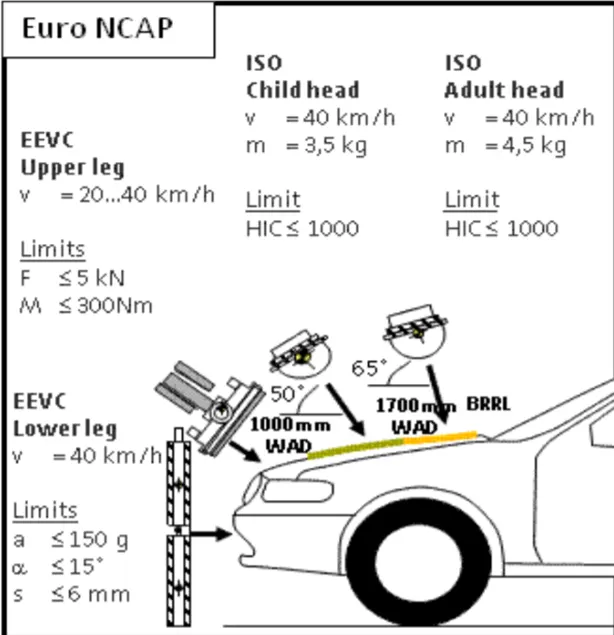
The European New Car Assessment Programme (Euro NCAP) is a European voluntary car safety performance assessment programme based in leuven(Belgium) formed in 1996.They publish safety reports on new cars, and awards 'star ratings' based on the performance of the vehicles in a variety of crash tests, including front, side and pole impacts, and impacts with pedestrians.
WRAP AROUND DISTANCE:
The trace of the points received on the point front structure when one end of the flexible tape of required length held at ground reference level and other end in control with the front structure.
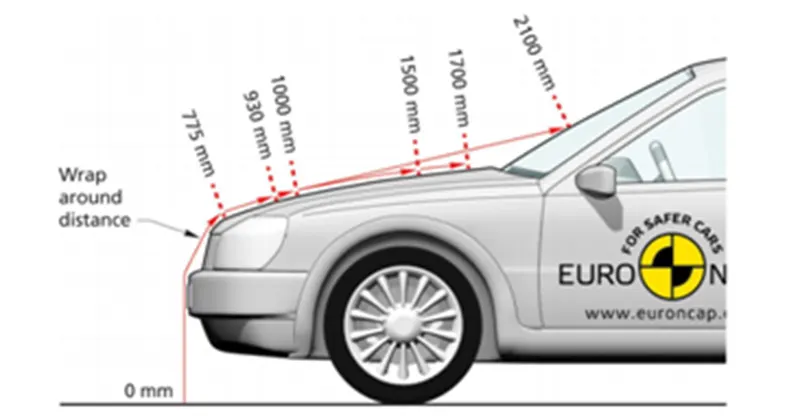
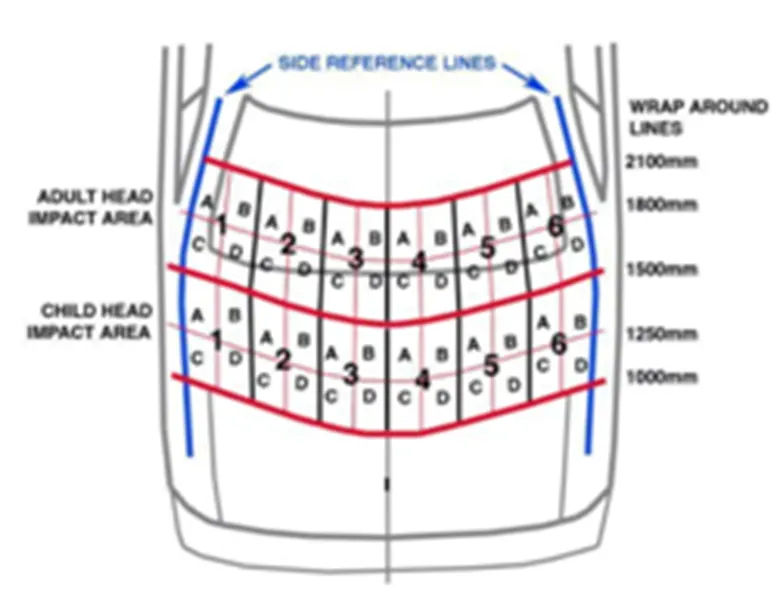
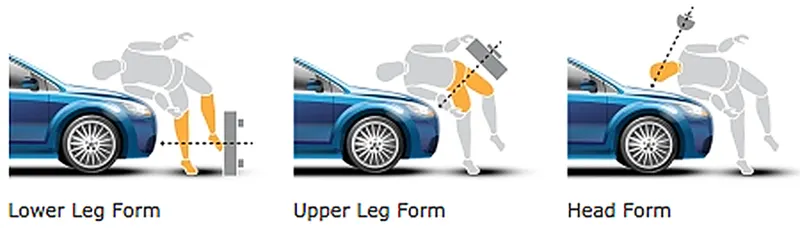
The head form test area is defined as the outer structure that includes the upper surface of all outer structures. It includes, but is not limited to, the bonnet, wings, windscreen scuttle, wiper arms/spindles, windscreen frame, A-pillars and roof. It is bounded by the geometric trace of the 1000mm wrap around line in the front, the Bonnet Side Reference Lines and the 2100mm wrap around distance (WAD). This requirement is to reduce the impact of injuries for child and adults these are pedestrian safety.
PEDESTRAIN IMAPCT ZONES:
HOOD STAY:
A hood stay is an apparatus for an engine room of a car, which can safely keep an engine hood in an open state even if an external force is abruptly generated due to vibration, wind and can facilitate an opening/closing operation of the engine hood.
Types of hood stay:
- Support rod
- Gas stay
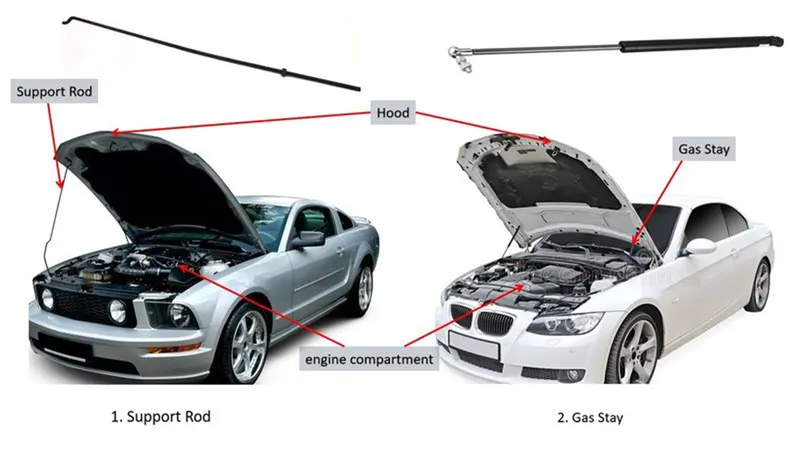
- We have to design the stay rod in such a way that it should not collide any another part in the engine compartment, because of this collusion the rod produce the noise when the car in motion this causes the NVH ( NOISE , VIBRATION AND HARSHNESS)
- Rod with the bends are more preferred because a straight rod will by wobbling, whereas the same part with bent is rigid. these structured rod gives strength to the part
- The another important thing that should be considered while designing the rod is , the rod should be mounted on the opposite side of the battery because , this rod should not produce any interface while installing the battery
DESIGN:
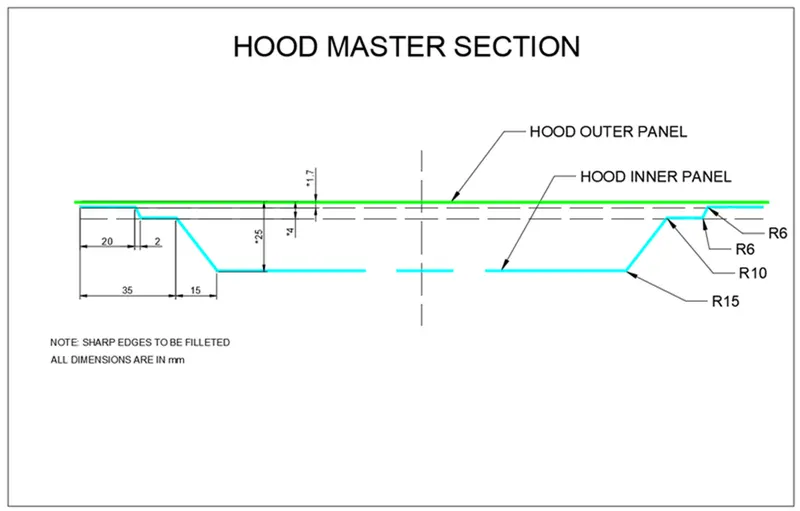
For the creation of hood design, check and observe the points which given and the requirements. we need to create the inner panel, outer panel, from the given styling surface using the master section.
MASTER SECTION:
Master section are the guides for design requirements which decide the component packaging after technical (styling, concept or class A) surfaces.
OUTER PANEL:
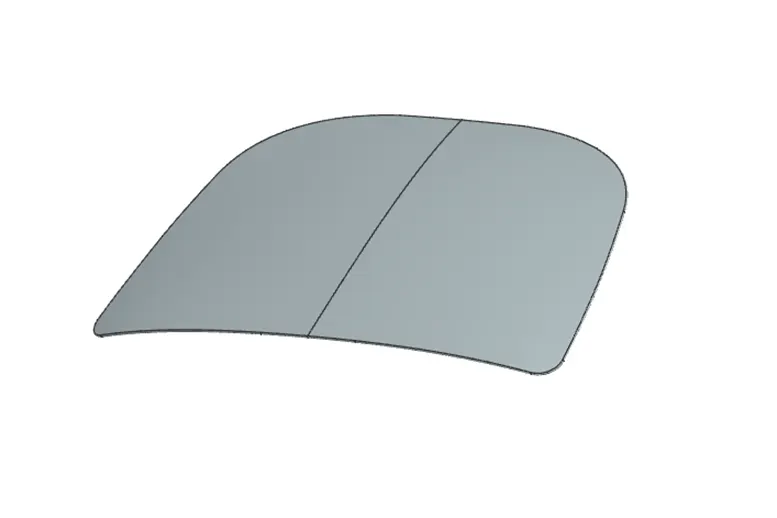
- From the styling surface create the outer panel.
- The outer panel is actually called the skin of the vehicle which is designed by the styling team to get a good look for a vehicle by covering the inner panel and engine parts of the car.
- This is the symmetry object, we can create a half using trim sheet command and and work on this half sheet only then after that we mirror the entire geometry.
- In this outer panel we hemming process is done for the inner panel.
INNER PANEL:
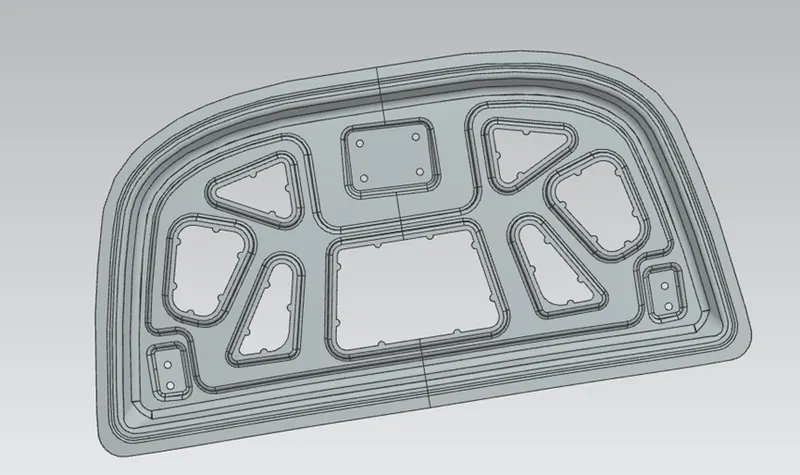
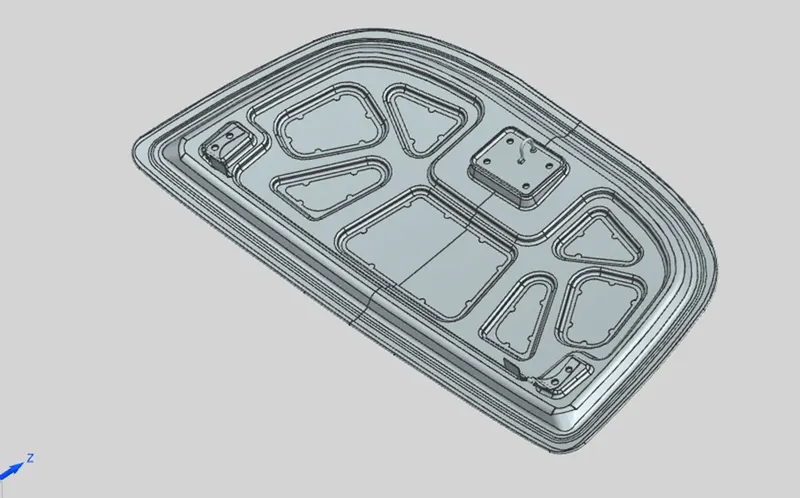
- Inner panel is recreate surface from the styling surface. Which gives the strength to the outer panel with the reinforcement.
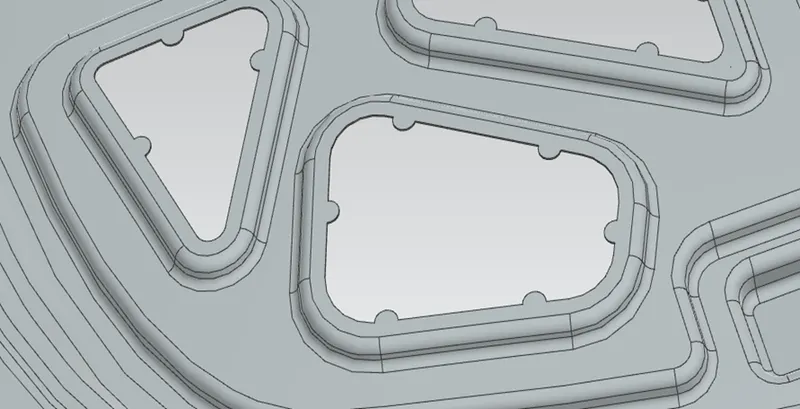
- We create the emboss on the inner panel which is called the reinforcement
- Add the mastic points for attaching the outer surface and inner surface to avoid the collision between them.
HINGE COMPONENT:
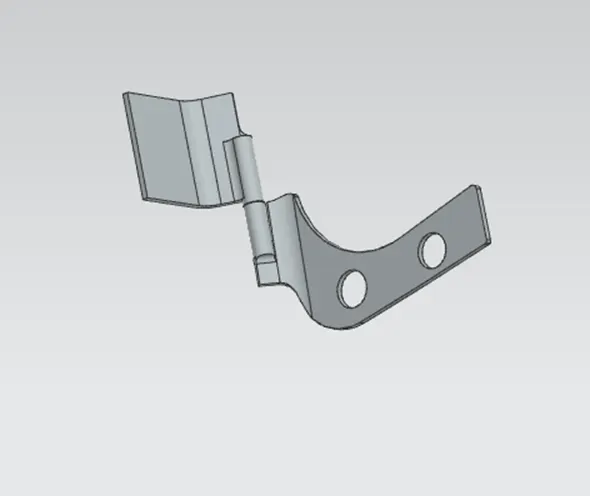
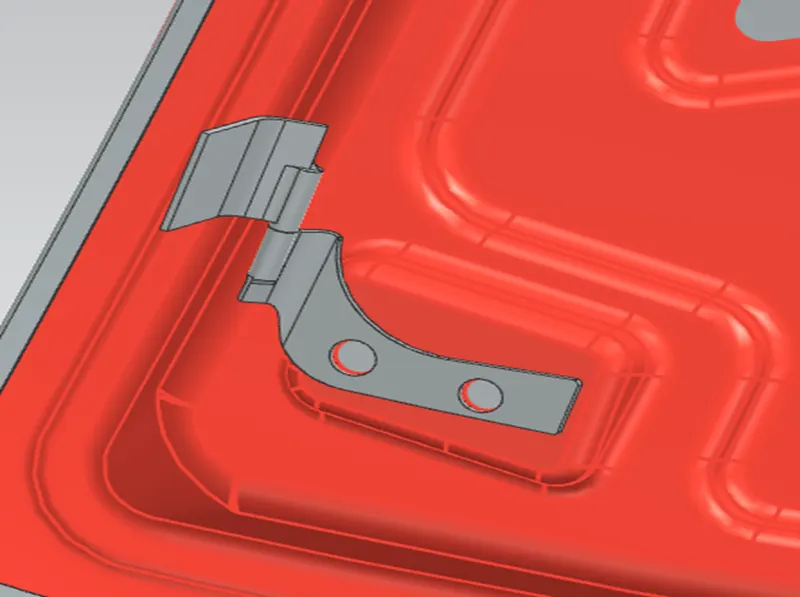
- This hinge is assemble to the inner panel.
- For assemble this component use assemble constraints, in this constraints we use mainly two constraints
- Parallel constrain: this constrain is for the rotation of the hood along x direction which is open and close of the hood panel.
- Touch align constraints: attach the hinge down surface and inner panel hinge emboss surface for the attachment.
- For the another side use the mirror command.
LATCH TRAJECTORY:
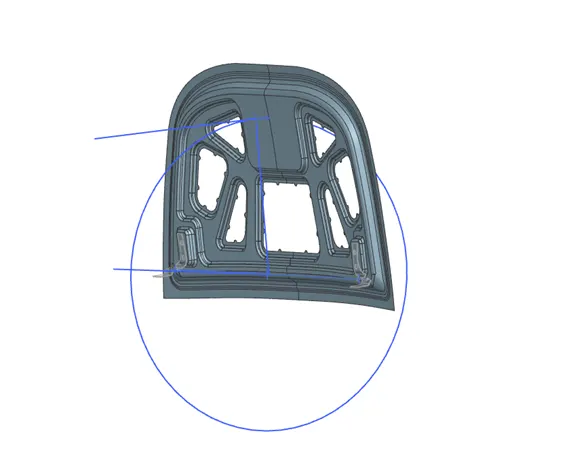
- The latch trajectory is the path which the striker will follow when the hood is open/closed while pivoting on the hinge axis. The latch trajectory is taken as a circle with the hinge axis as the centre of the circle. The striker is placed 90 degree such that it is tangent to the circle.
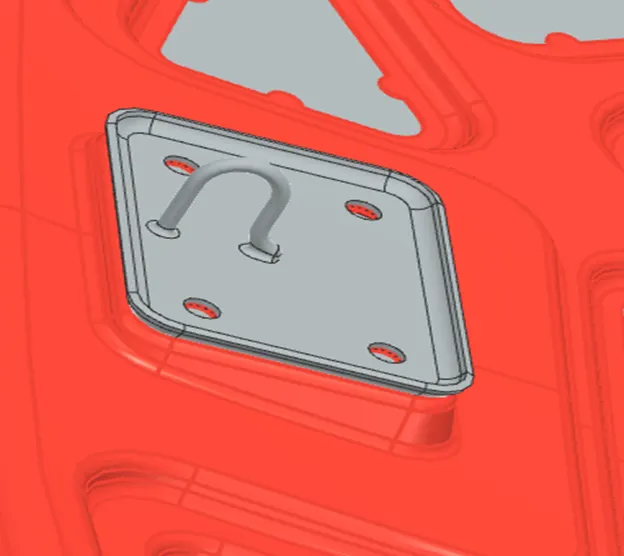
STRIKER:
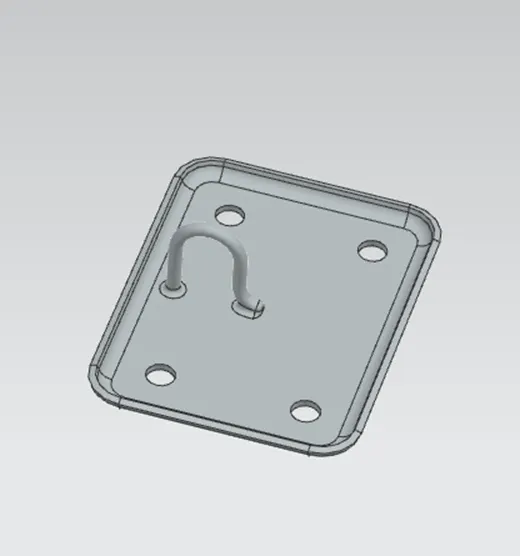
- for assembling of striker we need to create the latch trajectory which gives the exact location of latch.
EMBOSSESS:
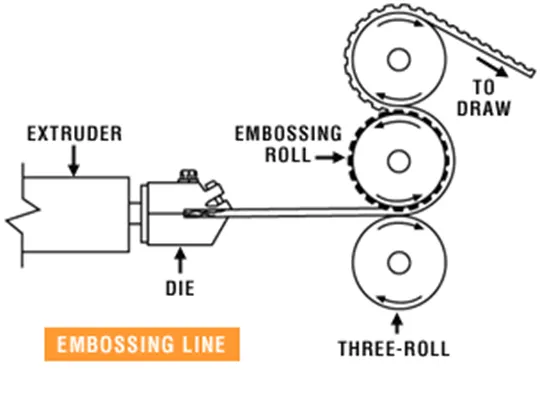
- Embossing is a metal forming process for producing raised or sunken designs or relief in sheet material by means of matched male and female roller dies, theoretically with no change in metal thickness, or by passing sheet or a strip of metal between rolls of the desired pattern.
- Metal sheet is drawn through the male and female roller dies producing a pattern or design on the metal sheet. Depending on the roller dies used, different patterns can be produced on the metal sheet.
MASTIC POINTS:
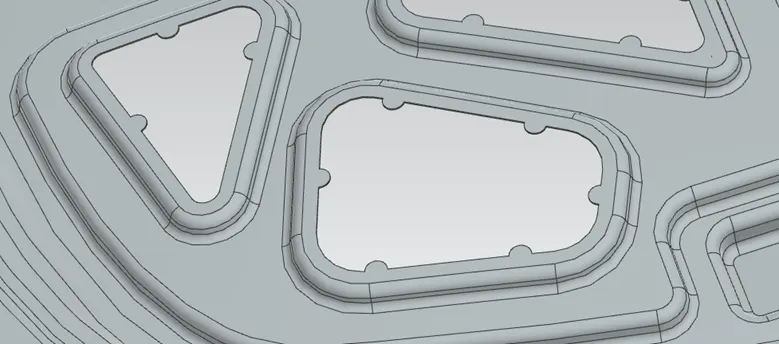
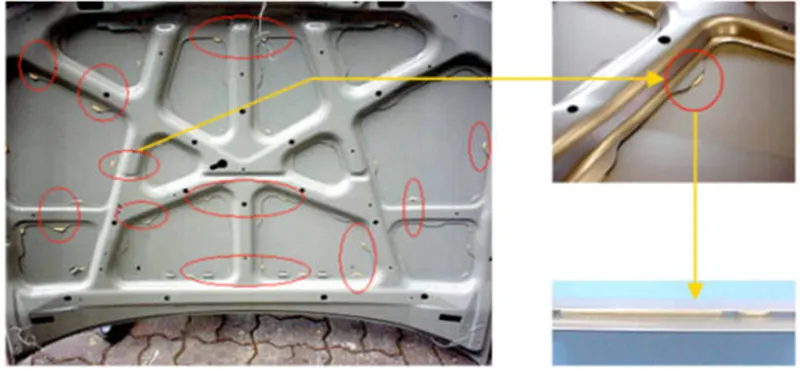
- It is an elastic compound that behaves like a rubber. These points are defined on the hood inner panel where hood easily can deform.
- It helps hood outer panel to come back to its original shape after getting deformed. It also helps the inner panel fixed with the outer panel.
- The main function of mastic point is to reduce NVH(Noise ,Vibration and Harshness) that created on hood. So, by providing more in number of mastic points at center area of hood will increase the performance of car. It has capability to reduce the NVH for the radius of 80mm.
HEMMING:
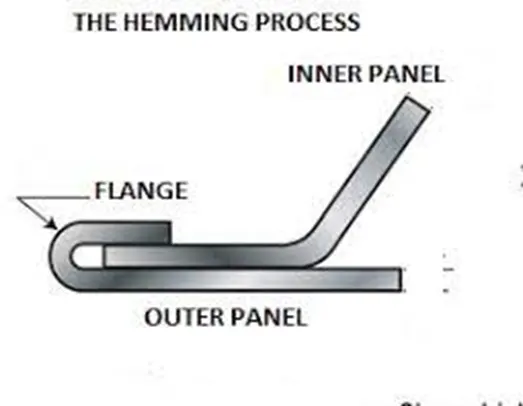
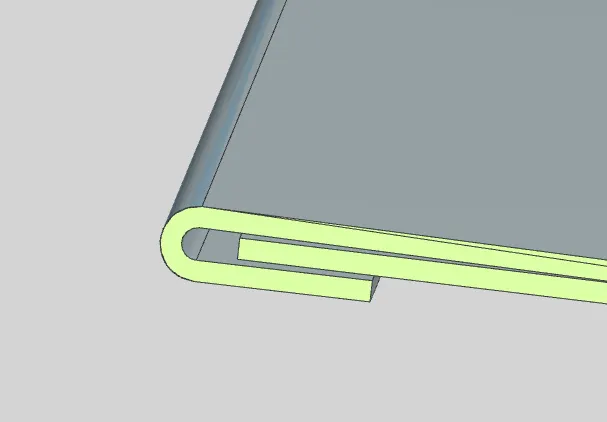
Hemming is a technology used by the automotive industry to join inner and outer closure panels together. It is the process of bending/folding the flange of the outer panel over the inner one.
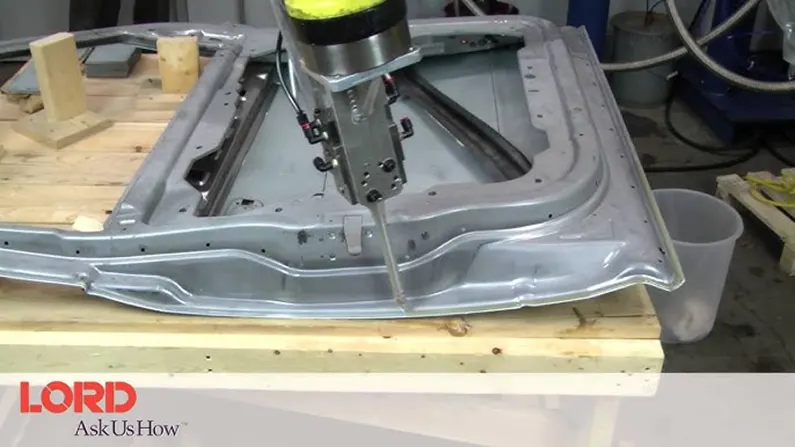
Hemming process can be carried out in diverse vehicle components: closures (hoods, doors, tailgates) sun roofs, fenders, wheel houses and in special applications such as fuel lid, brand and special parts. Both the outer perimeter and inner frame of the part can be hemmed.
DEEP DRAWING:
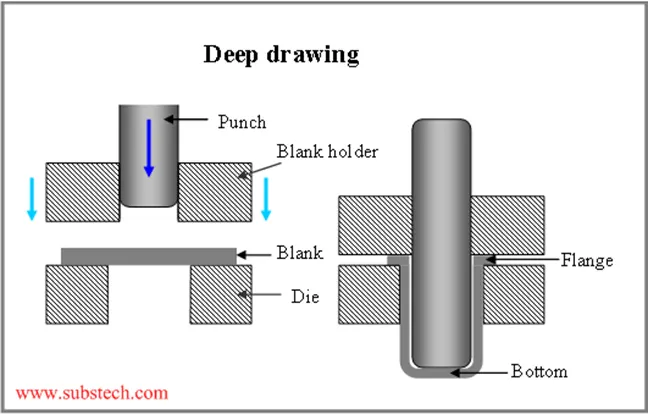
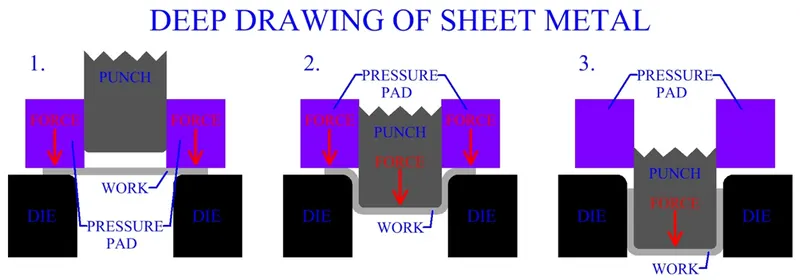
Deep drawing is a sheet metal forming process in which a sheet metal blank is radially drawn into a forming die by the mechanical action of a punch. It is thus a shape transformation process with material retention. The process is considered "deep" drawing when the depth of the drawn part exceeds its diameter.
The total drawing load consists of the ideal forming load and an additional component to compensate for friction in the contacting areas of the flange region and bending forces as well as unbending forces at the die radius. The forming load is transferred from the punch radius through the drawn part wall into the deformation region (sheet metal flange).
Deep drawing processes are divided into three types:
- Deep drawing with tools
- Deep drawing with active means
- Deep drawing with active energy
FINAL HOOD BODY:
SUBMISSION:
- All the files is submitted in the zip file and the concern is in the zip file is not opening all the part files and assembly files. so please grade my hood challenge with in presence of the guides in the group session entire the hood assembly file.