Hood design-Week 2
AIM
To design and assemble hood inner panel with outer panel and provided master sections by following the given design rules.
SOFTWARE USED
SIEMENS NX CAD 12
LITERATURE
A car hood ,also termed as "bonnet" is a hinged cover that rests over the engine bay of a front engine vehicle.It protects the engine and connecting parts from external forces while providing easy access for maintenance.
Car hoods are typically made from steel or aluminium.Sometimes it may be made from other materials like carbon fiber,fiberglass or dry carbon.The basic design methodology for hood are as follows.
- Creating of hood inner panel and outer panel.
- Creating embossments.
- Creating reinforcements
- Assembling the components.
Besides functioning as an engine compartment cover, the hood of a car can also help to manage the
impact energy of a pedestrian’s head in a vehicle-pedestrian impact.The latest data released by WHO(World Health Organization) showed that India ranks first country with the highest number of deaths caused by traffic accidents, followed by China and Indonesia.Therefore,the design consideration of hood with respect to pedestrian safety is so vital that various assessment program are carried out considering the safetry of humans.As a result of the implementation of these regulations, vehicle manufacturers face technical
challenges associated with the investigation of optimal hood panel configuration to meet the requirements while retaining or maximising styling flexibility with minimal modifications to the general architecture of the design.The following Figure 1 shows as example for such regulation carried out by the Australian New Car Assesment Program (ANCAP).Here,the pedestrian tests are carried out to estimate head and leg injuries to pedestrians struck by a vehicle at 40 km/h.
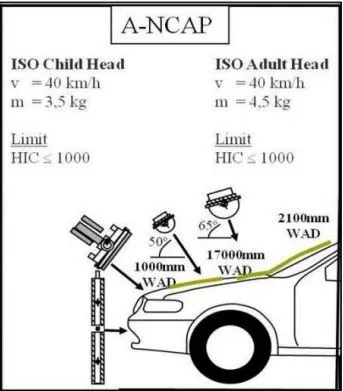
Figure 1. Standards of ANCAP pedestrian protection head impact requirements.
According to the requirements of the ANCAP for pedestrian protection, there are different zones of car hood for analysis, as shown in Figure 2 below. It can be noted that when the collision projection point locates between WAD 1000 (Wrap Around Distance) and WAD 1500, the head type will use the children head type. whereas if the points locates between WAD 1700 and WAD 2100 it denotes adult head type.
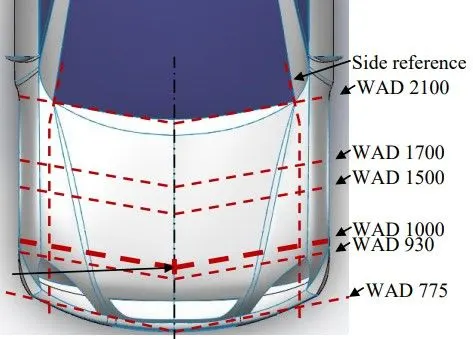
Figure 2. Zoning of pedestrian head impact protection for ANCAP
DESIGN METHODOLOGY
- Creating Outer Panel.
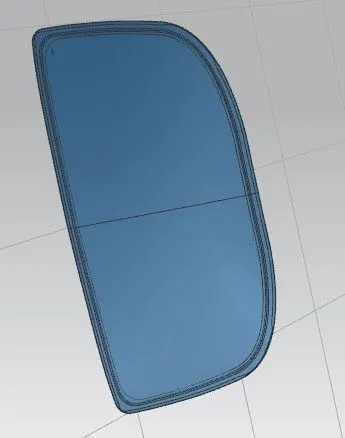
Outer panel is the aesthetic element of the vehicle which is designed by the styling team keeping in account for the safety norms for the vehicle as well as for the pedestrians.The hood panel of the vehicle is a form in which an outer panel and inner panel are combined by the process called hemming.
- Creating Inner Panel
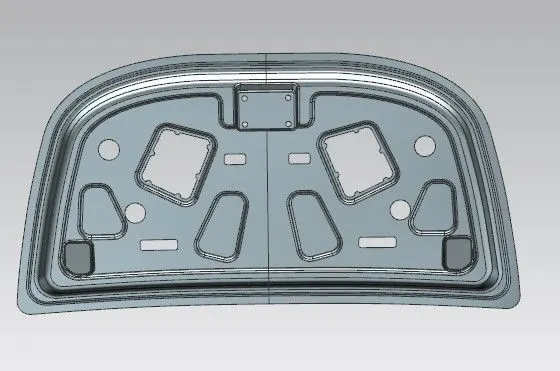
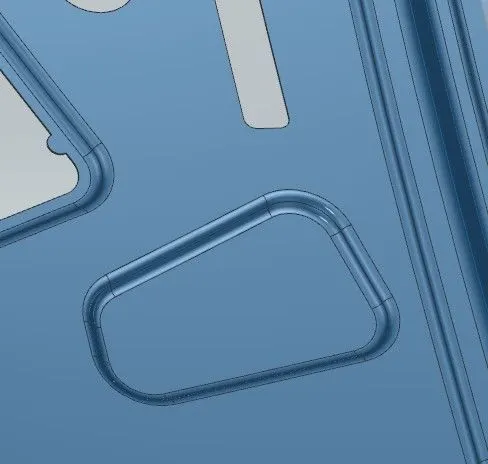
The hood inner panel for a vehicle is capable of increasing rigidity,durability and weight reduction, and also improves frontal collision and pedestrian protection.For these functionalities,embosses are created which provide additional strength to the material and designed in a way to evenly distribute the external forces from collision towards the hinge and body of the car.The emboss for latch and hinge elements are made on this panel.
- Creating Embossment
Sheetmetal embossing is a stamping process to produce raised or sunken designs as per requirement.This process is done by male and female roller dies or by passing strip of metal between rolls of desired pattern.This technique will strengthen sheetmetal and improve its properties.It is acheived bt strain hardening and residual stresses induced as a result of the embossing process which influence mechanical properties such as yield and tensile stress.
- Creating Reinforcement
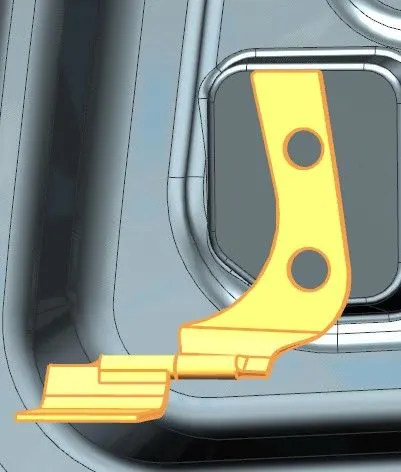
To improve the strength of the hood especially in the areas where hinges and striker are placed ,reinforcement are provided which prevent strength drop at that positions.Also stiffer pads are placed to reduce the NVH.Therefore, the reinforcement thickness is kept more than the panel thickness.
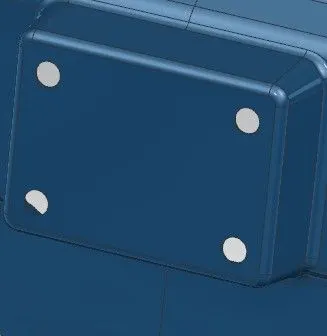
For proper opening and closing of the hood,the striker is placed tangent to the trajectory of the hood.The trajectory is made with respect to the hinge axis placed on the hood.
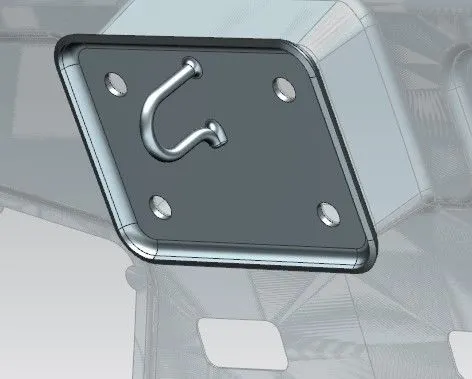
Hinge is placed in such a way that it fixes the hood to the fenders of the vehicle. The striker latch axis must be fixed perpendicular to the hinge axis so that the hood opens or closes properly.
- Deep drawing
Deep drawing or hydroforming,is a sheet metal forming process where blank sheetmetal is radially drawn into a forming die by means of mechanical punch.It can be used for wide range of materials likecopper ,brass, steel and stainless steel.The main defects of deep drawn parts are wrinkling and necking.
Disadvantages of deep drawing process are
- High initial setup cost
- Not suitable for short run
Advantages of deep drawing process are
- High efficiency
- Low cost for mass production
- Good mechanical property.
In automotive industry, deep drawing process is usually carried out using rigid tools.The figure below illustrate the deep drawing process.
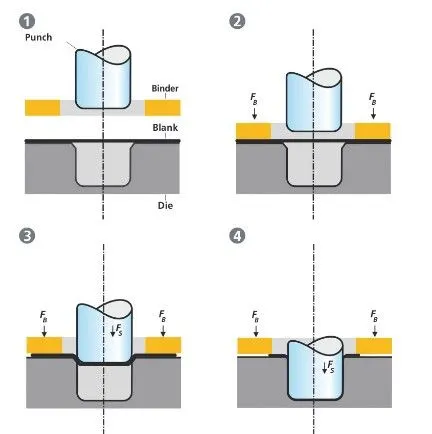
Figure . Deep drawing process
There are approximately 300 to 400 sheet metal parts which fit together to form the body of a car. In order to manufacture high quality sheet metal parts optimally for their particular use, specialized software simulates the complete deep drawing process.
- Mastic sealants
Mastic sealant is used to fix or combine the hood outer panel and hood inner panel.It creates a strong ,flexible and waerproof seal,making it ideal for sealing in areas where there need to resist movements.It is used for both exterior and interior applications.Due to its properties it can act as a barrier to moisture and are more vulernable to leaks.
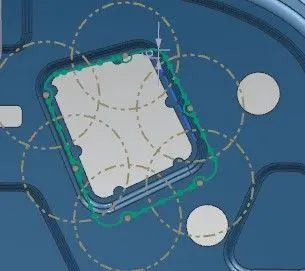
- Hemming
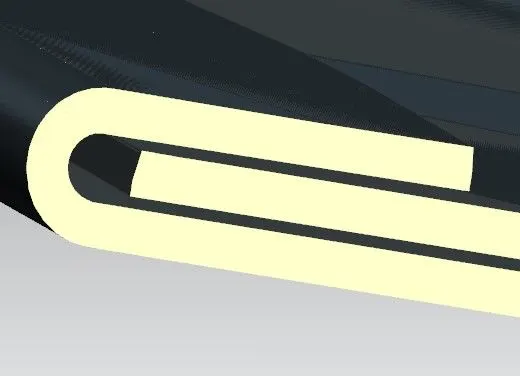
Hemming is a forming operation in which the edges of the sheet are folded over another part in order to achieve a tight fit.It is used to connect parts together,to improve the apperance of a part and to reinforce part edges.This process is used in assembly as a secondary operation after deep drawing ,trimming and flanging operations to join two sheetmetal parts (here, outer and inner panel)together. Normally this type of assembly are used for hoods ,doors ,trunk lid and fenders.The two types of hemming operations are Convectional die hemming and roll hemming.
In conventional die hemming, the flange is folded over the entire length with a hemming tool.
In roll hemming, the hemming roller is guided by an industrial robot to form the flange.
Relief is provided at the places where stresses are developed.Usually at the sharp corners that are developed during hemming process.
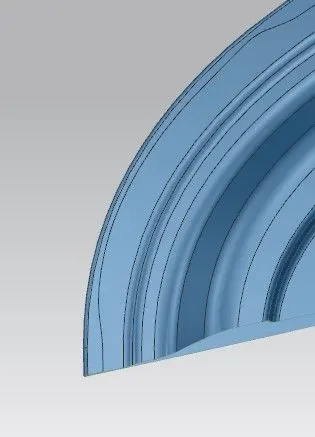
Common tools that are used for hood design in NXCAD
- Sketch.
- Offset through curve.
- Offset
- Project curve.
- Law of Extension.
- Trim Sheet.
- Emboss.
- Edge Blend.
- Mirror geometry.
- Assembly constraints
- Sew.
Conclusion
The design of hood is done in Siemens NXCAD as per the provided design criteria.