Design of a Car Hood
HOOD DESIGN AND ASSEMBLY.
Objective : Designing of:
- Hood Outer Panel.
- Inner Panel.
- Assemble with necessary Reinforcement.
Software Used : Siemens NX
Defination of Hood :- The hood or bonnet is the cover over the engine of any car which protects the exposure of engine from the outer surrounding and also adding some style to the car itself. Hoods can open to allow access to the engine compartment, or boot on some rear-engine and mid-engine vehicles, for maintenance and repair.
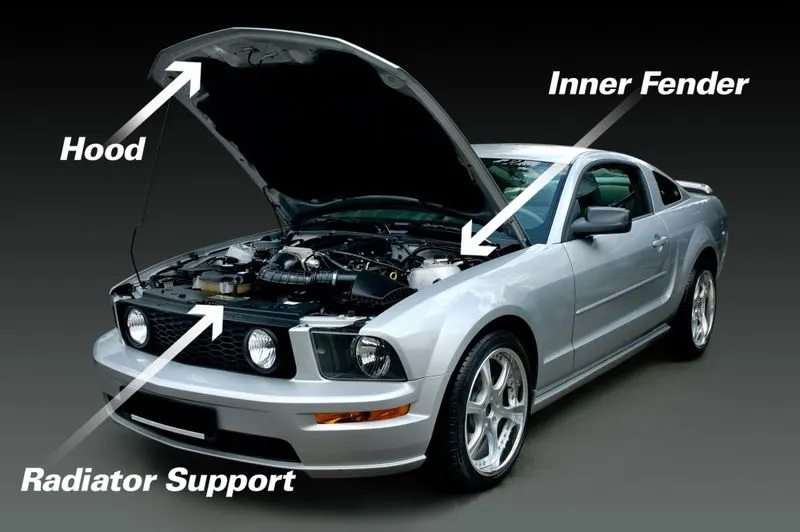
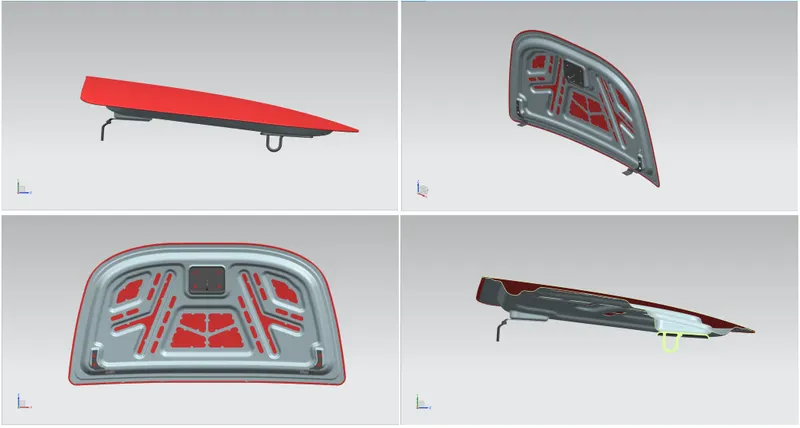
A Typical hood assembly consists of the following parts:
| SR. NO | PART TYPE MODEL | PART NAME |
| 1 |
|
HOOD OUTER PANEL |
| 2 |
|
HOOD INNER PANEL |
| 3 |
|
LATCH & STRIKER |
| 4 |
|
HINGE ASSEMBLY |
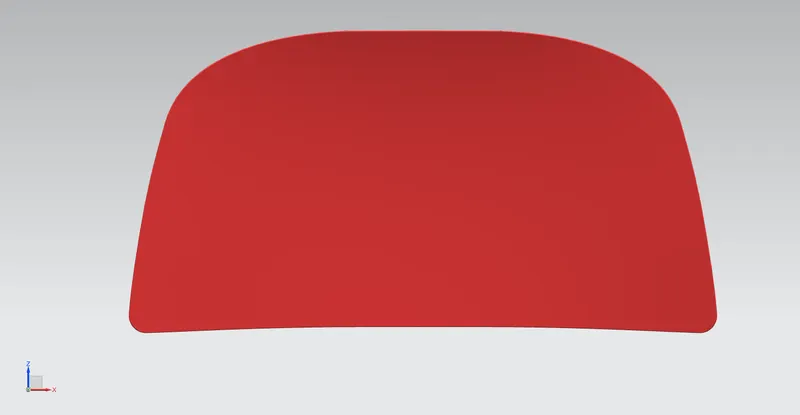
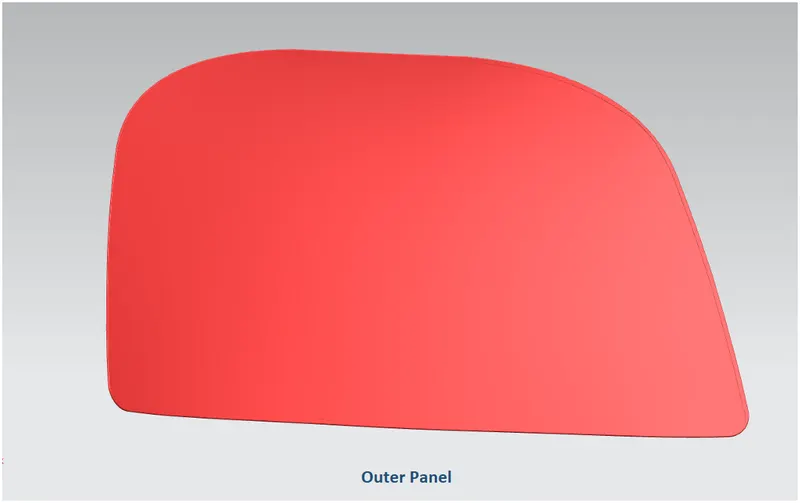
Outer Panel : Outer Panel covers the inner panel and is the part of the hood that is visible to the consumers. Hence it is mainly the styling or the asthetic part of the hood. The pedestrian safety standards are also considered during designing the outer panel of the Hood. A good Design of the outer panel also considers Better Child & Adult Head Impact on the Hood.
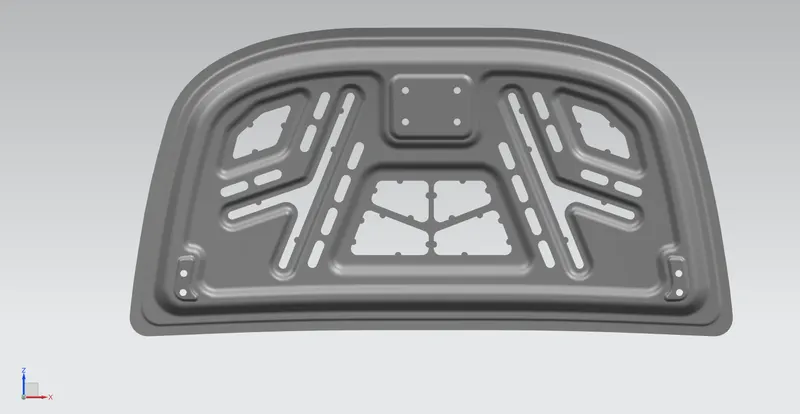
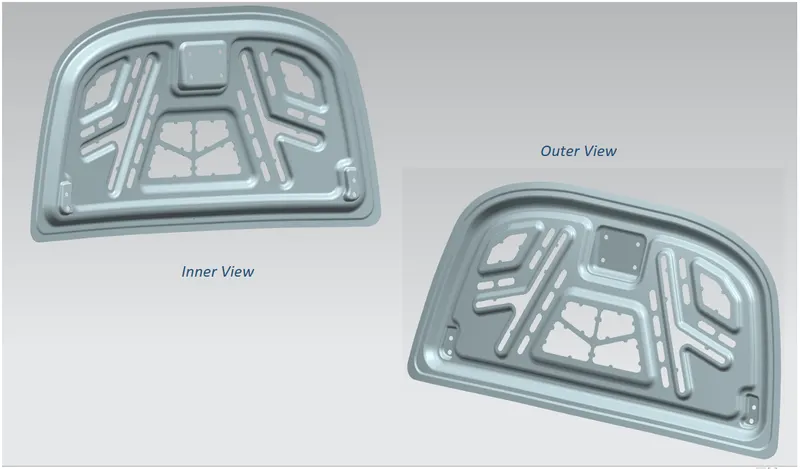
Inner Panel : This Provides Reinforcement to the whole Structure. Its Primary Function is also to provide protection to internal Components and to divert the force of Impact during a crash, to the sideward direction of the car.
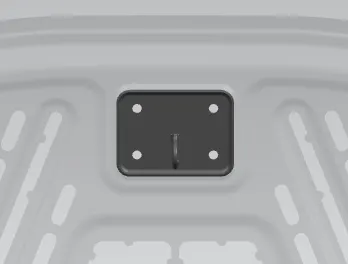
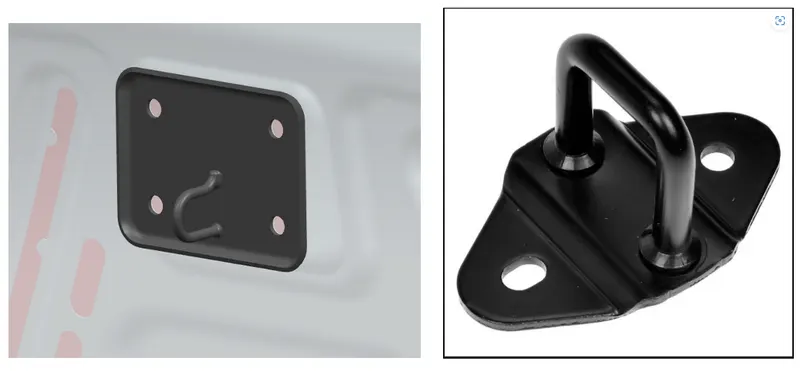
Latch & Striker : A Latch Striker is Used to Lock the Hood to the frontal part of the car, so the hood is locked and secure. This will also ensure that the hood wont open while the car is running.
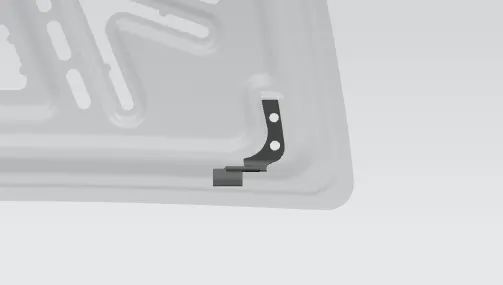
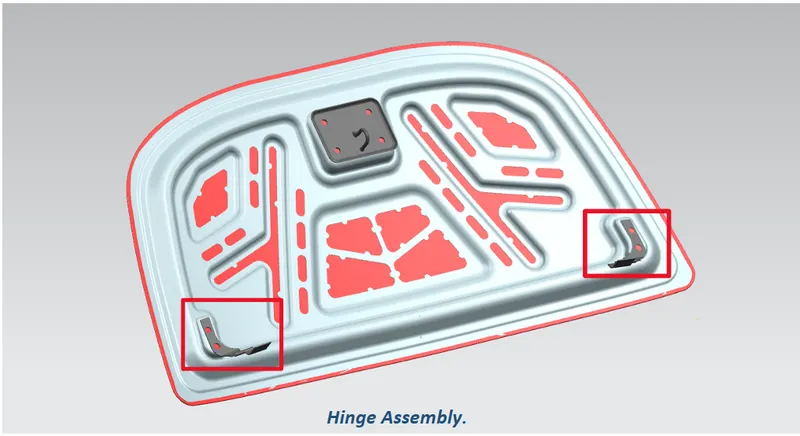
Hinge Assembly : This is Used for the hood to Open and Close while the backside of the Hood stays in Place and only the fron area will Open and Close.
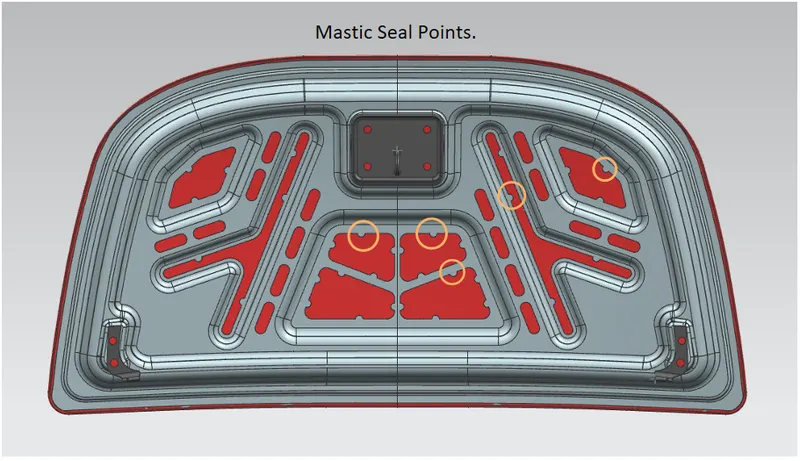
Mastic Seals : The outer panel cannot be bolted or welded to the inner panel, because of the esthetic requirements. We can overcome this by providing the suitable mastic sealant. This sealant also increase the strength of the system and has a influence around 80 mm in diameter.
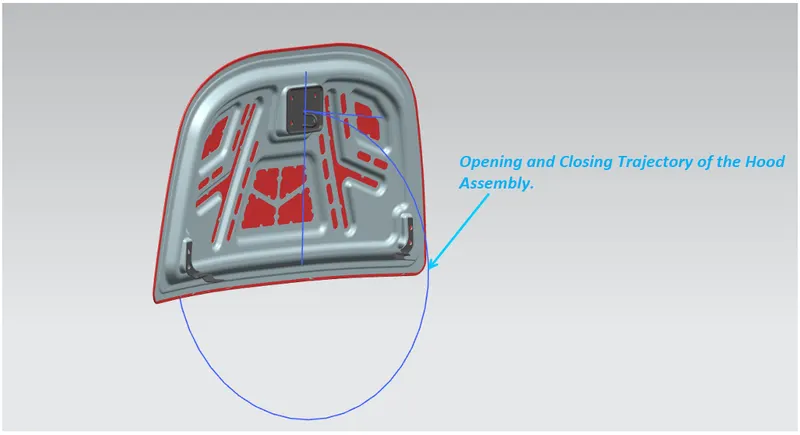
Latch Trajectory : Latch trajectory is a path that hood follows for opening and closing operations. The proper working of hood can be achieved by positioning the striker tangential to the trajectory path of the hood. The trajectory path must be drawn from the center of the hinge axis on the mirror plane.
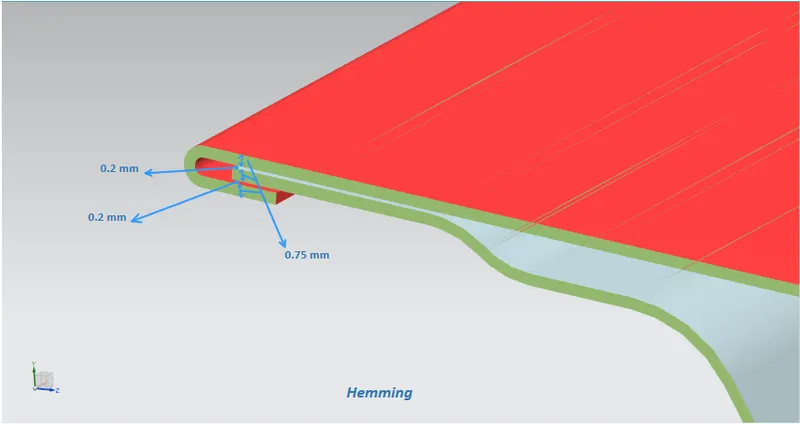
Hemming operation : Hemming is a sheet metal forming method that involves bending sheets to an angle of 180 degrees over the flange of inner Panel. The hemming technique is used to create automobile body panels and pieces such as deck lids, trunk lids, doors, hoods, and tailgates. In this operation sheet are folded or folded over another part in order to achieve a tight fit. Normally hemming operations are used to connect parts together, to improve the appearance of a part and to reinforce part edges.
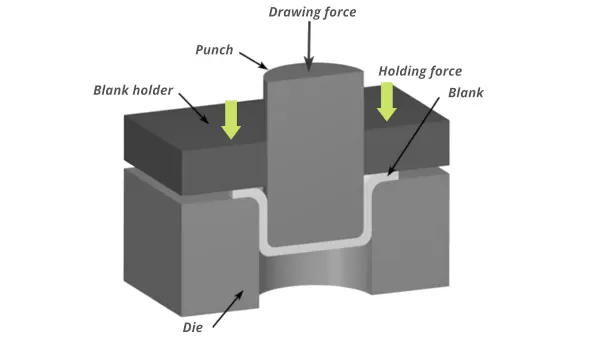
Deep drawing operation : Deep drawing is a metal forming operation in which the sheet metal is stretched into a desired shape by the mechanical action of a punch. The punch pushes the sheet metal blank downward and forces it into a die cavity which ultimately forms a shape of the desired part. During the deep drawing operation, the tensile forces cause the sheet metal blank to plastically deform into a cup shaped part. Generally the term deep drawing is referred to a drawn part which has depth more than its diameter.