Hood design-Week 2
AIM:
To design an inner panel, outer panel, hinges and reinforcements A detailed report about the Hood Design which includes a detailed explanation about hood and its components, Latch Trajectory, Mastic Data, Emboss Definitions, Manufacturing process like Hemming, and all the parameters followed in the design.
Hood or Bonet
- The hood of the car is made up of an inner and an outer panel. The exterior panel is only a metal cover, whereas the interior panel provide strength. There is frequently a sound-absorbing substance covering the underside of the hood. Although aftermarket manufacturers may produce hoods out of fibreglass, carbon fibre, or dry carbon, hoods are normally built of steel or aluminium.
- The motor vehicle's hood, often known as the bonnet, is a hinged cover that provides access to the engine compartment for upkeep and repairs. A hidden latch may be used to hold the hood down on passenger cars.
- Some high-performance automobiles include "hood scoops" that funnel outside air to the air filter, improving performance and effectiveness. The key components of the car, such as the engine, are covered and protected by a thin, hinged sheet. Its primary purpose is to provide direct access to the car's engine, transmission, and other vital components for repair and maintenance while shielding them from harsh light and dust. Additionally, it enhances aesthetics and contributes to stable aerodynamic car design.
- Regulations that limit the degree of head injuries sustained by pedestrians when struck by vehicles have just gone into effect. This is inspiring more sophisticated hood designs. A little lever that is often positioned under the dash serves as the hood release. A cable connects it to the hood latch. A safety mechanism on the hood latch needs the removal of a different latch before the hood may be opened. To avoid accidental opening while driving, this is done.
DATA:
Inner hood has been designed by following the master data:
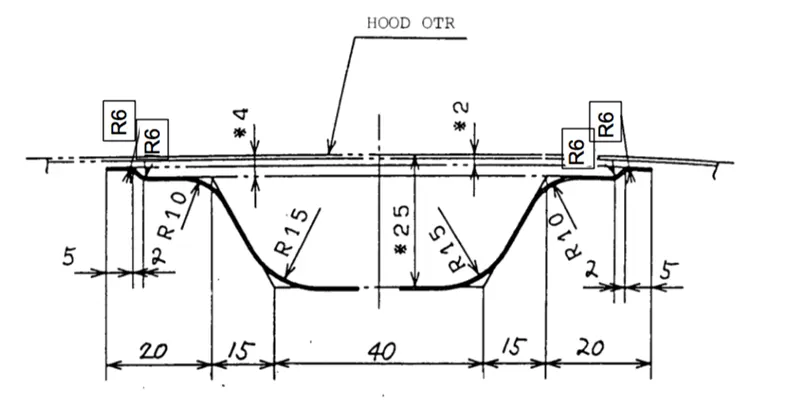
Hood thickness:
Outer panel thickness: - 0.75mm
Inner panel thickness: - 0.75mm
Reinforcement thickness: - 1.5mm
DESIGN:
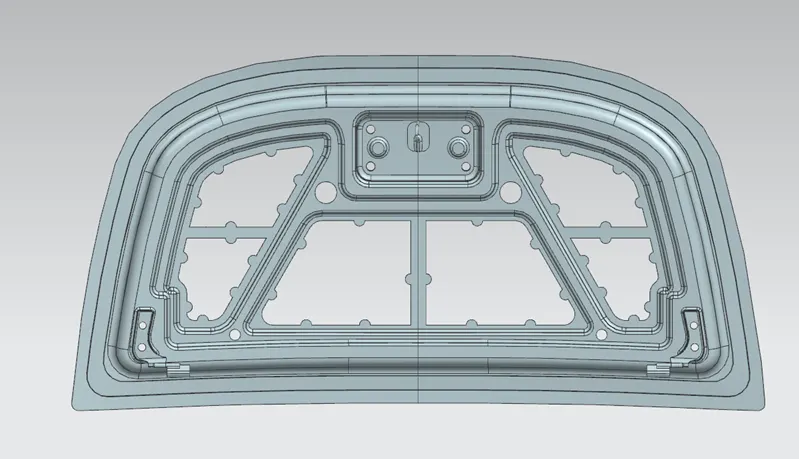
Inner panel:
The outer panel is held up by the inner panel. It has perforations and embosses. Stiffness is provided by embosses, and energy is diverted towards reinforcement.
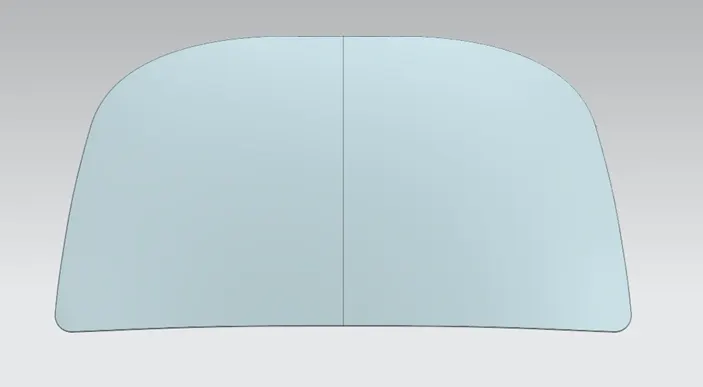
Outer panel:
A car outside panel serves as the engine's exterior cover and enhances aesthetics.
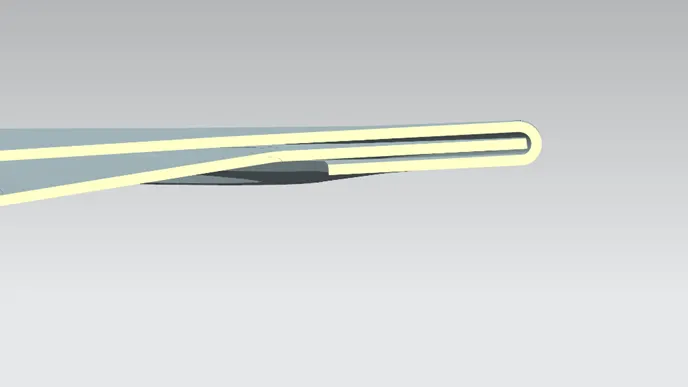
Hemming:
A spot would be left on the outside panel and would ruin the appearance of the car if the outer panel and inner panel were to be joined by any welding process. Therefore, we employ the hemming procedure to attach the inner and outer closing panels together. It involves folding or bending the outer panel's flange over the inner panel. Using the roller hemming head, the outer panel's flange is gradually curved over the inner panel.
Corner Relief:
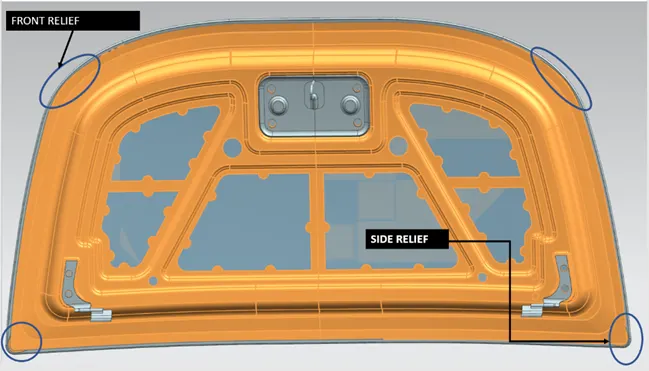
There are numerous different hemming processes, but roller hemming is utilised in hoods. The outer panel's borders will be rolled over by the roller during this phase in order to enclose it with the inner panel. For a flawless closing, these rollers will be turned over two or three times. Therefore, rollers apply a specific amount of force to all of the corners, but there are some regions where the roller cannot adequately tighten the component, therefore we provide some relief to the corners.
Mastic points:
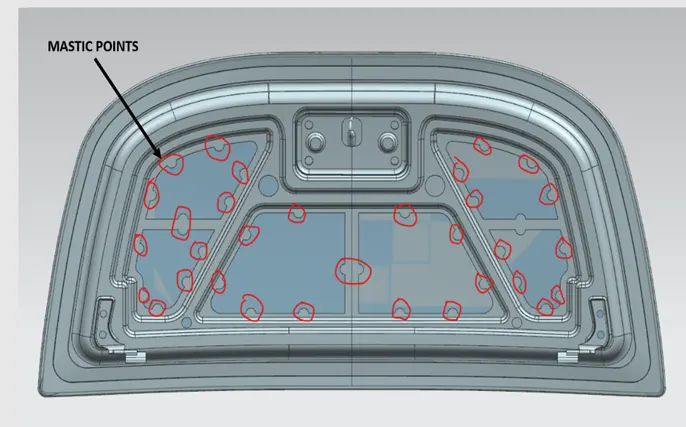
The Mastic points is a elastic compound that behaves like a rubber. it is applied between Hood's outer panel and inner panel. it has an influence area of about 80mm.
Reinforcements:
Reinforcements are used to provide more strength to the assembly.
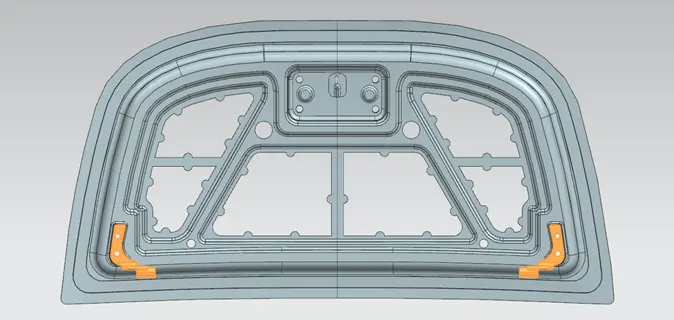
- Latch & striker
- Hinge
LATCH & STRIKER:
The hood of the car is secured with a latch and striker. It is often positioned on the area designated on the inner panel.
HINGE:
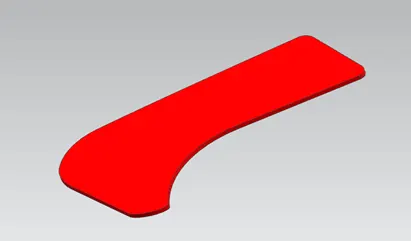
To join an automobile's hood and cowl panel, hinges are employed. It makes the hood's opening and shutting possible. The hinge needs to be constructed sturdy enough to support the weight of the hood as well as the force exerted on it during the collision.
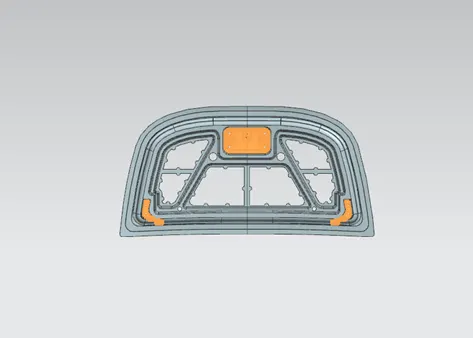
Position of Hinge & Striker:
Typically, the hinges should be positioned on the hood's left and right sides such that the strike fits perfectly into the opening.
The following requirements must be met to be sure of this:
- There should be alignment between the two hinges.
- The hinge axis should always be perpendicular to the centre of the striker's circular trajectory.
EMBOSS:
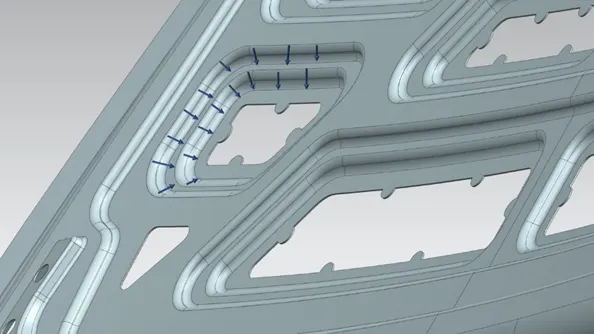
The projections that are created on sheet metal using deep drawing techniques are called embosses. The main reason for performing the operation is to harden the inner panel's smooth surface and design. The main purpose of embossing is to disperse the force applied on the hood during a collision of the car as quickly as possible towards the hinges. This lessens the force's effect on the passenger who is inside.
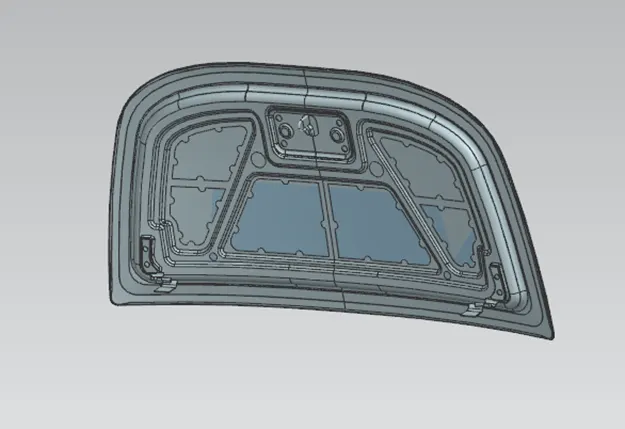
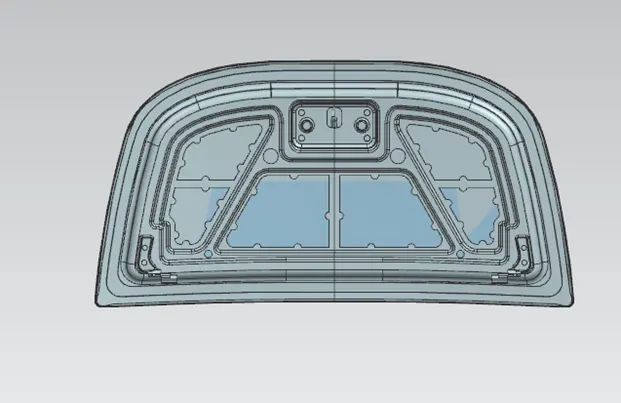
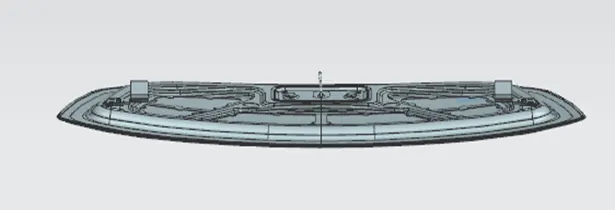
TOTAL ASSEMBLY:
DRAFT ANALYSIS:
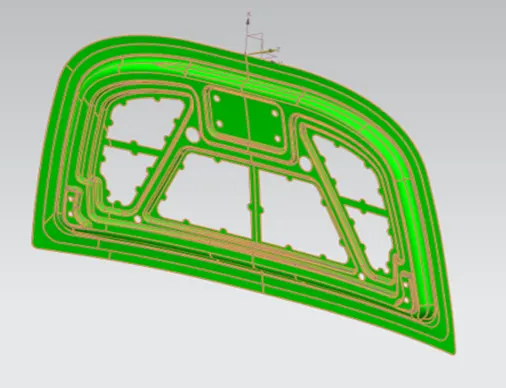
Once the design was ready, the inner panel of the hood was analysed for manufacturability. here draft analysis shows that all parts are clearing when core is removed from cavity.
CONCLUSION:
The hood's components are ALL created using the specifications & dimensions provided. After finishing the hood design and successfully analysing for manufacturability. We can infer that the car can make use of the hood. The hood has also been designed in accordance with EuroNCAP safety standards, taking into account the safety of passengers and pedestrians.