Hood design-Week 2
DESIGNING AND MODELLING OF A HOOD USING CATIA V5 SOFTWARE
Introduction to HOOD
A car hood also referred to as a bonnet in some other countries is the hinged cover that rests over the engine of a front-engine vehicle. Its purpose is to provide access to the engine for repair and maintenance. Car hoods are typically constructed from steel and sometimes from aluminum.
Hoods are usually made from the same material as the rest of the body. This can be steel, aluminum, fiberglass, or carbon fiber. However, some aftermarket companies produce fiberglass or carbon fiber steel hood replacements to make the vehicle lighter.
The hood release system is common on most vehicles and typically consists of an inner hood latch/lock handle, a hood release cable, and a hood lock assembly. The hood lock handle is usually located under the steering wheel, next to the driver’s seat, or in the door frame.
For racing cars or vehicles with aftermarket hoods (that do not use the factory latch system) the hood can be held down by hood pins. Some aftermarket hoods that have a latch system still have hood pins to keep the hood buttoned down if the latch fail

Design Considerations for HOOD
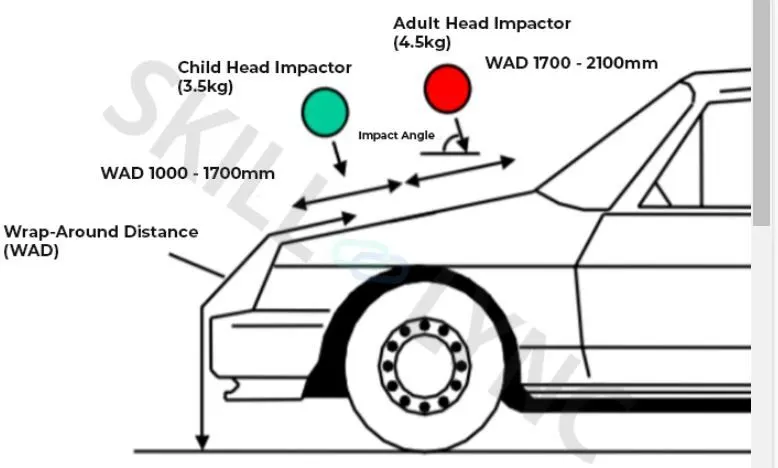
- Pedestrain safety
- Occupant safety
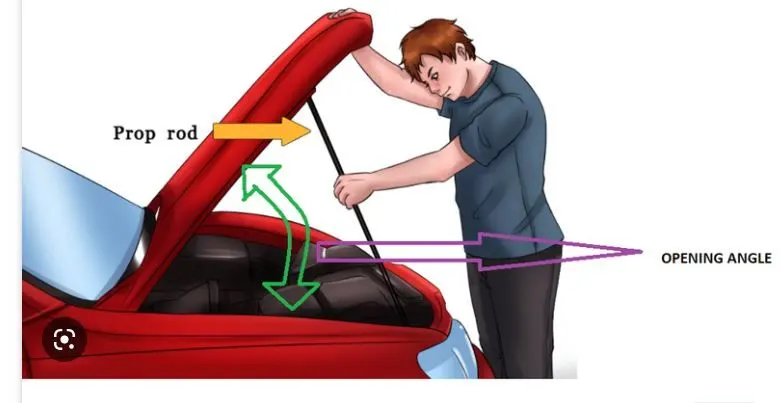
- Opening angle of Hood
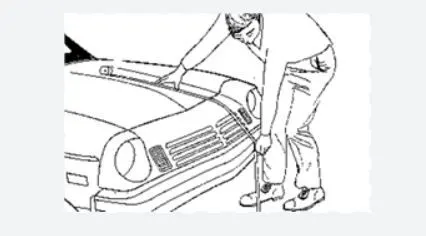
- Wrap around distance(WAD)
- NVH ( Noice, Vibration, Harness)
- Styling
Objectives:
- Design hood outer panel
- Design hood inner panel
- Design of Latch
- Design of Hinge
- Different operations used in hood
-
The Hood consists of the following major component as:
The outer panel
The outer panel, used to cover the inner panel of the hood. It is also considered as the class-A type of the car body, because it is visible from the outside. This component must be considered for the styling. It is first component that subjected to any type of impact. This part is intact with inner panel so to have a perfect combination its edges are wrap around inner panel this type of wrap called hem operation.
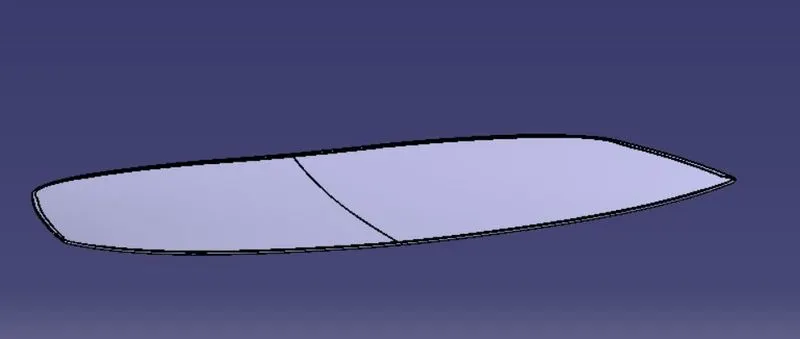
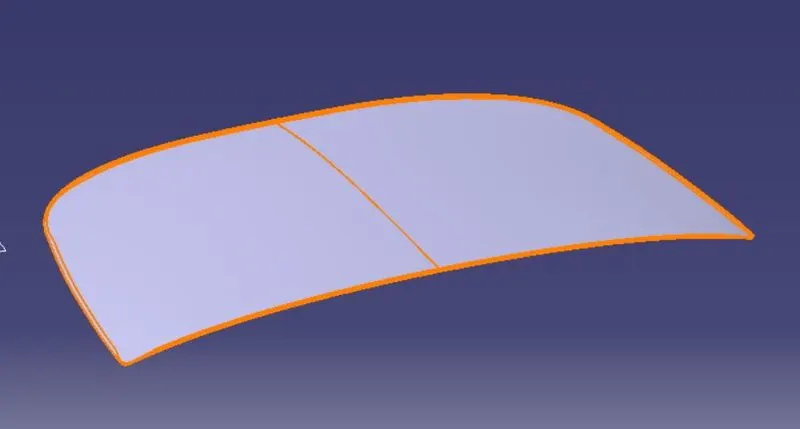
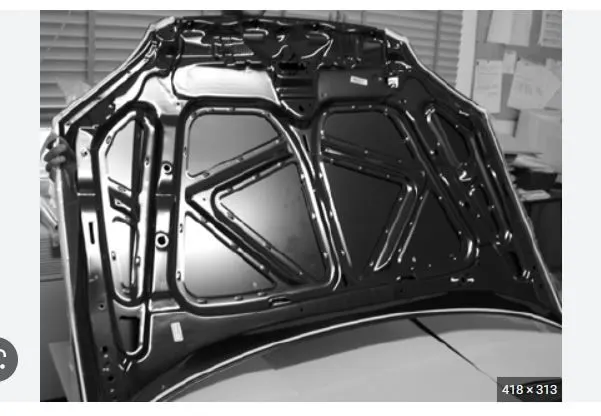
The inner panel
This is a class-B surface, which cannot be visible directly from the outside. The top and bottom section of the inner panel are presented below. For this hood part, many factor must be considered for the designing such as: less weight, high stiffness, good force distribution at the time of impact, good heat remover, minimal harness and vibration. The steps embosses were provided for good stiffness and avoid localization of forces. The sticker and hinge are also attached to it. The half circle space presented in the figure marked with the red line circle also provided for the mastic to provide the proper contact between outer and inner panel.
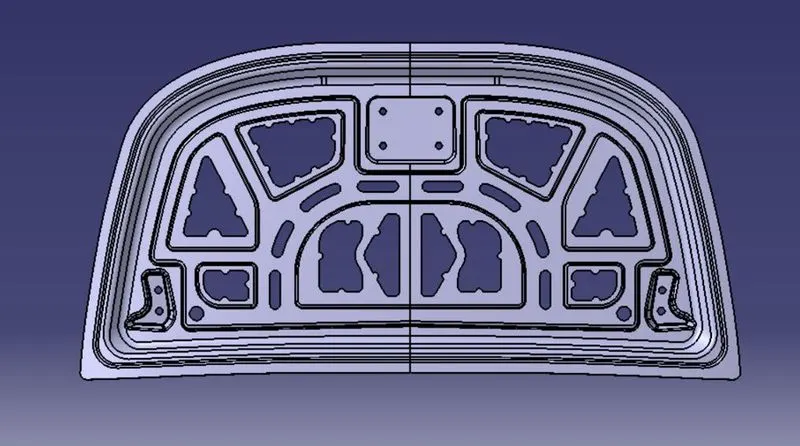
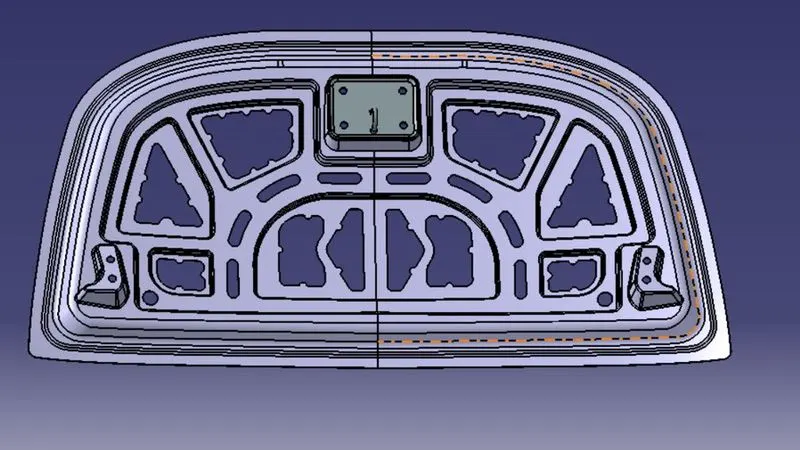
MASTIC: The outer panel cannot be bolted or welded to the inner panel, because of the esthetic requirements. This can be overcome by providing the suitable mastic sealant. An excellent anti-flutter compound, elastic Mastics are an extruded product made in standard, custom, or complex die cut shapes and thicknesses to meet customer requirements for sealing, noise dampening, and vibration reduction. This sealant also increase the strength of the system and has a influence around 80 mm in diameter.
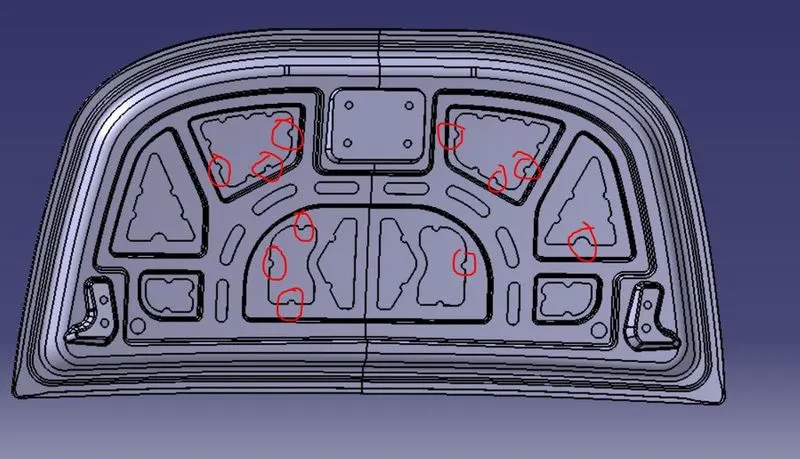
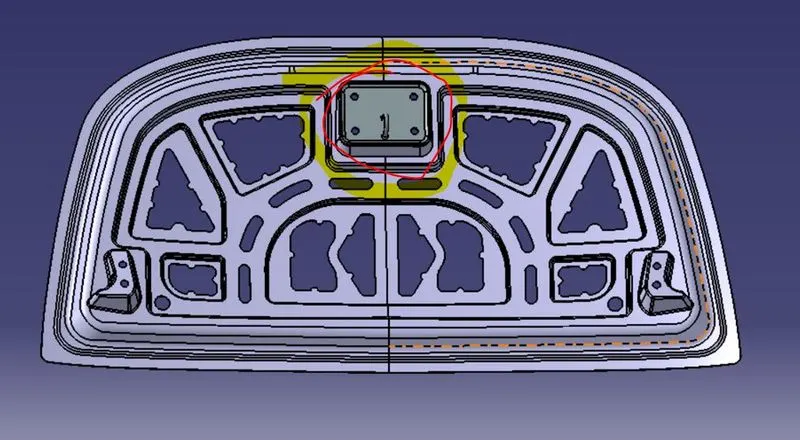
Latch and striker assembly
These both, together used to lock the hood to the body of the car. The reinforcement is provided to compensate loss of the strength.
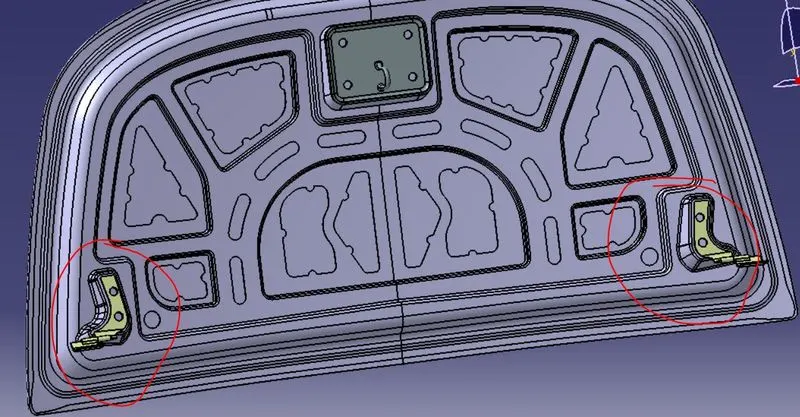
Hinge assembly
Hinges are provided with the hood assembly on the both corner shown with the red line on the below photo. It is used to connect the hood and fender and also it provide the rotation to the hood assembly, so as to open and close hood frequently. It allow only one degree of freedom.
Emboss definition
Sheet metal embossing is a stamping technique that creates raised or sunken images in sheet metal. This procedure can be accomplished using matching male and female roller dies, or by sliding a sheet or a strip of metal between the desired pattern's rollers. It's frequently used in conjunction with foil stamping to produce a gleaming, three-dimensional impression.
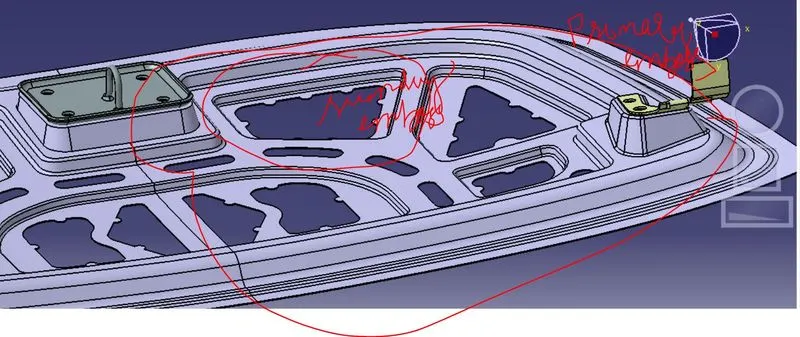
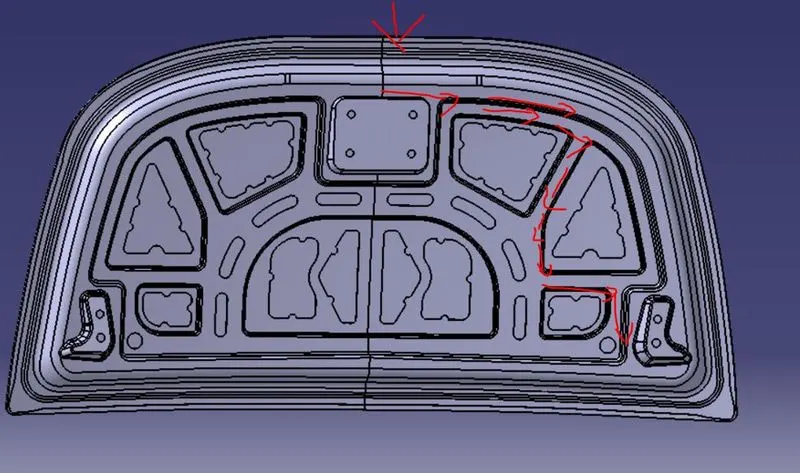
emboss design specifications
in model the embosses are created in such a way that even if the collission happens the forces arediverted towards the hinges so that the driver or the passenger wont get affected much
-
Hemming operation
Hemming is a sheet metal forming method that involves bending sheets to an angle of 180 degrees. The hemming technique is used to create automobile body panels and pieces such as deck lids, trunk lids, doors, hoods, and tailgates. In this operation sheet are folded or folded over another part in order to achieve a tight fit. Normally hemming operations are used to connect parts together, to improve the appearance of a part and to reinforce part edges.
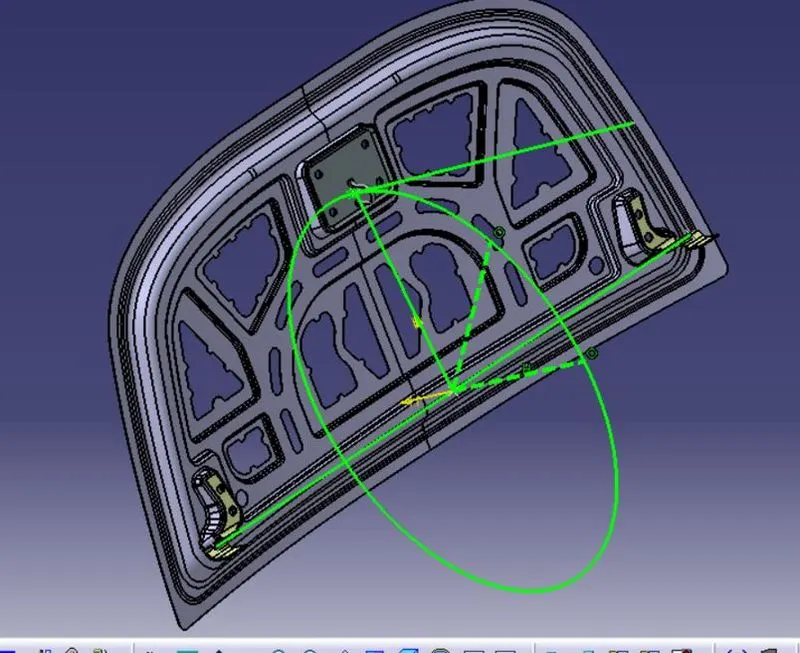
HINDGE AND STRIKER TRAGECTORY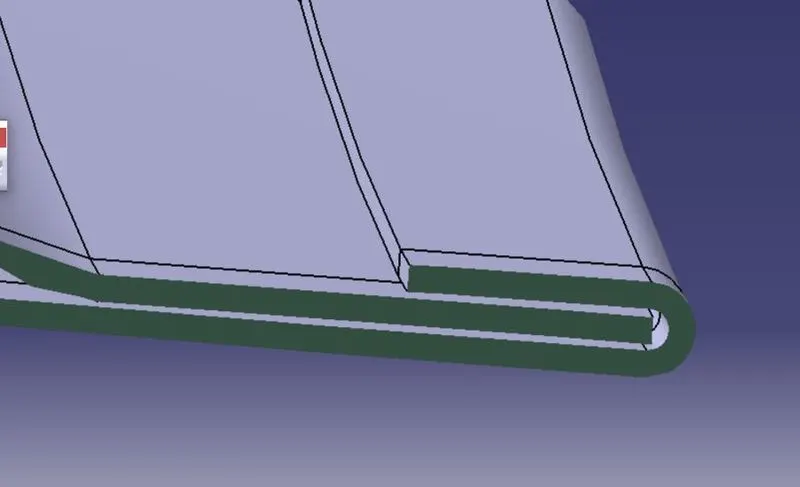
Hindge and striker trajectory indicates the opening and closing od the hood with respective the upper and lower ends od the hood mounting .The hidge is connected to the frame and and the other end of the hindge is fixed to the hood which helps the hood to get fixed amd move easily and this hindge and striker tractory show how procurely the the striker gets locked to the bottom area and angles are specified
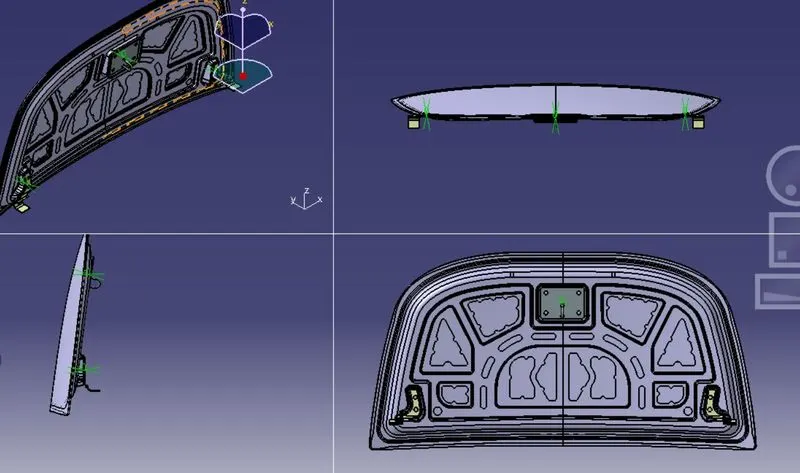
tools used are
surface work bench tools:parallel curve ,split,trim,extrapolate,sweep,intersect,projection ,join ,curve smooth,extract,multi extract,offset ,boundry,edge fillet.tritangent fillet.
part workbench tools:thick surface and edge fillet
assembly workbench tools: fixconstraint ,offset constraint,
conclusion :by considering all the design rules and input specifications innerpanel and outer panel and hindge allignment and striker allignment are done with proper tools usage