Hood design-Week 2
OBJECTIVE :-
To design the hood inner panel with the help of given parameters, master section and hood outer panel,hinge and striker.
INTRODUCTION
HOOD:
The hood or bonnet is the hinged cover over the engine of motor vehicles. Hoods can open to allow access to the engine compartment (or trunk on rear-engine and some mid-engine vehicles) for maintenance and repair. It also protects these parts from direct sunlight and dust.A latch is provided under the hood in order to prevent accidental opening during driving.
Design Parameter
Hood Thickness Information
Outer Panel Thickness = 0.75mm
Inner Panel Thickness = 0.75mm
Reinforcement Thickness = 1.5mm
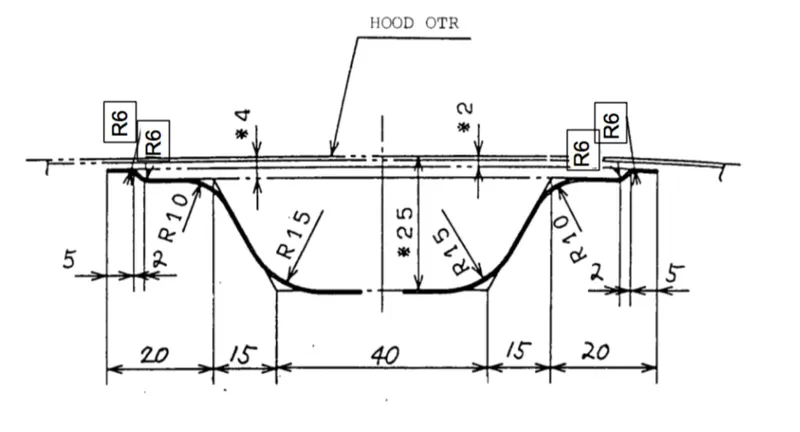
Master Section
COMPONENTS:
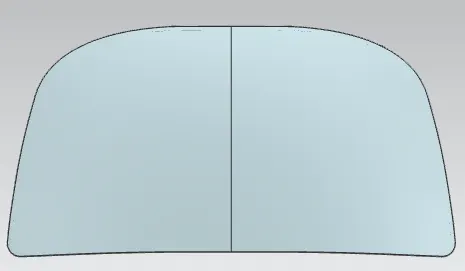
HOOD OUTER PANEL:-
Outer panels are the aesthetic elements of a car. It is the styling team who provides the skin for the outer panel. The shape, position and size of the hood should satisfy the safety norms. So while designing the hood we should give more importance to pedestrian safety. The outer panel is attached to the inner panel by hemming. So, it is necessary to provide required hemming flange and reliefs for the hemming operation. We also provide mastic sealants between outer panel and inner panel to reduce vibration.
HOOD INNER PANEL:-
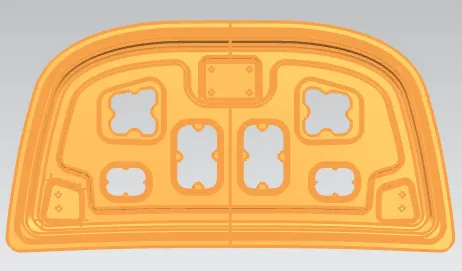
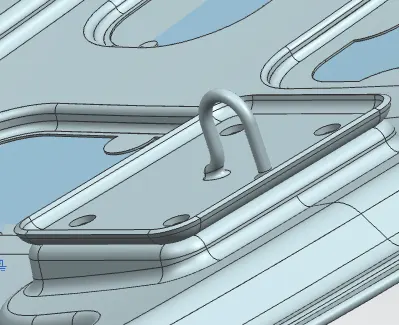
Inner panel is the part that gives strength and rigidity to the outer panel. The master section represents the initial emboss shape and size. Then we provide the emboss for the latch and hinge elements after fixing the location.
HINGES:-
Hinges allow the hood to rotate around a fixed axis for opening and closing movement. One part of the hinge is fixed with the engine compartment, while other part is connected to hood.
LATCH AND STRIKER:-
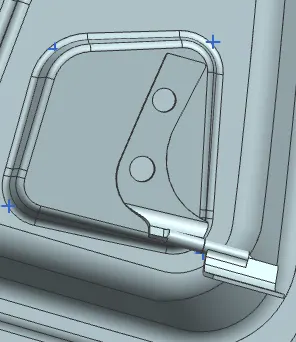
Latch and striker mechanism is provided to lock the hood, in order to prevent accidental opening of the hood during driving. The latch is present on the engine compartment while the striker is attached to inner part of hood.
REINFORCEMENT:-
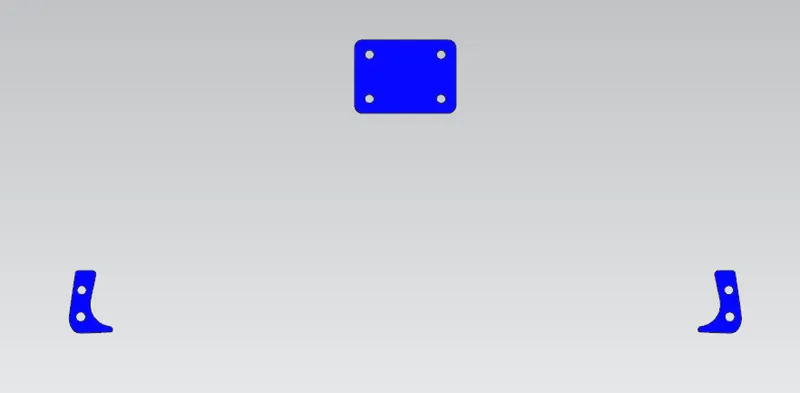
Reinforcements are provided according to the design requirements. Mainly it is provided at the hinge and latch regions to improve the strength locally. Usually thickness of reinforcements will be higher than that of the inner panels and the value varies according to cost and requirement. According to the design requirement here it is given 1.5mm thickness to both hinge and latch reinforcements.
TRAJECTORY:-
It is the path along which the hood rotates during opening and closing movement. The striker on the hood follows a particular path while opening or closing the hood, which is along circumference of a circle with center at the hinge axis. This path is nothing but latch trajectory. It is a very important aspect in hood design, in order to decide hinge, latch and striker installation point.
Design cosideration:-
most important point to consider during designing the hood is hood opening angle.
opening angle consideration depands on the average height of the human living in the particular country which taken as consideration.
if the average height of the human being is more then the opening will be more ,and vise versa . It's important to avoid the injury.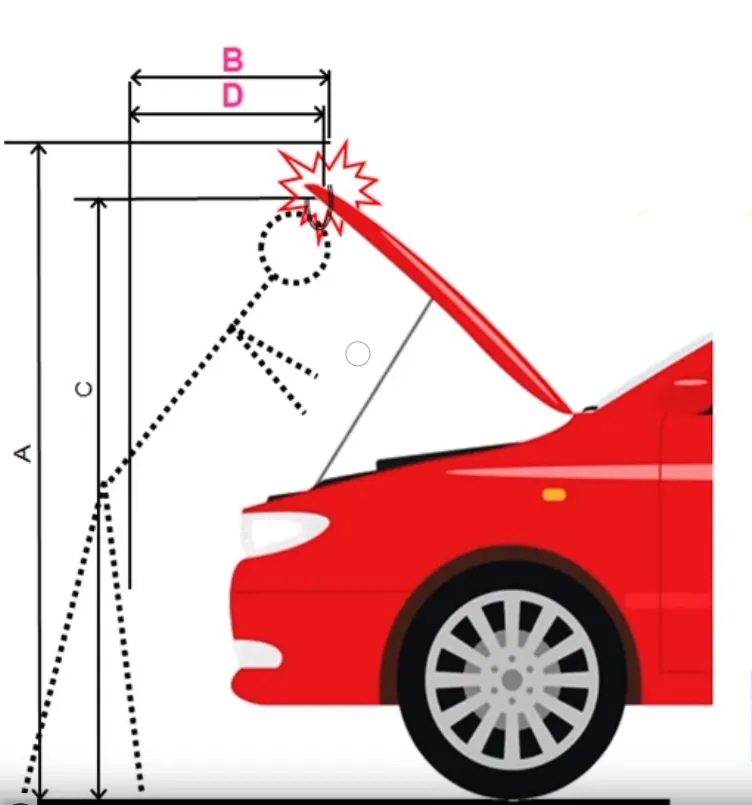
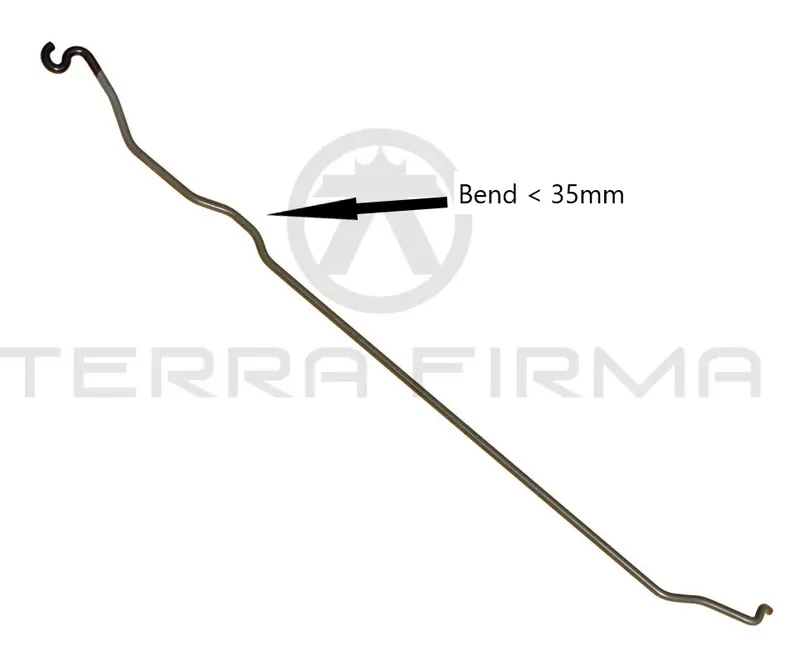
we can give support rod /gas stay for supporting the rod at open possition.
MANUFECTURING PROCESS
The following are the manufacturing steps done to generate the outer and inner panel of the hood.
Blanking: It is the process where the required sheet metal material is cut from the sheet metal coil for the manufacturing of the hood using a blanking die.
Stamping:
The material obtained from blanking is stretched using the stamping die. The stamping die is designed according to the embossed design. This process is called deep drawing.
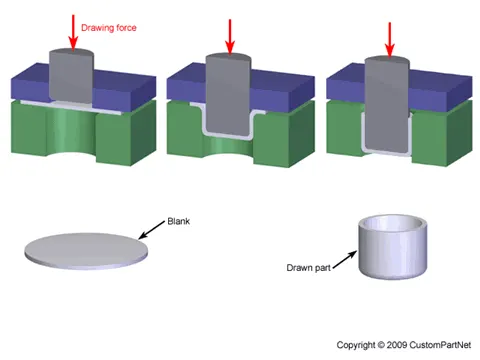
The material obtained from blanking is stretched using the stamping die. The stamping die is designed according to the embossed design. This process is called deep drawing.
Trimming and punching: The outer and inner panel is obtained from the forming is placed in the trimming and punching die to carry out trimming and shaping operations to obtain the hood panel with the required dimensions and emboss cutouts
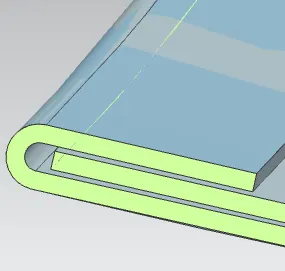
Hemming is a technology used in the automotive industry to join inner and outer closure panels together (hoods, doors, tailgates, etc.). It is the process of bending/folding the flange of the outer panel over the inner one. The accuracy of the operation significantly affects the appearance of the car’s outer surfaces and is, therefore, a critical factor in the final quality of a finished vehicle
Different types of hemming methods are
1. Die hemming method
2. Table-top hemming method
3. Robotic Roller hemming method
.
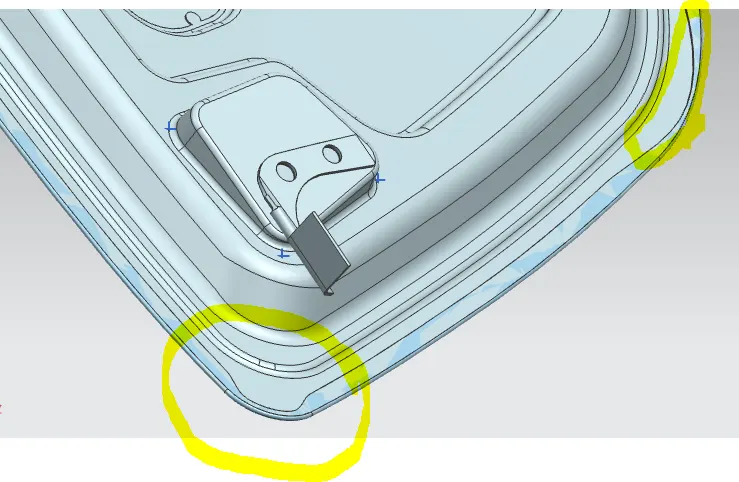
Corner Relief
Corner relief has to be provided for sheet metal bending. In this case, before the hemming process to control the deformation of the sheet metal and to avoid any tear of the sheet metal during bending
.
Sealants
Sealants are used to close the gap between two or more substrates. It also acts as a leakproof between the components. It forms a barrier through the physical properties of the sealant itself and by adhesion to the substrate.
Mastic Sealants are used to join one surface to another or protect the area to which it is applied. It has heat resistant properties and the ability to form a strong bond which is applied using a mastic sealant gun.
Mastic Sealants have an influence area of 80mm diameter.
Mastic Sealant points in the designed hood are shown below.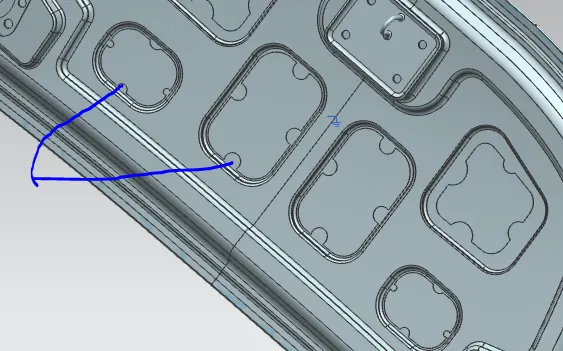
Design Standards
The most important criteria in designing a bonnet are pedestrian safety from a frontal collision.
The EURO NCAP has developed series of crash test and rating systems for assessing pedestrian, driver, and passenger injuries during impact with of the vehicle.
The below image illustrates a pedestrian is in standing perpendicular to the road and a crash test performed with a head-on collision.
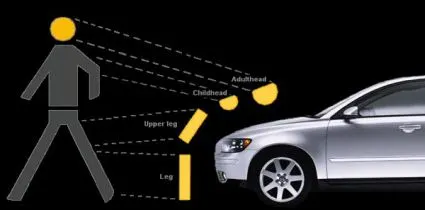
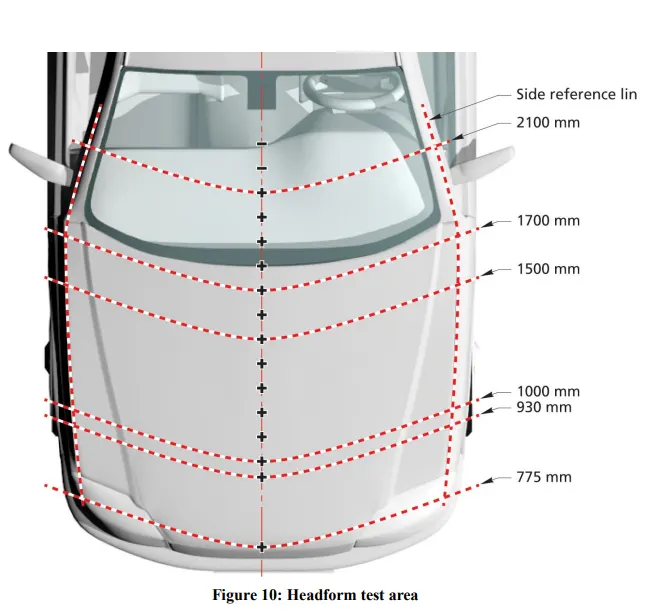
Wrap around distance: It is the distance from the road to the point where the head of the pedestrian collides with the hood
In the below images we can see the wrap-around distance for adults and children.
Conclusion:
1. The design considerations for the Hood is taken are discussed and taken into consideration while designing the hood.
2. The manufacturing feasibility of the hood is taken into consideration.