Hood design-Week 2
HOOD DESIGNING
Introduction
A car hood is the metal part that covers the engine compartment of an automobile. the hood protects the engine and connected parts from the elements while providing easy access for repairs and maintenance. Car hoods are typically constructed from steel and sometimes from aluminium. A concealed latch is typically used to lock the hood in place while driving and two hinges are provided on both sides to fix the hood to the main body.
From a design perspective hood should meet some specific conditions like pedestrian safety, a hood head zone for the lock striker, force distribution when subjected to frontal collision (occupant safety), manufacturability etc.
while we design the hood assembly we considered some important parts like the hood's inner pannel, outer panel and two supportive parts hinge, striker and latch. the outer panel gives the aesthetics of the car and cushioning of the hood at the moment of a collision while the inner panel provides the strength to the hood. latch and hinges fixing the entire assembly of the hood to the main car body
DESIGN CONSIDERATIONS FOR CAR HOOD
- head clearance zone
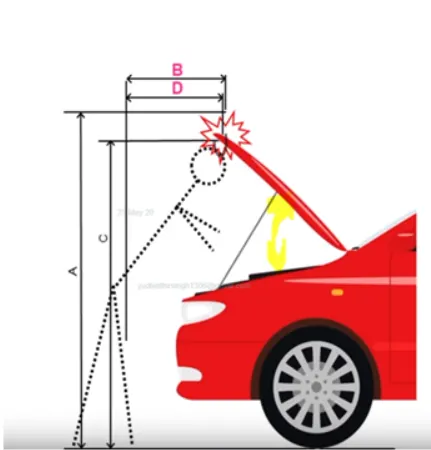
The head clearance zone is the clearance such that when the hood is in fully open condition it does not hurt the head of the person that is standing next to the hood. this is controlled by the opening angle of the hood. the opening angle of the hood is decided according to the country the car is manufactured. some countries may have people with an average height of 5.5 ft and another region may have people with an average height of 6 ft . so deciding the right opening angle for the hood is an important criterion.
- Noise Vibration Harshness (NVH)
the noise and vibration produced by the car should be minimized. in the hood, to avoid vibrations stiffener pads are provided. mastic sealants also reduce the nvh
- Pedestrian safety
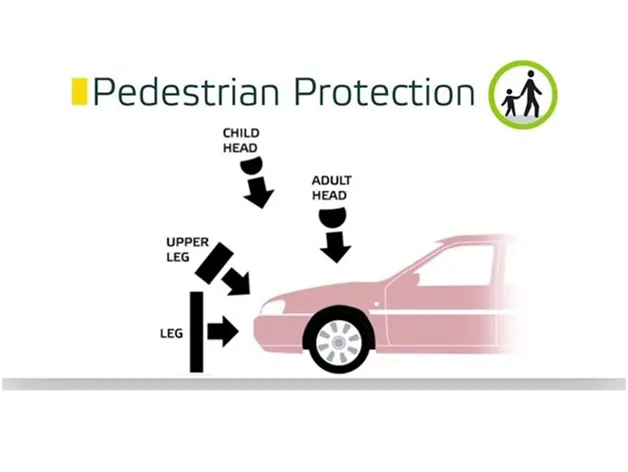
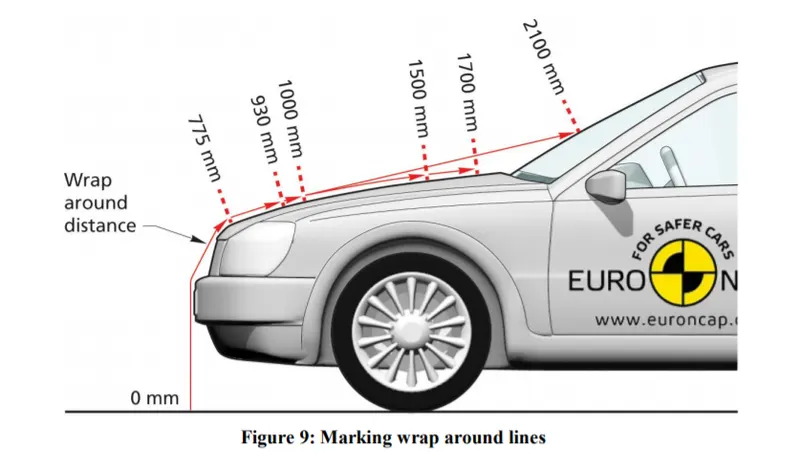
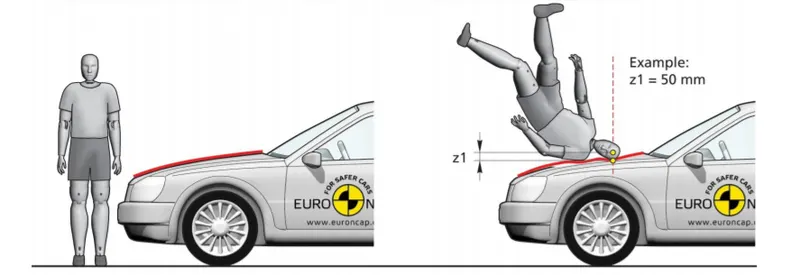
Pedestrian safety is a major important factor considered while designing a hood. EURO NCAP (New Car Assessment Programme) has devised some regulations. It carries out tests on the car to check if it passes those regulations.
DESIGN PROCEDURE
- outer panel
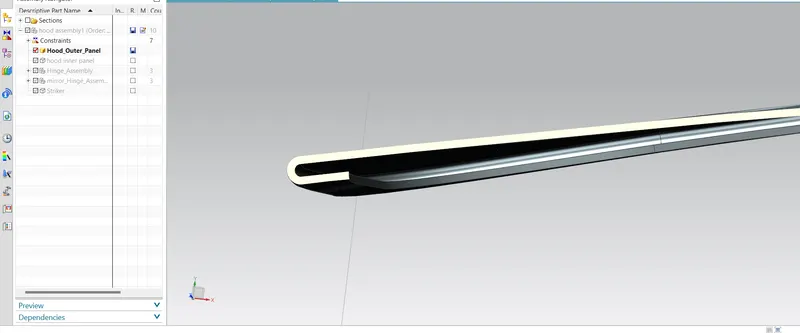
Hemming of Hood
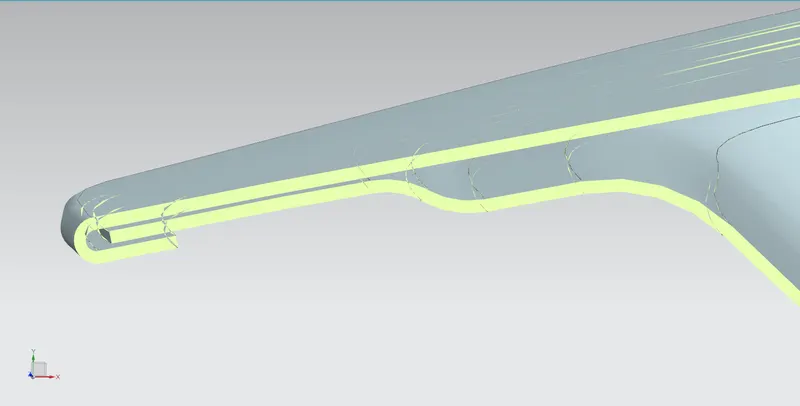
Hemming is the process of joining the hood outer panel with the inner panel by bending and pressing the outer edge of the hood's outer panel with the inner panel. Hemming of the hood keeps both panels together similar to welded components thus process spot welding of the hood is eliminated. Its specified nomenclature is to provide a gap of 0.2mm between Hood's outer and inner panel at both the top and bottom of the inner panel is to be maintained.
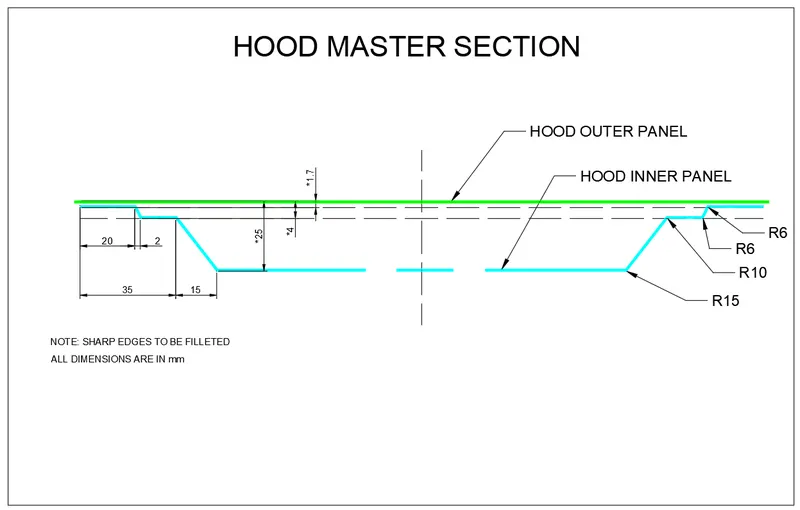
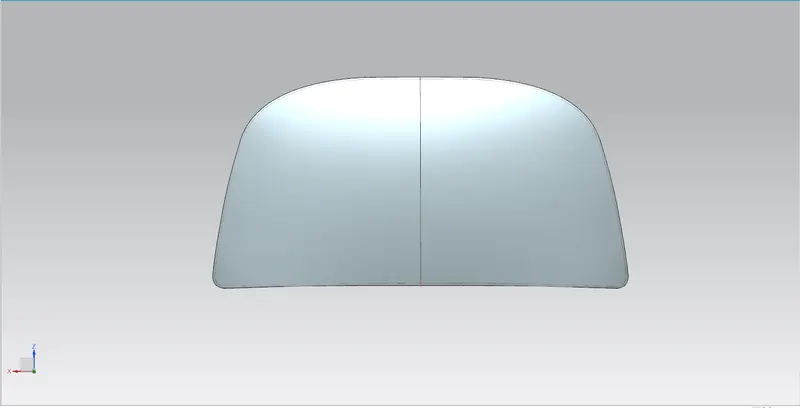
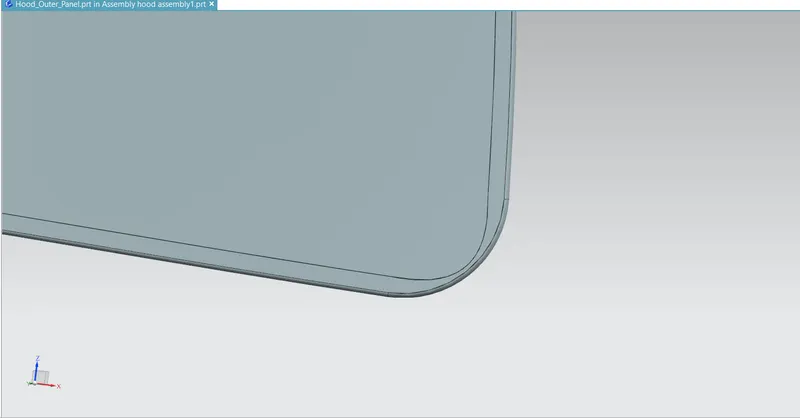
We receive the outer panel skin as our input and a master section .so we create an outer panel with a thickness of 0.75mm and with hemming length of 6mm and provide corner reliefs on the corners of the panel
- inner panel
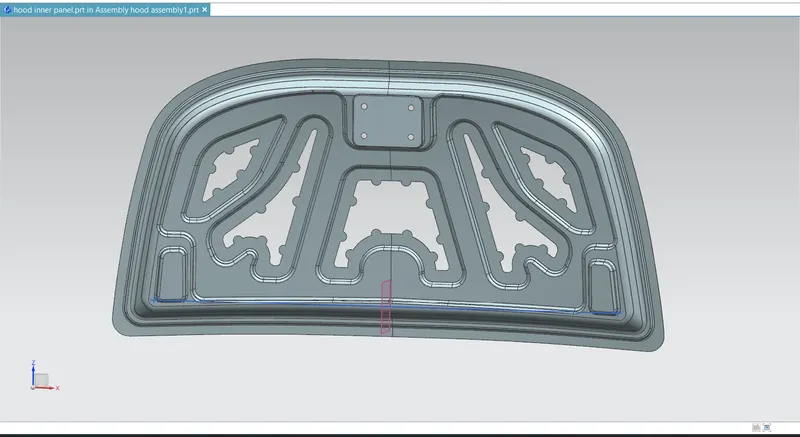
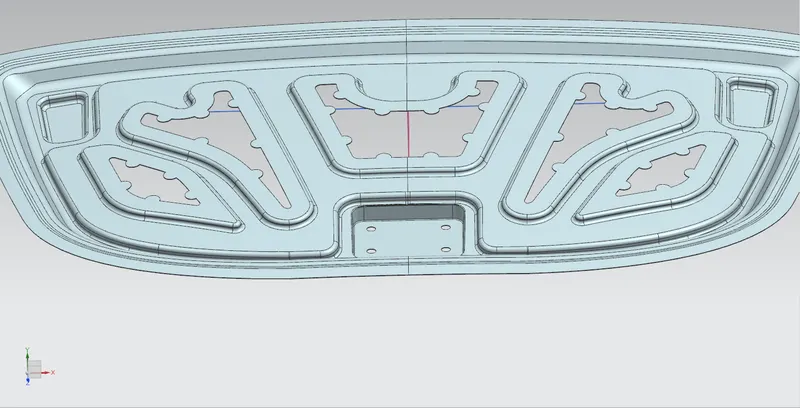
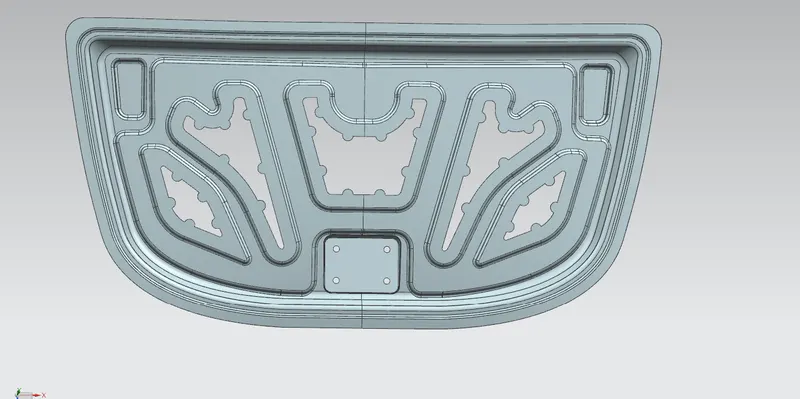
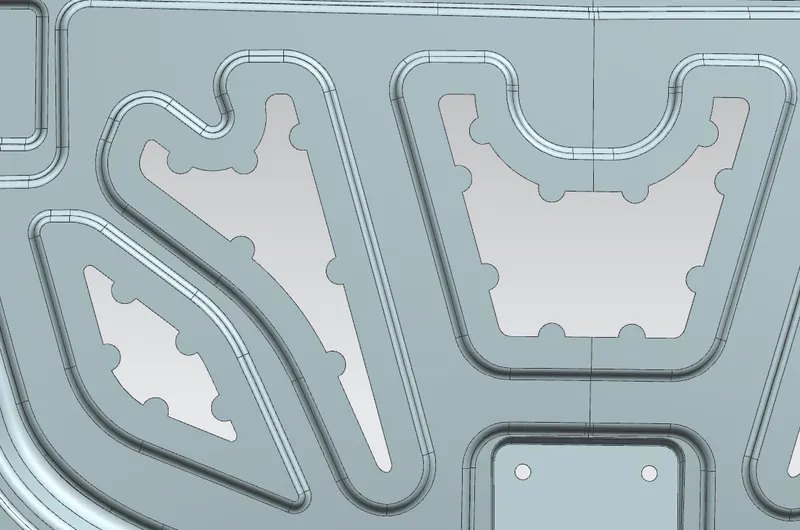
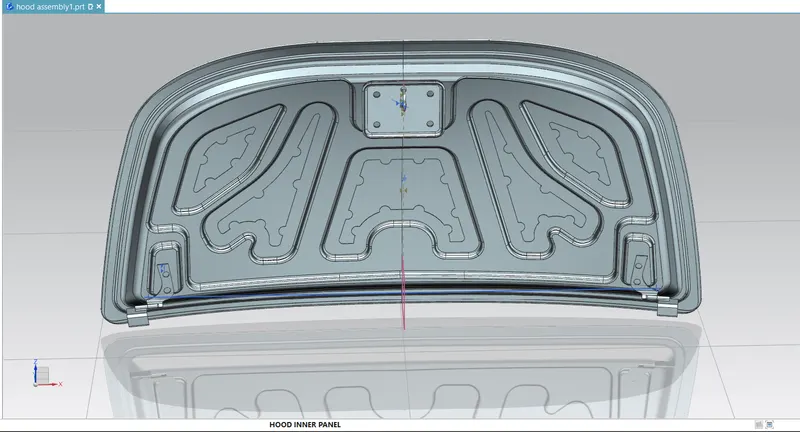
The inner panel is created with the help of master section provided . we then create emboss on it . this emboss is created to increase the strength of part . the embosses are created such that the forces move towards the hinge or outside of panel . the inner panel thickness is kept as 0.75mm
Mastic Data
Hood has a large surface area and hemming can only be provided through its boundary. We cannot use other joining techniques like welding, riveting etc because they leave marks on the outer panel which spoil its aesthetic appearance. So, mastic sealants are used to stick the inner surfaces of outer panel and inner panel. Mastic sealants are elastic compound that behave like rubber. It is applied between the inner and outer panels at specified spots. Thus, the mastic points are arranged in such a way that it covers the areas away from the hemming which are more vulnerable to vibratev
Hinge and latch
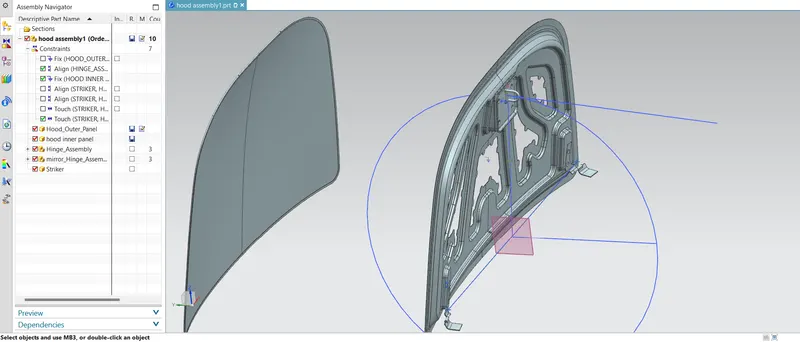
The hinge and latch is assembled to the inner panel . first the hinge is assembled on the emboss then with create a trajectory for the latch with respect to the axis of hinge .the line which is originated from tip of latch has to be tangent to the circle . after determining trajectory we will assemble the hinge onto the inner panel .
Assembly
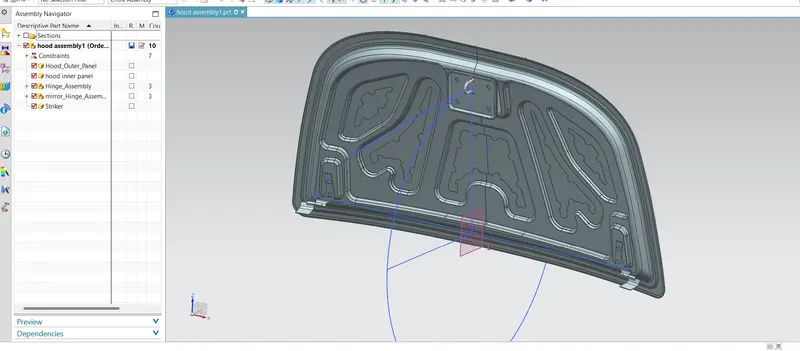
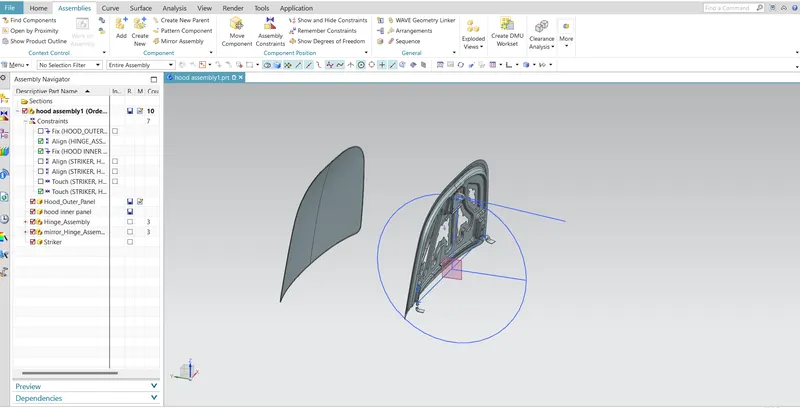
all the parts were assembled together with the help of assembly constrain .we also maintained the given parameters in the attachment such as the gap between the inner and outer panneland sticker placement
- Deep Drawing process
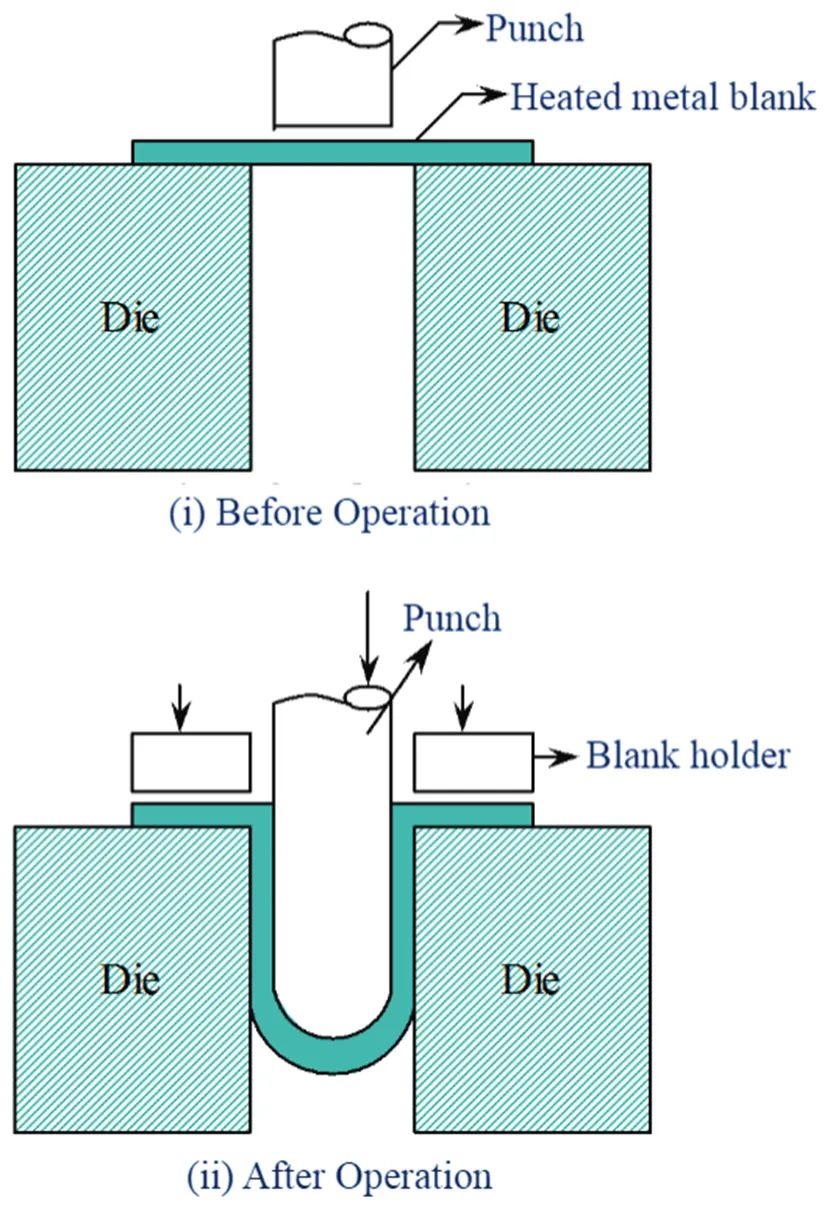
Deep drawing is one of the most widely used processes in sheet metal forming. Apart from its use in many other sectors, it is applied in the automotive industry for the manufacturing of car body parts. The deep drawing process is a forming process which occurs under a combination of tensile and compressive conditions.
Sheet metal blank is radially drawn into a forming die by the mechanical action of a punch. It is thus a shape transformation process with material retention. The process is considered "deep" drawing when the depth of the drawn part exceeds its diameter. This is achieved by redrawing the part through a series of dies. The flange region (sheet metal in the die shoulder area) experiences a radial drawing stress and a tangential compressive stress due to the material retention property. These compressive stresses (hoop stresses) result in flange wrinkles. Wrinkles can be prevented by using a blank holder, the function of which is to facilitate controlled material flow into the die radius.
conclusion
We have designed the outer panel and inner panel following the master section and also learnt the assembly of Hood inner panel, Outer panel, and the reinforcements like latch and hinge assembly