Hood design-Week 2
HOOD DESIGN
To create Hood inner and outer panel design using given skin data and assemble it other parts of Hood.
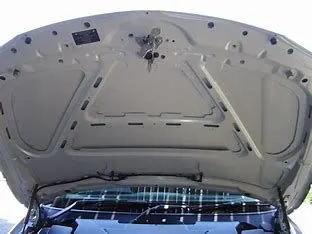
Hood of a car - A car hood, also referred to as a bonnet in some countries, is the cover of sheet metal (Steel, Aluminium etc.) hinged to the vehicle frame for pivoting between open and closed positions. It is generally a feature of a front engine car and acts as a cover for engine and other components. A car hood is meant to protect the performance parts of a car.
In the closed position, the hood generally encloses a compartment housing an engine and other vehicle components (Battery, Electronis etc.). In the open position of hood, the engine and other components are exposed to allow access for service and maintenance.
Hood also acts s a shock absorber in case of accidents where the high impact is absorbed by the hood upto some extent thereby protecting the people inside the car.
Hood of a car is also responsible for reducing the noise of engines in case of conventional cars. In modern day cars which are electric, hood design is done keeping in mind the safety of inside passengers, thereby designing the hood to restrict and deviate the damage by impact upto some extent away from passangers.
Consederations of designing Hood of the cars - Desiging hood of the car is complex it have consider all the factors like Pedestrian safety,Vehicle qauality,Occupant safety, styling and manufacturing.
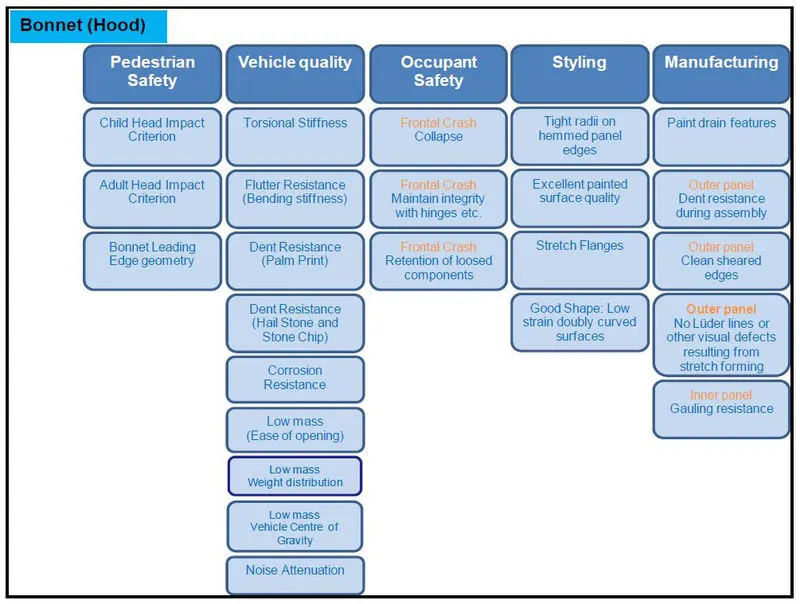
Components of Hood :
1.Outer panel
2.Inner panel
3.Stricker
4.Hinge
1. Outer panel
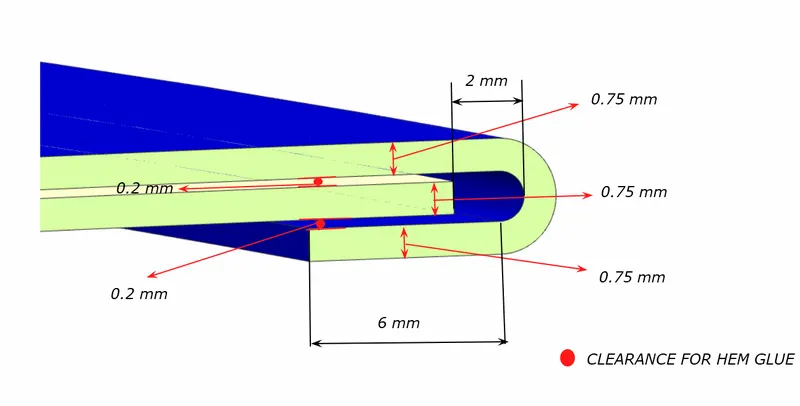
Outer is the visible surface in Hood, it is connceted to inner panel using hemming method. Here I have given thicken of the outer panel as 0.75 mm.
To create hemming , outer panel boundary of given skin offset to 0.5mm inside with fillet and using law extension it was extented in vertical direction and skin surface fully offset to 2.85 mm and thickness trimed to 15mm. Using Three surface blend operation three surfaces where connected. In hemming process there should be relief in corners and i have given it.
Finished surface mirrored using mirror geomentry and thickned to 0.75mm.
Hemming and seaming - are two similar metalworking processes in which a shetetmetal edge is rolled over onto itself. Hemming is the process in which the edge is rolled flush to itself, while a seam joins the edges of two materials.[1]
Hems are commonly used to reinforce an edge, hide burrs and rough edges, and improve appearance.
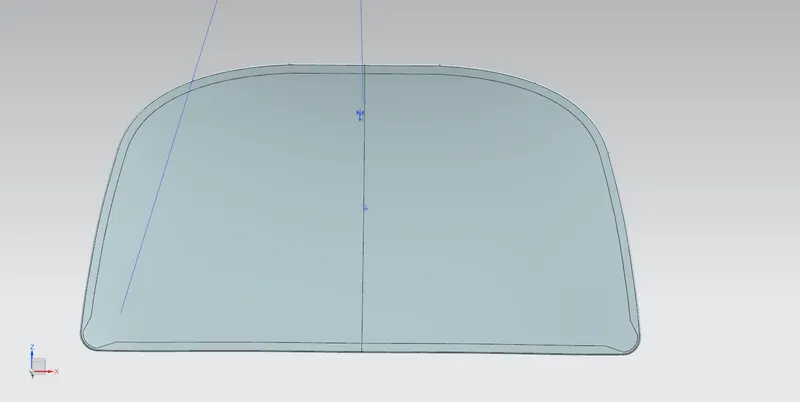
Hood Outer panel
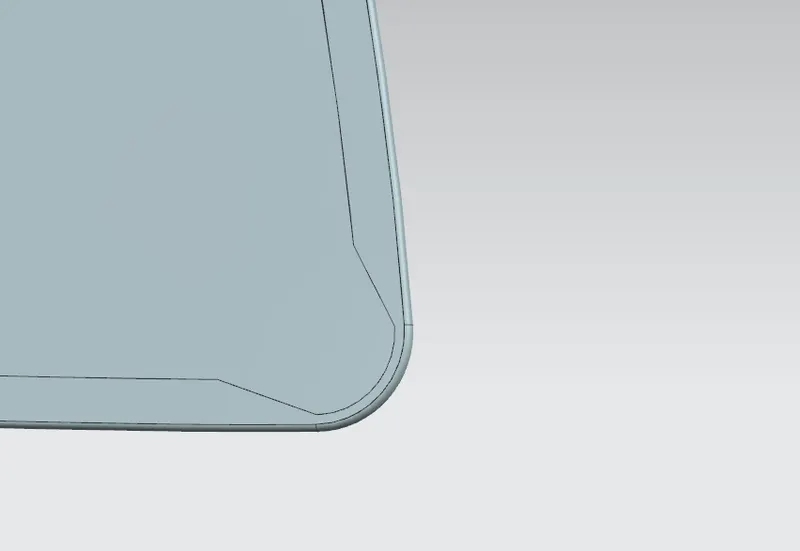
Relief in Corners for Hemming process
2. Inner Panel
Innerpanel is a surafce which strengthens the hood and it design considering many factors.
Innerpanel consists of Emboss
Emboss is given so that during the crash the energy is dissipated outside / away from the vehicle occupants and along with the other cut outs to reduce the weight. Along with reduction in weight it even doesn't cost as it is a cut out. After embossing the required amount of
material is trimmed accordingly with NX CAD tools and are given with a fillet radius by maintaining the minimum value of 3 + 0.75, so that no emboss let with sharp edge
Deep drawing is the process of converting blank of Sheet metal into a cylindrical containers with a flat or hemispherical base.
It is combination of metal forming process & sheet metal process.
Thicken of the Inner panel given as 0.75mm.
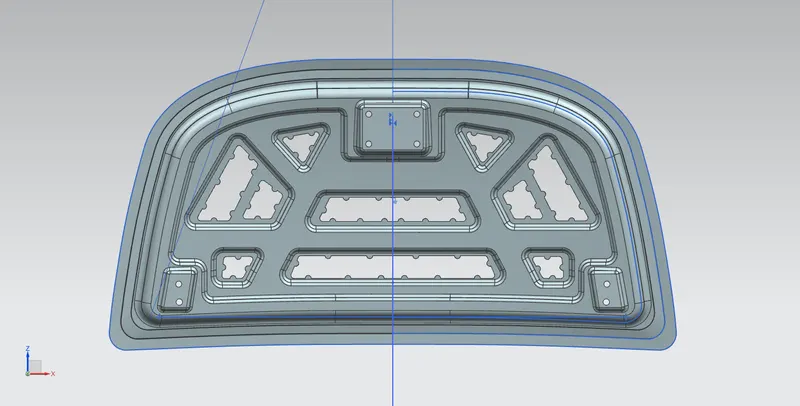
Inner panel
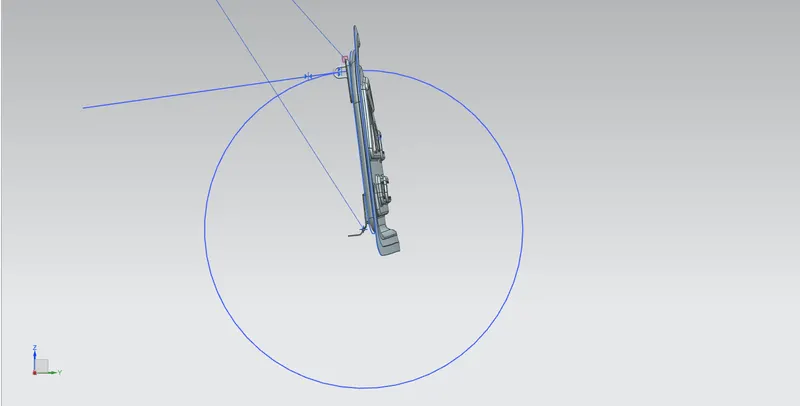
3.Striker and Hinge - A latch and striker is a mechanism which holds the hood in its closed position. For the hood to close properly it is necessary that the axis of the striker be perpendicular at every point on its circular trajectory. The rotation of hood is referenced at the axis of hinges. The trajectory of hood is shown in the form of circle on which the axis of striker is perpendicular at every point on the trajectory. Hinges are the points on the hood that connect the hood to the vehicular frame and are responsible for pivoting of the hood in the form of opening and closing of it.
latch trajectory is the path which the striker will follow when the hood is open/closed while pivoting on the hinge axis. The latch trajectory is taken as a circle with the hinge axis as the center of the circle. The striker is placed 90 degree such that it is tangent to the circle.
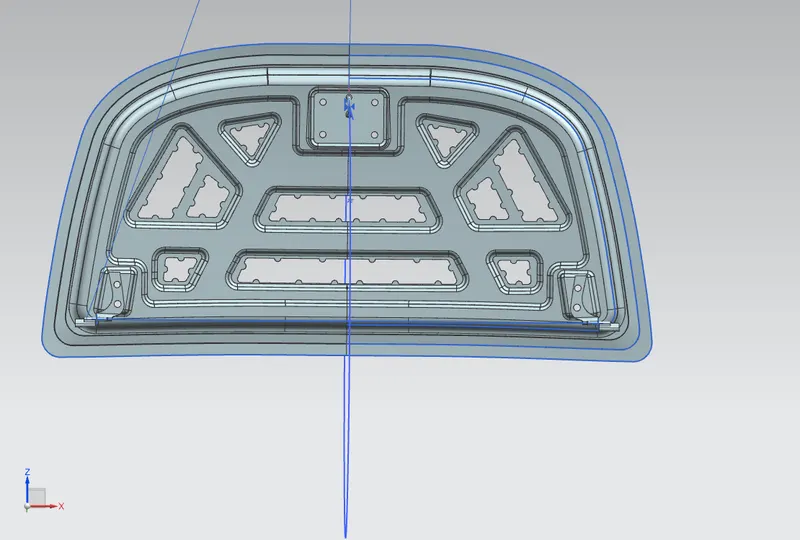
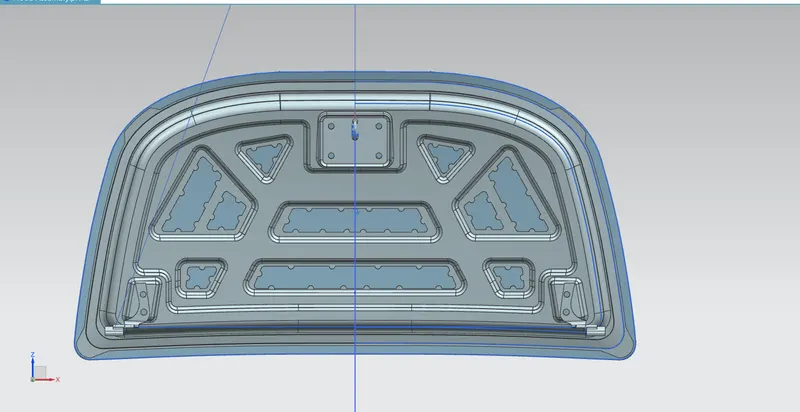
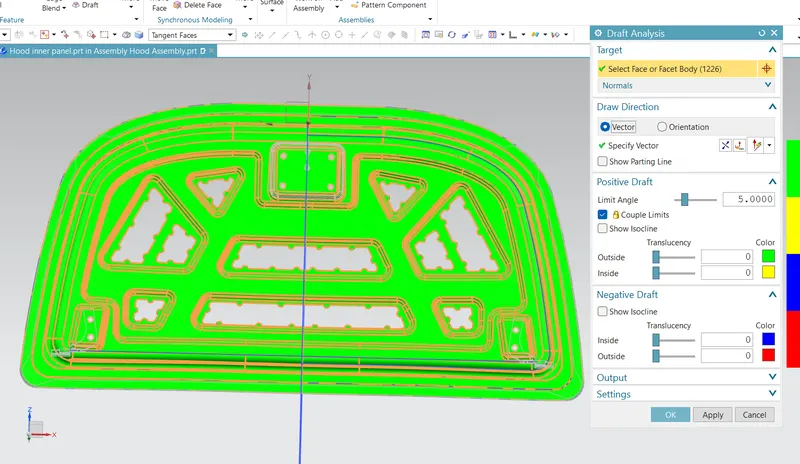
Draft Analysis - Draft analysis is made out check the draft of the design. here surfaces are in gree are above 5 degree.