Hood design-Week 2
Automotive Hood Design
Objective
To understand the design strategy and consideration that goes under designing and developing an automotive hood to achieve both occupant and pedestrian safety. Manufacturability and functional requirements as per Euro NCAP standards are taken into consideration.
Software used: Siemens NX
Work Flow
Introduction
Design Consideration
Design
Conclusion
References
Introduction
Hood is one of the major closure systems in a vehicle and is fundamentally a reinforced skin with many design considerations and safety regulations. It is essentially a type of door that cover the power train and other vehicle propulsion system such as drive belts and battery. Apart from being a hinged cover to engine which provides easy access for maintenance, it acts as a critical safety component both for vehicle occupant and pedestrians.
Hood may have several components, but two most important parts are inner and outer panel. The inner panel serves as a structure that dissipate and channel shock waves during crash. And the outer panel serves more as an aesthetic for Automobile’s overall presentation and to channel airflow over the vehicle. Hence both require critical precision as well as dedicated strategy from the design conceptualization to the production. The initial design goes through iterative design modification based on structural analysis such as fatigue analysis and crash analysis.
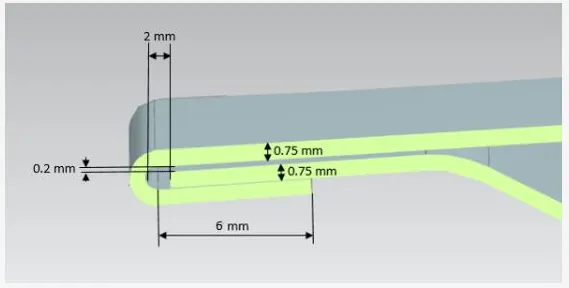
After the finalization the inner panel is generally manufactured by deep drawing process. The inner and outer panels are joined by using multiple joining methods such as hemming, riveting, gluing and spot welding. In this hemming is used to join both the panels. Hemming is performed after the parts have deep drawn, trimmed and flanged. Hemming involves bending and folding of the outer panel around the inner panel and pressed using hemming rollers to maintain the consistent surface joining.
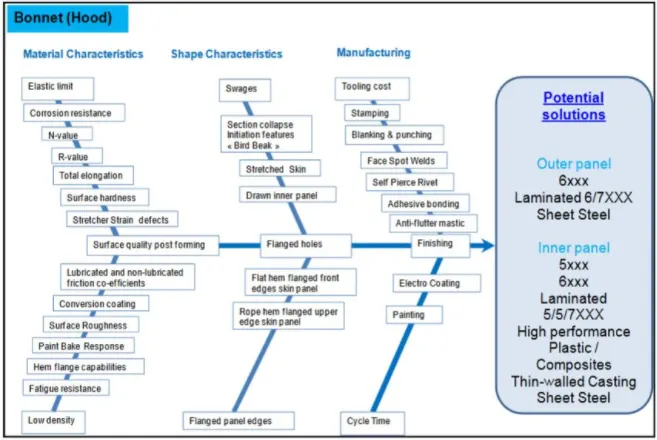
Fig (1). Desired characteristics and manufacturing techniques arranged in a herring-bone diagram [1]
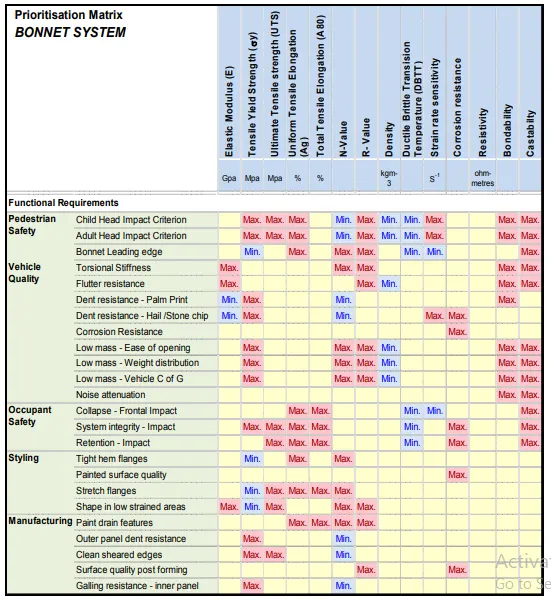
Fig (2). Design Prioritisation Matrix [1].
Design data of inner and outer panel
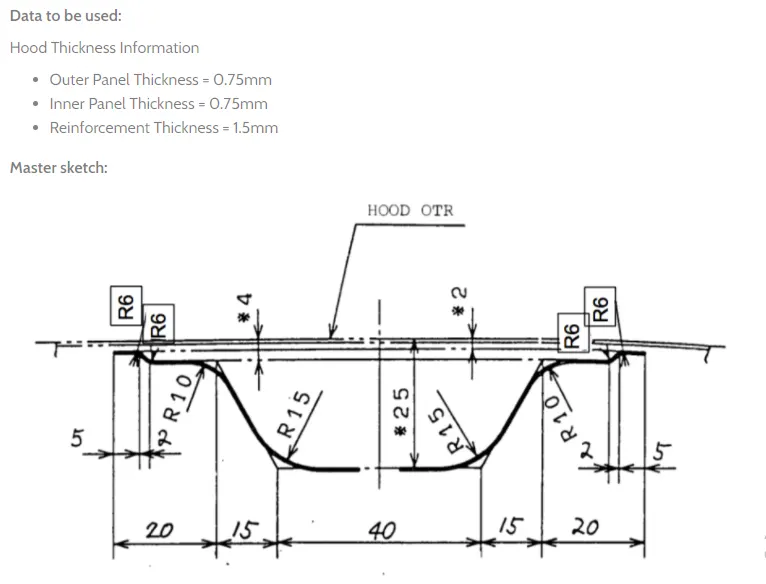
Fig (3) Design Data
After designing the initial structure based on master section, embosses were made to strengthen the structure as well as to integrate channels to dissipate maximum energy away from cabin. After the designing of these panels, latch and hinge placements are designed in such a way to attach the component to the vehicle. Once the structure of inner panel is ready, reinforcement is provided to compensate the strength drop which occurred due to the inclusion of latch and hinge placements. At this stage the NVH team also involves in implementing the major design changes and the inclusion of components to reduce vehicle vibration and noise control.
Apart from hemming, the centre region of the inner panel structure is kept in contact with the outer panel using mastic sealants. Mastic sealants are rubberized components placed between the outer and inner panel to provide annexed contact. These sealants help maintain the outer panel aesthetically pleasing as well due to absence of welds, nuts or bolts in the process of consolidation.
Design Consideration
As the hood plays a crucial role in safety of both pedestrians and occupants in vehicle. Hence a lot goes while designing the hood and must be complaint with the standards and considerations. In this project Euro NCAP was followed to understand what one must follow while designing the hood of an Automobile. Euro NCAP programs and develops the test series and rating systems for accessing design safety for pedestrians during impact with the vehicle. The tests are generally executed at 40 kmph and covers the pedestrian body interaction with the vehicle upon collision.
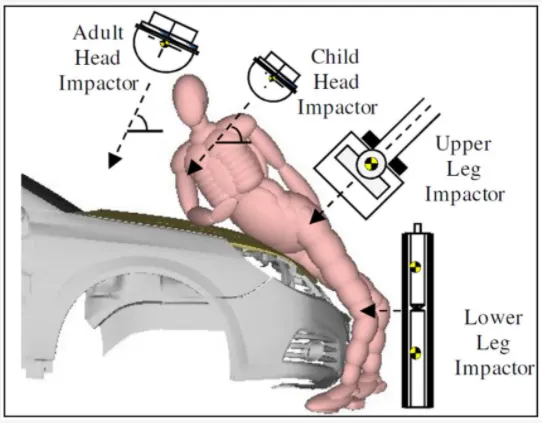
Fig (4) Body bonnet interaction [1]
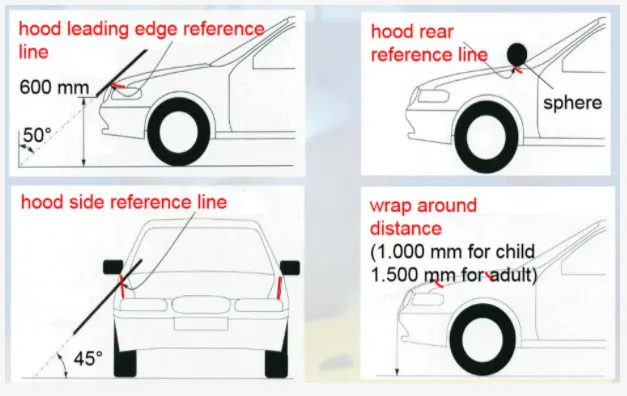
Fig (5) Head Impact region[2]
Based on the impact regions the inner panel is designed by removing the material at those regions to reduce the impact during the collision. With the impact of the pedestrian the hood in those regions should allow deformation by absorbing and dissipating the energy by collapsing which reduces the impact on the pedestrians. At the same time the impact on vehicle also should dissipate away from the cabin to protect the occupant in the vehicle. Based on these condition the inner panel should be embossed with the channels and empty cut out to allow maximum absorption of impacts.
Design
Inner panel
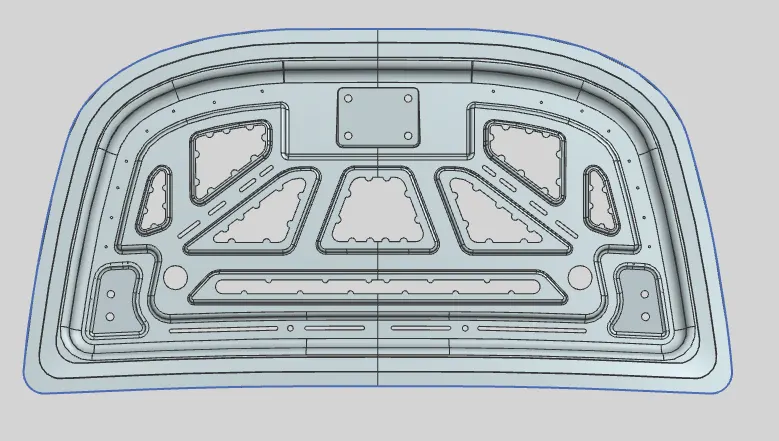
Outer Panel
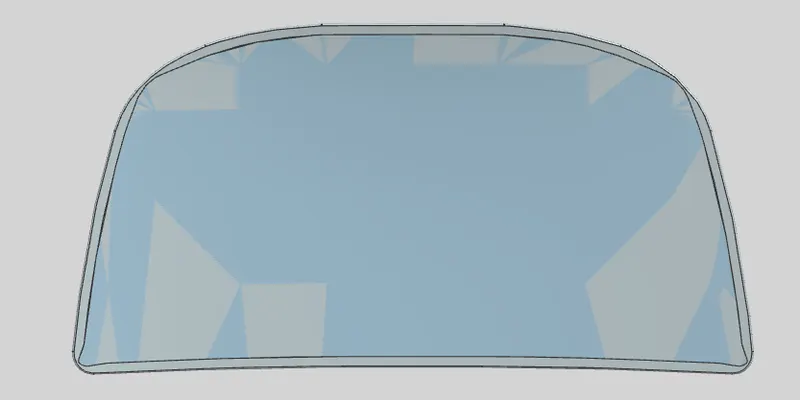
Cross section
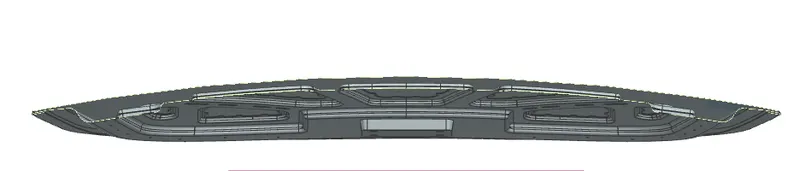
Hem
Relief
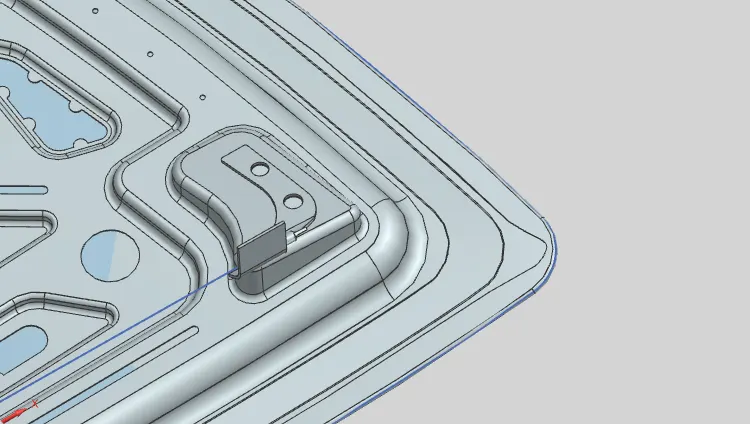
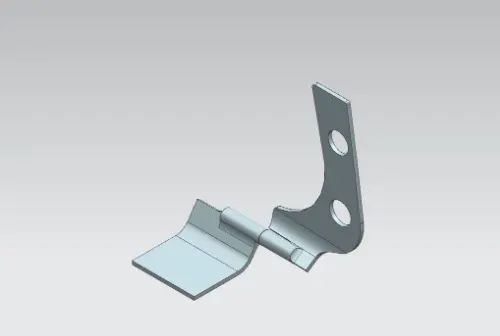
Striker and hinge assembly
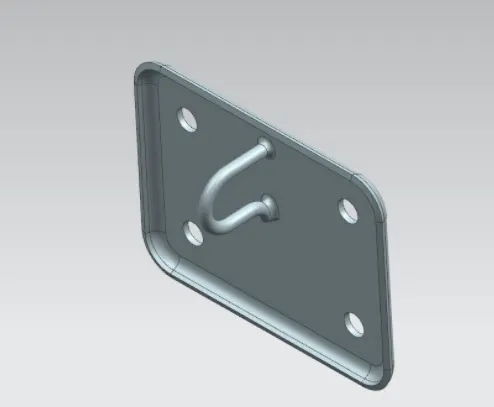
Mastic Sealants
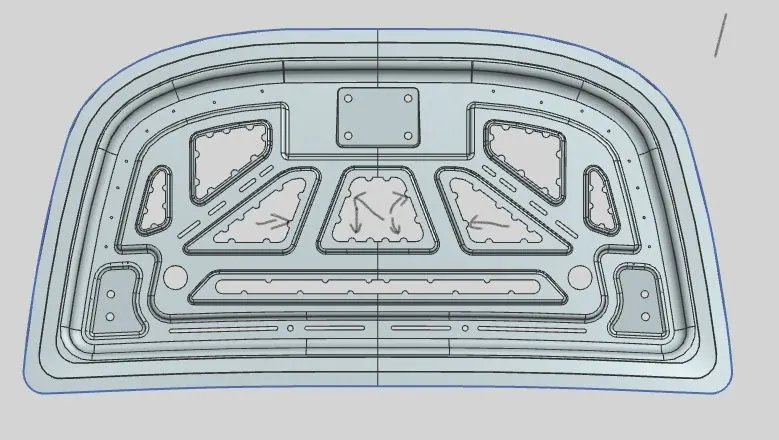
Mastic Sealants have the influence are of 80mm generally.
Hood opening and closing trajectory
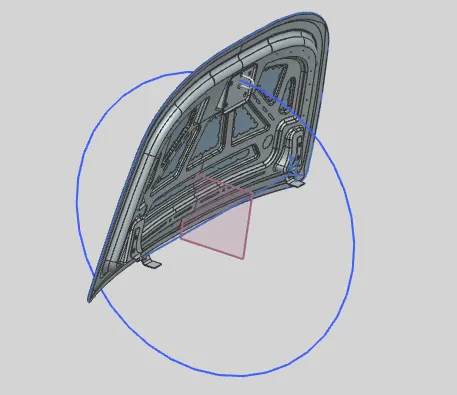
The trajectory for the opening is to be proper when the striker’s axis is coincidental with the hood centre axis. The perpendicular line from the axis is selected from the hinges.
Shock Flow
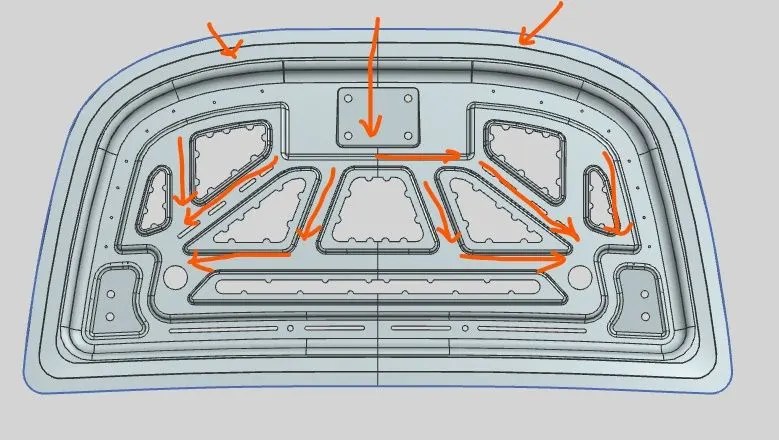
Conclusion
The hood is designed in top down approach and also satisfies the industry manufacturing requirements, and functional as well as safety standards of Euro NCAP in Siemens NX.
References
[1] Design-Case study: Bonnet and boot lid
[2] Comparison of steel and Aluminium hood with same design in view of Pedestrian head