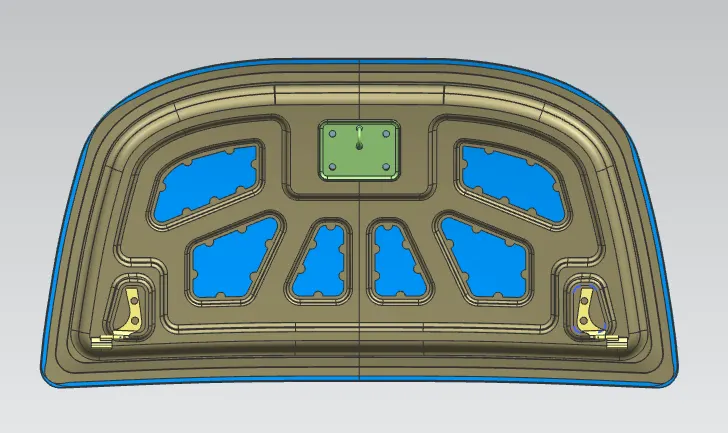
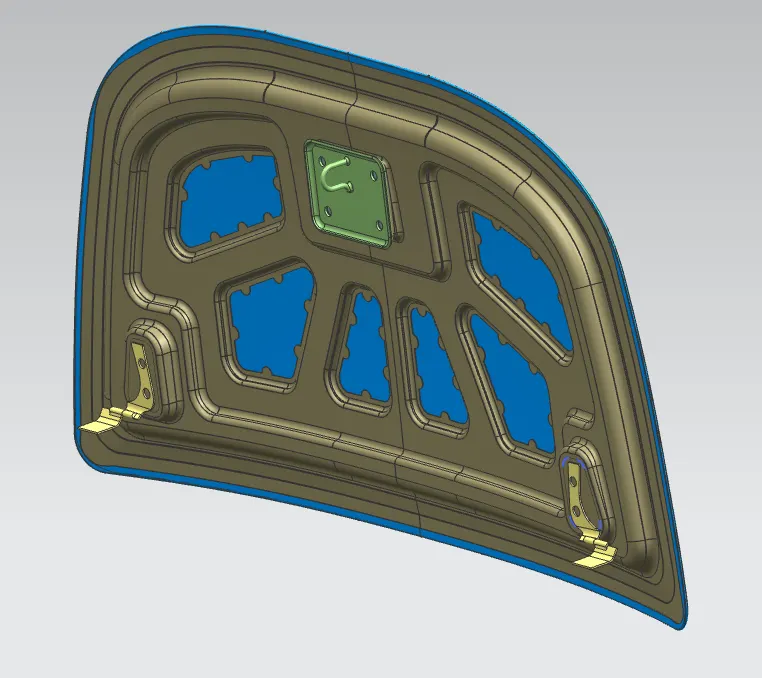
Hood design-Week 2
HOOD DESIGN:
Design considerations that needs to be taken care while designing a hood as discussed below.
1) The maximum height of the hood in open condition has to be considered while designing as per each individual country standards.
This is because the height of a average person changes with country.
2) The material consideration is also required that should be cost effective to manufacture.
3) Position of stay rod has to be decided oppostite to position of battery. For ease of assembly and maintenance during later stage.
4) The Hood should be designed with a light weight material for the pedestrain saftey. Any impact should cause minimal damage.
One should ensure, there is minimal damage if an adult or children hit on the hood.
The European New Car Assessment Programme (Euro NCAP) is a European car safety performance assessment program which has developed test specifications & rating systems for assessing pedestrian injuries during impacts with the front of vehicles.
HOOD DESIGN IN CAD:
Initially, the class A surface of Hood Outer panel is provided along with the master section.
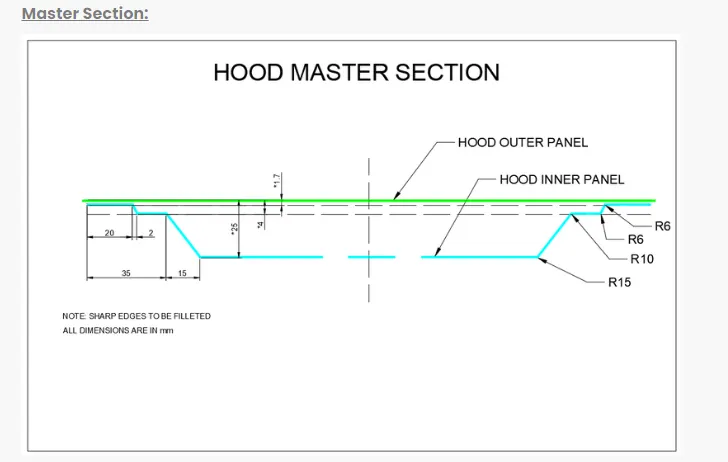
Using the master section profile, Hood Inner panel is designed.
HOOD INNER PANEL:
1) Inner panel we implement the safety of pedestrians & as well as the driver. In this panel only we can attach the reinforcement, embossed, mastic points etc.
2) Emboss is provided to strengthen the hood inner panel
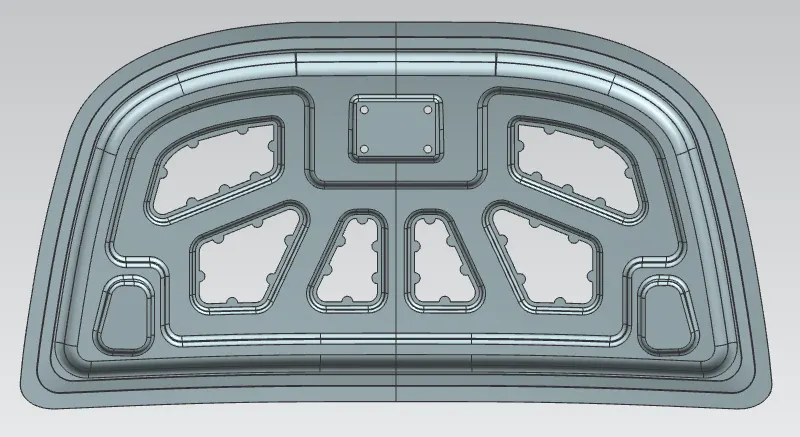
3) Several cutouts are made to deflect the impact when vehicle hits any impact. W & Y patterns are followed in industry.
Also these cutouts ensure less impact when pedestrians gets hit on the hood.
4) Mastic points are provided to apply mastic sealent, which will bind the hood inner and outer panel after heat treatment.
5) Ensure the latch and striker face and hinge face should be parallel to assemble.
6) Ensure all the emobss are provided draft more than 7degree as per manufacturing principles for sheet metal standards.
7) Ensure radius are provided for all sharp edges, fillet radius must be greater than t times the material thickness.
HINGE ASSEMBLY:
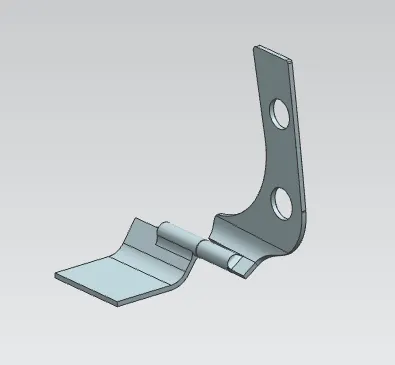
1) Hinge is a component that fixes the hood to the fenders of the car. The latch must be fixed perpendicular to the hinge axis so that the hood opens or closes properly.
STRIKER:
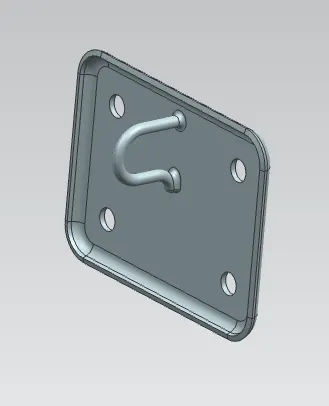
1) Latch & striker is used for locking the hood with the car. It is usually placed on the space provided on the inner panel.
HOOD OUTER PANEL
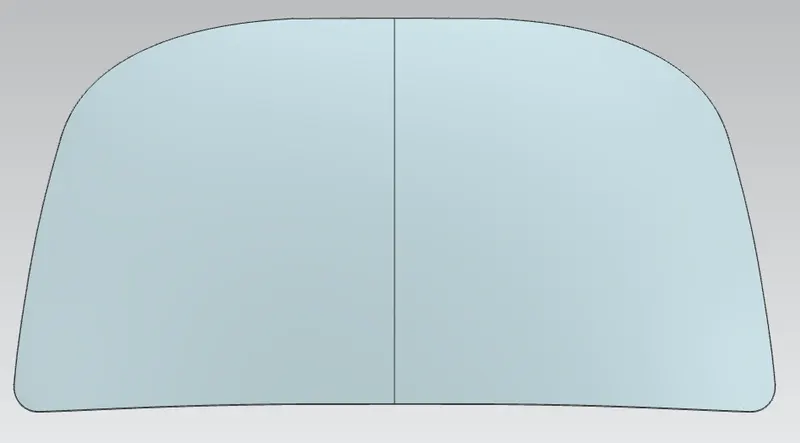
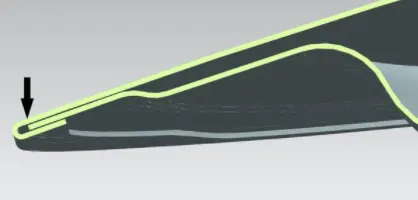
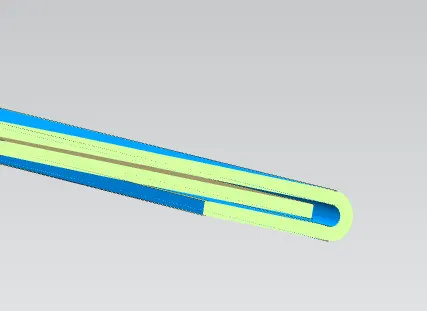
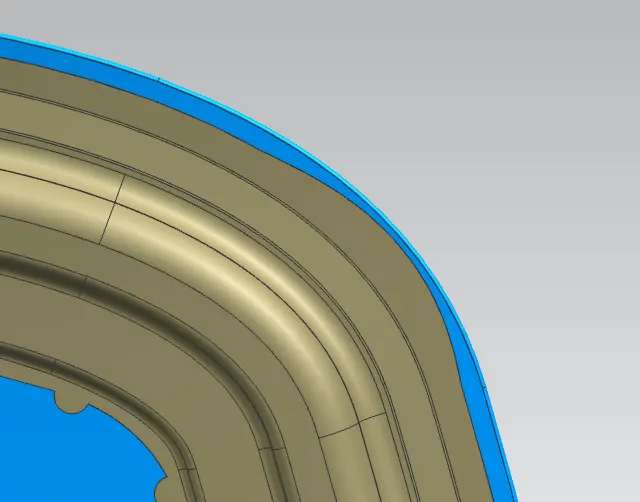
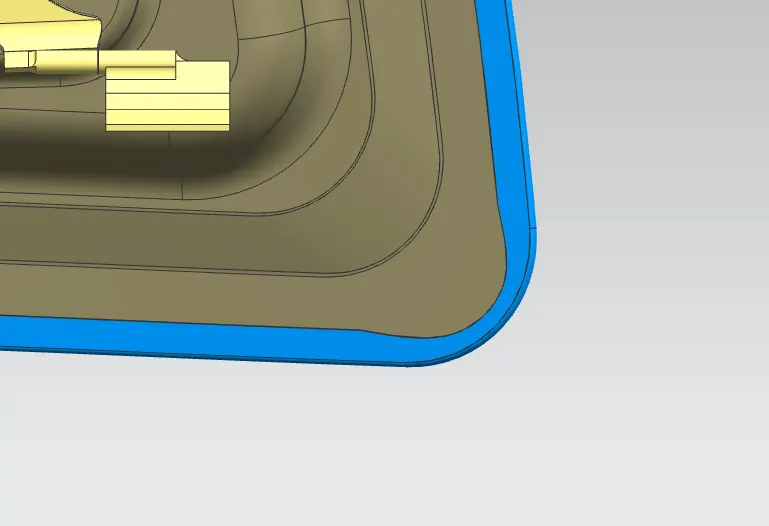
1) Outer panel holds inner panel and sub parts. Hemming process is used to assemble the outer panel with inner panel.
2) Hood outer panel is designed by styling team for better looks.
REINFORCEMENTS:
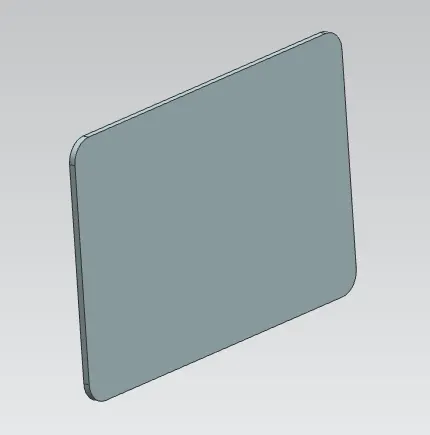
1) Reinforcements are thick sheet metal components which are provided to strength the inner panel.
Reinforcements are provided only when is the requirement for additional strength.
Manaufactuing Process in Hood Design:
1) Blanking Process to cut the initial sheet metal from raw sheet.
2) Punching to cut out the unwanter areas
3) Deep drawing/Stamping to create emboss structure
4) Hemming process to join the hood outer and inner
5) Spot weld to assemble reinforcements with hood inner panel.
Image of hemming in CAD:
Latch Trajectory:
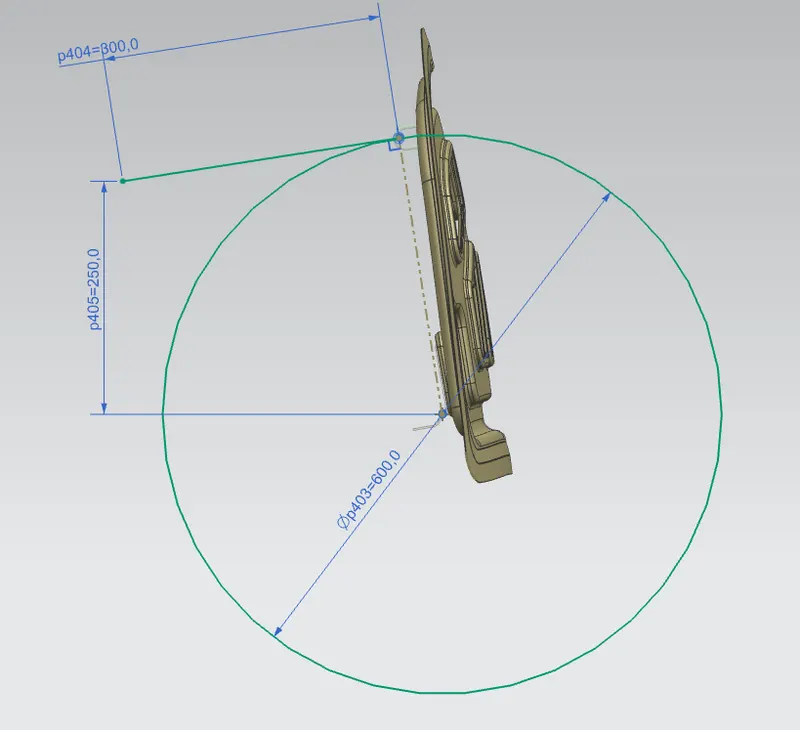
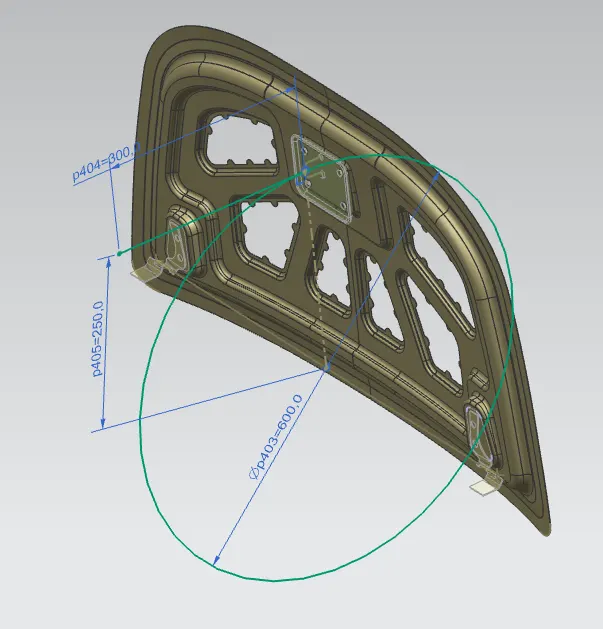
While opening or closing the hood, the latch must be perfectly aligned.
For that, the latches trajectory must be perpendicular to the hinge axis.
Hemming:
Hemming Relief:
Front Relief:
Rear Relief:
Hood Assembly Output: