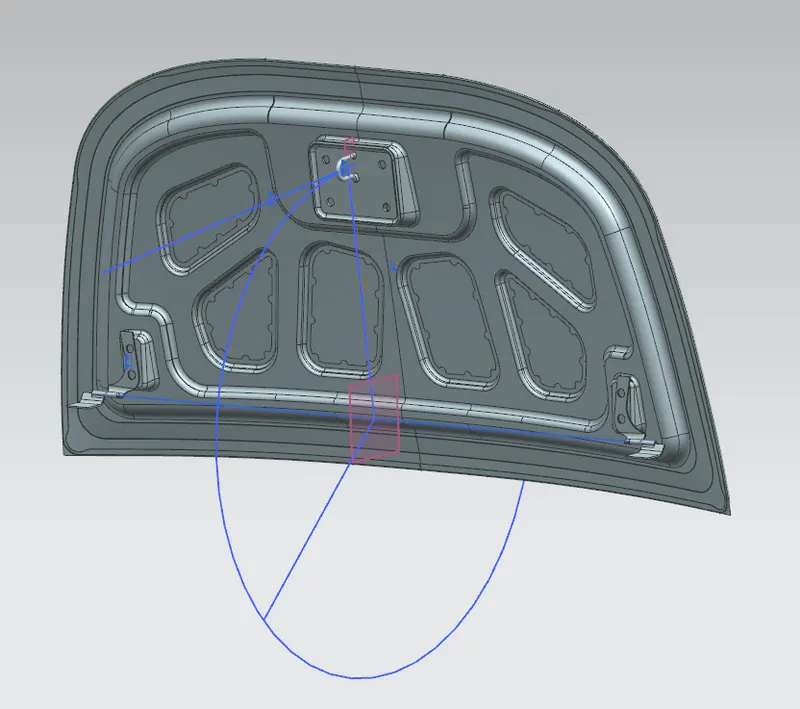
Hood design-Week 2
Design Consideration for Hood Design
1. The Need for Embossing and Its Design-
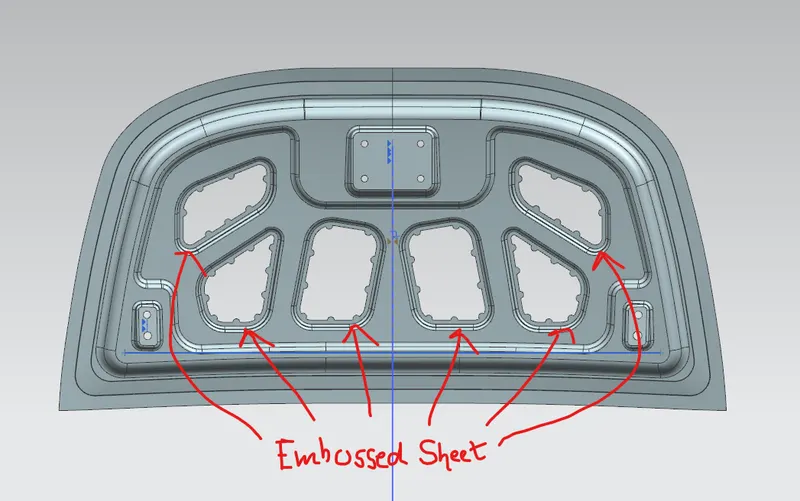
After the basic master layout is completed, emboss sections must be provided to divert the collision force from the outer corners toward the hinge areas. This substantially lessens the impact force that enters the passenger cabin.
We must consider the draught direction and draft angle when making these embosses so that the stamping tool will product the correct embossed structures on the panel.
2. Hinge Emboss: To add extra strength where the hinges are mounted, we must build embosses on the inside panel of the hood. so that it can serve as a support reinforcement for hinges. Hinge positioning should be planned using a trajectory calculation that takes the latch into consideration.
3. Like the hinge emboss, the latch emboss must be designed to increase the local strength of the inner panel and serve as a support structure for the installation of the latch.
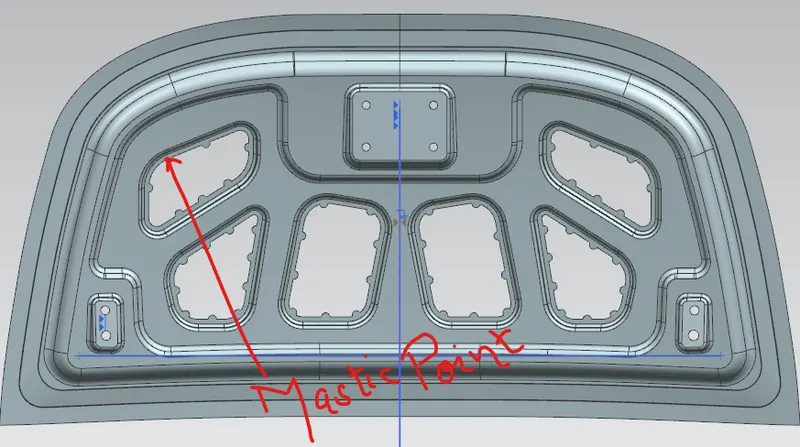
4.Mastic Data -
Mastic sealants must be used in order to reduce NVH, or noise, vibration, and hardness between the inner and outer panels of the hood. Each mastic sealant increases local strength by around 80mm. It connects the inner and outer panels, which also quiets the vibrating.
5. Positioning the hinge -
To ensure that the hood opens and closes correctly, hinge arrangement must be carefully planned. Additionally, it will determine whether or not the latch and striker close properly.
In order to have proper hinge placement, align the hinges on the inner panel such that the radius created by the striker's centre point and the midpoint of the axis passing through both hinges are equal. This trajectory needs to be set up to be parallel to the striker.
6.Hemming of Hood-
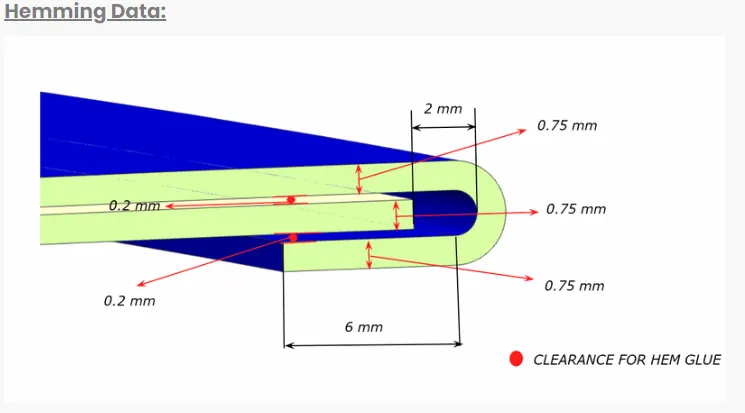
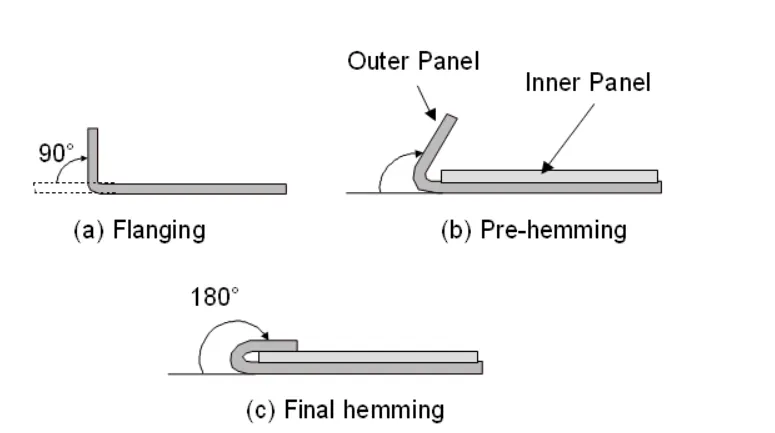
Hemming is the process of bending and pressing the outer edge of the hood outer panel into the inner panel to link them together. Hemming the hood eliminates the need for spot welding because it maintains the two panels attached similarly to welded components. Its specified name is to maintain a 0.2 mm gap between the inner and outer panels of the hood at both the top and bottom.
Hood and Its Components
HOOD- Another name for it is a bonnet. When a car has a rear-engine or some mid-engine vehicles, the engine compartment or trunk can be accessed through a hinged cover called the hood or bonnet. The inner and outer hood panels of the hood are joined together using the hemming procedure.
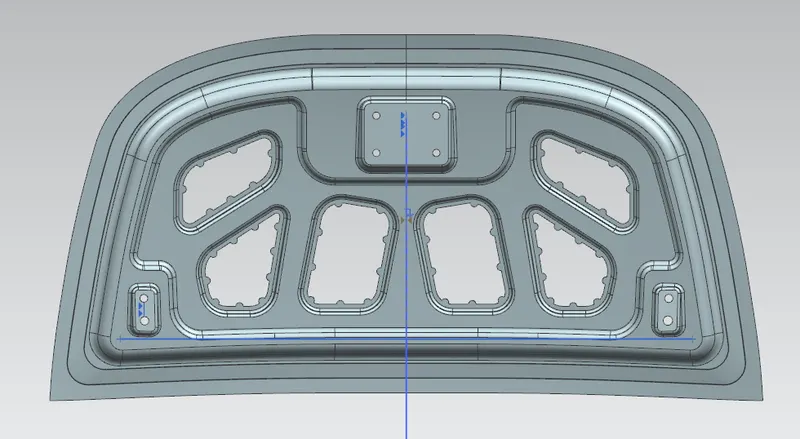
Fig. Hood Inner Panel
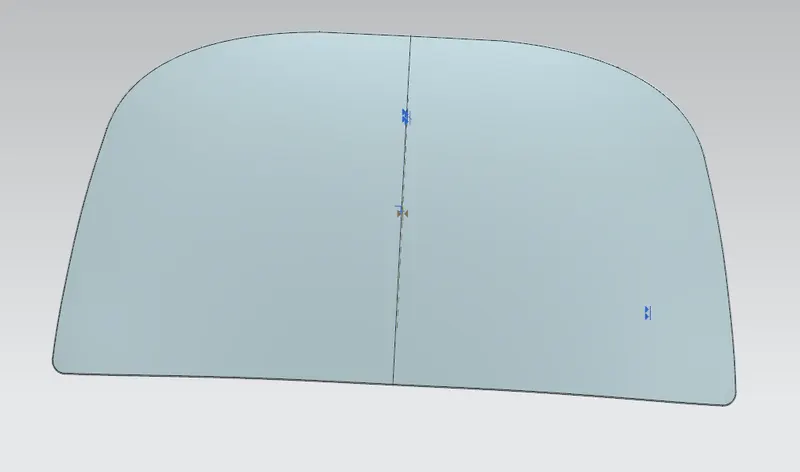
Fig. Hood Outer Panel
Hinge- The hood's opening and closing are controlled by the hinge. It joins the car's hood and engine compartment. In addition to supporting the hood safety, the hood's hinges have another function. The hinges are meant to keep the hood fastened to your automobile in the event that the hood latch should malfunction. Otherwise, if the latch malfunctions while you're moving quickly, the hood could break off on its broken hinges, which would be disastrous and dangerous. In reality, a powerful slipstream can toss the hood and slam it on the windshield even if only one of the hinges fails.
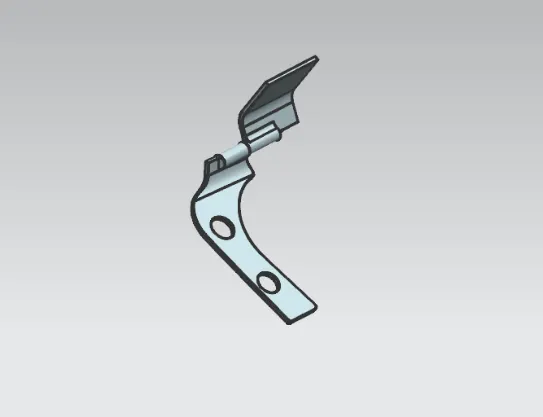
Latch- A striker called a latch is positioned over the hood and fastens to a hole in the engine compartment. Thus, it serves as a means of locking the hood to the engine compartment.
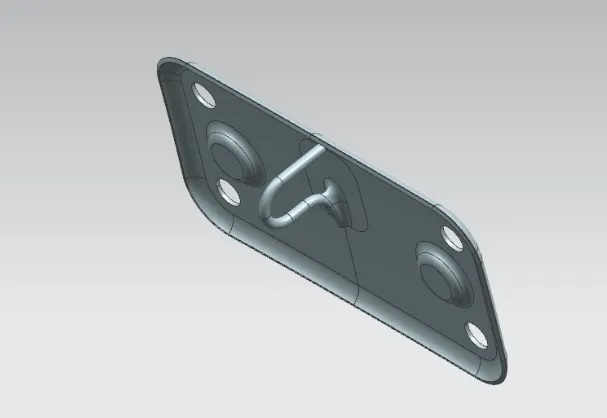
REINFORCEMENTS- For sound absorption and to lessen the impact of impacts, the hood has reinforcement features. The most common material used to reinforce sound-absorbing components in the car industry is glass fibre or glass filament.
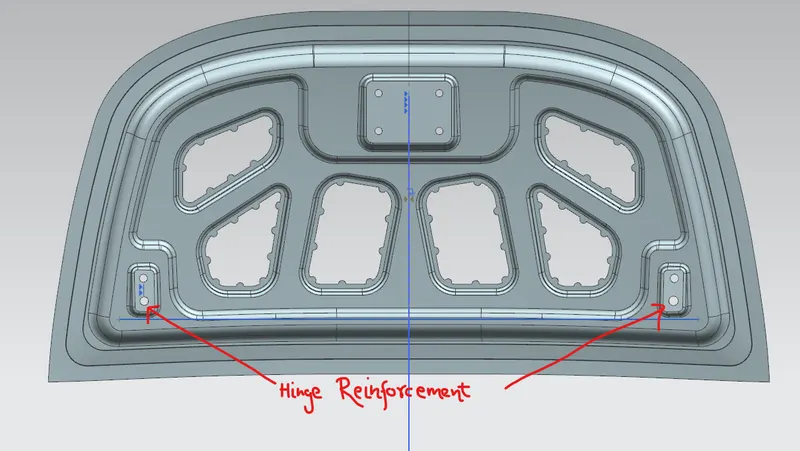
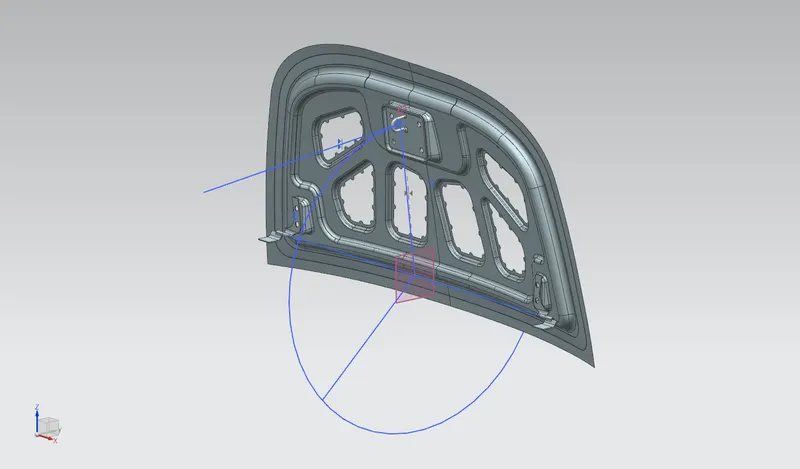
Latch Trajectory- It is strongly advised that, when the latch is put along with the hood panel, the latch striker be positioned so that it precisely fits into the lock hole in the engine compartment. In light of this, the latch striker is positioned using the latch trajectory path on the inner hood panel. This path is made by drawing a large trajectory path using the hinge axis as a reference.
Embossed Surface - When a car crashes or is involved in an accident, the embossed surface is crucial. Because the hood takes the brunt of the impact during a collision and bears all of the forces involved, The majority of impact forces travel directly in the direction of the collision, endangering the driver who is seated beneath the automobile. Typically, the inner hood panel will have V- or Y-shaped embosses. so that the hood's corner point receives the impact forces that are coming from the direction of the collision and the driver is protected.
Mastic Data - The outer panel's primary function, as we all know, is for aesthetic reasons. Bolts and welding are thus not an option. Mastic sealants and hemming are required to do this. Mastic sealants are rubber-like rubber-like elastic materials. Between the outer and inner panel, it is situated. It starts off as a paste, but after being heated in a furnace, it hardens, uniting the outside and inner panels. Mastic sealant has an impact of 80mm diameter and tends to strengthen the strength of the panel. The inner and outer hood panels must have a 2 mm minimum space between them.
MANUFACTURING PROCESS USED
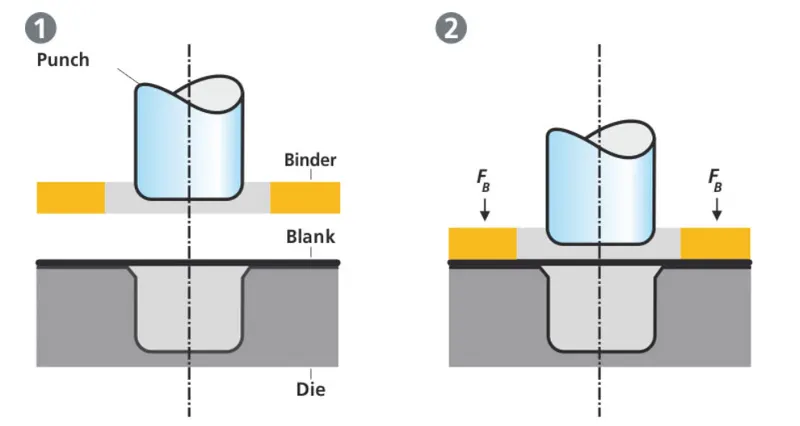
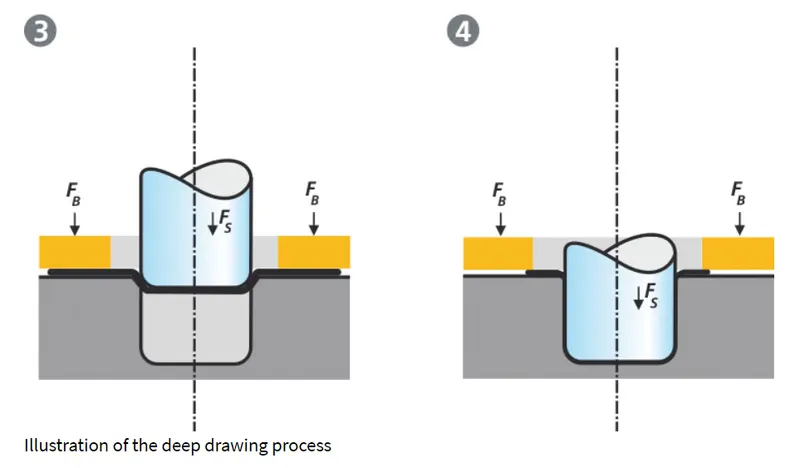
1. DEEP DRAWING: The deep drawing process is a shaping procedure that takes place in a setting that combines compressive and tensile forces. A hollow body with one side open is manufactured from a flat sheet of metal, or a hollow body with a smaller cross-section is created from a hollow body.
Three categories of deep sketching procedures are recognised:
- Deep drawing with tools
- Deep drawing with active means
- Deep drawing with active energy
Deep drawing is typically done in the automotive industry with hard tools.
2. HEMMING- In essence, the hemming procedure is utilised to fuse the inner and outer hood panels together.
A sheet metal edge is rolled over into itself during the hemming process. While a seam connects the edges of two textiles, hemming involves rolling the edge flush against itself.
Hems are frequently used to strengthen edges, cover burrs and unattractive edges, and enhance
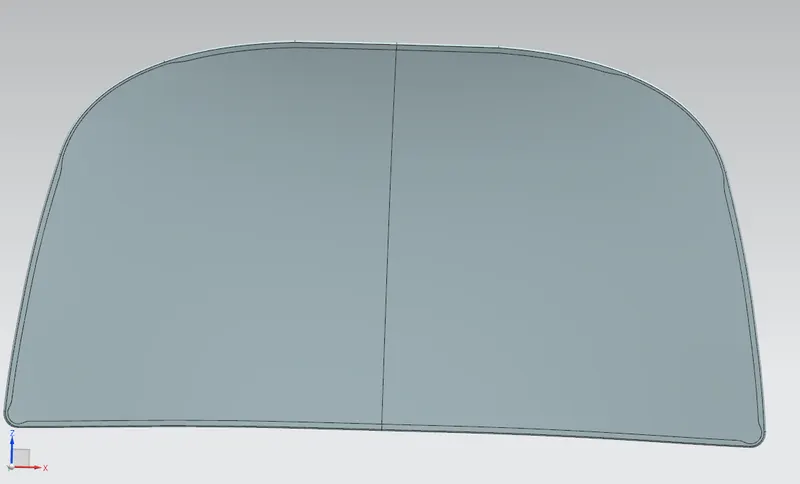
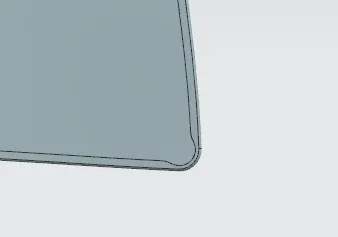
Relief provided in the outer panel
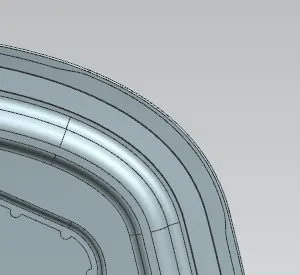
Fianl Hood Design