Hood design-Week 2
AIM:
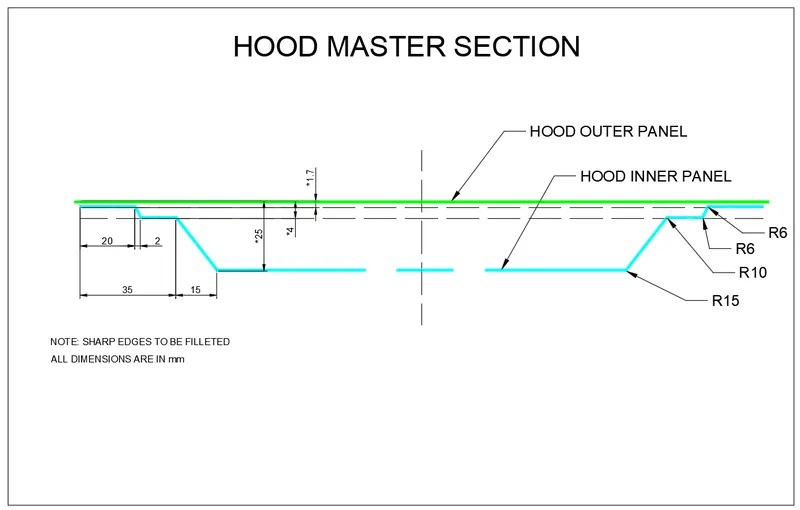
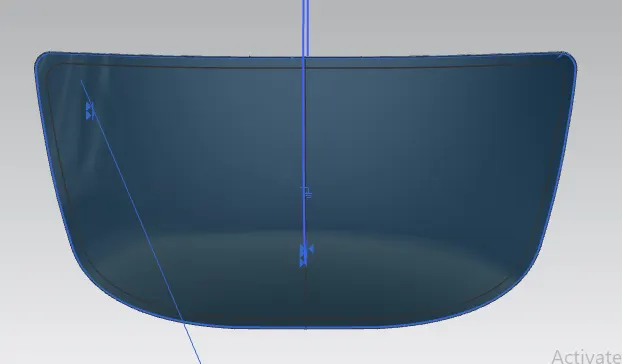
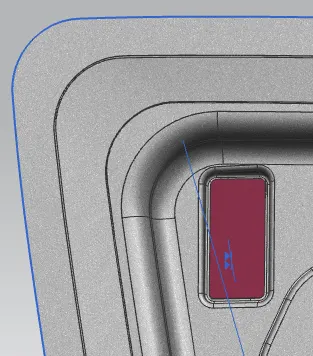
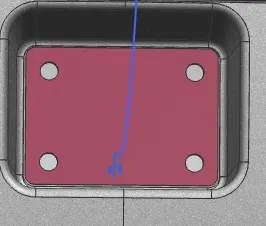
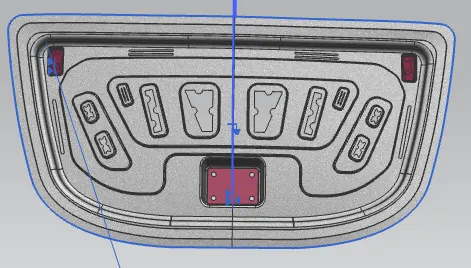
To Design Hood Outer Panel, Inner Panel and the necessary reinforcements by following the Master Section by considering the Design parameters.
OBJECTIVES:
The main objectives of these report is about the Hood Design which includes a detailed explanation about hood and its components, Latch Trajectory, Mastic Data, Emboss Definitions, Manufacturing process like Deep-Drawing and Hemming, and all the parameters followed in the design.
GIVEN DESIGN PARAMETERS:
The given design parametrs to consider are
- Outer Panel Thickness = 0.75mm
- Inner Panel Thickness = 0.75mm
- Reinforcement Thickness = 1.5mm
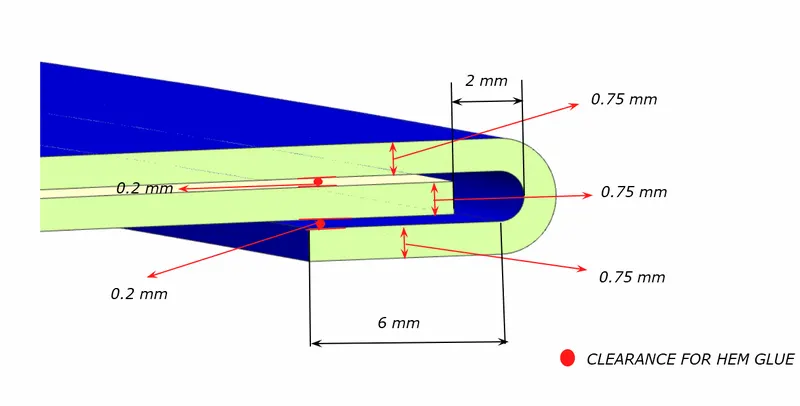
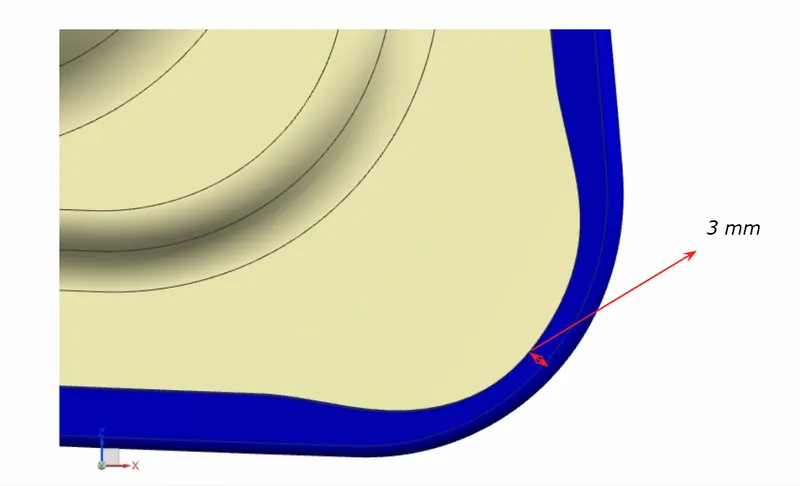
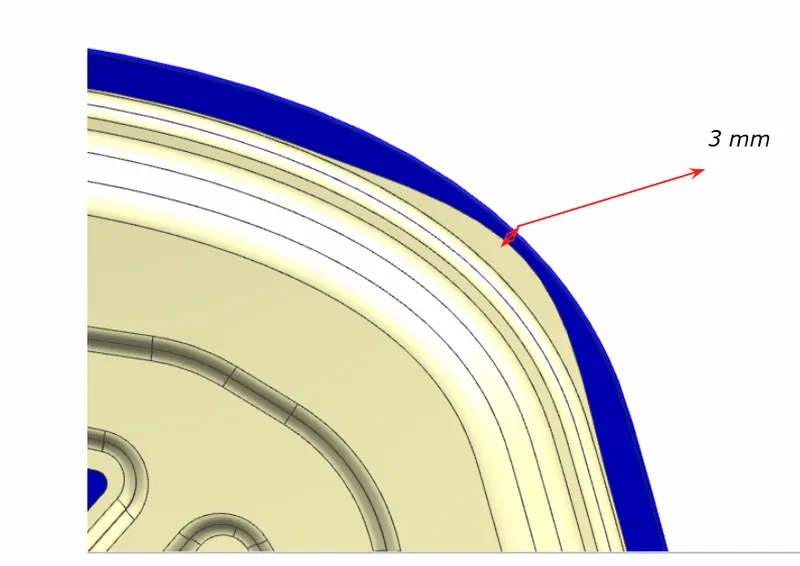
GIVEN MASTER SECTION:
THEORY:
HOOD:
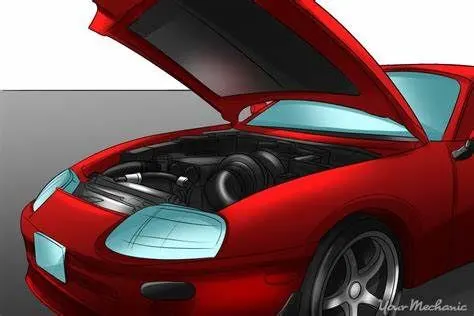
The Hood or Bonnet is the hinged cover over the engine of motor vehicles.Hood can open to allow acess to the engine compartments for maintenence and repairs.On front engined cars, the hood may be hinged to either the front or the rear edge, or in the earlier models it may be split nto two sections,one each side,each hinged along the center line.
The hood is typically made out of the sam material as the rest of the body work.This may includes steel, alluminium,fireglass or carbon fiber.The various components of hood assembly are as follows.
COMPONENTS OF HOOD DESIGN:
- Outer hood pannel
- Inner hood panel
- Latch and striker assembly
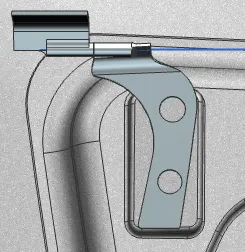
- Hinge assembly
- Hinge reinforcement
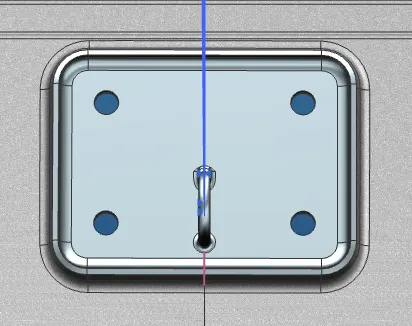
- Striker reinforcement
LATCH TRAJECTORY:
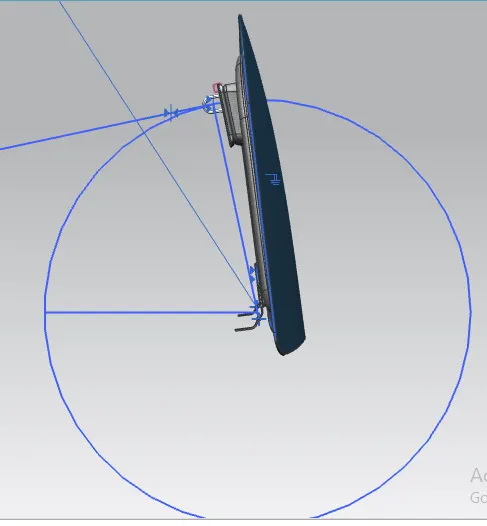
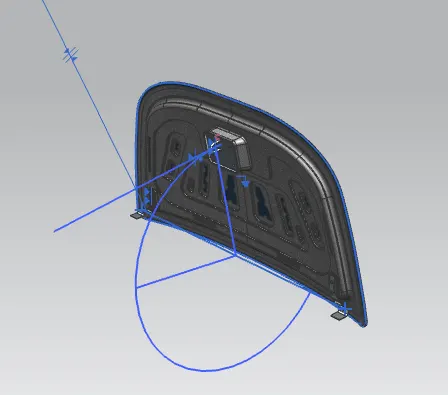
While assemblying the latch with the hood panel it is strictly recomended that the position of the latch and striker exactly fit in to the locking system in the engine compartment.The path is created by aking the hinge axis as the reference.
It provides the opening and closing of the hood. This is done with the help of latch and striker. for perfect closing and opening of hood striker and latch should be at perpendicular to each other. To find the placement of latch draw a circle taking radius from the middle of the hinge axis and striker. then Draw the tangent line from the circle to find a position of a latch.
MASTIC DATA:
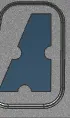
As we know that main pupose of hood outer panel is for classy look of the surface by covering the hood inner panel, to join inner pannel with outer pannel we cannot use regular joing procedures like welding,riveting,using fastners etc. these will destry the classy surface of the outer pannel. To eradicate the above problems we have using the mastic sealents and hemming operations.Mastic sealent behaves like a elastic rubber.It is like a paste we apply between outer and inner panel we have designed some space to apply the paste.Intially it is like a jelly after heating it will be hardened and expanded upto 5mm and stick in between outer and inner panel.It also reduces the vibrations and some disturbances, acts like a dampers to the hood side area.


EMBOSS DEFINITION:
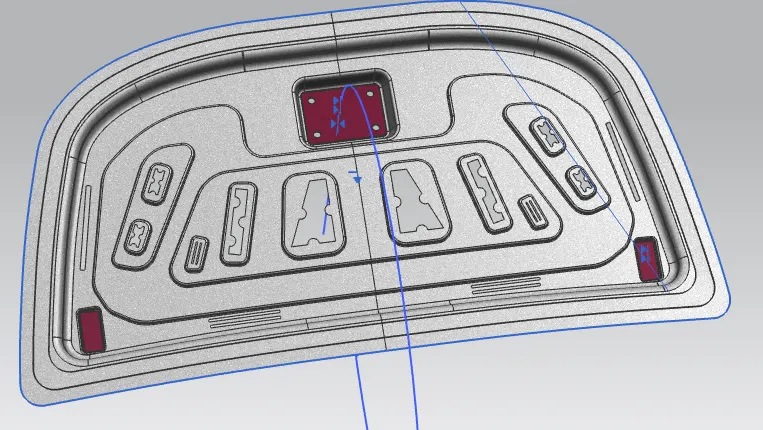
Embossed surface plays an important role in the accidents of the vehicle.While the vehicle got rushed first imapcted area is the hood only these direct effects the driver only.To reduce of the impact when vehicle met with accident we provide embossed surface on the hood inner panel to divert the forces in different directions by creationg the embossed surfaces in different shapes usally in y or v shapes.So that by diverting the impact forces to the other directions we can reduce the effect of driver from major accidents.
Hemming:
Hemming is a forming operation in which the edges of the sheet are folded or folded over another part in order to achieve a tight fit. Normally hemming operations are used to connect parts together, to improve the appearance of a part and to reinforce part edges.
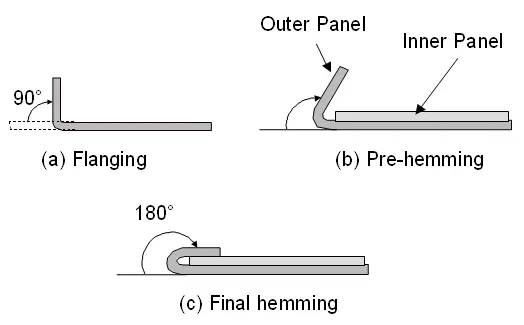
In car part production, hemming is used in assembly as a secondary operation after deep drawing, trimming and flanging operations to join two sheet metal parts (outer and inner) together. Typical parts for this type of assembly are hoods, doors, trunk lids and fenders.
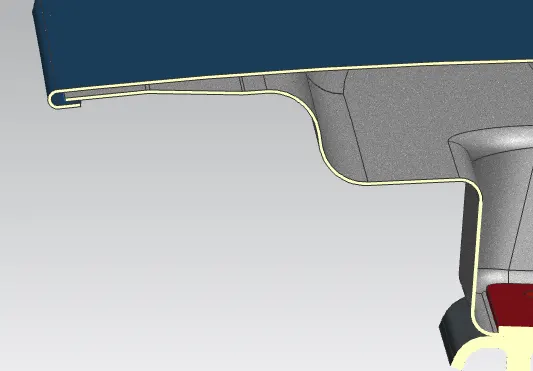
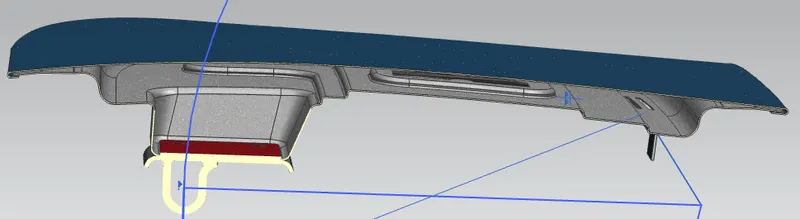
Manufacturing process Deep-Drawing:
Deep drawing is one of the most widely used processes in sheet metal forming. Apart from its use in many other sectors, it is applied in the automotive industry for the manufacturing of car body parts. The deep drawing process is a forming process which occurs under a combination of tensile and compressive conditions.
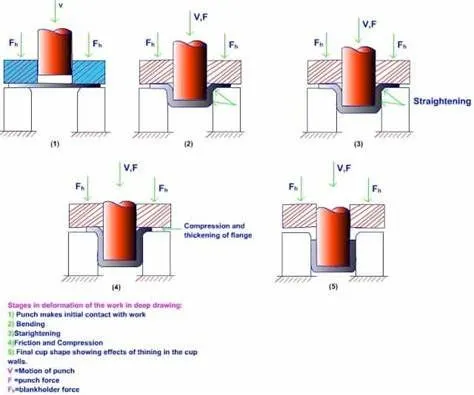
Sheet metal blank is radially drawn into a forming die by the mechanical action of a punch. It is thus a shape transformation process with material retention. The process is considered "deep" drawing when the depth of the drawn part exceeds its diameter. This is achieved by redrawing the part through a series of dies. The flange region (sheet metal in the die shoulder area) experiences a radial drawing stress and a tangential compressive stress due to the material retention property. These compressive stresses (hoop stresses) result in flange wrinkles. Wrinkles can be prevented by using a blank holder, the function of which is to facilitate controlled material flow into the die radius.
FINAL ASSEMBLY OD HOOD DESIGN:
REINFORCEMENTS OF 1.5MM THICKNESS:
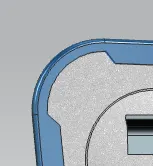
RELIEF CORNER: