Flow over an airfoil
Aim :
To
- Model the flow over a NACA0017 airfoil
- For the angle of attacks 0,2,4,6,8,10 compare the lift and drag forces
Theory :
Airfoil is defined as the cross-section of a body that is placed in an airstream in order to generate useful aerodynamic force.
Angle of attack is the angle between the oncoming air or relative wind and a reference line on the airplane or wing. Sometimes, the reference line is a line connecting the leading edge and trailing edge at some average point on the wing.
Effect of variation in Angle of Attack :
Increases as the angle of attack increase the lift force increase proportionately. And a certain point, called critical angle of attack, upper surface flow is more separated and the airfoil or wing is producing its maximum coefficient of lift.
The study of airfoil behavior to varying angle of attacks is made in order to determine the best possible dimensions for practical conditions. In most airplanes, this is about 16 to 18 degrees.
During a cruise, the requirement is to maintain the angle of attack where the total drag on the airplane is minimum so as to use the minimum thrust and therefore, minimum fuel consumption. This could occur at an angle of about 3 to 5 degrees.
Modelling :
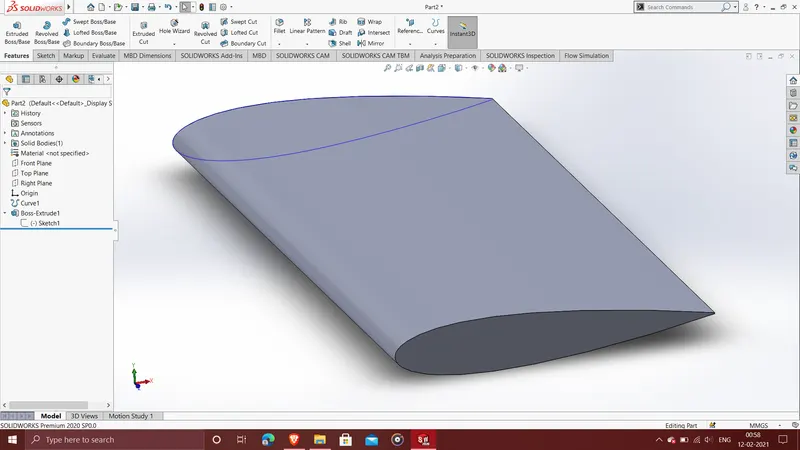
The NACA0017 airfoil used for the simulaton is as shown below
Simulation and Results :
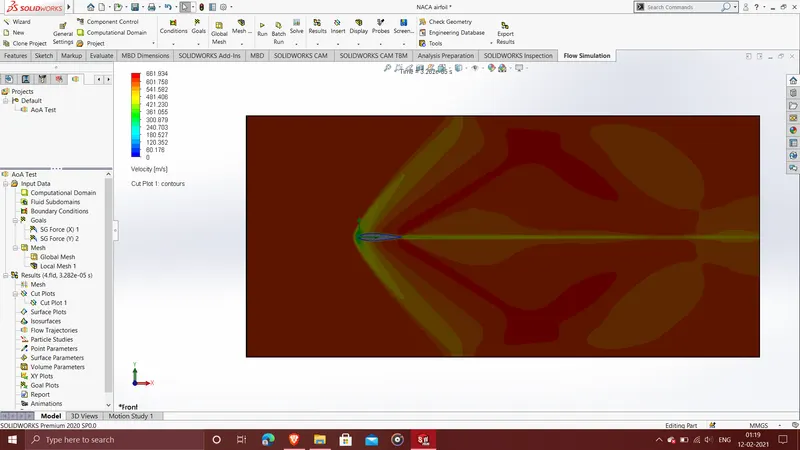
Case 1 : AoA 0 Degrees
Velocity Plot
Drag (SG Force X)
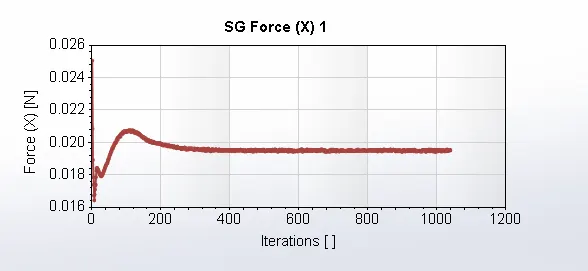
Average value = 0.020N
Lift (SG Force Y)
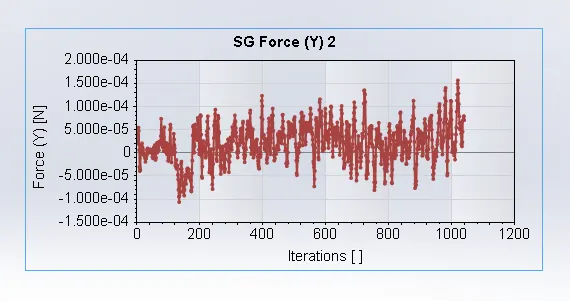
Average value = 4.543e-05 N
Case 2 : AoA 2 Degrees
Velocity Plot
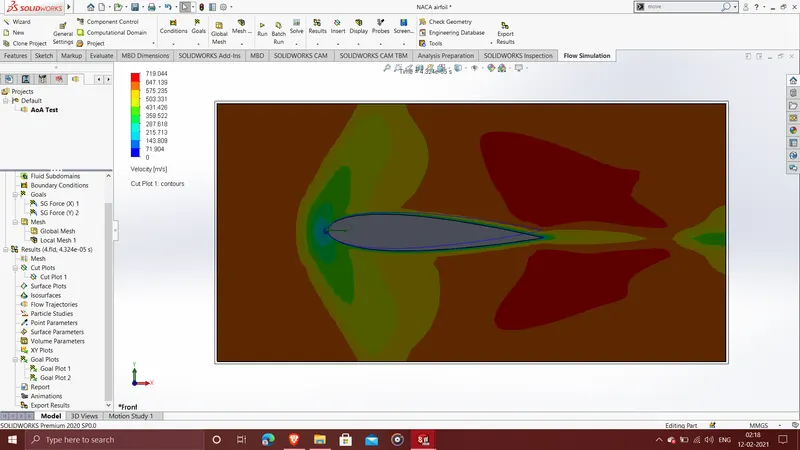
Drag (SG Force X)
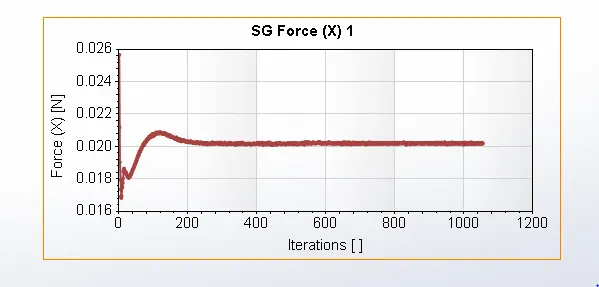
Average Value = 0.020 N
Lift (SG Force Y)
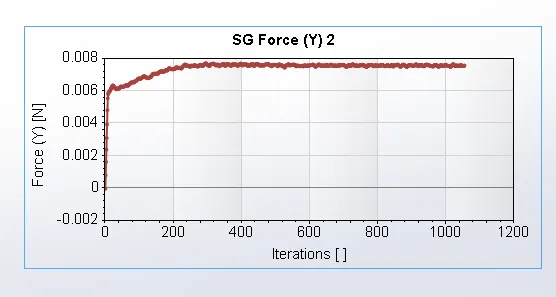
Average Value = 0.008 N
Case 3 : AoA 4 Degrees
Velocity Plot
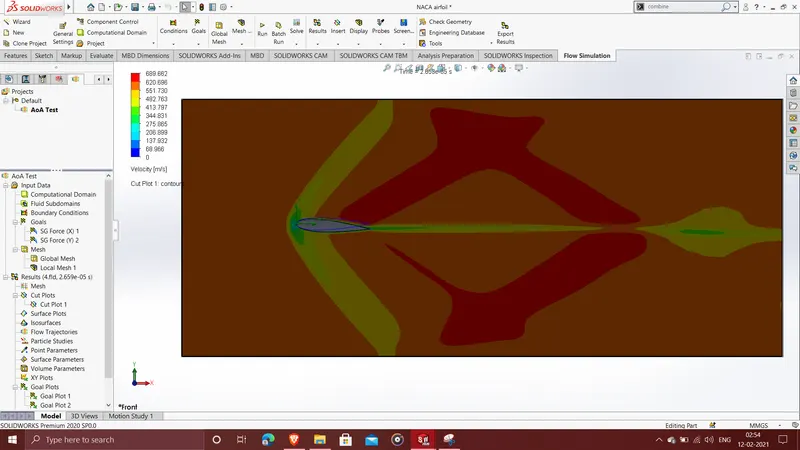
Drag (SG Force X)
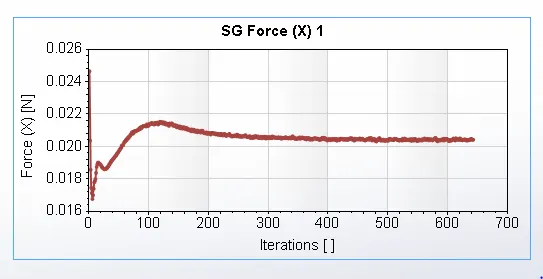
Average value = 0. 020 N
Lift (SG Force Y)
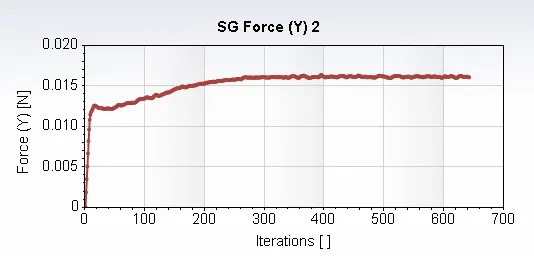
Average value = 0.016 N
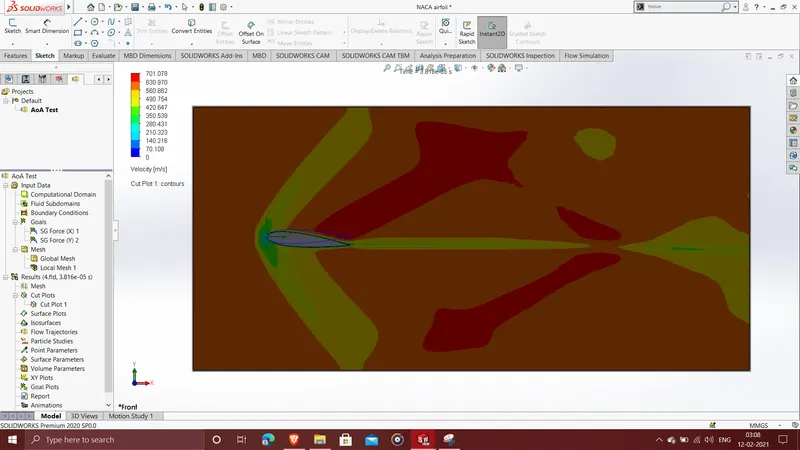
Case 4 : AoA 6 Degrees
Velocity Plot
Drag (SG Force X)
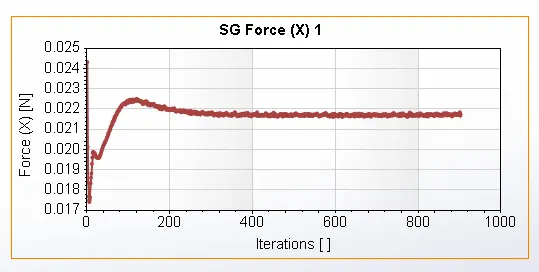
Average value = 0.022 N
Lift (SG Force Y)
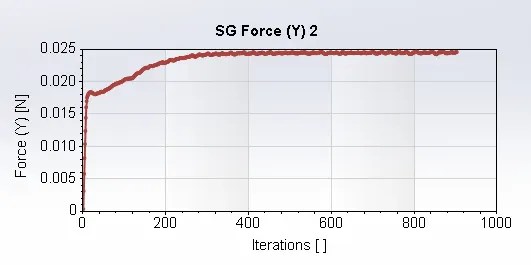
Average value = 0.024 N
Case 5 : AoA 8 Degrees
Velocity Plot
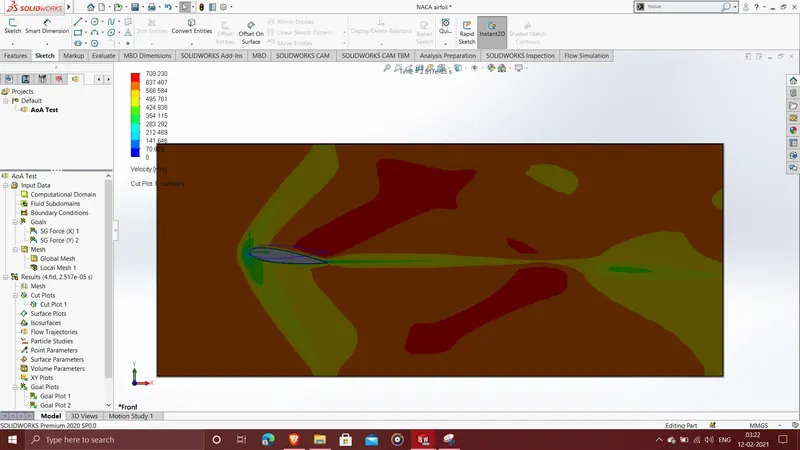
Drag (SG Force X)
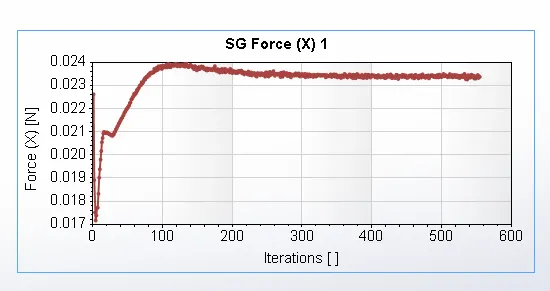
Average Value = 0.023 N
Lift (SG Force Y)
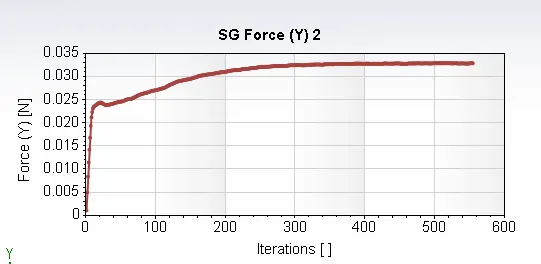
Average Value = 0.033 N
Case 6 : AoA 10 Degrees
Velocity Plot
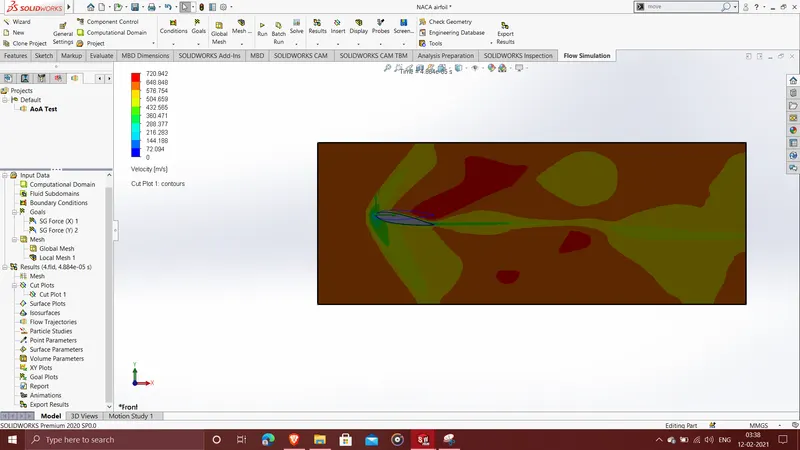
Drag (SG Force X)
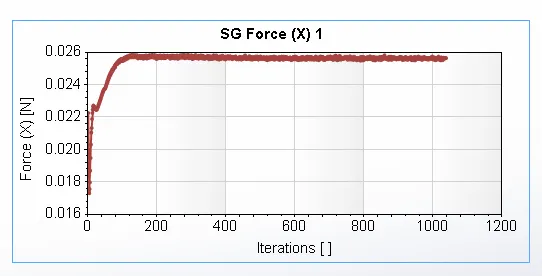
Average Value = 0.026 N
Lift (SG Force Y)
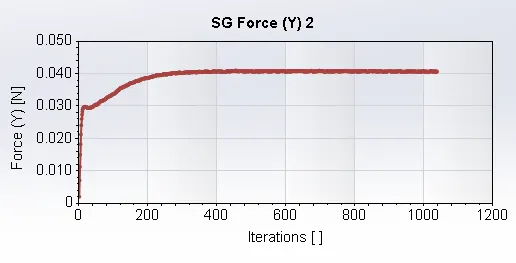
Average Value = 0.041 N
Final results :
| Angle of Attack | Lift | Drag |
| 0 | 4.543e-05 N | 0.020 N |
| 2 | 0.008 N | 0.020N |
| 4 | 0.016 N | 0.020 N |
| 6 | 0.024 N | 0.022N |
| 8 | 0.033 N | 0.023 N |
| 10 | 0.041 N | 0.026N |
Conclusions :
1. The above results are very small in magnitude because of the small size of the airfoil, its chord length and span being 1mm and 2mm respectively.
2. From the above results we can deduce that as the Angle of Attack increases, the lift and drag also increase.
3. However, the increase in drag is very minimal compared to the increase in lift.
4. The value of Lift is minimum at 0 degrees and maximum at 10 degrees.
5. The velocity of air flow over the airfoil also increases as the angle of attack increases.