Final Project: Electric Rickshaw modelling
Aim : To design a model of an electric rickshaw by using matlab simulink
Summary
we can observe that .I am going to build a matlab model of an electric rickshaw(three wheel) passenger vehicle by driven using the PM brushed motor and assuming the efficiency points of motor controller and motor with an suitable LI-ion battery
Firstly we are going to knew about Electric Rickshaw velhicle and how its works ,benefits of EV rickshaw.After that we are going to build the EV rickshaw model by using simulink with suitable blocks from the powertrain block set.
My Aim is to check how my rickshaw works for any three standard driving cycles showing their energy consumption,temperature rise of motor and controller for 100km constant speed driving at 45kmph.
Given that
Create a detailed MATLAB model of an electric rickshaw (three wheel passenger vehicle) as per details below:
- Rear wheels driven by PM brushed type motor
- Assume efficiency points of motor controller and motor
- Make an excel sheet of all input and assumed data
- Results: For any three standard driving cycles show energy consumption, temperature rise of motor and controller for 100 km constant speed driving at 45 kmph.
Introduction about Rickshaw
Electric rickshaws (also known as electric tuk-tuks or e-rickshaws or totoor e-tricycles) are small 3-wheeled vehicles powered by an electric motor and battery ranging from 650 to 1400 Watts. They save on fuel costs compared to auto rickshaws while offering greater ease-of-use than pulled rickshaws. This has led to their popularity and widened-acceptance in some cities since 2008.
If introduced in a systematic manner, electric rickshaws could be a low-emitter complementary transport for low-income people who suffer most from a lack of transport facility.They are mostly manufactured in India and China
Design and construction
These rickshaws have a mild steel tabular chasis consisting of three wheels with a differential mechanism at the rear wheels. The motor is a brushless DC motor. The electrical system used in Indian versions is 48V and in Bangladesh is 60V. The body design from the most popular Chinese version is of very thin iron or aluminum sheets. Bodies made of fiberglass are also popular because of their strength and durability, resulting in low maintenance. Body design is varied from load carriers, passenger vehicles with no roof, to full body with windshields for drivers' comfort.
It consists of a controller unit.They are sold on the basis of voltage supplied and current output, also the number of mosfet (metal oxide field effect transistors) used. The vehicle's batteries are typically lead acid with a lifespan of 6–12 months. deep cycles batteries designed for electric vehicles are rarely used. Weight of the electric car has also been a recurring design difficulty in them.
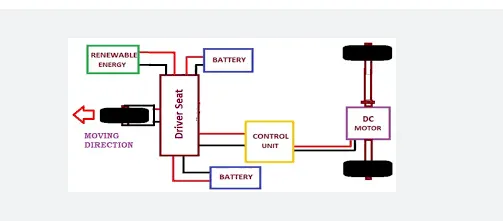
The block diagram of ev rickshaw
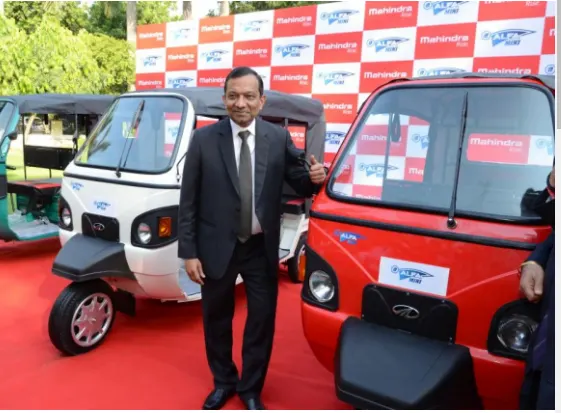
Electric Auto rickshaw (mahindra named treo)
Drive train (electric rickshaw)
Forces acting on a vehicle
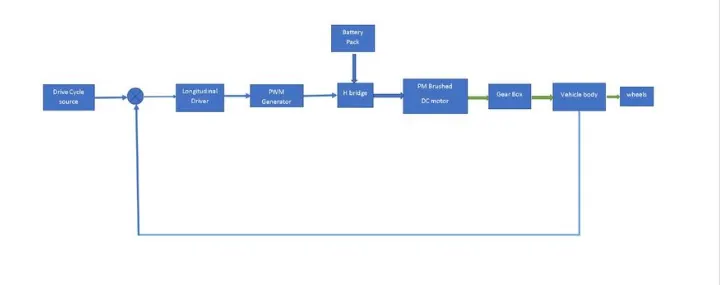
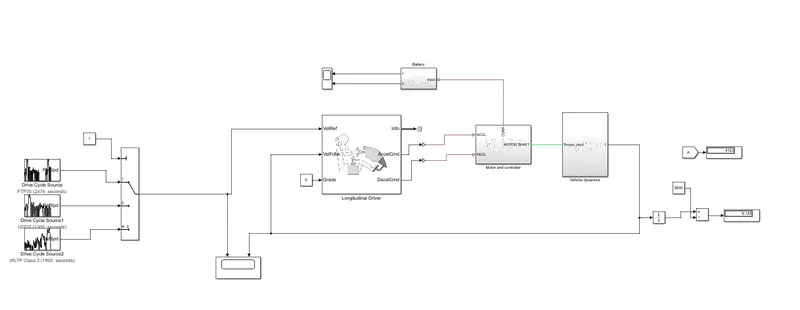
Model of Electric Rickshaw vehicle design by using simulink
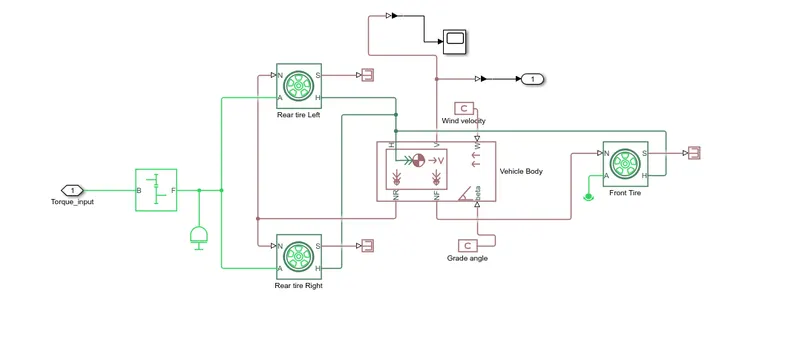
Vehicle Body
Motor and Controller
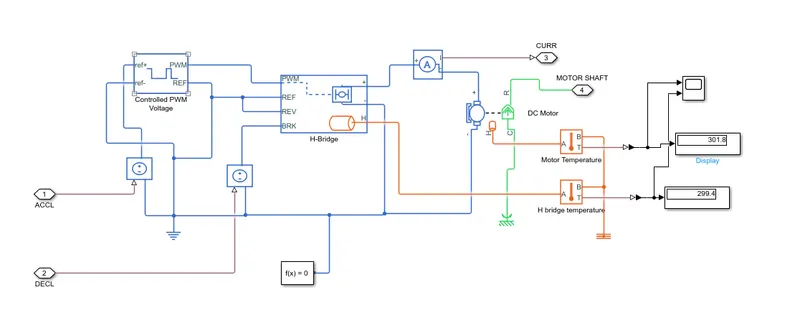
the longitudanal driver block acts as an controller that can generate the acceleration and deceleration commands for controlled pwm generator which is fed to the H bridge for the proper firing angle to the igbts and the h bridge feeds the permanant magnet DC motor
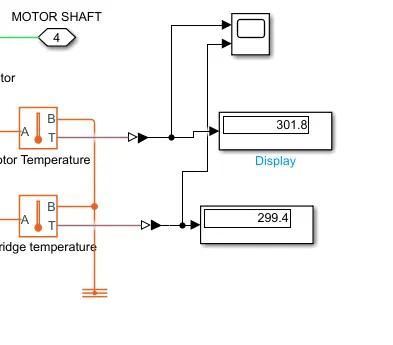
the two temparature measurements block attached to the motor and the converter in which the initial temparature is 300kelvin
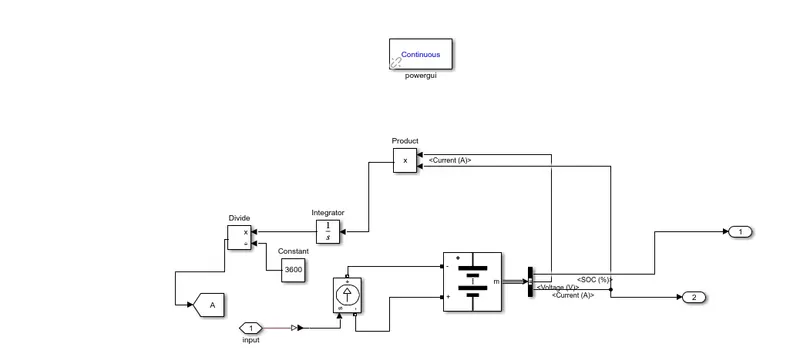
Battery
Results
Case 1: FTP75 Drive Cycle
Drive cycle source FTP75 2474 (seconds)
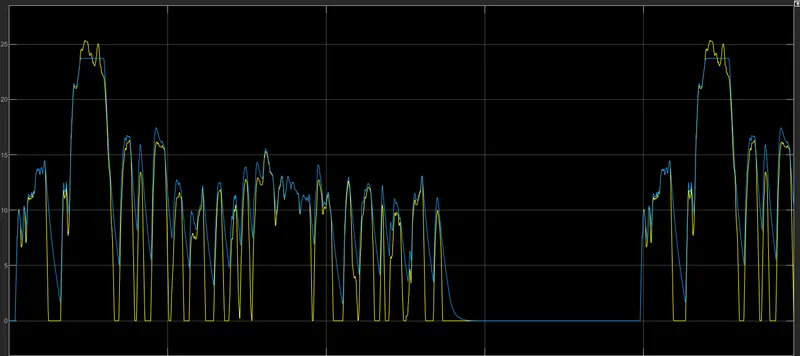
The velocity reference and vehicle velocity
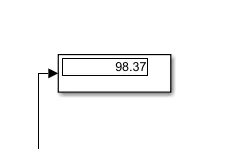
Battery current and the soc%
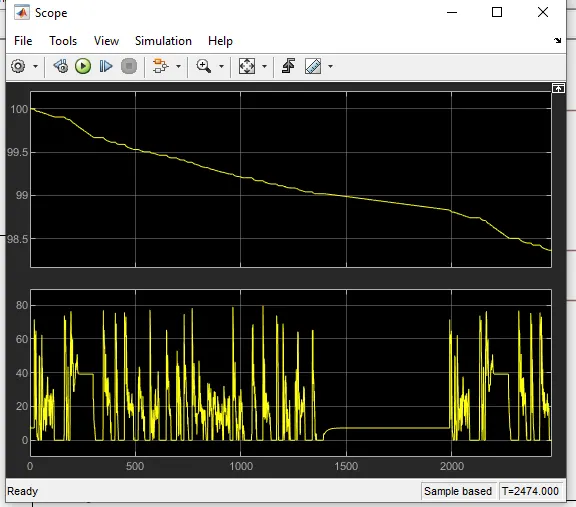
we can observe the gradual drope of soc% from 100% to 98%
we can observe the spikes in the current during the acceleration and drop at deceleration
Motor and controller temperature
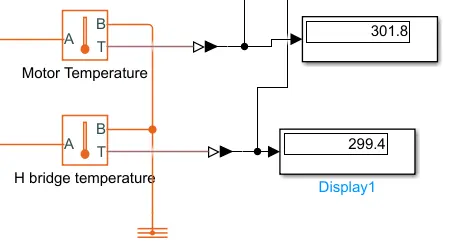
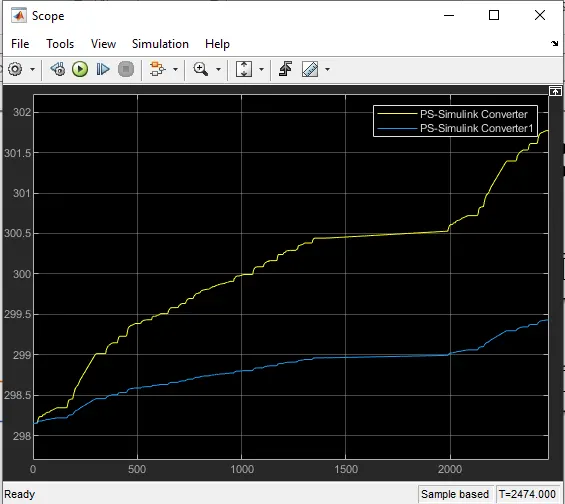
Case 2 : Drive cycle source
UDDS(1369seconds)
the velocity reference and vehicle velocity
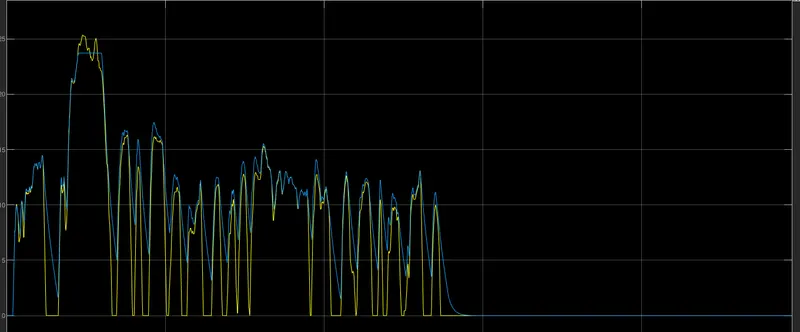
as well the blue line indicates the velocity reference and yellow line indicates vehicle velocity
let us see the battery current and the soc%
we can observe the gradual decrease in soc% in scope as well as exact soc% in display
we can observe the gradual drope of soc% from 100% to 99%
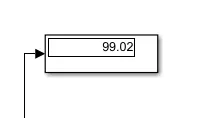
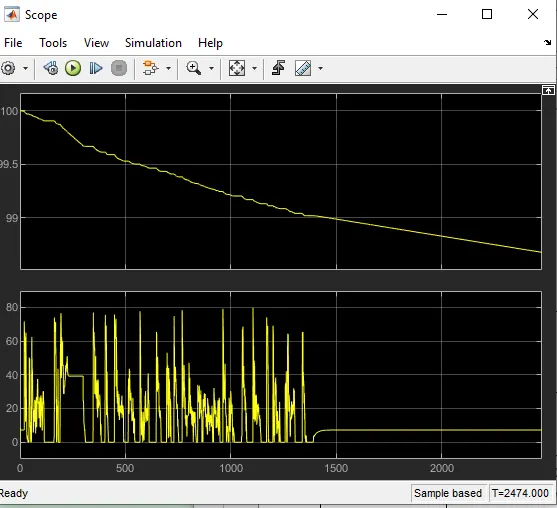
let us see the displays
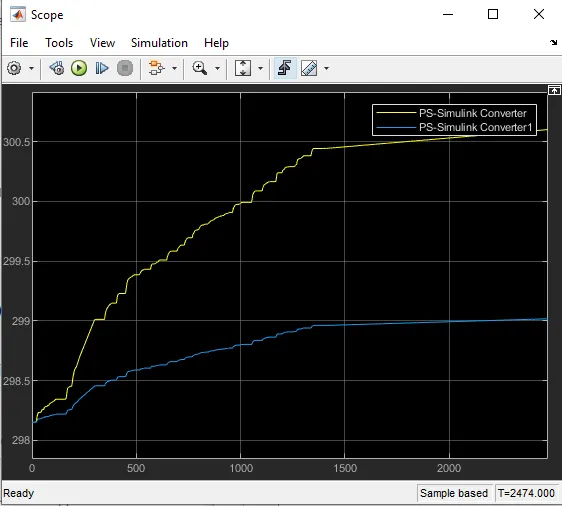
Motor and controller temperature
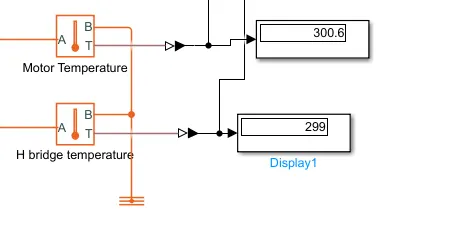
we can observe the gradual increase in temparature
Case3 : Drive cycle source (WLTP class1 (1022 sec)
the velocity reference and vehicle velocity
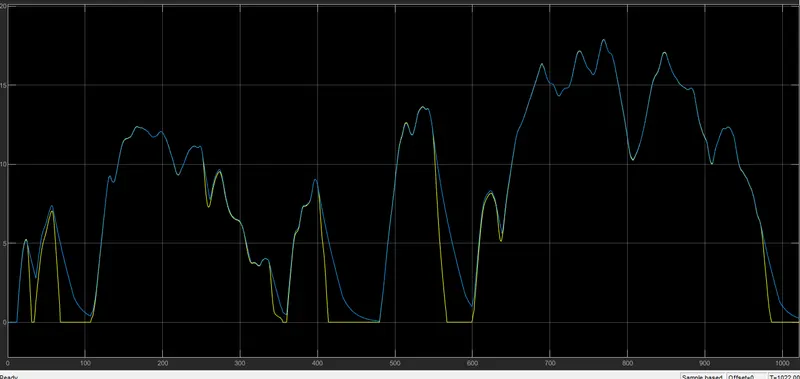
as well the blue line indicates the velocity reference and yellow line indicates vehicle velocity
let us see the battery current and SOC
we can observe the gradual drope of soc% from 100% to 99%
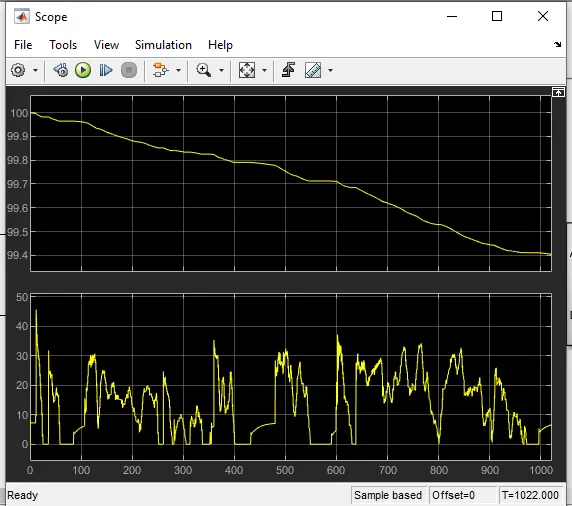
although the WLTP Class 1 cycle is 1800s which is smaller than FTP75 but it consumed more current and soc% is also low when compared to FTP75 this iss because it has more acceleration points than FTP75
we can observe the gradual decrease in soc% in scope as well as exact soc% in display
let us see the temparatures of motor and converter
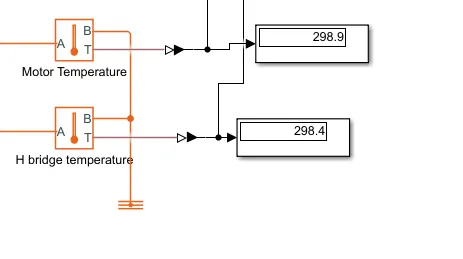
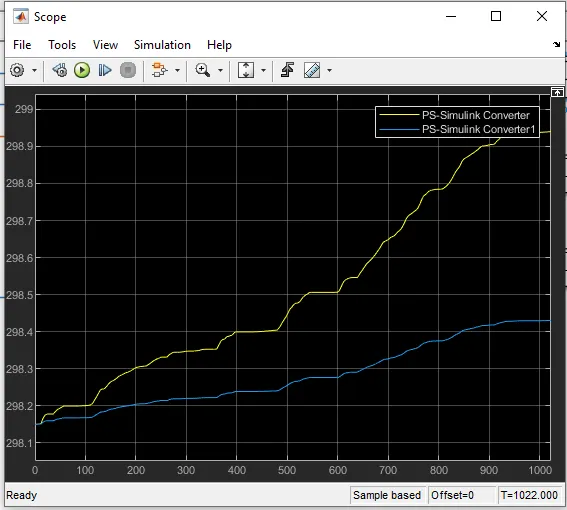
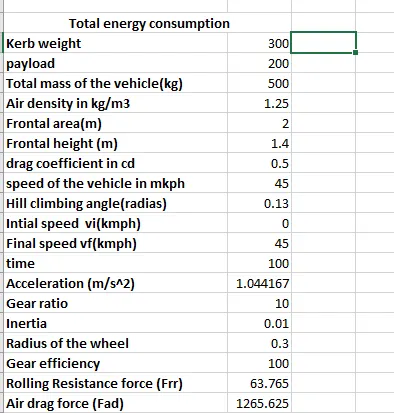
now let us create a tabular format in excel spreadsheet to calculate energy consumed by the vehicle in three driving cycles
| Drive cycles | Distance | Energy Consumed | Motor temperature | Converter temperature | SOC% |
| FTP75 | 6.135 | 4123 | 301 | 299.4 | 98% |
| UDDS | 4.216 | 2474 | 300 | 299 | 99.2% |
| WLTP | 2.401 | 1781 | 299 | 298.4 | 99.4% |
The above table shows the distance covered by the vehicle during the drive cycle, energy consumed , motor temparature and converter temparature, state of charge percentage of the battery in three drive cycle sources
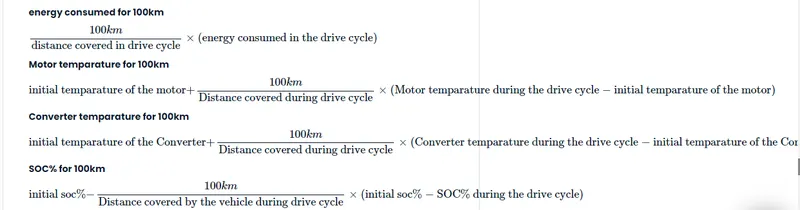
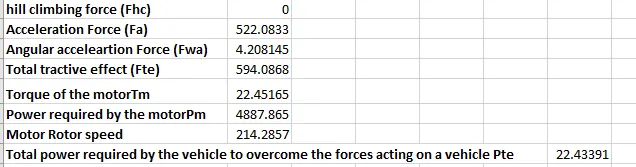
let us use the above formulas in excel spread sheet and calculate the four parameters for three drive cycles for 100km
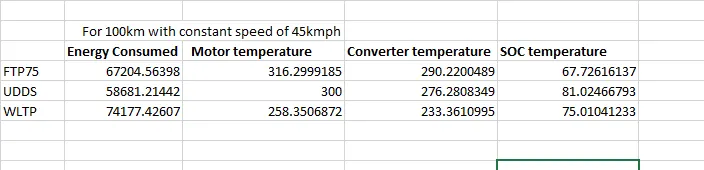
Conclusion
An Electric Rikshaw (three wheeled passenger vehicle) is designed using a Permanant megnet DC brushed Motor and a lithium ion battery with three different drive cycles namely FTP75, UDDS, WLTP Class 1. and also calculated energy consumed by the motor , motor temparature. converter temparature, state of charge percentage of the battery for each drive cycle. Later on by depending on the parameters we got we assumed formulae for energy consumed , motor and converter temparature, state of charge percentage for 100km by assuming 45kmph as constant speed and tabulated each and every parameters used, assumed and calculated in Excel spreadsheet and attached.