Final Project: Design of an Electric Vehicle
Objectives:
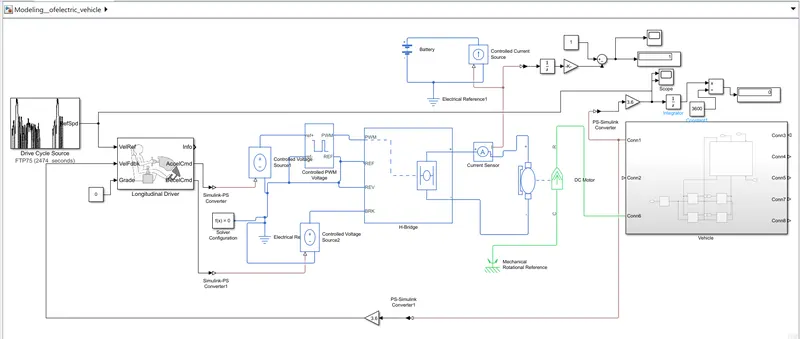
To prepare a technical report about the EV model including -
- System level configurations
- Model parameters
- Results
- Conclusion
Theory:
Electric vehicles consist of electric motor that is powered by a battery pack. The main advantage of electric vehicles is that they emit zero emissions and are eco-friendly. They also do not consume any fossil fuels, and hence use a sustainable form of energy for powering the car. All-electric vehicles, also referred to as battery electric vehicles (BEVs), have an electric motor instead of an internal combustion engine. The vehicle uses a large traction battery pack to power the electric motor and must be plugged into a wall outlet or charging equipment, also called electric vehicle supply equipment (EVSE).
Hybrid electric vehicles are powered by an internal combustion engine and one or more electric motors, which use energy stored in batteries. A hybrid electric vehicle cannot be plugged in to charge the battery. Instead, the battery is charged through regenerative braking and by the internal combustion engine. The extra power provided by the electric motor can potentially allow for a smaller engine.
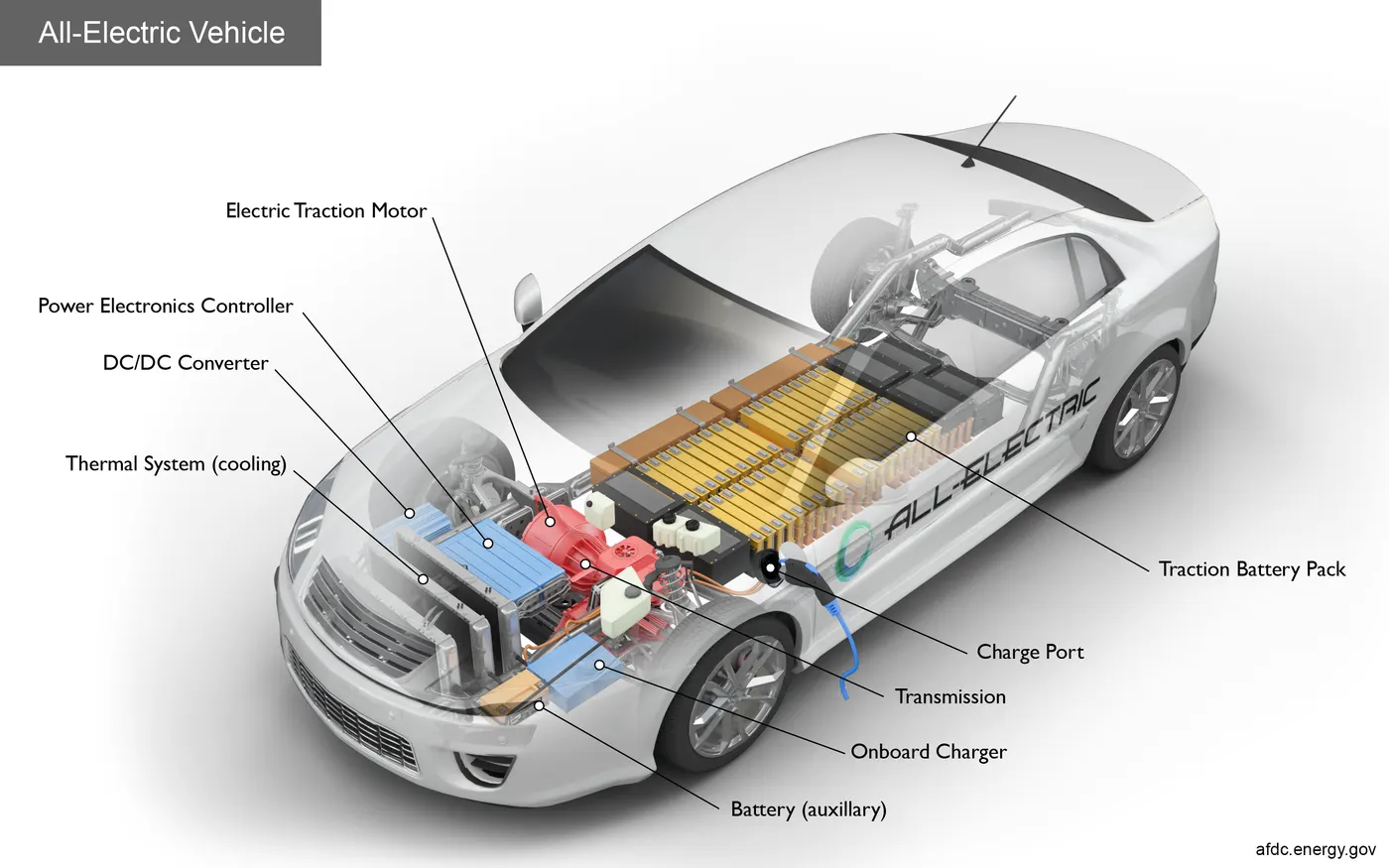
Components of Electric Vehicles
The components of modeling an Electric Vehicle are:
- Drive cycle
- Motor controllers
- Power converters
- Batteries
- Vehicle body
Vehicle Body
The electric car's skeleton is called a space frame and is made of aluminum to be both strong and lightweight. The wheels are also made of aluminum instead of steel, again as a weight-saving method. The aluminum parts are poured at a foundry using specially designed molds unique to the manufacturer. Seat frames and the heart of the steering wheel are made of magnesium, a lightweight metal. The body is made of an impact-resistant composite plastic that is recyclable.
Drive Cycle
The Drive cycle is a series of data points of the velocity of a vehicle vs time. The graph shown below is Federal Urban Drive Cycle. This data of velocity vs time can be considered as a general driving trend of the vehicle. We can select the motor power for an EV that will provide this drive cycle performance. So while designing an EV for city rides, where the maximum speed is 35km/hr we can choose a low-powered motor.
Motor controller
It is a device that improves the performance of an electric motor. The controller takes power from the batteries and delivers it to the motor. The accelerator pedal hooks to a pair of potentiometers and these potentiometers provide the signal that tells the controller how much power it is supposed to deliver. The controller can deliver zero power when the car is stopped and full power when the driver floors the accelerator pedal, or any power level in between.
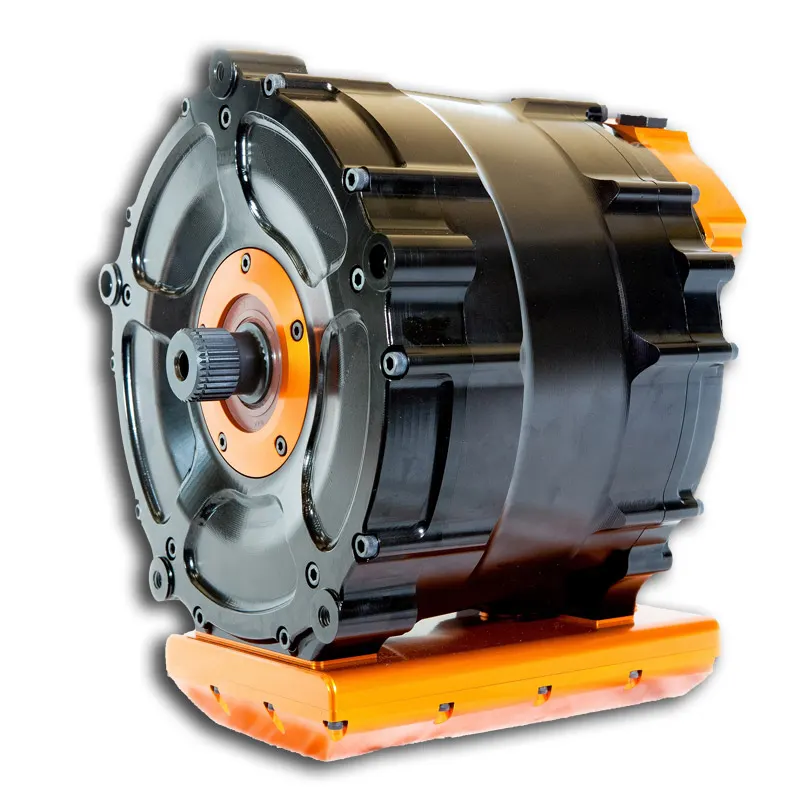
Electric traction motor
The electric traction motor is the main component of the electric vehicle. The motor converts electrical energy into kinetic energy. Using power from the traction battery pack, this motor drives the vehicle's wheels. Some vehicles use motor generators that perform both the drive and regeneration functions. This energy rotates the wheels. The electric motor is the main component that differentiates an electric car from conventional cars. An important feature of an electric motor is the regenerative braking mechanism. This mechanism slows down the vehicle by converting its kinetic energy into another form and storing it for future use. There are basically two types of motors DC and AC motors.
Power Electronics Controller
The power electronics controller determines the working of an electric car. It performs the regulation of electrical energy from the batteries to the electric motors. The pedal set by the driver determines the speed of the car and the frequency of variation of voltage that is input to the motor. It also controls the torque produced. This unit manages the flow of electrical energy delivered by the traction battery, controlling the speed of the electric traction motor and the torque it produces.
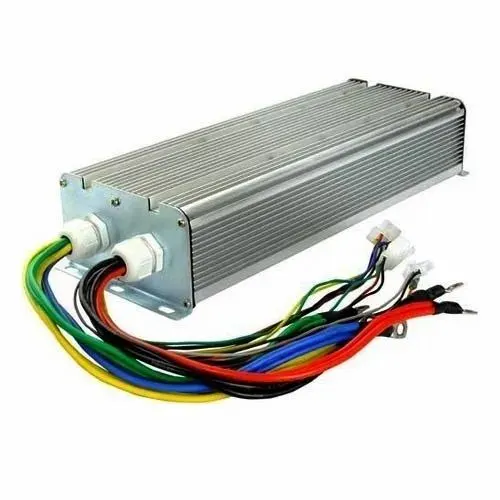
- DC/DC converter
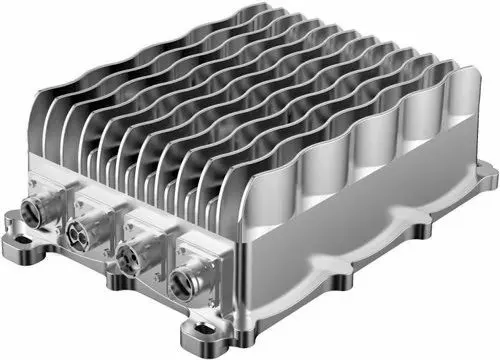
This device converts higher-voltage DC power from the traction battery pack to the lower-voltage DC power needed to run vehicle accessories and recharge the auxiliary battery. The traction battery pack delivers a constant voltage. But different components of the vehicle have different requirements. The DC-DC converter distributes the output power that is coming from the battery to a required level. It also provides the voltage required to charge the auxiliary battery.
Battery
In an electric drive vehicle, the auxiliary battery provides electricity to power vehicle accessories. In an electric drive vehicle, the low-voltage auxiliary battery provides electricity to start the car before the traction battery is engaged; it also powers vehicle accessories.
- Types of Energy Storage Systems
The following energy storage systems are used in all-electric vehicles, PHEVs, and HEVs.
- Lithium-Ion Batteries
Lithium-ion batteries are currently used in most portable consumer electronics such as cell phones and laptops because of their high energy per unit mass relative to other electrical energy storage systems. They also have a high power-to-weight ratio, high energy efficiency, good high-temperature performance, and low self-discharge.
Procedure
Sub-systems
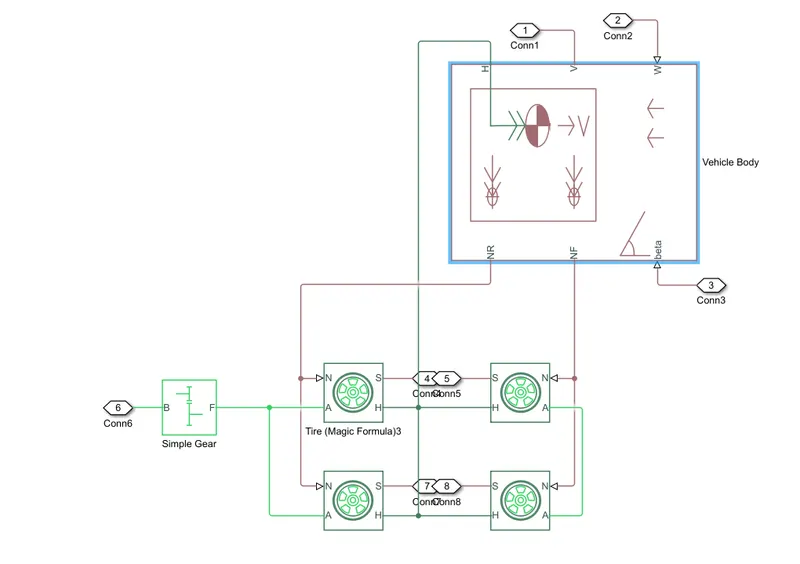
1) the Vehicle body
Input Ports
- W - Wind Velocity in m/s
- beta - Grade angle in radians
Output Ports
- V - Velocity in m/s
- NR - Normal force on Rear Axle (N)
- NF - Normal Force on Front Axle (N)
Vehicle Body Parameters
Tires
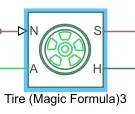
- The N port of the tire corresponds to the normal reaction acting on it.
The A port corresponds to the Mechanical Rotational conserving port for the wheel axle. - The H corresponds to the Mechanical Translational conserving port for the wheel hub through which the thrust developed by the tire is applied to the vehicle.
- The connection S represents the output port for the slip of the tire.
Model Study