Final Project: Design of an Electric Vehicle
Q) Create a MATLAB model of electric car which uses a battery and a DC motor.
THE MAIN COMPONENTS OF THE ELECTRIC VEHICLE ARE:
- Wheels/tire
- Battery
- Motor/generator
- Motor controllers
- Power converters
- Transmission systems
INTRODUCTION OF ELECTRIC VEHICLES:
Electric vehicles are either partially or fully electric. EVs are becoming increasingly popular because they have low running costs and are environmentally friendly. EVs have electric motors that power the vehicle. These electric motors are powered by lithium-ion batteries, which are excellent at retaining energy and have greater longevity than other variants. T
TWO TYPES OF ELECTRIC VEHICLES:
- Battery (BEV)
- Plug-in Hybrid (PHEV).
BATTERY ELECTRIC VEHICLE(BEV):
A BEV is an electric vehicle that is powered only by batteries. These batteries need to be recharged regularly, similar to how you would recharge your cell phone or laptop. The main advantage of BEVs is that they have zero emissions, making them very environmentally friendly. BEVs are also very efficient and have low running costs.
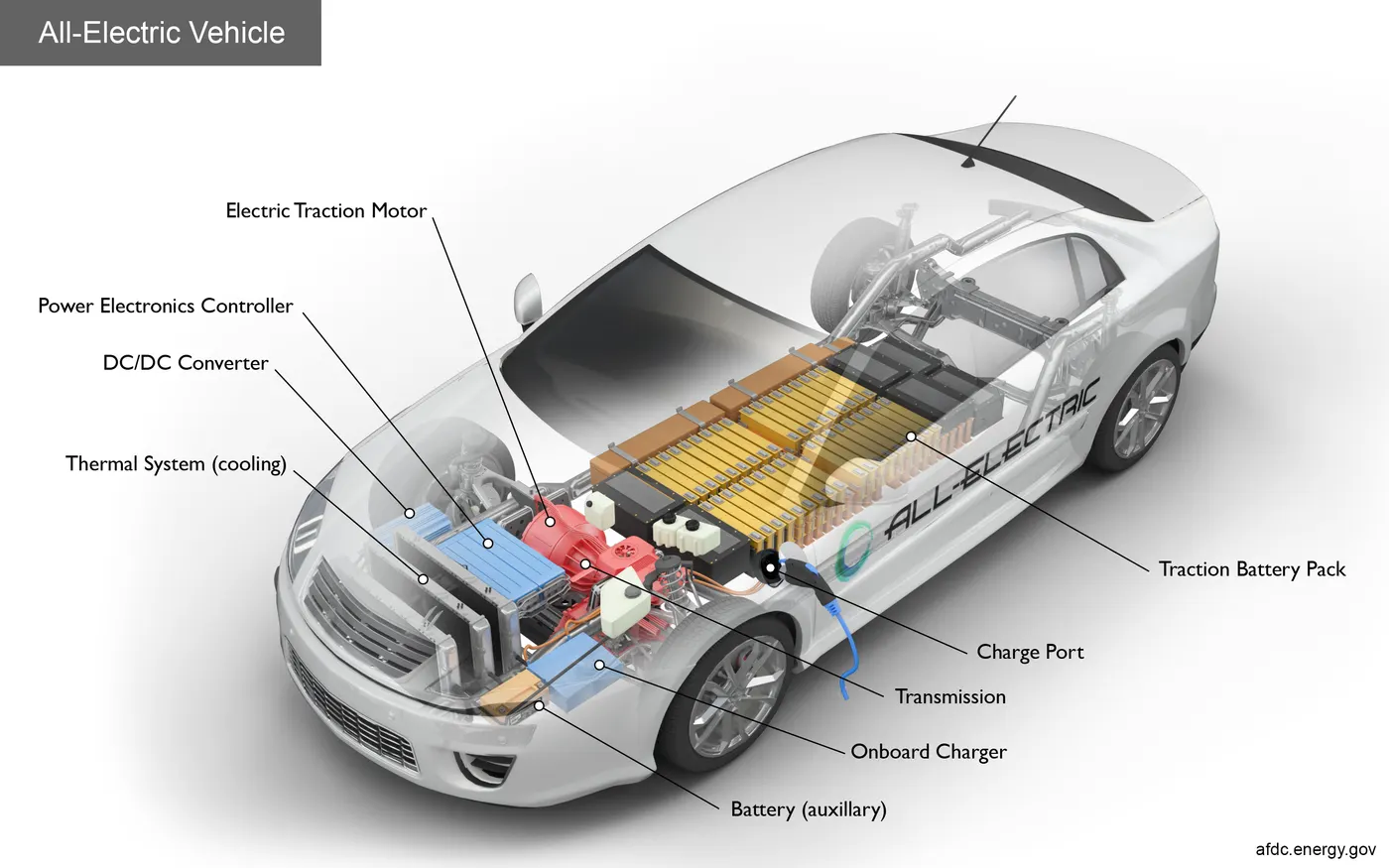
PLUG IN HYBRID ELECTRIC VEHICLE(PHEV):
A PHEV is an electric vehicle powered by both batteries and gasoline. PHEVs have electric motors that are powered by batteries that you can recharge by plugging the vehicle into a suitable charging point. PHEVs also have a gasoline engine that can be used to power the vehicle. The main advantage of PHEVs is that the gasoline variant serves as emergency energy that you can use if you run out of power on the road. Like BEVs, PHEVs also have low running costs.
The battery in a PHEV is much smaller, making them lighter and more efficient to use. Usually, the electric engine can power the vehicle between 10 to 50 miles. Once the electric power runs out, the gasoline engine will take over and power the vehicle.
simulation model of electric vehicle :
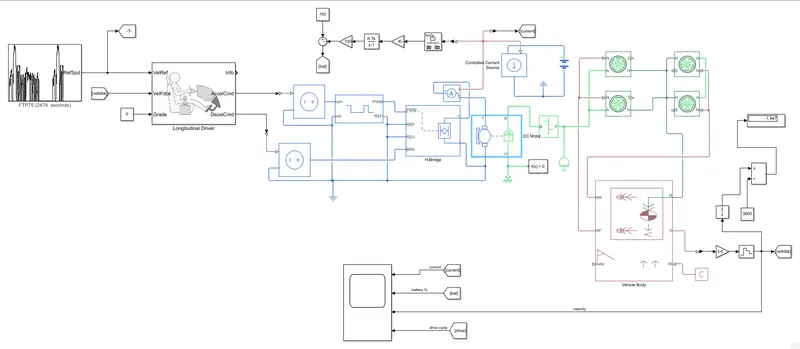
In this model using battery and DC motor to create a electric vehicle.
detailed explanation of each blocks :
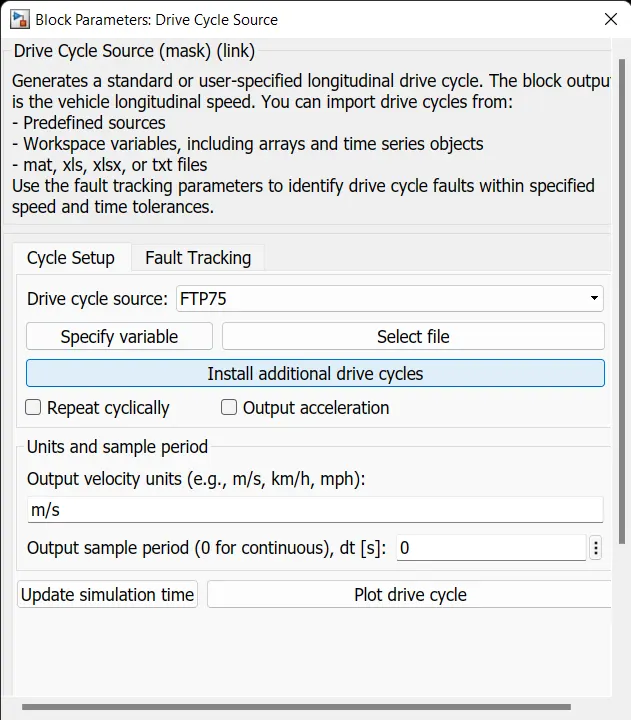
drive cycle :
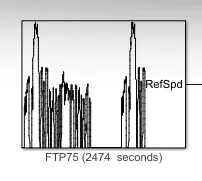
FTP75 drive cycle is used for this model and the drive cycle parameter are shown in below
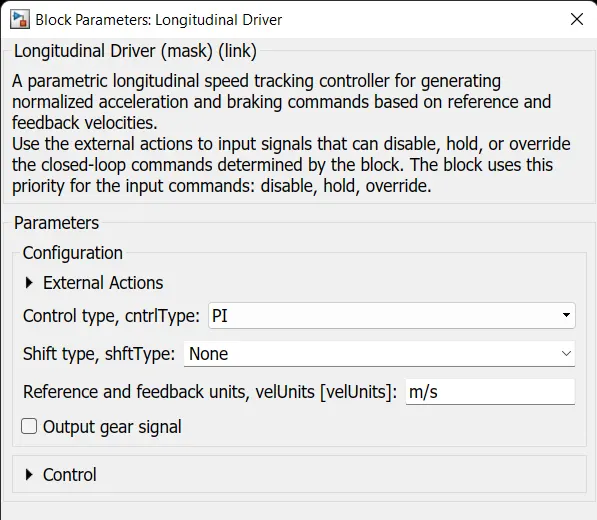
longitudinal driver:
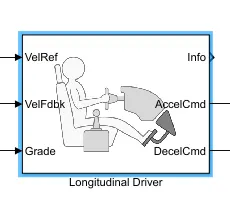
this block have six port they are
velref - reference voltage that is output of drive cycle
velfdbk - velocity input
grade - grade represent as 0
output ports :
accelcmd and decelcmd
acceleration comment gives to DC motor through the H bridge
some tools are used for control the voltage and current source
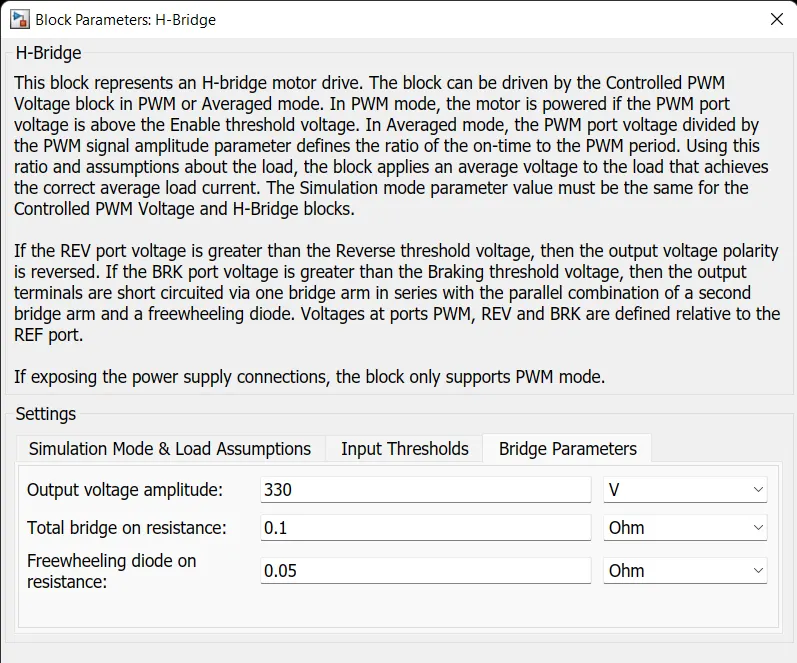
H-bridge :
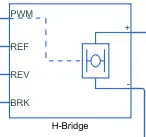
pwm port is receive a acceleration commend through controlled pwm voltage the output voltage is controlled to 330 v
and positive is connected to positive of battery and motor negative is connected to negative of motor
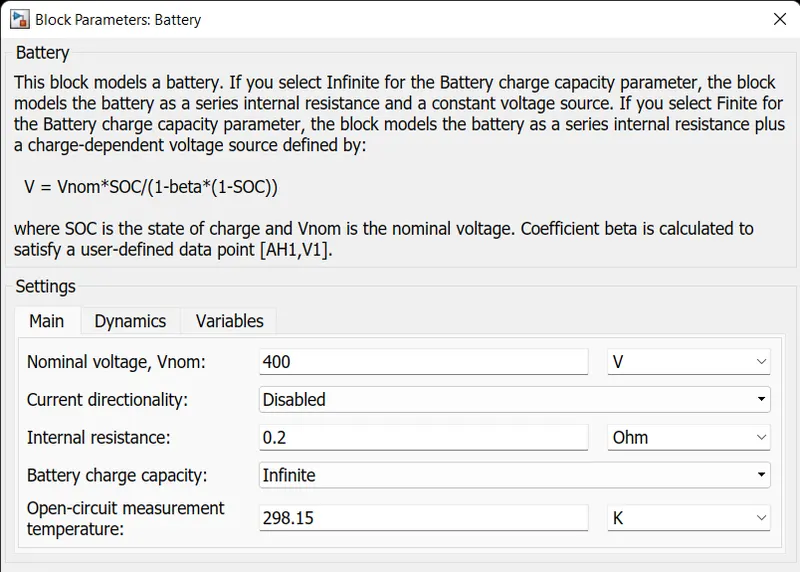
BATTERY:
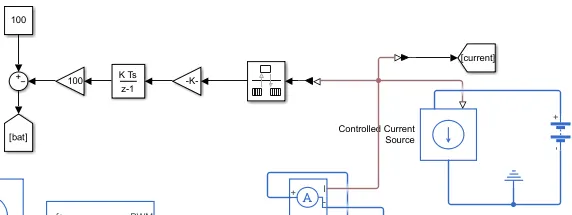
- The positive terminal of the battery is connected to the positive port of the controlled current source and the negative terminal is connected to the negative port of the controlled current source
- The physical signal of the controlled current source is connected to a PS-Simulink converter to connect to go block
DC MOTOR :
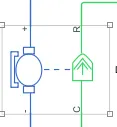
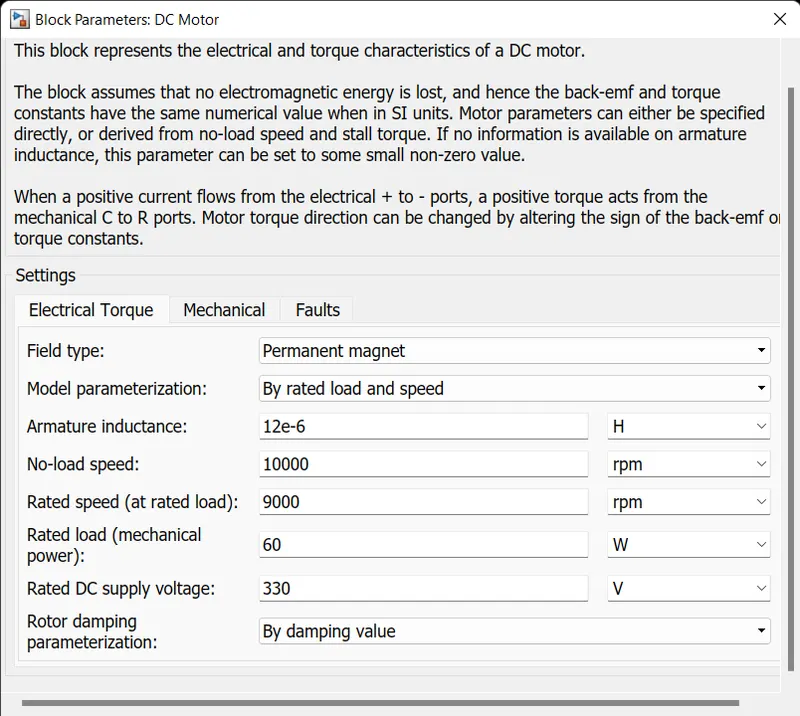
DC motor parameters are changed and the dc motor positive connected simple gear and negative connected to thermal reference and solver configuration is connected in this circuit.
GEAR :

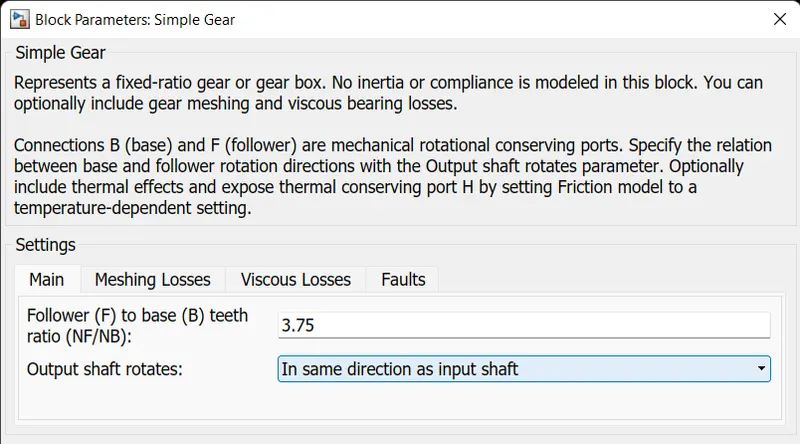
NF/NB ratio is set with 3.75 and the output shaft direction is same in input direction.
VEHICLE BODY :
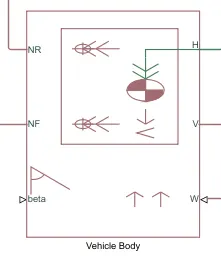
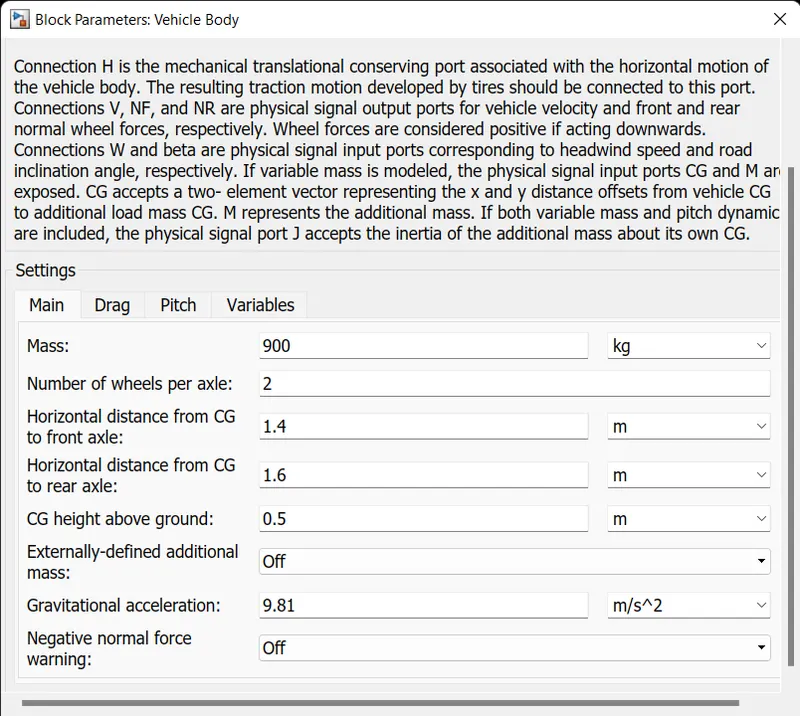
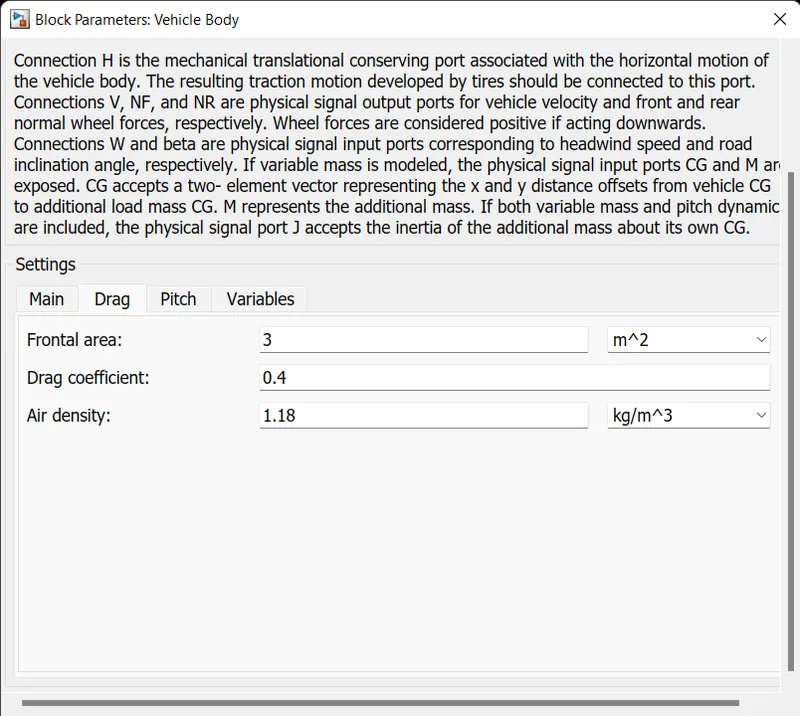
- vehicle body have six port
- nf port is connected to front tires
- nr port is connected to back tire
- H- H Stand for hub it is used to connect the hub of wheels to the main body of the vehicle
- V- Physical signal output port of velocity is used the velocity output of the vehicle
- W- Physical input port used to wind velocity acts against the vehicle
OUTPUT :
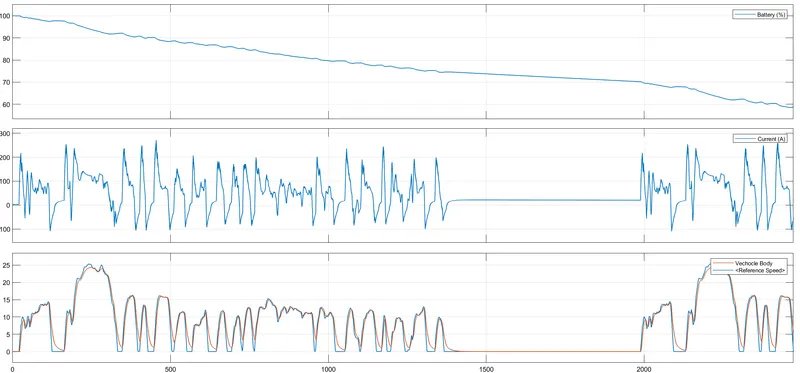
- FROM THIS output drive cycle and velocity has mostly same
- battery percentage is gradually reduce
- vehicle travel 25 kmph in 2474 sec
CONCLUSION :
the EV model has been created with simulink using battery and DC motor. the model simulated with FTP575(2474sec) drive cycle source simulation has produced the output in velocity with respect to acceleration.