Final Project: Design of an Electric Vehicle
Design of an Electric Vehicle
Aim:
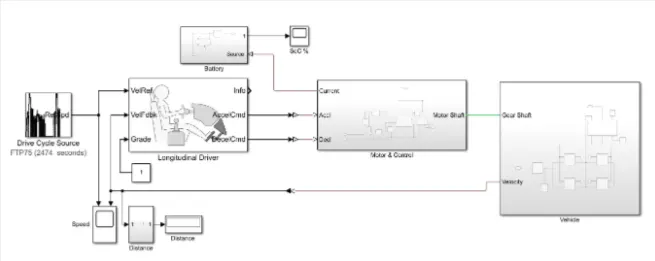
To create a MATLAB model of an electric car which uses a battery and a DC motor. Choose suitable blocks from the Powertrain block set.
Objectives:
Prepare a report about the model including the following:
1. System-level configurations
2. Model parameters
3. Results
4. Conclusion
- To makeamost simple&low run time vehicle model using individual component models
- To check out performance parameters:Speed,SOC,Current etc with various drive cycles
- To play with:Motor power,Vehicle body(Rolling resistance,Air drag,Weight)inputs
- To know MATLAB models&their configuration to match with actual vehicle
Theory:
All-electric vehicles, also referred to as battery electric vehicles (BEVs), have an electric motor instead of an internal combustion engine. The vehicle uses a large traction battery pack to power the electric motor and must be plugged into a wall outlet or charging equipment, also called electric vehicle supply equipment (EVSE). Because it runs on electricity, the vehicle emits no exhaust from a tailpipe and does not contain the typical liquid fuel components, such as a fuel pump, fuel line, or fuel tank.
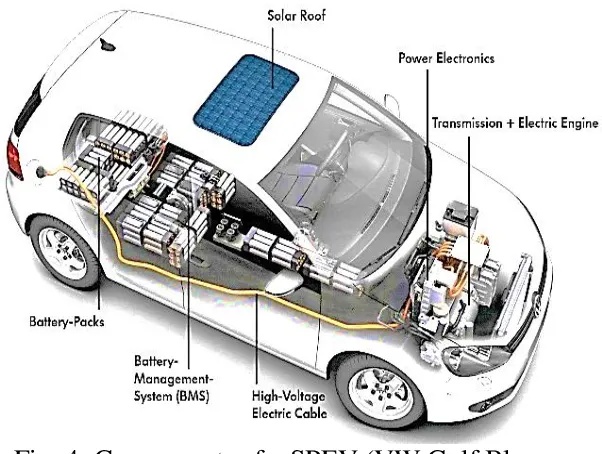
Electric Vehicle Design:
Development in EV conversion has been vastly improved in the recent year. However, different vehicle models have different technical specifications, so conversion kits for each one of them have to be customized in order to meet the specific requirement such as range per charge and acceleration performance. Engineers, therefore, have to make the decision on the capacity of batteries and also how many of them are required to meet the driving demand. Normal design process would require high-end expensive software to model the EV system. Furthermore, building the EV without the knowledge of the parameters within the system could costly lead to the failure of the design.
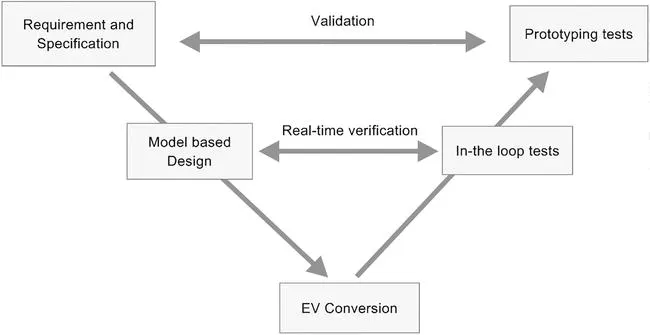
EV system modeling:
Simulink Model:
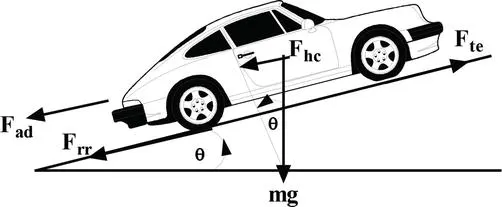
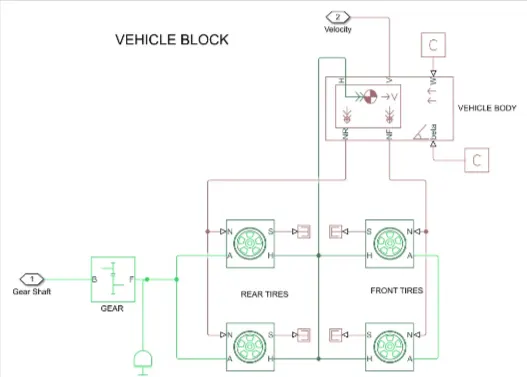
Vehicle Block:
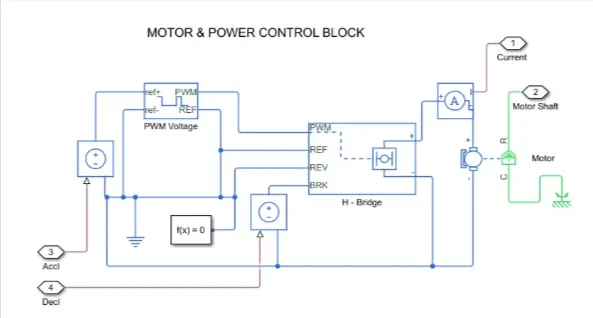
Motor and Power control block:
To make amost simple & low run time vehicle model using individual component models
To check out performancep parameters: Speed,SOC,Current etc with various drive cycles
To play with: Motor power,Vehicle body(Rolling resistance,Air drag,Weight)inputs
To know MATLAB models & their configuration to match with actual vehicle