Fender Design - Wheel Arch Challenge
FENDER DESIGN REGULATIONS
For the fender design to comply with local regulations depending on the local road conditions, wheel arc computation is required.
The wheel well is housed in the wheel arch, a semicircular portion of the fender. It should have enough space between the wheel arch and the tyre. in order to prevent contact with the wheel arch region while suspended. Here are a few rules because clearance values vary by region.
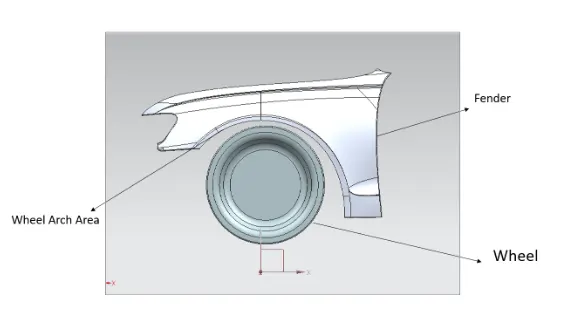
To satisfy the wheel arc radius in the fender design we have to follow different standards for different regions. Some of the standards available are :
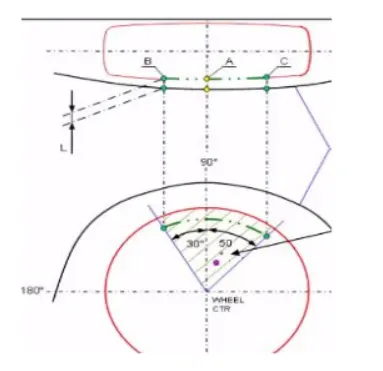
1. JAPAN STANDARDS:
According to the Japan Standard, all three of points B, A, and C must have a clearance value L of at least 5 mm between the tire and the fender wheel arch.
2. U.S. STANDARDS:
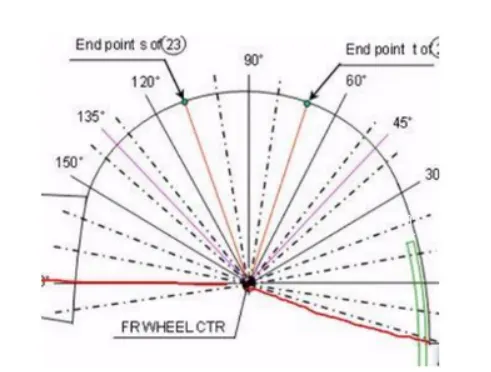
According to below figure, lines are drawn from the center of the wheel at intervals of 10 degrees from -20 to 180 degrees. Therefore, for every 10-degree angle, the clearance gap between the wheel and the fender wheel arch shall not be less than 5 mm according to US standards.
3. EUROPEAN STANDARDS:
As per the European Standard, clearance L should not be less than 10 mm at all the 5 points SB, SA, SC, SD, SE.
The clearance value will be more than 10mm at 30 degrees forward and 50 degrees backward and line 150mm above X-axis and Mid-point between 50 degrees and the line above 150mm.
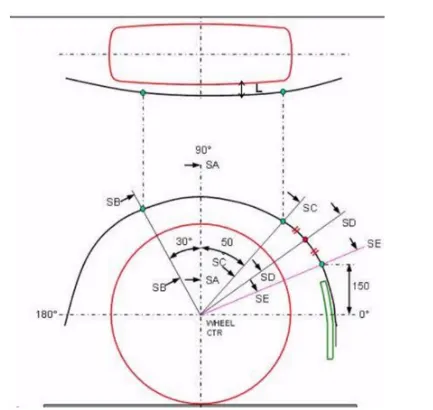
Let's check to see if the specified Fender & wheel model satisfies the European requirement.
PROCEDURE:
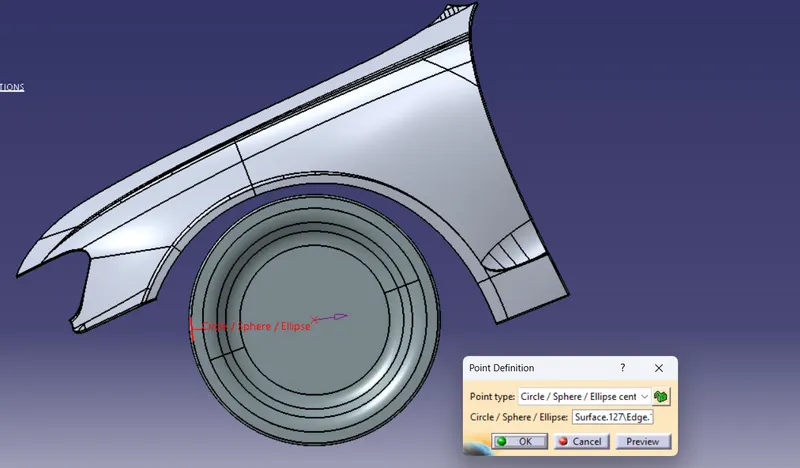
1. First create a center point for the outer edge of the wheel arc.
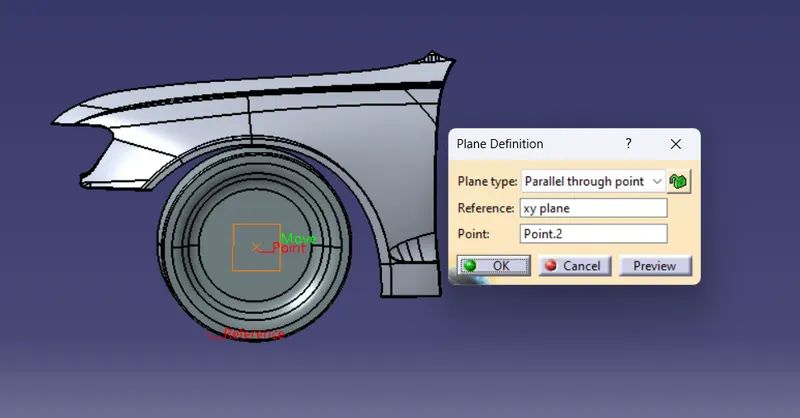
2. Create a plane over that point
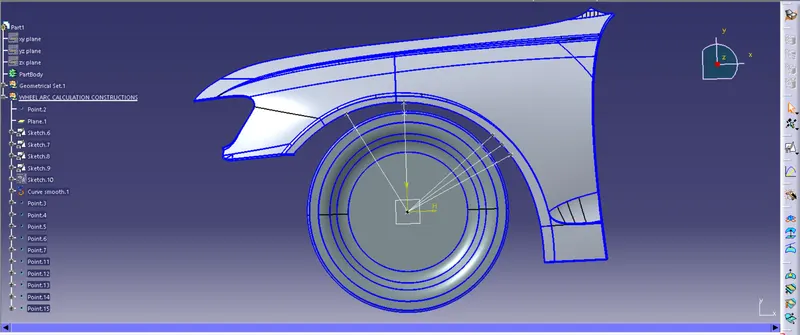
3. Create a sketch taking that plane and create a vertical line SA taking that point as the center. Then create two similar lines SB & SC at 30 degrees and 50-degree angles respectively from the line SA taken from the center. Create a horizontal line 150 mm higher than the wheel's center, offset it, and mark the place where it intersects the edge of the wheel. Trace a line through the intersection and the center of the wheel. Use bisecting lines to make an angle bisector, and give the two new lines you produce the names SD and SE. Exit the drawing and calculate the distance between the lines drawn on the wheel and the outer border of the Fender.
4. Create a point over the fender outer edge and wheel outer arc then measure the clearance L.
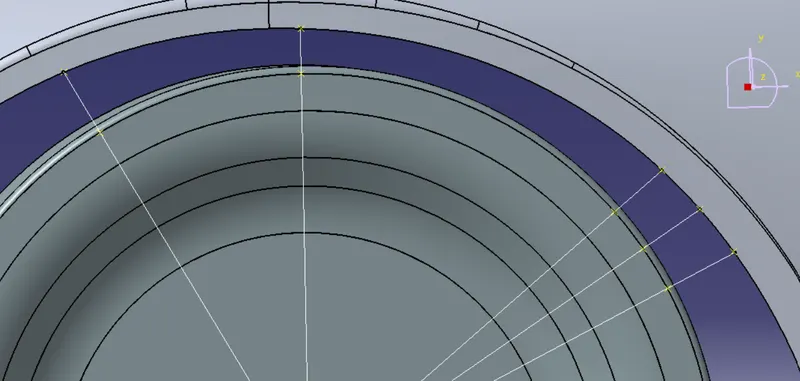
L measurement - L is the clearance between the fender's outer edge to the wheel's outer arc.
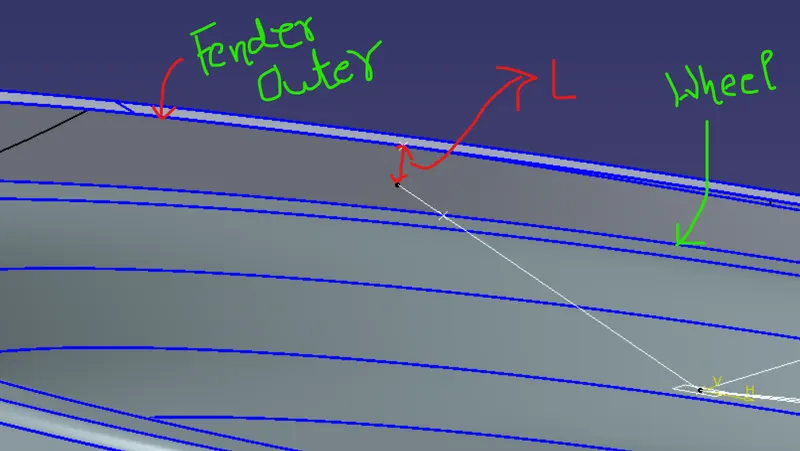
1. Measuring distance between SB-SB.
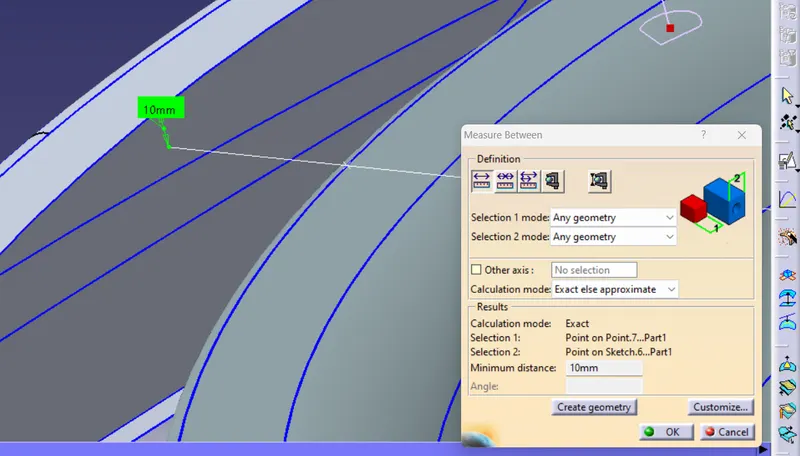
Similarly, it is calculated for other lines SA, SC, SD, and SE.
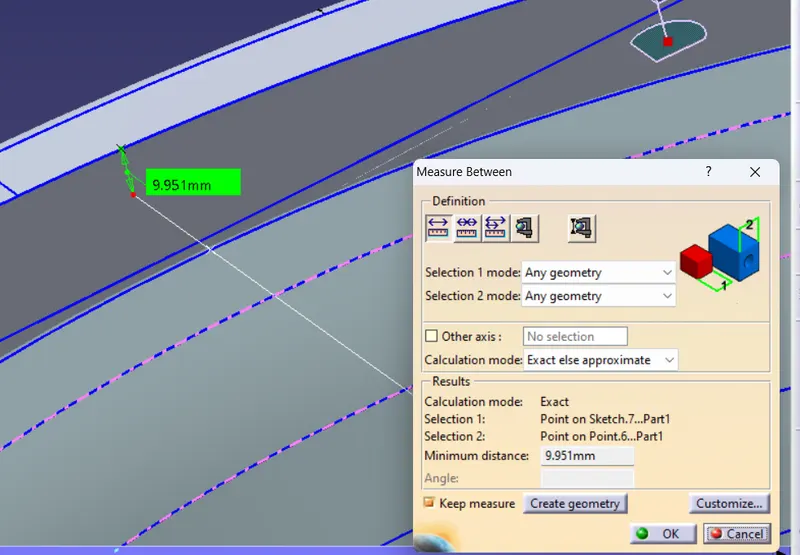
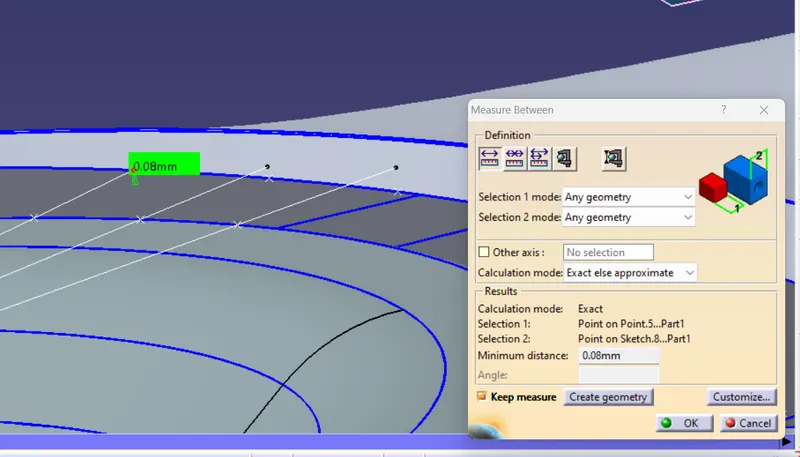
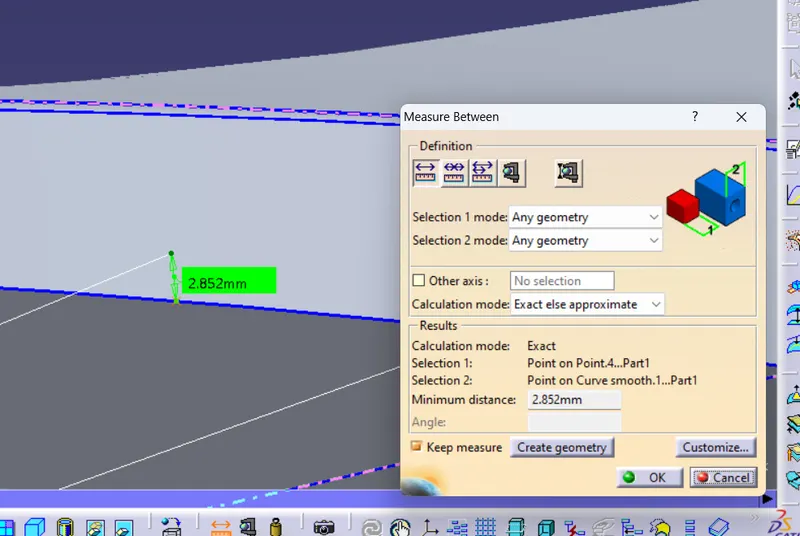
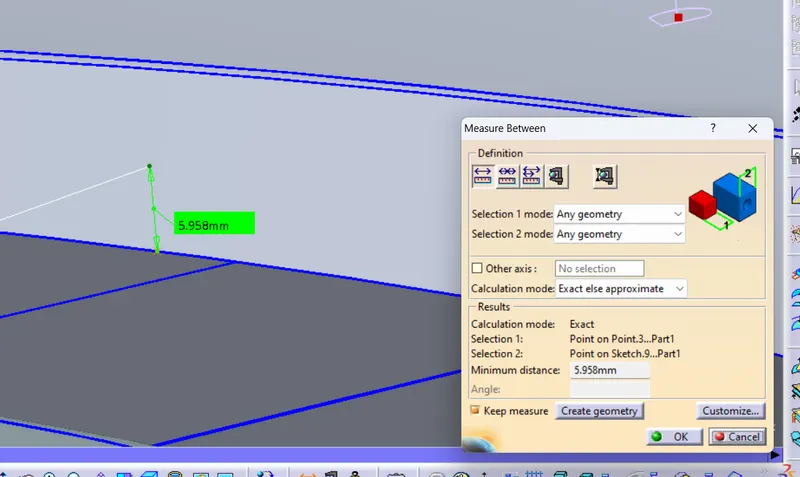
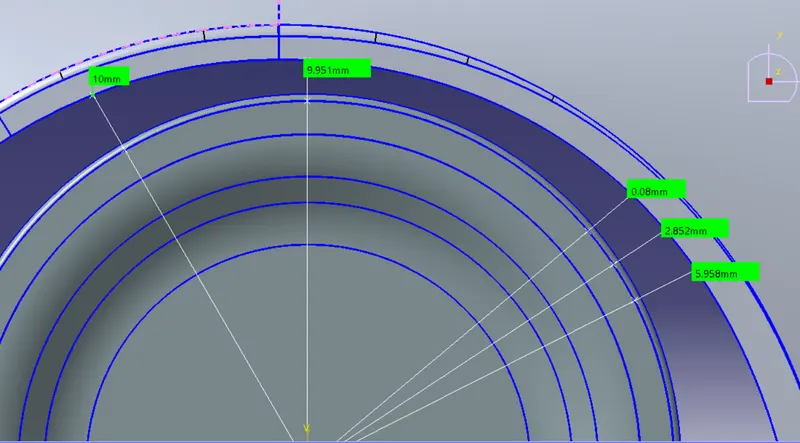
Tabular Form For L measurement-
| Plot | Standard value | Measured Value | Result | Comments |
| SB-SB | >10 mm | 10 mm | PASS | No improvements required |
| SA-SA | >10 mm | 9.951 mm | FAIL | Improvements required |
| SC-SC | >10 mm | -0.08 | FAIL | Improvement Required |
| SD-SD | >10 mm | -2.852 | FAIL | Improvement Required |
| SE-SE | >10 mm | -5.958 | FAIL | Improvement Required |
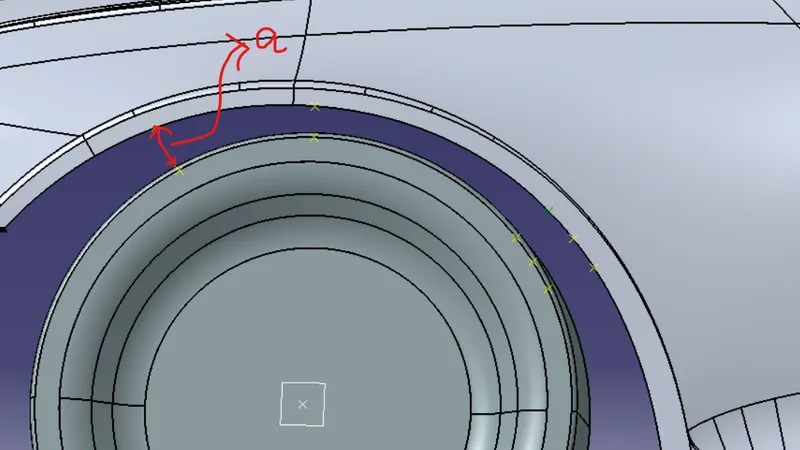
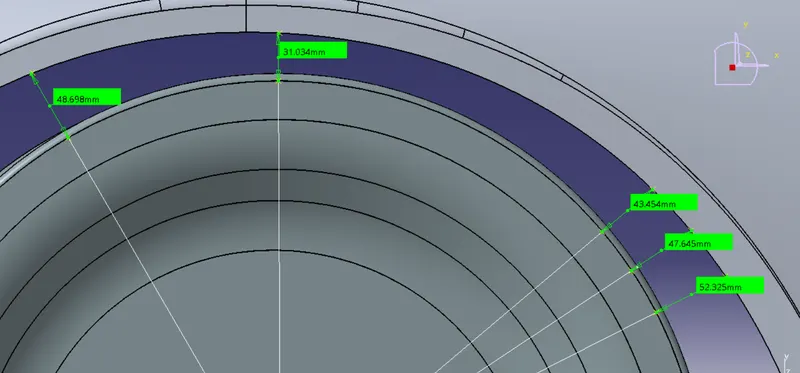
a measurement: a is the distance between the fender's outer edge and the wheel's outer arc (ALONG THE RADIAL DIRECTION)
| Plot | Standard value | Measured Value | Result | Comments |
| SB-SB | > 5mm | 48.698mm | PASS | No improvements required |
| SA-SA | > 5mm | 31.034 mm | PASS | No Improvements required |
| SC-SC | > 5mm | 43.454 mm | PASS | No Improvement Required |
| SD-SD | > 5mm | 47.645 mm | PASS | No Improvement Required |
| SE-SE | > 5mm | 52.325 mm | PASS | No Improvement Required |
CONCLUSION:
The other lines don't meet the European standard; only Lines SB. In order to update the appearance of the Fender to comply with European Standards, we must consult with the styling team and offer our suggestions.
As a result, the given Fender model needs to be updated because it does not meet European Standards.