Fender Design - Wheel Arch Challenge
Fender Wheel Arch Regulations:
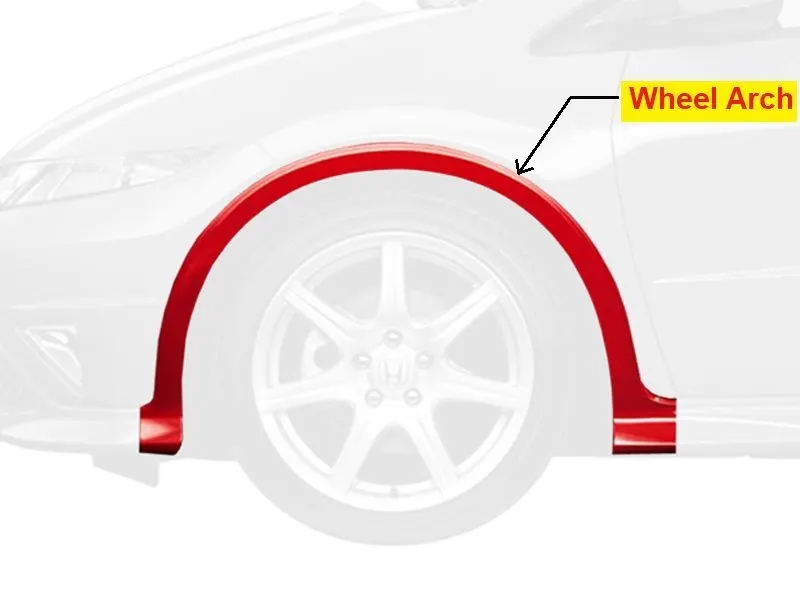
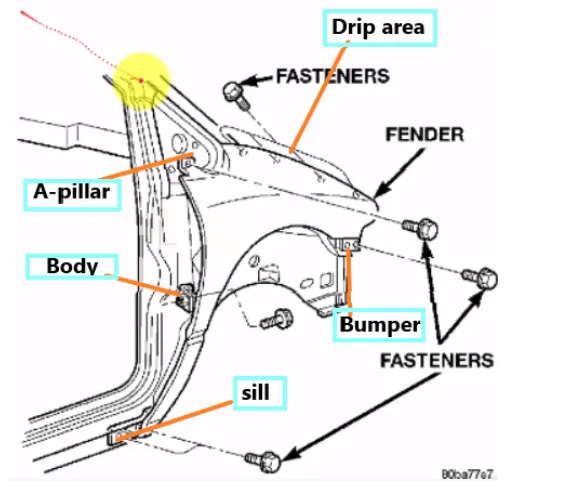
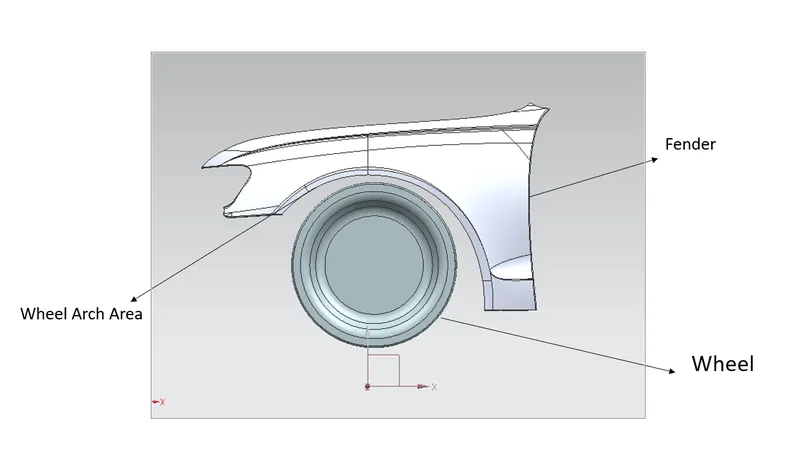
Fender - The fender is the part of a car that protects and frames (covers) its wheels.
1 - Prevent sand mud, rocks, liquids, and other road spray from being thrown into the engine compartment and outside the car by rotating the tire.
2 - And also prevent any injuries to pedestrians, and contain the motion of these particles.
3 - Also provide a look at the automobile or it is a styling-oriented part.
Types Of Fenders -
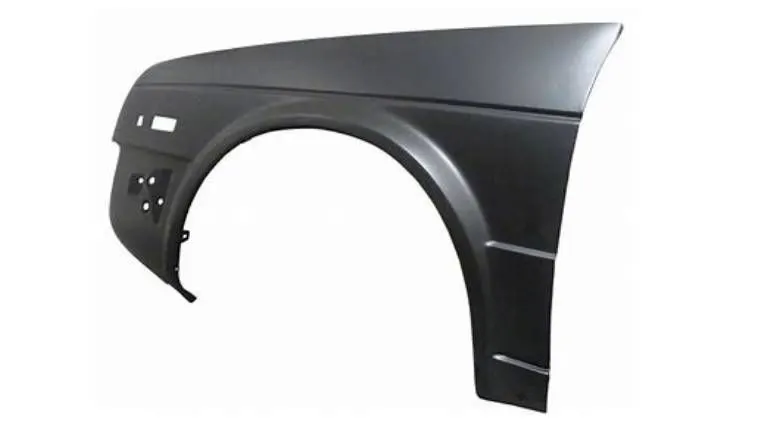
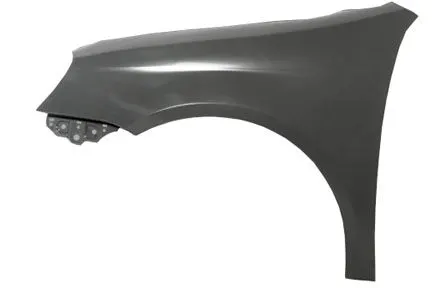
1 - Full Bumper Type 2 - Half Bumper type
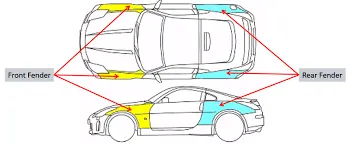
The rear Fender is together with the body's sides outer. (Or integrated), The front Fender is a side closing component for the engine compartment, the major role of the fender is to avoid chipping in the engine compartment, and also plays a major role to prevent injuries for the pedestrian, Anti chipping is also a Pedestrian safety Criteria, and also covers the engine compartment so we don't see the ugly region from the outside.
Because for full bumper type the blank, we are using is really big and has a lot of wastage. But in the case of half bumper type, we have a high possibility to reduce the scrap. which means slightly increasing the blank we can produce two fenders at the same time so we also reduce the production cost and also production time this is called scrap management.
Also, allow using a lot of plastic on the bumper which means reduced weight so also increases the performance of the vehicle.
Mounting Reason
Wheel Arch
Fender Wheel Arch Regulations:
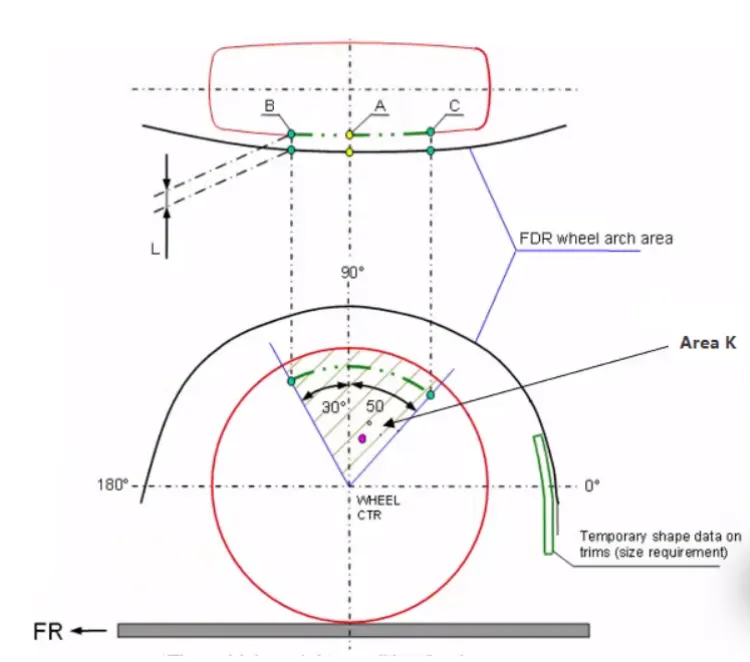
Japan Regulations:
- The clearance ‘L’ for the tire, hub, cap, and fender is to be measured within area K, and create clearance check chart to validate.
- The value of L should be greater than 5mm at all positions.
- Wheel guard requirement: The value of ‘a’ should be more than 5mm at line 30° forward and 50° rearwards from the central vertical axis of the wheel.
US Regulations:
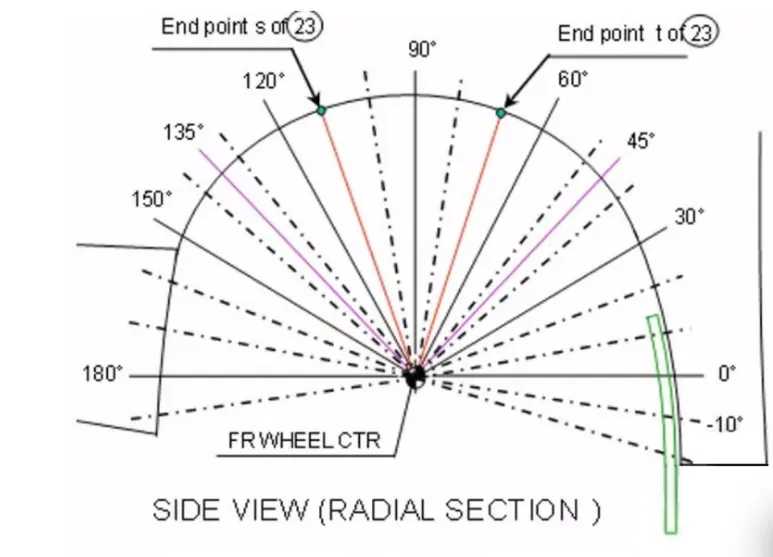
- Clearance ‘L’ is to be checked at all positions from -100° to 100° and create clearance check chart to validate.
- The value of L should be greater than 5mm to satisfy the regulations.
- Wheel guard requirement: The value of ‘a’ should be more than 5mm at line 30° forward and 50° rearwards from the central vertical axis of the wheel.
European Regulations:
- The Clearance ‘L’ should be measured at sections SA-SA, SB-SB, SC-SC, SD-SD and SE-SE and create clearance check chart to validate.
- At all the five sections the value of L should be greater than 10mm to satisfy the European Regulations.
- Wheel guard requirement: The value of ‘a’ should be more than 5mm at line 30° forward and 50° rearwards from the central vertical axis of the wheel.
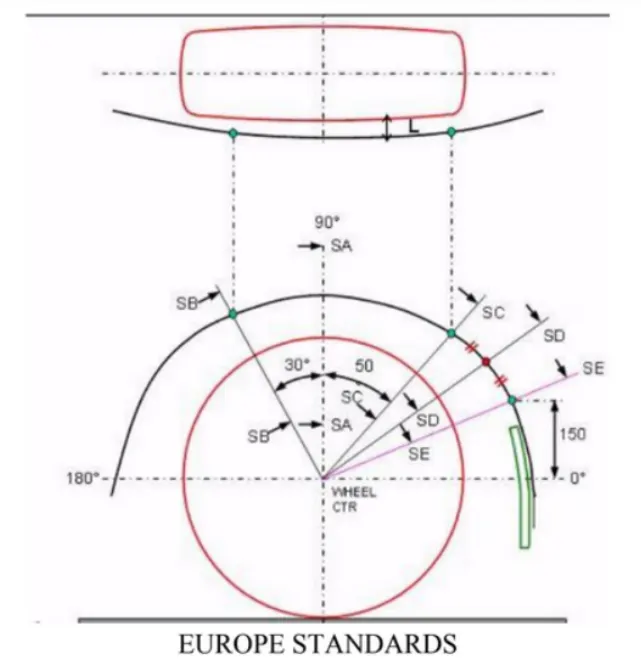
Calculation of wheel arch area according to European Regulations:
For the calculation of clearance between the Wheel Arch and the Wheel, we have to create a sketch on the outermost face of the wheel. The procedure of which is given below.
- A Datum Plane is created at the outermost face of the wheel.
- The sketch is created on the new Datum Plane.
- A Horizontal line is drawn across the center of the wheel.
- A perpendicular line SA is dropped at the center of the wheel.
- Two lines SB and SC are created at 30° forward of SA and 50° rearward of SA respectively.
- A point is created 150mm vertically above the center line.
- A-line SE is drawn from the wheel center and passes from the point created.
- Another line SD is drawn from the center of the wheel and in the middle of lines SC and SE
FENDER EVALUATION
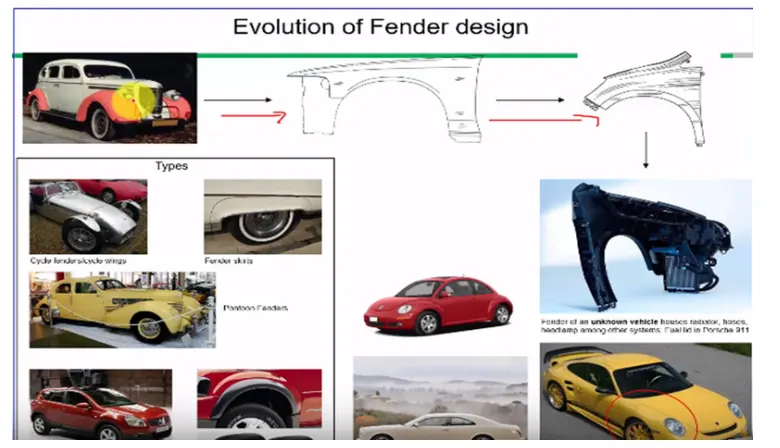
First level fender then we went into the full bumper type and then thinking of weight reduction and proper blank we come in to half bumper type.
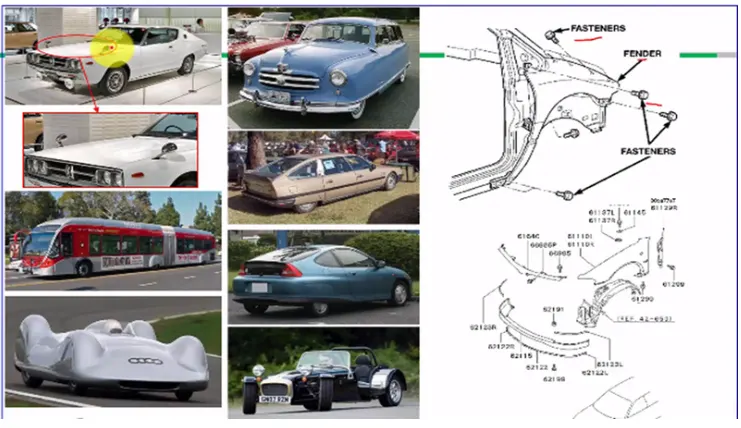
Some cars also have radiator housing in the fender.
Some cars have indicators in the fender and some have ORVM when we use ORVM so we don't use the indicator in the fender.
The process follows in NX CAD
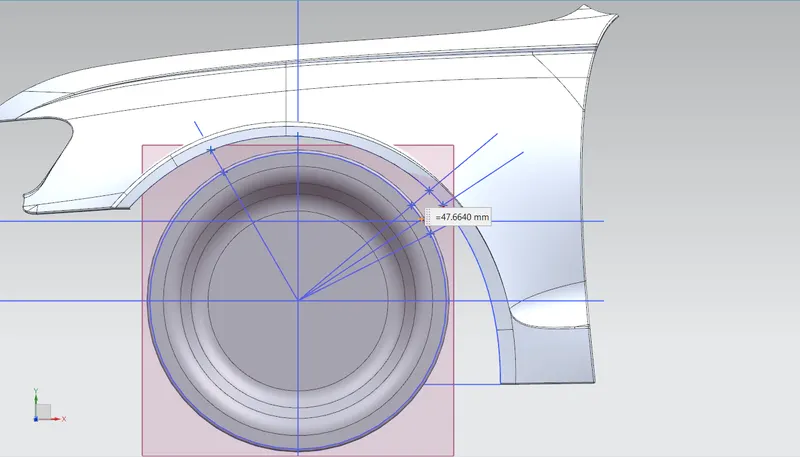
First we create a datum plane on wheel extreme face because the extreme face of the wheel is a flat surface.Go for sketch command and select the datum plane and click ok. Then import some edges to the datum plane by project curve option. Now we create vertical and horizontal lines.
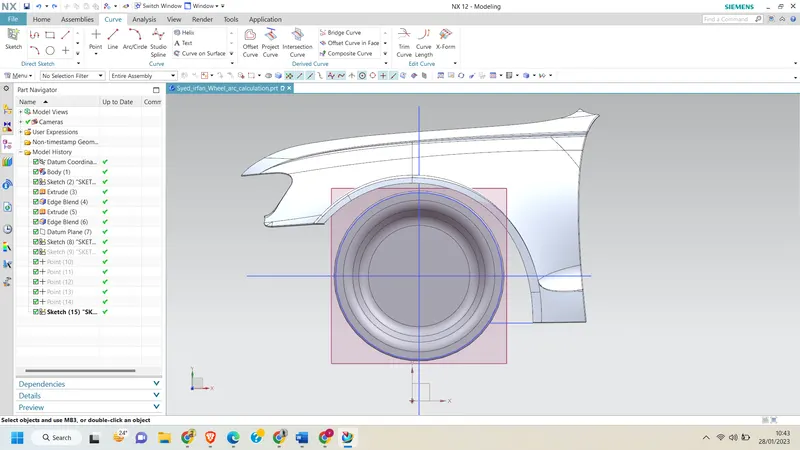
Create a line that is 30* from vertical axis (in 2nd coordinate) and another line which is 50* from vertical axis (in 1st coordinate) as we see in image.
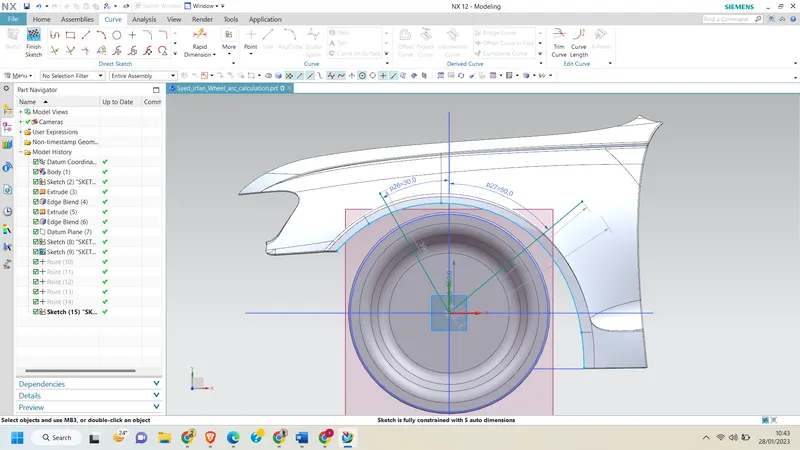
Offset the horizontal line at 150mm (upward direction).
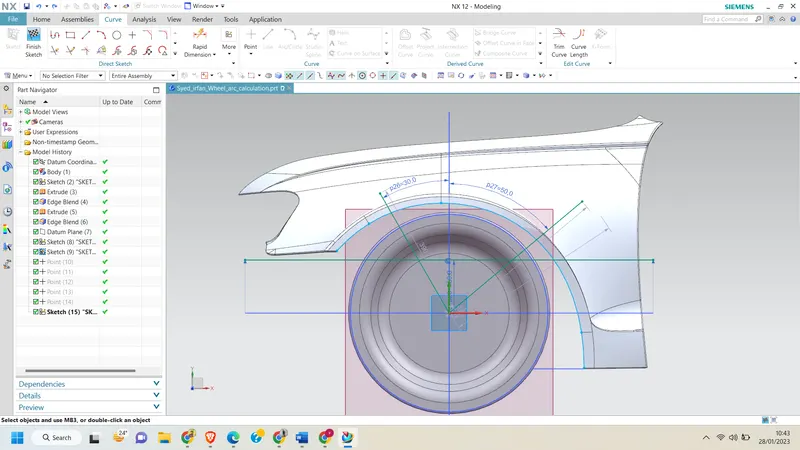
Create a line from the center and where fender curve and 150mm offset line intersect.
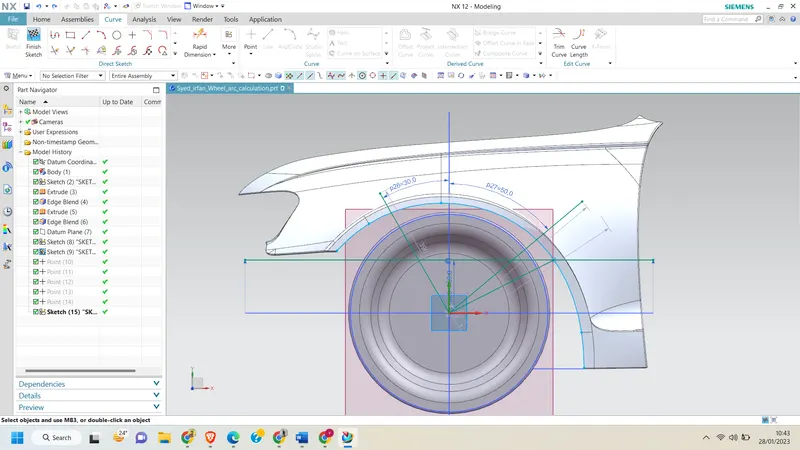
In European standard we need another line (by divided line we get 5th line).
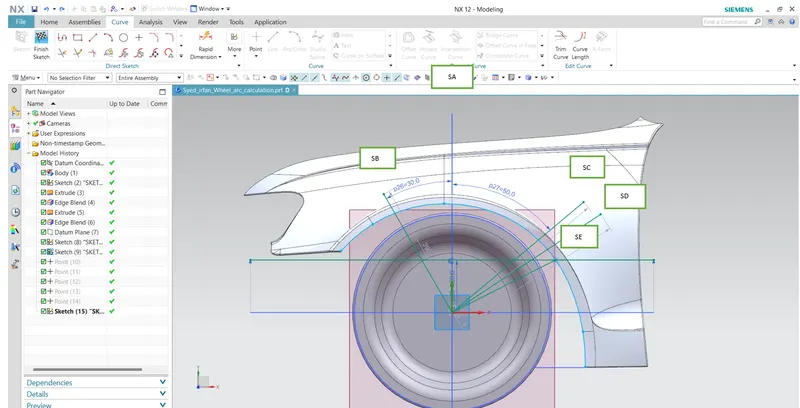
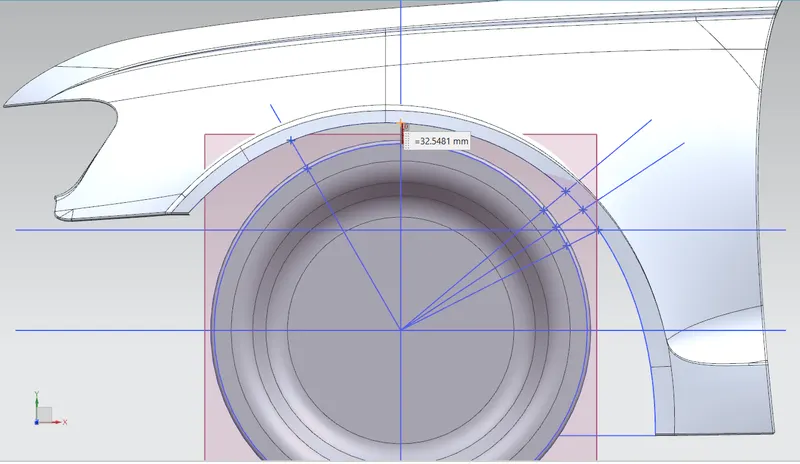
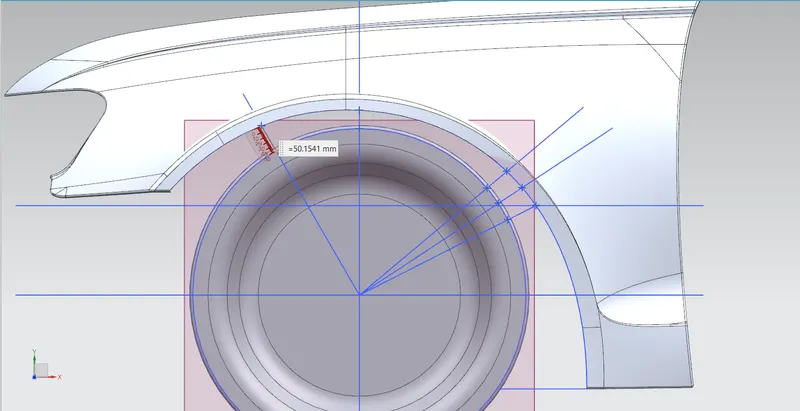
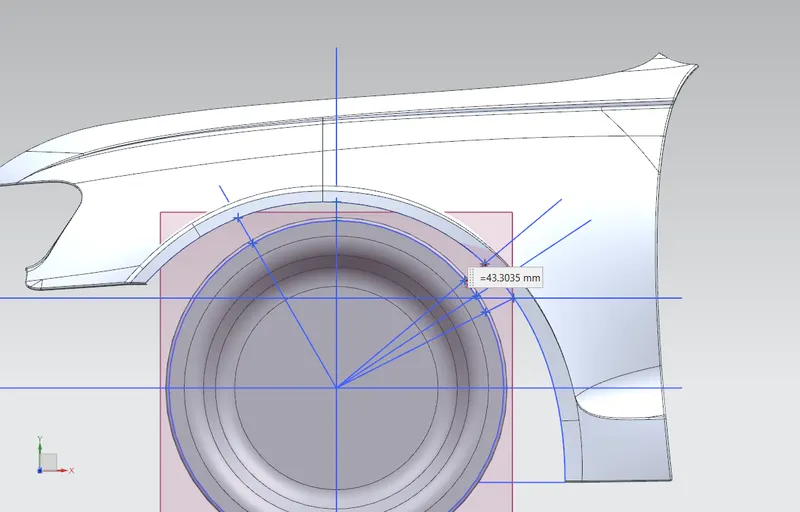
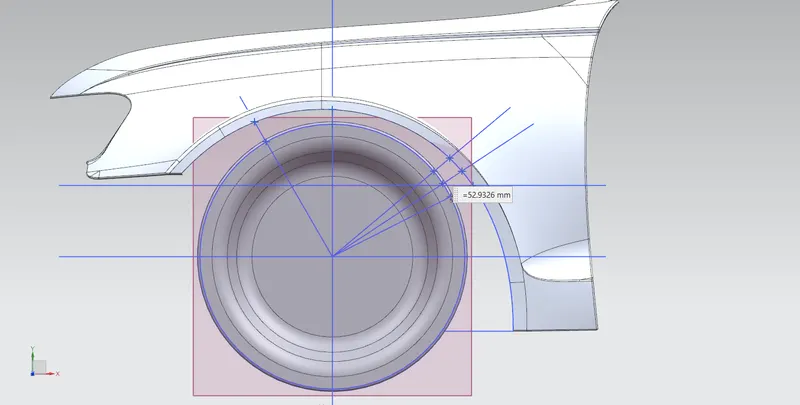
Then by using fender projected curve and created line we create the 5th point where the projected curve and the line are intersected (SA, SB, SC, SD, SE). As we know in this challenge, we calculate the distance between the fender and wheel face (extreme face), but my sketch is created in one plane so we project the curve by the use of projected curve. (These are vertical clearance which is less than or equal to 10mm According to European standard). By the use of the wheel extreme face projected curve and the line (SA, SB, SC, SD, SE) we get five another Point (A1, A2, A3, A4, A5), And the distance between (A1 & SA), (A2 & SB), (A3 & SC), (A4 & SD), and (A5 & SE) gives vertical clearance between wheel and fender and this value is greater than or equal to 5mm according to the European regulation. Then by using a measuring tool we calculate the distance (Vertical and horizontal) and check whether these distances pass the European standard or not.
esult
The Measuring 'L' for the given wheel and fender (Horizontal clearance(L> or = 10.0mm))
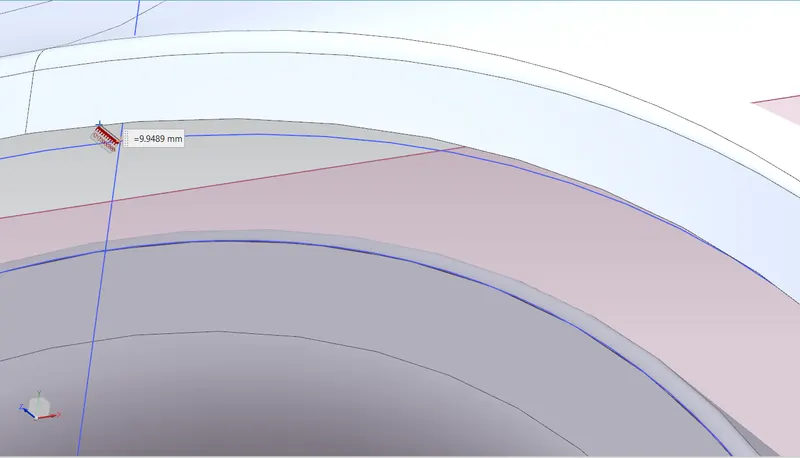
1 - The Measuring 'L' for SA = 9.9489mm
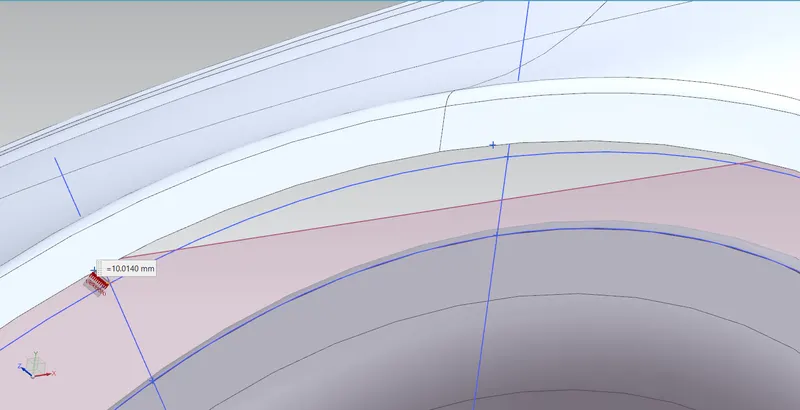
2 - The Measuring 'L' for SA = 10.0mm
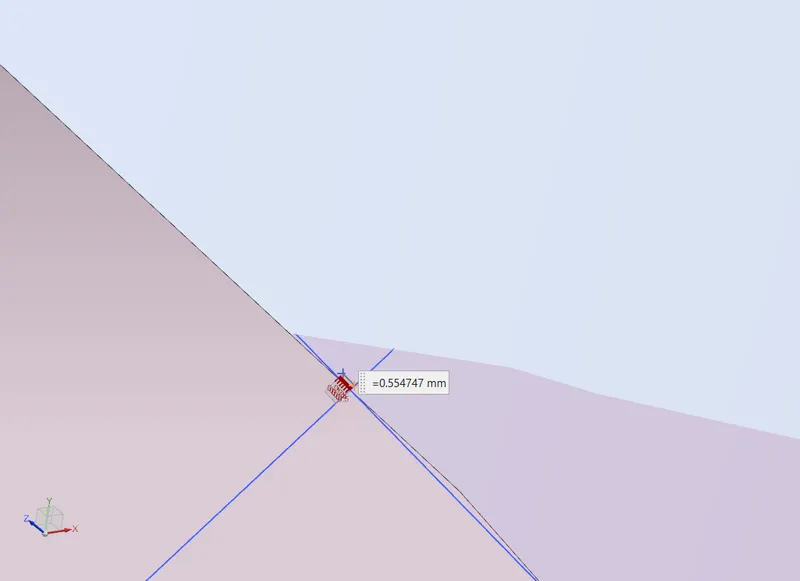
3 - The Measuring 'L' for SC = -0.5547mm
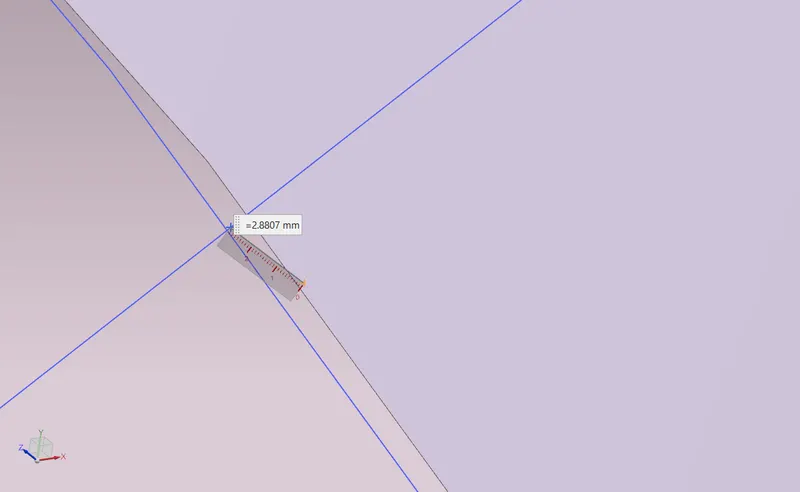
4 - The Measuring 'L' for SD = -2.8807mm
5 - The Measuring 'L' for SE = -5.9797 mm
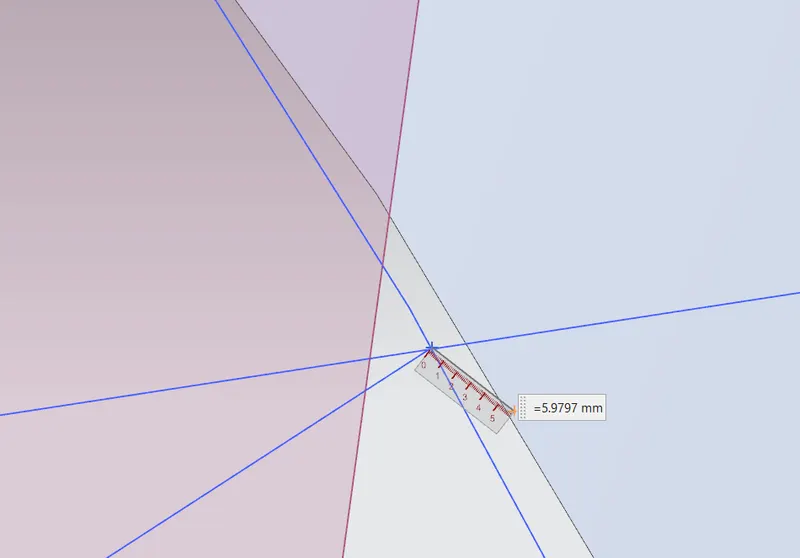
The Measuring 'A' for the given wheel and fender (Vertical clearance(A> or = 5.0mm))
1 - The Measuring 'A' for (A1-SA) = 32.5481mm
2 - The Measuring 'A' for (A2-SB) = 50.1541mm
3 - The Measuring 'A' for (A3-SC) = 43.3035mm
4 - The Measuring 'A' for (A4-SD) = 47.6640mm
5 - The Measuring 'A' for (A5-SE) = 52.6251mm
The Measuring 'L' for the given wheel and fender (Horizontal clearance(L> or = 10.0mm))
|
SR.NO. |
SECTION |
CLERANCE (L>=10.0mm) |
RESULT |
|
1 |
SA |
9.9489mm |
FAIL |
|
2 |
SB |
10.0mm |
PASS |
|
3 |
SC |
-0.5547mm |
FAIL |
|
4 |
SD |
-2.8807mm |
FAIL |
|
5 |
SE |
-5.9797mm |
FAIL |
The Measuring 'A' for the given wheel and fender (Vertical clearance(A> or = 5.0mm))
|
SR.NO. |
SECTION |
CLERANCE(A>=5.0mm) |
RESULT |
|
1 |
A1-SA |
32.5481mm |
PASS |
|
2 |
A2-SB |
50.1541mm |
PASS |
|
3 |
A3-SC |
43.3597mm |
PASS |
|
4 |
A4-SD |
47.6640mm |
PASS |
|
5 |
A5-SE |
52.6136mm |
PASS |
Conclusion
We can say that the Fender does not pass the European Regulations because the minimum clearance between the fender arch to the outer most wheel is 10 mm (Horizontal clearance) and this design does not meet this minimum clearance. But for vertical clearance value, all the points passes the European standard.