Fender Design - Wheel Arch Challenge
DEFINITION:-
Fenders are a part of a car's body that surrounds and protect the wheels. They are typically made of metal or plastic and are designed to help prevent debris, such as mud and rocks, from being thrown up into the air by the tires. They also help to improve the aerodynamics of a vehicle.
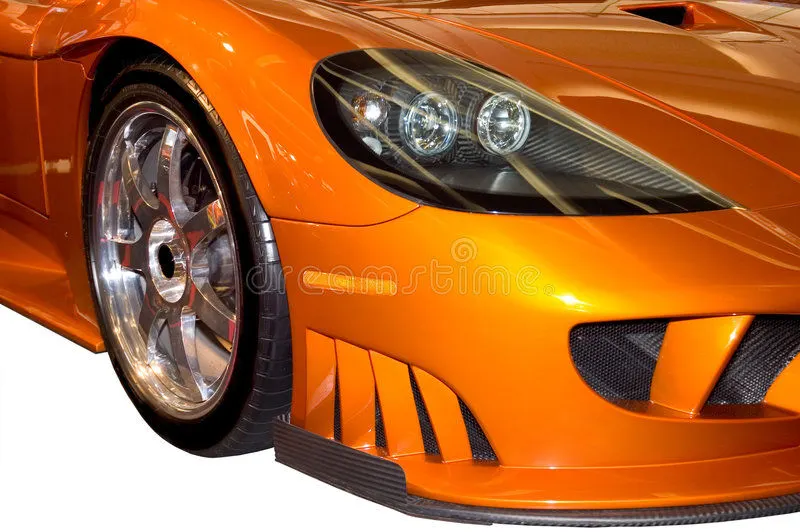
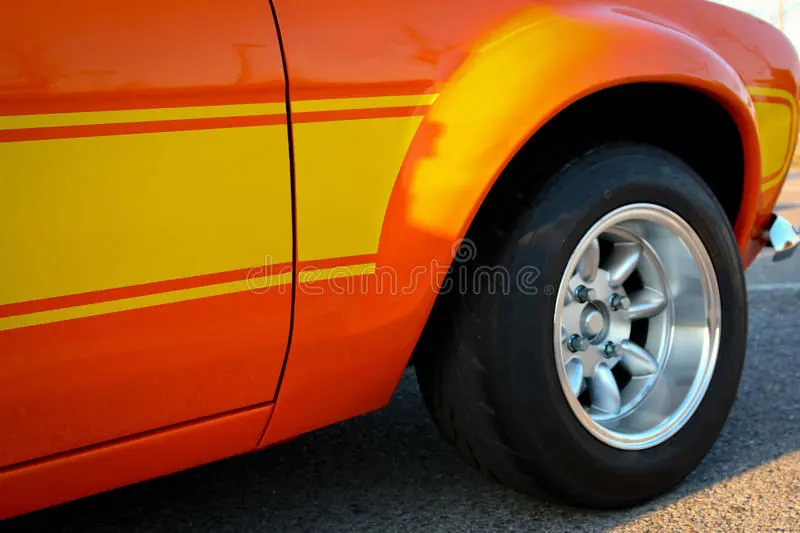
TYPES OF FENDER:
The type of fender is based upon the area covered i.e., full fender type and half fender type.
-
Full fenders: These fenders cover the entire wheel and tire, and are typically found on larger vehicles such as trucks and SUVs.
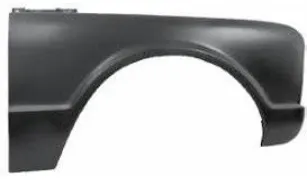
-
Half fenders: These fenders cover only the upper half of the wheel and tire, and are typically found on smaller vehicles such as sedans and hatchbacks.
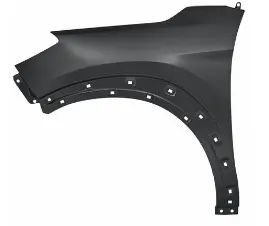
REGULATIONS:-
JAPAN REQUIREMENTS FOR FENDER WHEEL ARC:
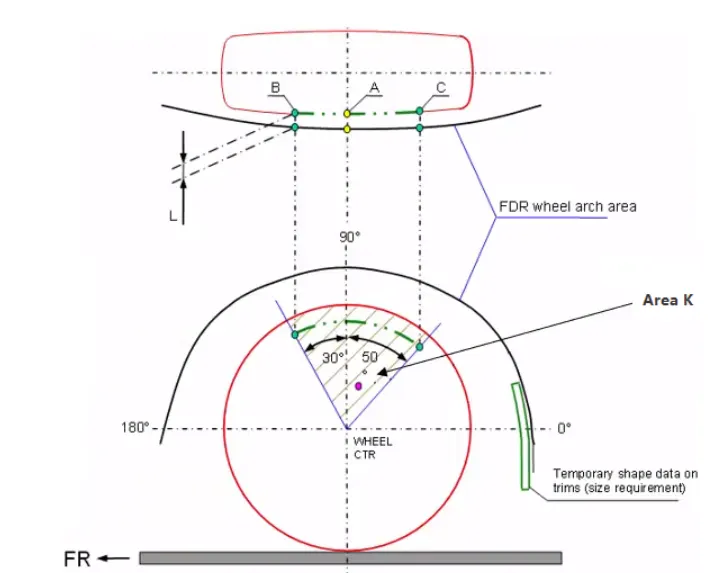
- Measure clearance L of tire, hub, cap, and fender in three different positions within area K and produce clearance check chart to validate.
- Clearance must be greater than 5mm in all the three positions.
- Wheel guard requirement: the value a shall be more than 5mm at a line 30*forward and 50*rearward from the central vertical axis of axis of wheel.
US STANDARDS REGULATION FOR FENDER WHEEL ARC:
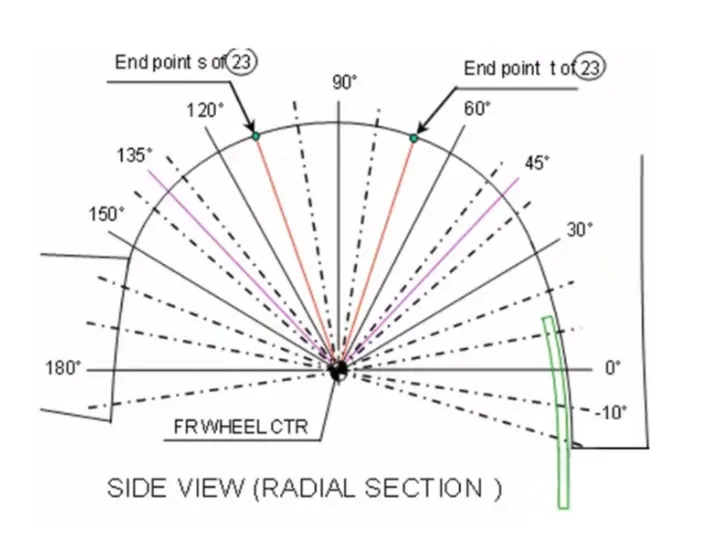
- Make clearance check details on all positions from -100* to 100* and make the clearance check table.
- All values should be greater than 5mm to satisfy the regulation.
- The value of ‘a’ shall be more than 5mm at a line 30* forward and 50*rearward from the central vertical axis of axis of wheel.
EUROPEAN REGULATION:
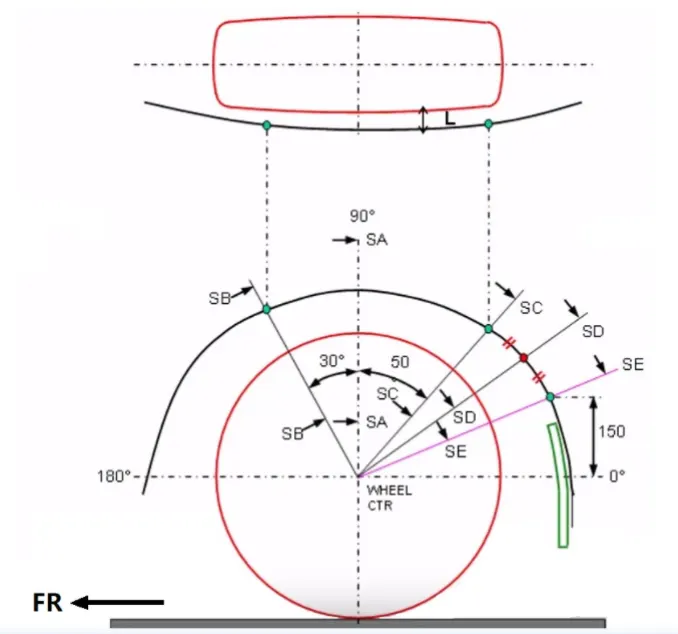
Measure CL L at section SA-SA-SB-SB-SC-SC-SD-SD-SE-SE and produce CL check chart to validate.
- At all five sections the CL L value should be greater than 10mm to satisfy the European regulations.
- Wheel guard requirement: the value of ‘a’ shall be more than 5mm at a line 30*forward and 50*rearward from the central vertical axis of axis of wheel.
FENDER -WHEEL ARCH Design Producer:
- According to the European standards, the design fender and wheel arc should pass the wheel guard requirement procedures.
- To start the test, first create a plane with origin as center of the wheel plane.
- Then sketch using lines along with given dimensions as SA, SB, SC, SD and SE.
- After sketching project the intersection points on to the fender face.
- Then use measure distance tool and calculate the clearance between sketch lines and wheel arc.
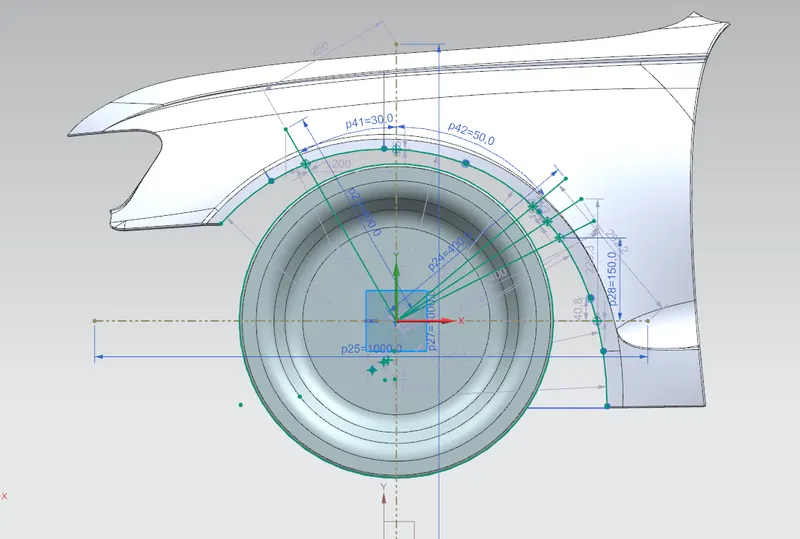
The above image represents the fender with the wheel arch which we are going to measure the clerance between the fender and wheel arch through specified distance between the two points.
>According to european standards the distance between the fender and wheel is 10mm,by basing on the 10mm we are going to measure the distance through specified points across the wheel.
Case-1(SA):
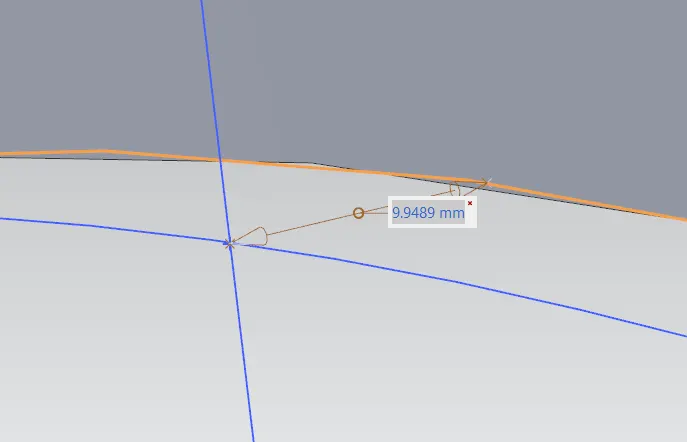
Here the clearance is 9.9489mm which is near to the 10mm ,so the test case is accepted.
Case-2(SB):
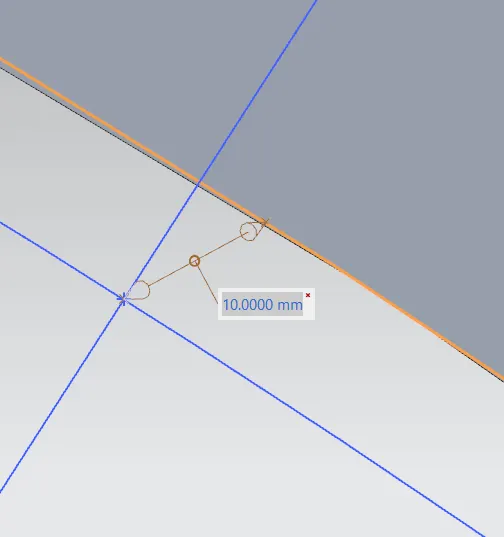
The above image which is an SB where the clearance is 10mm and the test case is passed at this region.
Case-3(SC):
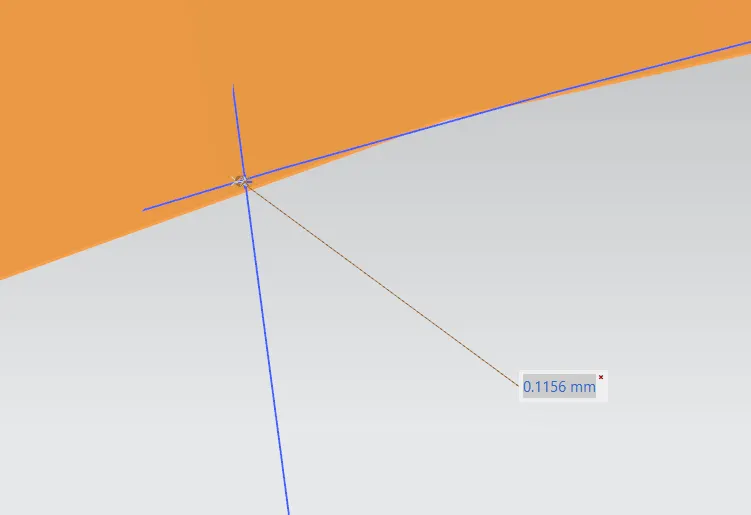
Here the clearance is 0.1156mm which is not near to the 10mm also in the opposite direction ,so the test case is not accepted.
CASE-4(SD):
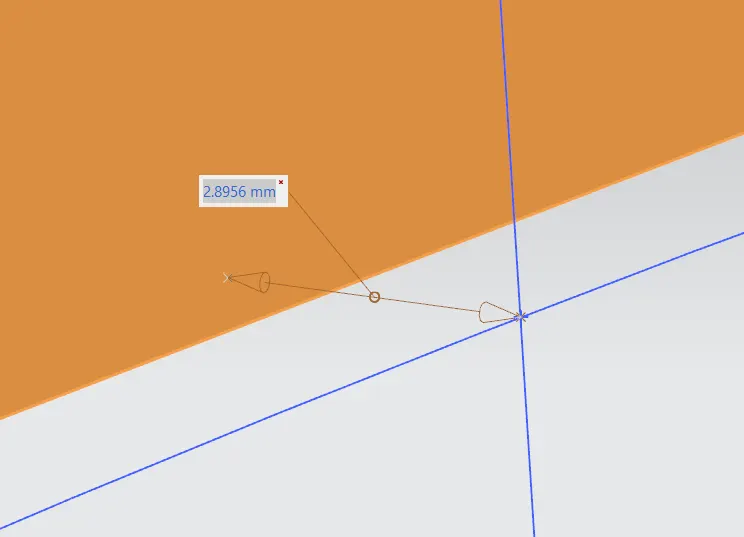
Here the clearance is 2.8956mm which is not near to the 10mm also in the opposite direction (outside car body) ,so the test case is not accepted.
CASE-5(SE):
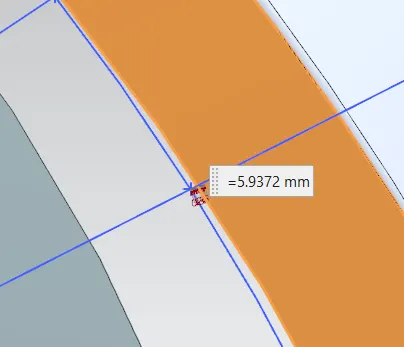
Here the clearance is 5.9372mm which is not near to the 10mm also in the opposite direction (outside car body) ,so the test case is not accepted.
CONCULSION:
>By observing all the above case we can conculde that the some of regions were not as per the required standard value.
>The tabulated form represents all the above test cases which where acecptebale and unacceptable.
| SR NO. | Region | Standard Clearance | Resulted Clearance | Results |
| 1. | SA | 10MM | 9.9489MM | ACCEPTABLE |
| 2. | SB | 10MM | 10MM | ACCEPTABLE |
| 3. | SC | 10MM | 0.1156MM | UNACCEPTABLE |
| 4. | SD | 10MM | 2.8956MM | UNACCEPTABLE |
| 5. | SE | 10MM | 5.9372MM | UNACCEPTABLE |
Only two points are acceptable as per the requirements of europian standards.Other three points needs to be altered.