Fender Design - Wheel Arch Challenge
AIM:
To create a report on fender regulation and to calculation the wheel arc area and prove whether the car will get passed in the European standards or not.
Fender:
A fender is the part of a car, truck, motorcycle, or other vehicles that frames or covers a wheel well. Its main purpose is to prevent debris, rocks, mud, liquids, sand, and other road debris from getting thrown in the air while the tires rotate.
The “fender” typically refers to the front panel that covers the front wheels, and the “quarter panel” typically refers to the rear panel that covers the wheel that also includes the roof pillar. The “bumper” is the front and rear ends of a motor vehicle to absorb impact in a minor collision.
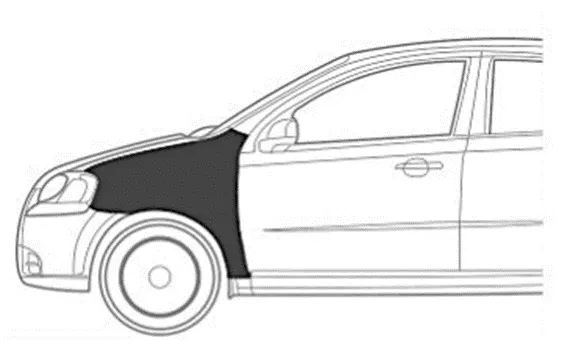
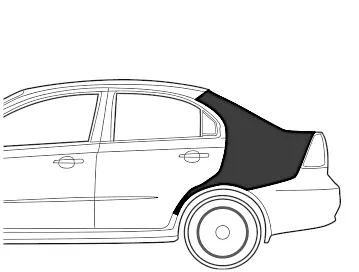
Types of fender:
The type of fender is based upon the area covered i.e. full fender type and half fender type.
Full bumper type :
Half bumper type :
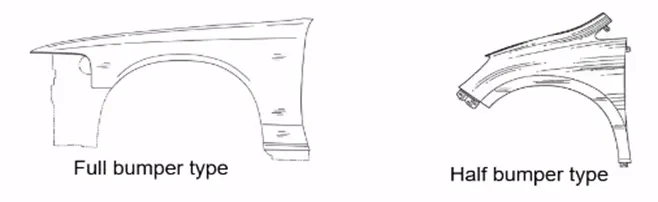
There are many factors that need to be considered during designing the fenders of the vehicle. One of them is the wheel arch area.
In a fender, the wheel arch is the semicircular part that is positioned above the wheel of the vehicle. While designing the fender care must be taken that the wheel arch of the fender meets the required standards.
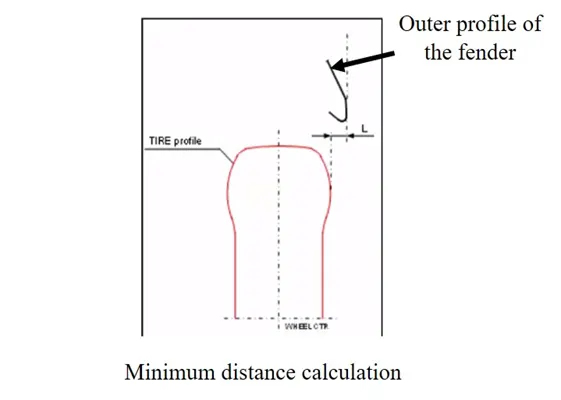
Different standards of the wheel arch area requirements:
- The wheel should be placed inside the fender or in other words, there should be a minimum distance between the outer surface of the fender and outer surface of the wheel.
- This helps to reduce the chance of chipping of the wheel with outer particles.
- It helps in increasing pedestrian safety.
- The distance ‘L’ as mentioned in the above figure should be a minimum value, which varies as per standards followed by different countries
Some of the different standards followed are:
- Japanese standards.
- European standards.
- US standards.
1.Japanese standards:
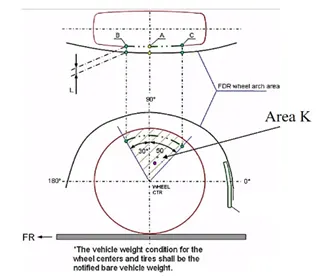
- Measure clearance L of the tire, hub, cap, and fender in three different positions within area K and produce a clearance check chart to validate.
- Clearance must be greater than 5 mm in all the three positions (i.e., at A, B, C from fender curvature)
- Wheel guard requirement: The value of 'a' shall be more than 5 mm at line 30* forward and 50* rearward from the central vertical axis of the wheel.
2.European standards:
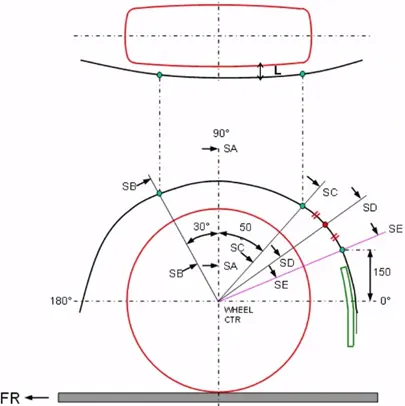
- According to european requirements the distance is measured at 5 different points.
- Measure CL L at sections SA-SA SB-SB SC-SC SD-SD SE-SE and produce CL check chart to validate.
- At all five sections the CL L value should be greater than 10 mm to satisfy the European regulations.
- ✓ Wheel guard reqmt: The value of 'a' shall be more than 5 mm at a line 30* forward and 50* rearward from the central vertical axis of axis of wheel.
3.US standards:
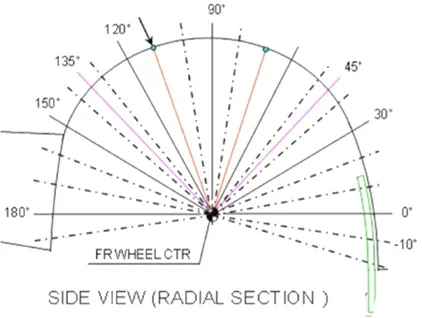
- The clearance ‘L’ at all positions (every 10o) from -20 deg to 180 deg should be greater than 5 mm to satisfy US regulations.
Why they have different requirements ?
- This is because of the road condition and also due to population density at the particular country.
- As in japan population density is high means speed limit will be low due to which at low speed the mud partical will spread slow so it have less distance ( 5mm) .
- While in europ population density is less means speed limit will be high due to which at high speed the mud partical will spread fast so it have more distance (10mm ) .
How I calculated :
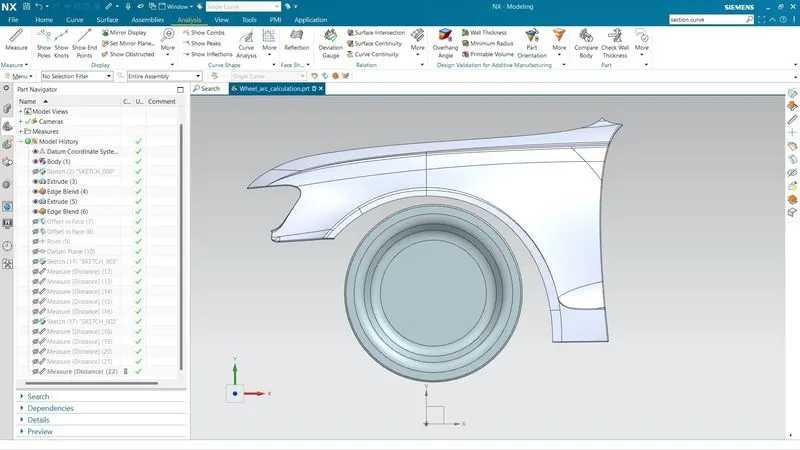
- We will start by constructing the points of measurements for the wheel arch area.
- First i used the point command to get center point of the outermost wheel and created a datam from the point.
- Then i sketched the required specification according to the european standard and marked point where wheel arch and wheel line intersects.
- By using measure command i measured the gap between two points.
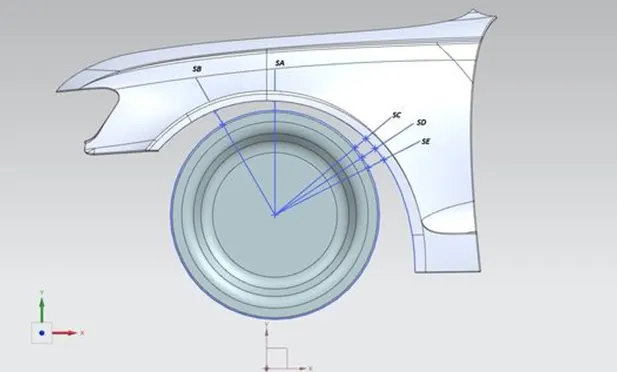
Measure CL L at sections SA SB SC SD SE and produce CL check chart to validate.
sections SA:
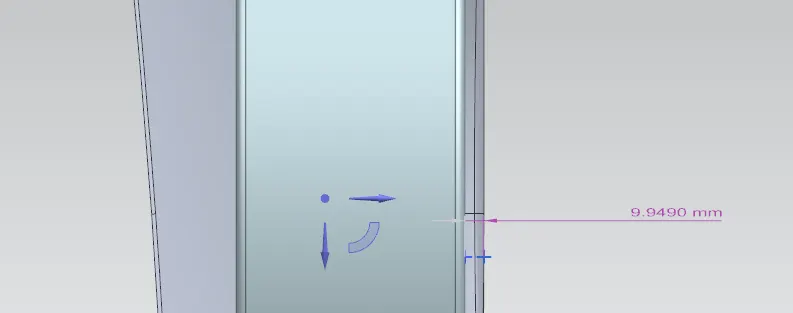
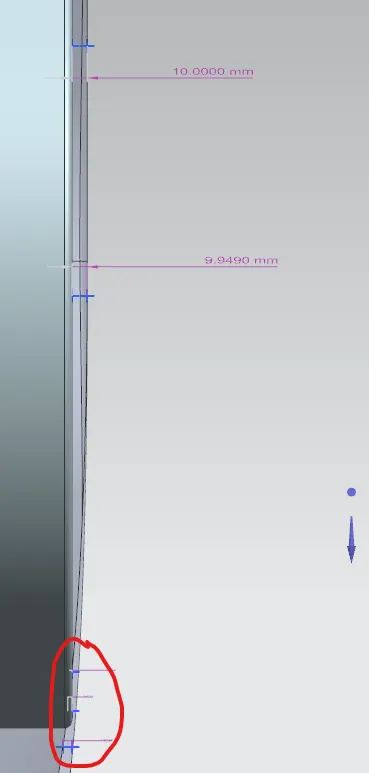
- CLEARANCE L at sections SA is 9.9490mm from wheel to wheel archer
Section SB:
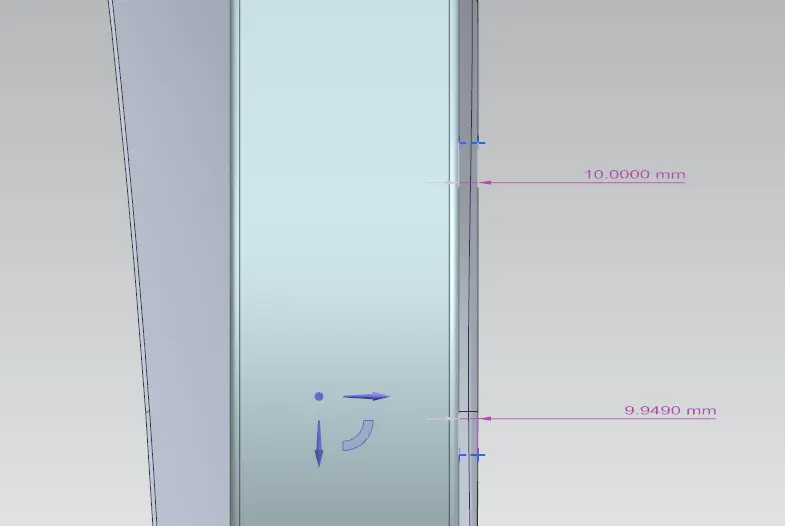
- CLEARANCE L at sections SB is exactely 10 mm from wheel to wheel archer.
Section SC:
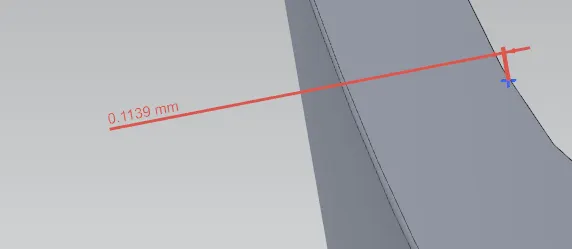
- CLEARANCE L at sections SC is -0.1139mm from wheel to wheel archer
Section SD:
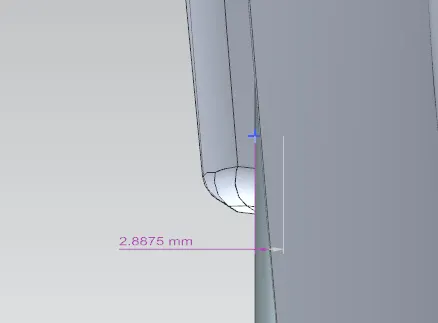
- CLEARANCE L at sections SD is -2.8875mm from wheel to wheel archer.
Section SE:
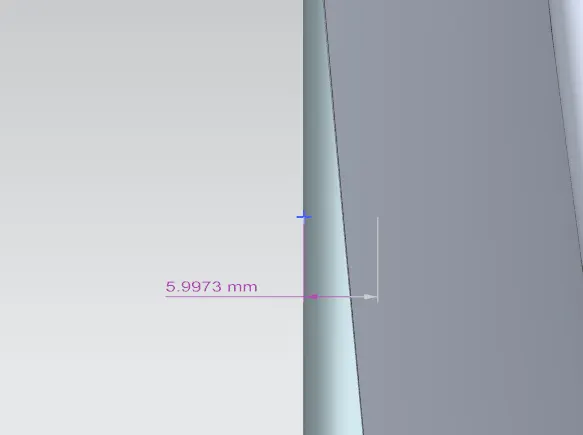
- CLEARANCE L at sections SE is -5.9973mm from wheel to wheel archer.
Checking whether the front fender wheel arch meets the standards:
- Comparing the above-observed values with the required values.
-
Position/Section Observed Clearance Value (mm) Required Clearance Value (mm) Passes the Requirement SA 9.9490 10 Fail SB 10.00 10 Pass SC -0.1139 10 Fail SD -2.8875 10 Fail SE -5.9973 10 Fail
SA need extra 0.590mm clearance, But In last three values SC, SD, SE are in negative Ref the snip below
Conclusion:
- Hence from the above observations, since the positions SA, SC, SD, and SE have a clearance of less than 10mm which is the minimum requirement for the European regulations, it is clear that the front fender's wheel arch area does not pass the European Regulations.
- The styling team is required to modify the styling surface of the fender such that the clearance \"L\" at sections SA, SC, SD and SE is equal to or greater than 10 mm by increasing the curvature at those sections towards outside.