Fender Design - Wheel Arch Challenge
Wheel Arch gap - Calculations
Aim :Calculate the wheel arch gap at the relevant places and determine whether the vehicle meets European standards.
Objective:
- Learn about the various wheel arch gap standards.
- Draw the lines with the necessary angles and points for the European standard.
- Measure the distance at each angle and indicate if the supplied model is pass or fail.
Wheel Arch
The semi-circular section of the fender located over the vehicle's wheel is known as the Wheel Arch. The fender's wheel arch should be designed to screen wheels and protect both the passengers compartment and pedestrians from the projection of water, dirt, and stones. The fender's wheel arch region is often built as a cover or shield over the tyre around its circumference to prevent debris like stones,dirt,sand,snow,etc, from being thrown into the car or the BIW area, as well as outside the vehicle and onto other vehicles or pedestrians on the road. For the vehicle to be permitted in different nations, the wheel arch of the fenders must meet the norms and rules of the relevant countries.
According to European rules, a pre-determined clearance or a minimum distance of 10mm must be maintained between the fender and corresponding tyre at specific places along the tyre profile, as indicated below:
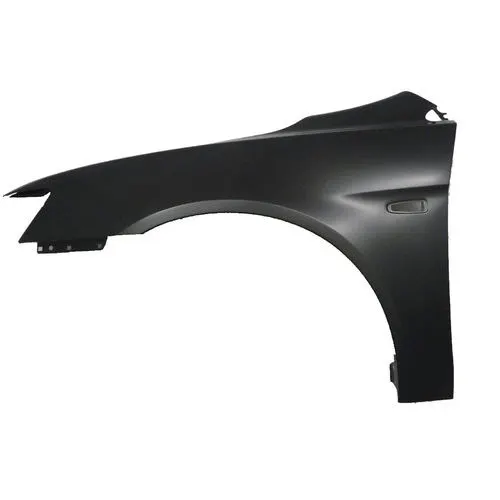
Fig 1 real Image of Car Fender
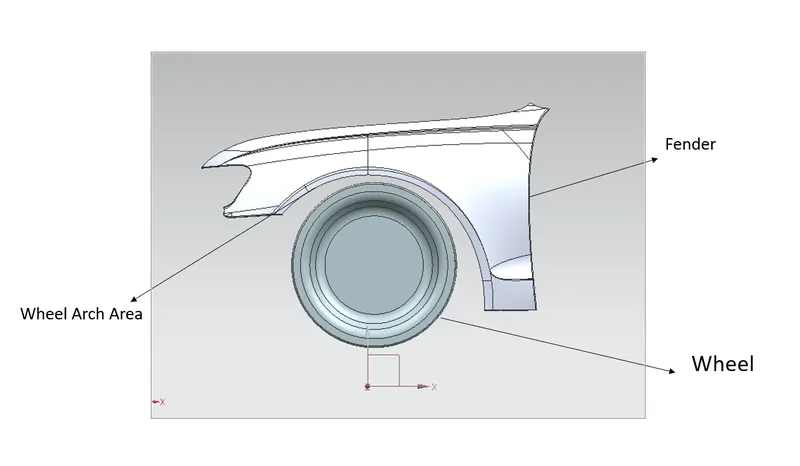
Fig 2 Graphical descreptive image of car fender
European Regulations :
- To validate, the clearance "L" should be measured at sections SA-SA, SB-SB, SC-SC, SD-SD, and SE-SE and a clearance check chart should be created.
- To comply with European Regulations, the value of L should be more than 10mm in all five parts.
- Wheel guard requirement: The value of "a" shall be more than 5mm at lines 30 degrees ahead and 50 degrees back from the wheel's centre vertical axis.
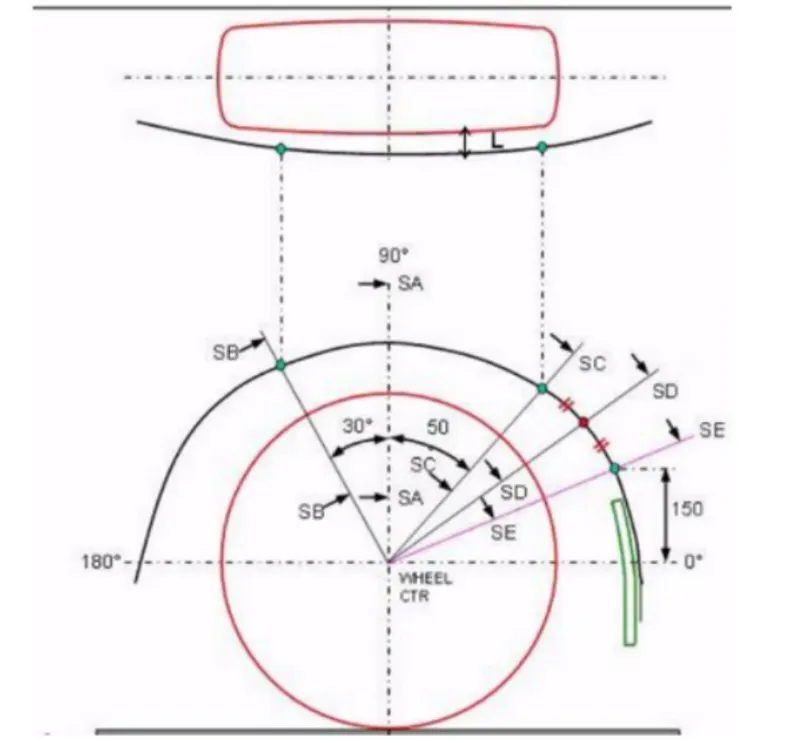
STEPS FOLLOWED IN CREATING THE SKETCH REQUIREMENT FOR EUROPEAN STANDARDS
- From the centre of the wheel, a horizontal and vertical axis is drawn.
- A represents the vertical axis intersection point.
- Similar references are drawn at 30 degrees to the left and 50 degrees to the right and labelled B and C.
- A 150mm line is drawn perpendicular to the horizontal axis and normal from the normal point on the fender, yielding point E.
- The midpoint of the arc formed by sections C and E results in the creation of a new section D.
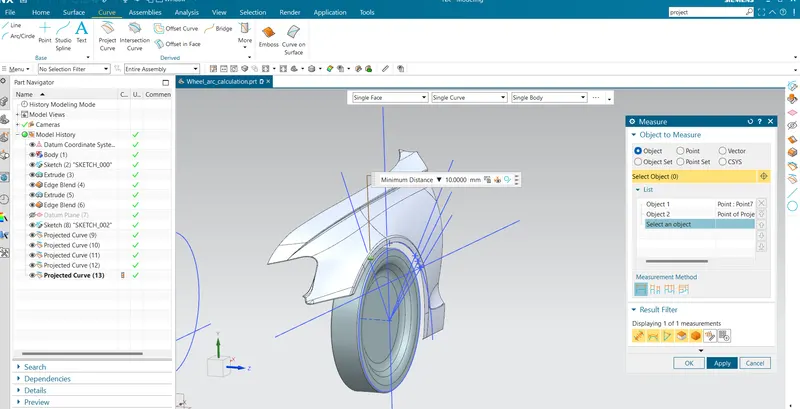
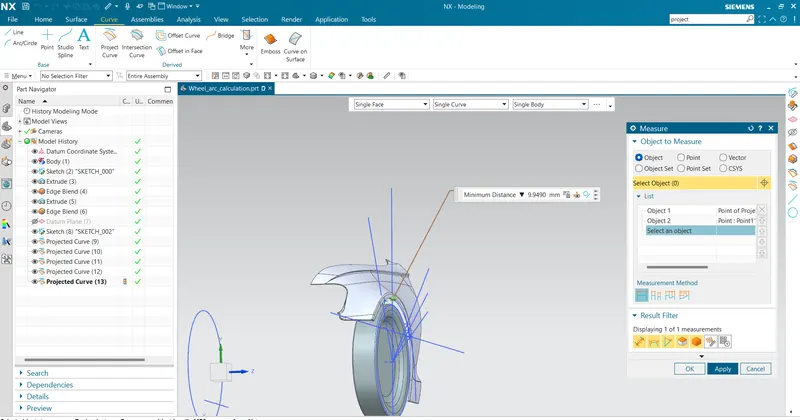
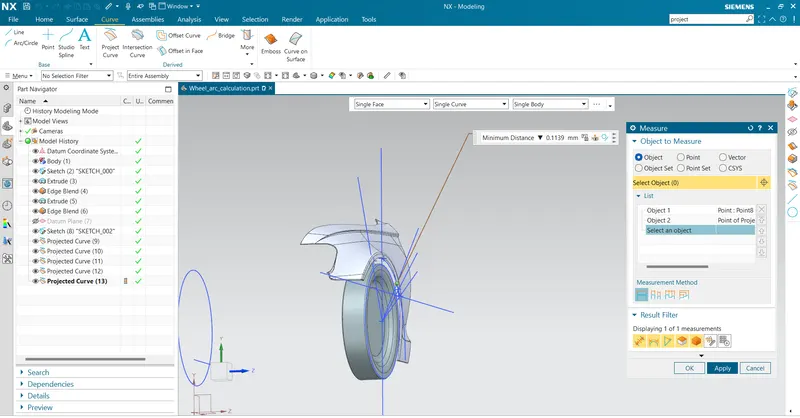
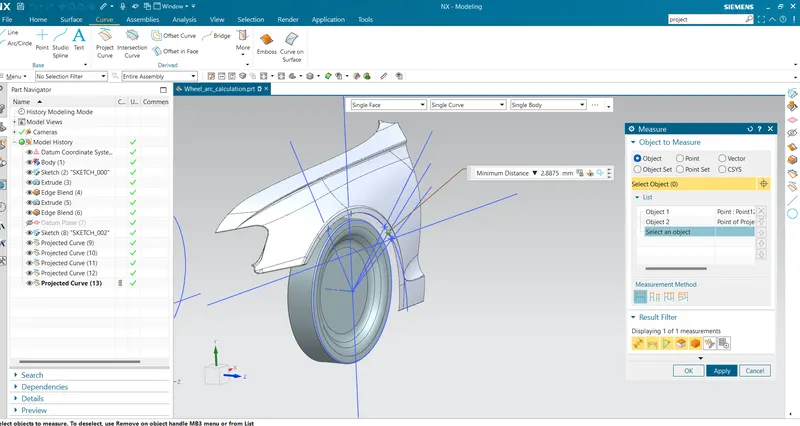
- The value of 'L' at each part, as well as the value of 'a', are determined to determine whether the fender meets European requirements, as indicated below.
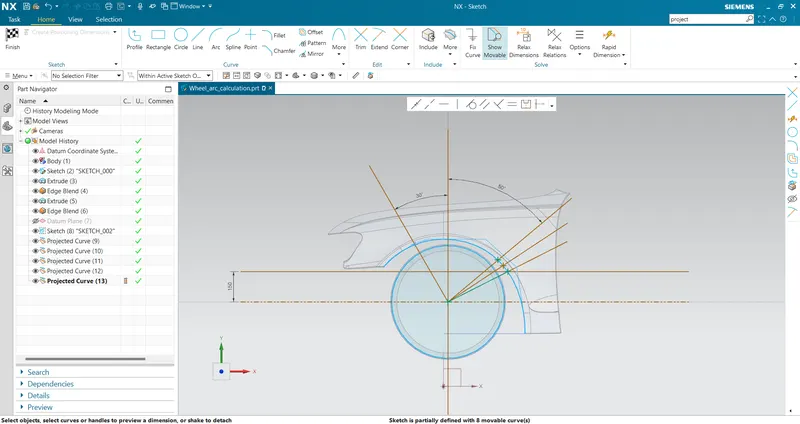
Value of L at B is 10 mm
Value of L at A is 9.9490
Value of L at C is 0.1139
Value of L at D is 2.8875
Value of L at E is 5.9018
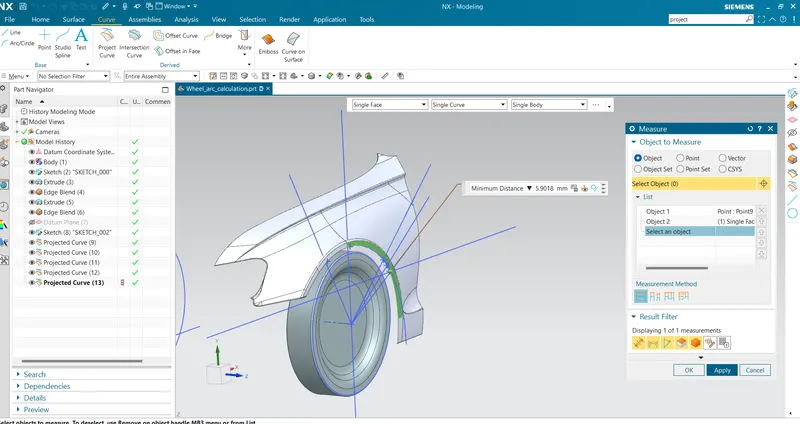
THE VALUES AT A,C,D AND E SECTIONS ARE NEGATIVE VALUES. THEY ARE LESS THAN 10 MM.
THE FENDER FAILS AS THE VALUES DOES NOT LIE IN BETWEEN THE VALUES OF THE EUROPEAN STANDARD.