Fender Design - Wheel Arch Challenge
Fender Wheel Arch Challenge
Aim:
- To understand the purpose of a wheel arch
- To learn about different regulations used in different countries for the wheel arch design
- To verify whether the given fender wheel arch design satisfies the European regulations
Wheel arch:
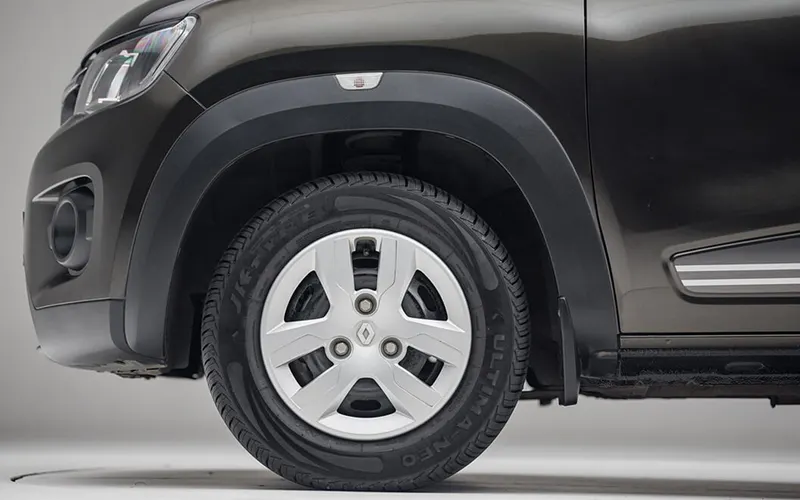
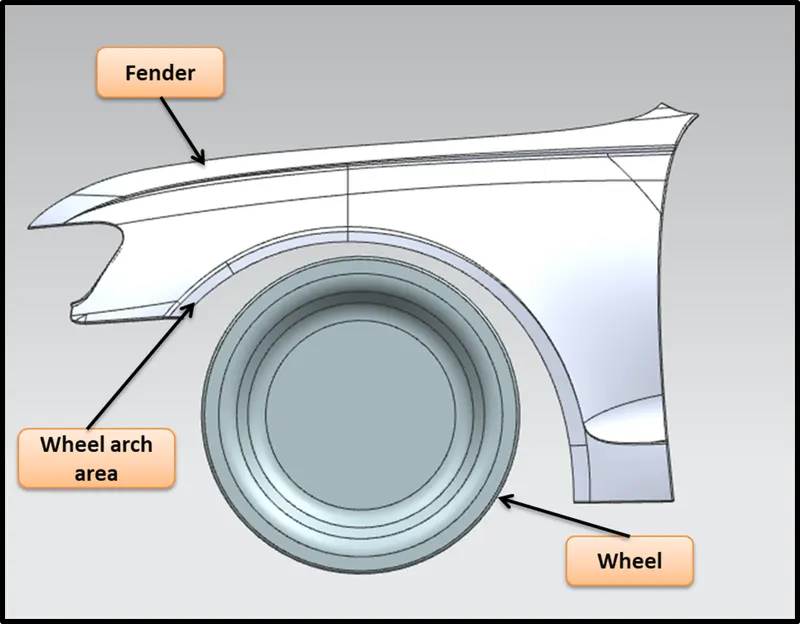
The wheel arch is the semi-circular part positioned above the wheel of a vehicle. The wheel arch area is generally covered by a plastic cladding which serves many purposes. It has to stop or deflect water, dirt and debris from entering into the engine area or near any powertrain and electrical components. By doing so they also protect the cars body paint from chipping which could cause rusting in the future. They also play a role in the safety of pedestrian by ensuring the rocks and chips encountered by the tire are not thrown towards the outside which can hit anyone.
In order to make sure all manufactures adhere to a common specification to maintain the safety standards,countries develop regulation which have to followed by the manufatures while designing any component.Wheel arch design also has few regulations to be followed and it varies from country to country.Few of the regulations are listed below.
US Regulation
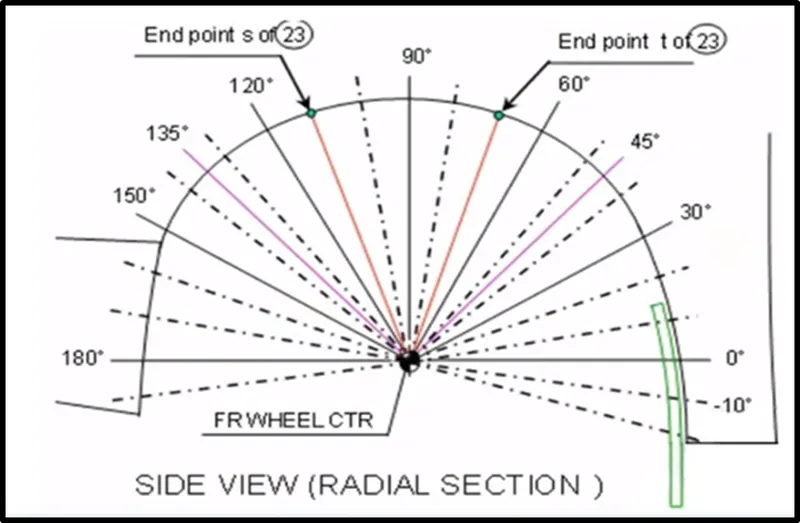
- The US regulation requires us to take measure the clearance L between the wheel outer edge and the wheel arch edge for every 10 degrees between the limit -20 to 180 degrees
- All the values measured which is known as the clearance value L must be greater than 5m to satisfy the US regulation
Japan Regulations
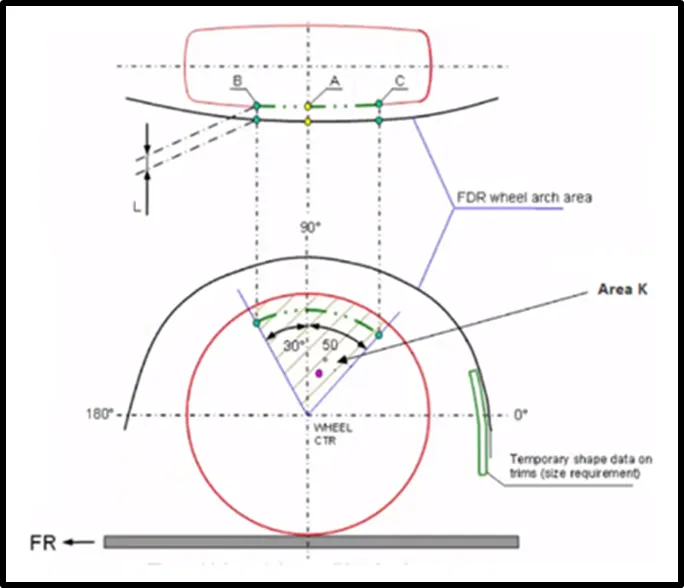
- Based on the image given below the clearance value L must be measured at points which are at an angle of 50 degrees,90 degrees and 30 degrees respectively
- All the points must have a clearance value L of more than 5mm to satisfy the Japanese regulations
Europe Regulations
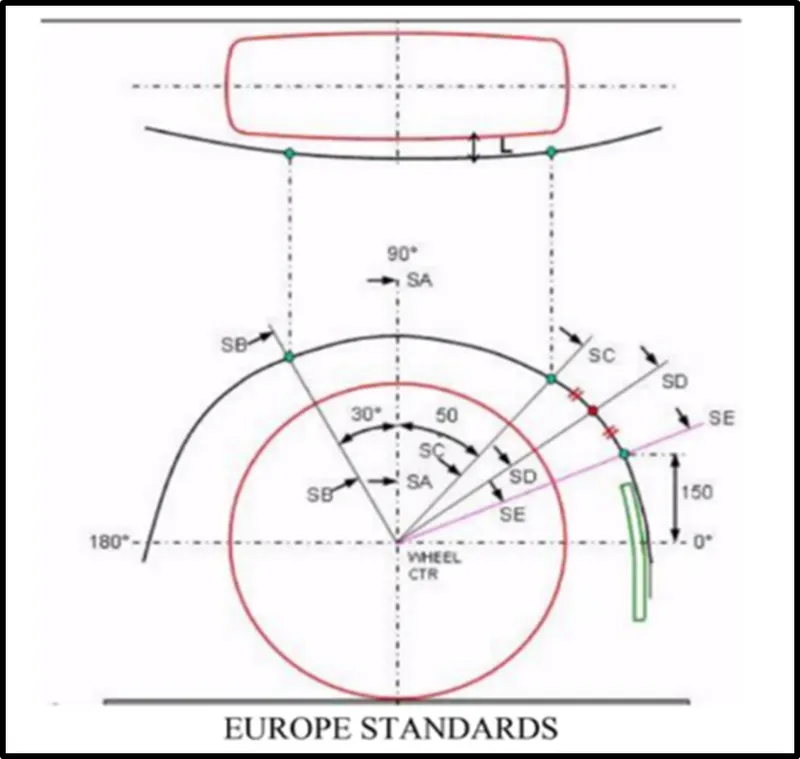
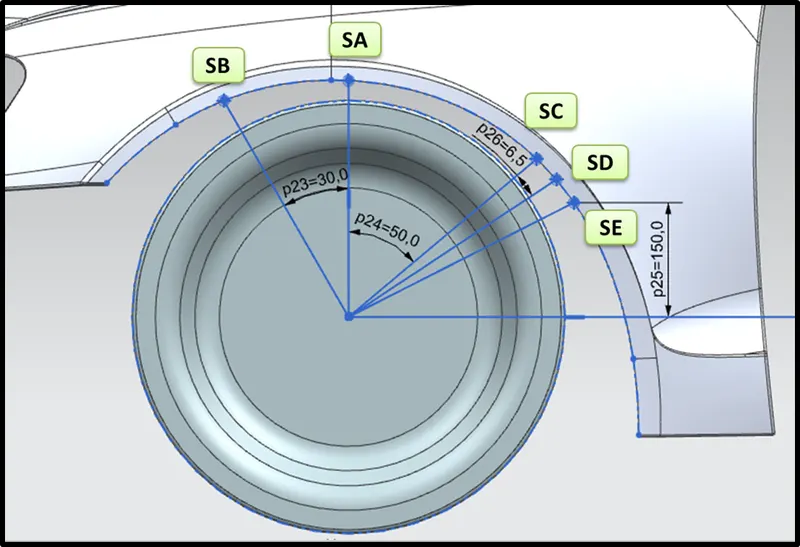
- We are required to measure the clearance L at the sections SA-SA,SB-SB,SC-SC,SD-SD,SE-SE as shown in the image below
- The clearance value L at all the five section must be grater then 10 mm to satisfy the European regulations
European standard verification for the wheel arch:
- We have been provided with a fender design along with a wheel as our input data
- Our main aim here is to verify whether the given fender design satisfies the European regulations for fender wheel arch area or not
- We start by sketching on the outer most face of the wheel body provided and draw the vertical and horizontal lines from the wheel centre.
- We can then project our wheel arch outer edge onto the sketch plane
- The point where the vertical line meets the wheel arch edge is identified as SA
- Next we draw a line at an angle of 30 degrees with reference from the vertical line in the fourth quadrant. The intersection between the line and the wheel arch edge is denoted a SB
- With the vertical line as reference another line at an angle of 50 degree is drawn in the first quadrant. The intersection between the line and the wheel arch edge is denoted as SC
- The next line is drawn such that its endpoint on the wheel arch edge is at a distance of 150mm from the horizontal reference line. This is denoted as SE
- The last line is drawn in the middle of the two points SC and SE and the intersection of this line with the wheel ach edge is denoted as SD
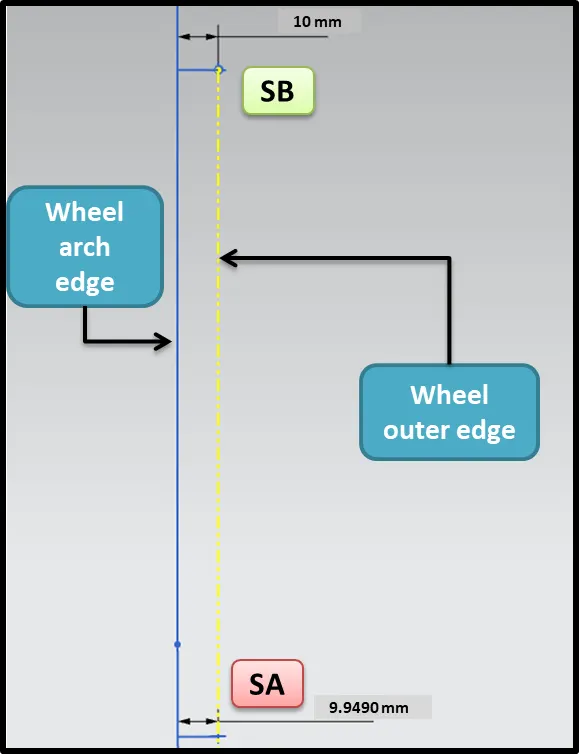
- Now, we start sketching on the top plane of the coordinate system and project the points created as well as the wheel arch outer edge
- Horizontal lines are drawn from the created points such that they intersect the wheel arch edge
- Excess area of the line can be trimmed off using the trim command
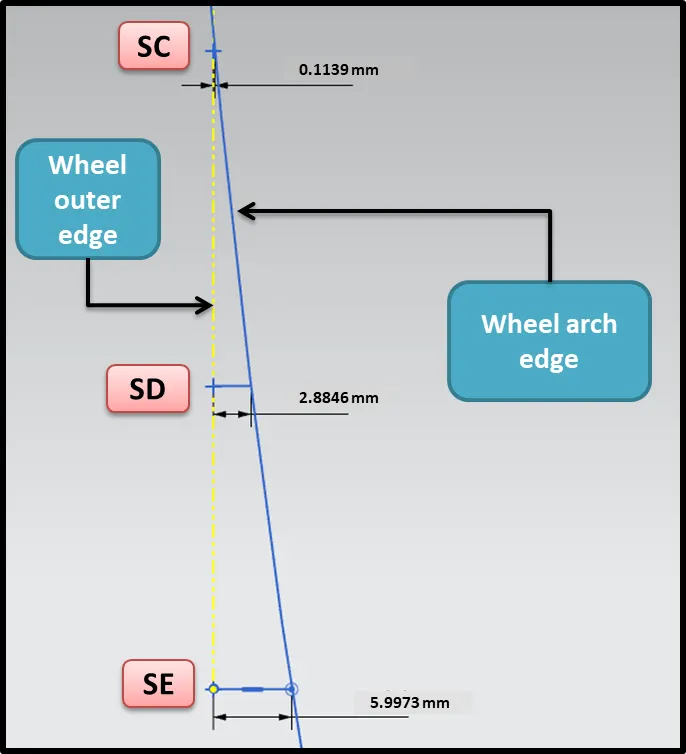
- We can now measure the length of the line using the dimension tool in the sketch toolbox or else we can use the measure tool in the analysis tab to get more accurate dimensions
- The dimension’s measured can be seen in the picture below and these dimension are then compiled in a table for comparison
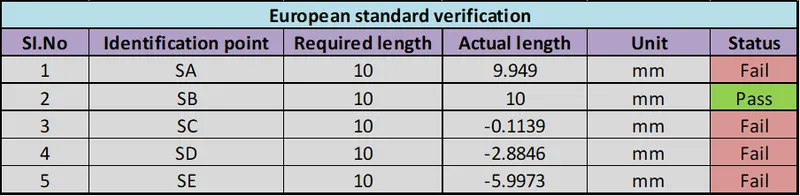
Conclusion:
- The purpose of wheel arch is studied
- Different regulations used in different countries for the wheel arch design have been studied.
- The fender wheel arch design provided has been verified for the European regulations and it is found that it does not satisfy the requirements and hence this data must be given to the styling team as a feedback to make changes in the fender design