Fender Design - Wheel Arch Challenge
AIM: The objective of the wheel arc challenge is to calculate the wheel arc area using Siemens NX CAD and to prove whether the given fender of car will pass the European standards or not.
INTRODUCTION:
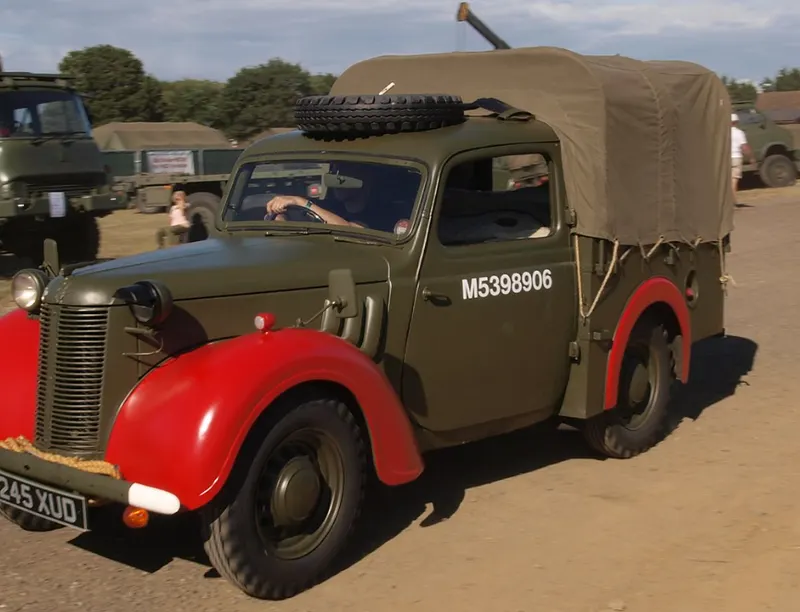
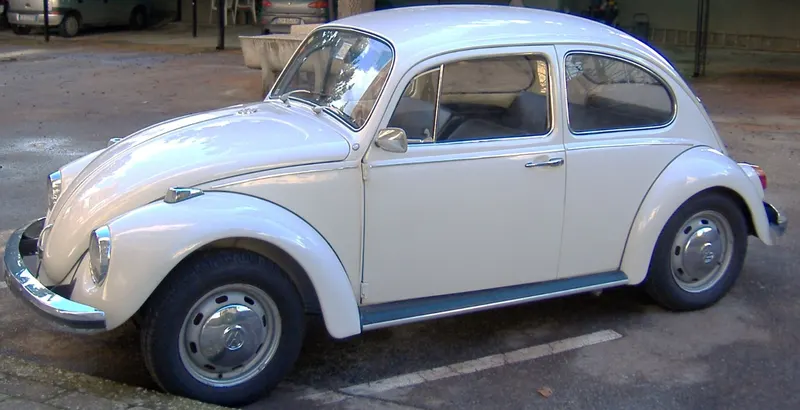
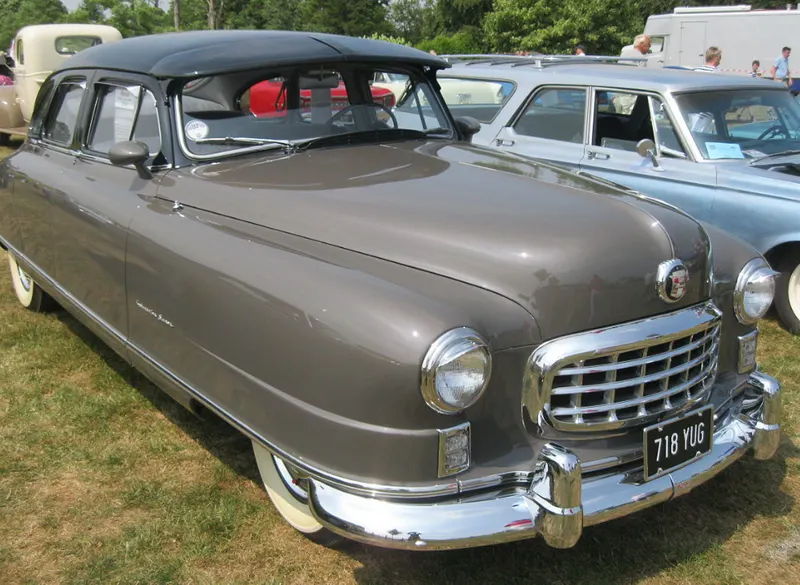
Fender - Fender is the American English term for the part of an automobile, motorcycle or other vehicle body that frames a wheel well (the fender underside). Its primary purpose is to prevent sand, mud, rocks, liquids, and other road spray from being thrown into the air by the rotating tire. Fenders are typically rigid and can be damaged by contact with the road surface.
Sticky materials, such as mud, may adhere to the smooth outer tire surface, while smooth loose objects, such as stones, can become temporarily embedded in the tread grooves as the tire rolls over the ground. These materials can be ejected from the surface of the tire at high velocity as the tire imparts kinetic energy to the attached objects. For a vehicle moving forward, the top of the tire is rotating upward and forward, and can throw objects into the air at other vehicles or pedestrians in front of the vehicle.
In British English, the fender is called the wing. (This may refer to either the front or rear fenders. However, in modern unibody vehicles, rear fenders may also be called quarter panels) The equivalent component of a bicycle or motorcycle, or the "cycle wing" style of wing fitted to vintage cars, or over tires on lorries which is not integral with the bodywork, is called a mudguard in Britain, as it guards other road users – and in the case of a bicycle or motorcycle, the rider as well – from mud, and spray, thrown up by the wheels.
TYPES OF FENDER:
The type of fender is based upon the area covered i.e., full fender type and half fender type.
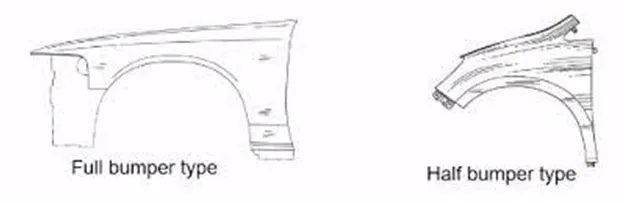
- FULL FENDER TYPE: Full fender type is traditional type of fender where more material consumption is observed. This type is used in old design of automobiles where it increases the overall weight and thus reduces performance. The maintenance also relatively more due to more surface.
- HALF FENDER TYPE: Half fender type is modern design where less material consumption is observed, so productivity increases by reducing size of blank and thus providing more performance. The maintenance also relatively low compared to full bumper type.
Wheel Arch- Wheel Arch is the semi-circular part of the fender positioned above the wheel of the vehicle. The design of the wheel arch of the fender should be such that it must shield wheels and protect both passengers compartment and pedestarians from the projection of watr, mud and stones.The wheel arch area of the fender is usually designed as a cover or shield over the tyre along its perimeter to stop any debris or stones ,dirt,sand,snow,etc,from getting thrown into the vehicle or the BIW area as well as outside the vehicle and onto other vehicles or pedestarians on the road.For the vehicle to has its permit in different countries,the wheel arch of fenders must be compliant with the standards and regulations set by respective countries.
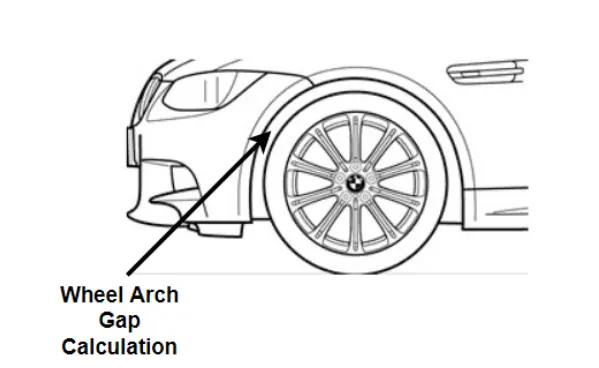
The most important body change was that the front wheel arch was cut higher into the fender.Corrosion had occurred around the splash plate at the back of the wheel arch.The car has big, high-definition headlights that extend to the wheel arch.
JAPAN REQUIREMENTS FOR FENDER WHEEL ARC:
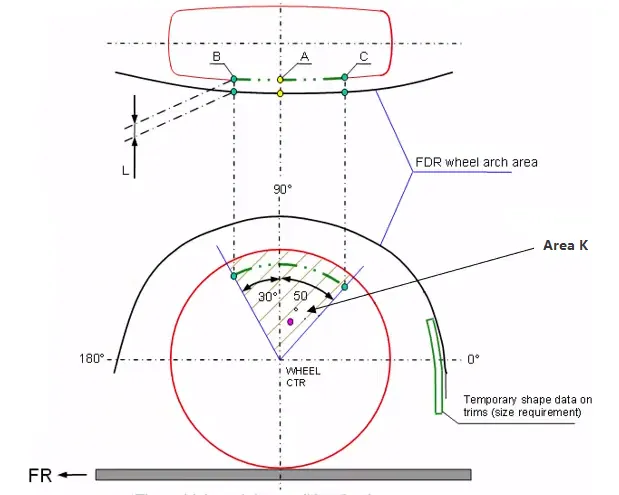
- Measure clearance L of tire, hub, cap, and fender in three different positions within area K and produce clearance check chart to validate.
- Clearance must be greater than 5mm in all the three positions.
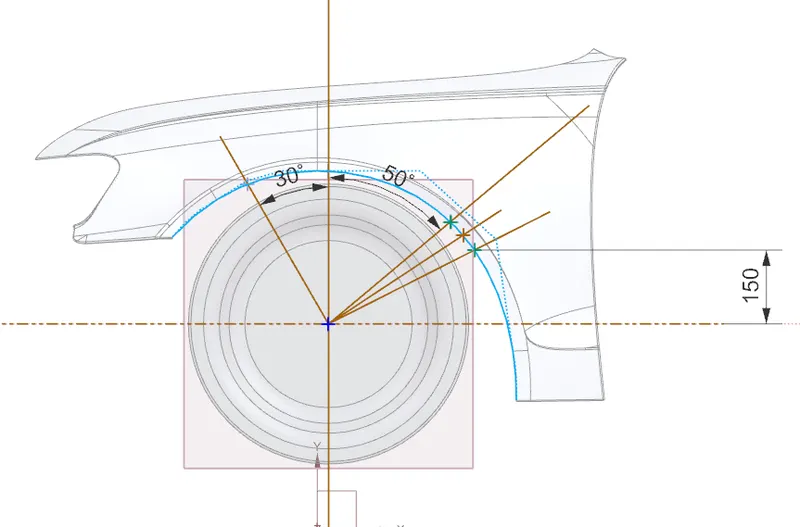
- Wheel guard requirement: the value a shall be more than 5mm at a line 30*forward and 50*rearward from the central vertical axis of axis of wheel.
US STANDARDS REGULATION FOR FENDER WHEEL ARC:
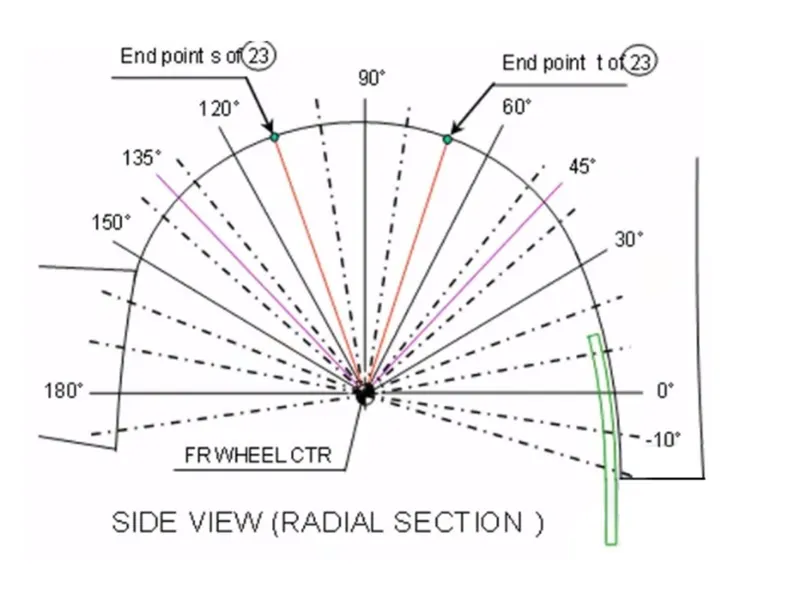
- Make clearance check details on all positions from -100* to 100* and make the clearance check table.
- All values should be greater than 5mm to satisfy the regulation.
- The value of ‘a’ shall be more than 5mm at a line 30* forward and 50*rearward from the central vertical axis of axis of wheel.
EUROPEAN REGULATION:
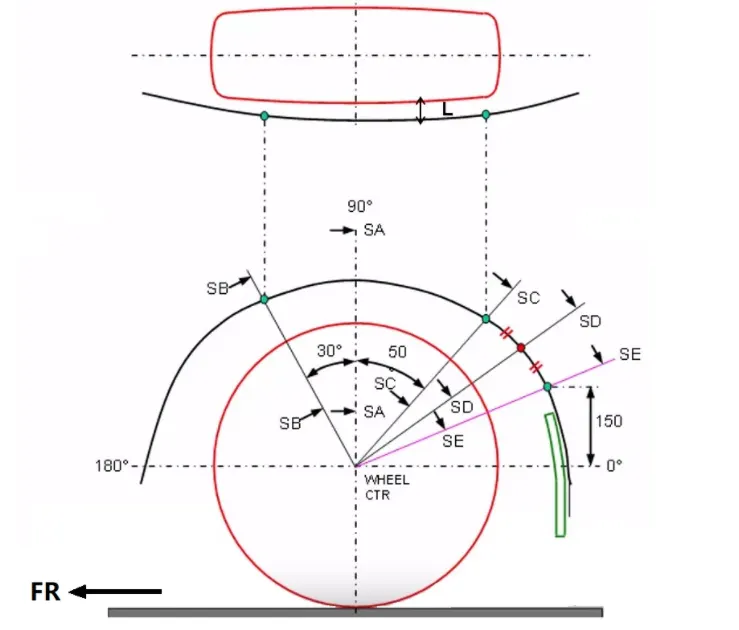
Measure CL L at section SA-SA-SB-SB-SC-SC-SD-SD-SE-SE and produce CL check chart to validate.
- At all five sections the CL L value should be greater than 10mm to satisfy the European regulations.
- Wheel guard requirement: the value of ‘a’ shall be more than 5mm at a line 30*forward and 50*rearward from the central vertical axis of axis of wheel.
PROCEDURE :
- According to the European standards, the design fender and wheel arc should pass the wheel guard requirement procedures.
- To start the test, first create a plane with origin as center of the wheel plane.
- Then sketch using lines along with given dimensions as SA, SB, SC, SD and SE.
- After sketching project the intersection points on to the fender face.
- Then use measure distance tool and calculate the clearance between sketch lines and wheel arc.
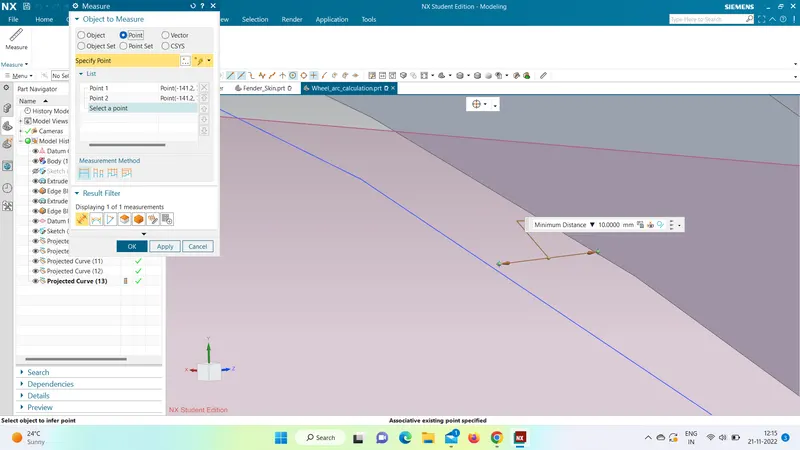
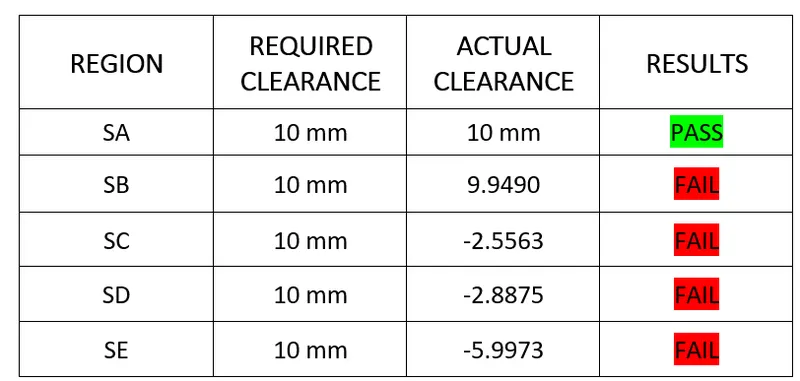
6. The clearance between SB line and wheel arc is 10mm also the line SB lies inside the fender so it gives positive value.
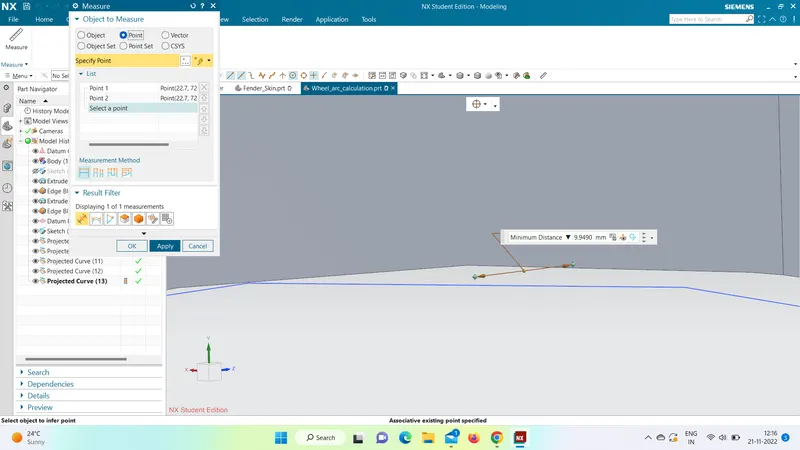
7. The clearance between SA line and wheel arc is 9.9490mm which is less than the required value.
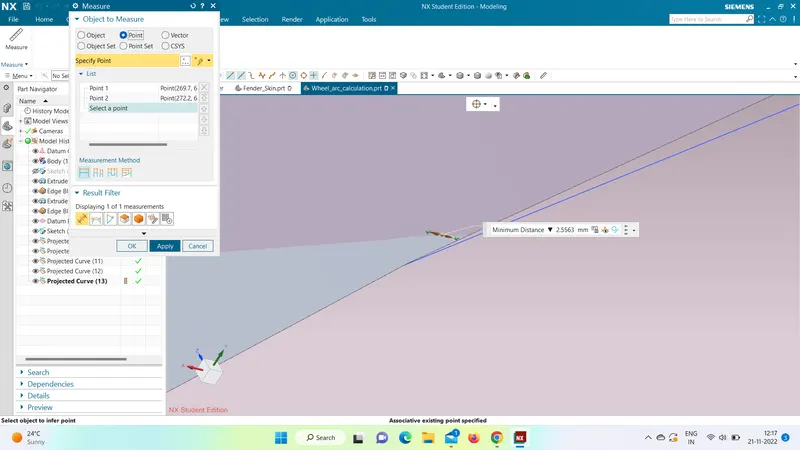
8. The clearance between SC line and wheel arc is -2.5563mm and also the line SC lies outside the fender so it gives us the negative value.
9. The clearance between SD line and wheel arc is -2.8875mm and also the line SD lies outside the fender so it gives us negative value.
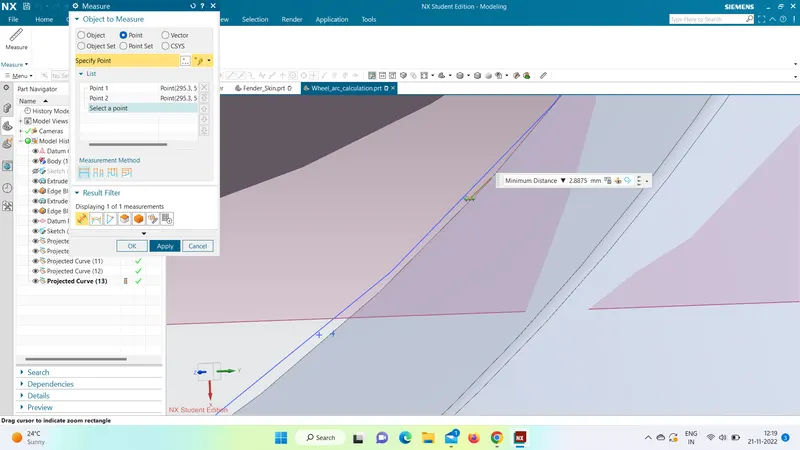
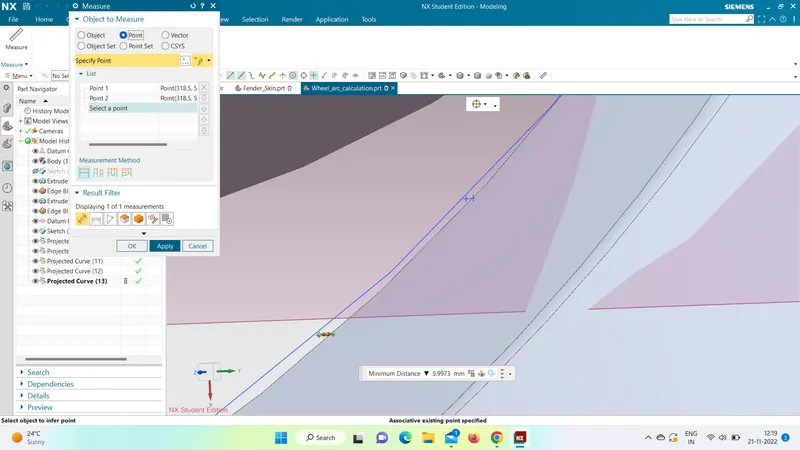
10. The clearance between SE line and wheel arc is -5.9973mm and also the line SE lies outside the fender so it gives us negative value.
RESULTS:
CONCLUSION:
From the above study we came on conclusion that,
- Fender does not pass the European Regulations, as the Minimum Clearence value of 'L' between the fender wheel arch and wheel for vehicle and Safety is 10 mm and this design does't meet the requirement.
- Negative sign indicates that the wheel arc is behind the wheel.