Fender Design - Wheel Arch Challenge
Challenge - WHEEL ARC (Fender Design)
OBJECTIVE: The objective of the wheel arc challenge is to calculate the wheel arc area using Siemens NX CAD and to prove whether the given fender of the car will pass European standards or not.
INTRODUCTION:
WHEEL ARCH: The wheel arch is the semicircular part positioned above the wheel of a vehicle. The most important body change was that the front wheel arch was cut higher into the fender. Corrosion had occurred around the splash plate at the back of the wheel arch.
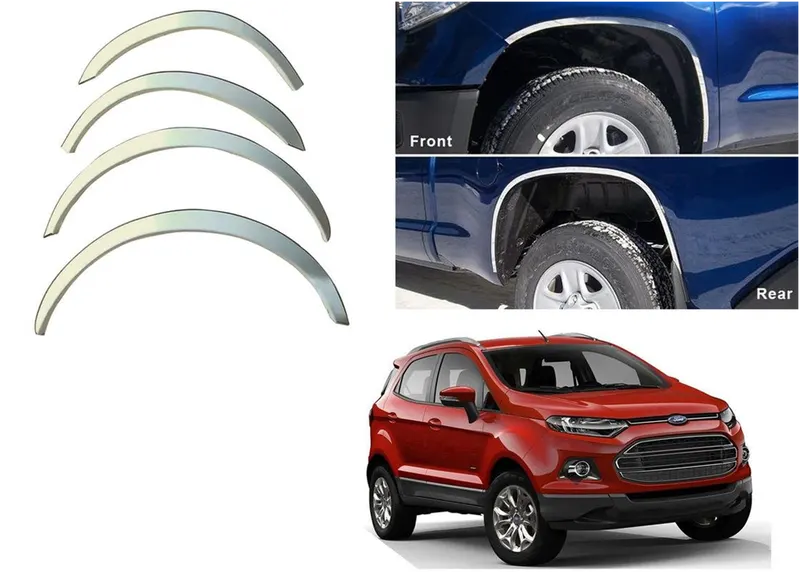
FENDER: The fender is the part of a car that protects and frames its wheels and keeps mud from splashing it. Most modern vehicles have fenders on their front wheels. It is the part of a car, truck, or motorcycle that surrounds the wheel sell. The primary function of a fender is to prevent dirt and debris from being thrown into the air by the tire. The fender is located over the wheels of the vehicle. As such, there are four fenders on a typical vehicle: front right, front left, rear right, and rear left.
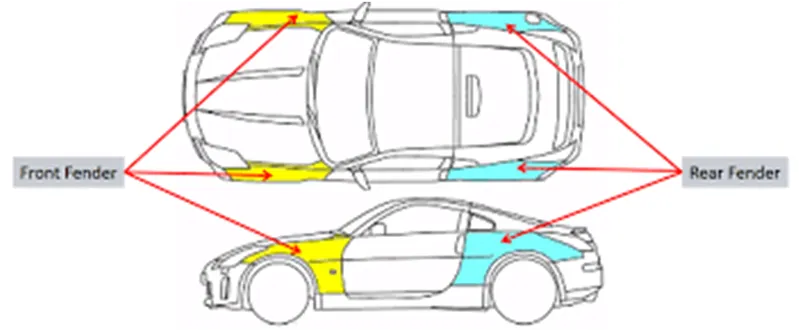
TYPES OF FENDER:
The type of fender is based upon the area covered i.e., full fender type and half fender type.
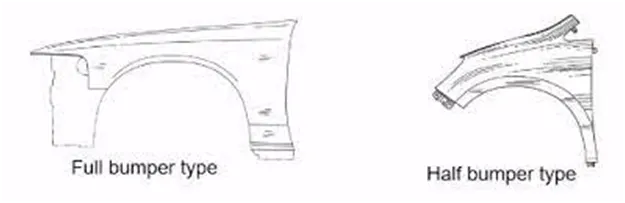
- FULL FENDER TYPE: Full fender type is the traditional type of fender where more material consumption is observed. This type is used in the old designs of automobiles where it increases the overall weight and thus reduces performance. The maintenance is also relatively more due to more surface.
- HALF FENDER TYPE: Half fender type is a modern design where less material consumption is observed, so productivity increases by reducing the size of the blank and thus providing more performance. The maintenance is also relatively low compared to the full bumper type.
JAPAN REQUIREMENTS FOR FENDER WHEEL ARC:
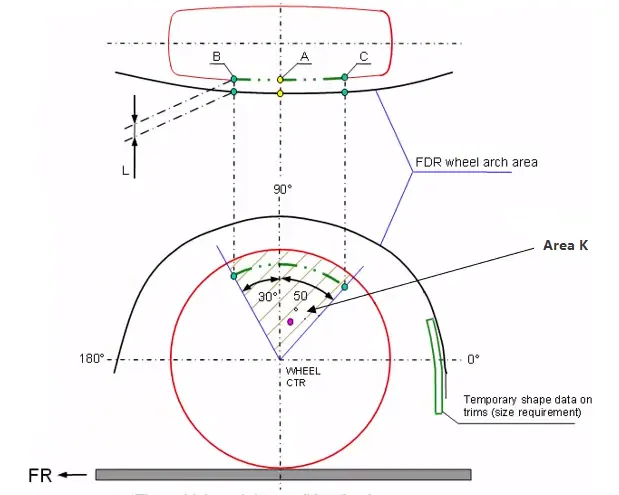
- Measure clearance L of the tire, hub, cap, and fender in three different positions within area K and produce a clearance check chart to validate.
- Clearance must be greater than 5mm in all three positions.
- Wheel guard requirement: the value a shall be more than 5mm at a line 30*forward and 50*rearward from the central vertical axis of the wheel.
US STANDARDS REGULATION FOR FENDER WHEEL ARC:
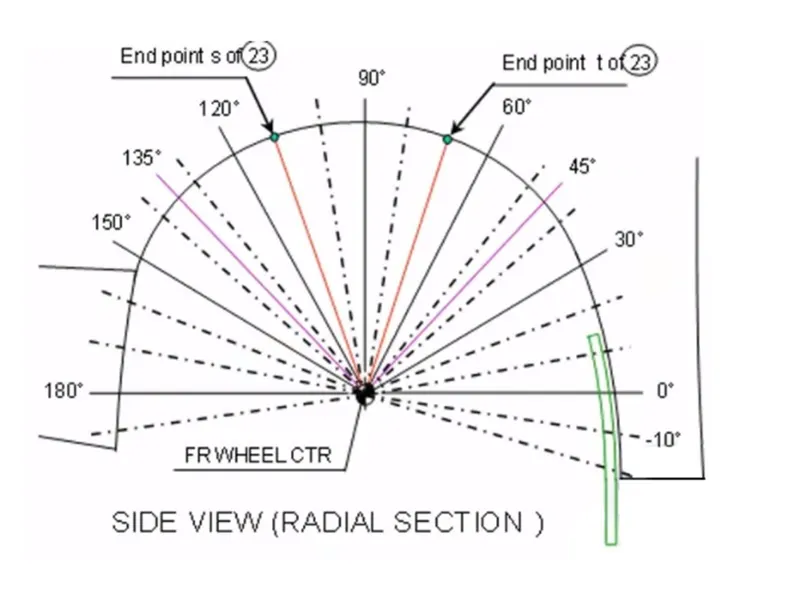
- Make clearance check details on all positions from -100* to 100* and make the clearance check table.
- All values should be greater than 5mm to satisfy the regulation.
- The value of ‘a’ shall be more than 5mm at line 30* forward and 50*rearward from the central vertical axis of the wheel.
EUROPEAN REGULATION:
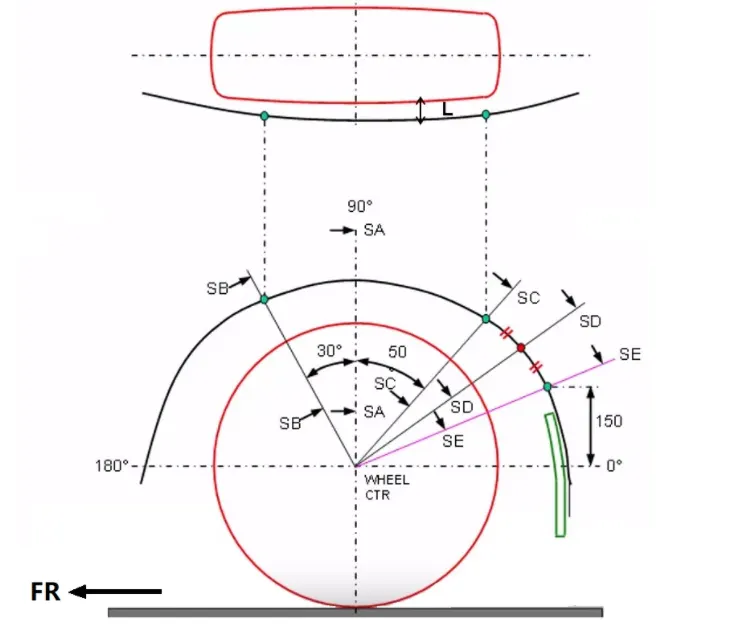
Measure CL L at section SA-SA-SB-SB-SC-SC-SD-SD-SE-SE and produce a CL check chart to validate.
- At all five sections, the CL L value should be greater than 10mm to satisfy European regulations.
- Wheel guard requirement: the value of ‘a’ shall be more than 5mm at a line 30*forward and 50*rearward from the central vertical axis of the wheel.
Calculation:
This is carried out for pedestrian safety of the car, here by using the European regulation's requirement to define the design given for calculation.
As required to plot the coordinates,
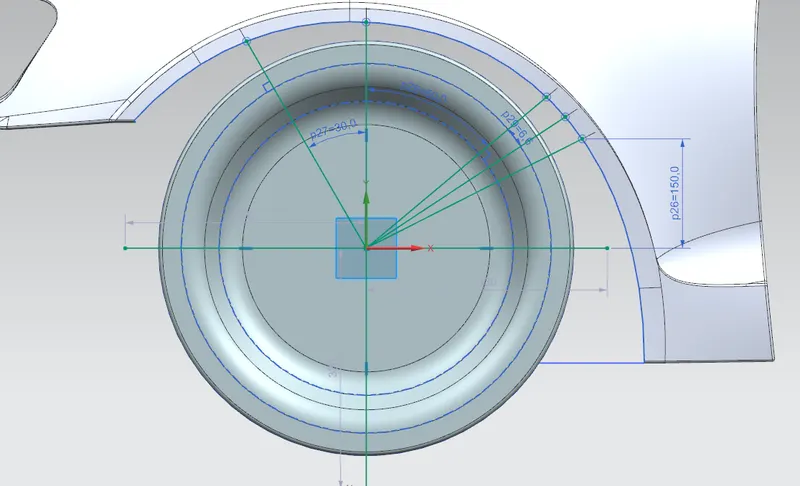
Figure 4 plotting the checking point on the plane.
In figure 4 the following coordinates SB, SB, SC, SD and SE are plotted using the angles and dimensions according to the requirement standard.
Next the points are checked if they provide a gap of 10mm from the outer part of fender to the outer most part of the tier, if it is more than 10mm it meets the safety requirement if it is below 10mm it doesn’t meet the standard.
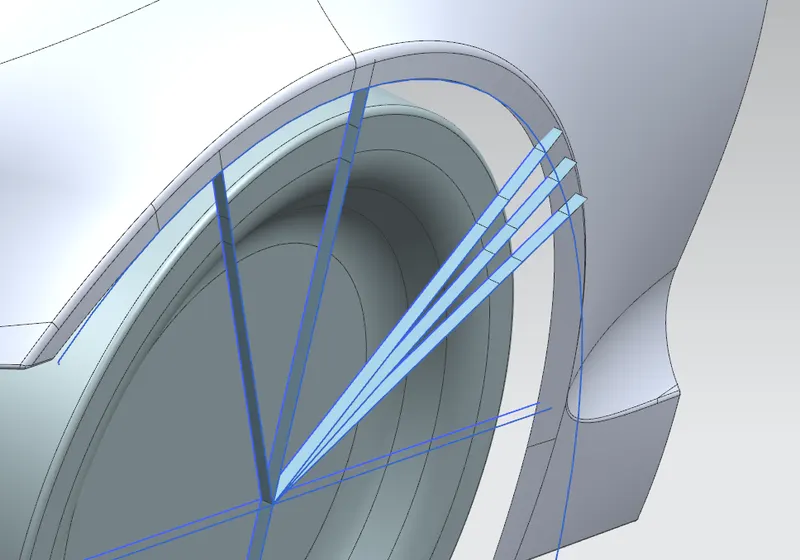
Figure 5 Law extension of 10mm towards the fender
In figure 5 you can see the law extension of 10mm towards the fender is done, we can see that SA, SB have a clearance more than 10mm whereas remaining check points doesn’t meet the standard.
The above figure shows the following result
- SB plot satisfies the 10mm distance
- SA plot satisfies the 10mm distance
- SC plot doesn’t satisfy, there is 3mm clearance which doesn’t go with the standard.
- SD plot doesn’t satisfy, there is 0.25mm clearance which doesn’t go with the standard.
- SE Plot doesn’t satisfy, there is -3.4mm clearance which doesn’t go with the standard.
Conclusion:
Hence we can declare that the following fender wouldn’t pass the standards the styling team must redesign the fender.