Fender Design - Wheel Arch Challenge
Wheel Arc:
It is a part positioned with the fenders and above the wheels of the vehicle. They are designed in such a way that, they provide protection from dust, mud, stones, snow, water etc elements to the vehicle and engine compartment.
They also provide safety to the pedestrians by minimising the damage of impact on them.
Different countries have different regulations regarding the fender designs. Each car must follow the regulations declared by the standard.
Here is a photo of Europian standard:
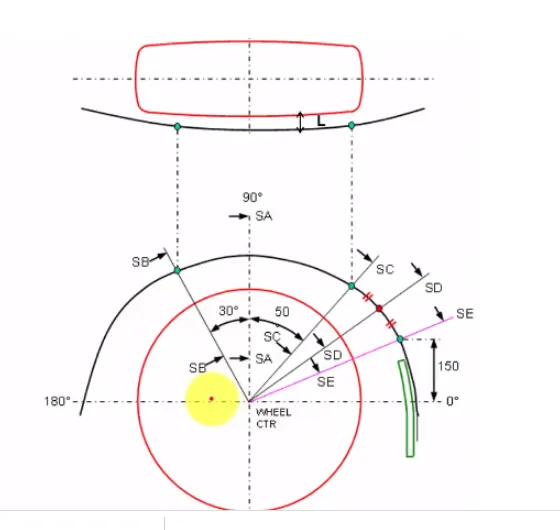
As we can see that the gap should be maintained for the safety of the vehicle.
Fender Design:
First of all we would discuss the purpose of fenders in the vehicle:
Fenders are located above the wheels. Following the circumference of the wheels. The image of a fender is shown below:
As shown in the image, is located on a vehicle. Some mounting are provided on the fender, so that it can be fit on the respective parts of the vehicle.
So, while driving the wheels comes in contact with water, sand, mud, snow, dust particles etc. Due to the weight of the vehicle and traction of the wheels these particles are thrown on to the surface of the vehicle with force. In order to prevent the damage on the body as well as engine compartment, we use fenders. They prevent any foreign particles to ender into the vehice or engine compartment.
That was not the only use of fenders.
The other main reason to use fender is " Padestrian Safety" :
While on road, if for some reason the driver could not stop the car and if the car hit a padestrian then it should be kept in mind that the human injury must minimised anyhow possible. We can do that by designing the fenders according to the standards.
Different regions have different standards. One must keep that in mind and design or manufacture the product accordingly.
Fenders are mounted on the vehicle by means of bumpers, A Pillar, Sill and splash. This depends on the vehicle design.
The following image is following the Europian standards:
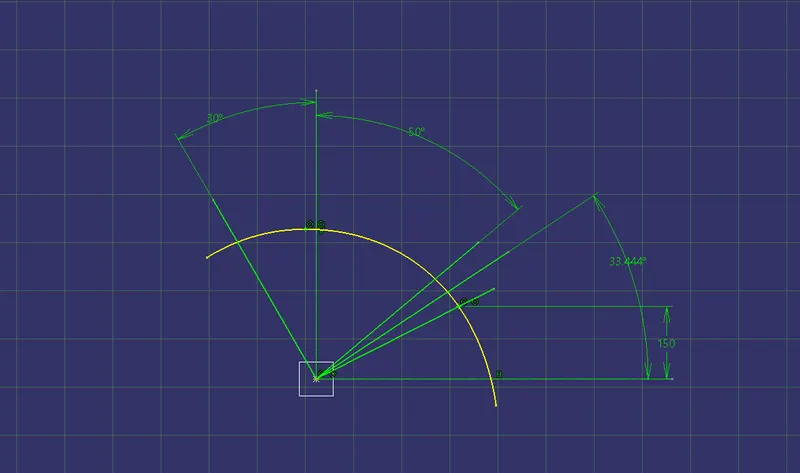
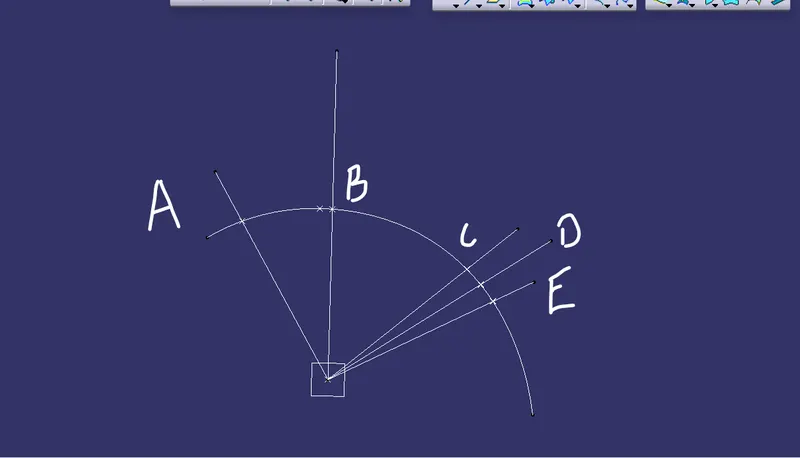
Each line has proper angle.
I have provided them with alphabatics to reduce confusion.
The value at A:
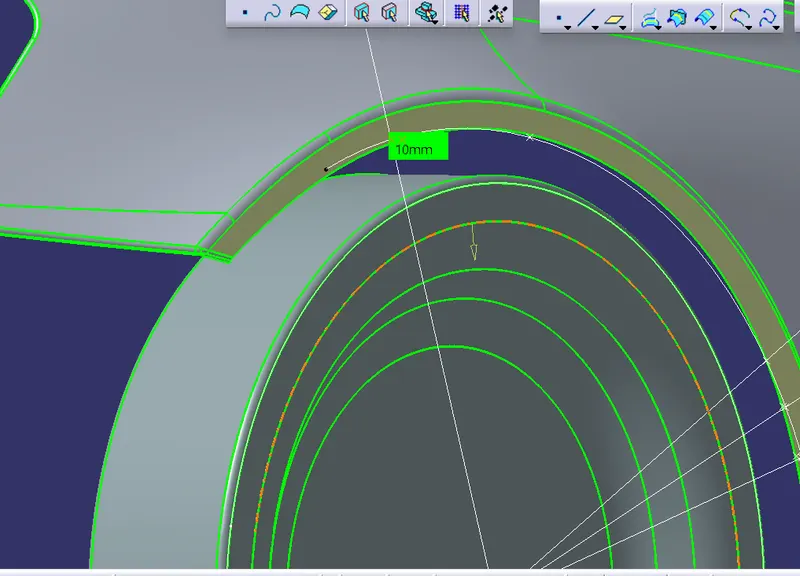
As it is clear that it is exactly 10mm. So we are good to go.
Value at vertical B:
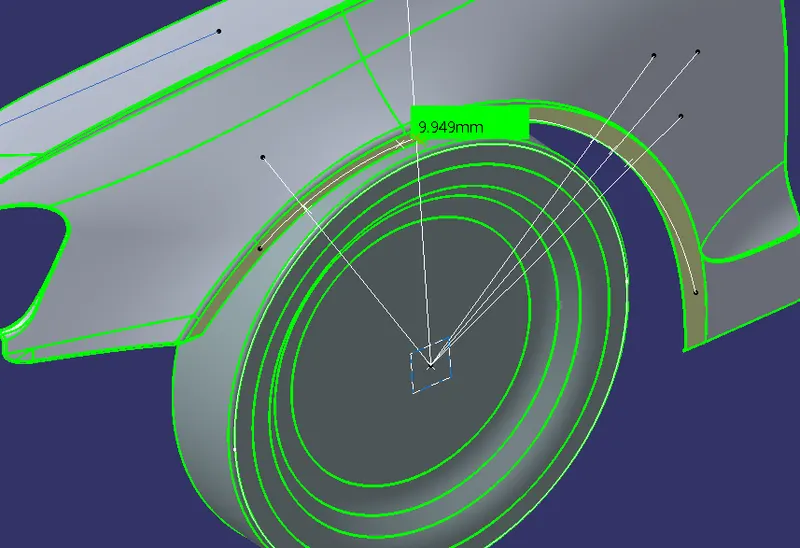
It is around 9.94 somwthing which is fine.
Value at C:
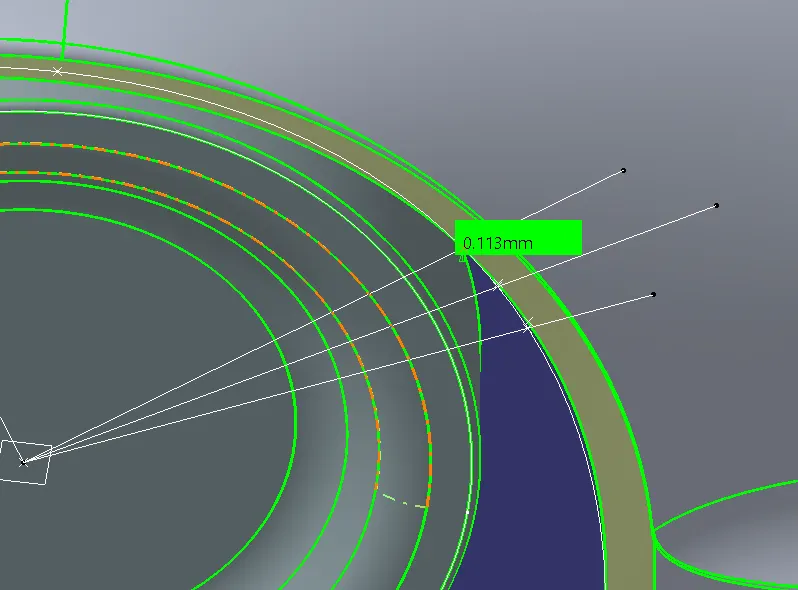
It is negative so here it is not following the standards.
Value at D:
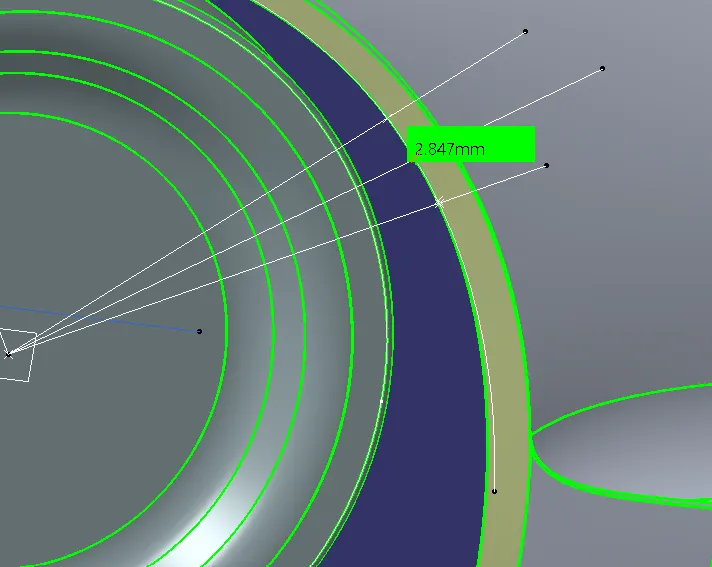
It is 2.847. Which is negative.
Value at E:
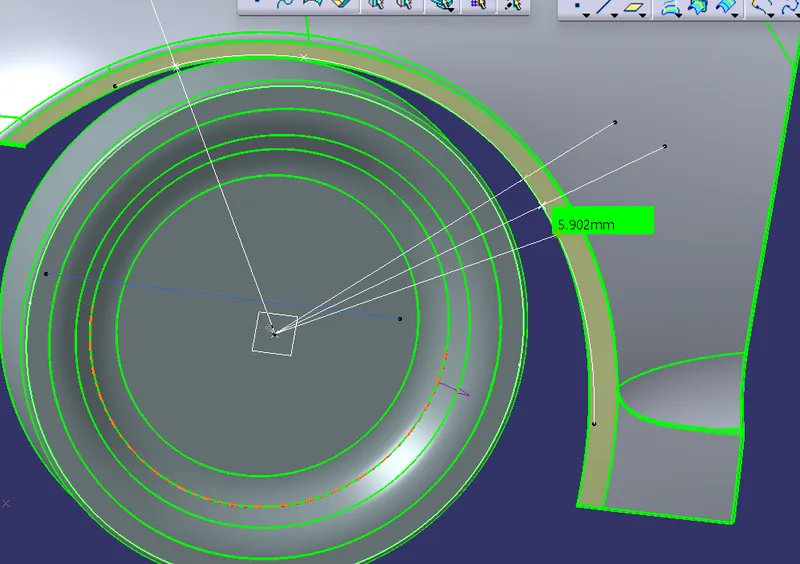
It is around 5. Not following the standard.
"IT will fail by authorities as the vlaues are not falling under the standard range. "