Fender Design - Wheel Arch Challenge
Fender Design - Wheel Arch Challenge
AIM: - To Calculate the Wheel Arc area and prove whether the car will pass the standards or Not.
OBJECTIVE: -
To study the standard and regulations for fender design of wheel arch and analyses the data which is given in the question whether the wheel arc area will pass the standards or not. There is various standard which normally varies by region and their road structure like Japanese AND Europe, here we take European standard.
INTRODUCTION: -
Fender: Fender is a part of an automobile, motorcycle or other vehicle body that frames a wheel well (the fender underside).
Fender is a part of a car which is used to protect the sides of the engine compartment. The fender is situated above the wheel of the car so that it can protect the side parts of the car and other vehicle which is moving nearby since the chips and debris thrown from the wheel in movement could cause damage. The fender also reduces the pedestrian injury when there is a pedestrian vehicle collision and prevent throwing up of debris to nearby vehicles. Usually, the front fender is designed separately rear fender come along with the body structure.
The purpose of a fender is pretty simple. Its purpose is to keep mud, rocks, and other road debris from being thrown around by the tires. In other words, the fender is a housing for the wheels that keeps road debris contained. If there was nothing covering the wheels, all kinds of debris would be kicked up by the rotating tires.
The fender not only protects your car from sustaining damage from road debris but it prevents this debris from being thrown up at other vehicles on the road. This is why vehicles with large, oversized tires are often required by law to install fender flares.
Wheel Arch: It is a curved part of the Fender positioned right above the Wheel. The Wheel Arch is designed such that it protects both the pedestrian and car cabin from mud, water rocks and other road spray. Different countries have different wheel arch regulations in place, and the wheel arch design has to comply with them to be deemed usable in that country. For avoiding design alterations of the same vehicle to meet the different regulations in different countries, the maximum values of the concerned regulation parameters are taken into consideration for design purpose. Wheel arch comes with some standard specifications. When viewed from the front or top side of the vehicle, if the wheel is protruding outside the fender, that would lead to more chipping while driving and compromises pedestrian as well as the vehicle safety. Taking these factors into consideration, the wheel has to be positioned inside the wheel.
There are different regulations in this regard based on different regions.
- Japan Regulation
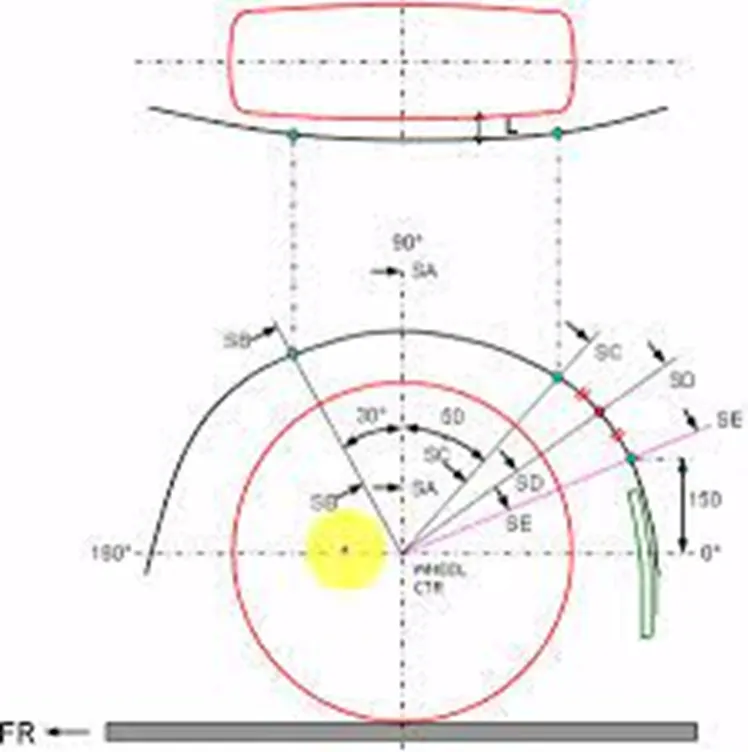
- The clearance ‘L’ for tire, hub, cap and fender is to be measured within area K and create clearance check chart to validate.
- The value of L should be greater than 5mm at all positions.
- Wheel guard requirement: The value of ‘a’ should be more than 5mm at line 30° forward and 50° rearwards from the central vertical axis of the wheel.
- European Regulation
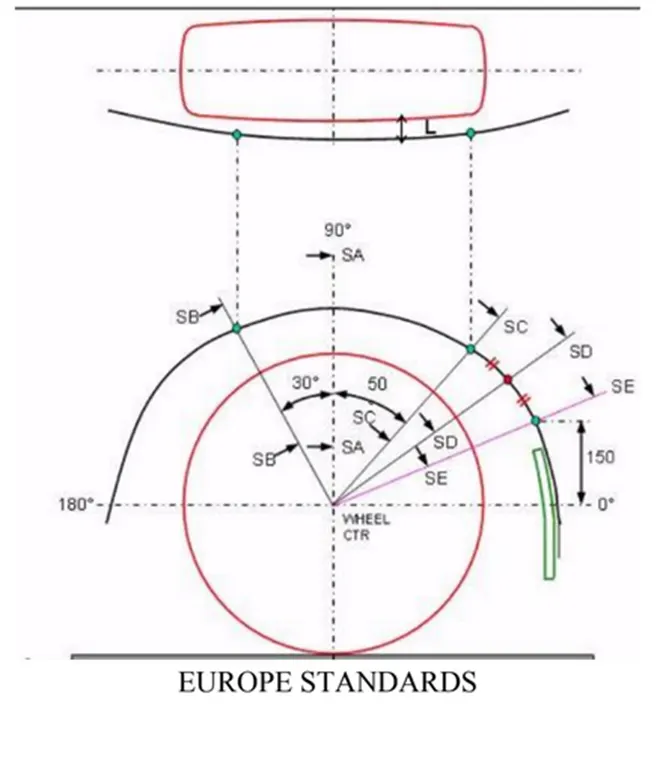
- The Clearance ‘L’ should be measured at sections SA-SA, SB-SB, SC-SC, SD-SD and SE-SE and create clearance check chart to validate.
- At all the five sections the value of L should be greater than 10mm to satisfy the European Regulations.
- Wheel guard requirement: The value of ‘a’ should be more than 5mm at line 30° forward and 50° rearwards from the central vertical axis of the wheel.
- Us Regulation
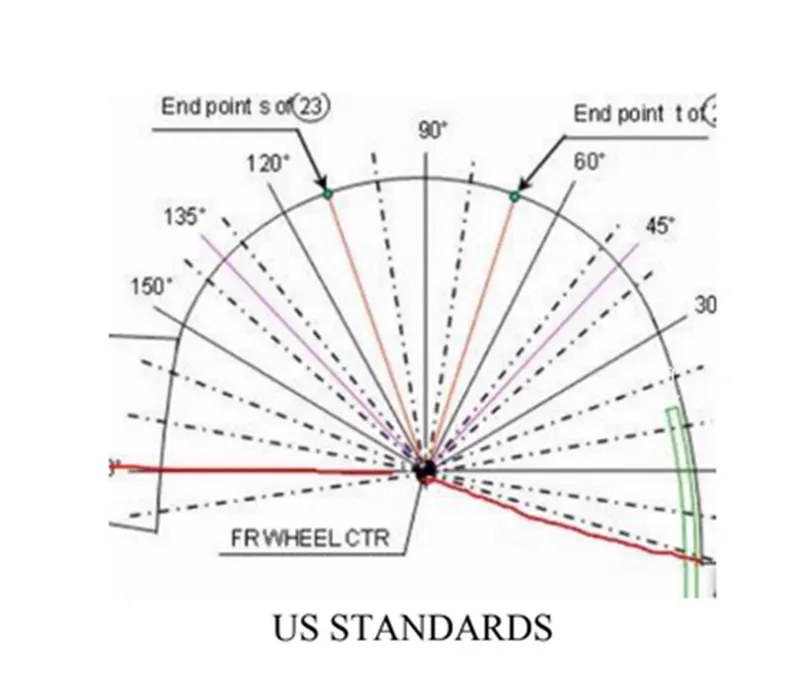
- Clearance ‘L’ is to be checked at all positions from -100° to 100° and create clearance check chart to validate.
- The value of L should be greater than 5mm to satisfy the regulations.
- Wheel guard requirement: The value of ‘a’ should be more than 5mm at line 30° forward and 50° rearwards from the central vertical axis of the wheel.
Calculate the Wheel arch area using European Standard in siemens NX CAD
By using the European regulation, the wheel arc area for the given styling surface will be calculated as below,
- First the lines will be drawn as per the requirements of the European standard and the outer most edge of the fender arc and then the outer most face of the wheel must be measured.
- The projected points will be named as SA, SB, SC, SD, SE and then the values must be measured.
- As per the European standard the value of ‘L’ must be greater than or equal to 10.
- The value lesser than 10mm will result in the failure of design.
- By using this study, the styling team will get some suggestions which will help them to come up with a successful design with the necessary requirements.
Measuring Clearance Value ‘L’ At ‘SA’
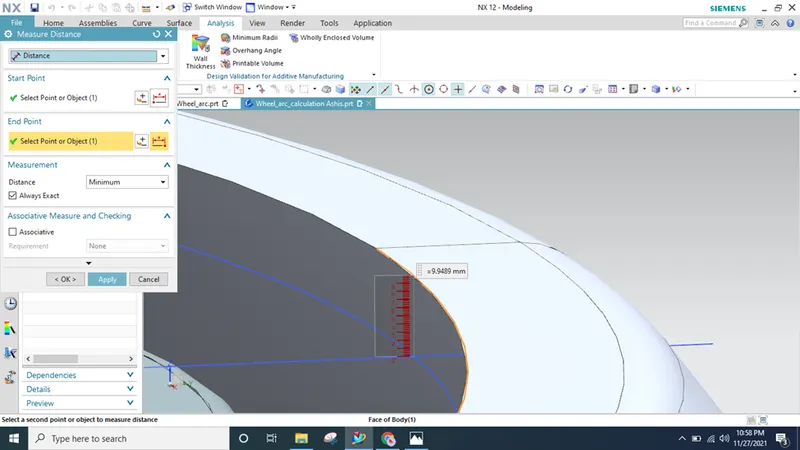
Measuring Clearance Value ‘L’ At ‘SB’
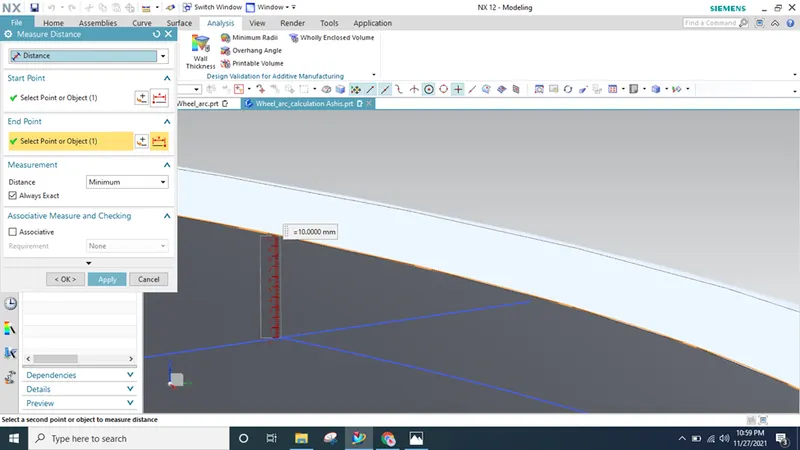
Measuring Clearance Value ‘L’ At ‘SC’
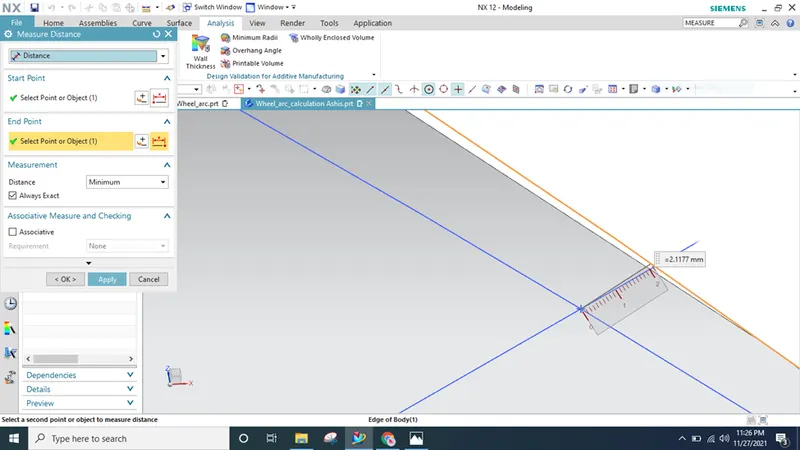
Measuring Clearance Value ‘L’ At ‘SD’
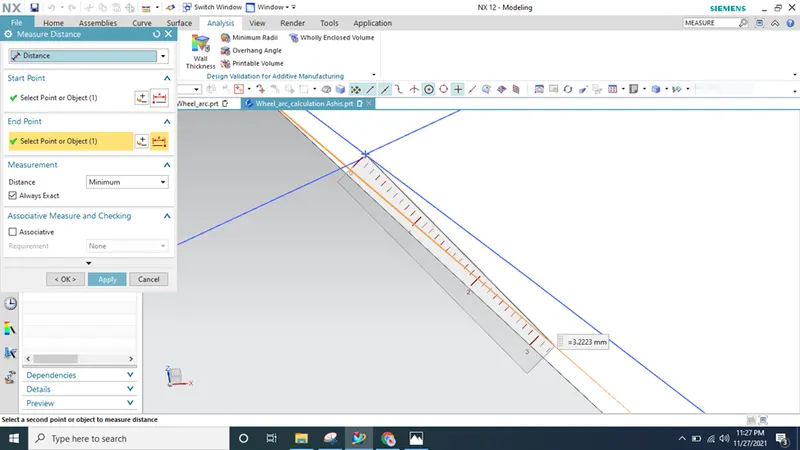
Measuring Clearance Value ‘L’ At ‘SE’
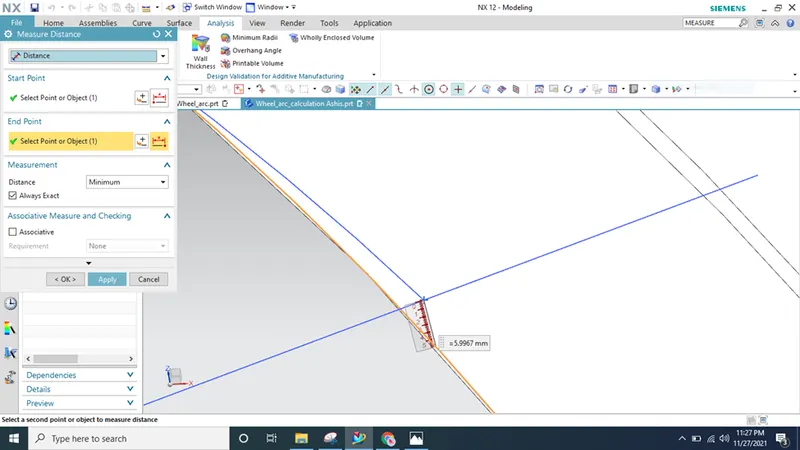
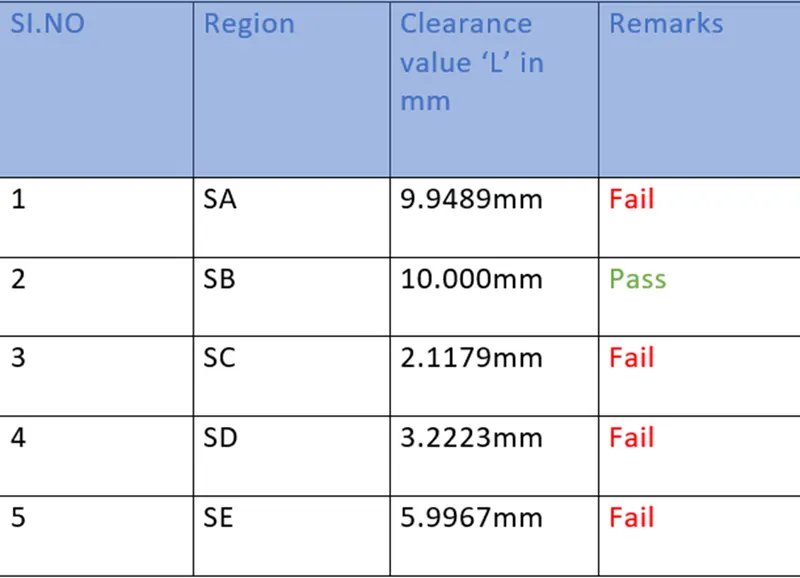
Comparison Table
CONCLUSION: -
Except the section SB all others failed to satisfy the minimum requirement of the clearance value ‘L’ which is 10mm as per European regulations. In addition to that the wheel protrudes outside the fender which was not at all acceptable so the entire design was failed and forwarding the report to the styling team to ensure the wheel arc area will be redesigned as per the requirements necessary.