Fender Design - Wheel Arch Challenge
REPORT ON FENDER WHEEL ARCH DESIGN
OBJECTIVE
- To check wheel arch by using the European standards and prove whether the car will pass the standards or not.
What is Fender?
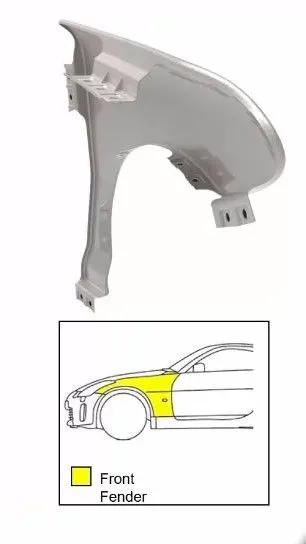
- Fender is the US English term for the part of an automobile (vehicle body) that frames a wheel well (the fender underside).
- Its primary purpose is to prevent sand, mud, rocks, liquids, and other road spray from being thrown into the air by the rotating tire.
- When vehicle is moving, tires pick up stones and others and hurl them in all directions.
- Fenders are basically present to prevent any injuries to pedestrians and contain the motion of these particles.
Fender Wheel Arch:
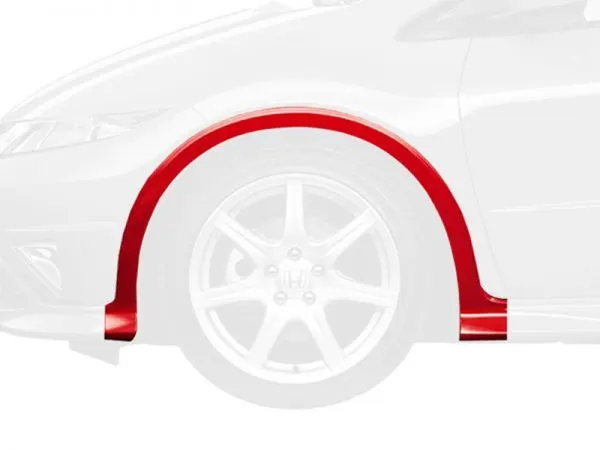
- It is an arch shaped cavity in the body of a vehicle, which houses a wheel.
- It allows the wheel to be accessed and in case of front wheels, it enables them to be steered.
INPUT DESIGN:
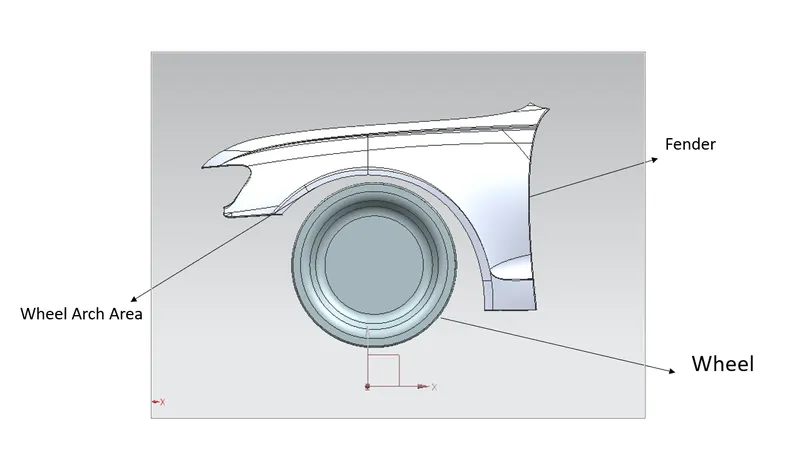
US REGULATION REQUIREMENTS
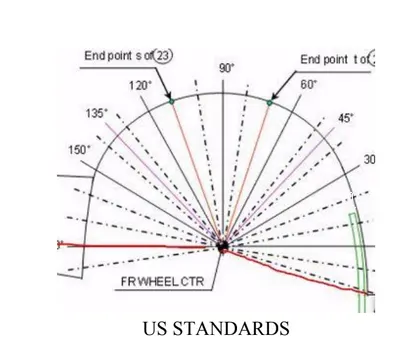
- Make clearance check details on all positions from -100º to 100º & make the clearance check table.
- All values should be greater than 5 mm to satisfy the regulations.
- The value of ‘a’ shall be more than 5 mm at a line 30º forward and 50º rearward from the central vertical axis of axis of wheel.
JAPAN REGULATION REQUIREMENTS
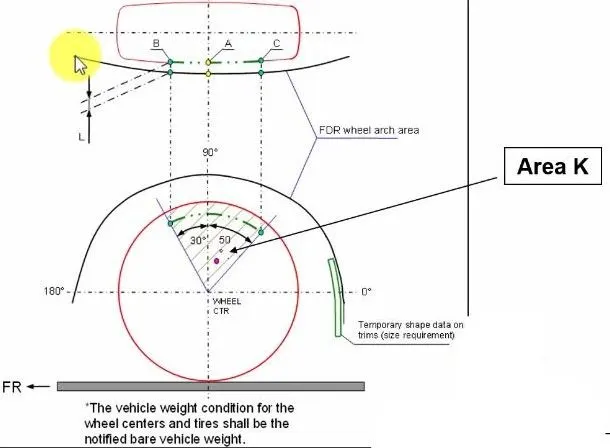
- Measure clearance L of tire, hub, cap & fender in three different positions within area K and produce clearance check chart to validate.
- Clearance must be greater than 5 mm in all the three positions.
- Wheel guard requirement: The value of ‘a’ shall be more than 5 mm at a line 30º forward and 50º rearward from the central vertical axis of axis of wheel.
EUROPEAN REGULATION REQUIREMENTS
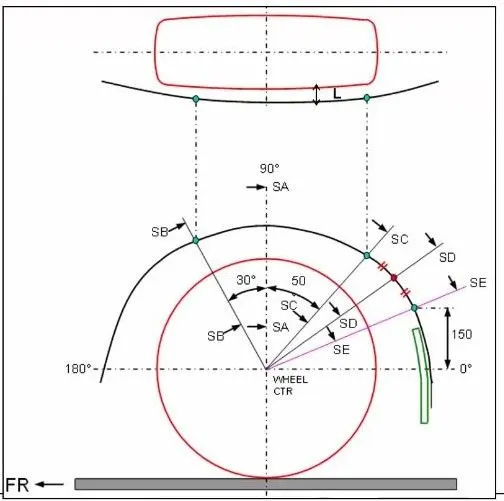
- Measure CL L at sections SA-SA SB-SB SC-SC SD-SD SE-SE and produce CL check chart to validate.
- At all five sections the CL L value should be greater than 10 mm to satisfy the European regulations.
- Wheel guard requirement: The value of ‘a’ shall be more than 5 mm at a line 30º forward and 50º rearward from the central vertical axis of axis of wheel.
PROCESS
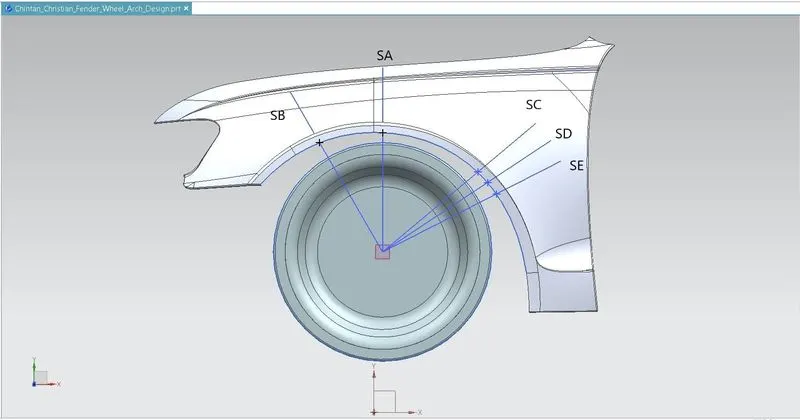
- In this challenge, wheel arch is validated by European Regulation Requirements.
- First, create a plane on outer face of wheel.
- Then, create sketch on this plane with 5 lines - SA, SB, SC, SD, SE as shown in figure.
- SA line is drawn at 90ºangle, SB line is drawn at 30º angle as well as SC line is drawn at 50º angle according to image.
- Now, create SE line at vertical distance of 150 mm from center line of wheel and use derived lines option to create a bisecting line SD between SC & SE.
- Then create intersection points on these 5 lines as shown in figure and project them on fender wheel arch face. Now one can measure clearance value ‘L’ using measure distance from analysis menu.
- In European regulations, clearance value should be equal to or greater than 10 mm.
OBSERVATIONS
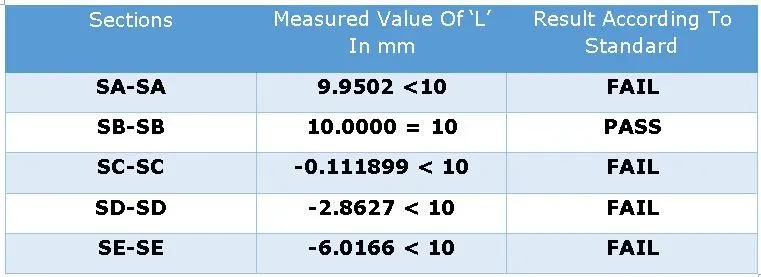
- Measure clearance distance ‘L’ at SA:
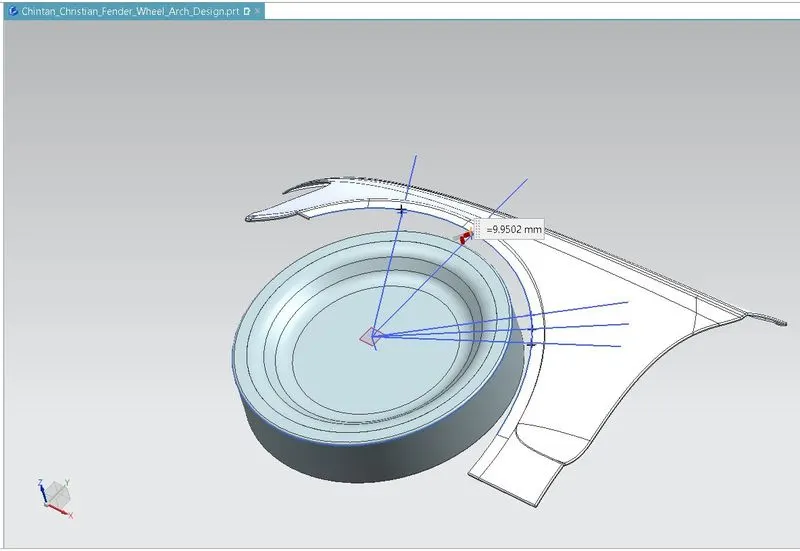
L = 9.9502 mm
- Measure clearance distance ‘L’ at SB:
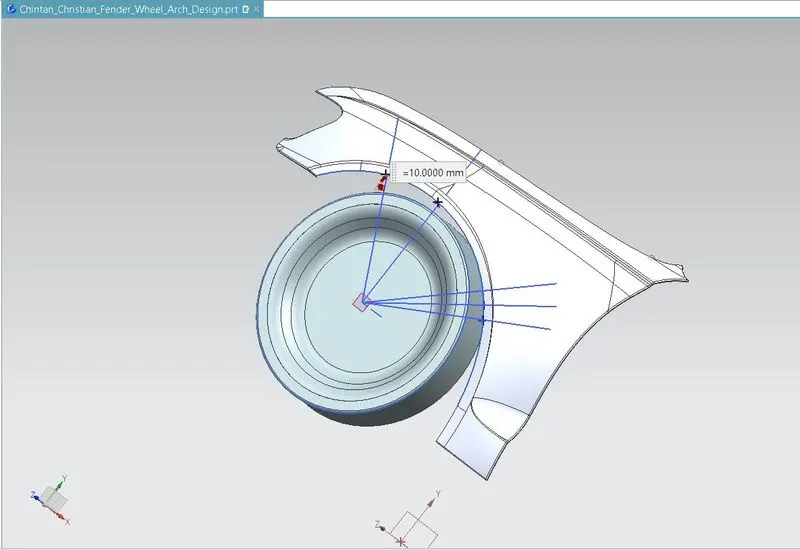
L = 10.0000 mm
- Measure clearance distance ‘L’ at SC:
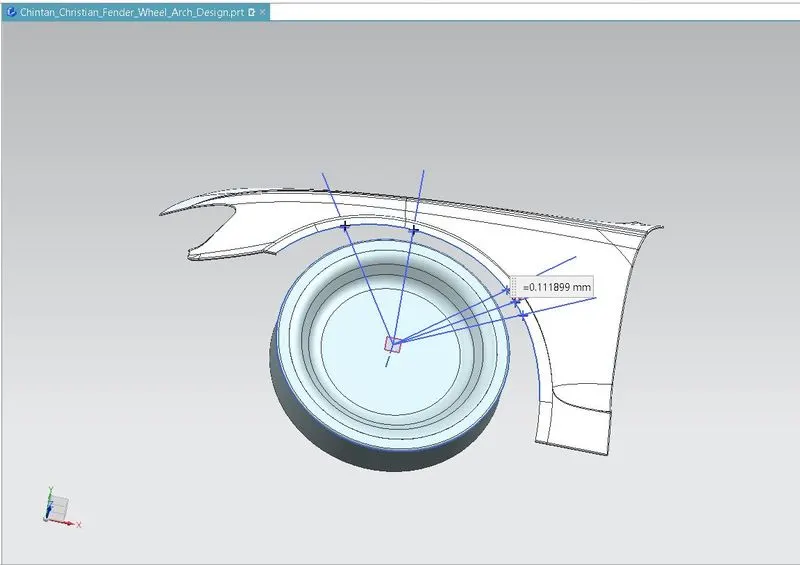
L = - 0.111899 mm
- Measure clearance distance ‘L’ at SD:
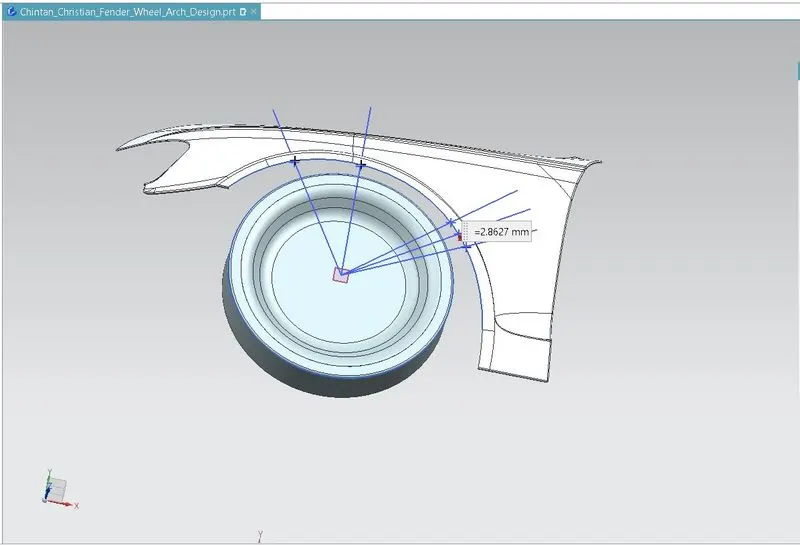
L = -2.8627 mm
- Measure clearance distance ‘L’ at SE:
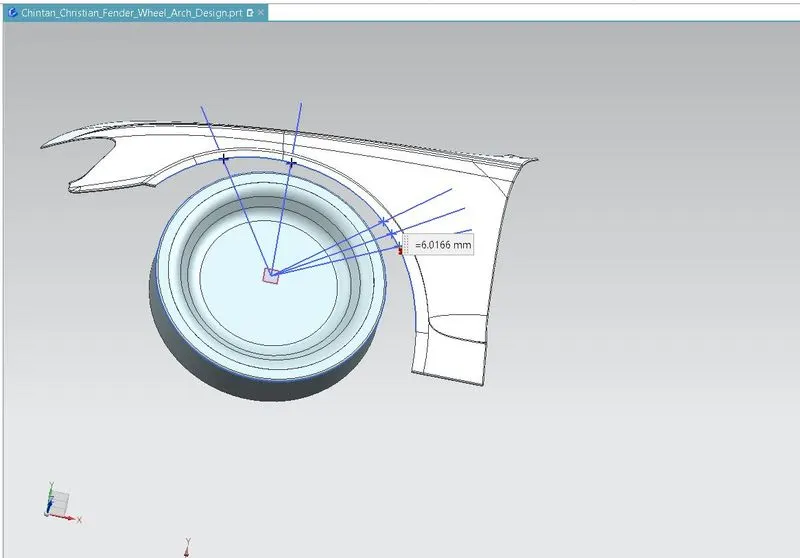
L = -6.0166 mm
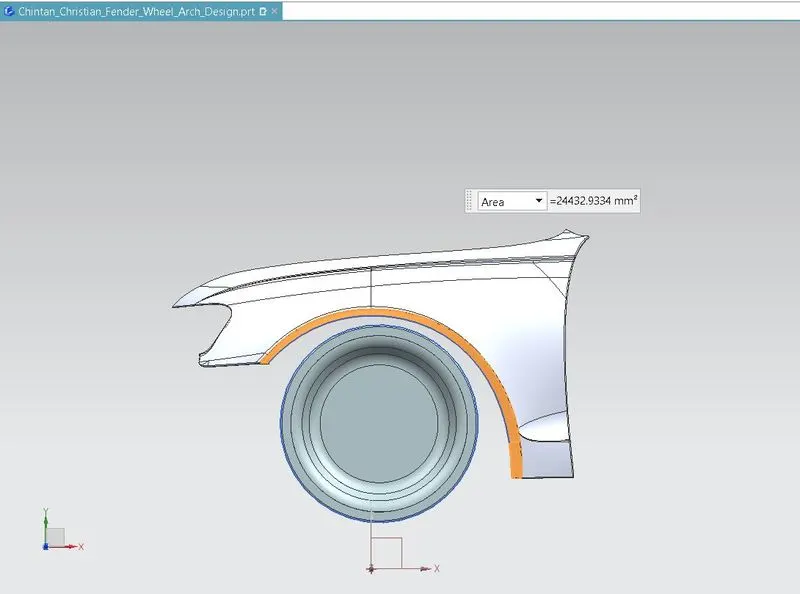
AREA OF WHEEL ARCH
CONCLUSION
- From the table, we can conclude that the given fender doesn’t satisfy the European Standards for the wheel arch area at sections SA, SC, SD & SE.
SUGGESTION FOR STYLING TEAM
- Styling team should modify the styling surface of the fender by increasing curvature at sections SA, SC, SD & SE in outward direction so that the clearance value ‘L’ will be equal to or greater than 10 mm at these sections which will satisfy the European Standards.