Fender Design - Wheel Arch Challenge
Fender :
The fender is a component located on the sides of a vehicle, specifically designed to enclose the engine compartment. Its primary function is to provide protection against sand, small stones, and mud particles that may enter the engine area when the wheels are rotating. Additionally, fenders play a crucial role in preventing injuries to pedestrians. There are two main types of fenders: the half bumper type and the full bumper type, differing primarily in size. The choice between these types depends on factors such as the usage of raw materials and cost-effectiveness, with the half bumper type being more economical.
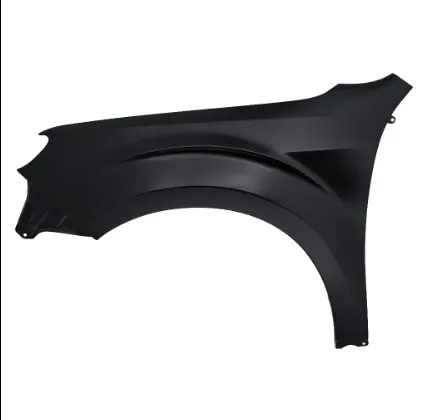
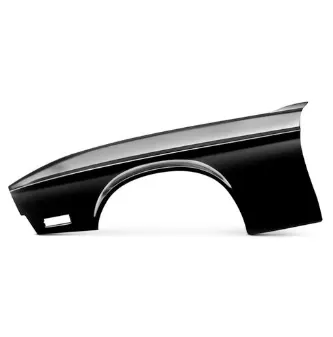
Half-Bumper Fender Full-Bumper Fender
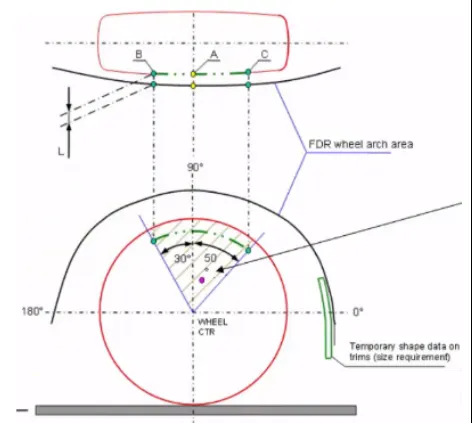
Japan regulation:
According to the regulation, it is required to draw two lines originating from the wheel center point and extending towards a vertical line on the wheel. The left line should have a 30-degree angle, while the right line should have a 50-degree angle. These lines are then projected onto the wheel arch, and the resulting points must have a minimum distance of 5mm from the surface.
European Regulation:
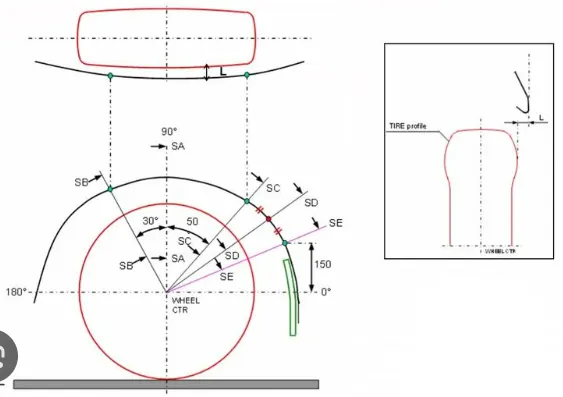
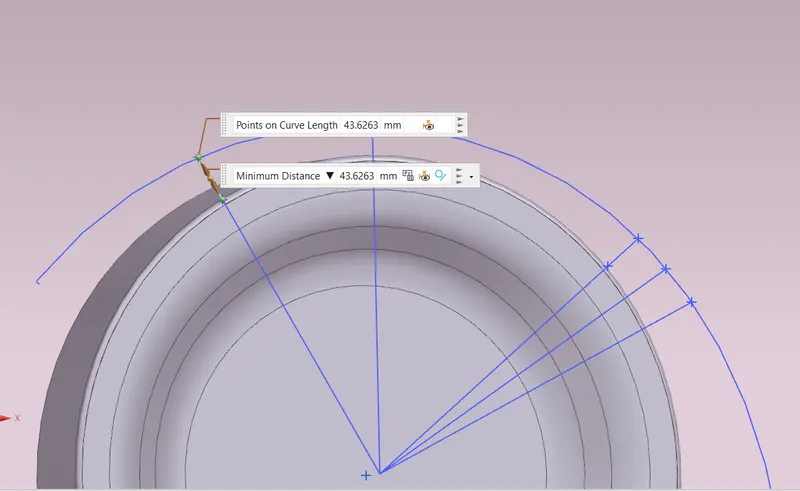
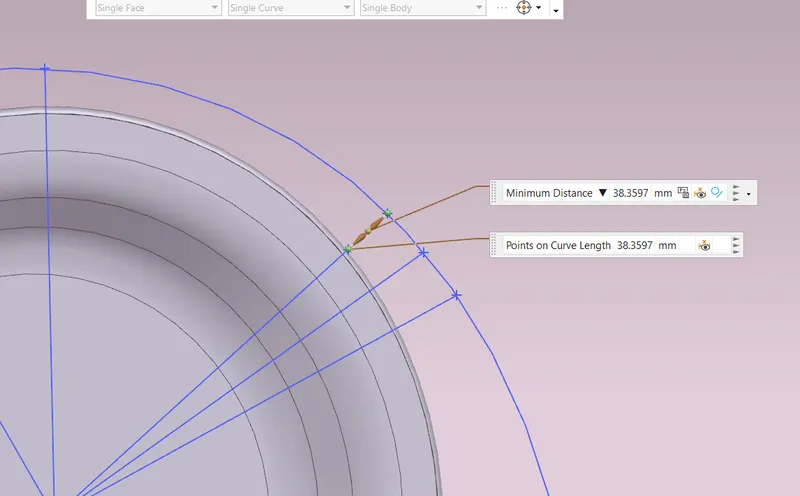
According to European regulations, similar to those in Japan, there is a requirement to draw two lines originating from the wheel center point and intersecting with a vertical line on the wheel. The left line should have an angle of 30 degrees, while the right line should have an angle of 50 degrees. These points, when projected onto the wheel arch, must be at least 10mm or more. Additionally, it is necessary to measure a point 150mm away from the zero or horizontal line of the wheel, and there should also be a midpoint between this 150mm point and the 50-degree point. Furthermore, the distance "a" between the outermost layer of the fender and wheel along SB and SC should be greater than 5mm.
USA Regulation:
Here in USA we need to take points for every 10-degree from.-100 to 100 degree & all values should be greater than 5mm to satisfy the regulation. Furthermore, the distance "a" between the outermost layer of the fender and wheel along SB and SC should be greater than 5mm.
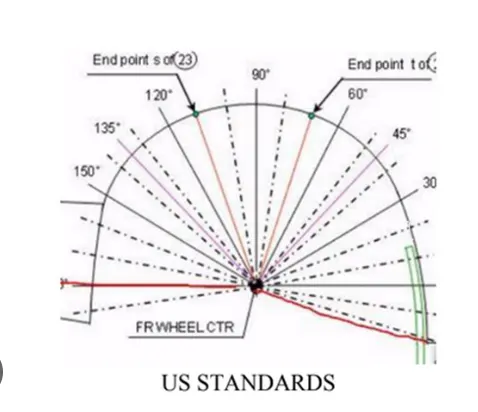
Example : CONSIDERING EUROPEAN REGULATION
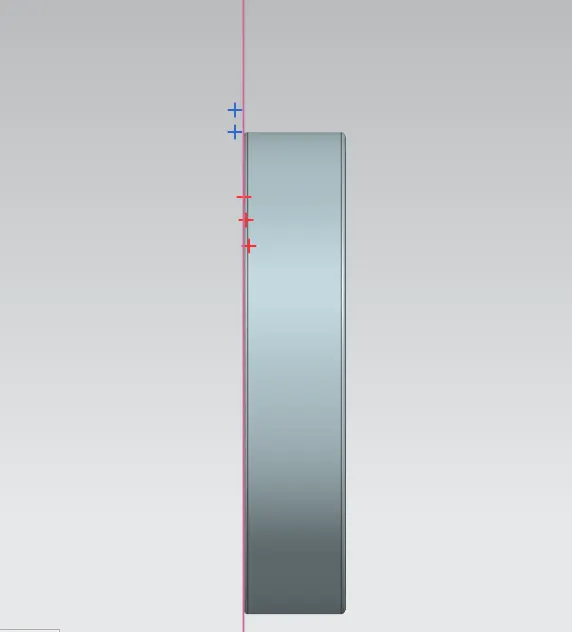
Draw a plane with the outer-most surface of tyres, then sketch the lines and points as per Euopean guidelines. Project the points on the fender body & Use Measure tool to check the distance between the points and the created plane.
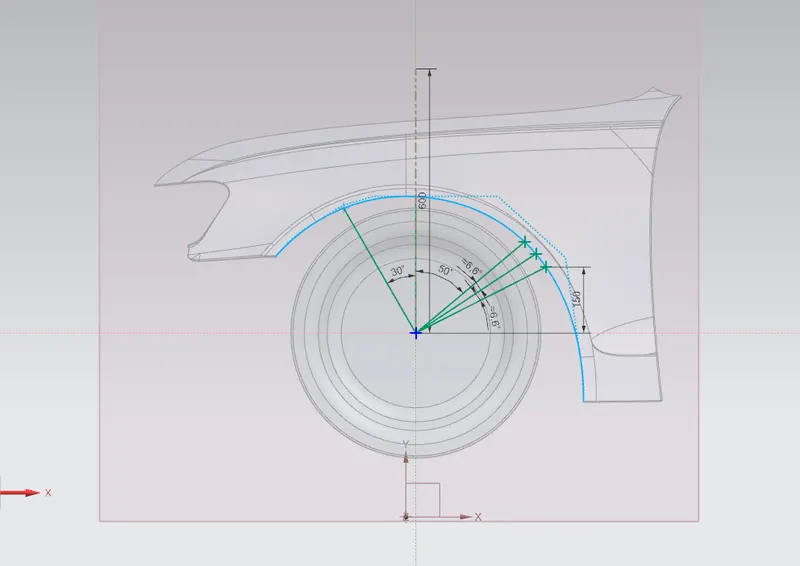
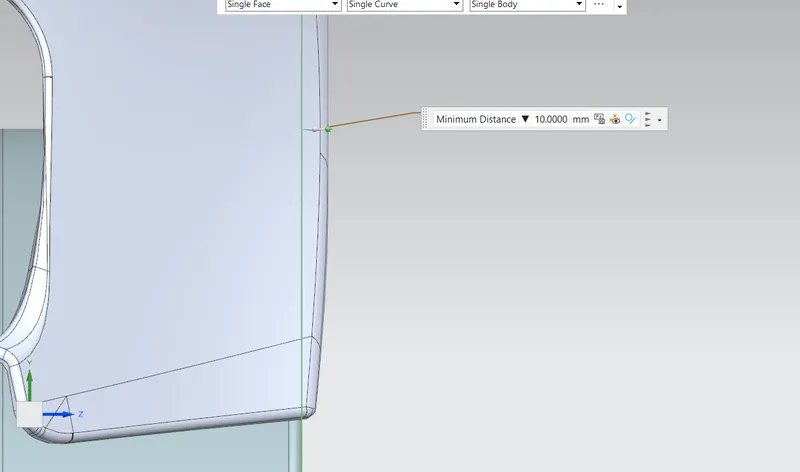
SB :-
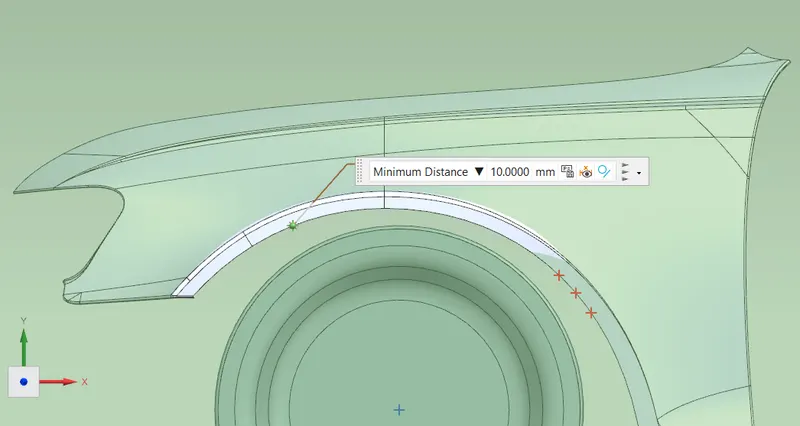
SA :-
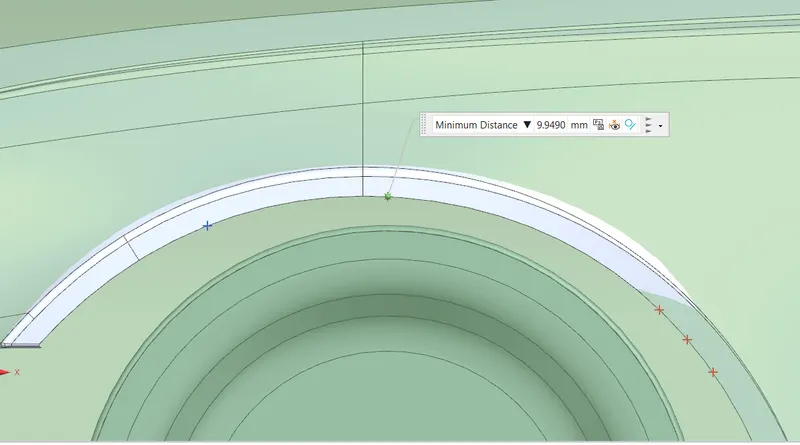
SC :-
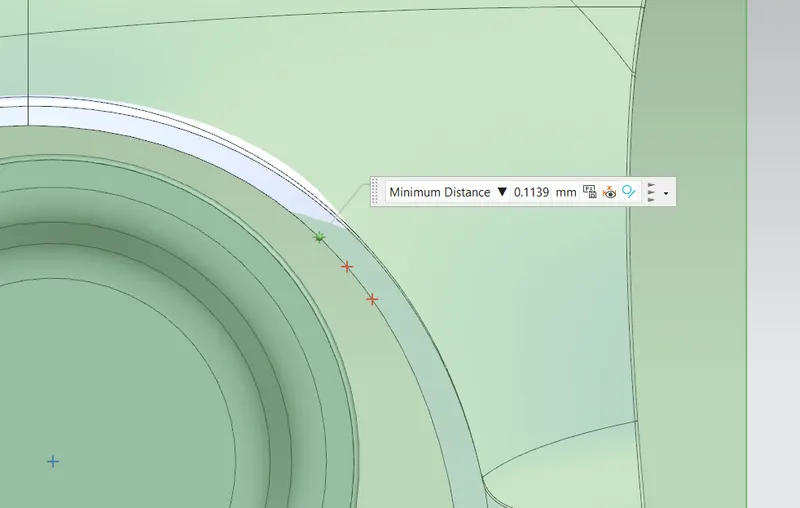
SD :-
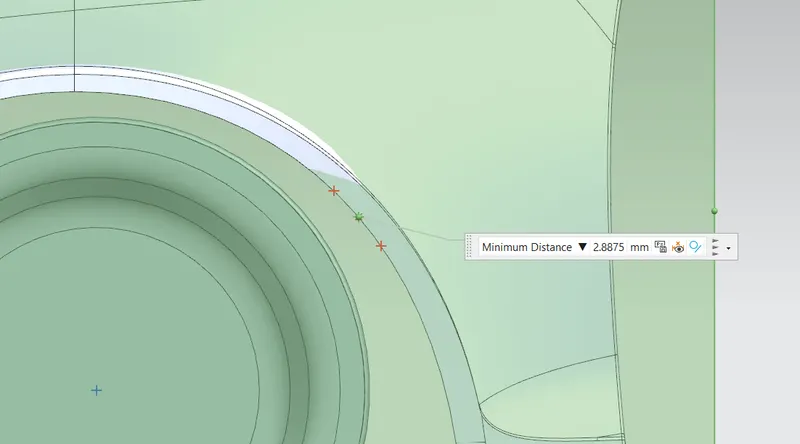
SE :-
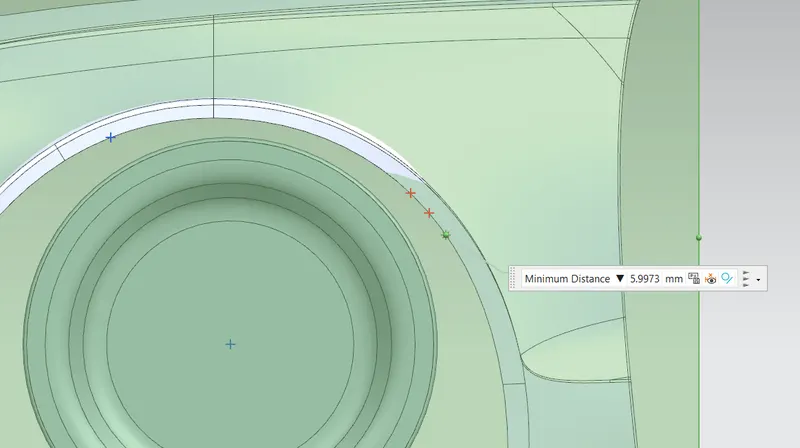
The Below Fig. shows that the red points are inward w.r.t tyre outermost face. So, the distance values will be negative.
| S. NO. | LINE POSITION | DISTANCE (L)(MM) | STATUS |
| 1 | SB | 10.0000 | PASS |
| 2 | SA | 9.9490 | FAIL |
| 3 | SC | -0.1139 | FAIL |
| 4 | SD | -2.8875 | FAIL |
| 5 | SE | -5.9973 | FAIL |
"a" for SB-30-degree is greater than 5mm
"a" for SC-50-degree is greater than 5mm
Conclusion :
From above analysis we cam to conclusion that only SB & "a" values are pass. SA, SC, SD & SE values need to be changed. For that to happen Fender Design needs to modified.