Fender Design - Wheel Arch Challenge
Objective:
To find whether the given fender with wheel arch area is eligible to meet the European regulations of fender design criteria or not.
Introduction:
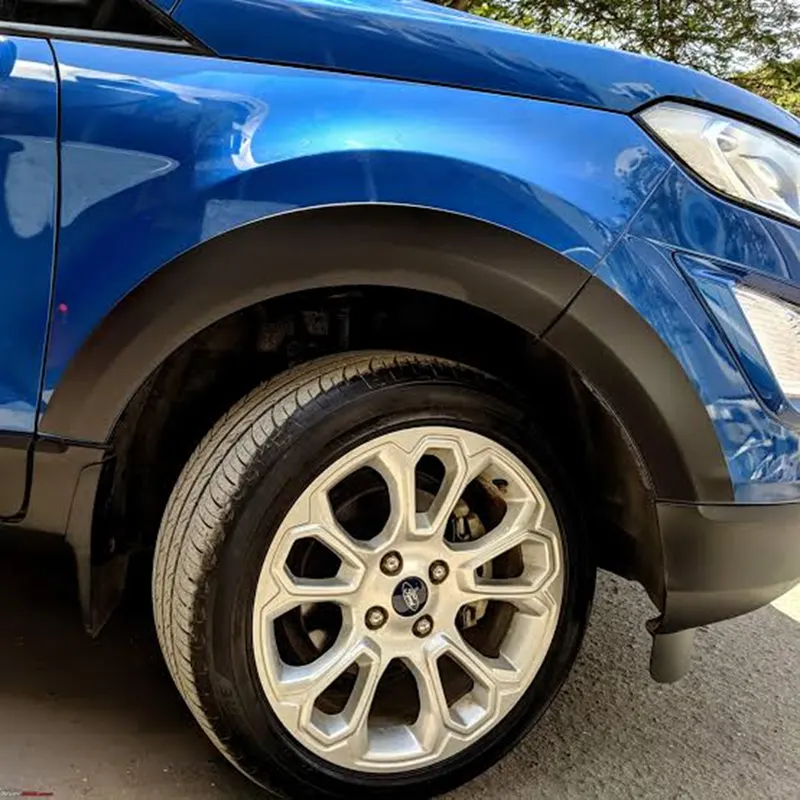
- Wheel arch is a semi-circular part of the fender positioned above the wheel of the vehicle.
- The design of wheel arch of the fender should be such that the wheel is positioned inside it, so the passengers and pedestrians are protected from stone chips.
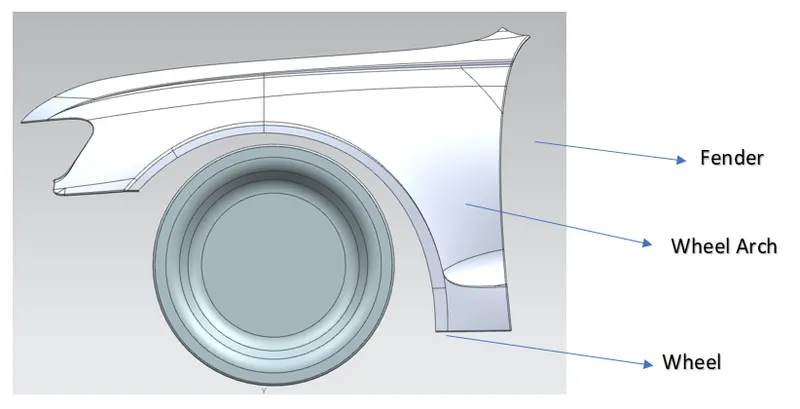
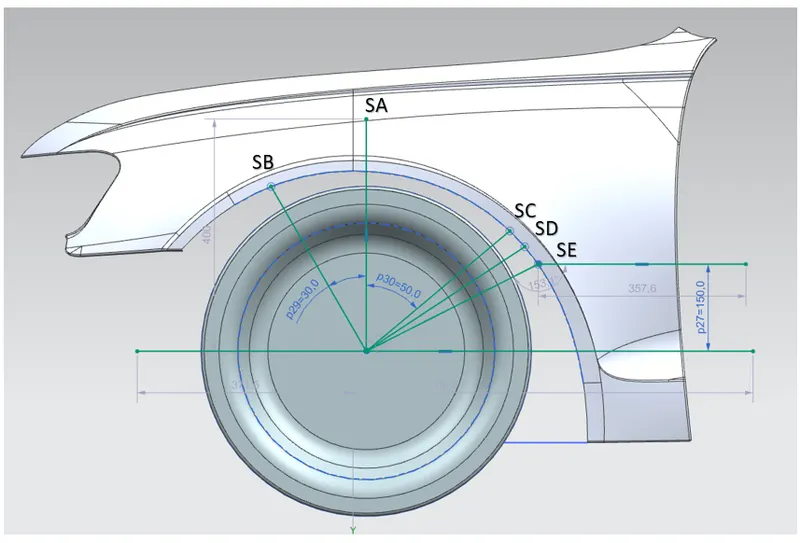
Given fender part
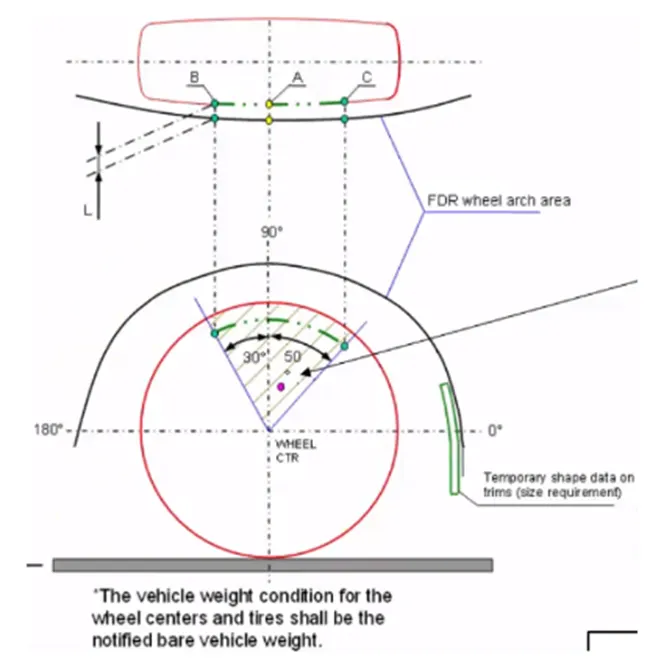
Different regulations requirement for fender wheel arch area:
- Japan regulation requirement
- Measure clearance L of tyre, hub, cap and fender in three different positions within area K and produce clearance check chart to validate.
- Clearance must be greater than 5 mm in all the three positions.
- Wheel guard requirement: The value of 'a' shall be more than 5mm at a line 30 degree angle forward and 50 degree angle rearward from central vertical axis of axis of the wheel.
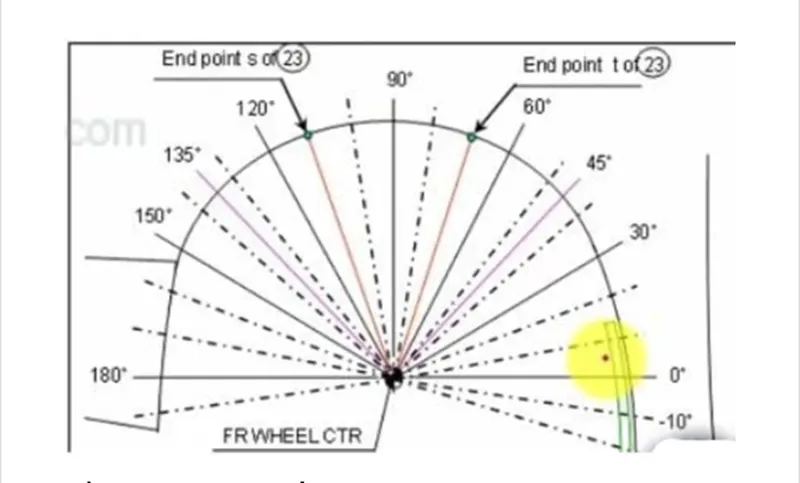
- US regulation requirement
- Make clearance check details on all positions from -100 degree to 100 degree and make the clearance check table.
- All values should be greater than 5 mm to satisfy the regulations.
- The value of 'a' shall be more than 5 mm at a line 30 degree angle forward and 50 degree angle rearward from the central vertical axis of axis of the wheel.
- European regulation requirement
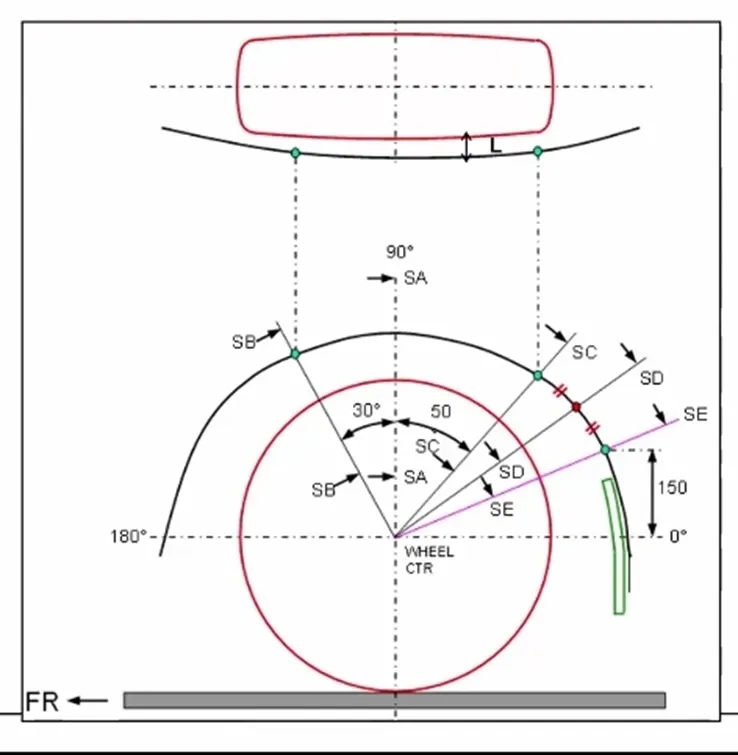
- Measure CL L at sections SA-SA SB-SB SC-SC SD-SD SE-SE and produce CL check chart to validate.
- At all five sections the CL ‘L' value should be Greater than 10mm to satisfy the European Regulations.
- Wheel Guard Requirement :- The value of 'a' shall be more than 5mm at a line 30 degree angle forward and 50 degree angle rearward from the central vertical axis of axis of the wheel.
Procedure to measure the clearance between tyre and fender i.e ‘L’
- First, we have to define the wheel centre and sketch a perpendicular line in upward direction, this will be SA.
- To find point B we need to draw a line with an angle 30 degree forward and that point will be SB.
- Next, draw a line making an angle 50 rearward and that point will be SC.
- Now, offset the horizontal centre line to 150 mm upwards. We get SE point by joining the wheel centre and point at which wheel arch outer curve meets with the offset line.
- At last identify the centre point between SC and SE, that will be our SD.
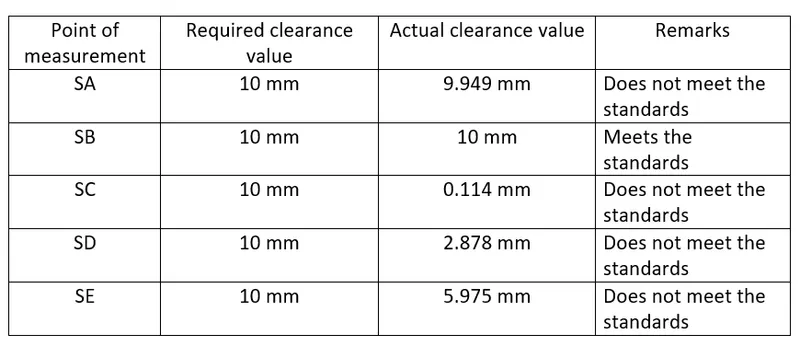
The value of clearance at all the five sections should be above 10 mm to satisfy European standards.
Following are the results after measuring the distance:
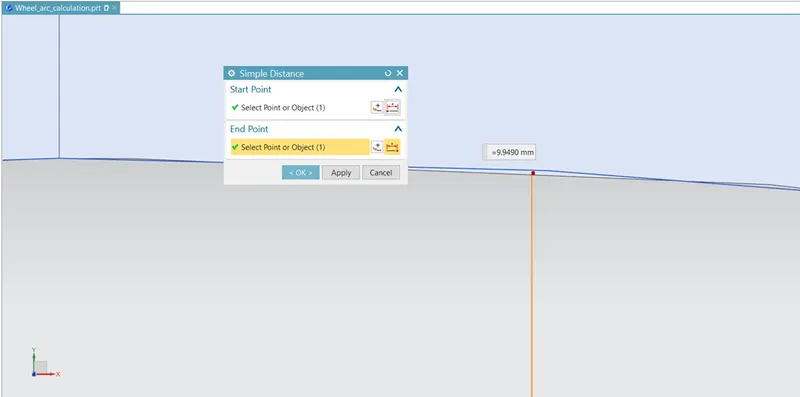
- Measurement of point = SA
Required clearance value = 10 mm
Actual clearance value = 9.949 mm (Does not meet the standards)
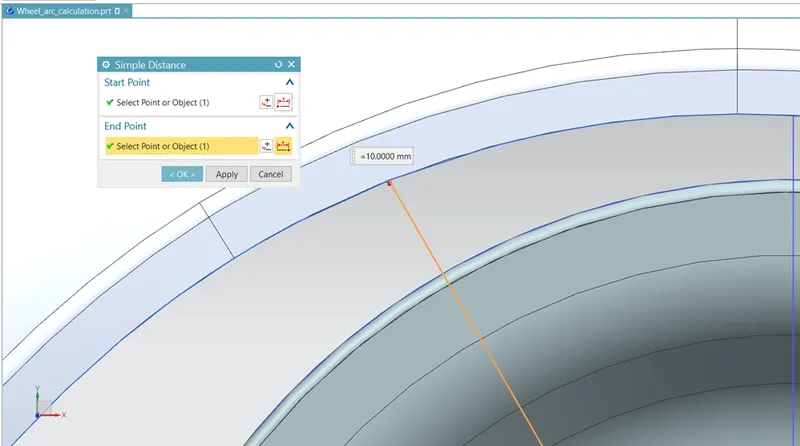
- Measurement of point = SB
Required clearance value = 10 mm
Actual clearance value = 10 mm (Meets the standards)
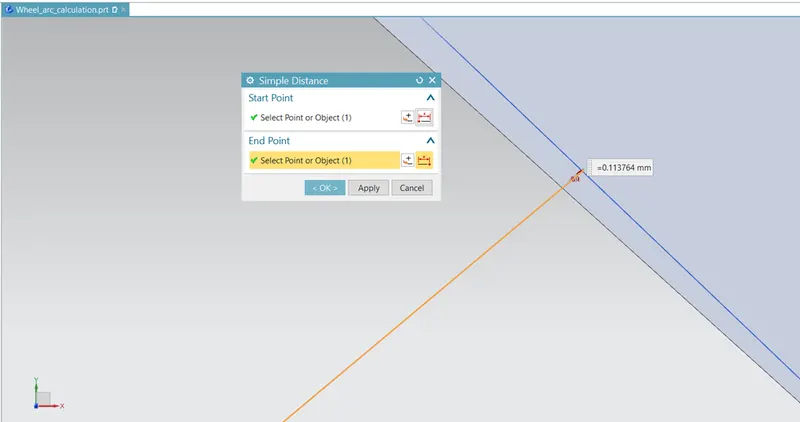
- Measurement of point = SC
Required clearance value = 10 mm
Actual clearance value = 0.114 mm (Does not meet the standards)
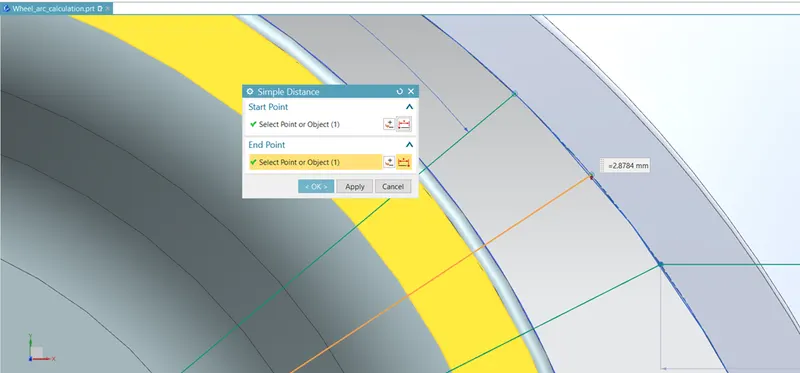
- Measurement of point = SD
Required clearance value = 10 mm
Actual clearance value = 2.878 mm (Does not meet the standards)
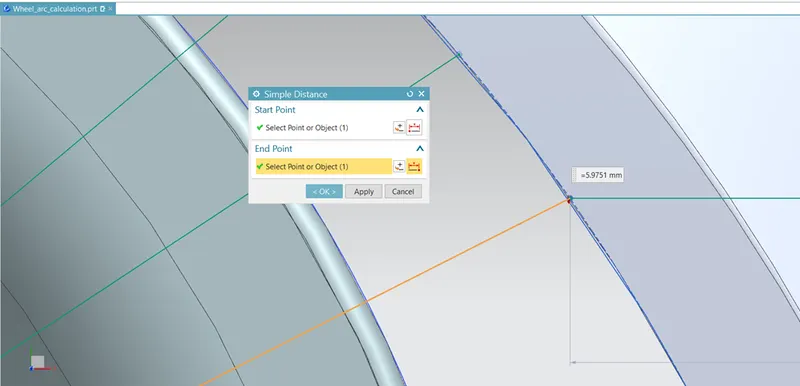
- Measurement of point = SE
Required clearance value = 10 mm
Actual clearance value = 5.975 mm (Does not meet the standards)
Result:
Conclusion
- As per European regulation requirement the clearance at a given point should be greater than or equal to 10 mm.
- In the above case there is only one point that satisfies the requirement and all other points are below 10 mm.
- Hence the car will not pass the standards, the fender needs to be modified.