Fender Design - Wheel Arch
AIM:
Calculate the wheel arch gap at required points and check whether the car passes the European standard
FENDER
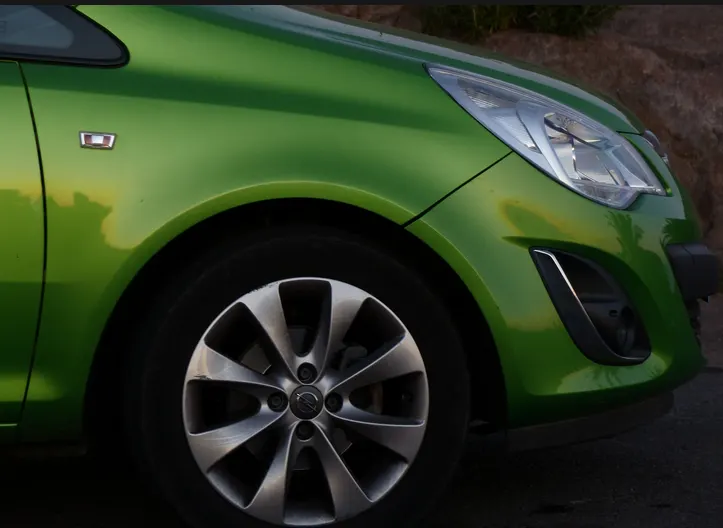
The fender is also known as a car wing or car quarter panel is a protective panel that is typically made of metal or plastic and is located on the exterior of a vehicle near the wheel wells . It is designed to protect the vehicle wheels tires and other components from bebris road spray and minor impacts that can occur while driving.
Car fenders also serve an aesthetic purpose by providing a streamlined and finished appearance to the vehicle's body.In the event of a collision or accident, the fender can absorb and distribute impact forces,helping to minumize damade to the rest of the vehicle.
Fenders can come in various shapes and styles, depending on the make and models of the vehicle and may be painted to match the vehicle's colour .Some fender may have a smooth and flowing design while other may be more angular and pronounced depending on the intended use and style of the vehicle
Car fenders play an important role in protecting and enhancing the appearance of a vehicle.They are an essential component of the body stucture, providing both functional and aesthetic benefits to drivers and passengers alike .

TYPES OF FENDER
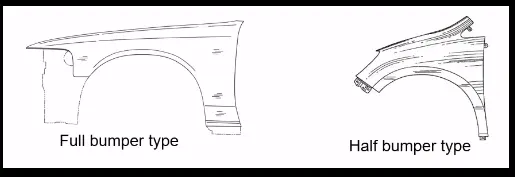
A "full bumper fender" is not a common type of fender for cars. It seems like you may be referring to a complete bumper assembly, which includes both the bumper cover and the fender as a single unit. In some cases, especially in modern cars, the bumper cover and fender are integrated as a single piece, forming a seamless look.
In such cases, the fender is typically made of sheet metal or plastic and is designed to protect the wheel well and other components of the vehicle's front or rear end from damage in case of an impact. The bumper cover, on the other hand, is the visible outer layer of the bumper assembly and is often made of plastic or composite materials. It is designed to absorb impact energy and protect the vehicle's body and occupants during collisions.
A full bumper fender assembly may be available as a replacement part in case of damage or for customization purposes, and it typically includes both the fender and bumper cover as a single unit that can be installed on the vehicle as a whole. However, it's important to note that the availability and design of bumper fender assemblies can vary depending on the make, model, and year of the vehicle. It's always recommended to consult with a qualified mechanic or refer to the manufacturer's specifications for accurate information on specific vehicle parts.
Half bumper type is the modern design where less material consumption is observed, so productivity increases by reducing the size of the blank and thus providing more performance. The maintenance also relatively low compared to the full bumper type.
We are changed from full bumper type to half bumper type to reduce the scrap rate per blank. In the full bumper, we can only produce one Fender per blank, whereas as a half bumper type we can produce 2 fenders per blank.
There are several types of fenders for cars, including:
-
Standard Fenders: These are the most common type of fenders found on cars. They are typically made of sheet metal and are designed to protect the wheels and undercarriage of the car from debris.
-
Flared Fenders: Flared fenders extend outwards from the body of the car and provide extra clearance for larger wheels and tires.
-
Widebody Fenders: Widebody fenders are similar to flared fenders but are much larger and extend further out from the body of the car. They are typically found on high-performance sports cars and are designed to accommodate wider tires and provide better handling.
-
Lip Fenders: Lip fenders are small, curved fenders that attach to the front and rear of the car. They are designed to reduce drag and improve the aerodynamics of the vehicle.
-
Off-Road Fenders: Off-road fenders are typically found on trucks and SUVs and are designed to protect the vehicle from rocks and other debris when driving off-road.
-
Fender Liners: Fender liners are not technically fenders, but they are an important part of the fender system. They are typically made of plastic and are designed to protect the inside of the fender from dirt and debris.
FENDER WHEEL ARCH REGULATION:
Japan Regulation
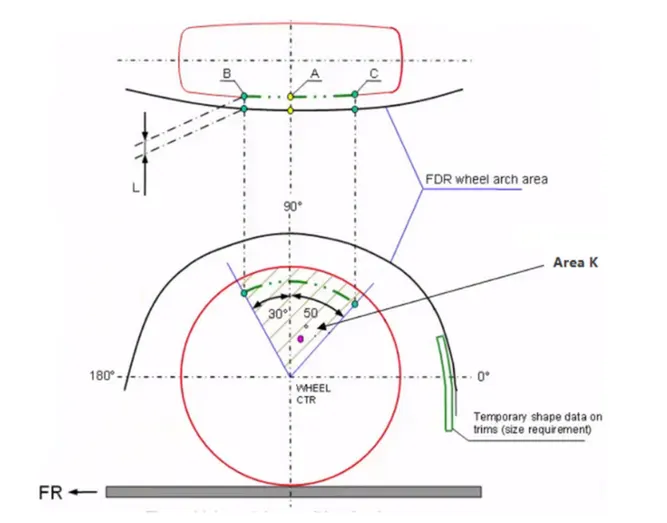
- The clearance L for tyre, hub, cap and fender is to be measured inside area K and validated by creating a clearance check chart.
- At all times the value of L should be more than 5mm
- The value of A must be more than 5mm at line 30 deg anti clockwise direction and 50 deg counterclockwise from the wheel's centre vertical axis.
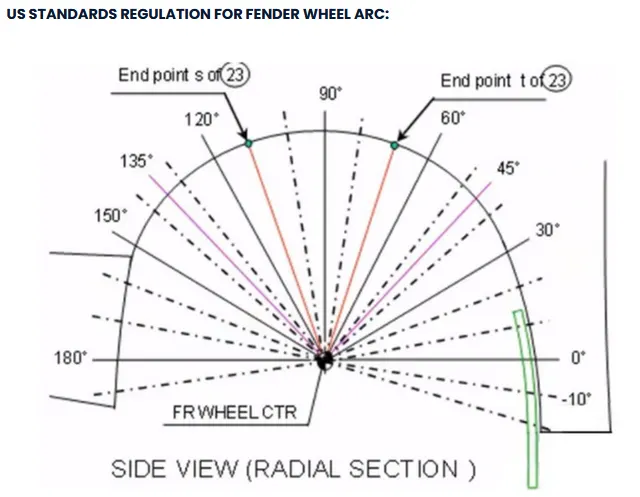
- Create the clearrance chech table and details for all position shown in fig
- To satisfy the regulation all values muct be more than 5mm
- The value of a must be greater than 5mm along a line 30deg ahead and 50deg back from the central vertical axis of the axis
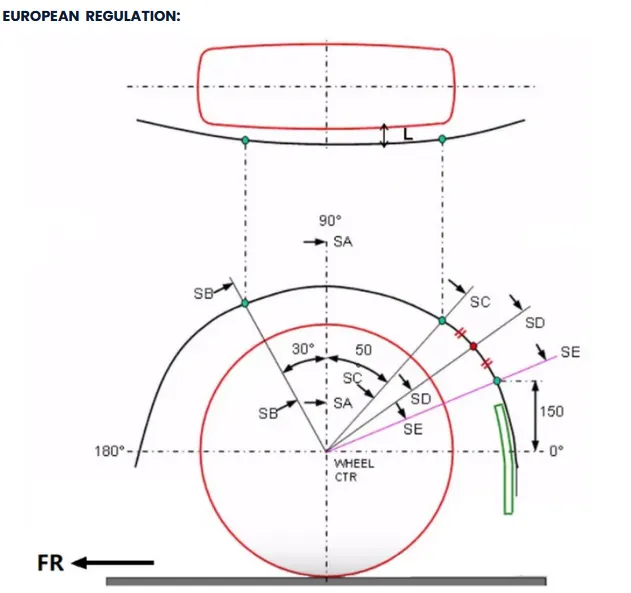
Measure Clearance L at section SA-SA-SB-SB-SC-SC-SD-SD-SE-SE and produce Clearance check chart to validate
At all five section the clearance L value should be greater than 10mm to satisfy the European regulation wheel guard requirement the value of the A shall be more than 5mm at a line 30 deg forward and 50 deg rearward grom the central veticalaxis of axis of wheel
PROCEDURE:
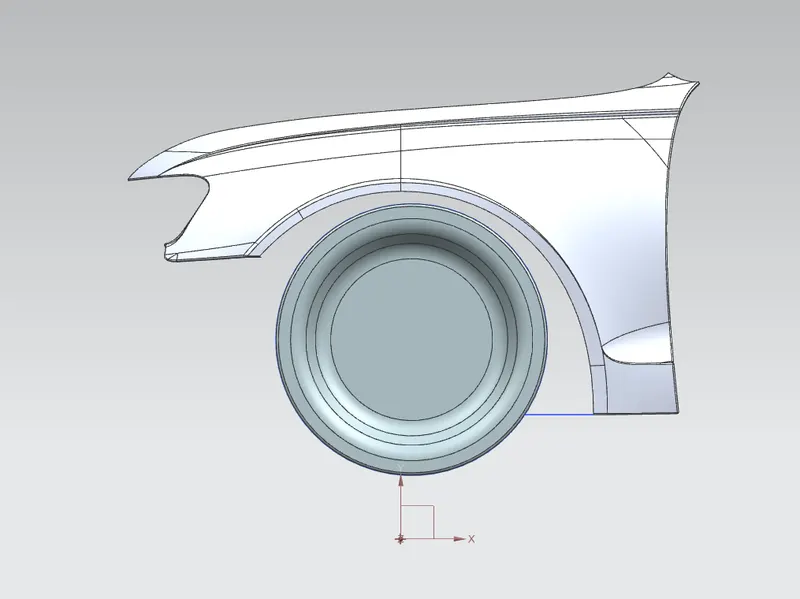
- Open the given file in NX
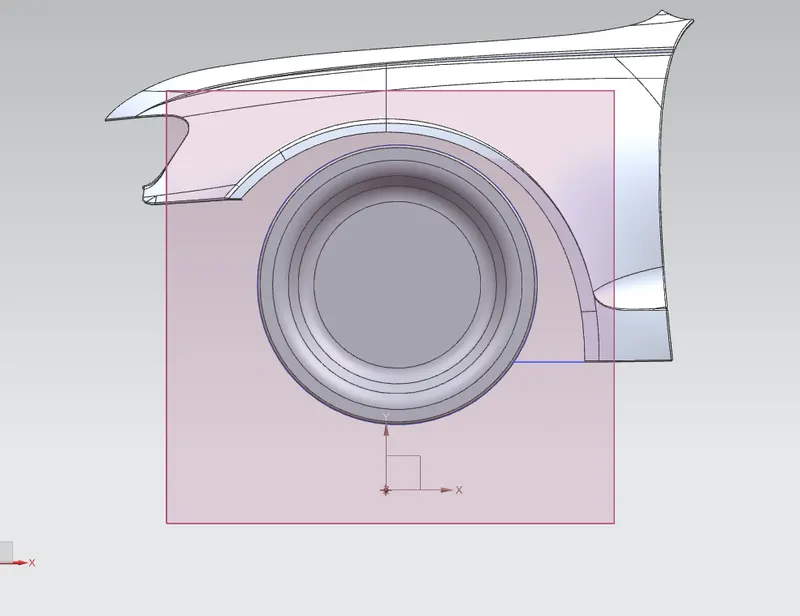
- Now make a datum plane and XY plane and to the towarks the wheel
- Then go to sketch command and position the and the that plane
- Now go to project curve and project the wheel last curve and project the wheel arch also.
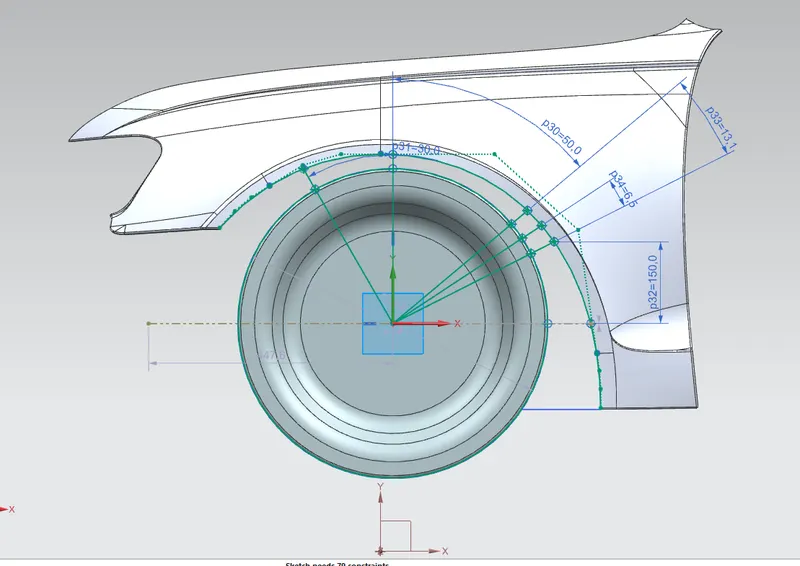
- Then the centre line off the circle in Y and X axis
- Now make a line 30 deg line left side of the centre vertical line shown in fig
- Like that draw a 50 deg line in right side
- Now draw a line in right the distance between the line is 150 mm from 0 deg centre line
- Measure the angle between the 50 deg line and now drawed in and draw a new between two line at centre
- Now create the points as shown in below fig
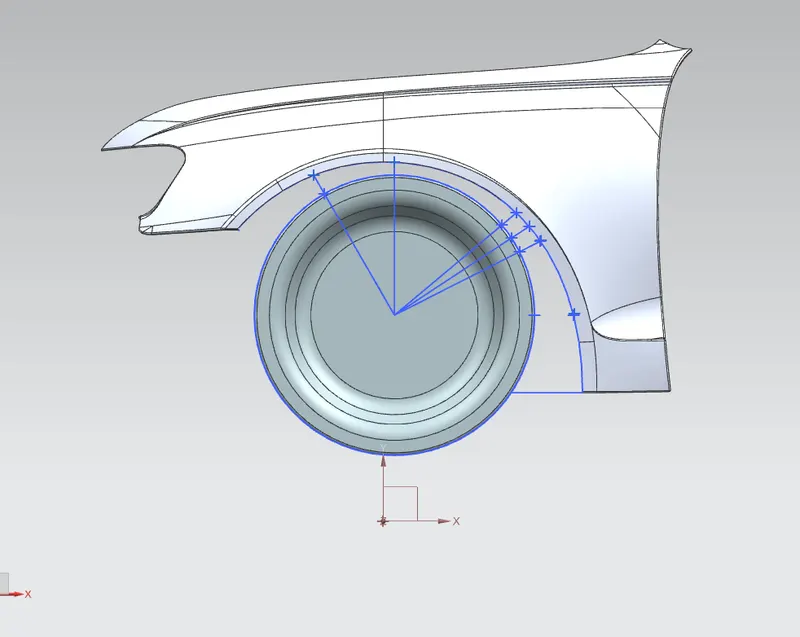
A VALUES
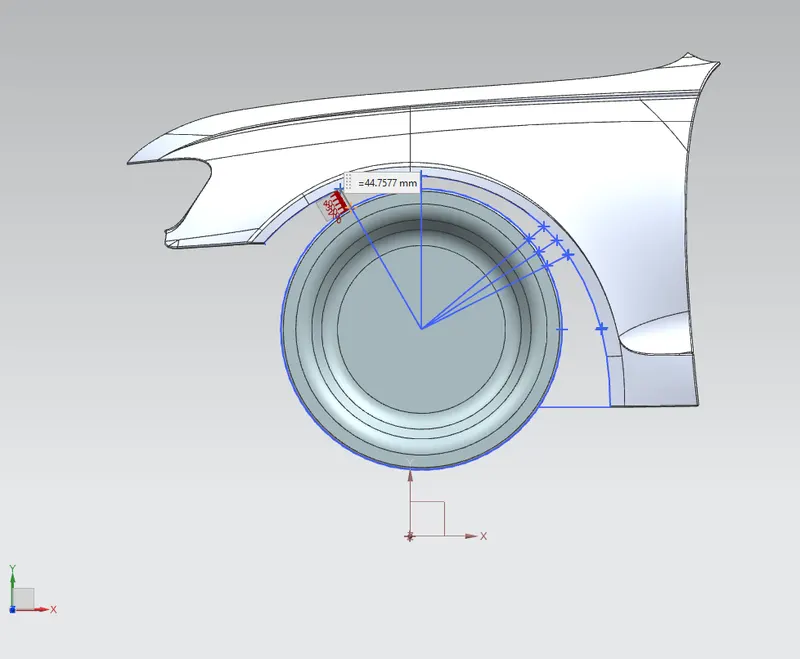
SB =44.7mm
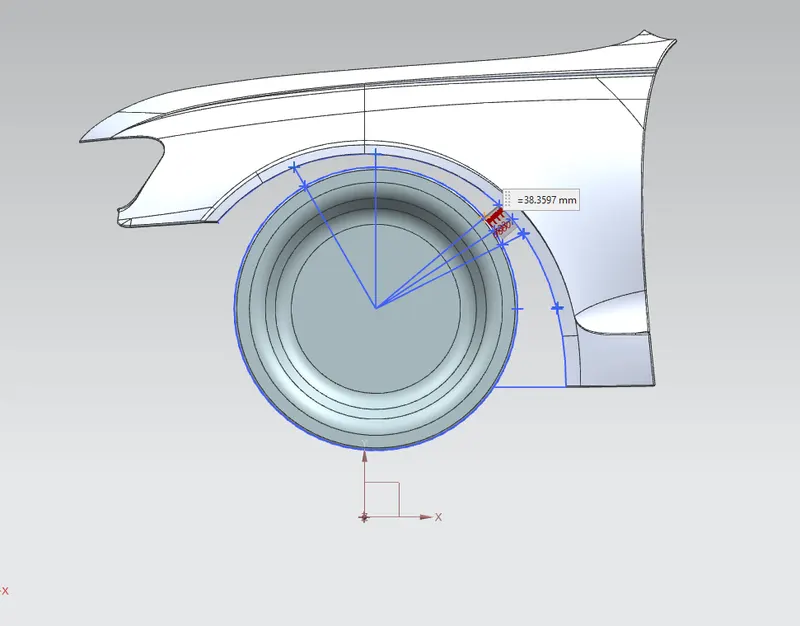
SC=38.5mm
L VALUES
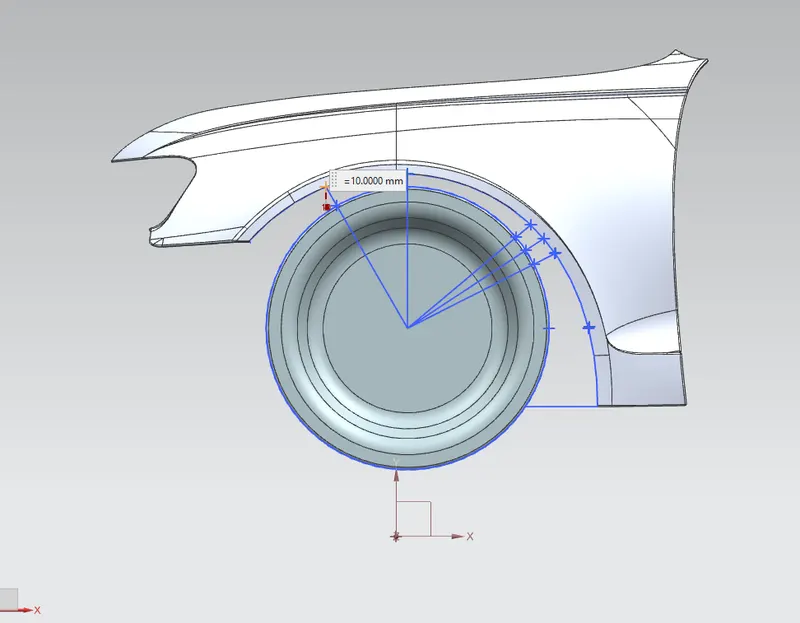
SA-SA=10MM
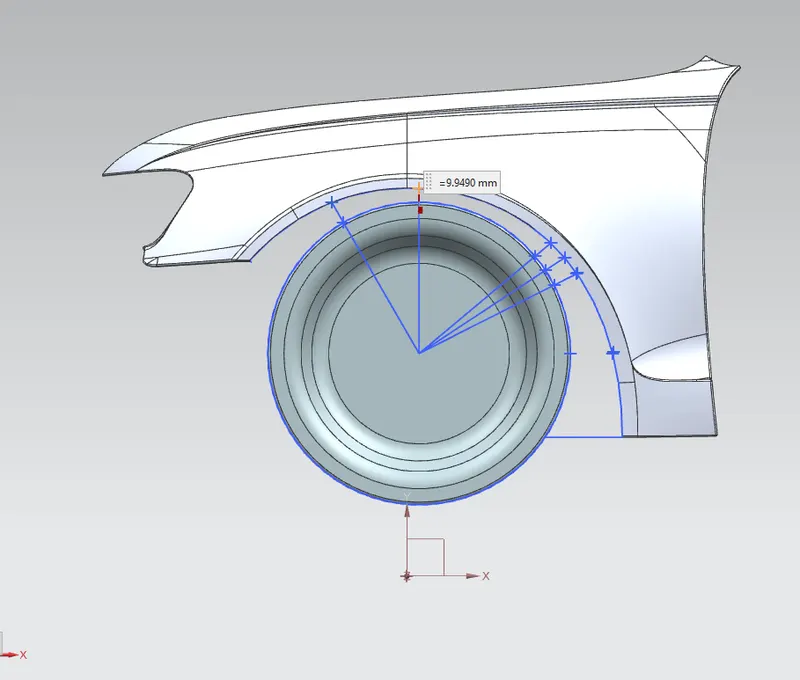
SB-SB=9.94MM
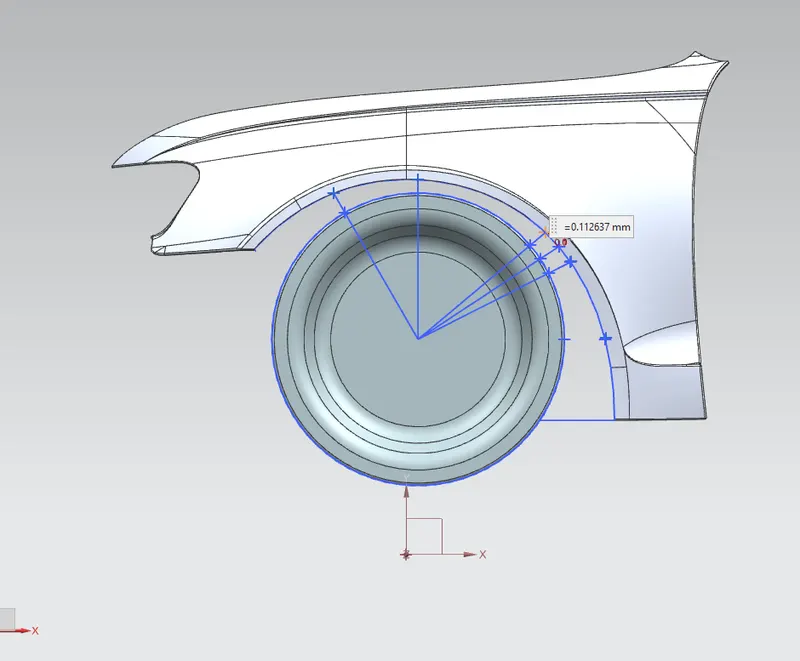
SC-SC=0.11MM
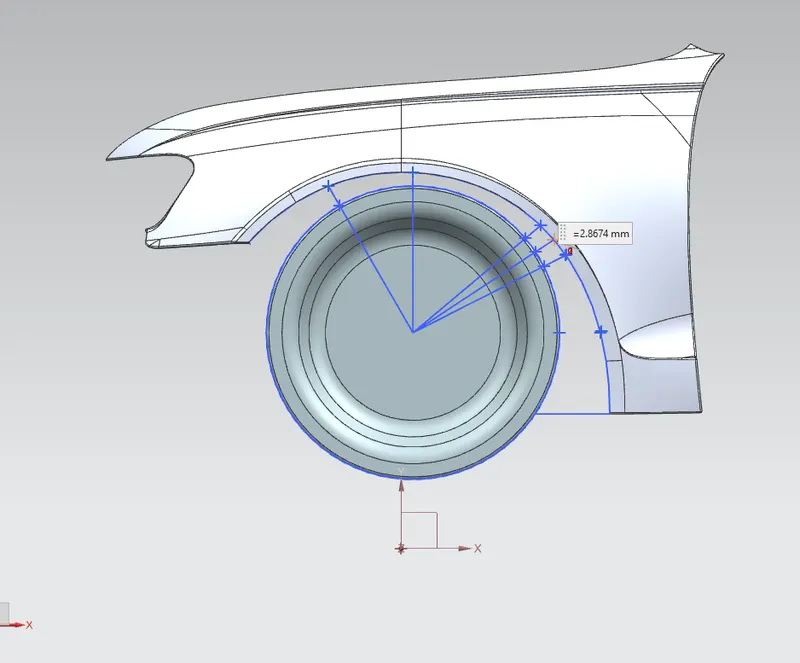
SD-SD=-2.86MM
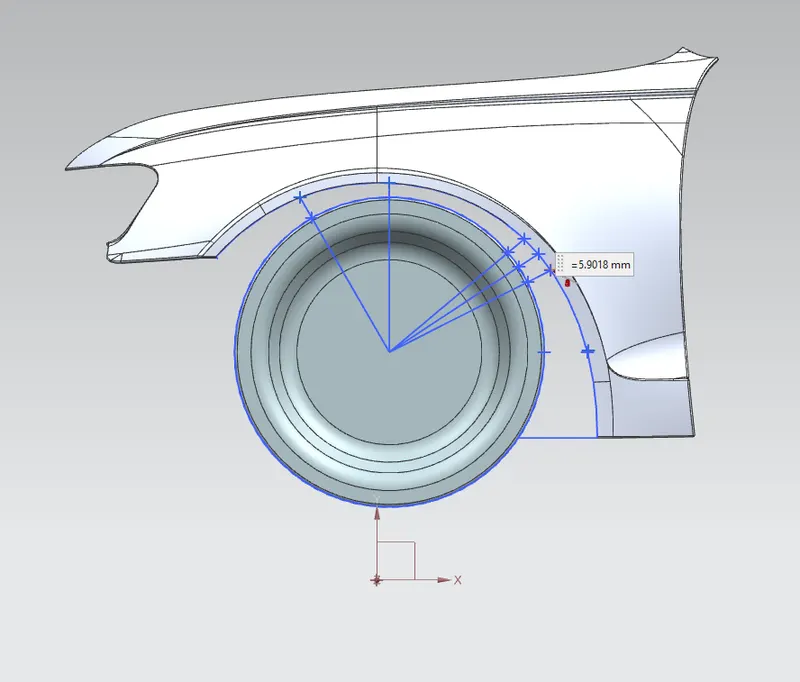
SE-SE=-5.90MM
RESULT:
A VALUES FOR SB = 44.7MM PASS
SC=38.5MM PASS
| SECTION | L>10 | RESULT |
| SA-SA | 10MM | PASS |
| SB-SB | 9.94MM | FAIL |
| SC-SC | -0.11MM | FAIL |
| SD-SD | -2.86MM | FAIL |
| SE-SE | -5.50MM | FAIL |
This does not pass european standard