Fender Design - Wheel Arch Challenge
Objective:
Calculate the wheel arch radius for the given Feder NX model & examine Feder eligibility it’s meeting European standards requirement.
Explanation:
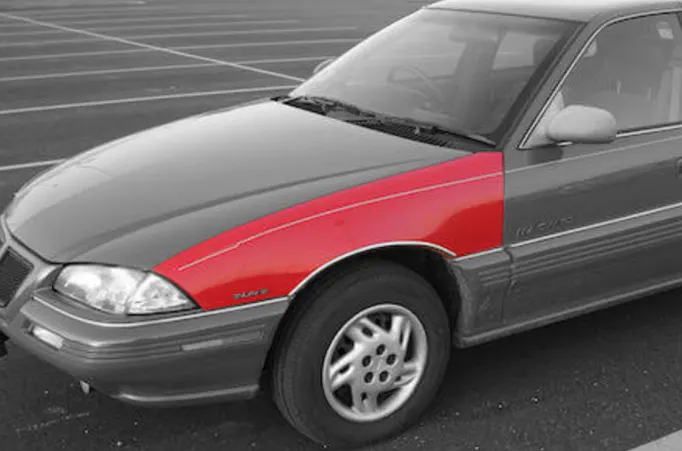
In most of the English-speaking world the fender is another word for bumper. It’s the part of the car that attempts to fend off major damage in the event of an accident. Fender is the American English term for the part of an automobile, motor cycle or other vehicle body that frame a wheel well (the fender underside). Its primary purpose is to prevent sand, mud, liquid and other road spray from being thrown into the air by the rotating tire which may herm the pedestrians cause problem because of that the calculation of wheel arc radius is to position the wheel inside the fender body. Fender also enhance the car’s aerodynamics.
Driving will be very messy if your car doesn’t have fenders that house the wheel wells. The tires of your car spin fast when you drive. As they rotate, they catch moisture and debris from the pavement and spray them into the air.The tire’s kinetic energy ejects these foreign matters into the air at high velocities. As this thing is happening, the moisture and debris that fly in the air can cause the following to happen:
- Get other vehicles or pedestrians on the road side dirty
- Hurt pedestrians
- Scratch the bodies of other vehicles
- Cause minor, and even major damage to other vehicles
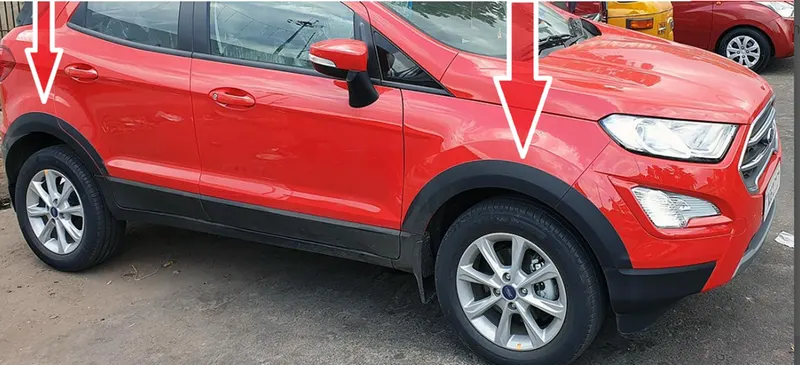
Type of Fender:
- Full Bumper type
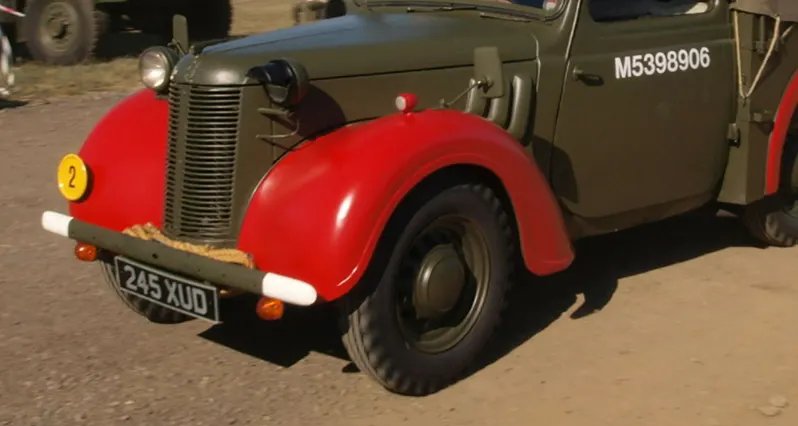
- Half Bumper Type
Different standard for wheel arch requirement:
Different regions follow different standard based on there road condition, government regulations, geography, climate and various another factor.
- Japanese Standards
- American Standards
- European Standards
Japanese Standards:
- Measure clearances L of tire, hub, cap and fender in three different positions within area k and produce clearances check chart to validate
- Clearances must be greater than 5mm in all the three positions.
- Wheel guard requirement: The Values of a shall be more than 5mm at a line 30 degree forward and 50degree rearward from the central vertical axis of wheel
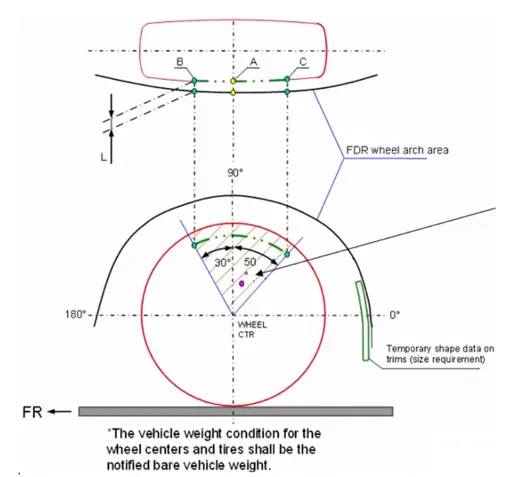
European Standards:
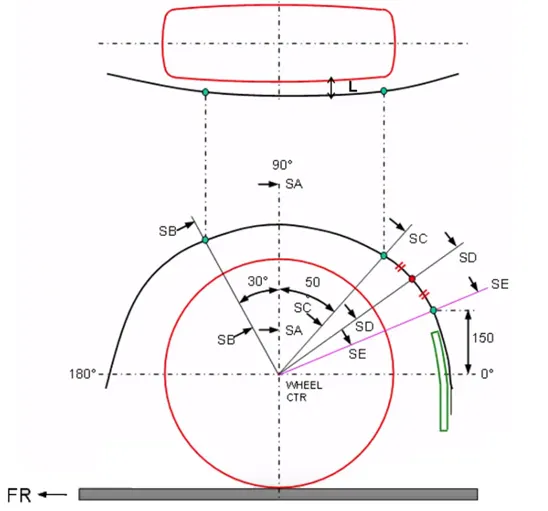
- Measure CL L at sections SA-SA, SB-SB, SC-SC, SD -SD, SE-SE and produce CL check chart to validate
- At all five Sections the CL L value Should be greater than 10mm to satisfy the European regulations
- Wheel Guard requirement: The value of ‘a’ shall be more than 5mm at a line 30 ° and 50° rearward from the central vertical axis of axis wheel
American Standards:
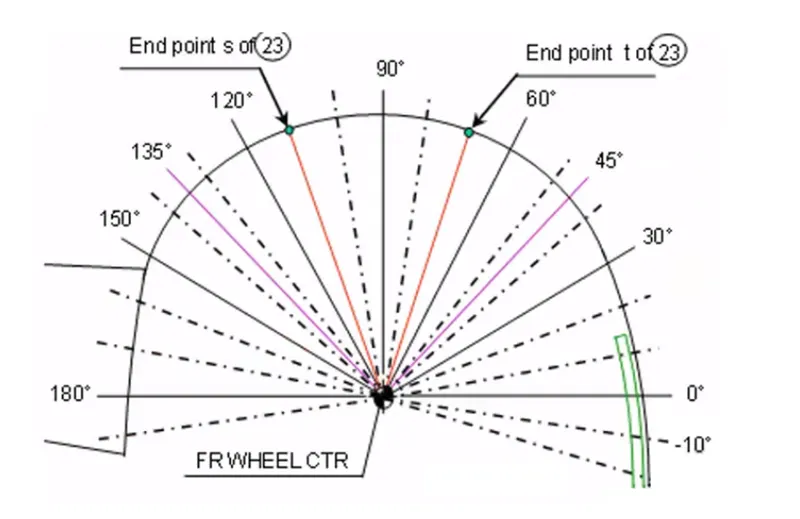
- Make clearances check details on positions from -100° to 100° and make the clearances check table
- All Value Should be greater than 5mm to Satisfy the regulations
- The values of ‘a’ shall be more than 5mm at a line 30° forward and 50° rewarded from the central vertical axis of wheel
Requirement check for European standard:
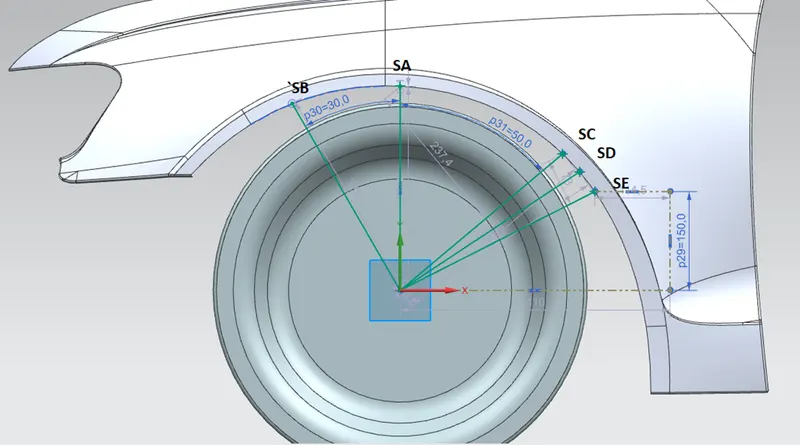
- Taken a plane on the wheel and created sketch as per European Standard.
- Taken center of the wheel created one straight line towards Fender arch, angle consider 90°. (SA)
- Refer to the center line created 50° and 30° two angle as per angle created two lines as show into the below picture (SB & SC)
- Created one Horizontal line taken center of the wheel then done offset 150mm & this line consider as a References line
- Taken references line intersection point and create one line (SD) .SC & SE curve middle position taken and created one more line that is SD.
- Now we have SB, SA, SC, SD, SE total five line.
Comparing the above observed value with required value
|
Point |
Should be condition (value) |
Is Condition (Value) |
Image |
Status |
|
SA |
10mm |
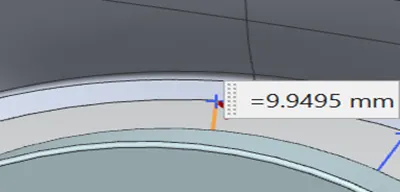
9.94mm |
 |
Not ok |
|
SB |
10mm |
10mm |
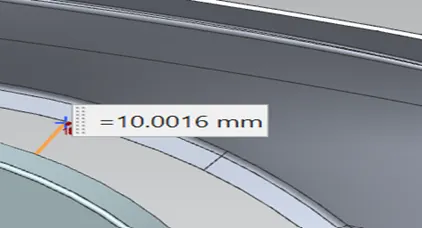 |
Ok |
|
SC |
10mm |
0.11mm |
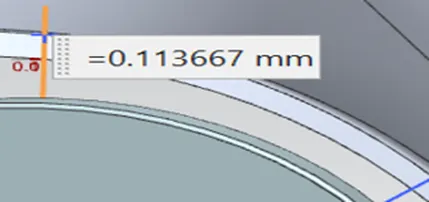 |
Not Ok |
|
SD |
10mm |
3.42mm |
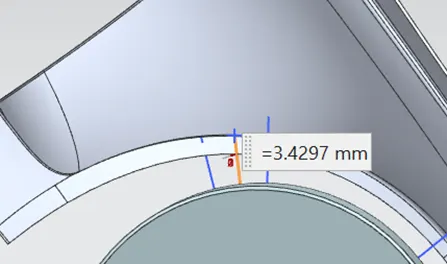 |
Not ok |
|
SE |
10mm |
7.12mm |
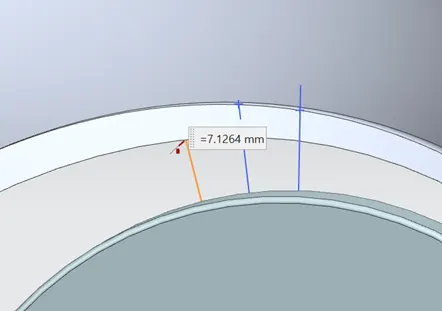 |
Not ok |
Conclusion: As per above comparison SA, SC, SD, SE all four point are not meeting requirement and only one point meeting the requirement as a 10mm.Now with this scenario it’s very clear this front Fender wheel arch does not pass European requirement.