Fender Design Challenge
FUNDER DESIGN
- A fender is the curved part of the car's body that sits over and houses the wheels.
- The function of the wheel arch is to protect from mud, and stone and during accidents help pedestrians and consider wrap-around distance for head impact.
- It is found in the distance from the outermost tire to the L-shaped brackets in the fender
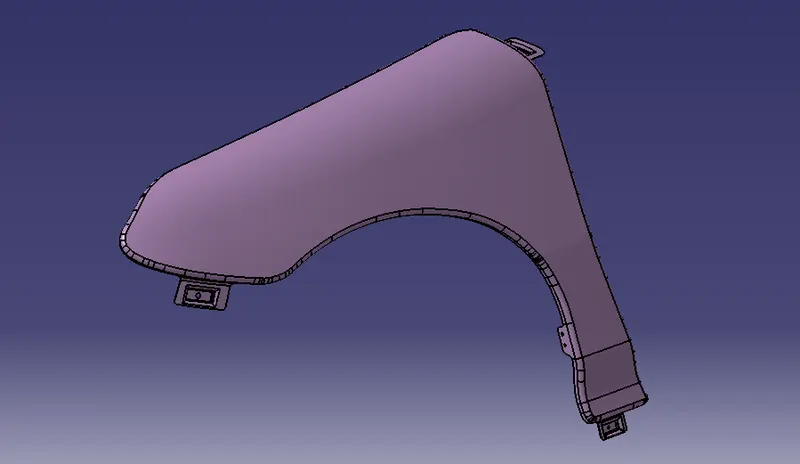
Types of Fenders:
There are two types of fenders
- Full Bumper types.
- Half Bumper types.
Full Bumper types:
- This bumper style was present on earlier models of vehicles but is not currently manufactured. It will cover the area from the side door to the car's headlight.
- The manufacturing process has created more wastage and consumes raw materials so development and production reduce in the modern period.
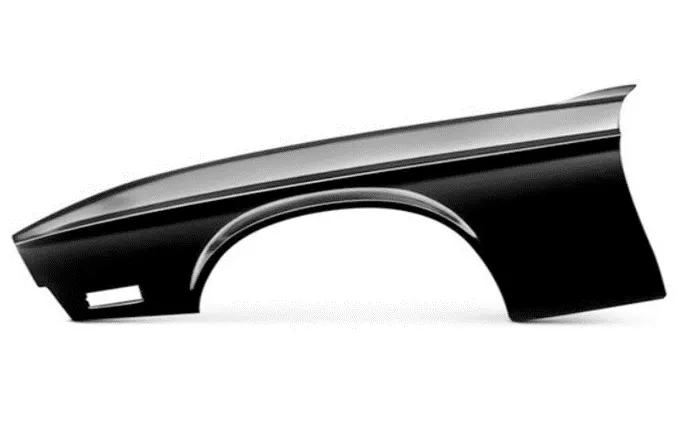
Half Bumper types:
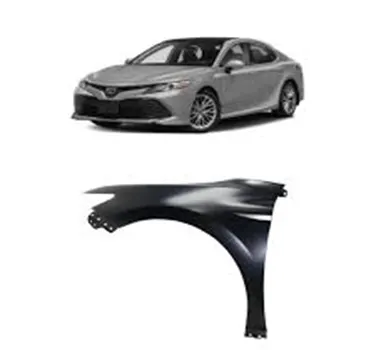
- This type of bumper is used in modern-day because of the reduced raw material wastage, reduction in car weight to improve performance, and low manufacturing cost compared to the full bumper type.
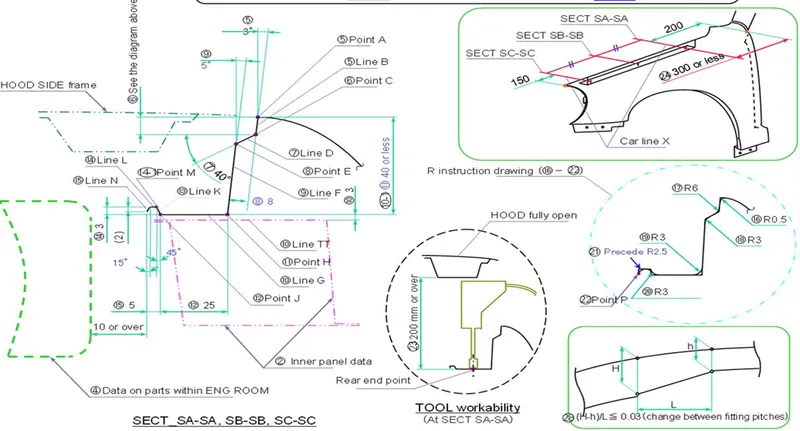
Design Parameter:
Types of mounts in Fender:
- Drip Area
- Sill Mount
- Bumper Mount
- A-Pillar Mount
- Splash/Baffle Mount
Drip area
The drip area uses to mount the fender near the engine part with at least 10mm and above clearness is necessary.
Make sure that gives sufficient space cowl mount.
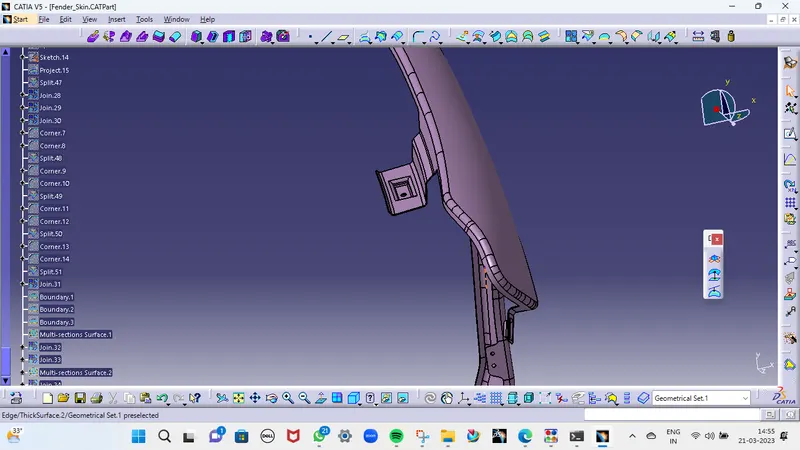
Sill Mount:
The region is mounted on the sill and it is the bottom area of the fender.
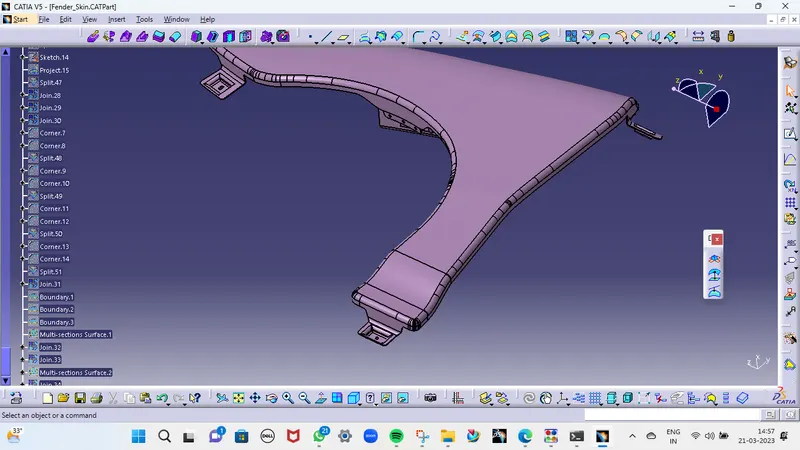
Splash/Baffle Mount:
It is used to prevent engine compartments from stone chips, and mugs.
Mounted on the plastic material.
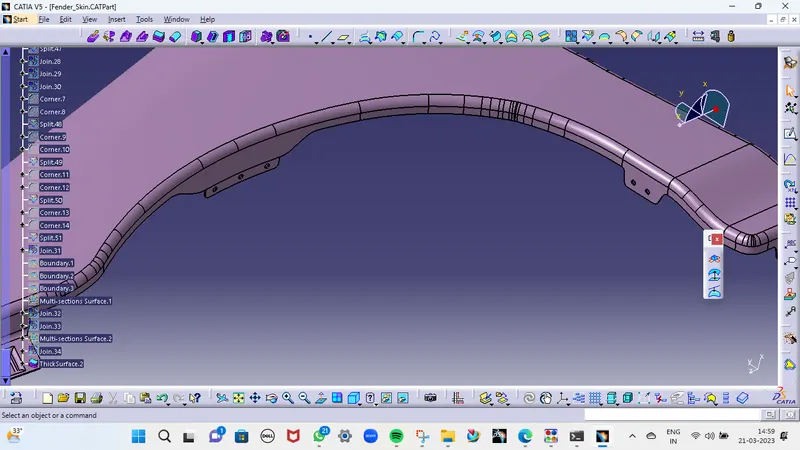
Bumper Mount:
This is used to connect the fender and bumper of the car.
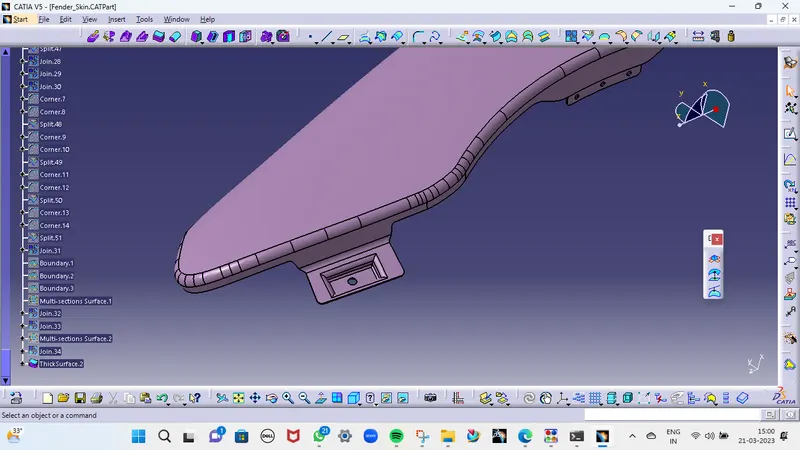
A-Pillar Mount:
This is used to connect A-pillar and fender.
Manufacturing process:
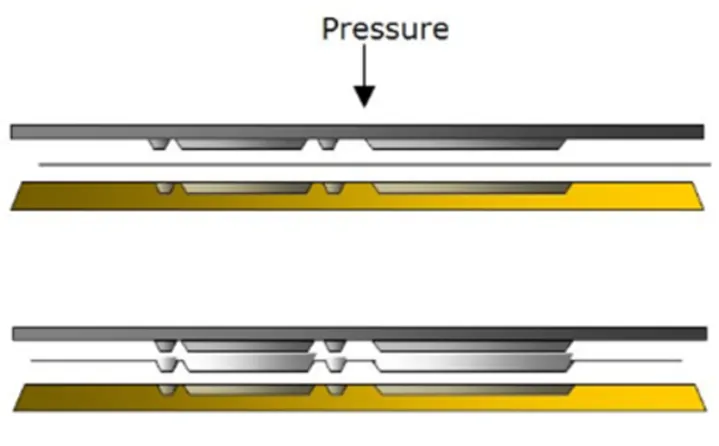
Embossing:
Embossing is the process of giving a 3-dimensional look to a material or product. Pressure is applied to the surface of the material and results in an image will project on the surface of the material. ‘Relief’ is another term used to encompass the process of embossing.
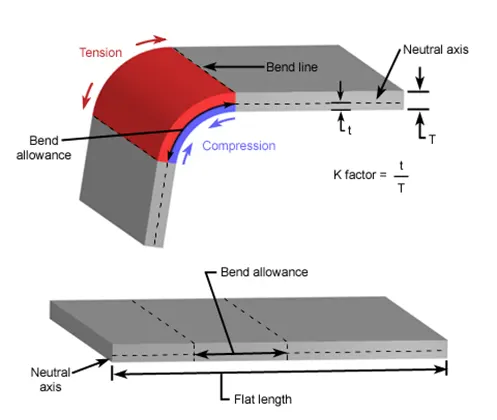
Bending:
It involves applying to the sheet metal workpiece to produce a curvature. In general, bending is used to produce a simple curvature surface instead of a complex. The amount of pressure is important to change the sheet metal surface into the given shape.
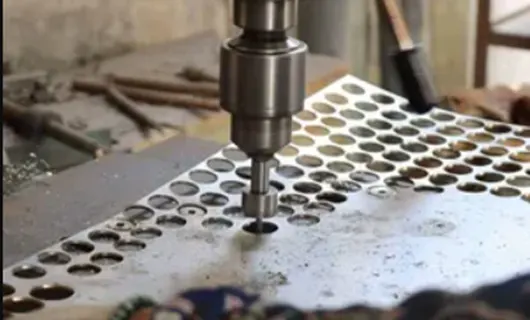
Drill:
Drilling a hole in sheet metal with a twist drill is a rather straightforward operation. You start off by drilling a small diameter pilot hole, and then drill gradually larger holes until you get to the size you need.
Conclusion:
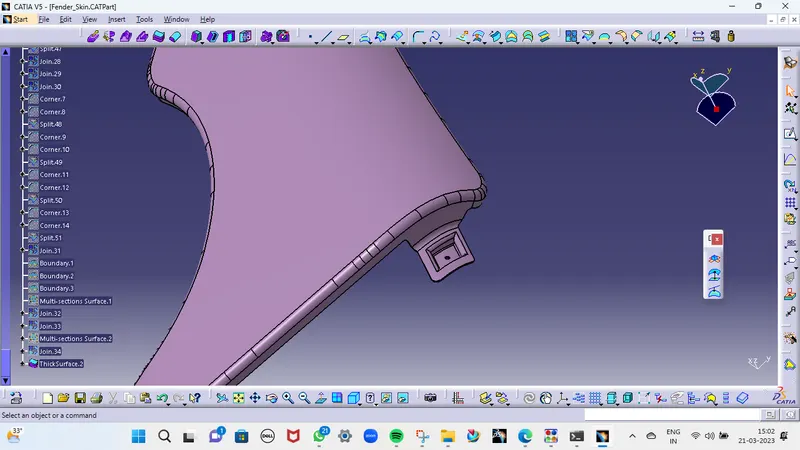
Fender design is done using CATIA V5 software and the design has been created under the given parameters.
*****THANK YOU*****