Fender Design Challenge
FENDER DESIGN
INTRODUCTION
Fender is nothing but formed sheet-metal part mounted over the road wheels of an automobile, bicycle, etc., to reduce the splashing of mud, water, and the like.
When the vehicle is moving, tires pick up stones and other and hurl them in all directions. Fenders are basically present to prevent any injuries to pedestrians and contain the motion of these particles.
Most passengers automobiles have four fenders, one over each wheel. For vehicle with a narrow body that exposes the tires, the fender is an exposed curve over the top of the tire.
OBJECTIVE
The main objective of this project is to make proper mounts for the fender which is provided to us and to understand the concept behind this and also learn about the software.
METHODOLOGY
Skin data of the fender is given to the engineer by the styling team.
The design engineer will then make the mounting points for the fender according to the design and according to the engineering standards.
A master section is provided to us for making and desiging the drip area.
DESCRIPTION
Fender is the US english term for the part of an automobile ( vehicle body ) that frames the wheel well.
Its primary purpose is to prevent sand, mud, rocks, liquids and other road spray from being thrown into air by the rotating tire.
Type of fender-
-
Full bumper type-
In full bumper type there the blank used is only for making one fender. So there is a lot of wastage of blank since it's big.
-
Half bumper type-
In half bumper type by slightly increasing the blank size we can make two fenders. So there will be less wastage of blank.
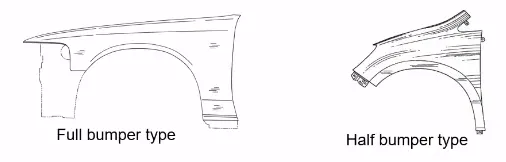
It is called scrap management, so we mostly choose half bumper type since we are reducing the usage. It also reduces cost and weight.
Mounting of fender-
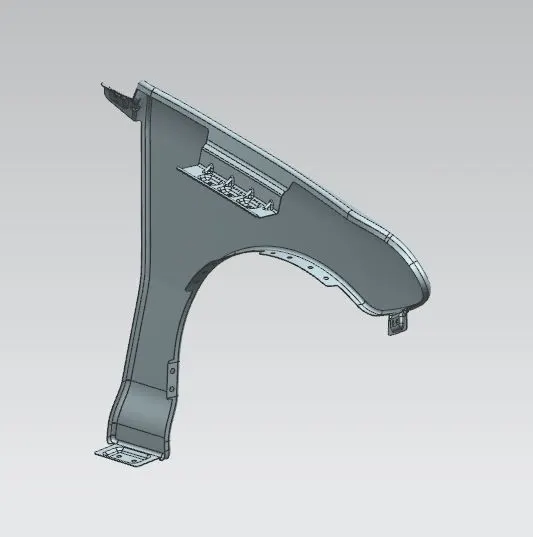
There are 5 mounting points in a fender-
-
body
-
A pillar
-
Sill
-
Cowl
-
Drip area
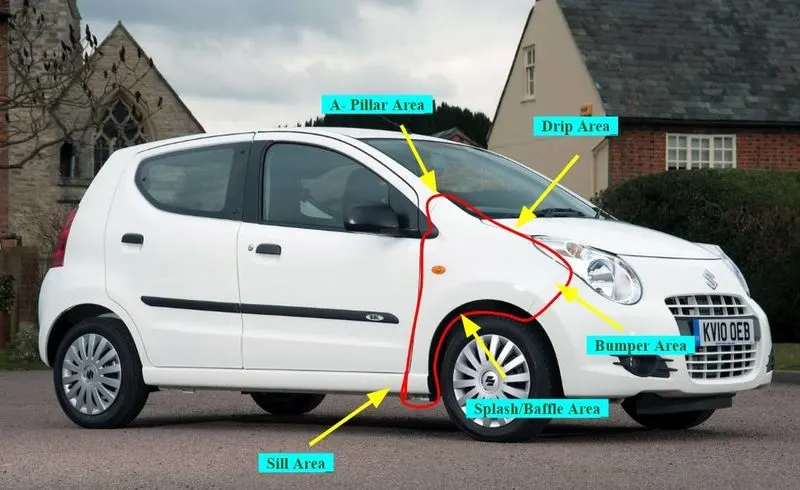
Drip area-
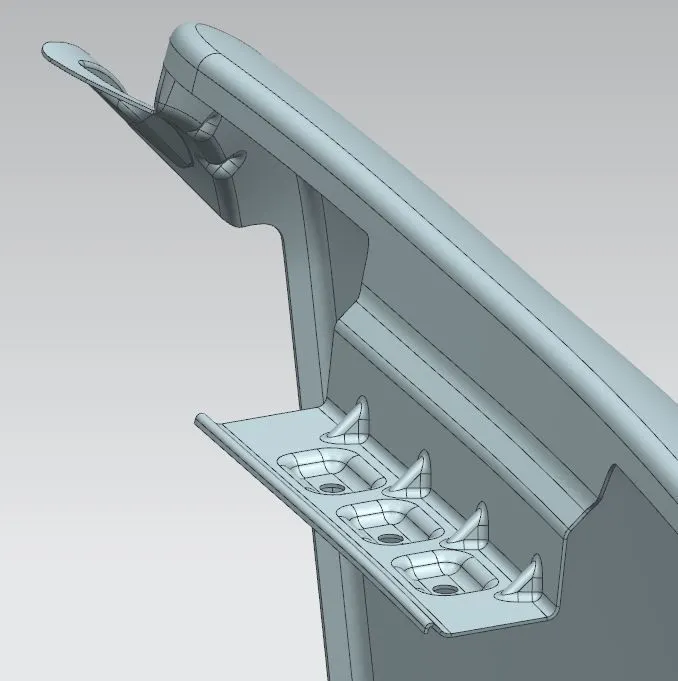
Drip area is the area where it gets in contact with the engine compartment. The design of aa fender involes designing the drip area too as it is the major mounting region. If that region is not not designed properly then the drip area would be visible from the gap between the hood and the fender.
The remaining mountings are covered by other parts.
The fenders are manufactured using the stamping process.
Stamping also called pressing — involves placing flat sheet metal, in either coil or blank form, into a stamping press. In the press, a tool and die surface form the metal into the desired shape.
PROCEDURE
We first import the skin data in NX cad then we start desingning the mounting points.
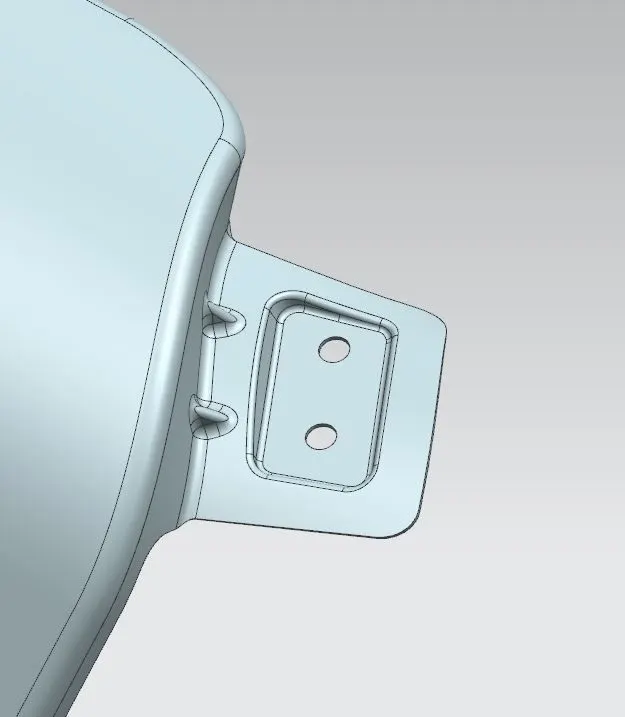
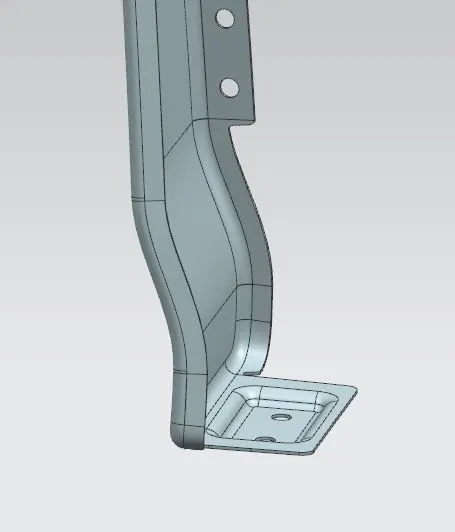
We trim some area from the skin data to give a particular mounting points for body, sill, cowl, drip area and A pillar.
We start with drip area. A master section is provided to us for the drip area. Then according to master section we model the drip area.
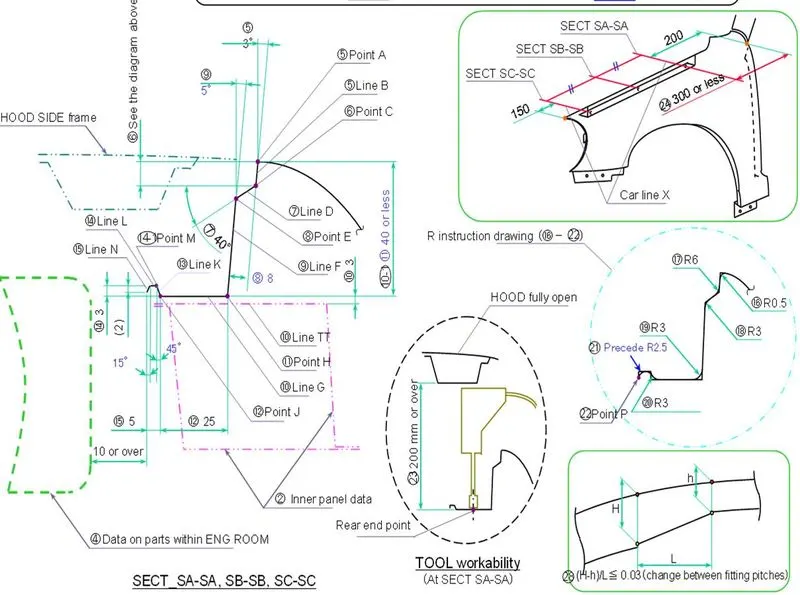
After this using the law extension tool we create area for all the mounts in the fender.
All the edges of the mounts should not have any sharp edges. If we have an unsual edge we can correct it by giving relief to the area. In that way there also will be no stress concentration at that point.
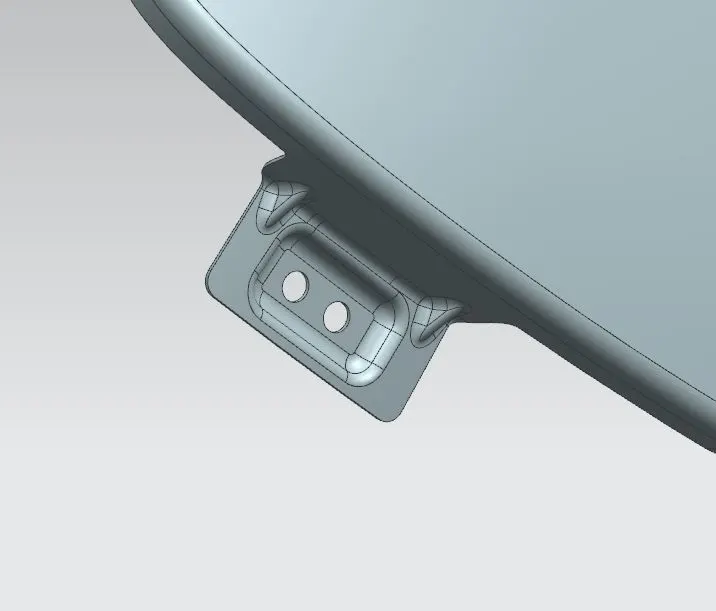
Then we will create embosses and will provide moiting holes on all the mounting areas.
The embosses we create should have a flat surface i.e. it should have zero radius of curvature.
We also added some gusset using the dart feature in nx cad. It allows us to strengthen the mounts.
Using edge blend and face blend we make sure that there are no corners or edges.
After creating all the mounts we then thicken the surface by 0.75mm.
CONCLUSION
From this project we got to learn about the design requirement and parameter about designing the front fender and also about the various tools used in NX cad. We also got to know about the master section provided for the drip area and why it is important and various other parameters.