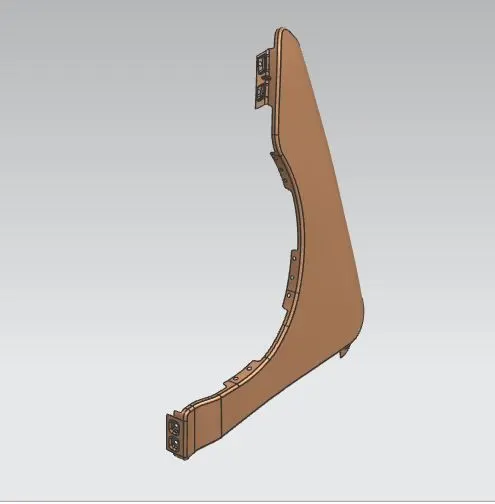
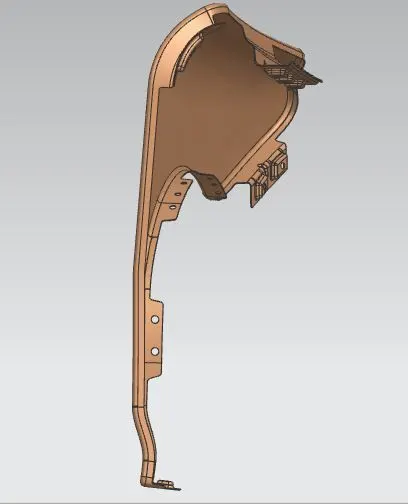
Fender Design Challenge
Objectives :
- To design the car fender according to the given design parameters related to industry standards.
- Prepare a report by explaining about Fender Design and its different mounts,manufacturing process and its design parameters.
- Design a front fender from the given skin data and the master section provided with Drip mounting, A-pillar, Sill, Bumper and Baffle (splash) Mounts.
Introduction:
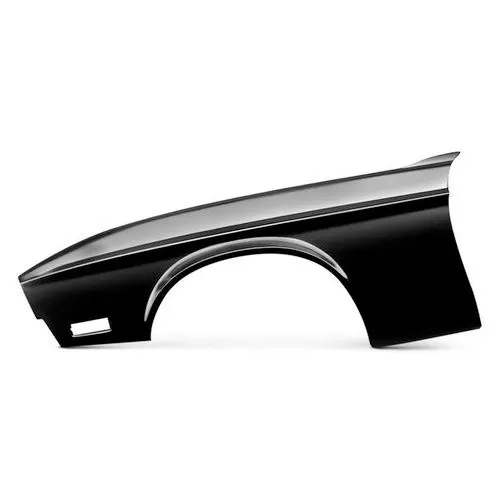
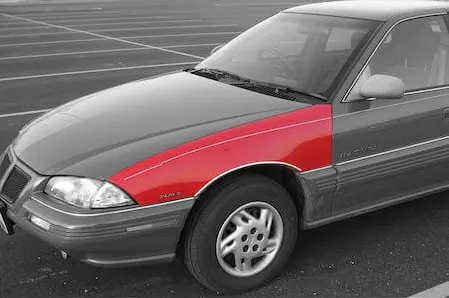
- Fender is the American English term for the part of an automobile, motorcycle or other vehicle body that frames a wheel well (the fender underside).
- Its primary purpose is to prevent sand, mud, rocks, liquids, and other road spray from being thrown into the air by the rotating tire.
- Fenders are typically rigid and can be damaged by contact with the road surface.
the role of the design engineer is to design the product that can be easily manufactured and with less cost effective. - This is the place where the Design for manufacturing [DFM] and Design of assembly [DFA] takes a role while developing any product.
- The process of development of design carries on until the design satisfies the customer needs. Here in this project the product that we are going to develop is a car fender.
What is a Fender?
- A fender is the part of a car, truck, motorcycle, or another vehicle that frames or covers a wheel well.
- Its main purpose is to prevent debris, rocks, mud, liquids, sand, and other road debris from getting thrown in the air while the tyres rotate.
- Fenders may be made from fibreglass, steel, or other materials. Many of these materials are designed to crumple in a crash, distributing the impact across the frame of the car to make the crash more survivable for the occupants of the vehicle.
- In the US these wheel-covers were given a name which reflected their purpose rather than the way they looked, and so the piece of metal which guards the detritus flying up from the road was called the ‘fender’ – literally fending off the attack of the muddy roads.
- As time went on this function still applied, and therefore so did the name. In the states, a small incident that might be called a ‘bump’ by a Brit where the bumper makes contact with something, would often be called a ‘fender bender’
- Although nowadays the fender/wing covering the wheel is very much part of the overall car body, in the early days of car design the wheels were more remote from the chassis, and so to stop all manner of grubby bits flicking up at high speed from the wheels into other road users (and all over your own gleaming coachwork) there needed to be some kind of extra guard.
USES OF FENDER :
- Get other vehicles or pedestrians on the road side dirty
- Hurt pedestrians
- Scratch the bodies of other vehicles
- Cause minor, and even major damage to other vehicles
TYPES OF FENDER:
There are mainly two types of fenders :
1. Half bumper type
This half bumper type is used for mainly cost and material cutting purpose as this type is also provides ease of manufacturing and the strength is also improved for half bumper type fender.
2. Full bumper type
The full bumper type model is used in the olden days this creates much wastage of material and the unnecessery cost is increased.
In this project as we said we are going to design the front fender mounts.
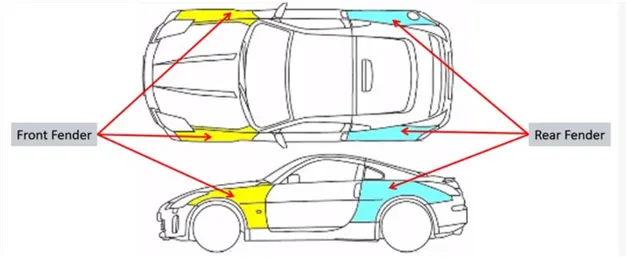
MOUNTING REGIONS ON FENDER :
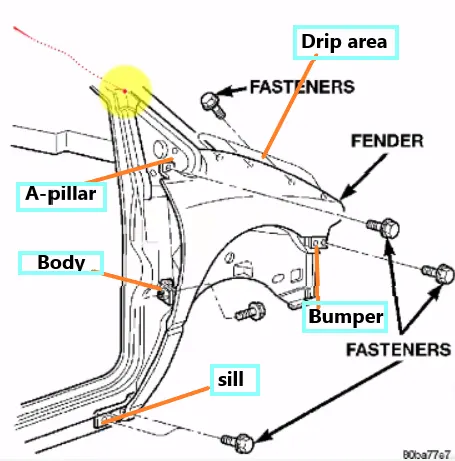
There are 5 mounting regions on the fender
- A- pillar mounting
- Body mounting
- Sill mounting
- Bumper mounting
- Drip mounting
Manufacturing process
The manufacturing of the fender majorly involves these operations.
1.Embossing
2.Bending
3.Cutting and Blanking
Embossing
Embossing is a metal forming process for producing raised or sunken designs or relief in sheet material using matched male and female roller dies, theoretically with no change in metal thickness, or by passing sheet or a strip of metal between rolls of the desired pattern.
Bending
Metal bending is a process by which metal can be deformed when applying force to the subject, which causes it to bend at an angle and form the anticipated shape, which often results in it being in a ‘V’ or a ‘U’ shape. This is done through the application of force on a workpiece. The force on the work piece can be mechanical, pneumatic or hydraulic.
Cutting and Blanking
Cutting processes are those in which a piece of sheet metal is separated by applying a great enough shearing force to cause the material to fail.
Blanking is a steel manufacturing process in which a flat, geometric shape is created by feeding a coil of sheet metal into a press and die. In this process, the blank is punched out from the large metal sheet.
Master section to create the Drip Area.
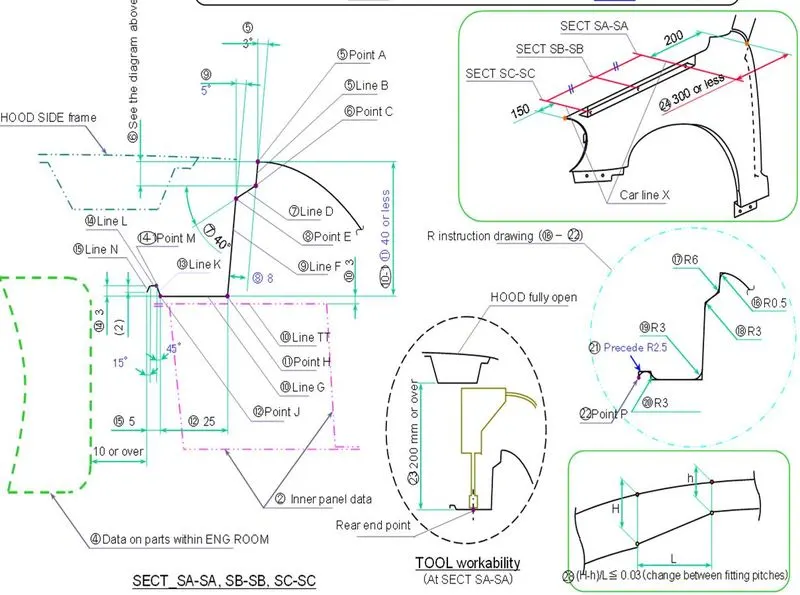
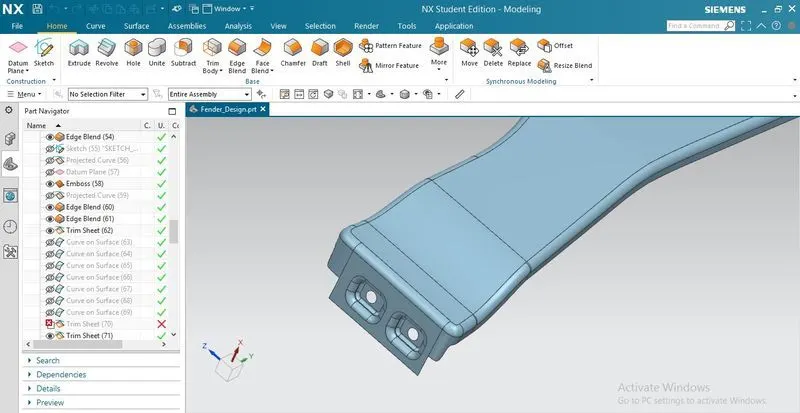
Bumper Mounting :
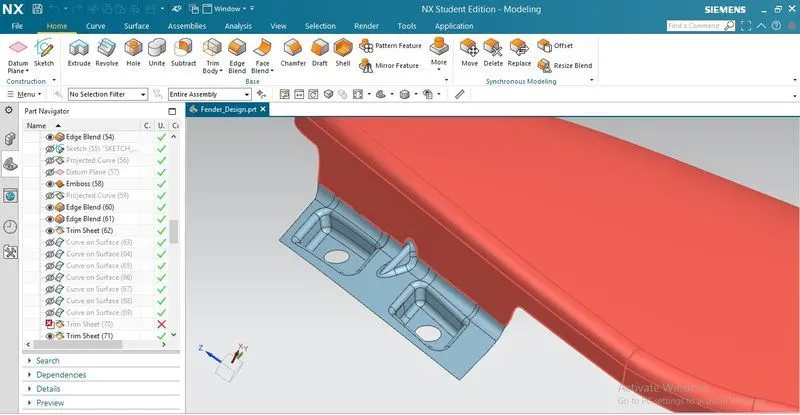
Sill Mouning :
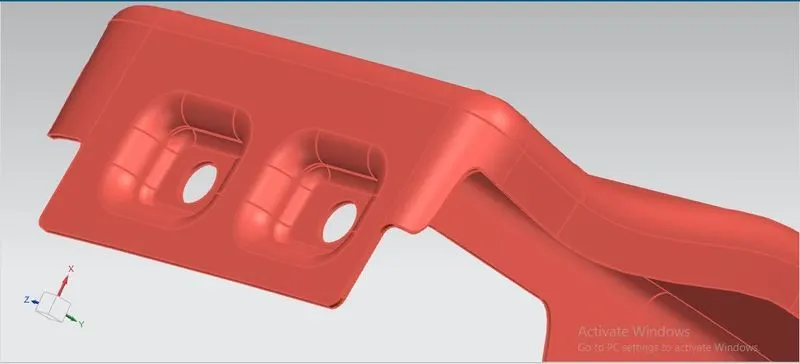
Baffels Mounting :
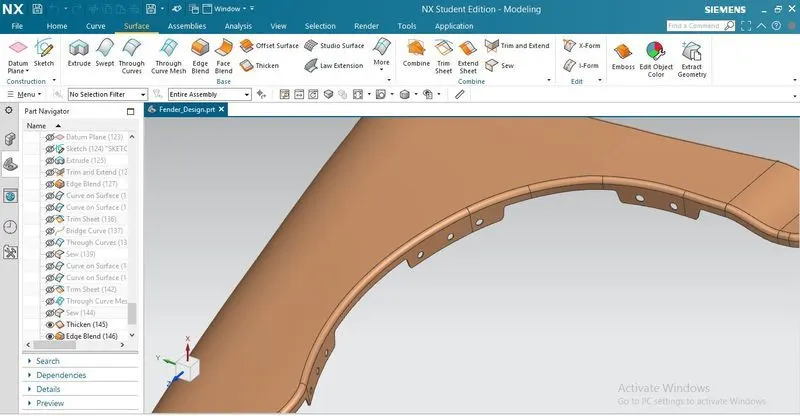
Views Of Fender :