Fender Design Challenge
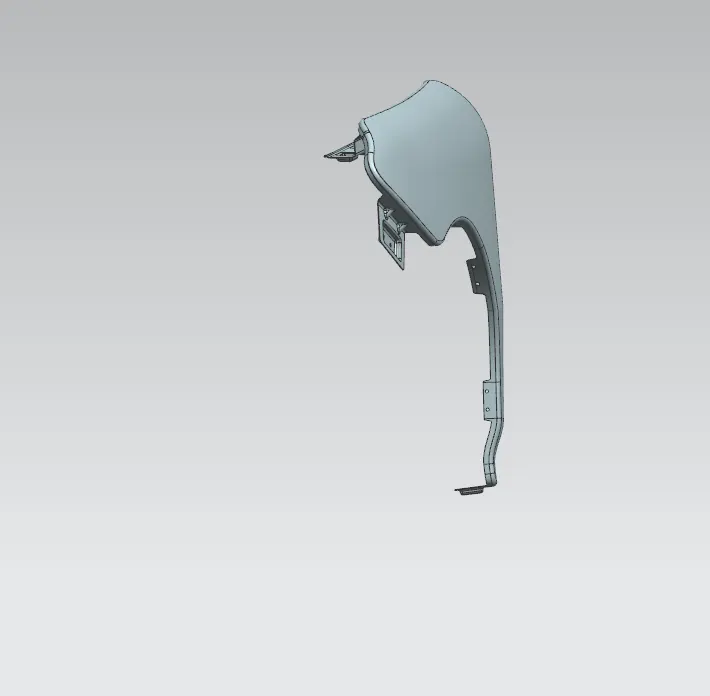
Objective: Design a front fender from the given skin data and the master section provided with Drip mounting, A-pillar, Sill, Bumper and Baffle (splash) Mounts.
Introduction:
The purpose of a fender is to prevent mud, gravel, and other road debris from flying off of tyres. It is a curved sheet that is mounted over the tyre. A fender is, in essence, a wheel casing that contains road debris. The bumper, sill, and A pillar support the fender's mounting. Additionally, Fender has a place to put a baffle. When vehicle is moving, tyres pick up stones and others and hurl them in all directions. Fenders are basically present to prevent any injuries to pedestrians and contain the motion of these particles.
Most passenger automobiles have four fenders, one over each wheel. For vehicles with a narrow car body that exposes the tire, the fender is an exposed curve over the top of the tire. For wide body vehicles that cover the tire, the fender forms the wheel well surrounding the tire, and is not directly visible from above the car body.
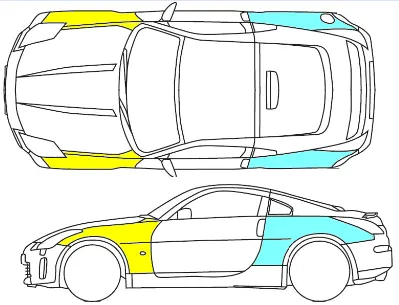
In the following image, the highlighted portions are fenders in a car body.
Types of Fender:
There are two types of fender. These two have been explained as follows.
Full Bumper Type:
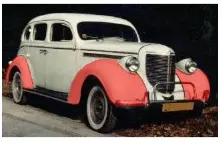
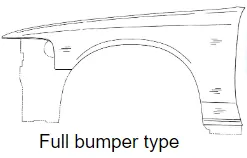
These types were used in initial days of evolution of car industries. These types of fender, though, left more scrap which was not economical for the car manufacturers.
Half Bumper Type:
To reduce the scrap from creating fender, half bumper type fender have been used extensively. From the same blank, two half bumper type fenders can be produced and thus increasing productivity and reducing waste.
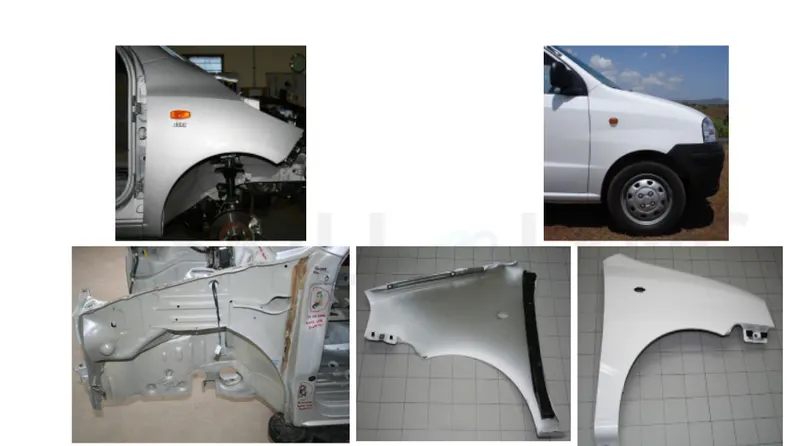
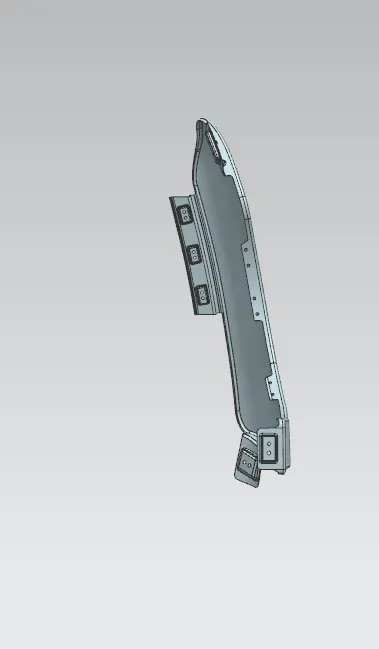
There are generally five mountings on fender which are described as follows:
1. Bumper Mounting:
This is used to connect the fender to the bumper of the car.
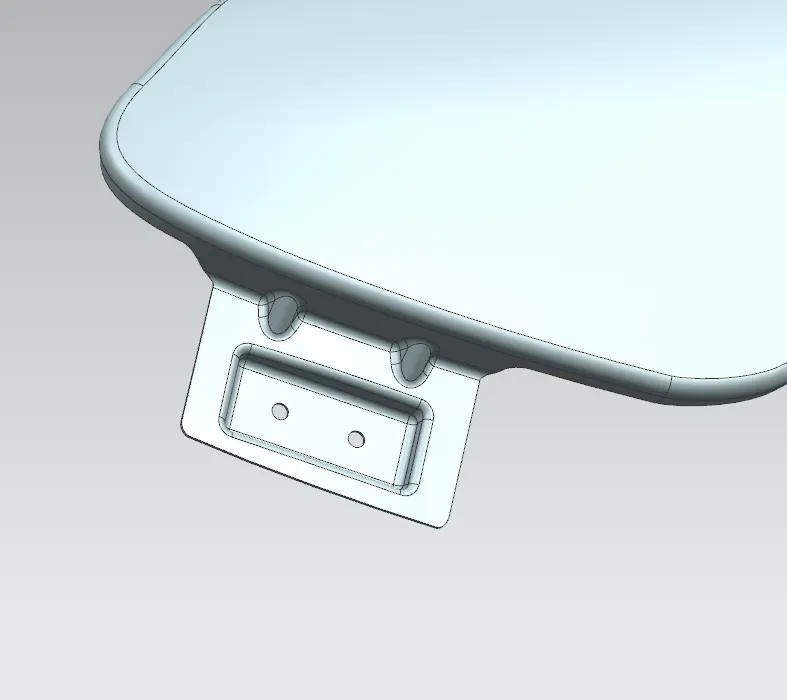
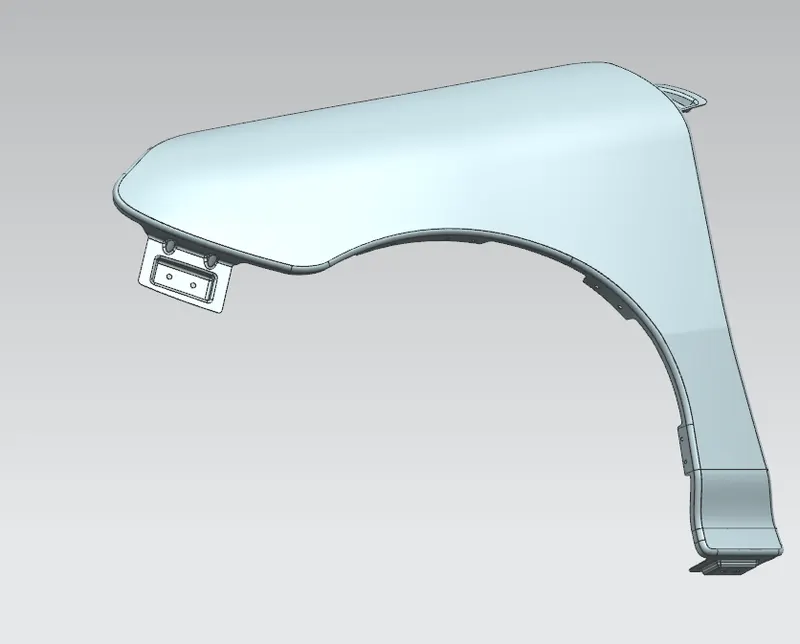
Dart is provided to improve the strength.
2. A-pillar Mounting:
This is located near the cowl area which goes to side windows of the car.
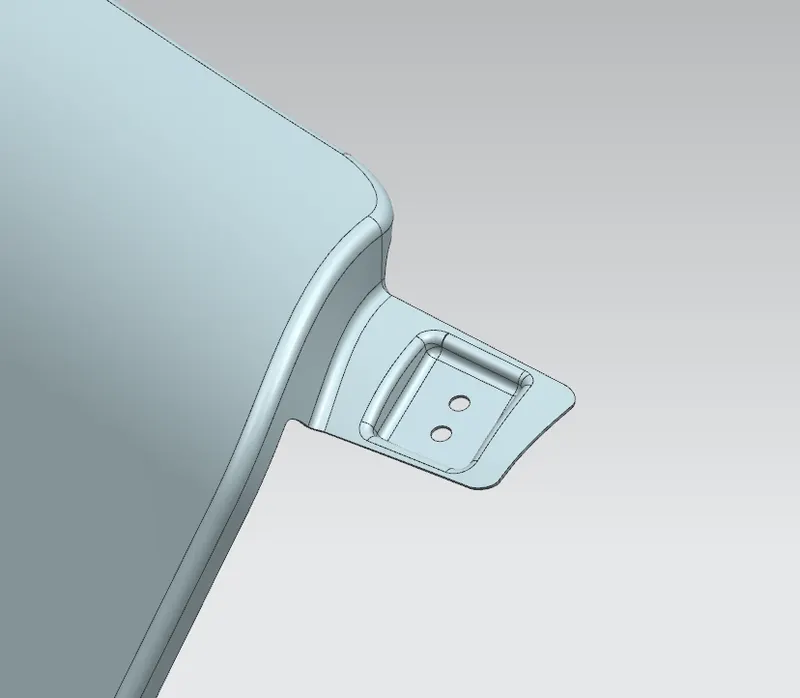
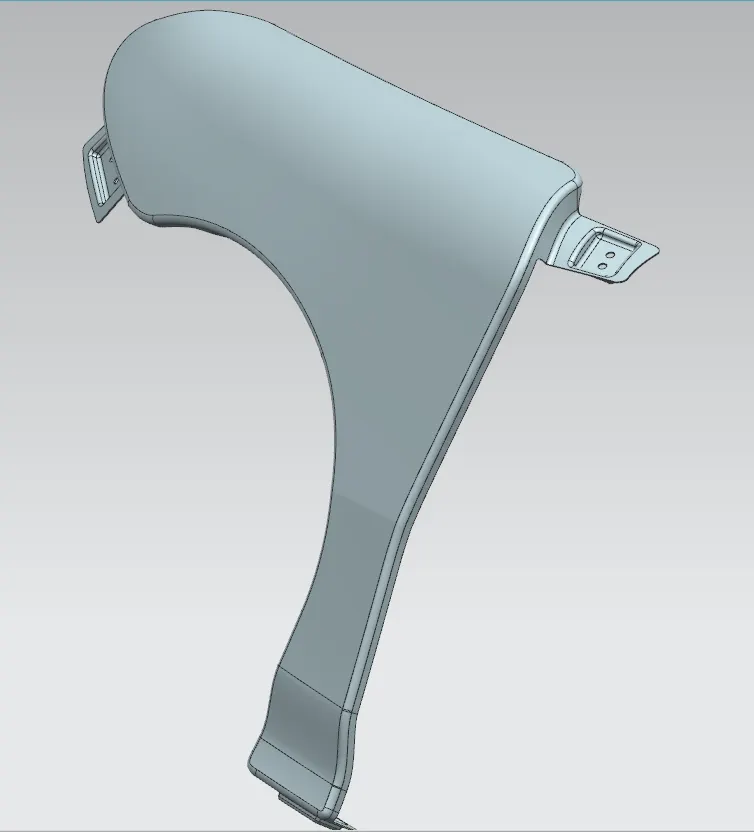
The end cap of the embossed surface should be plane which is achieved by offsetting a plane from the start cap of the embossed surface.
Law extension to extend sheet for the mounting and curve on surface is used to smoothen the sharp corners, bridge curve for smoothening the edges.
3. Sill Mounting:
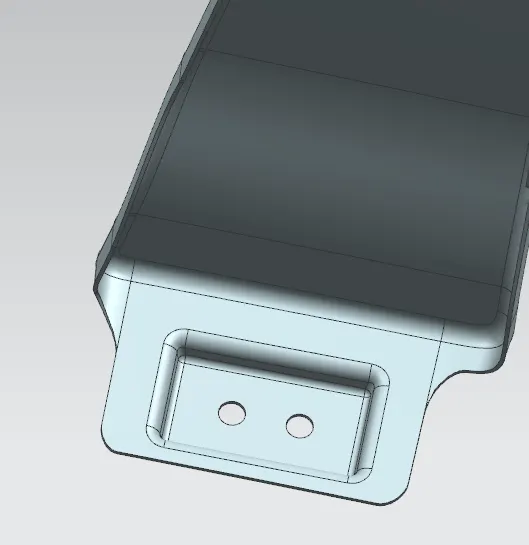
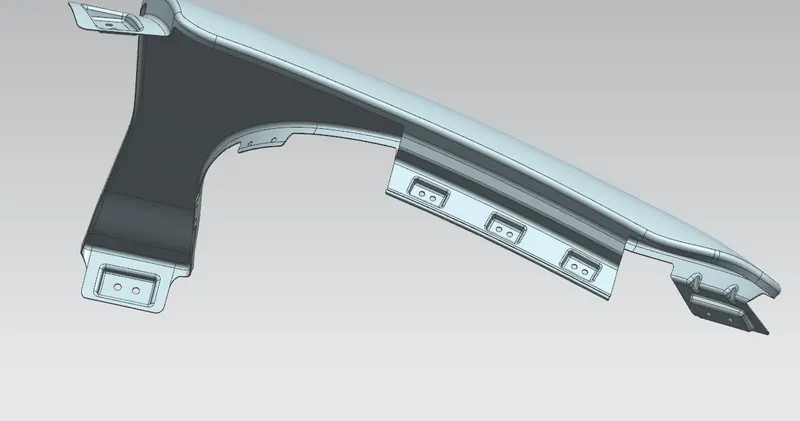
This mounting is near the door area.
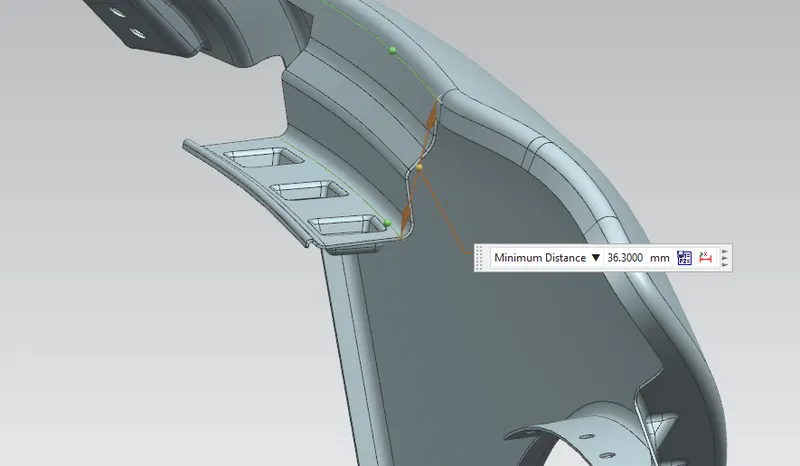
4. Drip Area Mounting:
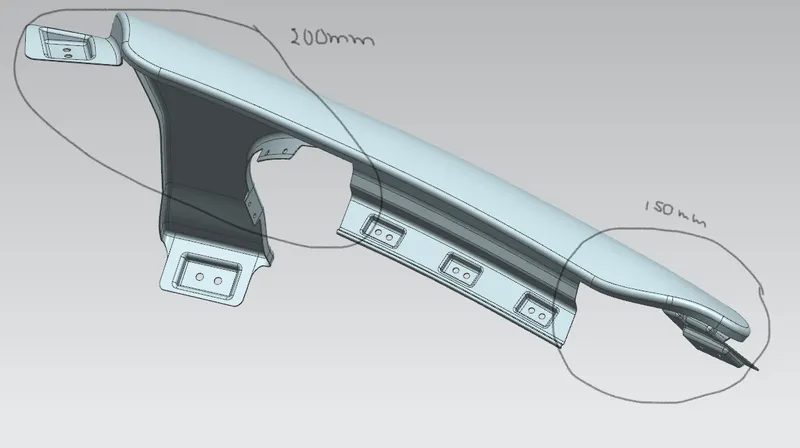
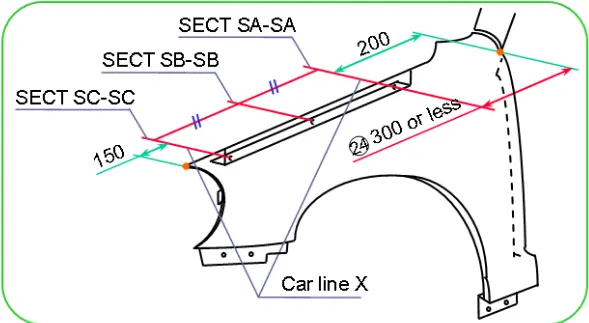
This is very important mounting. This goes into the engine compartment. There are few design considerations for the drip area. At;east 150 mm gap is provided near the headlight area and 200 mm near the cowl area to provide way for the respective housings. The total depth should not increase 40 mm and beads or darts should be provided to increase stiffness of the drip mounting.
5. Baffle(Splash) Mounting:
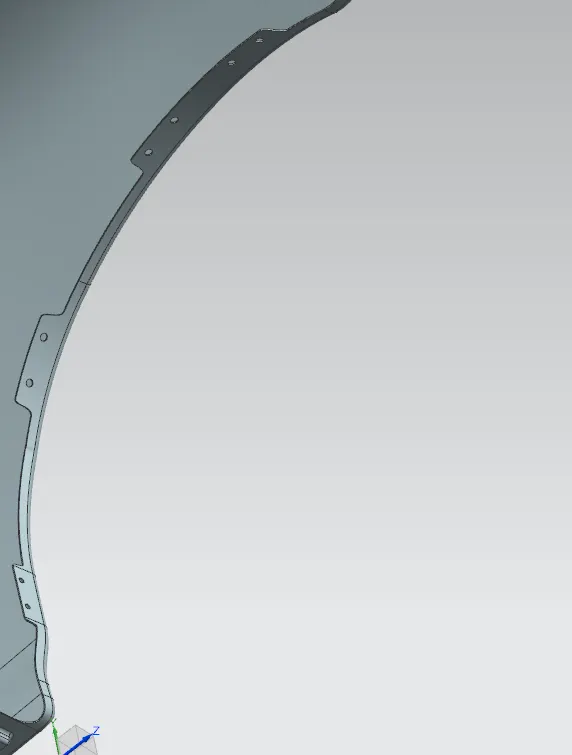
Baffles are provided to mount splash fittings to prevent debris entring into the engine compartment. It also helps in inhibiting the passage of sound. It is mounted with the help of fasteners.
Conclusion:
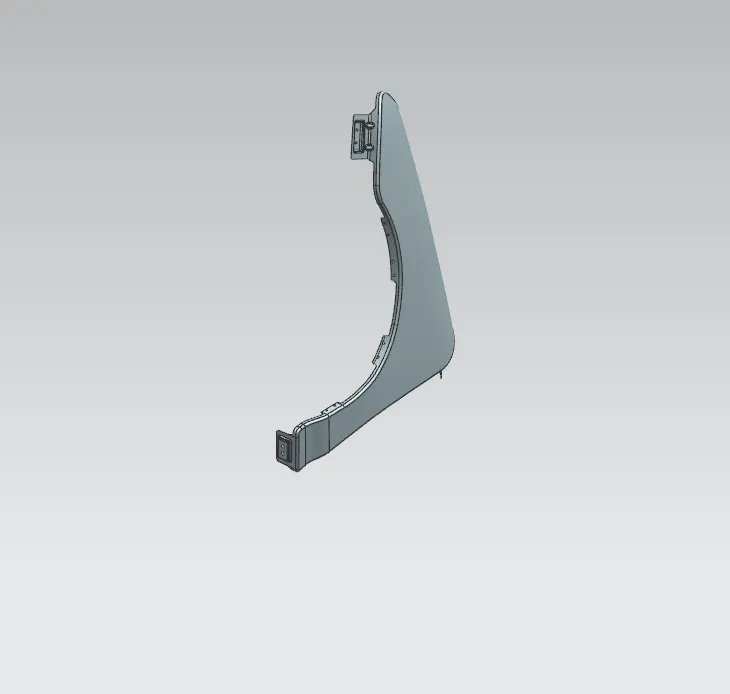
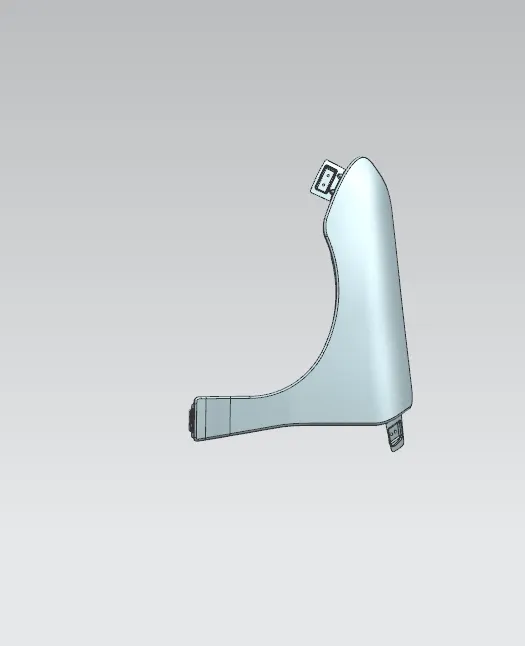
This project gave insight to the design considerations of mountings on the fender of a car and how different housings in the engine compartment may affects the design of the fender. Bridge curve, curve on surface, law extension features were extensively used for different mountings.